




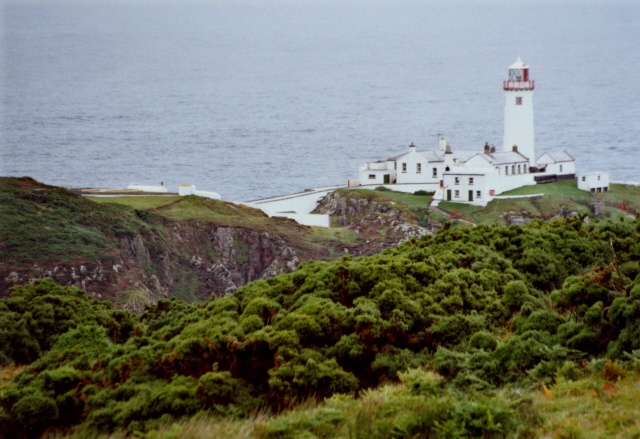
Perched dramatically on the rugged northern coast of County Donegal, Ireland, the Fanad Head Lighthouse stands as a sentinel against the wild Atlantic Ocean. This iconic structure, with its whitewashed walls and red-topped lantern room, is not just a beacon for ships but also a beacon of history, culture, and natural beauty that captivates all who visit.

The Fanad Head Lighthouse was constructed in response to the tragic shipwreck of the HMS Saldanha in 1811, which claimed the lives of all aboard along the harsh Donegal coast. Officially lit in 1817, the lighthouse was designed by the renowned engineer George Halpin, Senior, one of the most significant figures in the development of lighthouses in Ireland. Since then, it has been guiding sailors safely through the treacherous waters of Lough Swilly and across the North Atlantic, witnessing nearly two centuries of maritime history.
Architecturally, the lighthouse is a striking example of 19th-century maritime design. Its cylindrical tower, standing 22 meters high, is built from local stone and painted a pristine white to make it stand out against the often stormy Donegal skies. The lighthouse's lantern room houses a modern LED light, a stark contrast to the original oil-burning lamp, yet both serve the same purpose of ensuring the safety of those at sea. The surrounding buildings, now transformed into charming accommodation, retain their historical charm, offering visitors a unique chance to step back in time.
The cultural tapestry of the Fanad Peninsula is woven with rich traditions and lively festivals. Locals take immense pride in their Gaelic heritage, which is evident in the region's music, dance, and storytelling. The nearby town of Rathmullan often hosts traditional Irish music sessions, where the lilting notes of fiddles and flutes mingle with the sound of the sea. Festivals such as the Lughnasa Festival celebrate ancient Celtic traditions, attracting visitors eager to experience authentic Irish culture.
A visit to Fanad Head is incomplete without indulging in the local gastronomy. The Donegal coast is famed for its fresh seafood, including succulent oysters and plump mussels harvested from the cool Atlantic waters. Traditional Irish stews and hearty soda breads are staples on menus, offering a taste of the rustic culinary heritage of the region. For those with a sweet tooth, local bakeries offer delights such as barmbrack, a fruit-studded tea loaf that’s perfect with a cup of strong Irish tea.
For the intrepid traveler, Fanad Head offers more than just its lighthouse. A lesser-known gem is the Great Arch, a natural sea arch carved by millennia of crashing waves, offering breathtaking views and a perfect spot for photography enthusiasts. Birdwatchers, too, will find a haven here, with the surrounding cliffs providing nesting grounds for puffins and other seabirds. The area is also steeped in local legends, including tales of mermaids and mysterious sea creatures, sparking the imagination of those who dare to explore its shores.
When planning a visit to Fanad Head, timing is everything. The summer months, from May to September, provide the best weather for exploring both the lighthouse and the stunning surrounding landscapes. However, the spectacle of a winter storm thrashing against the cliffs is an experience in itself, offering a raw and untamed view of nature’s power. Dress warmly, as the winds can be fierce, even in summer.
To make the most of your visit, consider booking one of the lighthouse's accommodations, allowing you to experience the solitude and beauty of this remote location overnight. Take a guided tour to learn about the lighthouse’s history and operation, and don't forget to climb to the top for panoramic views that stretch across the Atlantic and over to the distant horizon.
Whether you're drawn by the history, the architecture, or the sheer natural beauty, Fanad Head Lighthouse promises an unforgettable journey to the edge of Ireland's wild coast. Here, where the land meets the sea, the spirit of Donegal whispers stories of the past to those willing to listen.
