
← Back

Farnese Palace

Piazza Vittorio Emanuele II, 18, 64012 Campli TE, Italia ★★★★☆ 281 views
Rayko Raver
Campli
🏆 AI Trip Planner 2026

Get the free app

Discover the best of Campli with Secret World — the AI trip planner with 1M+ destinations. Get personalized itineraries, hidden gems and local tips. Free on iOS & Android.

🧠 AI Itineraries 🎒 Trip Toolkit 🎮 KnowWhere Game 🎧 Audio Guides 📹 Videos
Scan to download iOS / Android
Scan for AppGallery Huawei users

About Farnese Palace

Farnese Palace - Campli | Secret World Trip Planner

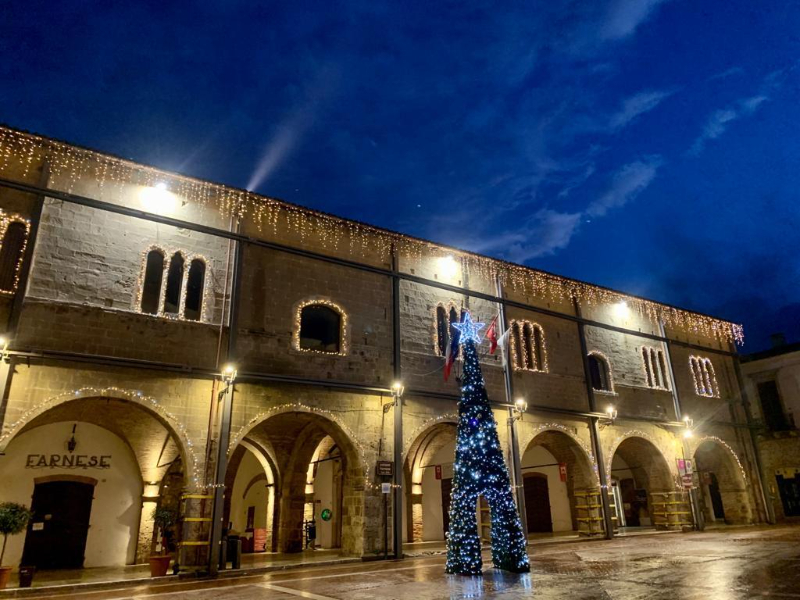
Also known as "Palazzo del Parlamento" (for the political meetings of the heads of the family) it dates back to the 14th century and was restored in the 16th and 19th centuries. In the back the "Well of the Farnese": courtyard with portico, well and external staircase for access to the upper floors. The loggia has small vaults with ogival crosses made of bricks; the others near the courtyard are round-headed. The palace, in Gothic style with Lombard and Umbrian-Marchigiani influences, represents the most ancient civic building of Abruzzo. In origin it was constituted from two plans and a tower of sighting; to pianterno great porticato with seven arcs to sixth acute that sorreggono the structure. The facade of the upper floor is embellished by two large windows flanked by pairs of three-mullioned windows with elegant columns. On a sandstone ashlar set in the facade is reported in Latin the date "1520", perhaps referring to the remaking of the building in the sixteenth century. On the third floor, added later and then demolished, was housed in 1845 the first theater in the region. In the XVIII century it was often ruined by frequent and disastrous earthquakes. During the French domination Palazzo Farnese, residence of the ancient lords of Campli, was transformed into barracks. Restored in 1888 after a long period of decay, it is now the seat of the Municipality.

🗺 AI Trip Planner 2026

Plan your visit to Campli

Suggested itinerary near Farnese Palace

MAJ+
500.000+ travelers worldwide
  1. 🌅
    Morning
    Farnese Palace
    📍 Campli
  2. ☀️
    Afternoon
    Holy Staircase of Campli
    📍 0.1 km · Campli
  3. 🌆
    Evening
    Campli and The museum of the ancient convent of San Francesco
    📍 0.1 km · Campli

Buy Unique Travel Experiences

Powered by Viator

See more on Viator.com

Explore nearby · Campli

Frequently Asked Questions

Farnese Palace, also known as Palazzo del Parlamento, dates back to the 14th century and is the most ancient civic building of Abruzzo. It was restored during the 16th and 19th centuries, with a Latin inscription on the facade marking 1520, likely referring to significant renovations during the Renaissance period.
The palace showcases Gothic style with Lombard and Umbrian-Marchigiani influences, featuring a ground floor with a grand portico of seven arches with acute vaults, elegant three-mullioned windows with columns on the upper floors, and the distinctive 'Well of the Farnese' courtyard with its own portico and external staircase. The loggia contains small vaults with both ogival brick crosses and round-headed arches throughout.
After being used as military barracks during French domination and housing the region's first theater on its third floor in 1845, the palace was restored in 1888 following a period of decay. Today, it serves as the seat of the Municipality of Campli and is open to the public as an important historical landmark.
During the 18th century, Farnese Palace suffered frequent and disastrous earthquakes that caused significant damage to the structure. This period of repeated seismic activity led to extensive deterioration that was only addressed centuries later with the major restoration effort in 1888.
The palace's back courtyard, known as the 'Well of the Farnese,' features a portico, a historic well, and an external staircase that provides access to the upper floors. This courtyard area showcases the architectural details of the building's construction with its varied vault styles and remains one of the palace's most distinctive features.
