



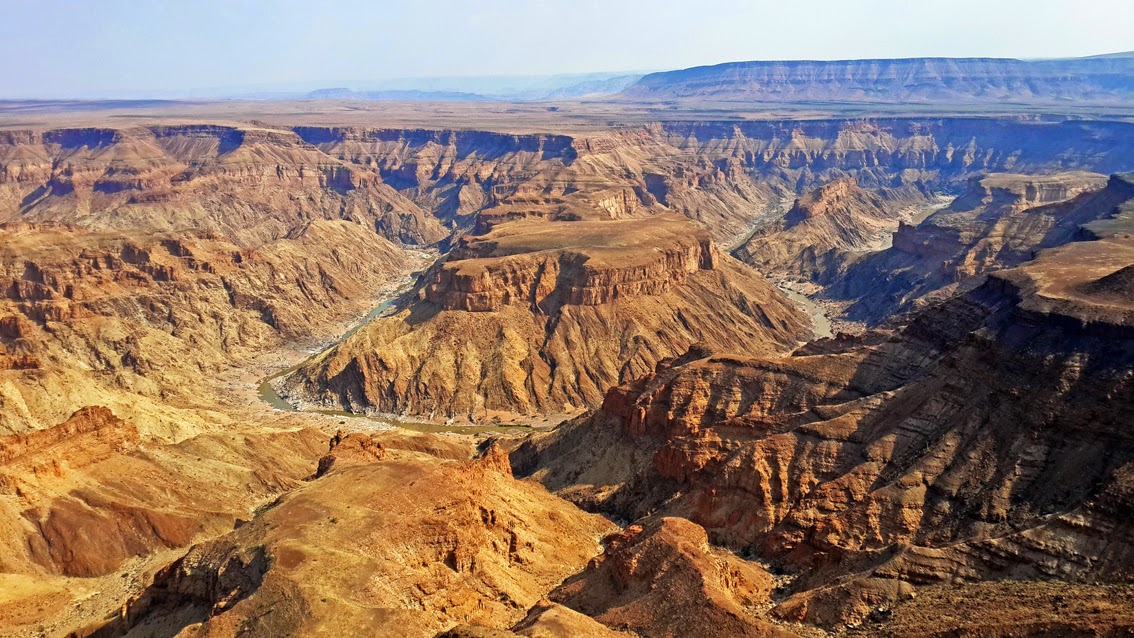
The Fish River Canyon in Namibia is an awe-inspiring testament to the forces of nature, a landscape that holds both stunning beauty and a rich tapestry of history. As the second largest canyon in the world, following the Grand Canyon, its striking features leave visitors speechless. This colossal rift, measuring 160 kilometers long, 27 kilometers wide, and plunging nearly 550 meters deep, was sculpted over 500 million years through water erosion and tectonic shifts. The sheer drop from the surrounding plateau creates a dramatic reveal, leaving the canyon hidden until visitors reach its edge.
History and Origins The origins of the Fish River Canyon are steeped in ancient geological history. Formed during the late Proterozoic era, the canyon's development is a tale of seismic shifts and relentless erosion. The area has been inhabited by the San people for thousands of years, who regarded the canyon as sacred. They left behind rock engravings and artifacts that provide insight into their lives and beliefs. In the 19th century, European explorers, including the German geographer Karl von Stein, began documenting the canyon, leading to its eventual recognition as a natural wonder.
Art and Architecture While the Fish River Canyon is primarily a natural landscape, its breathtaking vistas have inspired artistic expression. Local artisans create intricate beadwork and crafts that reflect the patterns and colors of the canyon. The San rock engravings are perhaps the most significant artistic legacy, depicting animals and human figures that exemplify the rich spiritual connection the indigenous people have with this land. Although there is no traditional architecture within the canyon itself, the surrounding areas showcase Namibian vernacular structures that harmonize with the desert landscape, built using local materials to withstand the harsh climate.
Local Culture and Traditions The culture surrounding the Fish River Canyon is vibrant and diverse. The ǃKung, a subgroup of the San people, continue to share stories and traditions passed down through generations. Their rituals, including the N/um ceremony—a healing dance that invokes spiritual energy—are integral to their identity. Festivals such as the Namibian Cultural Festival celebrate the country’s rich heritage, featuring traditional music, dance, and food that highlight the unique customs of various ethnic groups. Visitors may be fortunate enough to witness these cultural events, which serve as a reminder of the canyon's significance beyond its physical beauty.
Gastronomy The gastronomy of the Fish River Canyon region offers a taste of the local flavors influenced by its geography and cultures. Traditional dishes often include biltong (dried cured meat), a staple that travelers can find throughout Namibia. Potjiekos, a slow-cooked stew made with meat and vegetables, is popular among locals. For those with a sweet tooth, malva pudding, a caramelized sponge cake served with custard, is a must-try. The region also boasts a selection of local wines from nearby vineyards, offering a delightful pairing with traditional meals.
Lesser-Known Curiosities One of the more surprising aspects of the Fish River Canyon is its seasonal transformation. During the rainy season, the usually arid landscape bursts into color, with wildflowers carpeting the ground and the river flowing robustly. Additionally, the canyon is home to unique wildlife, including the elusive klipspringer and various bird species like the rock kestrel. Visitors often miss the opportunity to explore the Fish River, which offers a different perspective of the canyon from within its depths.
Practical Visitor Information The best time to visit the Fish River Canyon is during the Namibian winter months from May to September, when temperatures are cooler and the skies are clear. Be sure to pack plenty of water, sunscreen, and sturdy hiking shoes if you plan to explore the canyon’s trails. The Fish River Hiking Trail, stretching 85 kilometers, is a popular trek for adventurous souls, taking about five days to complete. Keep an eye out for lookout points like Hiker’s Point, which offers some of the most stunning panoramic views of the canyon.
In this natural wonder, the convergence of history, culture, and breathtaking scenery creates an unforgettable experience. For a seamless exploration of this magnificent landscape, consider using the Secret World app to craft a personalized itinerary tailored to your interests.
