


The silence comes first of all. Then, slowly, the color: a red that ignites like embers as the sun descends on the flat horizon of the Gobi Desert. The Flaming Cliffs, known in Mongolian as Bayanzag, are located in the Bulgan region, in southern Mongolia, and owe their English name to this extraordinary visual phenomenon — the red sandstone walls literally seem to be on fire during sunset hours.

This plateau of sedimentary rock is not only famous for its chromatic beauty. In 1922, the American explorer and naturalist Roy Chapman Andrews, leading an expedition from the American Museum of Natural History in New York, discovered here the first dinosaur eggs ever identified by science. That discovery forever changed paleontology and transformed the Gobi into one of the most important fossil sites on the planet. Even today, walking among the rock formations, it is not uncommon to come across fragments of bone or mineralized shell emerging from the sand.
A landscape that belongs to another time
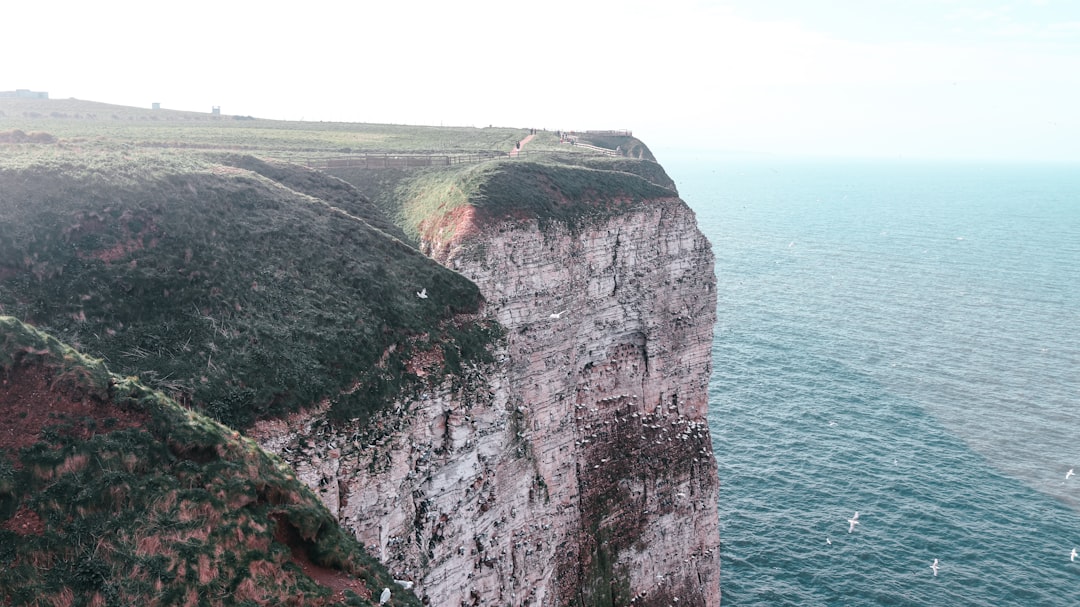
The Flaming Cliffs stretch for several kilometers along a plateau edge that drops down to a desert plain. The height of the rock walls reaches up to 30-40 meters in some places, and their surface is shaped by millennia of wind erosion into sinuous and irregular forms. The dominant color is a deep orange-red, produced by the oxidation of iron contained in the sandstone, which varies from dark brick to pale ochre depending on the time of day and the angle of light.
Surrounding it, the landscape is almost devoid of vegetation: a few saxaul bushes, shrubs adapted to extreme drought, and open stretches of gravel and sand. The absence of noise is total — no traffic, no artificial sounds. Only the wind, when it blows, and the crackling of sand against the rock. Those arriving from chaotic cities perceive this quiet as something physically tangible, almost oppressive in the first minutes, then progressively liberating.

The Night in the Gobi Desert
Staying at the Flaming Cliffs until nightfall is an experience that is worth the trip by itself. Light pollution is virtually absent in this part of Mongolia, and the night sky fills with stars at a density that is hard to imagine for those living in Europe or urban Asia. The Milky Way is visible to the naked eye for a good part of the year, and on moonless nights, the celestial dome becomes almost dazzling.
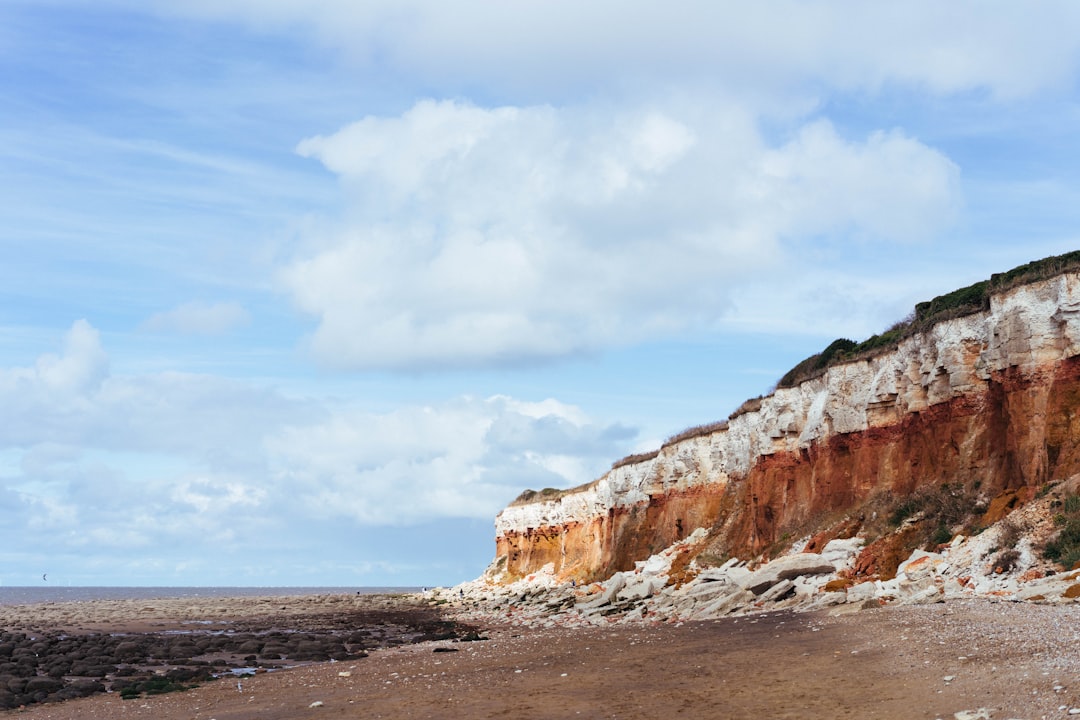
The tourist camps in the area — ger structures, the traditional Mongolian circular tents — offer overnight stays that allow you to experience both the sunset and the sunrise over the cliffs. The sunrise is less spectacular in terms of color compared to the sunset, but it provides a golden, slanting light that casts long shadows on the rock walls, revealing details of the surface that would otherwise be invisible.
Dinosaur and fossils: what can still be seen today
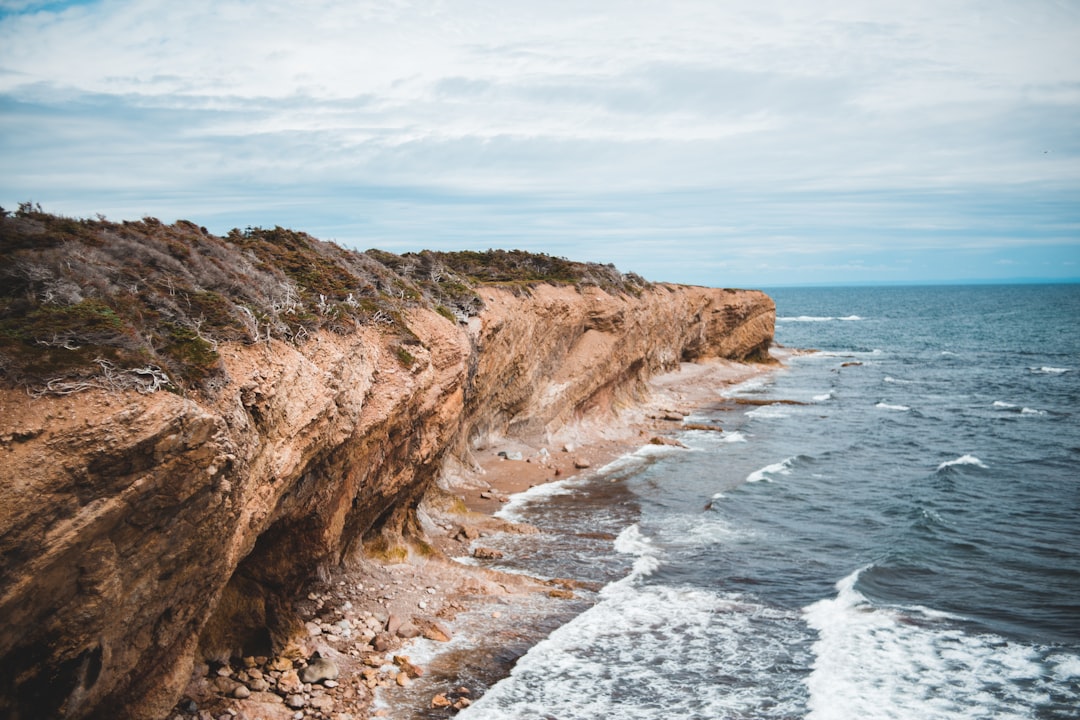
Roy Chapman Andrews' expedition uncovered, in addition to dinosaur eggs, remains of Protoceratops and Velociraptor, two species whose encounter — immortalized in a famous fossil of two specimens in combat — was discovered right in this area of the Gobi. Many of the original finds are preserved at the American Museum of Natural History in New York and at the Natural History Museum of Mongolia in Ulaanbaatar.
On the site, it is still possible to observe, without touching them, fossil fragments emerging from the rock. The surface of the cliffs and the surrounding ground continuously yield ancient material due to erosion. It is strictly forbidden to collect any finds: Mongolian authorities impose significant penalties and inspections, even in such a remote location, do exist. Limiting oneself to photographing is the right choice — and often sufficient.
How to get there and when to go
The Flaming Cliffs are typically reached from Dalanzadgad, the capital of the Ömnögovi province, located about 100 kilometers away. From Dalanzadgad, it is possible to rent a 4x4 with a local driver, which is almost mandatory due to the lack of paved roads in the final stretch. Organized tours from Ulaanbaatar often include Bayanzag as a stop on a broader itinerary in southern Gobi.
The best time to visit is May-June or September-October: in summer, the Gobi reaches temperatures above 40°C during the day, making any excursion tiring and potentially dangerous. In winter, temperatures drop well below zero. Always bring plenty of water, high-factor sunscreen, and layered clothing to cope with the temperature fluctuations between day and night, which in the Mongolian desert can exceed a 20°C difference even in spring.


