



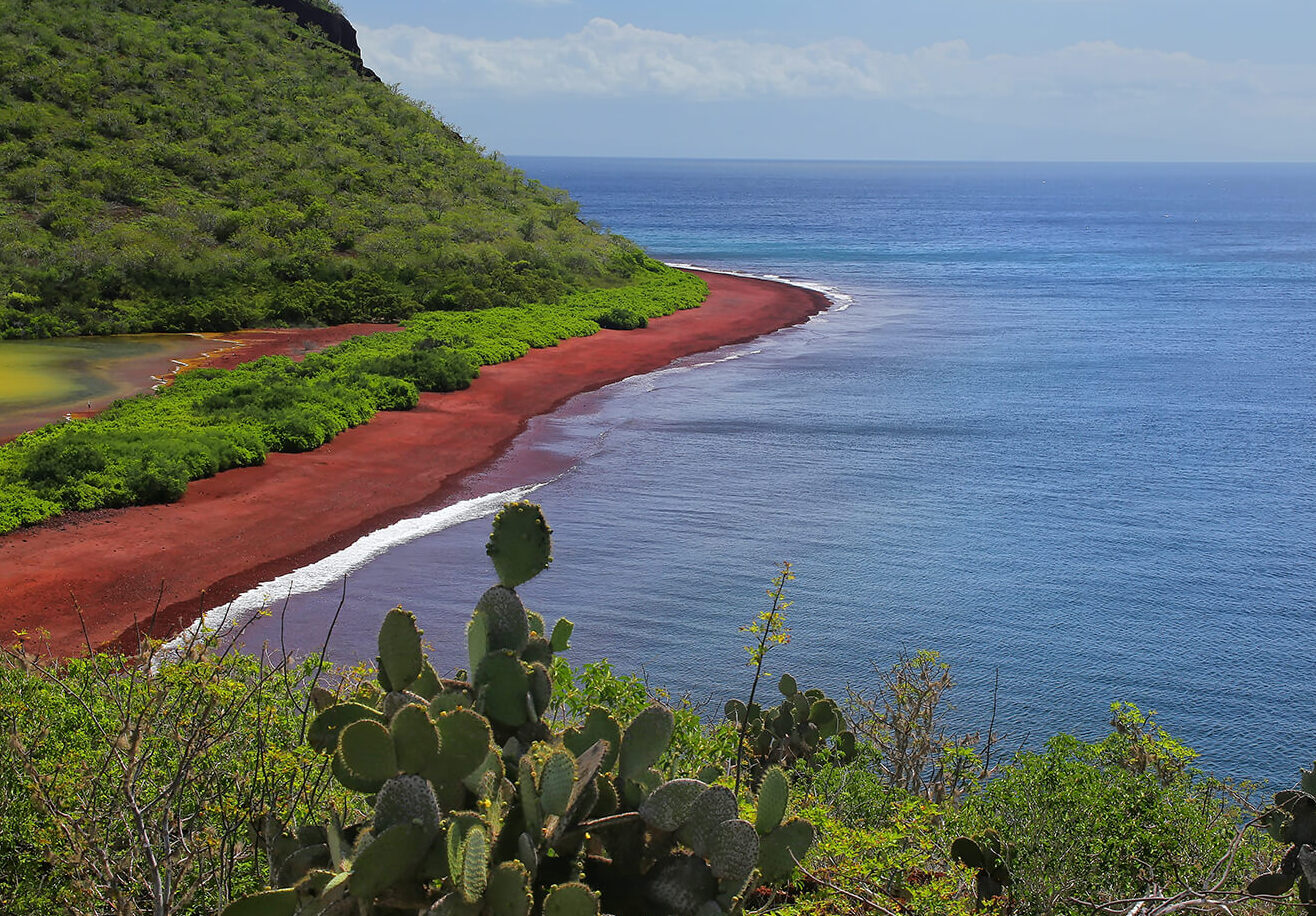
The Galapagos archipelago is a treasure trove of biodiversity. One of the most spectacular landscapes, with its primordial charm, is that of Rabida Island, where, in addition to sea lions and iguanas, there is a beautiful red beach of volcanic origin. Behind the island, there is a lagoon populated by flamingos, while a path leads into the forest, where you can spot endemic Galapagos birds.
### History and Origins The Galapagos Islands, located about 600 miles off the coast of Ecuador, were first discovered by Europeans in 1535 when the Spanish bishop Tomás de Berlanga stumbled upon them while en route to Peru. The archipelago was largely uninhabited until the 19th century, and it became a vital spot for whalers, pirates, and later, scientists. Charles Darwin famously visited the islands in 1835 aboard the HMS Beagle, which laid the groundwork for his theory of evolution.
Rabida Island is known for its distinct geological features, having been formed by underwater volcanic activity. The island's striking red beach is a result of high iron content in the volcanic rocks, providing a sharp contrast to the azure waters that lap the shore.
### Art and Architecture While Rabida Island itself is largely uninhabited and devoid of traditional architecture, the artistic significance of the Galapagos as a whole is profound. The islands have inspired countless artists, writers, and scientists. The works of Darwin remain a cornerstone of biological art, intertwining scientific observation with the beauty of nature. In more contemporary times, the islands have become a canvas for environmental artists who seek to highlight conservation through their work.
### Local Culture and Traditions The local culture in the Galapagos is deeply tied to the natural world. The Ecuadorian population inhabiting the islands celebrates various festivals, many of which highlight the rich biodiversity and cultural heritage. One notable event is the Fiesta de San Pedro, celebrated in late June, which honors the patron saint of fishermen. This festival features traditional music, dance, and an abundance of local seafood.
Visitors will also encounter unique customs such as local fishing practices and the crafting of artisan goods from natural materials. The culture here emphasizes sustainability and respect for the delicate ecosystems surrounding the islands.
### Gastronomy The gastronomy of the Galapagos is a delightful blend of Ecuadorian flavors and fresh seafood. Traditional dishes include ceviche, a refreshing dish made from freshly caught fish marinated in citrus juices, and casuela, a hearty soup featuring seafood and local vegetables. The islands also offer unique fruits like the naranjilla, which can be found in various local drinks.
Don’t miss trying paila marina, a seafood stew that showcases the diversity of marine life in the region. Local beers and pisco, a grape brandy, provide a refreshing accompaniment to any meal.
### Lesser-known Curiosities One fascinating aspect of Rabida Island is the fact that it is home to the only red sand beach in the Galapagos. The unique coloration creates an otherworldly atmosphere that captivates photographers and nature lovers alike. Additionally, the flamingos found in the lagoon are not the only surprise; the island's brackish water supports a variety of wildlife, including migratory birds and unique vegetation that thrives in its unique ecosystem.
Another hidden gem is the presence of endemic species such as the Galapagos mockingbird and Galapagos dove, which are not found anywhere else in the world. Their adaptations and behaviors provide insight into evolution and natural selection.
### Practical Visitor Information The best time to visit Rabida Island and the Galapagos is during the dry season, from June to December, when wildlife is particularly active. Travelers should consider joining guided tours to fully appreciate the ecological significance of the islands while adhering to conservation guidelines.
When exploring the island, be sure to pack plenty of water, sunscreen, and binoculars for bird watching. The red beach is not only a stunning sight but also a fantastic spot for photography.
For those wishing to explore further, the Secret World app can help plan a personalized itinerary that highlights the unique features of the Galapagos and its stunning landscapes.
