
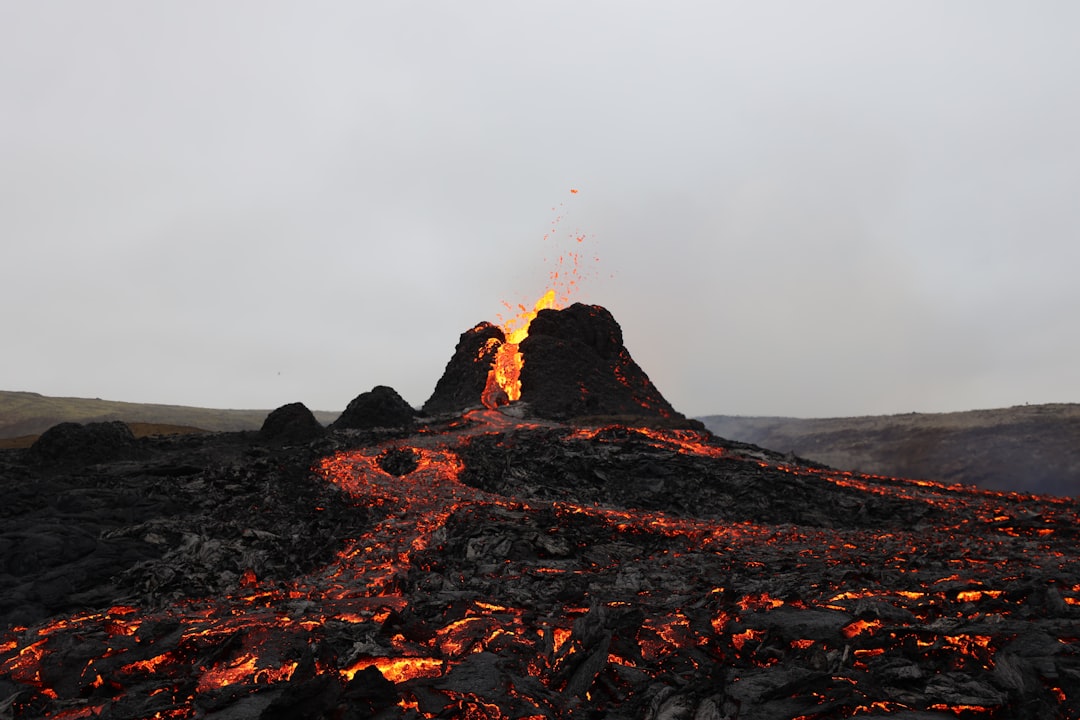

The soil beneath your feet is black and porous, a residue of eruptions that have shaped this portion of Catalonia over the last eleven million years. The Natural Park of the Volcanic Zone of Garrotxa, in the heart of the province of Girona, is home to over forty extinct volcanoes spread across about fifteen thousand hectares of land. These are not arid and barren cones: each crater is surrounded by forests of beech and oak trees, and the contrast between the dark basalt rock and the intense green of the vegetation creates landscapes that surprise even those who are already familiar with them.

The logistical center of the area is Olot, a city of about thirty-five thousand inhabitants that literally sits on volcanic deposits. From here, most of the marked trails begin, and the Resource Center of the Volcanic Zone — located in the Casal dels Volcans within the Parc de Can Jordà — offers detailed maps, informational panels, and updated indications on the status of the paths. It is the ideal starting point for getting oriented before venturing into the reserve.
A biodiversity built on lava

The paradox of Garrotxa is that its extraordinary fertility derives precisely from volcanic destruction. The basaltic soils, decomposing, release minerals that nourish an exceptionally rich vegetation. The beech forests that cover the volcanic cones — particularly those around the Volcà de Santa Margarida and the Volcà del Croscat — host a flora that includes ferns, mosses, and fungi in remarkable quantities, especially in autumn. The undergrowth is dense and shady, with filtered light that completely changes the atmosphere compared to the surrounding Mediterranean landscapes.
The fauna is equally interesting: the park is home to wild boars, foxes, and various species of nocturnal birds of prey. Along the waterways that cross the area, such as the Fluvià River in its upper parts, one can observe the kingfisher and, with patience, the European otter, whose presence has been documented in recent decades thanks to river ecosystem restoration programs. Amphibian species are particularly numerous, favored by the constant humidity and the pools of water that form in the crater depressions.

The volcanoes to see up close
The Croscat Volcano is the youngest volcano on the Iberian Peninsula: its last eruption dates back to about eleven thousand years ago. An active quarry until the 1990s has cut into the side of the cone, revealing the internal stratigraphy and making the layers of volcanic ash and lapilli visible to the naked eye. This cut, although caused by extraction activity, is now one of the most educationally interesting elements of the park: one can literally read the eruptions like pages of a geological book.
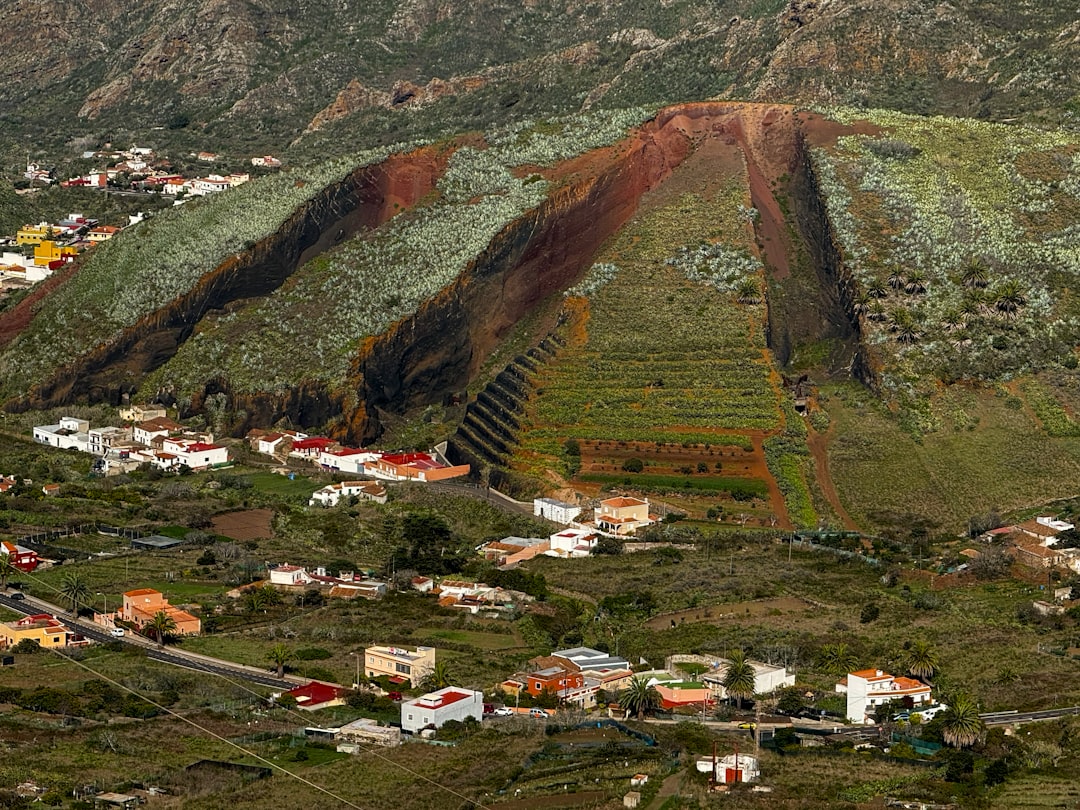
A few kilometers away, the Santa Margarida Volcano offers a different experience: inside the perfectly preserved crater, which has a diameter of about one kilometer, stands a small Romanesque chapel dedicated to the saint. The circular path that runs along the edge of the crater takes about an hour and a half of leisurely walking, with manageable elevation changes. The view from inside the crater — with the chapel in the center and the wooded walls all around — is one of those physical details that remain etched in memory.
The medieval villages in the middle of the forest

Garrotxa is not just nature: the villages that dot the volcanic area have remained almost unchanged for centuries. Santa Pau, about twenty kilometers from Olot, is a medieval village with a porticoed square from the 14th century that preserves its original layout. The houses made of dark basalt stone give the buildings a gloomy and severe color, very different from the coastal Catalan architecture. The weekly market of local beans — the fesols de Santa Pau, a protected designation of origin variety — is one of the most representative gastronomic products of the area.
Also Besalú, about twenty-five kilometers from Olot along the road to Girona, deserves a detour: its medieval bridge over the Fluvià River, with its defensive towers, is one of the best-preserved examples of Catalan Romanesque architecture. The contrast between the ancient stone and the green of the surrounding vegetation perfectly reflects the same balance found throughout the park.
Practical tips for visiting Garrotxa
The best time to visit the park is from April to June and from September to November: in summer, the heat can be intense and the most frequented trails become crowded, while in autumn the colors of the beech forests reach their peak. Wearing hiking shoes is essential: the trails on volcanic soil can be slippery after rain. Most of the main routes are accessible for free, but the visitor center requires a small contribution for informational materials.
Olot can be reached by bus from Girona in about an hour and a half, or by car via the C-66. There is no direct train station. For those arriving without a car, many trails start directly from the center of Olot on foot, making it possible to visit the main volcanoes even without renting a vehicle. Allow at least two full days to do justice to the area is the most honest advice one can give.


