
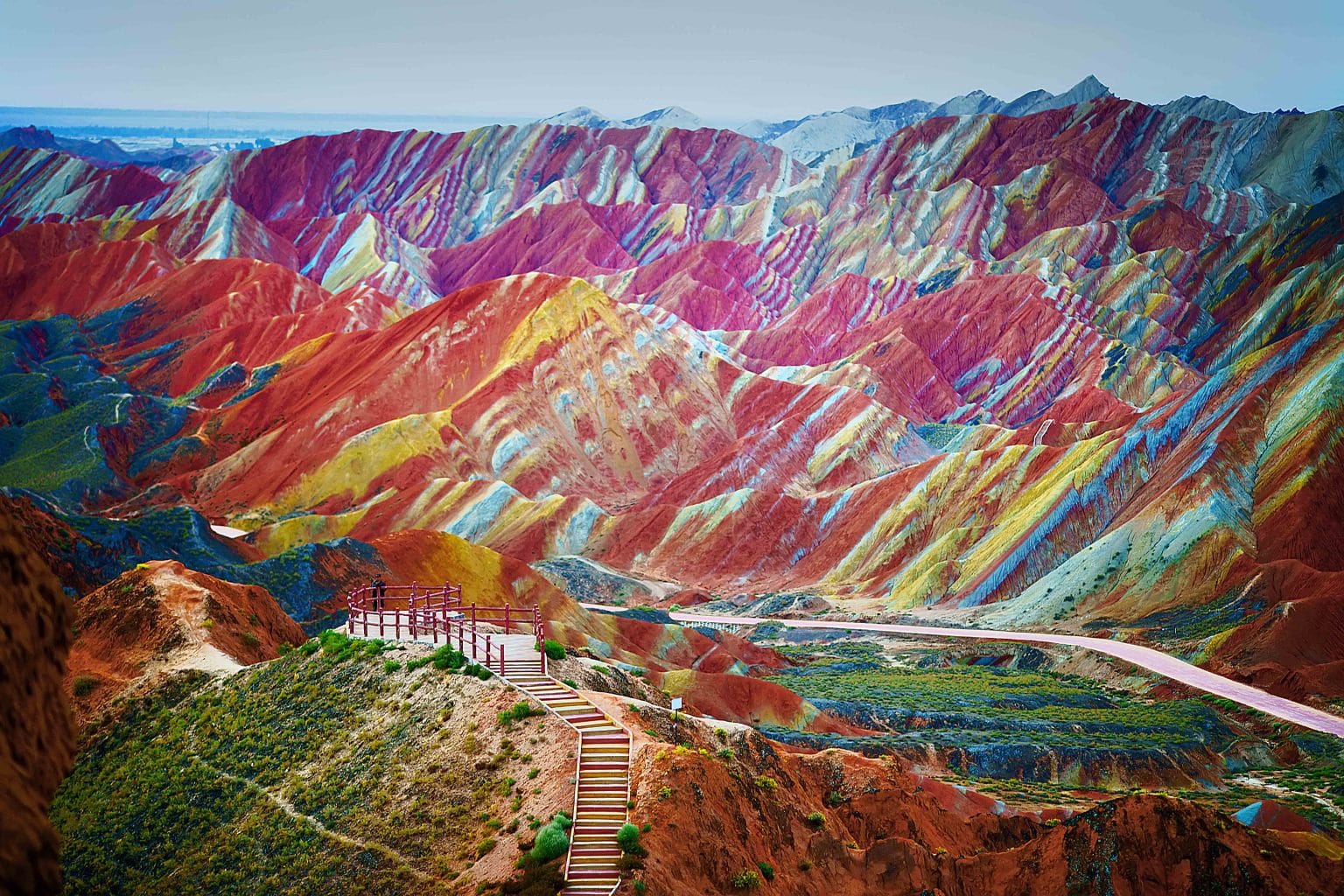

The Geopark Zhangye Danxia, located in the heart of Gansu Province, China, is a striking tapestry of colors that paints the barren landscape with vibrant hues. Often referred to as the "Rainbow Mountains," this geological wonder has become a captivating emblem of natural artistry and a testament to the power of erosion over millions of years.
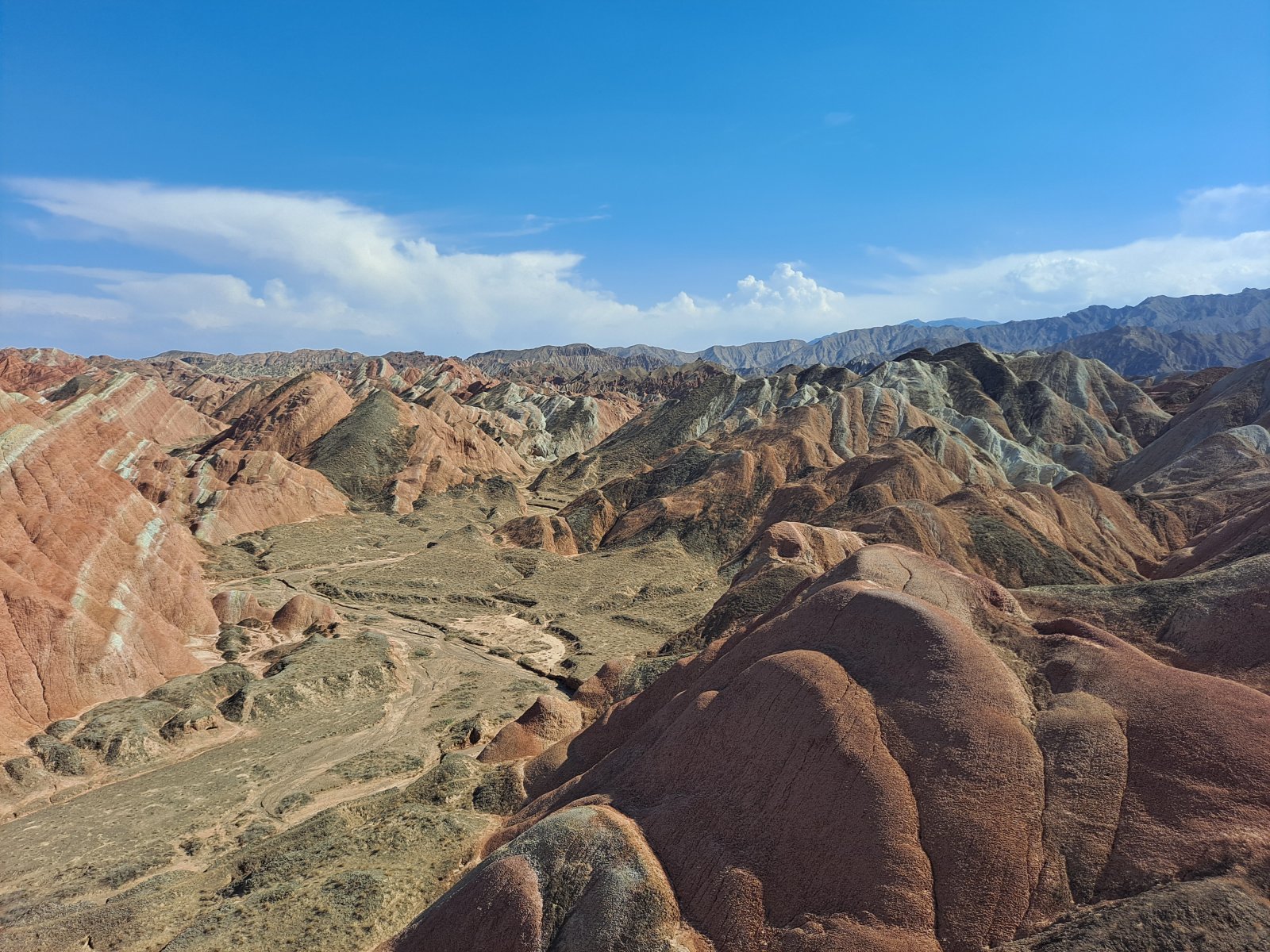
The formation of the Danxia landform began approximately 540 million years ago, during the Paleozoic era, when the area was submerged under a vast ocean. Over the eons, layers of sandstone and minerals were deposited, each contributing a different color to the geological palette. It wasn’t until the Himalayan uplift, around 40 to 50 million years ago, that these layers were thrust upwards and exposed to natural forces like wind and rain. The word "Danxia" itself, meaning "rosy cloud," is an homage to the vivid reds that dominate the landscape, a natural masterpiece that has been sculpted and painted by time.
While the Geopark is renowned for its natural beauty, it is also a place where art and nature converge seamlessly. The undulating mountains resemble the strokes of a master painter, with each ridge and valley enhancing the visual drama. Although the park lacks traditional architectural elements or man-made artworks, the landforms themselves are considered an artistic marvel, attracting photographers and artists from around the world who seek to capture its surreal beauty.
Local culture in Zhangye is deeply intertwined with these landscapes. The park is part of the broader cultural heritage of the Hexi Corridor, a key segment of the ancient Silk Road. This region served as a crossroad of cultures, where traders and travelers exchanged not only goods but also stories, traditions, and culinary influences. Today, this cultural melting pot is reflected in the diverse customs and festivals celebrated in the area, such as the Zhangye Danxia Culture and Tourism Festival, which highlights the region's unique geological and cultural heritage.
When it comes to gastronomy, Gansu Province offers a tapestry of flavors that echo its historical role as a Silk Road nexus. Local specialties include Zhangye noodles, hand-pulled and served with rich, savory broths, and Niang Pi, a cold noodle dish with a tangy sauce, perfect for the summer months. Travelers can also indulge in local lamb dishes, seasoned with cumin and chili, reflecting the region's historical connections with Central Asia.
Beyond its stunning vistas, Geopark Zhangye Danxia holds lesser-known curiosities that enrich the visitor experience. For instance, the park's colors are most vibrant after a rainfall, when the minerals glisten under the sun, making for an unforgettable sight. Few realize that the park is also home to several endemic plant species, which have adapted to the arid conditions and contribute to the biodiversity of the region. Another intriguing aspect is the local belief that the unique shapes of the rocks hold spiritual significance, echoing myths and legends that have been passed down through generations.
For those planning a visit, the best time to explore Zhangye Danxia is between June and September, when the temperatures are mild, and the colors are at their most vivid. Early morning or late afternoon visits are recommended to catch the play of light across the mountains, enhancing their multi-hued brilliance. To avoid the most crowded viewing platforms, consider visiting the less frequented areas of the park, such as the Binggou Danxia Scenic Area, known for its unique rock formations.
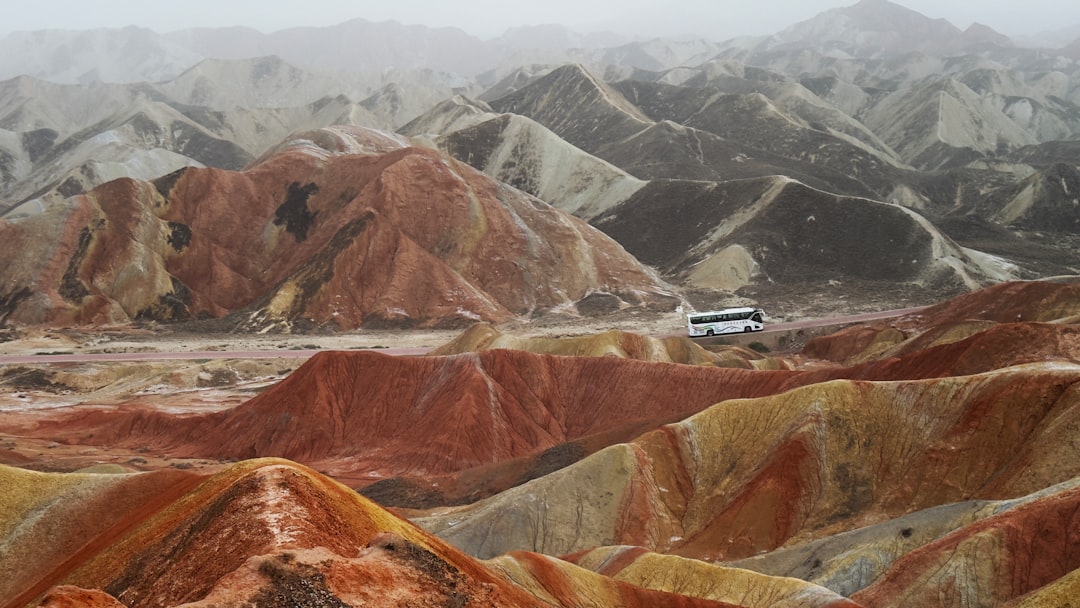
Visitors should prepare for a fair amount of walking, as the best views are often away from the main paths. Wearing comfortable shoes and bringing plenty of water is advisable, as well as a good camera to capture the breathtaking views. While the park is easily accessible from the city of Zhangye, about 30 kilometers away, hiring a local guide can provide deeper insights into the park's geology and cultural significance, enriching the experience beyond the visual spectacle.
In summary, the Geopark Zhangye Danxia is not only a feast for the eyes but a place where history, culture, and nature converge to offer a profound and enriching travel experience. Whether you're drawn by its geological wonders, cultural richness, or culinary delights, a visit to this captivating landscape promises memories that are as vivid and enduring as the colors of the mountains themselves.


