



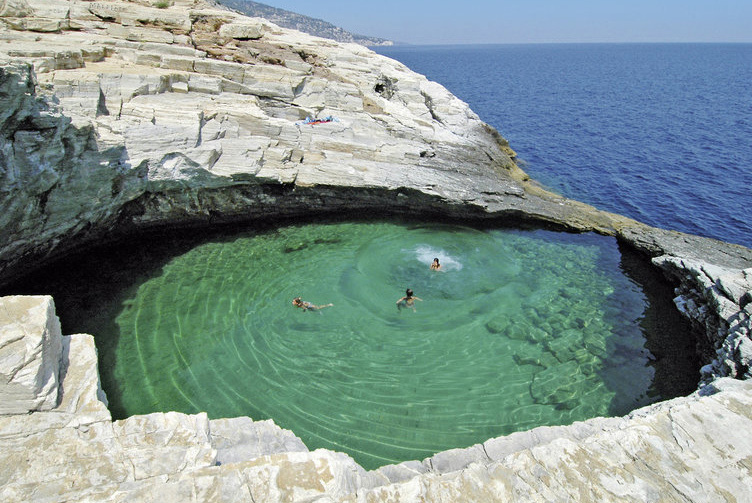
Nestled amid the rugged coastline of Thasos, a Greek island in the northern Aegean Sea, lies a natural marvel that has captivated visitors for centuries—Giola, a stunning natural rocky pool. This hidden gem, often referred to as the "Tear of Aphrodite," offers a unique blend of natural beauty, rich history, and cultural depth, making it a must-visit for those seeking a slice of paradise with a story.
The origins of Giola are steeped in mythology and ancient history. According to local legend, the pool was carved by Zeus himself to serve as a swimming hole for Aphrodite, the goddess of love and beauty. This mythological link gives Giola an ethereal charm, painting it as a divine creation rather than a simple natural phenomenon. Historically, the island of Thasos has been inhabited since the Neolithic era, with a rich tapestry of civilizations, including the Phoenicians and the Greeks, leaving their mark. The nearby region of Aliki boasts ancient marble quarries and archaeological sites that speak to the island's past prosperity and strategic importance in the Aegean.
Architecturally, Giola is a natural masterpiece. The pool, carved into the rocks by the relentless waves of the Aegean, is surrounded by cliffs that reach up to 8 meters high, offering daring visitors a chance to plunge into its crystalline waters. Unlike man-made structures, Giola’s architecture is organic and dynamic, changing with the tides and the seasons. The nearby landscape is dotted with remnants of ancient marble structures, a testament to the island's historical significance and its role as a major center of marble extraction and sculpture in antiquity.
The cultural fabric of Thasos is woven with vibrant traditions and age-old customs. The island hosts numerous festivals throughout the year, celebrating everything from religious events to the harvest. One of the most significant is the Festival of Theophania in January, where locals gather to bless the waters, a practice that echoes the island's deep connection to the sea. Traditional music and dance play an integral role in these celebrations, with the sounds of the bouzouki often heard in the island's tavernas, adding to the festive atmosphere.
Gastronomy on Thasos is a delightful journey through the island's culinary heritage. The local cuisine is heavily influenced by its coastal location, with seafood featuring prominently. Visitors can savor dishes such as grilled octopus and saganaki shrimp, often prepared with a dash of the island's renowned olive oil. Thasos is also famous for its honey, a sweet, golden nectar that is often used in desserts or drizzled over yogurt for a simple yet delicious treat. Don’t miss tasting the local wine, particularly the Assyrtiko variety, which pairs beautifully with the island's fresh offerings.
Beyond the well-trodden paths, Giola holds several lesser-known curiosities. While many tourists flock to its waters for a refreshing dip, few realize that the hike to Giola is a journey through history itself. The path is dotted with wild herbs and ancient olive trees, some of which are believed to be centuries old. The area also offers a haven for birdwatchers, with migratory and resident species frequenting the cliffs. For the adventurous, exploring the nearby coves and hidden beaches reveals a side of Thasos that remains untouched by time.
For those planning a visit, the best time to experience Giola is from late spring to early autumn, when the weather is warm, and the sea is at its most inviting. The journey to Giola requires a bit of effort, as the path is rocky and unpaved, but the reward is more than worth it. Sturdy footwear is recommended, and visitors should bring water and sun protection, as the area offers little shade. Early morning visits are ideal to avoid crowds and witness the serene beauty of the pool in solitude.
As you stand on the edge of Giola, gazing into its azure depths, it’s easy to believe in the myths that surround this enchanting place. Whether you’re diving from the cliffs, exploring the island’s cultural heritage, or savoring its culinary delights, Giola is more than just a destination—it’s an experience that lingers long after the journey ends.
