
← Back

Golubac Fortress

Golubac 12223, Serbia ★★★★☆ 537 views
Milra Nada
Golubac
🏆 AI Trip Planner 2026

Get the free app

Discover the best of Golubac with Secret World — the AI trip planner with 1M+ destinations. Get personalized itineraries, hidden gems and local tips. Free on iOS & Android.

🧠 AI Itineraries 🎒 Trip Toolkit 🎮 KnowWhere Game 🎧 Audio Guides 📹 Videos
Scan to download iOS / Android
Scan for AppGallery Huawei users

About Golubac Fortress

Golubac Fortress - Golubac | Secret World Trip Planner

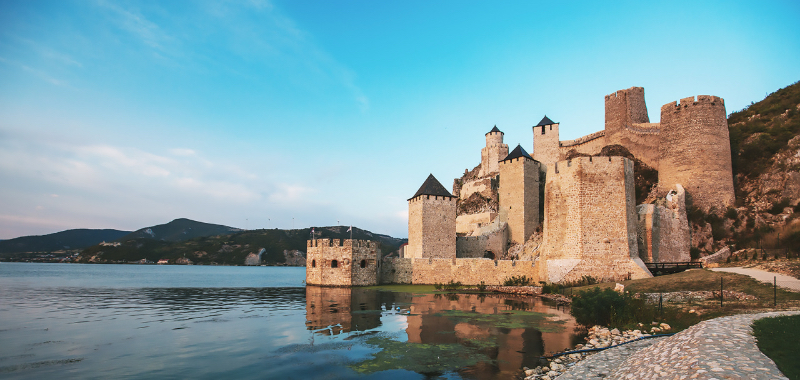
On the right bank of the Danube, on a rugged rock overlooking the waters of the majestic river, stands Golubac Fortress, a 14th-century medieval fortification. Located at the center of powerful medieval states, Golubac Fortress served an important defensive function. Over the centuries it was ruled by Serbs, Hungarians, and Turks, who remained within its ramparts for the longest time. For centuries the Danube was the dividing line between the Ottoman and Hungarian empires first, and between Turkish and Habsburg later. Muslims on one side, Christians on the other. Today, 588 kilometers of its 2850 still run through it into Serbia, and there are no less than five (six, if you also count Bač, a bit further away) massive fortresses on it. Among them one still "watches over" a border, that with Romania, near the point where the river becomes so wide that it looks like a sea. At the height of the town of Golubac in fact as many as 7km divide the Serbian bank from the Romanian one, narrowing then rather abruptly to the south under the watchful gaze of the fortress of the same name (Tvrđava Golubački grad), an obligatory point of passage to access the Iron Gates, or Djerdap canyon. The fortress walls are adapted to the extreme configuration of the terrain and drop steeply from top to bottom. At the top of the ridge is a keep, called a "hat tower" because of its unusual shape. Two rows of stone walls descending from the keep connect eight square towers that served for defense and guarding. The view from the Golubac fortress stretches for miles, making it an ideal place for a romantic dip in the colors of the sunset reflected in the Danube.

🗺 AI Trip Planner 2026

Plan your visit to Golubac

Suggested itinerary near Golubac Fortress

MAJ+
500.000+ travelers worldwide
  1. 🌅
    Morning
    Golubac Fortress
    📍 Golubac
  2. ☀️
    Afternoon
    Golubac Fortress is one of the best preserved medieval fortresses in Europe
    📍 0 km · Golubac

Buy Unique Travel Experiences

Powered by Viator

See more on Viator.com

Explore nearby · Golubac

Frequently Asked Questions

Golubac Fortress served as a crucial defensive stronghold located at the center of powerful medieval states, and for centuries it marked the dividing line between the Ottoman and Hungarian empires, later between Turkish and Habsburg territories. The fortress was ruled by Serbs, Hungarians, and Turks over the centuries, with the Turks remaining within its ramparts for the longest time.
The fortress features walls adapted to the extreme terrain that drop steeply from top to bottom, with a distinctive keep at the top called a 'hat tower' due to its unusual shape. Two rows of stone walls descend from the keep and connect eight square defensive towers that were used for guarding and protection.
Golubac Fortress stands on the right bank of the Danube on a rugged rock overlooking the river, positioned at the Iron Gates (Djerdap canyon) where it narrows dramatically. At this location, the fortress sits as an obligatory passage point, and the river widens to approximately 7km between the Serbian and Romanian banks in the town's height.
The fortress offers spectacular views that stretch for miles across the Danube, making sunset the ideal time to visit when the colors reflect beautifully in the majestic river waters. This romantic setting and expansive panoramic views make it a perfect destination for photographers and nature lovers.
There are at least five massive fortresses on the 588-kilometer Serbian stretch of the Danube (six if you count Bač further away), with Golubac being one of the most significant. These fortifications served as important defensive positions when the Danube marked the border between different empires.
