
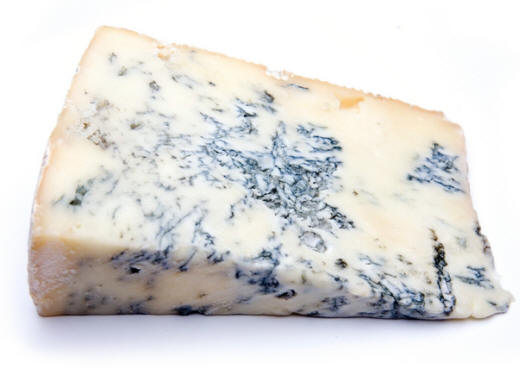

Gorgonzola is a very ancient cheese; some say that it was first made, in the town of the same name on the outskirts of Milan, in the year of grace 879. According to others, the birth took place in Pasturo in Valsassina, a major dairy center for centuries, thanks to the presence of those excellent natural caves whose average temperature is constant between 6°C and 12°C and therefore allows for the perfect success of gorgonzola, as well as various other cheeses.
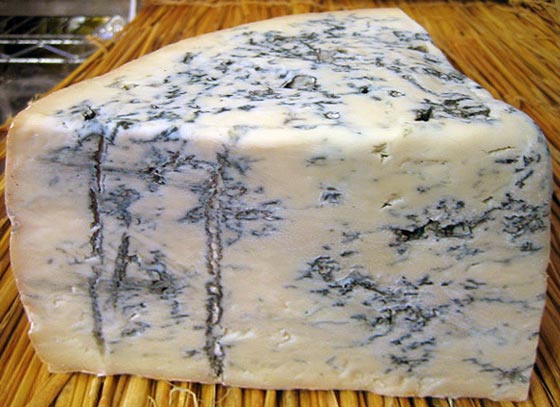
The town of Gorgonzola, in any case, remains the center of greatest fame, if not of greatest production or trade for several centuries; in fact, the first real name for gorgonzola was that of "stracchino di Gorgonzola," better defined later by its synonym "green stracchino." In this context, there is no doubt that its production took place with the autumn milking of the transhumance returning from the pastures or mountain pastures.
The spread of gorgonzola, though slow when compared to the successes of other cheeses, was nonetheless constant at least as far as the area between Lombardy and Piedmont was concerned: both the Pavese and Novarese areas joined Milan and Comasco in the production of gorgonzola in a massive way.
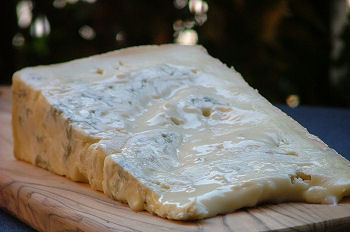
This foreshadowed what the decrees of 1955 and 1977 would delimit as the area of production and aging of this cheese, which by then had risen to protected designation of origin status.
From the early 1900s onward, gorgonzola savored its growing successes especially abroad, setting a record in exports with more than 100,000 quintals of cheese per year destined for England, France and Germany; while the former country prefers white gorgonzola with a mild and slightly piquant flavor, the French and Germans expressly demand that with a veined paste and marked taste, the so-called "two-paste" gorgonzola.
In the immediate postwar period, a new technique was developed, namely the processing of "one-paste" gorgonzola. Gradually it replaced the previous production, which was very empirical, considerably more expensive, hygienically and qualitatively inconstant. The dairies and the many dairies scattered throughout the Po Valley collect milk from all the farmsteads and produce the cheese, which is then transported to the large aging centers. In the 1970s the more than 100 dairies necessarily have to modernize their production facilities, and several small producers, unable to meet the expenses, have to leave. Thus, there remain to this day about 30 well-structured companies that, in addition to processing the milk, process the gorgonzola cheese in their modern facilities; they are divided into large and medium-sized complexes.
Production in recent years confirms the shift in the production axis. Among the three largest producing provinces, Novara collects more than 45 percent, Pavia 22 percent and Milan 15 percent. The rest is divided among the other provinces in the typical production and maturing area indicated by the denomination protection laws.
What it looks like
Gorgonzola is an uncooked, straw-white cheese, whose green streaks are due to the process of marbling, that is, the formation of mold.
It is therefore creamy and soft with a distinctive and distinctive flavor, slightly piquant the mild type, stronger and stronger flavor the piquant type whose paste is more blue-veined, firm and crumbly.
To enjoy the creaminess of sweet gorgonzola to the fullest, it is best to remove it from the refrigerator at least half an hour before eating it.
Both are made from pasteurized milk from cowsheds located in the area of origin with added milk enzymes and selected molds that impart the characteristic veins.
It is aged for at least 50 days for the mild type and more than 80 days for the piquant type.
Production areas
Only two Italian regions, by law and tradition, provide for the production of gorgonzola cheese and only these provinces: Novara, Vercelli, Cuneo, Biella, Verbano Cusio Ossola and the Casale Monferrato area for Piedmont and Bergamo, Brescia, Como, Cremona, Lecco, Lodi, Milan, Monza, Pavia and Varese for Lombardy.
Only milk from the farms in these provinces can be used to produce and thus give the protected designation of origin (P.D.O.) to gorgonzola cheese, guaranteeing already from the raw material, such an important cheese.
Today, gorgonzola is produced by about 30 dairies in modern facilities that process milk in compliance with hygiene and health regulations, with well-equipped laboratories and the care and experience needed for a cheese that requires considerable manual intervention and control.
There are about 3,000 farms located in the consortium territory, which supply milk for production. Current total annual production exceeds 4 million wheels, with a total of 480,000 quintals of product; consumer turnover is more than 500 million euros.


