



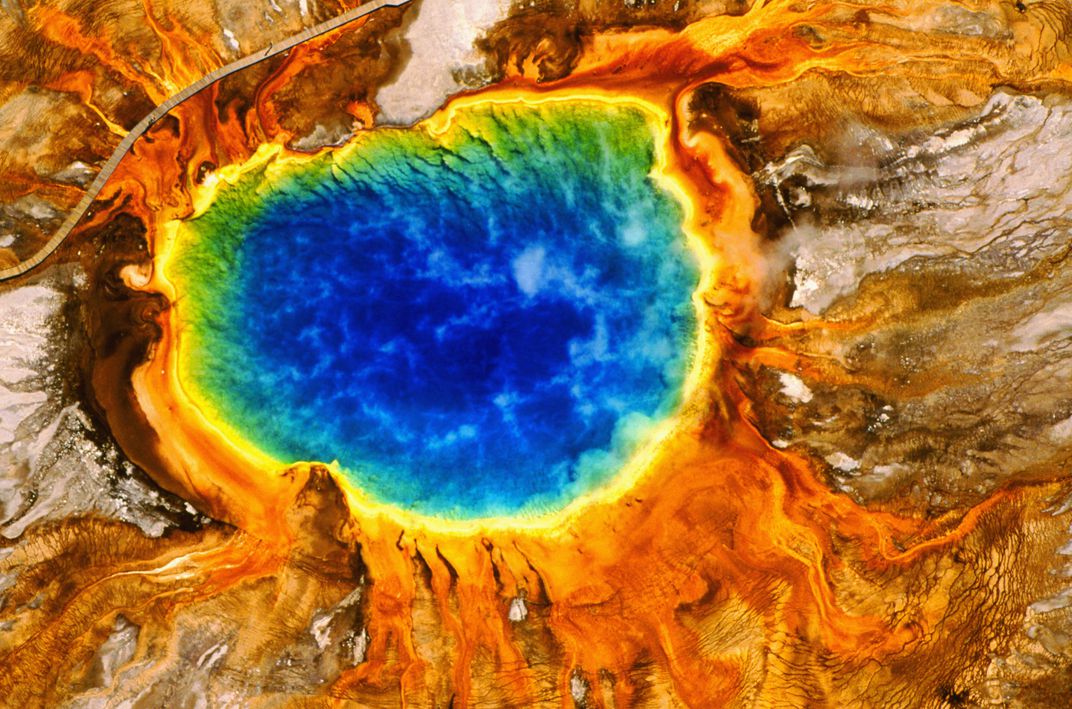
The Grand Prismatic Hot Spring is a mesmerizing natural wonder located in Yellowstone National Park, USA. Spanning over 370 feet in diameter, it is renowned as the largest hot spring in the United States and the third largest in the world. Its vibrant colors are often likened to a painter’s palette, featuring a stunning array of blues, greens, yellows, and reds that seem almost otherworldly. But the beauty of this thermal feature is deeply rooted in science and history, making it a fascinating subject for exploration.

### History and Origins The story of Yellowstone National Park begins long before it was established as the first national park in the world in 1872. Indigenous peoples, such as the Shoshone and Crow, inhabited the region for thousands of years, holding the area sacred and rich in spiritual significance. European explorers first documented the hot springs in the early 1800s, with John Colter, a member of the Lewis and Clark Expedition, being among the first to describe the geothermal wonders in 1807. His vivid accounts laid the groundwork for subsequent explorations that captured the public's imagination.
### Art and Architecture While Grand Prismatic Hot Spring itself is a natural masterpiece, the surrounding infrastructure reflects an architectural commitment to conservation and education. The boardwalks and viewing platforms were designed to minimize human impact while allowing visitors to experience the spring's beauty up close. The structures are crafted from sustainable materials, emphasizing harmony with the environment. Though there are no traditional artworks here, the spring itself is a living canvas, constantly changing with the seasons and the microbial life that flourishes in its warm waters.

### Local Culture and Traditions The culture surrounding Yellowstone is as dynamic as the geothermal features it harbors. Local customs often celebrate the natural world, with festivals like the Yellowstone Winter Festival highlighting the region's stunning winter landscapes. The park's significance extends beyond tourism; it serves as a site for scientific study and environmental awareness initiatives. Many local communities engage in traditional practices such as storytelling, where legends about the land and its features are passed down through generations, enriching the cultural tapestry of the area.
### Gastronomy While there are no specific local dishes directly tied to Grand Prismatic Hot Spring, the broader region is known for its hearty fare. Visitors can enjoy classic American cuisine in nearby towns like West Yellowstone and Gardiner. Dishes often feature locally sourced ingredients, such as bison burgers, trout, and huckleberry pie, a beloved dessert made from wild berries that flourish in the area. Dining here offers a delightful way to experience the local culture and flavors, complementing a day spent exploring the park’s wonders.
### Lesser-Known Curiosities One of the spring's most surprising aspects is its ever-changing colors. The vibrant hues arise from pigmented bacteria and archaea that thrive in the different temperature zones around the spring. As summer sets in and temperatures rise, the colors shift from deep blue to brilliant orange and red. Interestingly, the center of the spring reaches temperatures of about 200°F (93°C), making it inhospitable for most life forms. This sterile environment contrasts sharply with the colorful microbial mats that flourish in the cooler edges, creating a stunning visual dichotomy.
Another fascinating fact is that the spring was named in 1871 during the Ferdinand V. Hayden Geological Survey. The name “Grand Prismatic” is a nod to its size and the prism-like colors that appear as the light refracts through the mineral-laden waters.
### Practical Visitor Information To fully appreciate the beauty of Grand Prismatic Hot Spring, the best time to visit is during the late spring to early fall (May to September). This period offers the most favorable weather conditions and access to the park’s amenities. Arriving early in the morning or later in the afternoon can help avoid the crowds and provide stunning lighting for photographs.
Visitors should wear sturdy footwear for walking along the boardwalks, and be sure to carry water and snacks, as amenities within the park can be limited. Don’t miss the opportunity to explore the Fairy Falls Trail, which leads to a breathtaking overlook of the spring, offering a unique perspective on its vastness.
In conclusion, the Grand Prismatic Hot Spring is not just a remarkable natural wonder but a vibrant tapestry of history, culture, and science. For an unforgettable experience, consider using the Secret World app to tailor your personalized itinerary, ensuring you capture the essence of this spectacular destination.
