



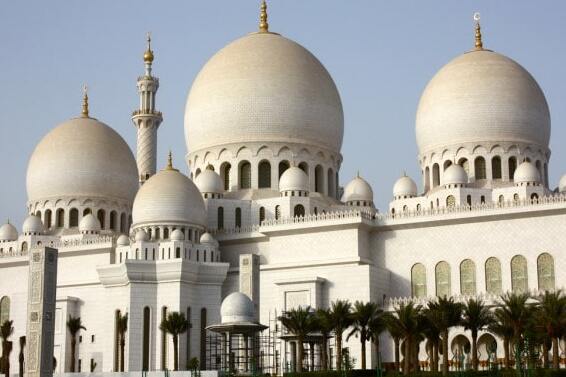
Standing majestically in the heart of Abu Dhabi, the Sheikh Zayed Grand Mosque, known in Italian as the Grande Moschea, is a breathtaking testament to the architectural and cultural ambitions of the United Arab Emirates. With its shimmering white domes and minarets piercing the sky, this mosque is not just a place of worship but a beacon of cultural harmony and a masterpiece of modern Islamic architecture.
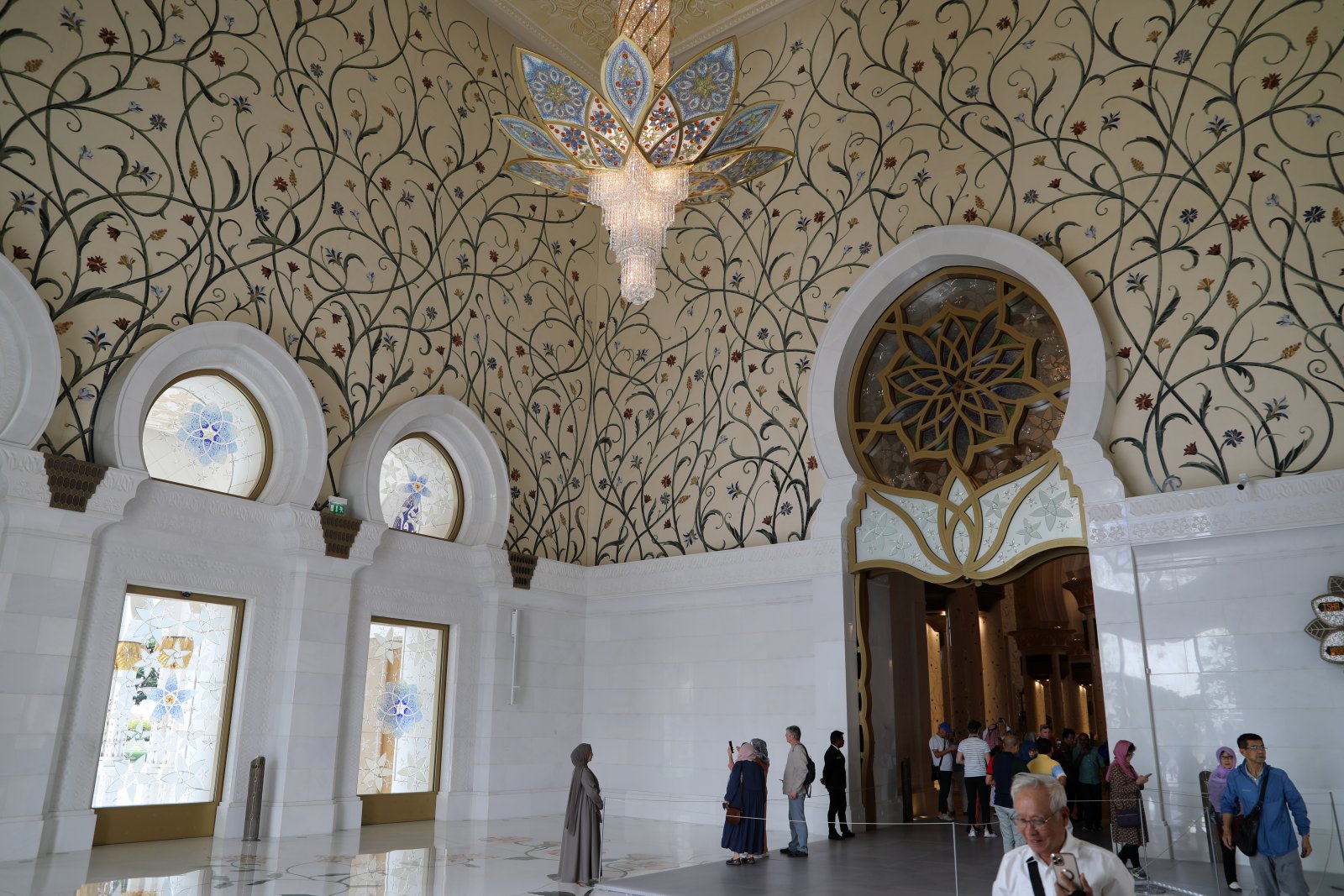
The history of the Grande Moschea is rooted in the vision of Sheikh Zayed bin Sultan Al Nahyan, the founding father of the UAE. His dream was to create a structure that would unite the cultural diversity of the Islamic world and the historical and modern values of architecture and art. Construction began in 1996 and involved artisans and materials from countries such as Italy, Germany, Morocco, India, Turkey, Iran, China, the United Kingdom, New Zealand, and Greece. The mosque was completed in 2007, a year after Sheikh Zayed's death, and stands as a monumental tribute to his legacy.
The architectural style of the Grande Moschea is a fusion of Mughal, Moorish, and Persian design elements, resulting in an awe-inspiring structure that exudes grandeur and serenity. The mosque houses 82 domes, the largest of which sits above the main prayer hall, and is adorned with pure white marble cladding. The prayer hall itself is a marvel, featuring the world's largest hand-knotted carpet, which took over two years to complete and involved artisans from the renowned carpet-making city of Mashhad in Iran. The mosque's seven crystal chandeliers, crafted by Swarovski, add a touch of opulence, shimmering with millions of Swarovski crystals.
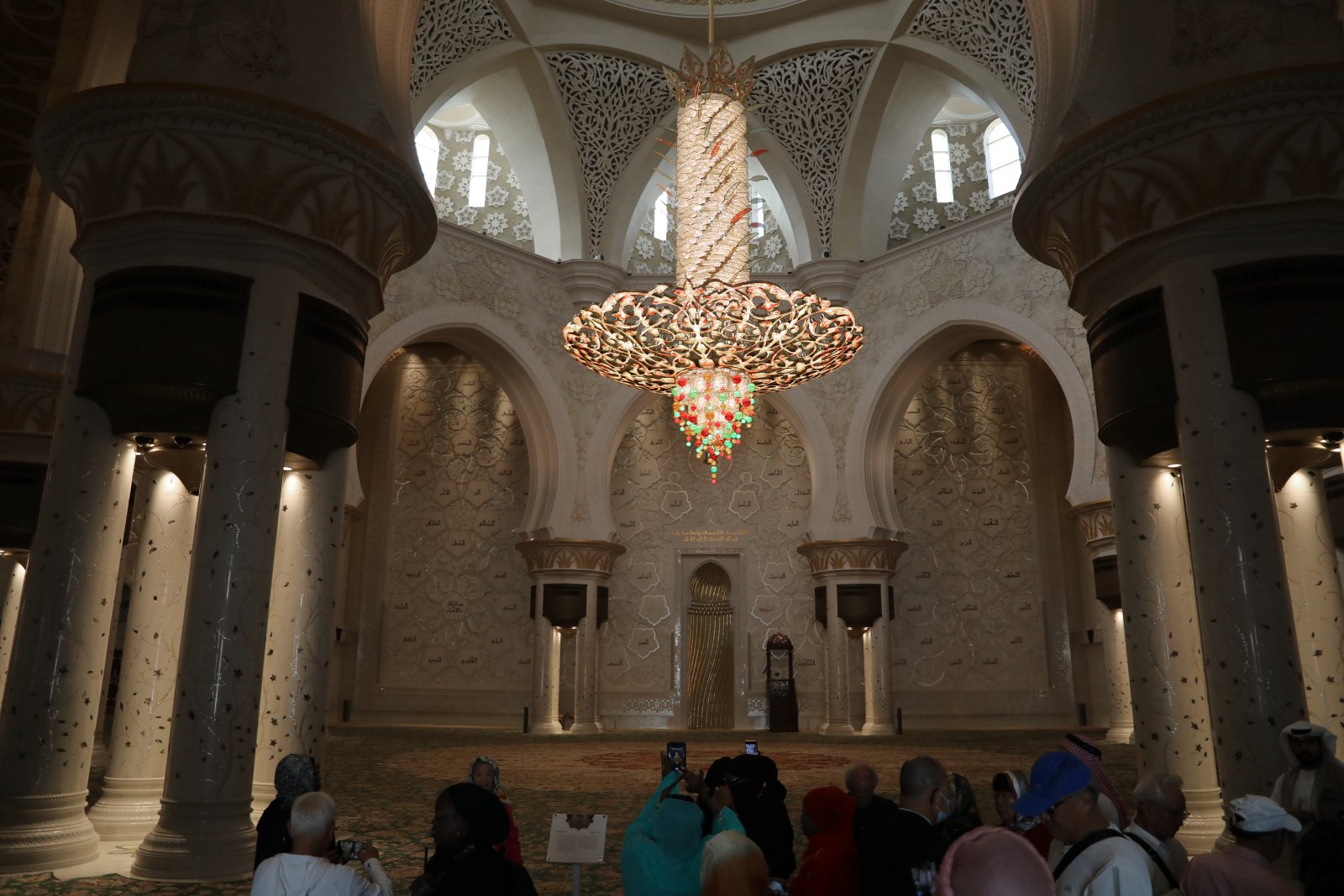
Local culture and traditions find a vivid expression within the Grande Moschea. It serves as a vibrant center for Islamic culture and education, hosting cultural events and Islamic festivals such as Eid al-Fitr and Eid al-Adha. Visitors often witness traditional Emirati customs, including the warm gesture of offering dates and Arabic coffee, known locally as gahwa, a symbol of hospitality deeply ingrained in Emirati culture.
While the mosque does not directly offer gastronomic experiences, the nearby city of Abu Dhabi is a culinary hub where one can savor typical Emirati dishes. A visit to the mosque can be complemented by exploring local favorites such as machboos, a spiced rice dish with meat or fish, and luqaimat, sweet dumplings drizzled with date syrup. These dishes, rich in flavor and history, provide a taste of the region's culinary heritage.
A lesser-known curiosity about the Grande Moschea is its meticulous alignment with the Holy Kaaba in Mecca, ensuring that all prayers are directed towards Islam's most sacred site. The mosque’s reflective pools, which create a mirror-like image of the structure, are a photographer’s delight, particularly at dusk when the lighting creates an ethereal glow. Additionally, the mosque's unique lighting system, designed to reflect the phases of the moon, bathes the exterior in a soft, bluish hue that changes with the lunar cycle.
For visitors, the best time to explore the Grande Moschea is during the cooler months from November to March. It's advisable to visit early in the morning or late in the afternoon to avoid the midday heat and crowds. Modest dress is a must, and women are provided with abayas at the entrance to adhere to the dress code. A guided tour, often conducted by knowledgeable and friendly staff, offers an enriching experience with insights into the mosque's architectural and cultural significance.
In conclusion, the Sheikh Zayed Grand Mosque in Abu Dhabi is more than just an architectural masterpiece; it is a symbol of cultural dialogue and religious tolerance. Whether you are drawn by its stunning beauty, its rich cultural tapestry, or its spiritual significance, a visit to the Grande Moschea is an unforgettable journey into the heart of the UAE's cultural heritage.
