
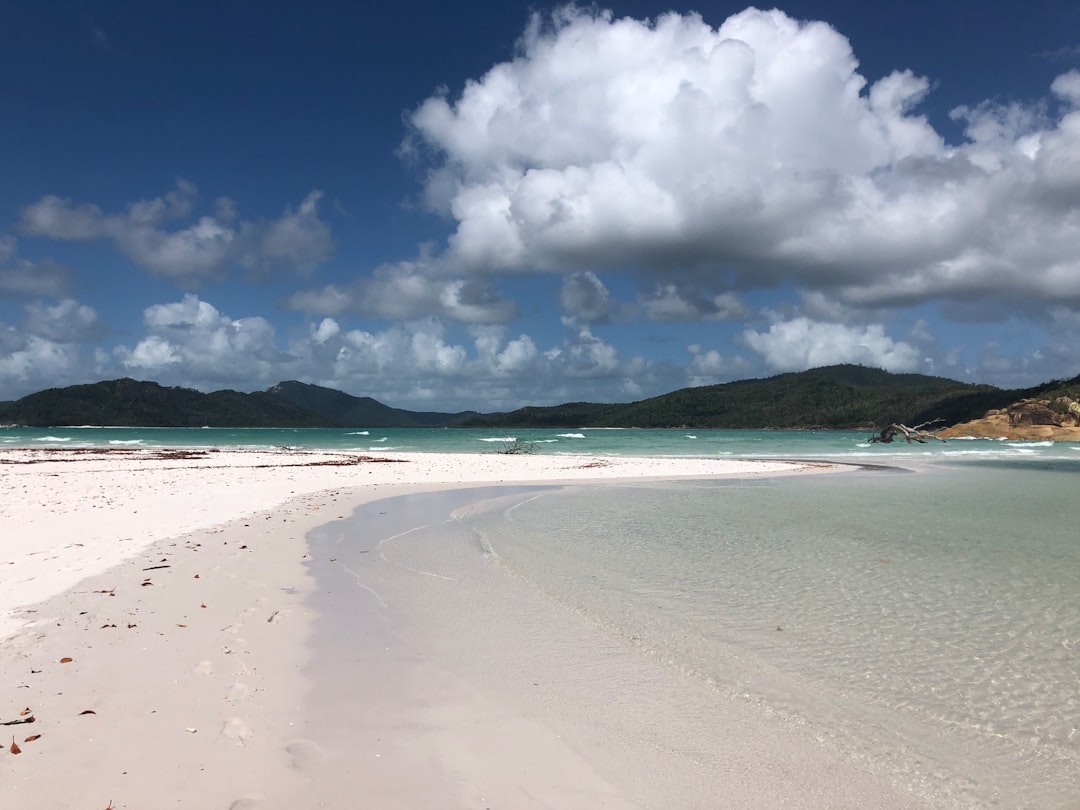

A few meters below the surface of the ocean, a giant grouper stares at you with motionless eyes while a school of turquoise parrotfish turns in unison around a fan coral. This is the Great Barrier Reef, the largest coral system on the planet: over 2,300 kilometers of living reefs along the northeastern coast of Queensland, Australia, designated a UNESCO World Heritage Site in 1981.

The marine park that protects it, the Great Barrier Reef Marine Park, is managed by the Great Barrier Reef Marine Park Authority and covers approximately 344,400 square kilometers, an area larger than Italy. Within it live over 1,500 species of fish, six of the seven species of sea turtles existing in the world, manta rays, dugongs, and more than 400 types of hard corals. It is not a single continuous reef, but a mosaic of about 2,900 individual reefs and 900 coral islands.
The biodiversity that can be seen underwater
Entering the water with a mask and snorkel near one of the most accessible sites from Cairns — such as Agincourt Reef or the Outer Barrier reefs — means finding oneself surrounded by a density of life that is hard to describe. The table corals of the Acropora species form flat platforms that host dozens of surgeonfish and butterflyfish. Along the vertical coral walls, called bommies, soft corals in purple and orange sway with the current.
Green turtles (Chelonia mydas) and hawksbill turtles (Eretmochelys imbricata) often approach divers without showing fear, grazing on algae from the corals. Giant mantas (Manta birostris) with wingspans that can exceed five meters glide through the open waters, while reef sharks — primarily white-tip sharks and grey sharks — patrol the seabed with slow and methodical movements.
How to reach the reef and what to expect
The main logistical base is Cairns, a city in northern Queensland, accessible by direct flights from Sydney, Melbourne, and Brisbane. Every morning, dozens of boats depart from Cairns to the Outer Reef: the catamaran journey takes about 90 minutes to reach the outer reefs, where the water is clearer and marine life is more abundant compared to the reefs closer to the coast.
Daily tours generally include snorkeling equipment, two or three guided dives, and lunch on board. Those without a certification can do introductory dives with a certified instructor directly from the floating platform. Prices typically range from 150 to 300 Australian dollars for a daily tour from the Outer Reef, depending on the operator and the services included. Historical operators like Reef Magic Cruises and Silverswift operate regularly from Port Douglas and Cairns.
The best time to visit and practical advice
The ideal time to visit the Great Barrier Reef is between June and October, during the Australian dry season. In these months, water temperatures hover around 23-25°C, underwater visibility is excellent — often over 20 meters — and the box jellyfish season (Chironex fleckeri), one of the most venomous in the world, is avoided, as it is present between November and May in coastal waters.
A fundamental practical tip: book the tour at least a few days in advance during the high season months (July-August), when boats fill up quickly. It is advisable to choose tours that head to the Outer Reef rather than the inner reefs, as the latter have suffered greater damage from cyclones and coral bleaching. Bring a 3mm wetsuit even in summer: the currents in deeper areas can be cool, and the wetsuit also protects against potential contact with coral.
The state of the reef and its fragility
The Great Barrier Reef has experienced documented episodes of mass bleaching, particularly severe in 2016, 2017, 2020, and 2022, caused by rising ocean temperatures. Bleaching occurs when corals, under thermal stress, expel the symbiotic algae that give them color and nourishment, turning white. If the temperature normalizes in time, the corals can recover; otherwise, they die.
Despite these pressures, large sections of the reef — especially in the Outer Barrier — still show healthy and colorful corals. The Great Barrier Reef Marine Park Authority enforces strict rules: it is prohibited to touch the corals, collect marine organisms, or anchor boats directly on the reefs. Adhering to these regulations is not only a legal obligation but also a condition for this ecosystem to survive for future generations.


