
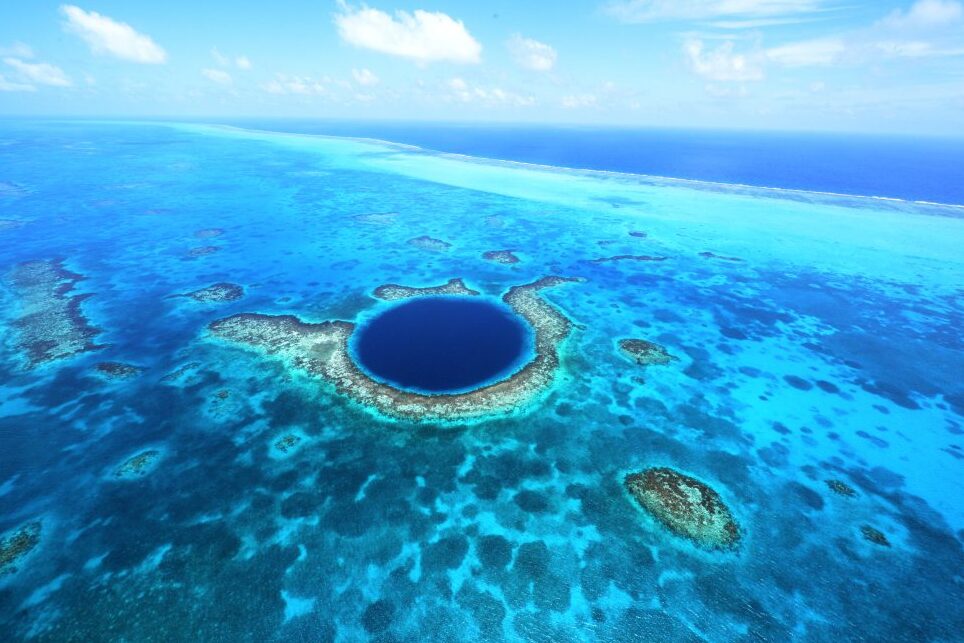

In the heart of the Caribbean, the Great Blue Hole stands as a mesmerizing testament to nature's artistry, a massive underwater sinkhole that has intrigued explorers and divers for decades. Located in the Lighthouse Reef atoll, approximately seventy kilometers from Belize City, this enigmatic geological formation is not only a diver's paradise but also a site rich in history and natural beauty.
The origins of the Great Blue Hole date back to the last Ice Age when sea levels were significantly lower. Initially, it began as a limestone cave, formed by the dissolution of rock over millions of years. As temperatures rose and sea levels rose approximately 10,000 years ago, this cave became submerged. The ceiling eventually collapsed, creating the striking circular sinkhole we see today, measuring 318 meters wide and plunging 124 meters deep. This geological marvel gained global recognition after the legendary French explorer Jacques Cousteau declared it one of the five most fascinating dive sites in the world in 1971, after he and his team explored its depths.
The architectural significance of the Great Blue Hole lies not in human craftsmanship but in the natural formations that have taken place over millennia. The walls of the sinkhole are adorned with intricate limestone stalactites and stalagmites, remnants of its ancient cave past. These formations are not only visually stunning but also provide insights into the geological changes that have shaped this underwater wonder. The vibrant corals and diverse marine life that inhabit the Blue Hole further enhance its allure, making it a living gallery beneath the waves.
Local culture around the Great Blue Hole is deeply intertwined with the rich heritage of Belize. The country is home to several indigenous groups, including the Maya, whose ancestors inhabited the region for thousands of years. While the Blue Hole itself does not have specific festivals, the surrounding areas celebrate various cultural traditions. The Maya Day of the Dead, or Hanal Pixan, is one such festival marked by vibrant altars and traditional food offerings. Visitors can witness the fusion of ancient customs with modern celebrations, providing a unique perspective on Belize's cultural tapestry.
When it comes to gastronomy, Belize offers an array of culinary delights that reflect its diverse influences. Local seafood is a staple, with dishes like conch ceviche and fried fish being particularly popular. The coastal proximity grants easy access to fresh ingredients, and the use of traditional herbs and spices enhances the flavors. Don’t miss trying rice and beans, a beloved national dish, often served with stewed chicken or pork. To wash it all down, indulge in a glass of fresh coconut water or a local beer like Belikin, a favorite among residents and visitors alike.
Despite its fame, the Great Blue Hole holds lesser-known curiosities that many tourists may overlook. For instance, beneath the surface lies a unique ecosystem that includes various species of sharks, such as the great hammerhead and bull sharks, making it a prime location for those seeking thrilling underwater encounters. Additionally, the sinkhole has been a site for scientific research and conservation efforts, aimed at preserving its delicate marine environment. The region is also home to fascinating marine archaeology, with remnants of ancient maritime trade routes that the Maya once navigated.
For those looking to visit the Great Blue Hole, the best time to go is during the dry season, from November to April. This period offers clear visibility and calm seas, ideal for diving or snorkeling. Booking a tour through a reputable operator is highly recommended, as they can provide insights and ensure safety while exploring. Divers should look for the unique formations of stalactites, the vibrant marine life, and the striking blue hues that give the hole its name.
As you plan your visit to the Great Blue Hole, consider using the Secret World app to create a personalized itinerary that captures the essence of Belize City and its stunning surroundings.


