


What Central Park is to New York and Hyde Park to London, Tiergarten is to Berlin: the green lungs of the metropolis. Located right in the city center next to attractions like the Brandenburg Gate and Potsdamer Platz, at 210 hectares it is even larger than Hyde Park in London.

In the Tiergarten, Berliners go for walks, skate, ride bikes or just lie lazily in the sun. This is where people meet for a family picnic, to play ball or just to unwind. On the large meadows in the Tiergarten you can ideally recover from sightseeing, shopping and the like.
Elector Frederick III. turns the former hunting ground into a “pleasure park for the population” at the end of the 17th century. Since then, the zoo has been redesigned again and again. The most enduring redesign to date is certainly that of Peter Joseph Lenné. Between 1833 and 1838 he transformed the park into a public park based on the English model.
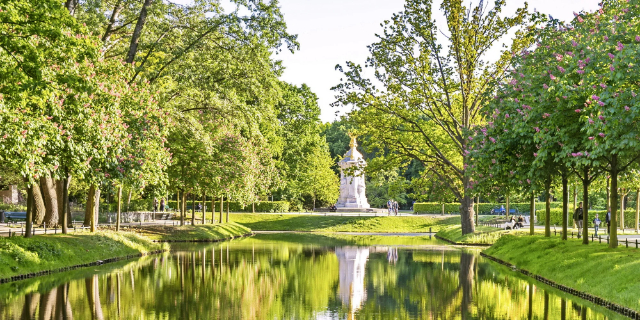
During and after the Second World War, the Tiergarten suffered greatly: the park suffered major damage in the fighting for Berlin, especially in the last year of the war. After the end of the war, Berliners almost completely cleared the park in search of firewood. The zoo was not reforested until 1949 - and that was only possible with numerous tree donations from all over Germany. For your stroll through the zoo, we recommend that you visit other monuments and memorials, as well as bridges worth seeing, the Office of the Federal President, the House of World Cultures or the Soviet memorial .
The tea house or the Global Stone Project combine with exciting insights into the landscape architecture of the English Garden.
In the south of the Tiergarten lies the Neuer See with the cozy Café am Neuen See , where you can sit outside in the beer garden almost all year round or in front of the fireplace in winter. Not far from there are the German Resistance Memorial Center or the memorials for Karl Liebknecht and Rosa Luxemburg.


