A well-chosen day trip gets you off the tourist conveyor belt. It puts distance between you and the villa-pool-brunch loop that swallows entire weeks if you let it. And Bali's geography rewards the effort: within an hour or two of most accommodation hubs, you can be standing at the base of a waterfall, on a cliff edge above the Indian Ocean, or on a fast boat cutting toward an island that still feels genuinely remote.
What makes a good day trip? Three things, in my experience. First, the journey itself has to be manageable — not a punishment you endure to reach a reward. Second, arrival has to offer something you cannot replicate closer to home base. Third, and this is the one most travel writing ignores: you need a realistic exit strategy. Knowing when to leave is as important as knowing when to arrive.
Bali has no commuter train network, so 'by train' in this guide means the regional rail connections that extend off-island — to Java, specifically. The boat routes are real and frequent. The car routes require honesty about timing. I will give you all of it.
At a glance
- Sekumpul Waterfall: seven falls and a hike that earns them
- The InterContinental Bali Resort and The undiscovered cascades: when a hotel is a trailhead
- Bali | Beachside cafés on Muaya beach in Jimbaran Bay: the seafood lunch that justifies the drive
- Balangan Beach is Bali's most picturesque beach: the Bukit's honest alternative
- Tirta Gangga: il palazzo reale sull'acqua a Bali — the water palace at the edge of the rice terraces
- Uluwatu Temple, or Pura Luhur Uluwatu: cliff, monkeys, and the kecak at dusk
- Bali and the secluded Crystal Bay Beach: the snorkeller's cove on Nusa Penida's west coast
- Bali:Nusa Penida, the biggest of the three Nusa Islands — the full island in a day
- Kawah Ijen is a volcano that erupts electric-blue lava: the overnight train that makes it possible
- Mount Rinjani Trekking: Lombok's volcano and the ferry-plus-drive that gets you there
Sekumpul Waterfall: seven falls and a hike that earns them
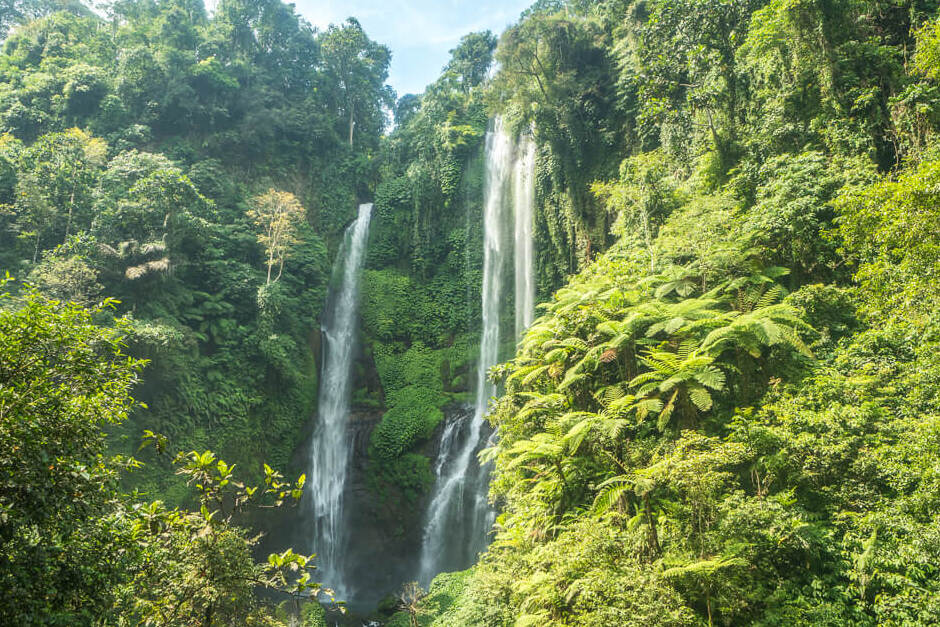
What you get for the effort is a collection of seven separate cascades dropping through dense jungle into a single basin — a scale that photographs consistently fail to convey. On arrival, walk the full loop past all seven falls rather than stopping at the first two (most day-trippers do, which means the back falls are comparatively quiet). Wade into the pool at the base of the tallest cascade. Sit on the rocks and let the mist settle on you for ten minutes. That is the activity. Then climb back out before 1 p.m., when afternoon clouds roll in and the paths turn treacherous.
Insider tip
Leave your accommodation by 6:30 a.m. The falls face east and catch direct morning light until around 10. After that, the gorge goes into shadow and the photos flatten. More importantly, tour groups from Ubud arrive around 9:30 — you want to be descending as they are ascending.
The InterContinental Bali Resort and The undiscovered cascades: when a hotel is a trailhead

The practical approach: drive to the resort, speak to the concierge or activities desk, and ask about the waterfall routes directly. The falls require some hiking through secondary jungle — not extreme terrain, but not a paved path either. Wear shoes you do not mind getting wet. The reward is the near-certainty of having a waterfall to yourself, which is increasingly rare anywhere in Bali. Combine this with a late lunch at the resort before heading back — it is one of the more civilised ways to end a day that started in mud.
Insider tip
Call the resort the day before and specifically ask which cascade is most accessible given recent rainfall. The routes change with water levels, and the staff who maintain the 'In the Know' guide are genuinely forthcoming if you ask the right question.
Bali | Beachside cafés on Muaya beach in Jimbaran Bay: the seafood lunch that justifies the drive
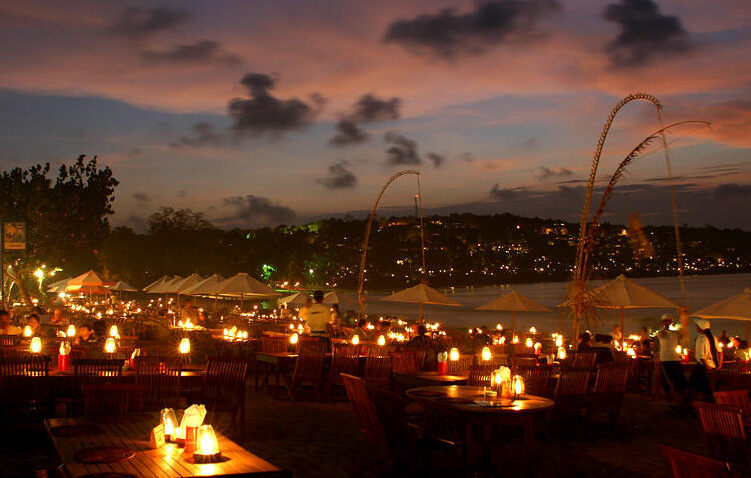
The cafés typically serve what came in that morning: shrimp, clams, crabs, calamari, lobsters, and a rotating cast of whole fish. The process is tactile and unhurried. You point at what you want, it goes on the grill, you eat it with your hands while watching the bay. Three specific things worth doing: arrive early enough to walk the beach before the tables fill, negotiate the price per kilogram before you order rather than after, and stay long enough to watch the light change over the Bukit Peninsula. The drive back north in late afternoon is easier than the drive south in the morning.
Insider tip
The cafés that face directly west get the best late-afternoon light, but they also fill fastest. Arrive by 4 p.m. for a sunset dinner sitting. If you come for lunch instead, you will have the beach almost to yourself and the seafood will be at its freshest from the morning catch.
Balangan Beach is Bali's most picturesque beach: the Bukit's honest alternative

For surfers, this is a serious wave — a fast, hollow left that works best at mid to high tide and rewards experience. Non-surfers should not feel excluded: the beach itself is wide enough to find a quiet patch, and watching competent surfers from the cliff path above is genuinely engaging in a way that watching them from the water is not. Walk the cliff path north toward Dreamland for a perspective on the coastline that most visitors miss entirely. Have a cold drink at one of the cliff-top warungs. Then leave before 2 p.m. — the access road narrows and the parking situation deteriorates badly in the afternoon as the surf crowd peaks.
Insider tip
The access road to Balangan has a paid parking area at the top of the cliff. Do not try to drive down to the beach itself — the road is steep, the turning radius at the bottom is punishing, and you will spend 20 minutes reversing while a queue builds behind you.
Tirta Gangga: il palazzo reale sull'acqua a Bali — the water palace at the edge of the rice terraces
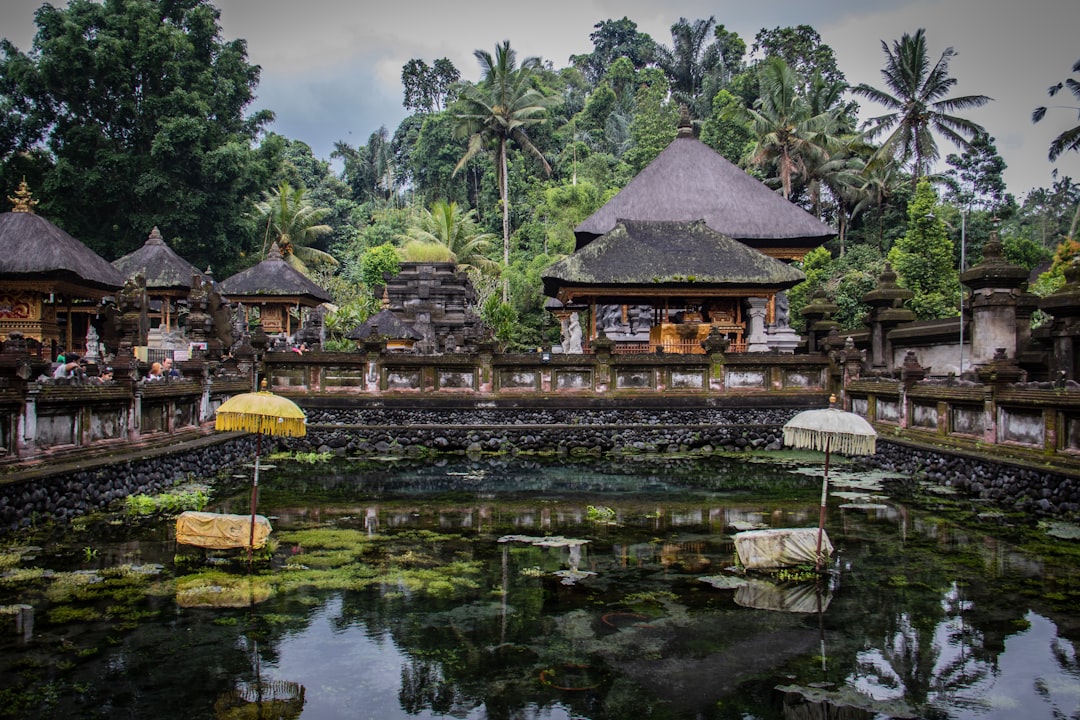
The water palace was built in the mid-twentieth century by the last raja of Karangasem and sits at the foot of Mount Agung. The stepping stones across the emerald green pools — basalt rocks rising from the water like a suspended path between two states of being — are the defining experience here. Walk them slowly. The fish in the pools are enormous and have been there for decades. Beyond the main pools, a path leads up through terraced gardens toward a higher viewing point over the surrounding rice fields. Allow at least two hours on site. The town of Tirta Gangga itself has a handful of small warungs where you can eat before the drive back.
Insider tip
Agung occasionally produces volcanic haze that settles into the valley by mid-morning. If you want clear views of the mountain reflected in the pools, arrive at opening time — typically around 7 a.m. The light is also dramatically better before 9.
Uluwatu Temple, or Pura Luhur Uluwatu: cliff, monkeys, and the kecak at dusk
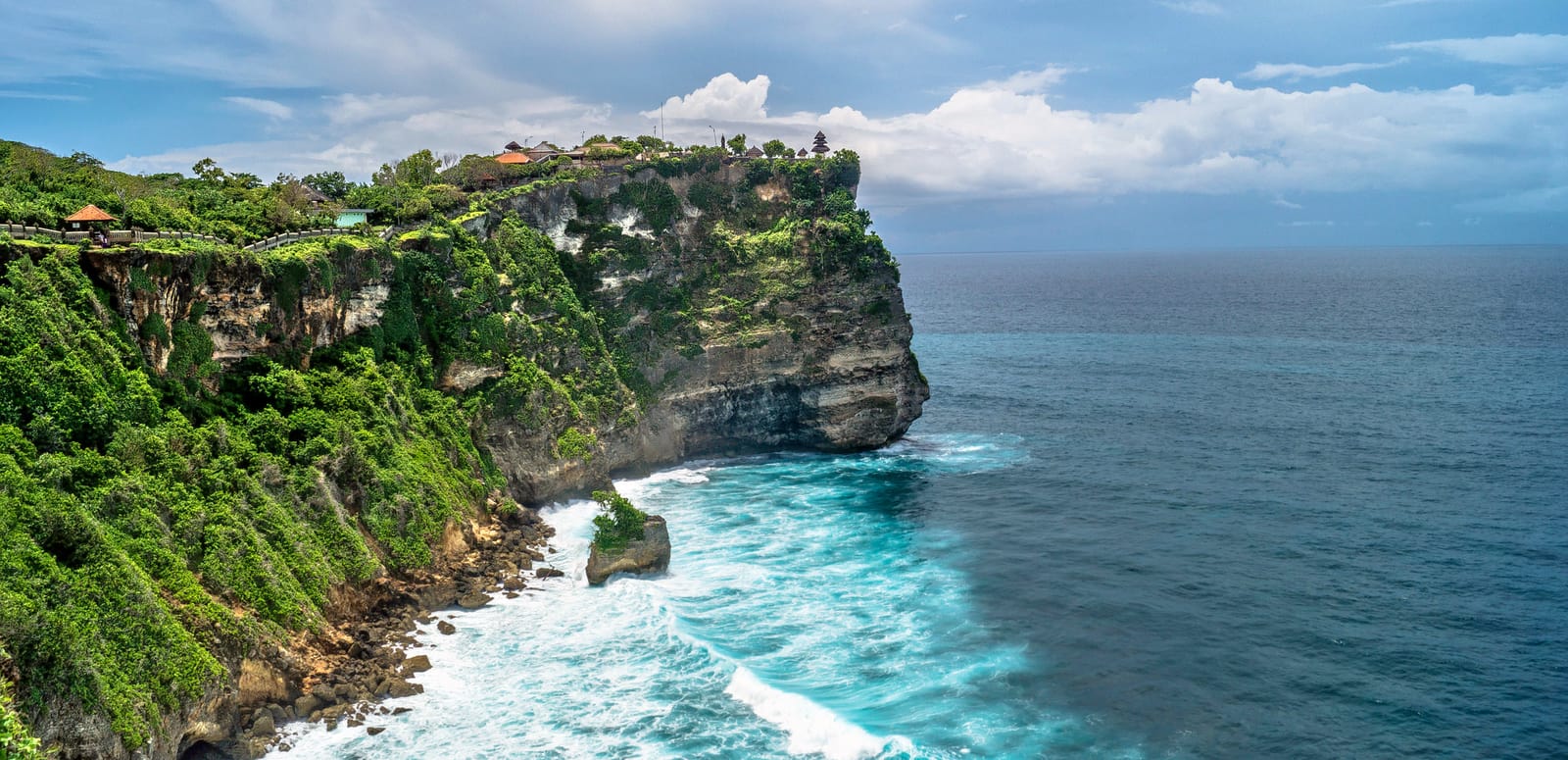
Four things to do: walk the full cliff path in both directions rather than just the short loop to the main temple; watch the waves breaking on the reef far below; attend the kecak fire dance performed at the clifftop amphitheatre at sunset (book ahead — it sells out); and manage your belongings carefully around the resident monkeys, who are fast, organised, and have developed a specific interest in sunglasses and water bottles. The drive back from Uluwatu in the dark after the kecak is straightforward on the main Bukit road.
Insider tip
The kecak performance begins roughly at sunset, which varies by season. Check the exact time the week of your visit and arrive 45 minutes early. The front rows of the amphitheatre offer the best view of the fire, but the back rows give you the cliff and ocean as backdrop — a genuinely different experience.
Bali and the secluded Crystal Bay Beach: the snorkeller's cove on Nusa Penida's west coast
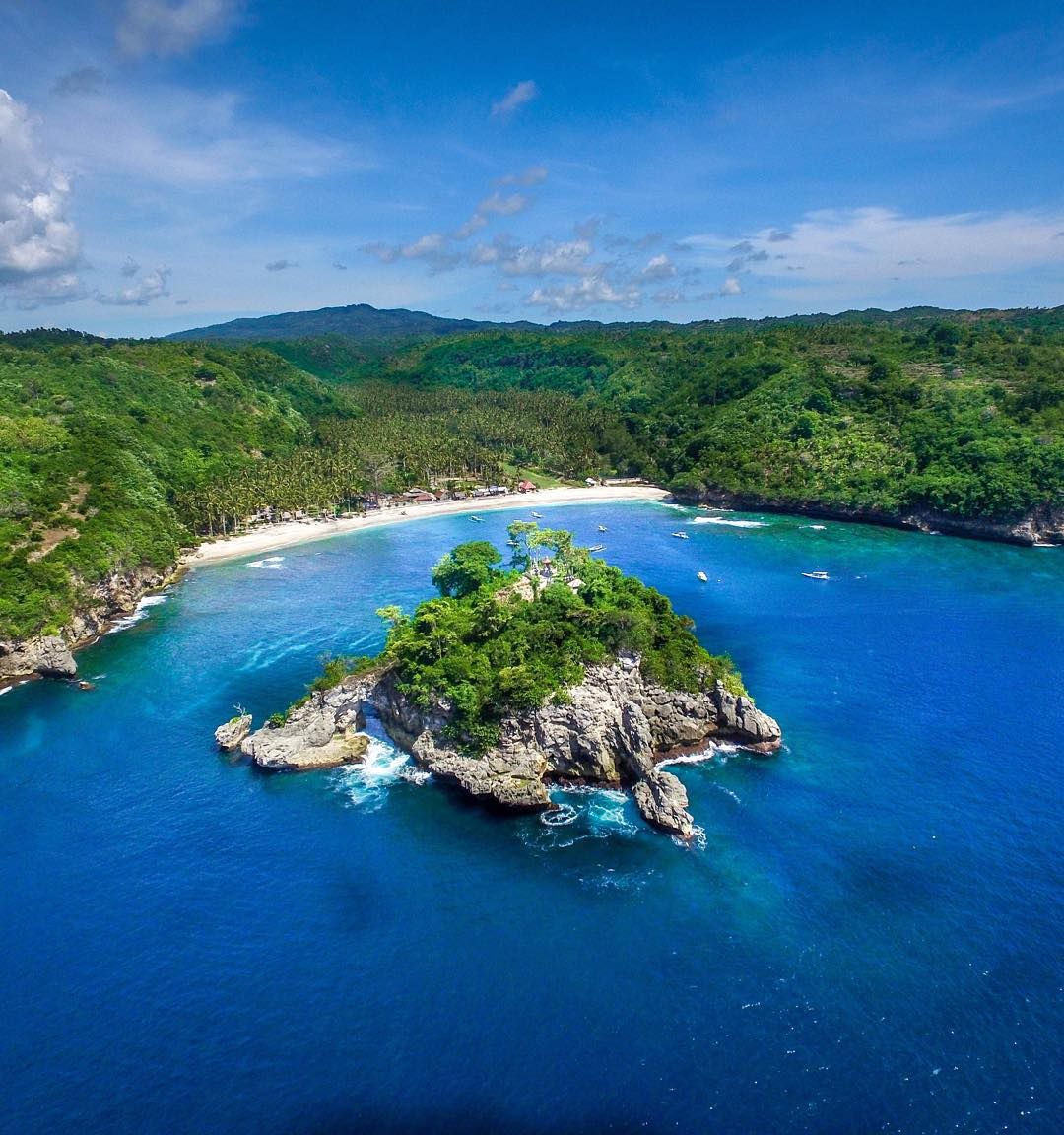
The snorkelling here is the main draw: schools of anthias and batfish move through the bay with some regularity, and the coral on the northern side of the cove is in better condition than much of what you will find closer to the Bali mainland. The water temperature drops noticeably compared to the beaches near Kuta — Crystal Bay is one of the sites where mola mola (ocean sunfish) are occasionally spotted between July and October, though sightings are never guaranteed. Bring your own mask and fins if possible; rental quality on the island is inconsistent. Leave the bay by 2 p.m. to make the afternoon fast boat back to Bali without rushing.
Insider tip
Fast boats from Sanur run roughly every 30–60 minutes in high season, but the last reliable departure back from Nusa Penida is typically around 5 p.m. Miss it and your day trip becomes an overnight. Confirm the return schedule with your boat operator before you leave the dock.
Bali:Nusa Penida, the biggest of the three Nusa Islands — the full island in a day
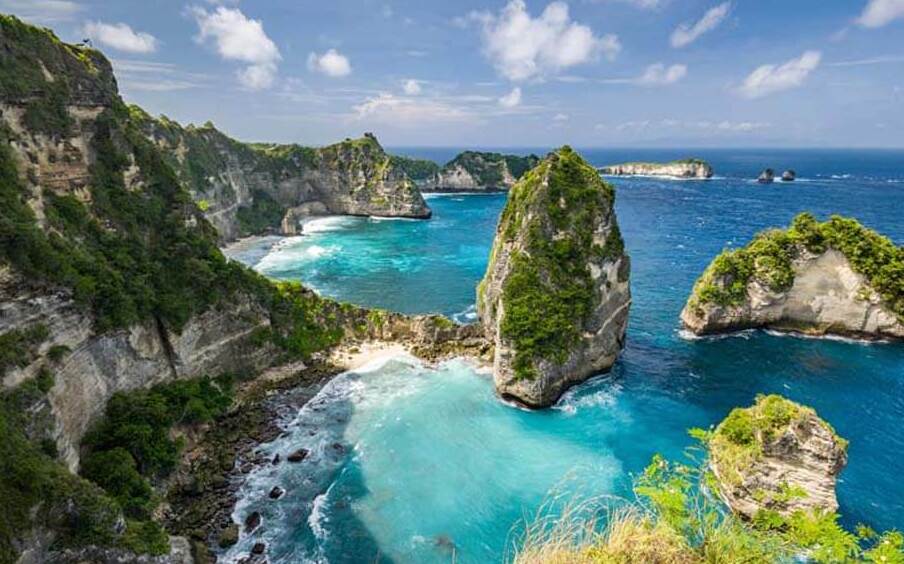
Do not try to see the entire island in one day. Choose a coast. The west coast has Crystal Bay and Kelingking — the famous T-Rex-shaped cliff — while the east coast is quieter and less trafficked. The landscape is rawer than mainland Bali: limestone cliffs, scrub vegetation, roads that are still being paved in sections. That roughness is part of the point. Rent a scooter at the Toyapakeh pier only if you are genuinely comfortable with mountain roads on unfamiliar bikes. Otherwise, negotiate a driver for the day at the pier — rates are posted and the drivers know which viewpoints are worth the detour.
Insider tip
Nusa Penida gets its own traffic problem now on weekends, particularly at the Kelingking viewpoint. If your goal is the west coast highlights, take the first boat out of Sanur — the 7 a.m. departure — and you will have the viewpoints to yourself for at least an hour before the tour groups arrive.
Kawah Ijen is a volcano that erupts electric-blue lava: the overnight train that makes it possible
This is not a casual day trip. It is a 24-hour circuit that demands planning: book the ferry crossing and onward transport in advance, wear a gas mask at the crater (rent one at the trailhead — the sulfur concentration is serious, not theatrical), and carry warm layers because the crater rim sits above 2,000 metres and the pre-dawn temperature is cold by any tropical standard. The turquoise acid lake inside the caldera, visible as dawn breaks, is a separate and quieter reward from the blue fire itself.
Insider tip
The blue fire is only visible in complete darkness — meaning you must be at the crater between roughly 2 and 4 a.m. Arrive after 5 a.m. and you will see a crater lake, which is extraordinary in its own right, but not the blue fire. Time the Gilimanuk ferry so you arrive in Banyuwangi by 10 p.m. at the latest.
Mount Rinjani Trekking: Lombok's volcano and the ferry-plus-drive that gets you there

The summit requires a minimum two-day trek with camping, and the crater rim — with its views over the caldera lake Segara Anak — is a full-day hike from Senaru even for fit walkers. What a day trip realistically offers is the lower forest trails, a genuine sense of the volcano's scale, and the Senaru village area, which has its own waterfall and traditional Sasak community. If you have only one day, treat Rinjani as an introduction rather than a conquest — and book a guide from Senaru village, not from a Bali-based tour operator, to keep the money local and the logistics simpler.
Insider tip
The Rinjani trekking area closes periodically due to volcanic activity and during Nyepi. Check the official Rinjani National Park status before you book the ferry. The fast boat from Padang Bai to Lembar takes around four hours; the slow ferry takes six. Take the fast boat on the way there.
Here is what I have learned from doing these trips repeatedly, in different seasons, by different means: the ones that stay with you are rarely the ones that went smoothly. The Kawah Ijen hike where the gas mask fogged up. The Tirta Gangga morning when Agung was completely clear and the reflection held for exactly twelve minutes before the clouds moved in. The Nusa Penida fast boat that left twenty minutes early and I nearly missed it.
Day trips from Bali reward a specific kind of traveler: someone willing to set an alarm, accept some discomfort in transit, and resist the urge to see everything. The island's geography is generous — coast, volcano, rice terrace, open ocean — all within reach of a single day. But that generosity has limits, and the limits are real. Pick two or three of these trips for a week's stay. Do them properly. The rest will give you a reason to come back.
Day trips from Bali reward a specific kind of traveler: someone willing to set an alarm, accept some discomfort in transit, and resist the urge to see everything. The island's geography is generous — coast, volcano, rice terrace, open ocean — all within reach of a single day. But that generosity has limits, and the limits are real. Pick two or three of these trips for a week's stay. Do them properly. The rest will give you a reason to come back.


