I've done most of the routes in this list more than once, by different means, in different seasons, and I'll tell you what the guidebooks won't: the train that gets you there before the tour buses, the parking lot that fills up by 9 a.m. on a Sunday, the ferry crossing that makes the destination feel earned rather than just reached. A good day trip from Seoul requires three things. First, it has to be genuinely different from the city — not just a suburb with a fortress wall, but a place that resets your sensory register. Second, the logistics have to be honest; if the round trip eats six hours of travel, I'll say so. Third, there has to be enough to do for a full day without padding. Everything on this list clears all three bars, though some barely. I'll tell you which ones.
The trips are grouped by how you get there, because the mode of transport shapes the experience as much as the destination itself. A car gives you control. A train gives you rest. A boat gives you a frame — water on both sides, the city falling away — that nothing else replicates. Choose accordingly.
At a glance
- Scopri la Fortezza Hwaseong di Suwon: Un Patrimonio Mondiale — the wall that still works
- Nami Island: un angolo di paradiso in Corea del Sud — the island that requires patience
- Visita all'Independence Hall of Korea: un viaggio nella storia — the museum that demands concentration
- Seoraksan National Park — the mountain that sets its own schedule
- Parco tematico "bagno"|Suwon, Corea del Sud — the theme park that commits to its premise
- Chungnyeongsan: La Montagna Sacra della Corea del Sud — the ridge walk without the crowds
- Scopri Ganghwa Island: Storia e Bellezze della Corea del Sud — the island that drove off the Mongols
- Scopri l'incanto dell'isola di Wolmido a Incheon — the harbor island that doesn't pretend to be wilderness
- Incheon Chinatown: Un Viaggio nella Cultura Cinese in Corea — the neighborhood that arrived with the steamships
- Sorae Wetland Ecological Park: un angolo di natura a Incheon — the salt marsh that survived the city
Scopri la Fortezza Hwaseong di Suwon: Un Patrimonio Mondiale — the wall that still works

On arrival, walk the full perimeter before doing anything else; the northern section gives the best elevated views over the city. Then descend into the Haenggung Palace complex inside the walls, visit the Korean Folk Village if you have time left, and finish at the eastern market district just outside the Paldalmun gate. The fortress is never empty, but it absorbs crowds well because the wall itself is the exhibit.
Insider tip
Take the 7:30 a.m. train from Seoul Station. You'll reach the north gate by 9 a.m., a full hour before the tour groups arrive by coach. The wall's western stretch gets direct morning sun — photograph it then, not at noon.
Nami Island: un angolo di paradiso in Corea del Sud — the island that requires patience

The tree-lined avenues — particularly the metasequoia and ginkgo paths — are the visual centerpiece, and they're worth the trip in autumn when the color is at its peak. Beyond walking the paths, rent a bicycle to cover the island's perimeter, visit the small outdoor sculpture installations scattered through the grounds, and take the zip line back across the river if you want to skip the return ferry queue. The island operates as a self-declared 'nation' with its own postal code, which is a gimmick, but an endearing one.
Insider tip
The first ITX-Cheongchun from Cheongnyangni departs around 6:30 a.m. Take it. The ferry to the island starts running at 7:30 a.m. and the island is genuinely quiet for the first 90 minutes. By 10:30 a.m. it is a different place entirely.
Visita all'Independence Hall of Korea: un viaggio nella storia — the museum that demands concentration

Allow at least four hours inside. The third and fourth halls, covering the March 1st Movement of 1919 and the subsequent resistance campaigns, are the most historically dense and deserve slow attention. The outdoor grounds include a Circle of the Nation monument and walking paths that are good for decompression between halls. This is not a trip for people who want to move fast, but for anyone trying to understand modern Korean national identity, it is probably the most important single site on this entire list.
Insider tip
Monday closures apply — the Hall is shut every Monday. Go on a weekday rather than a weekend; school groups arrive in force on Saturdays. The KTX return from Cheonan runs frequently enough that you can stay until 5 p.m. and still be back in Seoul for dinner.
Seoraksan National Park — the mountain that sets its own schedule
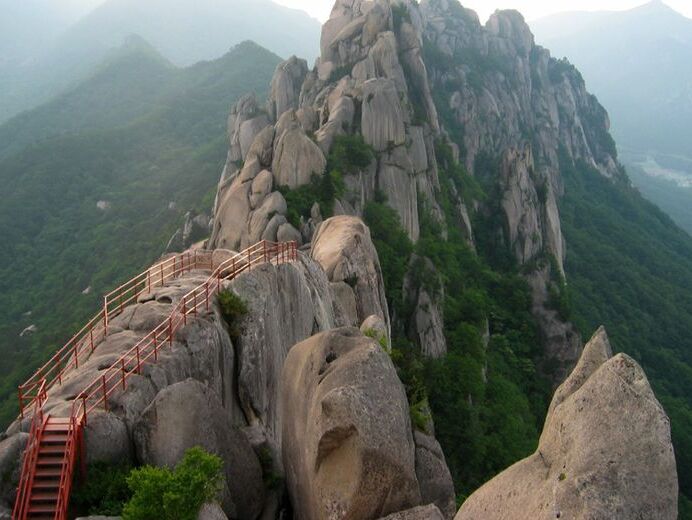
For a day trip, do not attempt the summit. Instead, take the cable car to Gwongeumseong Fortress ruins for elevated views without the six-hour round-trip hike, walk the Biryong Falls trail which is manageable in two hours, and spend time at the Sinheungsa Temple complex near the park entrance. The temple dates to the 7th century and the surrounding valley is one of the few places near Seoul where the natural environment feels genuinely unmediated.
Insider tip
Autumn weekends at Seoraksan are effectively a national event — the leaf color draws enormous crowds and accommodation books out months in advance. If you're day-tripping, go mid-week in late October and accept the longer travel day as the price of a quieter experience.
Parco tematico "bagno"|Suwon, Corea del Sud — the theme park that commits to its premise

Drive rather than take the train because the park is not well-served by public transit from Suwon Station, and combining it with the Hwaseong Fortress in the same day is straightforward by car — they're a short drive apart. The park is free to enter, takes about 90 minutes to cover thoroughly, and is genuinely educational underneath the obvious comedy. Take it seriously and you'll leave knowing more about public health history than you expected.
Insider tip
Parking at the theme park itself is limited. Arrive before 10 a.m. on weekends or park near Hwaseong Fortress and visit that first, then drive over. The combination of fortress and theme park makes for an unusually complete Suwon day.
Chungnyeongsan: La Montagna Sacra della Corea del Sud — the ridge walk without the crowds

Drive rather than trying to piece together public transit connections, which are workable but add significant time. Park at the main trailhead lot on the southern approach. The route to the summit passes several small Buddhist hermitages that are open to visitors; the monks here are accustomed to hikers and the atmosphere is contemplative rather than touristic. Bring your own food — facilities on the mountain are minimal and that is, honestly, part of the appeal.
Insider tip
The trailhead parking lot fills completely by 8 a.m. on autumn weekends. Either arrive by 7:30 a.m. or park in the village below and add 20 minutes of walking each way. Weekday mornings are a different experience entirely — you may have the ridge largely to yourself.
Scopri Ganghwa Island: Storia e Bellezze della Corea del Sud — the island that drove off the Mongols

A car is essential here because the key sites are spread across the island and public transit connections between them are slow and infrequent. Plan a circuit: start at the Goryeo Palace Site, move to the dolmen field at Bugeun-ri, then drive the coastal road to Gwangseongbo Fort for views across the Han River estuary toward North Korea. The island also has tidal flats of ecological significance, but prioritize the historical sites if time is short.
Insider tip
Traffic on the bridge to Ganghwa backs up badly on Sunday afternoons as day-trippers return to Seoul. Plan to leave the island by 3 p.m. or accept sitting in traffic for 45 minutes to an hour. Friday is the quietest day of the week for this trip.
Scopri l'incanto dell'isola di Wolmido a Incheon — the harbor island that doesn't pretend to be wilderness

The ferry crossing itself is worth taking even if you don't have a specific outer island destination — the views back toward Incheon's industrial waterfront and the container port give you a sense of the city's economic scale that you simply don't get from inside Seoul. Walk the full length of the promenade, watch the fishing boats work the harbor, and take at least one ferry departure for the view. The island is small enough that two hours covers it comfortably.
Insider tip
Wolmido is best on a weekday morning before the amusement park opens and the promenade fills with families. The ferry schedules to outer islands vary by season and some routes operate only on weekends — check Incheon Port Authority listings before you go, not after you arrive.
Incheon Chinatown: Un Viaggio nella Cultura Cinese in Corea — the neighborhood that arrived with the steamships

Walk the main gate street, visit the Jajangmyeon Museum (dedicated to the black bean noodle dish that was adapted from Chinese cuisine in this neighborhood and became a Korean staple), and then cross into the adjacent Jayu Park, which offers elevated views over the port and contains a statue of General MacArthur commemorating the 1950 Incheon Landing. Pair this with Wolmido Island for a full Incheon day.
Insider tip
Incheon Chinatown is genuinely small and genuinely busy on weekends. If you're combining it with Wolmido, do Chinatown first thing in the morning and walk to the island by 10 a.m. before the weekend lunch crowds arrive on both fronts.
Sorae Wetland Ecological Park: un angolo di natura a Incheon — the salt marsh that survived the city

Reach it by subway — Line 7 to Cheongna International City Station, then a short taxi — or by car, where parking is available and generally not oversubscribed. The main boardwalk circuit takes about 90 minutes. There are observation towers along the route that give clear sightlines across the tidal flats. The park is quiet, the pace is slow, and it is the only destination on this list where the correct speed is a near-complete stop.
Insider tip
Arrive at low tide for the tidal flat views — the difference between high and low tide here is dramatic and a high-tide visit gives you a fraction of the visual experience. Check tide tables for Incheon before you go; the optimal window is roughly two hours either side of low tide.
I've done all ten of these trips at least twice, and the one thing that surprises me every time is how quickly Seoul recedes. Forty minutes on a train and you're somewhere that operates by entirely different logic — slower, quieter, organized around a mountain or a harbor or a wall rather than around a subway interchange. The city will be there when you get back. It always is.
If I had to pick one trip for someone with a single free day and no particular agenda, I'd say Ganghwa Island by car in the morning, back by mid-afternoon. It has the historical range, the coastal air, and the sense of genuine remove that a day trip is supposed to provide. But the honest answer is that the best trip is the one you actually take rather than the one you spend three days researching. Pick something, leave early, and let the logistics sort themselves out. They usually do.
If I had to pick one trip for someone with a single free day and no particular agenda, I'd say Ganghwa Island by car in the morning, back by mid-afternoon. It has the historical range, the coastal air, and the sense of genuine remove that a day trip is supposed to provide. But the honest answer is that the best trip is the one you actually take rather than the one you spend three days researching. Pick something, leave early, and let the logistics sort themselves out. They usually do.


