The city everyone photographs and almost nobody truly sees
L
Words by
Lena Hofmann
Updated
14 October 2026
Read time
12 minutes
Includes
7 places · interactive map
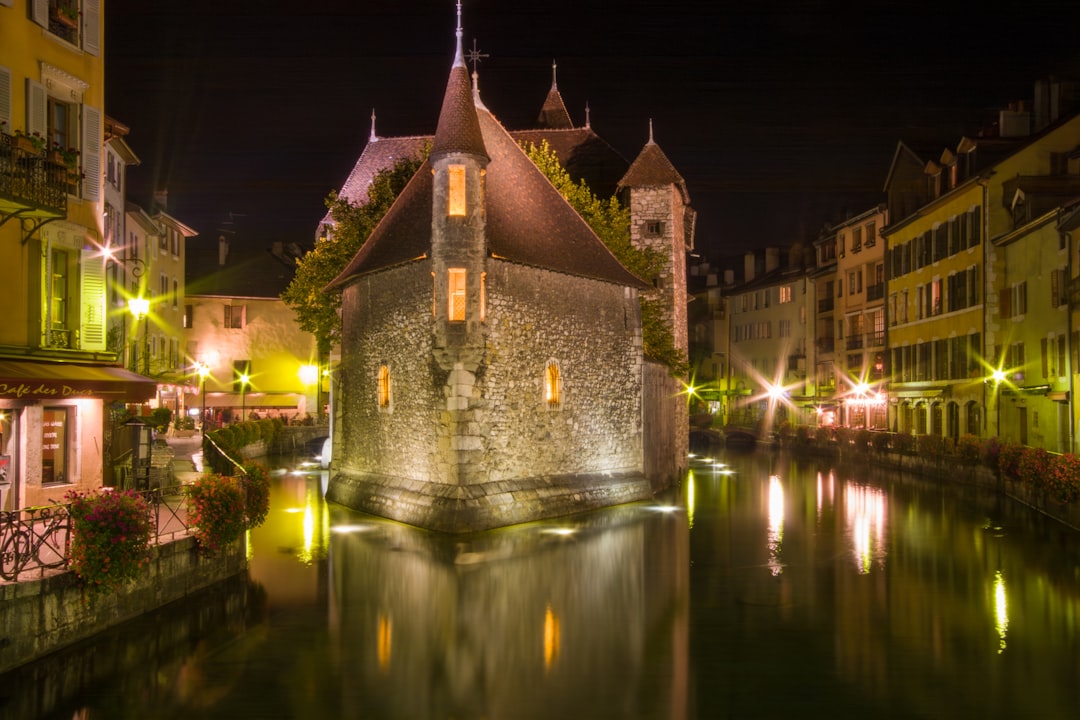
There is a particular cruelty to fame. The moment a place appears on enough Instagram grids, it becomes simultaneously over-visited and under-seen. People arrive with a mental image already formed — the turquoise canal, the geranium-draped balconies, the Palais de l'Isle reflected in water so clear it looks digitally enhanced — and they leave having confirmed that image rather than discovered anything behind it. Annecy is perhaps the most extreme example of this phenomenon in the French Alps. It is a city of roughly 130,000 people, a working administrative capital with a university, an industrial history, and a lake that has shaped the psychology of everyone who grew up beside it. And yet most visitors spend forty-eight hours photographing the same three streets and leave convinced they have "done" it.
What I want to talk about is not the city that exists on postcards. I want to talk about the city that exists around the edges of those postcards — the gorge that makes you feel genuinely small, the lakeside château that seems to float between water and sky, the old town that rewards the person who puts their phone away and simply listens. None of these places are secret in any absolute sense. Some appear in guidebooks. Locals know them. But there is a difference between a place being technically accessible and a place being genuinely encountered. These fifteen entries are an attempt to close that gap — to describe Annecy not as a backdrop for selfies, but as a place with actual depth, actual history, and an actual capacity to surprise even the well-travelled.
Palais de l'Isle: the building that refused to be only one thing
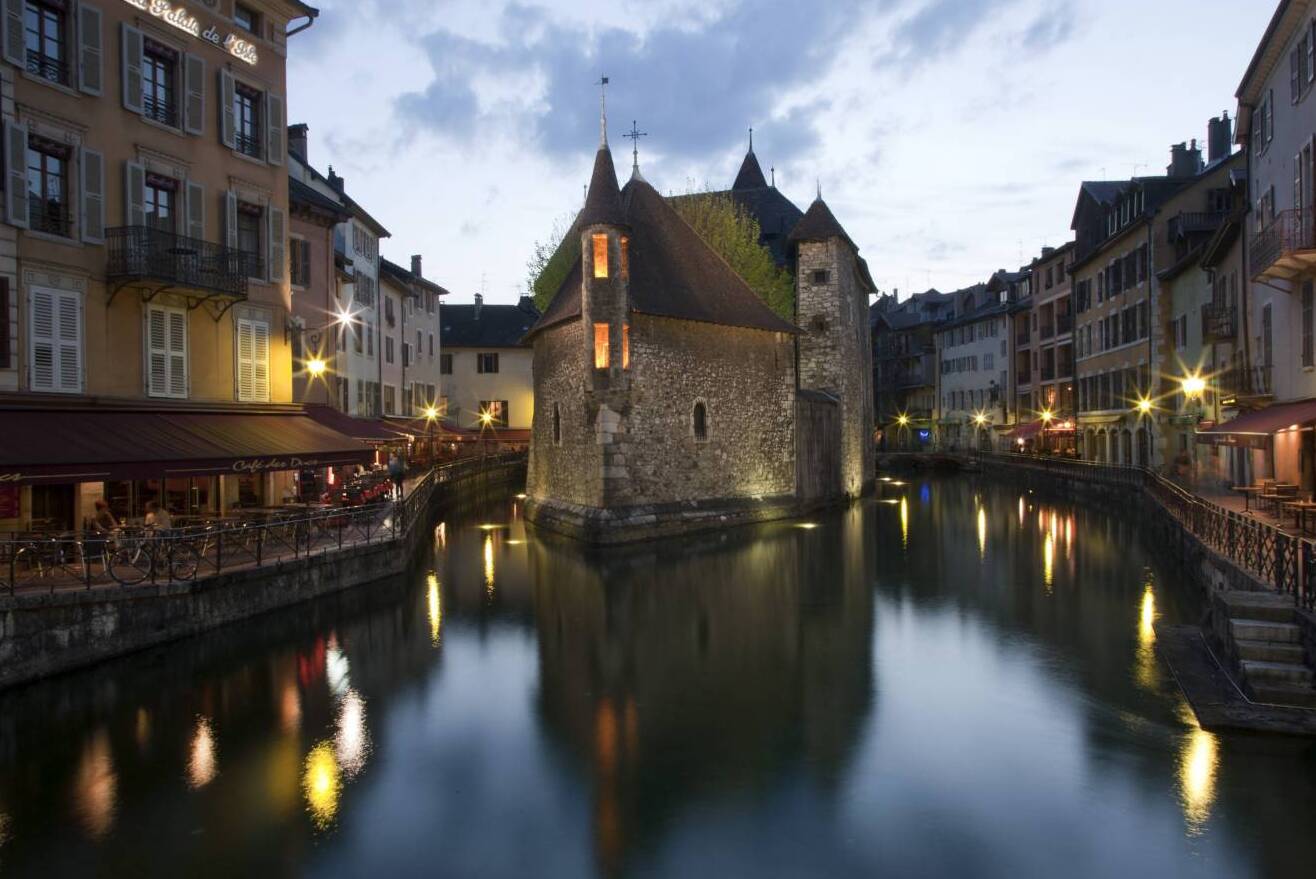
Most visitors photograph the Palais de l'Isle from the Rue Perrière bridge and move on, satisfied. What they miss is the building's genuinely strange biography. Sitting on a narrow triangular islet in the Canal du Thious, this twelfth-century fortified house has served, at various points in its long life, as a private residence, a court of justice, a mint, and a prison — sometimes more than one of these simultaneously. That layered utility is visible in the stonework if you look carefully: blocked windows, repurposed archways, walls that tell contradictory stories. The building is now a local history museum, but the institution matters less than the object itself. It is one of the most photographed monuments in France, which is precisely why most people never actually look at it.
Insider tip
Cross the bridge and walk around the islet's narrow perimeter rather than going straight inside. The view from the downstream end, where the canal splits, is the one that makes the building's impossible position on the water suddenly legible.
The old town of Annecy — sometimes called the Venice of Savoy, a comparison that flatters both cities while doing justice to neither — is one of those places where the famous view actively works against genuine exploration. The arcaded streets, the painted shutters, the canals running between medieval foundations: all of it is real, and all of it is extraordinary, and the crowds ensure that most people experience it as a kind of moving queue rather than a place. The reward for arriving early on a weekday morning, or for pushing into the residential streets behind the main tourist axis, is the discovery that the vieille ville has a domestic texture that the postcard version entirely erases — laundry lines, neighbourhood cats, the smell of a boulangerie that has no English-language menu.
Insider tip
The streets immediately north of the Rue Sainte-Claire, away from the canal, see a fraction of the foot traffic. This is where the old town's actual residential character survives most intact.
The Château de Menthon-Saint-Bernard sits on a wooded promontory above the eastern shore of the lake, and from the water it presents one of those silhouettes that seems almost too perfectly composed — towers, turrets, the suggestion of centuries. What separates it from mere scenery is that it has been continuously inhabited by the same family for roughly a thousand years, which gives it a quality of lived-in accumulation that restored châteaux almost never achieve. The rooms have the particular atmosphere of a house where things were kept because they were useful, not because they were decorative. The building is also, according to tradition, the birthplace of Saint Bernard of Menthon, the eleventh-century monk who founded the Alpine hospices that gave their name to the famous mountain breed.
Insider tip
The château is only open for guided visits on certain afternoons — check the seasonal schedule before making the journey from Annecy, as the trip along the lake road is pleasant but not short.
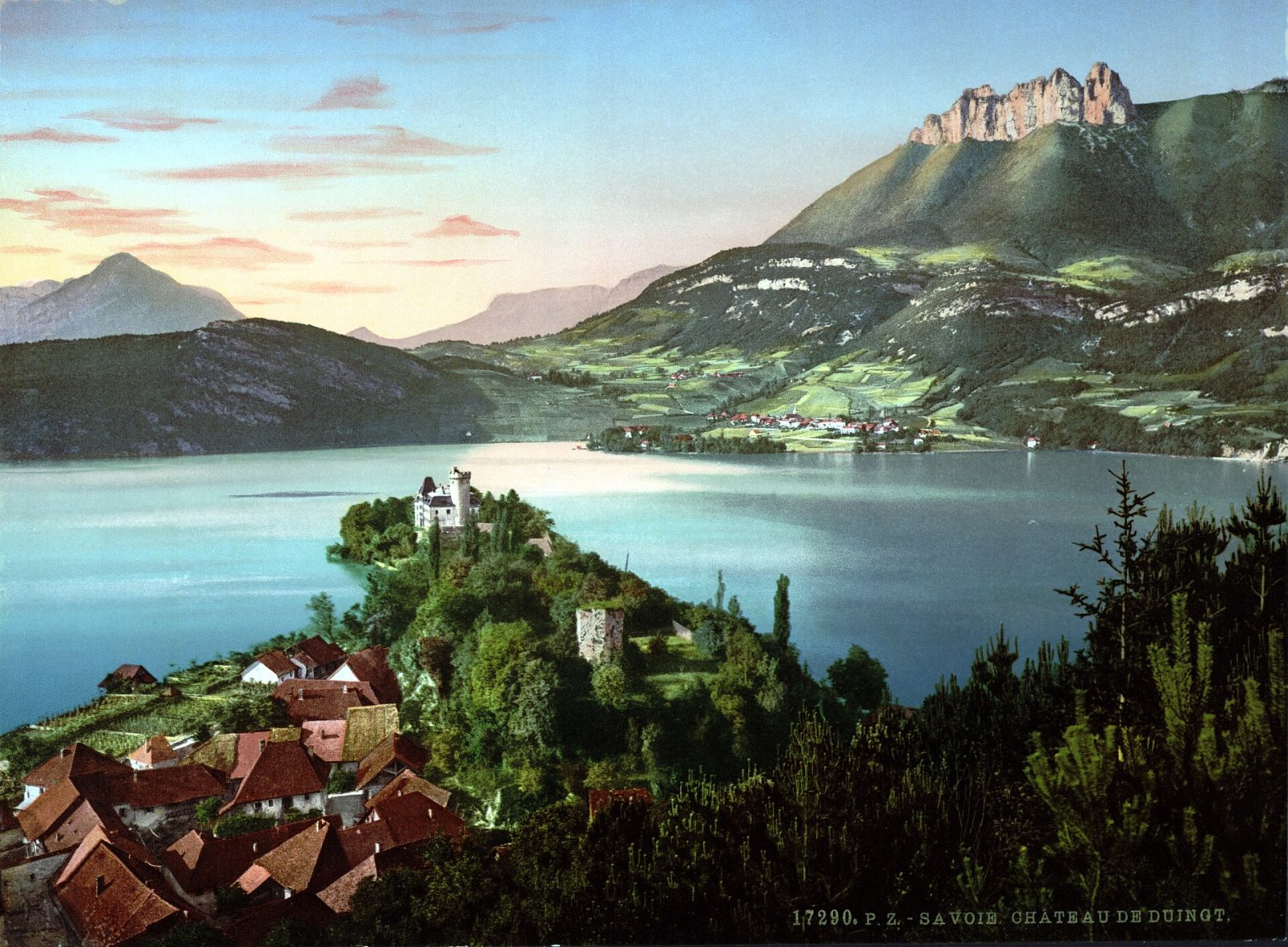
Ten kilometres south of Annecy, at the point where the lake narrows into its southern arm, the Château de Duingt occupies a small peninsula — or, depending on the water level, something close to an island — in a position so theatrical that it is tempting to assume it was designed primarily for effect. It was not. The medieval fortress that originally occupied this site was a serious piece of military infrastructure, controlling the passage between the two halves of the lake. What survives today is largely a nineteenth-century reconstruction in a medievalising style, but the site itself retains its strategic logic: standing here, you understand immediately why someone chose this particular rock in this particular stretch of water. The views back toward the northern shore, with the mountains rising behind Annecy, are the kind that make you recalibrate your sense of scale.
Insider tip
The village of Duingt itself, just behind the château, is quieter than almost anywhere on the lake's eastern shore and has a small waterfront area that sees relatively little tourist traffic even in summer.
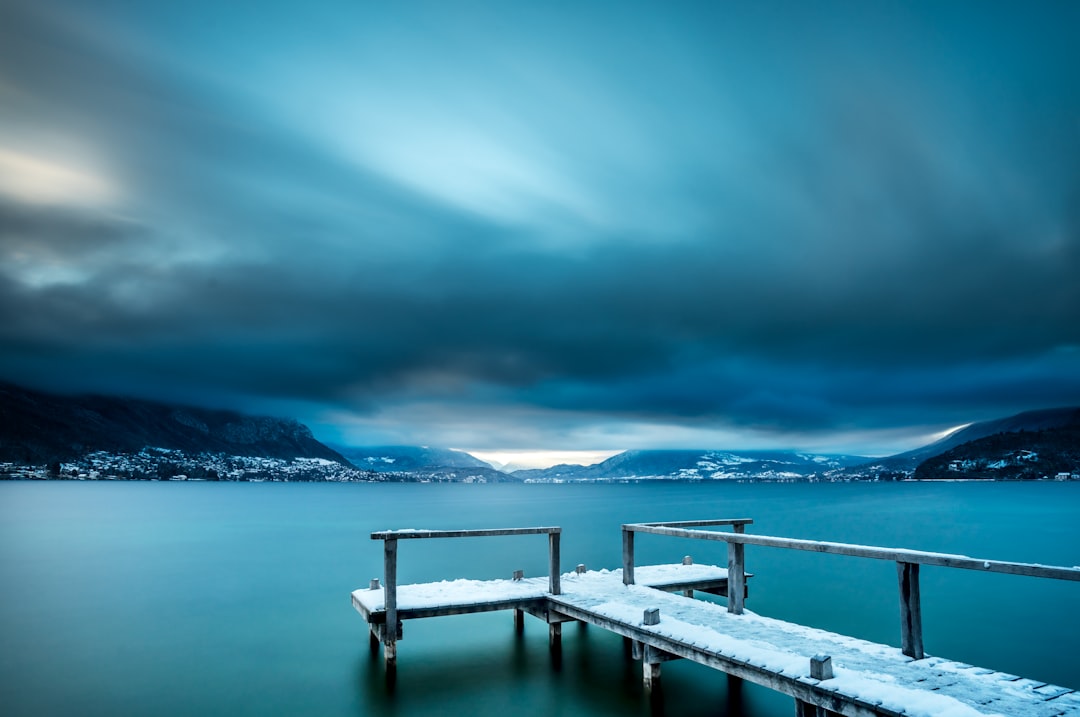
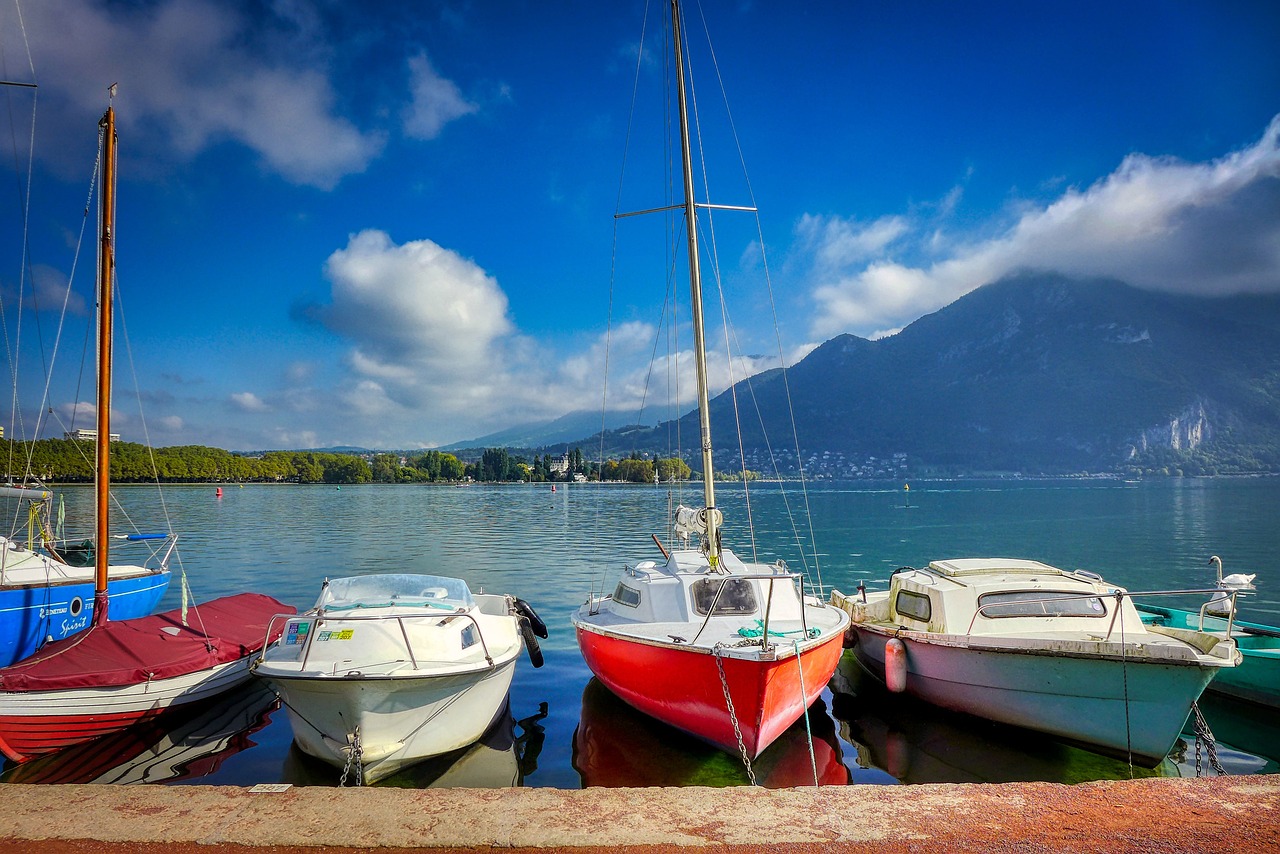
The Lac d'Annecy is one of the cleanest large lakes in Europe, a fact that is repeated so often it has become meaningless. What it actually means is this: the water is cold enough to be uncomfortable for swimming until well into summer, clear enough to see the bottom at depths that make you uneasy, and blue in a way that shifts with the light from turquoise to grey-green to something close to ink. The lake is also a working body of water — it has a drainage basin, a complex ecology, and a history of human use going back to the Bronze Age, when people built pile-dwelling settlements along its shores. The tourist version of the lake is the northern end, near the town. The version that rewards patience is the southern arm, the Petit Lac, where the mountains come closer and the water takes on a different character entirely.
Insider tip
The cycle path that runs along the western shore of the lake toward Doussard passes through sections of wetland and reed bed that most visitors never see. The light there in the early morning is unlike anything on the town side.
There is a version of Annecy that exists specifically for the weekend visitor: the canal views, the market stalls, the lakeside promenade at golden hour. And then there is the version that the city actually is — a regional capital with its own logic, its own rhythms, its own relationship between the historic centre and the surrounding communes that grew up around it. Understanding Annecy as a system rather than a backdrop means paying attention to things like the market at the Place Sainte-Claire, the relationship between the old town and the Bonlieu quarter that replaced a demolished neighbourhood in the twentieth century, and the way the mountains are not merely scenery but a genuine presence that shapes daily life, from the direction of light to the behaviour of weather. The city rewards the visitor who treats it as a place where people actually live.
Insider tip
The Tuesday and Friday markets extend well beyond the picturesque old town section — the stalls further along the Boulevard Taine, frequented primarily by locals doing their weekly shopping, offer a more honest picture of the city's daily life.
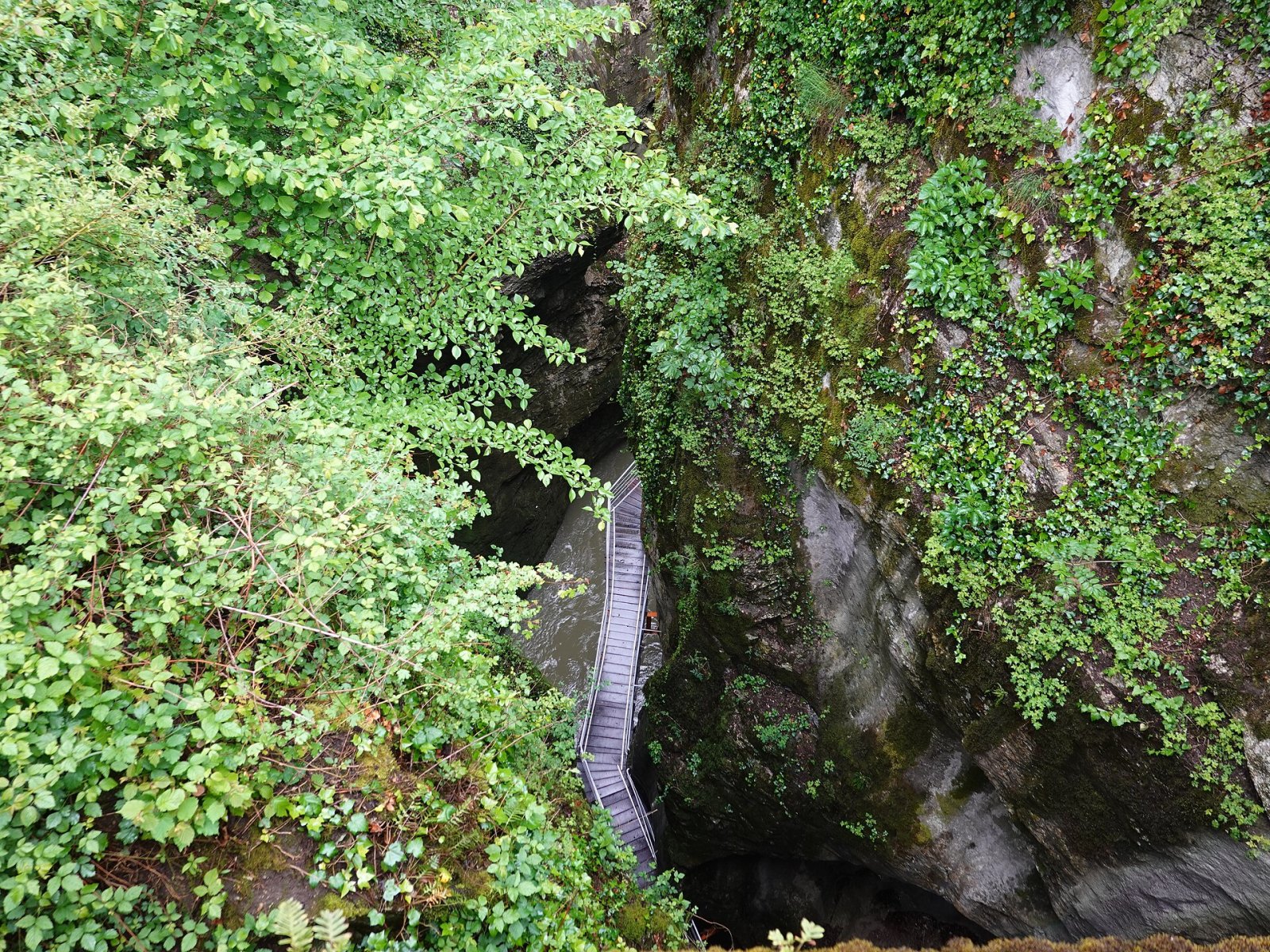
About eight kilometres west of Annecy, the Fier river has spent an impressive amount of geological time cutting through limestone in a way that has produced one of the more viscerally impressive natural features in the region. The Gorges du Fier are narrow enough in places that the walls block out the sky, and the river below — accessed via a series of walkways bolted directly to the rock face — is audible long before it is visible. The experience is less about scenic grandeur than about something more unsettling: the sense of being inside a landscape rather than looking at one. The gorge is not widely promoted relative to the lake, which means it tends to attract visitors who are actively curious rather than those following the standard circuit. The difference in atmosphere is noticeable.
Insider tip
The walkway through the gorge is genuinely narrow in sections and can be slippery — appropriate footwear is not a suggestion. The visit takes roughly forty-five minutes and the exit brings you out at a different level than the entrance, which is disorienting in a satisfying way.
The honest thing to say about Annecy is that it does not need defending or rehabilitating. It is a genuinely beautiful city with a lake that would be famous anywhere in the world, and the tourists who photograph the Palais de l'Isle from the bridge are not wrong to find it worth photographing. The question is not whether the famous things are worth seeing. The question is whether seeing only the famous things constitutes actually being somewhere. The places in this list — the gorge, the southern lake, the Savoyard history embedded in the old town's stones, the château that has been lived in for a millennium — are not alternatives to Annecy. They are Annecy. They are the context that makes the postcard image legible rather than merely decorative. The city, like most cities, is more interesting than its reputation suggests. That is not a criticism of the reputation. It is an argument for staying longer.
🏆 Pocket guide
Take this guide with you.
Save it offline, get walking directions, and discover thousands more places like the ones you just read.
When is the best time to visit Annecy if you want to avoid the summer crowds?
May and September offer the most favourable combination of weather and manageable visitor numbers. The lake is still cold for swimming in May but the light is exceptional and the old town functions at something close to its normal pace. September brings warmer water, harvest-season markets in the surrounding villages, and a noticeable reduction in tourist pressure after the French school holidays end in late August. November through March is genuinely quiet — some lakeside businesses close — but the city has a different kind of appeal in the off-season, particularly if you are interested in the mountains rather than the beach.
How do you get to the Gorges du Fier from Annecy without a car?
The Gorges du Fier are about eight kilometres west of Annecy, near the village of Lovagny. In summer, there are sometimes shuttle services from the city, but the most reliable option without a car is the train to Lovagny station — the line toward Aix-les-Bains stops there — followed by a short walk. Check current SNCF timetables before planning the trip, as service frequency varies by season. Cycling from Annecy is also feasible via the Fier valley road, though the route involves some traffic.
Is the Château de Menthon-Saint-Bernard open to visitors year-round?
The château operates on a seasonal and restricted schedule — it is privately owned and inhabited, which means access is limited to guided visits on specific afternoons, typically from late spring through early autumn. The exact schedule changes from year to year, so checking directly with the château or the Annecy tourist office before making the journey is strongly advisable. The exterior and the views from the village below are accessible at any time, and the walk up through the woods is worthwhile regardless of whether the château itself is open.
What is the most practical way to explore the lake's southern arm?
The cycle path that runs along the western shore of the lake from Annecy to Bout-du-Lac is one of the better-maintained lakeside cycling routes in the French Alps and is the most pleasant way to reach the southern arm without a car. Bicycles can be rented in Annecy. The full route to Bout-du-Lac is approximately twenty kilometres each way and is largely flat, following the shoreline. By car, the D1508 road runs along the western shore; the eastern shore road offers different views but is narrower and more winding.
Are there practical reasons to stay in one of the lake villages rather than in Annecy itself?
Yes, with some caveats. Staying in a village like Duingt or Menthon-Saint-Bernard gives you immediate access to the lake and a quieter base, but you will need either a car or a willingness to use the limited bus services to reach Annecy for restaurants, markets, and evening activity. The trade-off is worth considering if your primary interest is the lake and the surrounding landscape rather than the city itself. In peak summer, accommodation in the villages can actually be competitive with Annecy town prices, so comparing options across the whole lake area before booking is worthwhile.
🏆 Read this offline
Save it to your phone.
Bookmark this guide, plan your trip offline, and discover thousands of places like these.
BookmarkPlan offline60 languages
iOS / Android
Huawei users
Secret WorldHidden places, real stories — plan your trip