A city that reveals itself slowly, and only to those willing to look sideways
L
Words by
Lena Hofmann
Updated
10 September 2026
Read time
13 minutes
Includes
15 places · interactive map
There is a particular kind of invisibility that only the most visited places achieve. Budapest has mastered it. The city has been photographed from every angle, written about in every travel supplement, and yet it continues to conceal itself in plain sight — not through obscurity, but through the sheer weight of expectation that visitors carry when they arrive. You come looking for thermal baths and Habsburg grandeur, and you find them, and you feel satisfied, and you leave. What you miss is the city that exists in the pauses between those landmarks: the memorial that makes you stop mid-stride on a riverbank, the café that has survived three political systems and still serves coffee as though history were a minor inconvenience, the park where Budapest's ambitions for itself are written in stone and bronze and nobody is paying much attention.
I have been coming to Budapest for years, long enough to know that the word 'hidden' is almost always a lie — these places are on maps, some are in guidebooks, and locals walk past them daily without a second glance. That indifference is precisely what makes them worth seeking. The places that feel genuinely surprising to an informed traveller are not the ones nobody knows about. They are the ones nobody slows down for. Budapest rewards the walker who takes a wrong turn, the visitor who arrives early, the person who sits quietly in a place that was not on their itinerary. This list is not a shortcut to that experience. It is, at best, an argument for why the detour is worth making.
UNESCO site In Budapest: The Buda Castle — a palace that wears its wounds
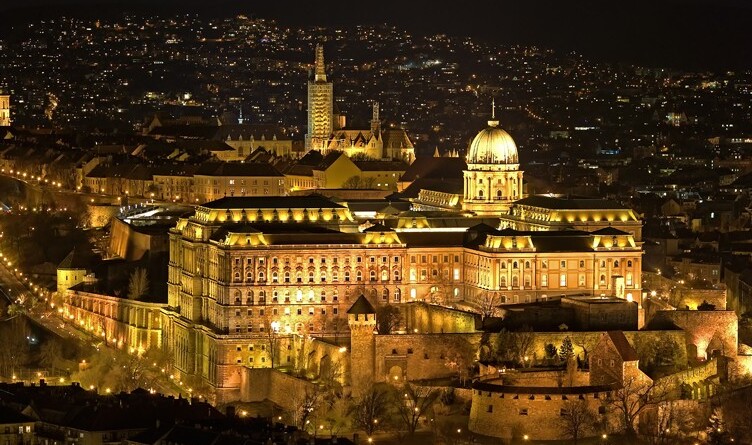
Most visitors photograph Buda Castle from the Pest side of the Danube and consider the matter closed. Those who cross the river and climb to it discover something the photographs do not prepare them for: a building that has been destroyed and rebuilt so many times that its current form is less a monument to power than a monument to persistence. Construction began in the 13th century and the castle has since been Ottoman, Habsburg, bombed, and reconstructed — each era leaving its own architectural fingerprints. The result is a complex that is simultaneously grand and slightly unresolved, which makes it far more interesting than a palace that has merely survived intact.
The National Gallery and the Budapest History Museum occupy its wings, and both are chronically under-attended relative to the building they inhabit.
Insider tip
Come on a weekday morning before the tour groups arrive and walk the northern end of the castle terrace — the views toward the Danube bend are considerably less crowded than the southern terrace that everyone photographs.
2Bridge|Engineering|History· 0.3 km
The Széchenyi Chain Bridge on the Danube — the bridge that made a city
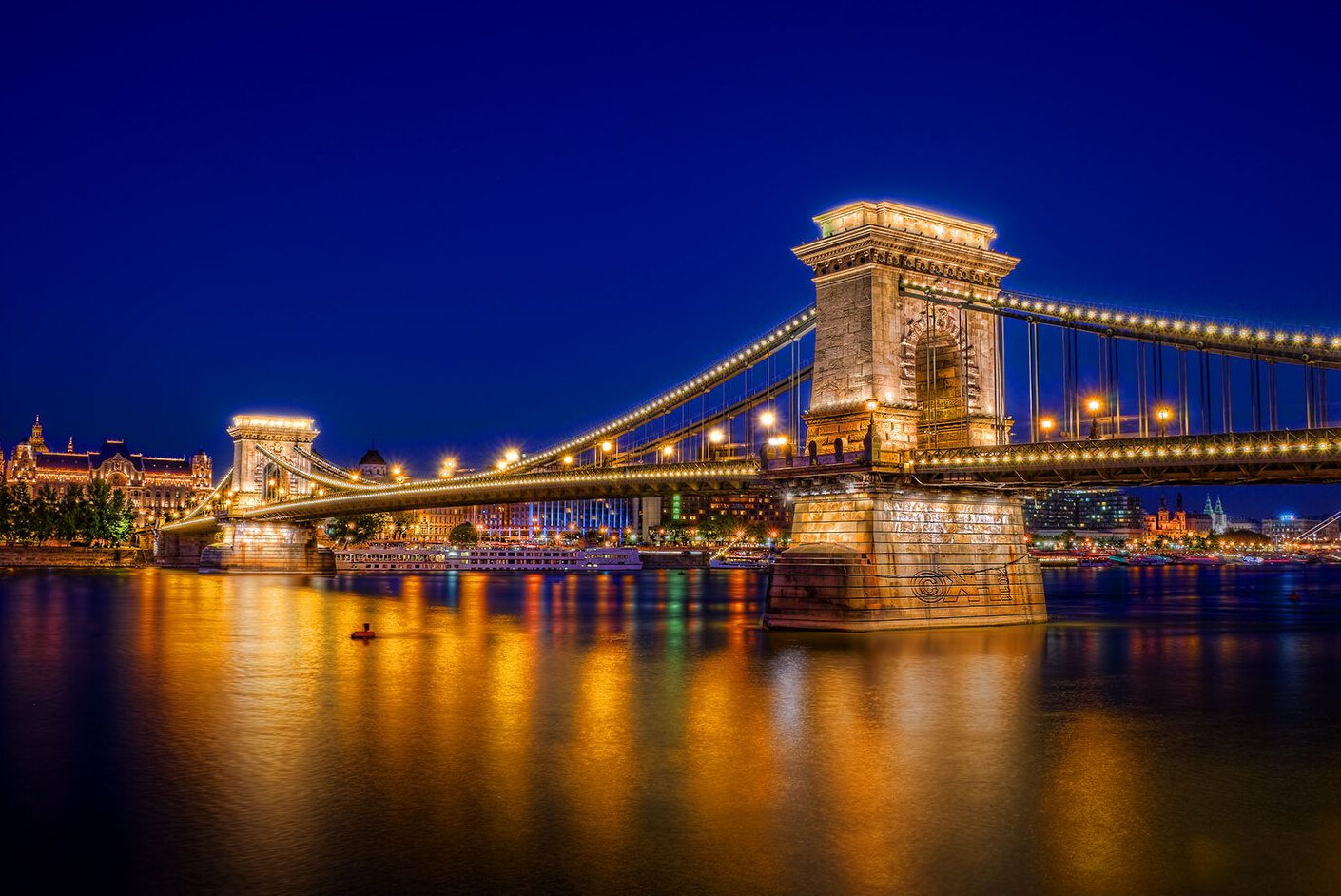
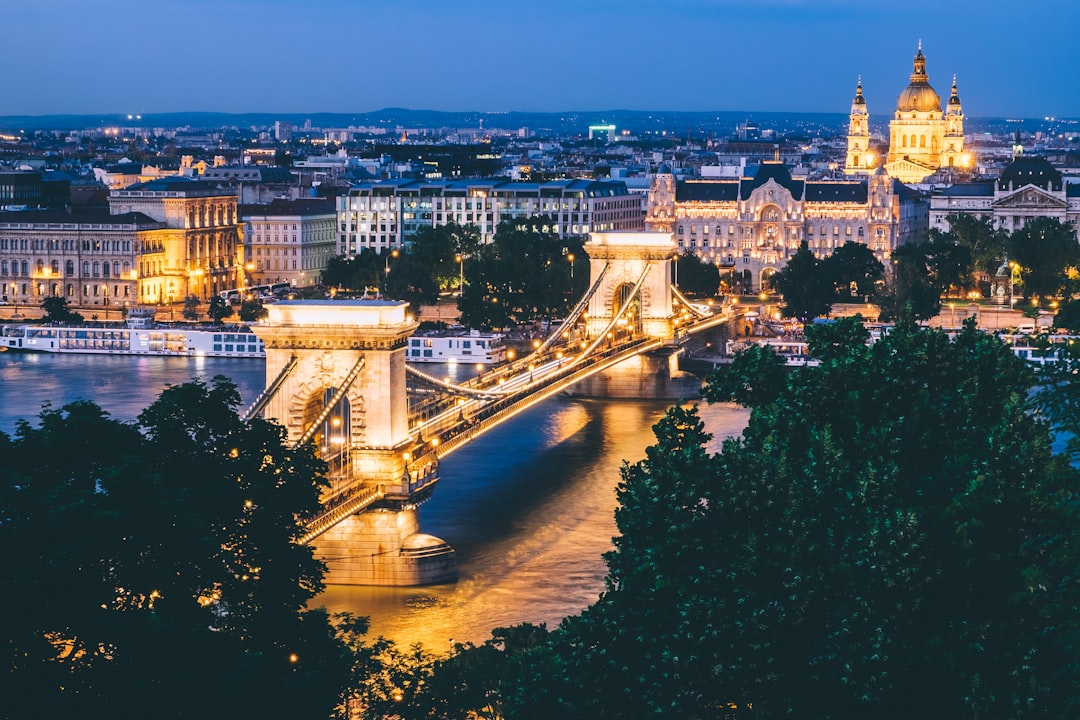
The Chain Bridge is so central to Budapest's identity that it appears on souvenirs, in logos, and in the background of approximately half the city's Instagram output. And yet the bridge itself — the actual iron and stone structure suspended between two classical river piers — is something that most people cross without reading. Designed by English engineer William Tierney Clark and completed in 1849, it was the first permanent bridge connecting Buda and Pest, and in doing so it made the idea of a unified city imaginable before unification was politically achieved. That is not a small thing. The iron chains that give it its name hang with a weight that is partly historical.
The bridge was destroyed in 1945 and rebuilt with careful fidelity to the original design, which means what you are walking across is both very old and relatively recent.
Insider tip
Walk the bridge at dusk rather than at night — the light on the river at that hour is more interesting than the illuminated postcard version, and the pedestrian lanes are quieter.
If the Chain Bridge as symbol belongs to the romantic imagination of Budapest, the Chain Bridge as engineering object belongs to a different and equally compelling story. The 48-metre river piers in classicist style that hold the iron chains aloft were considered extraordinary feats of construction when the bridge opened, and they remain visually authoritative today — massive without being brutish, decorative without being frivolous. Standing directly beneath one of the piers and looking up gives you a perspective that no photograph of the bridge ever captures: the sheer vertical ambition of the thing, the sense that someone in the 1840s decided to solve a problem with maximum seriousness.
The road-bed hanging from those chains was revolutionary at the time, and the engineering logic is still legible if you take a moment to actually look at how the structure works rather than simply walking across it.
Insider tip
The piers are best examined from the small walkways at water level — accessible from the riverbank on either side — where you can see the chain connections up close.
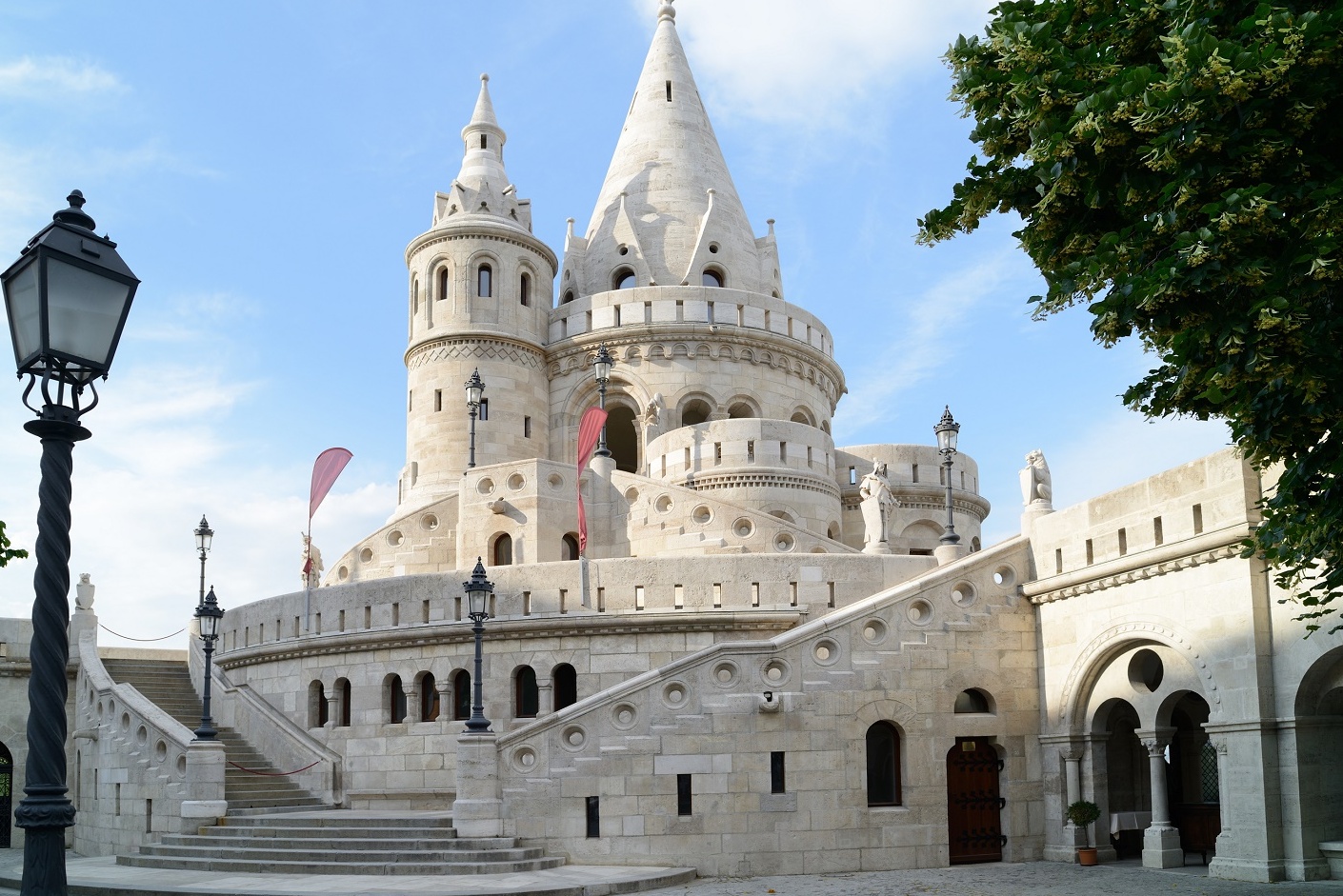
The Fisherman's Bastion is one of those rare places that is entirely aware of its own theatricality and makes no apology for it. Built between 1895 and 1902 as a decorative lookout terrace rather than a defensive fortification, it was designed by Frigyes Schulek with seven turrets representing the seven Magyar tribes who settled the Carpathian Basin in the 9th century. The neo-Romanesque arches frame views across the Danube toward the Parliament Building with the kind of deliberate pictorial composition that suggests the architect was thinking cinematically before cinema existed.
What makes it worth lingering at — beyond the views, which are genuinely good — is the quality of the stonework at close range, the carved details that reward attention, and the way the upper terraces feel genuinely elevated above the city in a way that photographs flatten completely.
Insider tip
The upper terraces require a small entrance fee, which deters enough visitors to make them meaningfully quieter than the free lower level — worth paying.
Part two — A little deeper
5Opera|Architecture|Cultural Institution· 1.5 km
Budapest and the Hungarian State Opera House — the building that outlasted its patrons
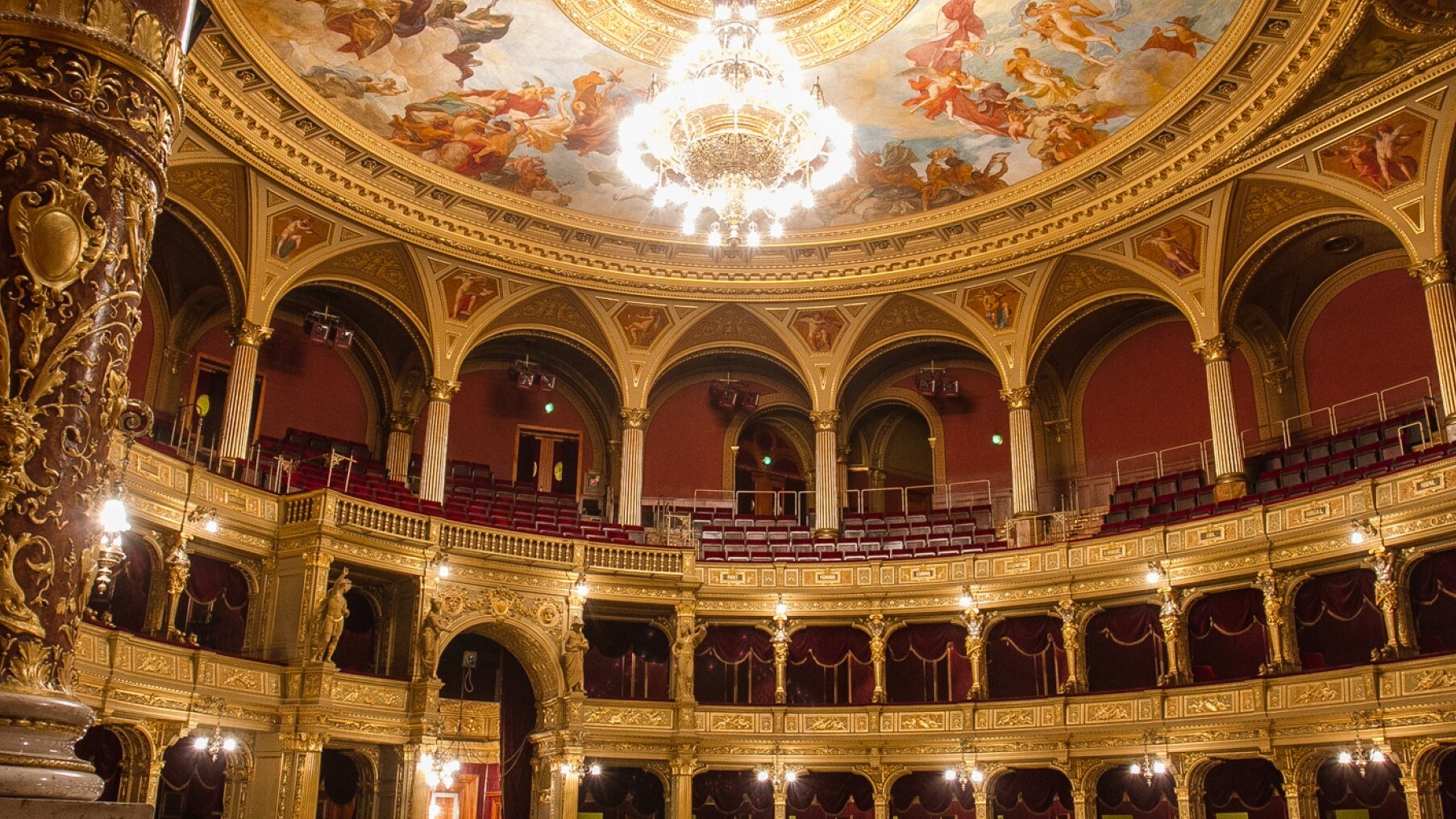
Located on Andrássy Avenue — itself a UNESCO-listed boulevard modelled loosely on the Champs-Élysées — the Hungarian State Opera House is the kind of building that makes you recalibrate your expectations of what a mid-sized European capital was capable of in 1884. Designed by Miklós Ybl, it is widely considered one of the most beautiful opera houses in the world, which is a claim made about several opera houses but which in this case holds up to scrutiny. The neo-Renaissance facade gives way to an interior of extraordinary richness: gilded ceilings, marble staircases, and a main hall with acoustics that reportedly impressed even Gustav Mahler, who served as director here briefly.
The building has survived wars, occupations, and political upheavals with its artistic programme largely intact, which is its own kind of remarkable.
Insider tip
Daytime guided tours of the interior are available and significantly cheaper than attending a performance — the architecture is the argument, and the tour gives you access to spaces that audience members never see.
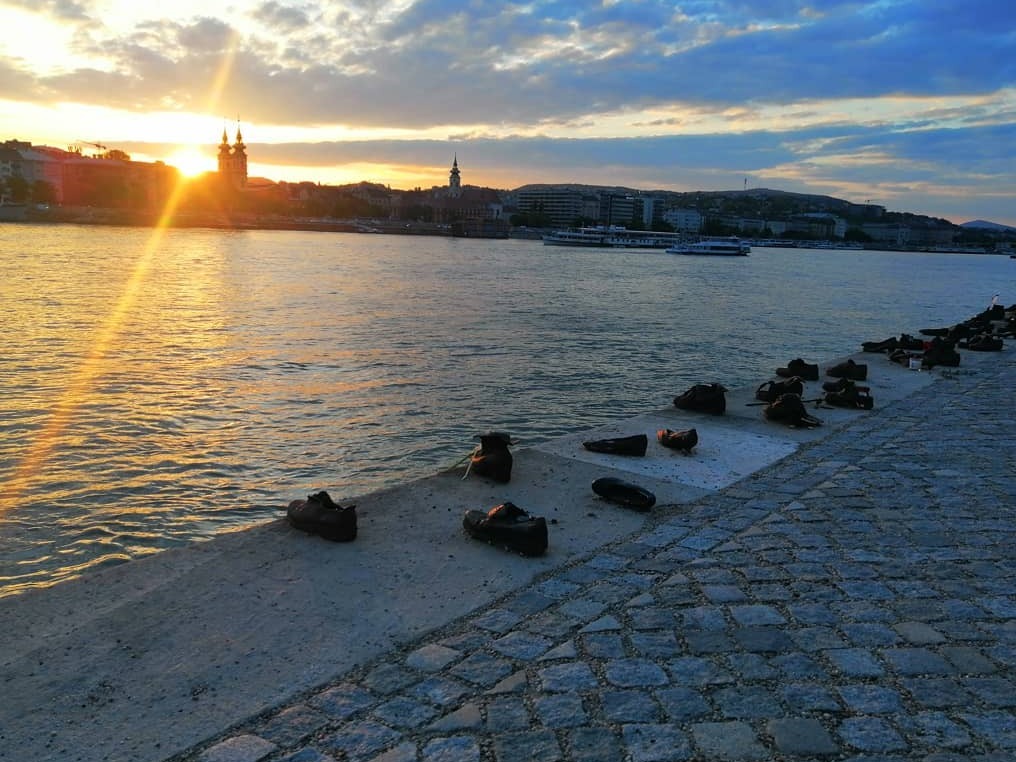
There is a particular cruelty to the location of this memorial that is entirely intentional. Sixty pairs of period-appropriate iron shoes — men's, women's, children's — are fixed to the edge of the Danube embankment at the point where, during the winter of 1944–45, Arrow Cross militiamen shot Jews at the river's edge, ordering them to remove their shoes first before killing them and letting the current take the bodies. Conceived by film director Can Togay and realised by sculptor Gyula Pauer, the memorial was installed in 2005 and has no explanatory plaque visible at a distance. You simply encounter the shoes and have to work out what they mean.
That moment of working it out — and then the moment after — is among the most affecting experiences Budapest offers, which is saying something in a city that has no shortage of difficult history.
Insider tip
Visitors sometimes leave stones, flowers, or candles inside the shoes — this is a tradition worth observing quietly rather than photographing extensively.
7Memorial|History|1956 Revolution· 0.7 km
The Mansfeld Péter Memorial — the youngest face of 1956
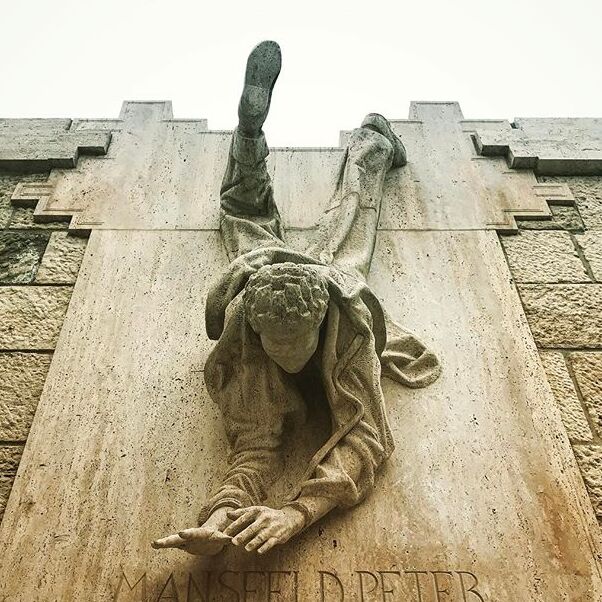
The 1956 Hungarian Revolution is commemorated across Budapest in various forms, but the Mansfeld Péter memorial carries a specific weight that the larger monuments do not. Péter Mansfeld was fifteen years old when he and his family became involved in the uprising against Soviet rule. He was later arrested, and — in a detail that defines the particular brutality of the reprisals — the authorities waited until he turned eighteen before executing him in 1959, ensuring the sentence was legally applicable. The memorial depicts a young man falling, which is both literal and figurative, and the image does not soften the story it is telling.
The memorial sits on the Buda side, and most visitors pass it without registering what it represents. That invisibility is itself a kind of injustice that the informed traveller can, at minimum, refuse to perpetuate.
Insider tip
Read the brief history of Mansfeld before you visit rather than after — arriving with context transforms the experience of standing in front of the sculpture.
8Square|Monument|History· 3.4 km
Heroes Square is in the heart of every Hungarian — a monument to arrival
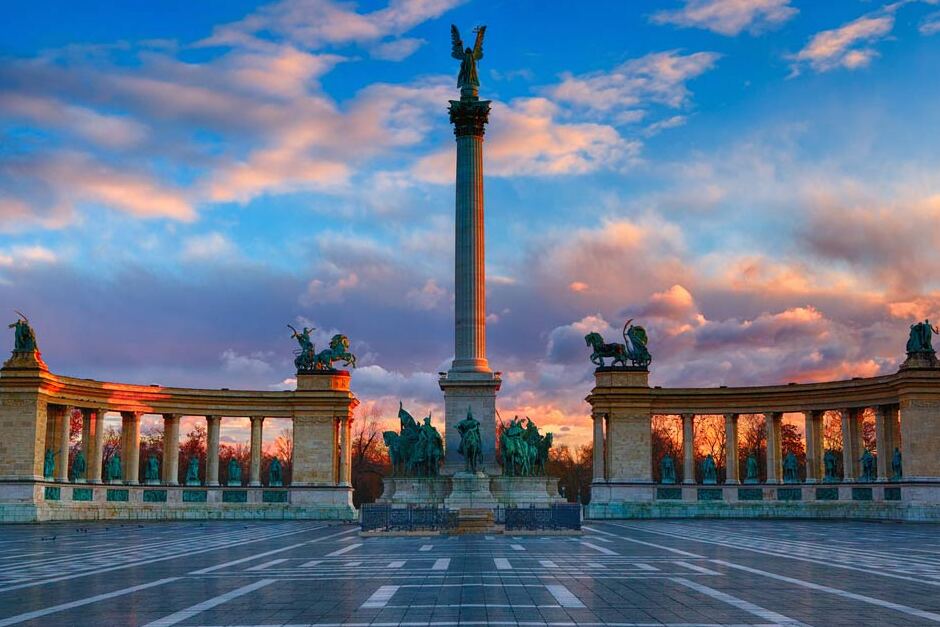
Heroes Square is one of those public spaces that is simultaneously a civic statement, a history lesson, and a piece of urban theatre that the city stages for itself as much as for visitors. The Millennium Monument at its centre was built to mark a thousand years since the Magyar tribes arrived in the Carpathian Basin — a celebration of origin that is also, inevitably, a political argument about who belongs here and since when. The colonnade of Hungarian kings and national heroes that flanks the central pillar was altered multiple times in the 20th century as different political regimes decided which figures deserved commemoration.
The square is large enough that it never feels fully intimate, but that scale is part of the point — it was designed to make the individual feel small in the presence of collective history, which it continues to do effectively.
Insider tip
The Museum of Fine Arts and the Kunsthalle face each other across the square and are both chronically under-visited relative to their quality — the square is a reasonable reason to visit both on the same afternoon.
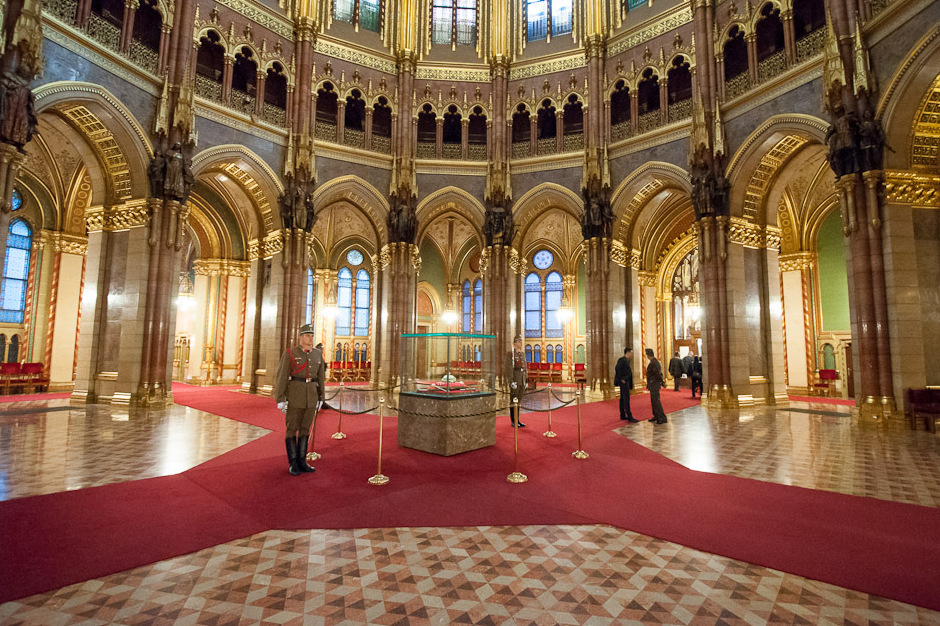
The Dome Hall of the Hungarian Parliament Building houses the Hungarian Crown Jewels, including the Holy Crown of Hungary — an object of such symbolic weight in Hungarian national identity that it has its own security detail and its own complicated political history involving wartime removal, American custody, and eventual repatriation in 1978. The crown itself is visually arresting: Byzantine in its lower section, Latin in its upper, and the result of a construction history that mirrors the country's own layered identity. The anecdotes surrounding the foundation of the Hungarian state, accessible through the exhibition here, are more interesting than the standard parliamentary tour narrative.
Most visitors to the Parliament focus on the main chambers and miss the Dome Hall almost entirely, which means the crown jewels are frequently seen in relative quiet.
Insider tip
Photography of the crown jewels is restricted — accept this gracefully and spend the time you would have spent photographing actually looking at the objects instead.
10Market|Food|Architecture· 1.8 km
Budapest's Great Market Hall — three floors of what the city actually eats
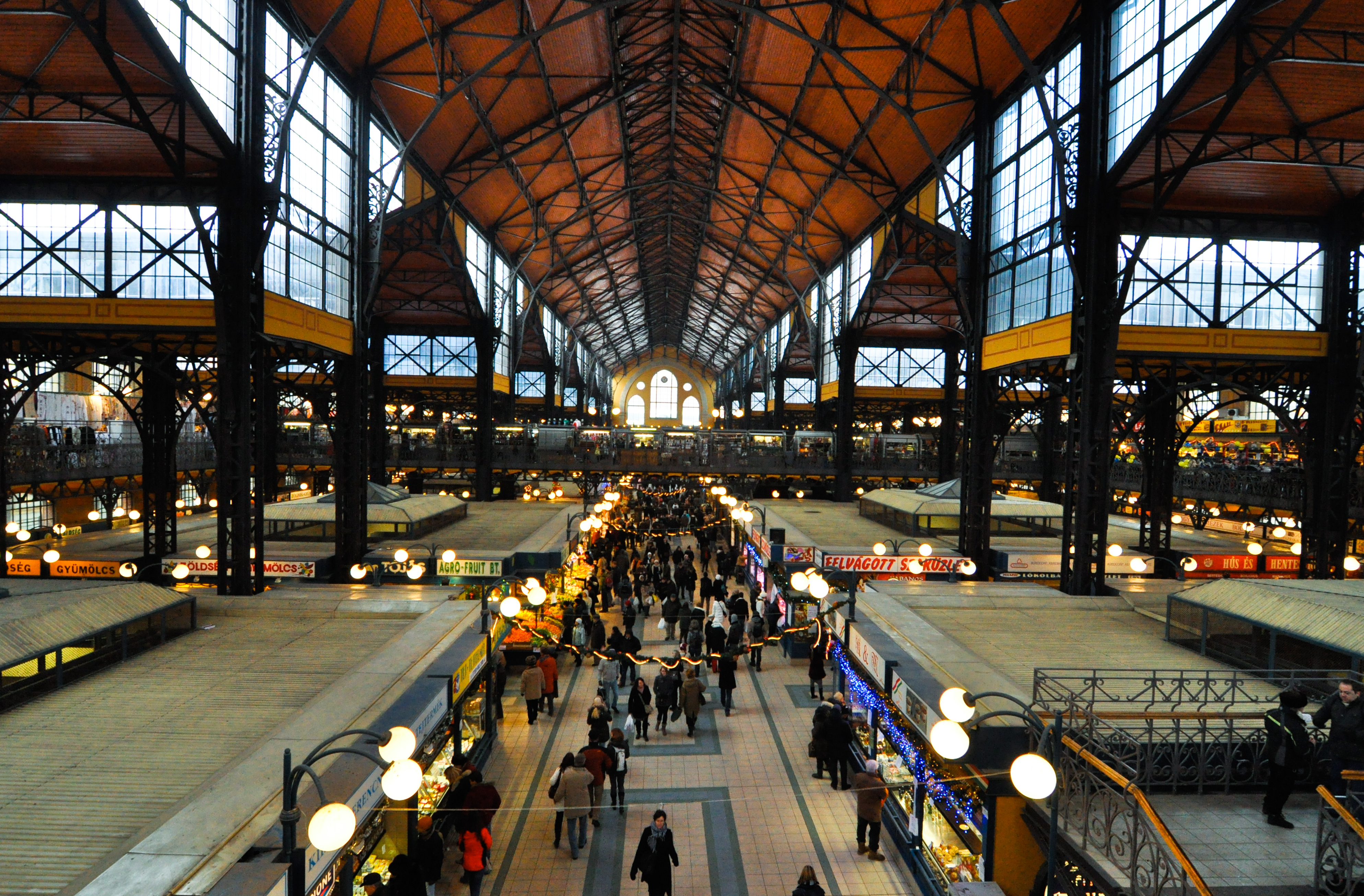
The Great Market Hall on Fővám tér is not a secret — it appears in every guidebook and on every food tour itinerary — but it is consistently misused by visitors who arrive, buy a string of paprika for the kitchen at home, and leave. The building itself is worth the visit independently: a vast iron-and-brick structure from 1897 designed by Samu Pecz, with a tiled roof that manages to be both functional and decorative. The three floors operate on a logic that rewards exploration: ground floor for fresh produce and the cold cuts and salamis that represent genuine regional food culture, basement for meat and fish, upper floor for the embroidered goods and tourist items that are best approached with calibrated expectations.
The market is busiest on Saturday mornings, which is simultaneously the best time to see it functioning as a real market and the worst time to move through it easily.
Insider tip
The upper floor food stalls, often overlooked in favour of the ground level, serve hot dishes at prices that reflect the fact that they are feeding market workers as much as tourists.
11Café|History|Architecture· 2.3 km
Budapest and the famous old New York Café — the room that survived everything
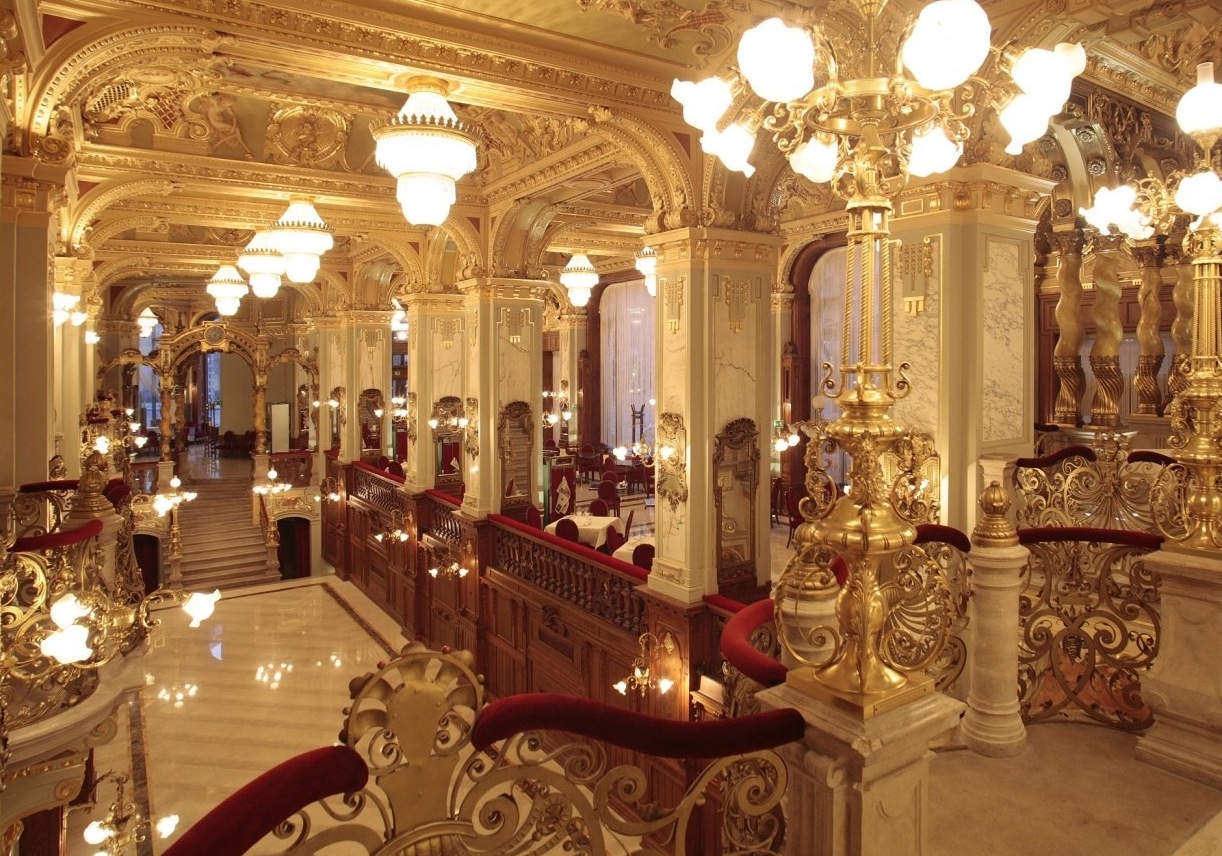
The New York Café opened in 1894 and has since operated through the Austro-Hungarian Empire, two world wars, communist nationalisation (during which it was briefly converted into a sporting goods store, which is either funny or tragic depending on your perspective), and eventual restoration to something approaching its original grandeur. The interior is operatic in its excess: gilded ceilings, frescoed walls, marble columns, and chandeliers that suggest the architect was working from a brief that said 'more' repeatedly. It has lived through enough political systems that its continued existence feels like a minor act of defiance.
The café is expensive by Budapest standards and popular enough that you will likely share it with other people who have read the same guidebook you have. None of that diminishes the room itself, which is genuinely one of the most extraordinary interior spaces in the city.
Insider tip
A coffee and a pastry at the bar costs considerably less than a full table service — standing at the bar also gives you a better view of the ceiling, which is the main event.
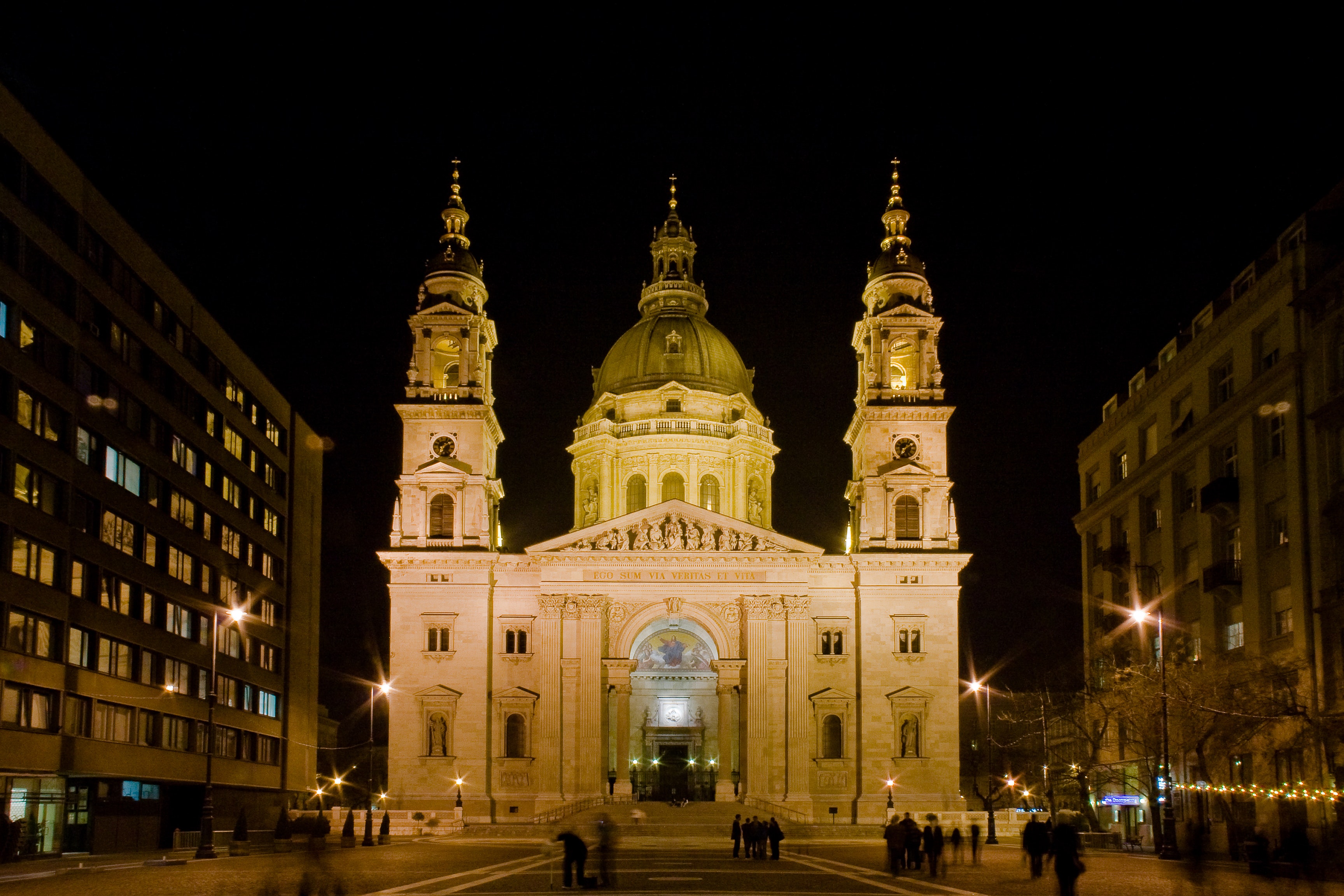
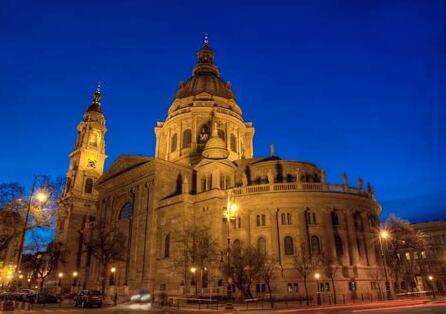
The rule that no building in Budapest should exceed 96 metres — the height shared by St Stephen's Basilica and the Parliament Building — is one of those pieces of urban regulation that is also a philosophical argument. The basilica, completed in 1905 after a construction process that included a partial collapse of the dome in 1868, stands as the primary Catholic monument in a city whose religious architecture spans multiple traditions. The interior is vast and formally impressive, with a reliquary containing what is claimed to be the mummified right hand of St Stephen, Hungary's first Christian king — an object that is simultaneously a relic, an artefact, and a fairly direct statement about the relationship between faith and nationhood.
The dome offers a panoramic view of the city that rivals the Fisherman's Bastion with significantly fewer visitors.
Insider tip
The panoramic terrace accessed via the dome requires a separate ticket and involves a lift plus a short staircase — the view from the external walkway is worth the mild inconvenience.
The Basilica of St. Istvan — Istvan being the Hungarian name for Stephen — is the same building approached from a different angle of understanding. Where the architectural and civic reading focuses on scale and political symbolism, the religious reading centres on the figure of the king himself: Istvan I, who converted Hungary to Christianity around the year 1000, establishing the institutional framework of the Hungarian state in the process. The basilica named for him is the most imposing church in the capital, and its presence on the Budapest skyline is a constant reminder that the city's identity was forged in a specific religious and political moment that continues to resonate.
The building rewards multiple visits at different times of day, when the quality of light through its windows changes the character of the interior considerably.
Insider tip
Evening organ concerts are held periodically in the basilica — the acoustics in the space make this a worthwhile experience that most visitors do not know to look for.
The Gellért Baths are the most architecturally significant of Budapest's thermal bath complexes, and also the most frequently cited in travel writing, which might suggest they belong to the overexposed rather than the overlooked. What the photographs miss — and they always miss it — is the quality of the Art Nouveau detailing at close range: the mosaic floors, the stained glass ceiling of the main pool, the ceramic columns, the sense that someone in 1918 decided a public bath should be treated with the same seriousness as a cathedral. The water that feeds the pools emerges at approximately 44 degrees Celsius from natural springs beneath Gellért Hill, which means the thermal experience is geological as much as it is recreational.
The building has a slightly faded grandeur that is more interesting than full restoration would be.
Insider tip
The outdoor wave pool and the rooftop sun terraces are less known than the main indoor pools and offer a different, more relaxed experience of the complex — worth exploring after the main pools.
Városliget — City Park — is the kind of urban green space that reveals its ambitions slowly. At first glance it is a large park with ponds and walking paths, the sort of place where families spend Sunday afternoons and joggers do their circuits. Look more carefully and you find Vajdahunyad Castle, a building constructed for the 1896 Millennial Exhibition that combines Romanesque, Gothic, Renaissance, and Baroque elements in a single structure as a kind of architectural survey of Hungarian history. You find the Széchenyi Thermal Baths, the largest in the city. You find a former sanatorium and a museum and an amusement park that has been operating in various forms for over a century.
The park is large enough that its constituent parts feel separate from each other, which means you can spend an afternoon here and feel like you have visited several different places.
Insider tip
The park is undergoing significant renovation as part of a long-term urban development project — check current access before visiting, as some areas may be restricted.
Budapest is a city that has been through enough history to be suspicious of easy narratives, and the best way to visit it is to share that suspicion. The places in this list are not secrets — they are, most of them, well-documented and reasonably well-attended. What they share is a quality of being genuinely worth more attention than they typically receive, either because they are overshadowed by more famous neighbours, or because they require some prior knowledge to fully appreciate, or simply because the city moves quickly and people forget to slow down.
The traveller who leaves Budapest feeling they have understood it is probably mistaken. The city has been rebuilt too many times, renamed too many times, governed by too many different ideas of what it should be. What you can do is spend time in its streets and along its river and in its grand interiors and come away with a set of impressions that are genuinely your own — not the city of the postcard, but the city as it actually presents itself to someone paying attention. That is enough. It is, in fact, quite a lot.
🏆 Pocket guide
Take this guide with you.
Save it offline, get walking directions, and discover thousands more places like the ones you just read.
What is the best time of year to visit Budapest to avoid the largest crowds?
Late autumn (October to November) and early spring (March to April) offer the most manageable visitor numbers. Summer is peak season and the thermal baths and major landmarks become genuinely congested. Winter has a particular atmosphere — cold but atmospheric — and Christmas markets draw crowds of their own, though the museums and indoor sites are quieter than at any other time of year.
How many days do you need to cover the places on this list properly?
Four to five full days is a reasonable minimum if you want to spend meaningful time at each location rather than simply checking them off. Budapest rewards slow walking and unplanned detours, and trying to cover too many sites in a single day tends to produce diminishing returns. A week is better, particularly if you intend to visit the thermal baths more than once — which, once you have been, you will.
Is Budapest an expensive city to visit?
By Western European standards, Budapest remains relatively affordable, particularly for food, public transport, and cultural admissions. The major thermal baths and the Opera House tours represent the higher end of local pricing but are still considerably cheaper than equivalent experiences in Vienna or Prague. The New York Café is the main exception on this list — it prices itself for an international clientele and should be budgeted for accordingly.
How easy is it to get between the sites on this list without a car?
Budapest has an excellent public transport network — metro, tram, and bus — that connects virtually all the sites on this list efficiently. The M1 metro line, which runs along Andrássy Avenue, is the oldest underground railway in continental Europe and connects several key sites directly. Many of the central locations are also walkable from each other, particularly on the Pest side. A multi-day transport pass represents good value if you are moving around frequently.
Are the thermal baths suitable for visitors who are not experienced with spa culture?
Yes, though it is worth understanding the basic etiquette before you arrive. The Gellért Baths are generally considered the most accessible for first-time visitors due to their relatively straightforward layout and the availability of information in multiple languages. Bring a towel or rent one on site, bring flip-flops, and be prepared for the fact that the pools are genuinely hot — the thermal water is not a heated swimming pool but a geological phenomenon, and it takes some adjustment.
🏆 Read this offline
Save it to your phone.
Bookmark this guide, plan your trip offline, and discover thousands of places like these.
BookmarkPlan offline60 languages
iOS / Android
Huawei users
Secret WorldHidden places, real stories — plan your trip