15 Hidden Gems in Causeway Bay — beyond the postcard
A knowing guide to the corners, corridors and curiosities that even frequent visitors tend to miss
L
Words by
Lena Hofmann
Updated
19 October 2026
Read time
12 minutes
Includes
14 places · interactive map
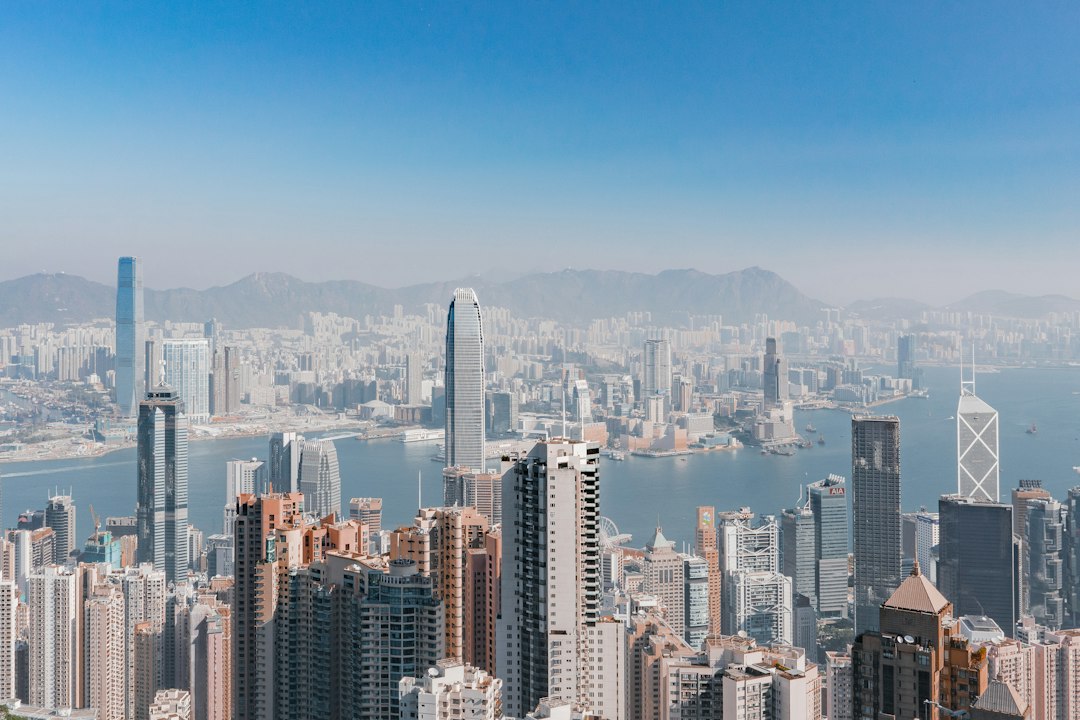
There is a particular kind of invisibility that afflicts the well-documented. A place can be photographed ten thousand times a day and still remain, in any meaningful sense, unseen. Causeway Bay and the wider Hong Kong island district that surrounds it operates on exactly this paradox: the trams rattle past shopfronts that have outlasted three economic eras, the harbour throws light in seventeen directions at once, and the crowds — always the crowds — move with such purposeful velocity that the act of stopping, of actually looking, becomes a minor act of resistance. I have been coming here long enough to know that the city rewards the patient and quietly punishes the itinerary-obsessed. The places that surprised me most were rarely obscure in any objective sense. They were simply overlooked: a square that marks a seismic political moment but is treated as a shortcut; a waterfront promenade that most visitors photograph from the wrong side; a park that sits above the city like a held breath. What makes a place feel hidden, I have come to believe, is not its obscurity but the gap between its significance and the attention it actually receives. The fifteen entries that follow are drawn from that gap. Some are famous. Some are institutional. A few are genuinely difficult to find. All of them, in my experience, have a way of catching even informed travellers off-guard — not because they are secret, but because the city moves so fast that the only way to see it properly is to decide, quite deliberately, to slow down.
Golden Bauhinia Square in Hong Kong: the ceremony most tourists photograph from the bus
In 1997, the handover of Hong Kong from British administration to the People's Republic of China was one of the most watched political events of the late twentieth century. Golden Bauhinia Square, the civic space that commemorates that transfer, sits at the edge of the Wan Chai waterfront in a way that feels simultaneously grand and oddly peripheral — hemmed in by the convention centre's sweeping roof on one side and the harbour on the other. The golden sculpture at its centre, a bauhinia flower cast in bronze, is polished to a gleam that catches the morning light with almost theatrical precision. Most visitors see it from a tour bus window or a harbour cruise and consider the matter settled. Those who actually walk the square's perimeter at dawn, when the flag-raising ceremony takes place and the crowds are thin, encounter something considerably more affecting: a piece of civic theatre that the city performs quietly, daily, whether anyone is watching or not.
Insider tip
The daily flag-raising ceremony happens at sunrise — check the exact time for the date of your visit, as it shifts with the season. Arrive fifteen minutes early and stand to the north side for an unobstructed view against the harbour backdrop.
2Architecture· 2.9 km
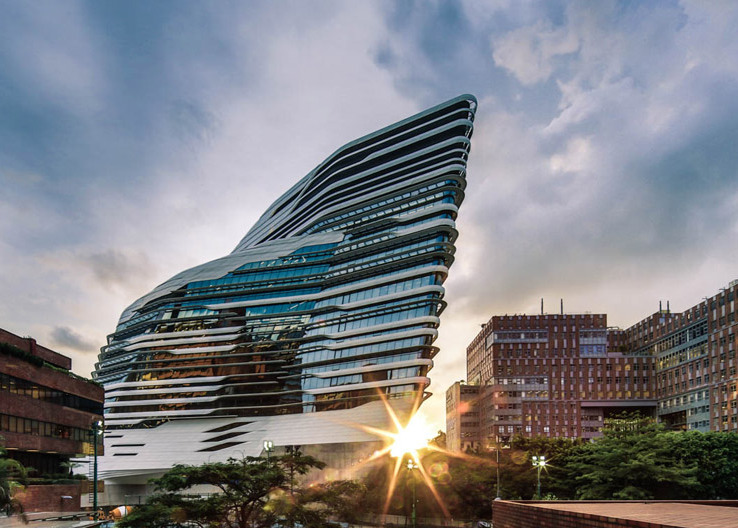
Zaha Hadid: Innovation Tower (Jockey Club Tower): a building that argues with gravity
Zaha Hadid's Innovation Tower at Hong Kong Polytechnic University in Hung Hom is the kind of building that makes you question whether the architect was working from blueprints or from a particularly vivid fever dream. Formally known as the Jockey Club Innovation Tower, it rises from Chatham Road South as a cascade of angular white forms that seem to lean into and away from each other simultaneously — a structure that looks different from every approach, as though it is perpetually in the process of deciding its own shape. Hadid's signature parametric style is well-documented, but the tower's relationship with its immediate surroundings — the dense, low-rise residential fabric of Hung Hom — gives it a contextual charge that photographs rarely convey. This is not a building that belongs to a skyline. It belongs to a street corner, and that proximity is where its real drama lives.
Insider tip
Walk the full perimeter of the building before entering. The south-facing elevation, rarely featured in architectural photography, offers the most complex interplay of angles and shadow, particularly in the late afternoon.
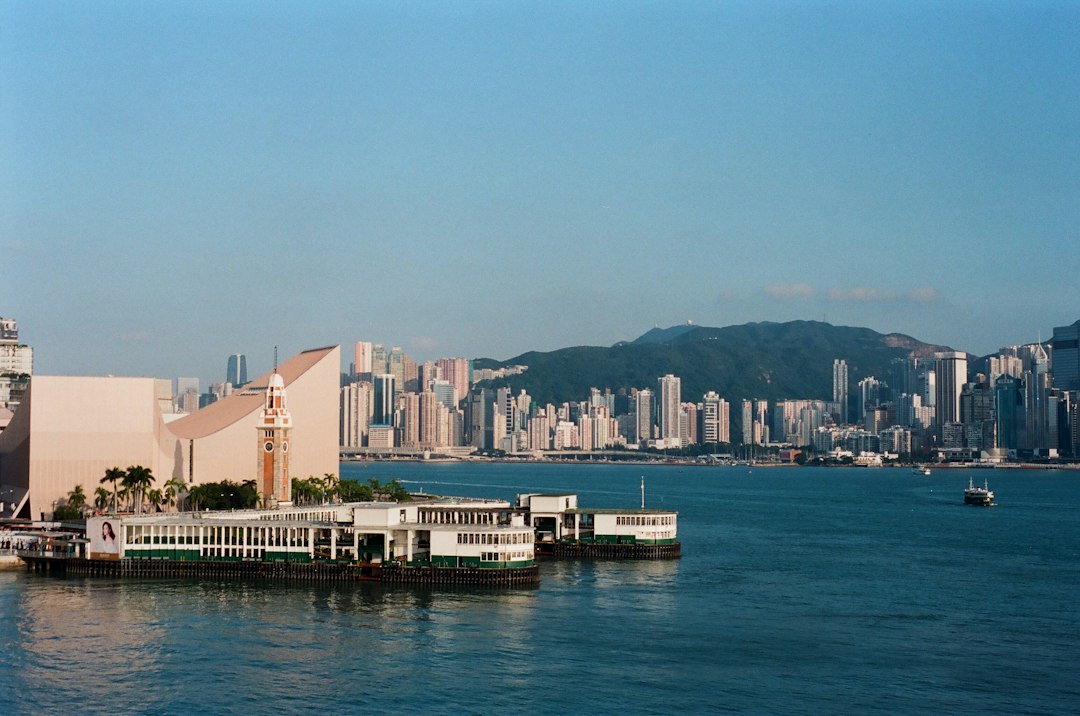
The Kowloon Clock Tower stands at the edge of the Tsim Sha Tsui waterfront as the sole surviving remnant of the old Kowloon-Canton Railway terminus — a station demolished in 1978 whose ghost still organises the surrounding urban geography in ways that most visitors never register. The tower is 44 metres of red brick and granite, built in the early twentieth century, and it has the slightly bewildered quality of a building that expected company. The railway it once served connected Hong Kong to the Chinese mainland and, in theory, to the Trans-Siberian route beyond. That ambition — the idea that you could stand here and be at the beginning of a journey to Moscow — has been entirely absorbed by the tower's current role as a backdrop for wedding photographs. The gap between those two scales of meaning is, in itself, worth a moment of contemplation.
Insider tip
The tower is most evocative at dusk, when the harbour light turns amber and the surrounding Cultural Centre complex empties of its daytime crowds. Stand with your back to the water and look up the tower's face for the best sense of its original civic scale.
4Food· 1.2 km
Dim Sum that means "touch your heart": a ritual disguised as breakfast
The translation is literal and also, somehow, exact: dim sum — touch your heart. What began as a modest family meal, dumplings and small eats stacked in bamboo steamers and shared across a table that was always slightly too crowded, has become one of the defining culinary experiences of the Chinese diaspora worldwide. In Hong Kong, however, the practice retains a specificity that exported versions rarely capture. The rhythm of yum cha — the tea-drinking ritual that accompanies dim sum — is as much about the pace of the meal as the food itself: the slow accumulation of small plates, the negotiation over the last har gow, the tea refilled without being asked. Finding a room where that rhythm is still intact, unhurried by tourism or Instagram, requires a degree of local knowledge that the city does not hand over easily. It rewards the visitor who arrives early, orders without pointing at a laminated menu, and surrenders to the pace of the kitchen.
Insider tip
Arrive before 9am on a weekday. The best dim sum houses fill with local families and retired residents at this hour, and the trolleys — where they still exist — move with a frequency that later sittings cannot match.
Lan Kwai Fong has been Hong Kong's most internationally recognised nightlife district for decades, which means that by the time most travel writers get around to describing it, the description is already slightly out of date. The cluster of bars, clubs and Western-style restaurants that occupies this steep L-shaped lane in Central operates on a reputation that precedes it by at least twenty years — and that reputation, paradoxically, is what keeps the more interesting corners of the district invisible. The daytime version of Lan Kwai Fong, when the shutters are half-down and the delivery trucks block the lane and the whole place smells of last night's ambition, is a genuinely different proposition: a working street in a working city, rather than a set dressed for a particular kind of visitor. The folklore of the place — its history of New Year's Eve crowds, its role in the expatriate social geography of the 1980s and 1990s — is worth understanding before you arrive.
Insider tip
Visit on a Tuesday or Wednesday evening rather than the weekend. The crowd thins considerably, the bar staff have time to talk, and the district's actual character — a neighbourhood that happens to have bars, rather than a bar district that happens to have a neighbourhood — becomes legible.
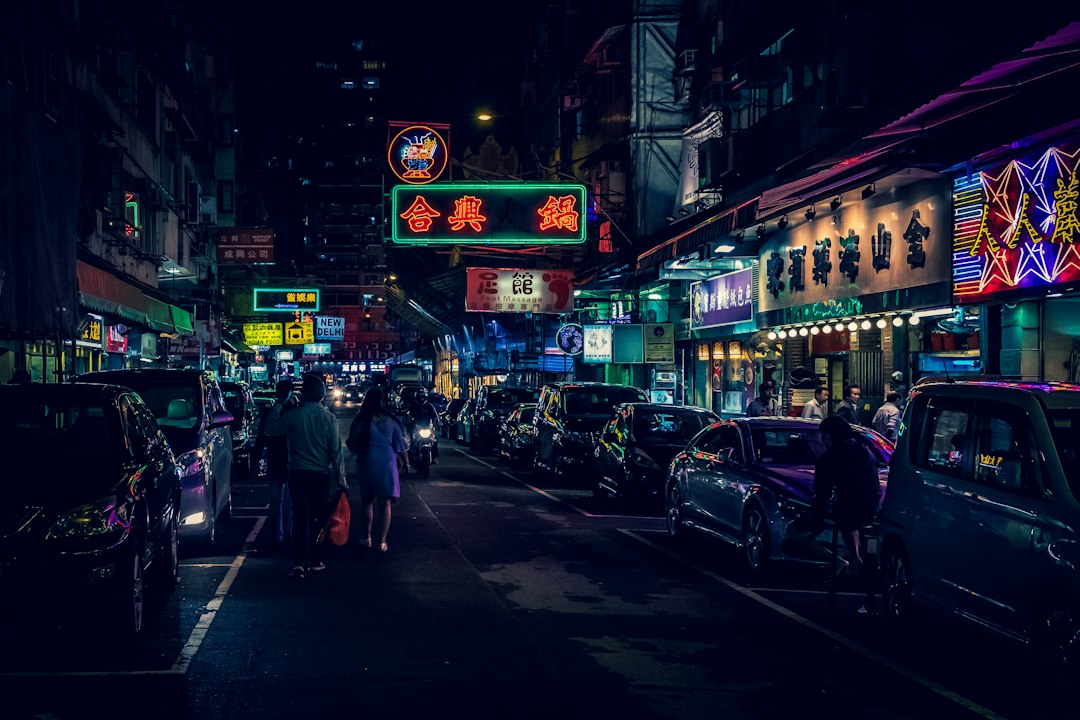
Temple Street Night Market in Yau Ma Tei is one of those places that appears on every list and is therefore, in the minds of many informed travellers, already dismissed. This is a mistake. The market — which stretches through the streets around the Tin Hau temple in Kowloon, filling the evening air with the smell of cooking, the sound of Cantonese opera drifting from portable speakers, and the particular energy of commerce conducted at very close range — operates on a scale and density that no amount of prior reading quite prepares you for. The stalls selling watches, clothing and electronics are the visible layer. Below that is a social infrastructure: fortune tellers working under bare bulbs, opera singers performing for small seated crowds, the entire apparatus of a neighbourhood's evening life conducted in public, without embarrassment, as it has been for generations.
Insider tip
The opera performances, when they occur, tend to cluster around the temple end of the market from around 8pm. They are not advertised and not guaranteed — which is precisely what makes encountering one feel like a genuine discovery rather than a scheduled attraction.
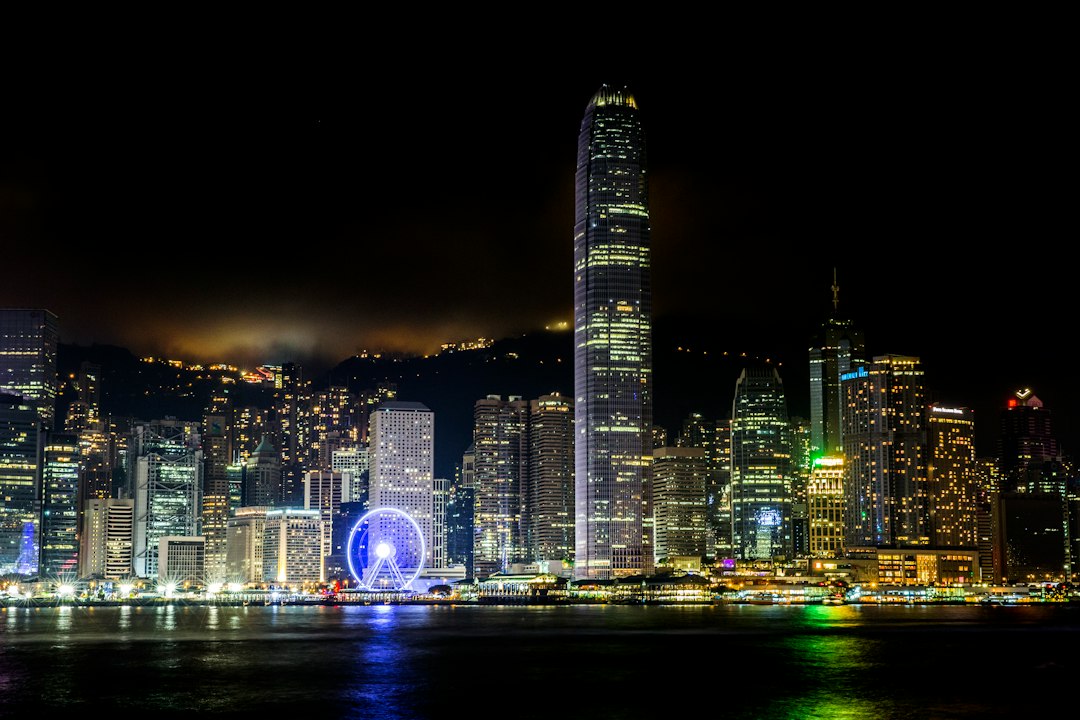
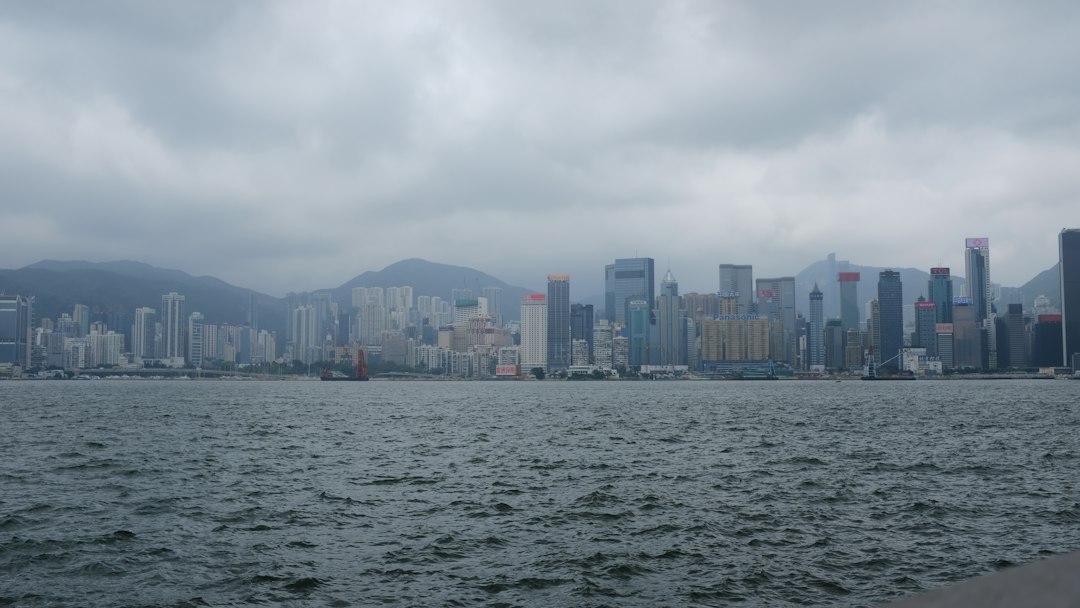
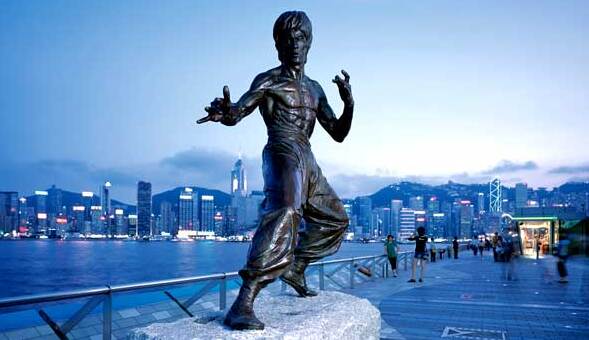
The Avenue of Stars along the Tsim Sha Tsui waterfront is, in its official conception, a tribute to Hong Kong's cinema industry — a 440-metre promenade of handprints, plaques and bronze figures celebrating the actors, directors and behind-the-scenes figures who built one of the world's most prolific film cultures. That story is genuinely interesting. But the reason most people stand here, cameras raised, is the view across Victoria Harbour to the Hong Kong Island skyline, which performs its own kind of cinema: a continuous, unrepeatable composition of glass, light and water that changes register every twenty minutes as the day progresses. The promenade's Italian-language documentation describes it as a place of magic — a word that usually signals the absence of anything more precise to say, but which here gestures at something real: the harbour view from this angle has a quality of theatrical excess that no single photograph resolves.
Insider tip
The promenade is at its least crowded in the hour after the Symphony of Lights show ends each evening. The harbour then belongs to the ambient light of the city itself, which is considerably more nuanced than the choreographed display.
8Film Location· 1.8 km
The Avenue of Stars in Tsim Sha Tsui East, Kowloon: reading the handprints
The Avenue of Stars in Tsim Sha Tsui East was conceived as Hong Kong's answer to the Hollywood Walk of Fame, and the comparison is both apt and slightly reductive. Where Hollywood's sidewalk stars are embedded in a working commercial street and therefore experienced in passing, the Kowloon promenade is a destination in itself — a waterfront walk of approximately 440 metres that invites a slower engagement with the history it documents. The handprints and plaques embedded along its length represent a canon of Hong Kong cinema that spans martial arts, melodrama, comedy and the particular genre of urban thriller that the city essentially invented. For visitors who know that canon even partially, reading the promenade becomes an act of recognition rather than tourism. For those who do not, it offers a coherent starting point for understanding a film culture that shaped global popular cinema in ways that are still being properly acknowledged.
Insider tip
Download a guide to Hong Kong cinema before you visit rather than relying on the plaques alone. Cross-referencing names with films you know transforms a pleasant walk into something approaching a curriculum.
Repulse Bay sits on the southern coast of Hong Kong Island, tucked between green hills in a way that seems almost deliberately designed to make you forget you are in one of the world's densest urban environments. The bay's name carries a colonial military history — a reference to a naval engagement rather than any quality of the place itself — and the contrast between that etymology and the actual experience of arriving here, where the pace genuinely slows and the water is the primary fact of the landscape, is one of the city's more pleasurable ironies. The beach is popular with local residents on weekends and essentially quiet on weekday mornings. The apartment buildings that rise behind the sand are among Hong Kong's most sought-after addresses, their facades reflecting a light that is categorically different from the harbour light on the other side of the island.
Insider tip
The Tin Hau temple complex at the eastern end of the beach, with its assembly of deities and the famous bridge said to add three days to your life for each crossing, is more architecturally and spiritually layered than its tourist-board billing suggests. Allow an hour.
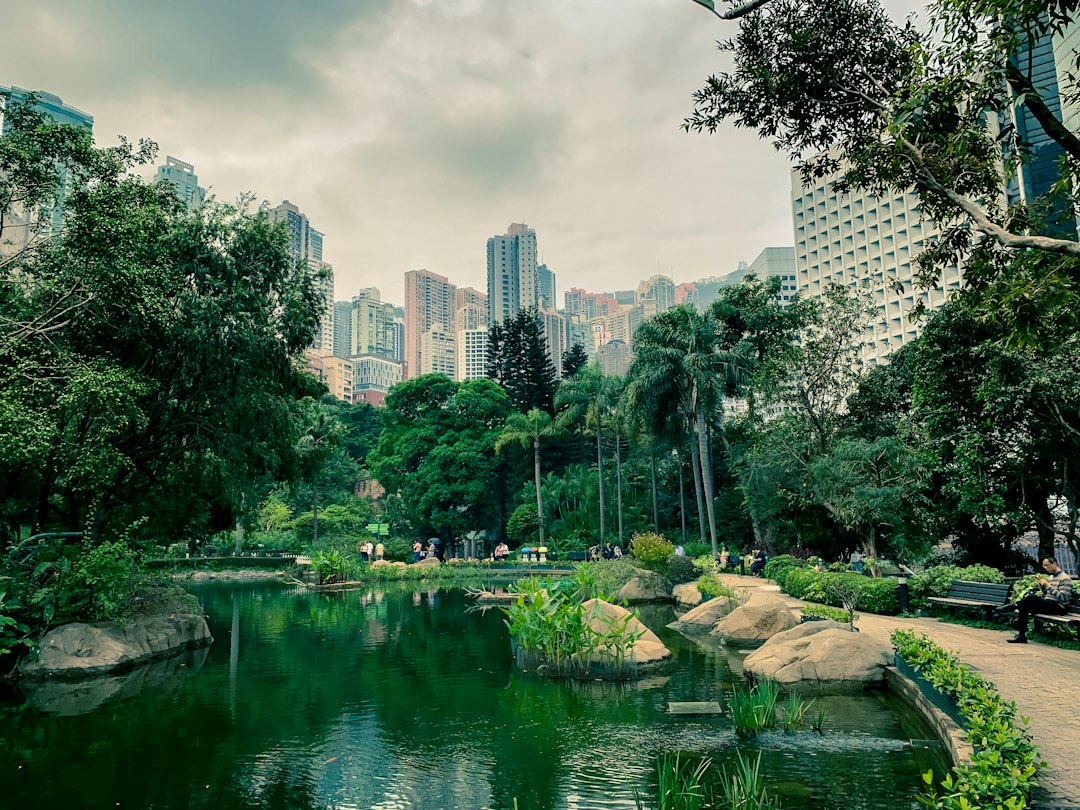
Hong Kong Park occupies a plateau above Admiralty that feels, from the moment you enter it, like a deliberate act of civic generosity — a decision to preserve open space in a location where the land value is among the highest on earth. The park's aviary, one of the largest in Southeast Asia, is a walk-through structure of considerable ambition: a steel-and-glass enclosure that contains a fragment of forest complete with waterfall, in which birds move freely at eye level and above. The park also contains a conservatory, a visual arts centre and the Museum of Tea Ware, housed in Flagstaff House — the oldest surviving Western-style building in Hong Kong. Most visitors who pass through are on their way to the Peak Tram or the surrounding shopping districts. The park rewards those who arrive with no particular destination in mind.
Insider tip
The Edward Youde Aviary is best visited in the early morning when the birds are most active and the light through the canopy is at its most complex. Entry is free, and the experience of walking through a functioning forest ecosystem in the middle of a financial district is genuinely disorienting in the best sense.
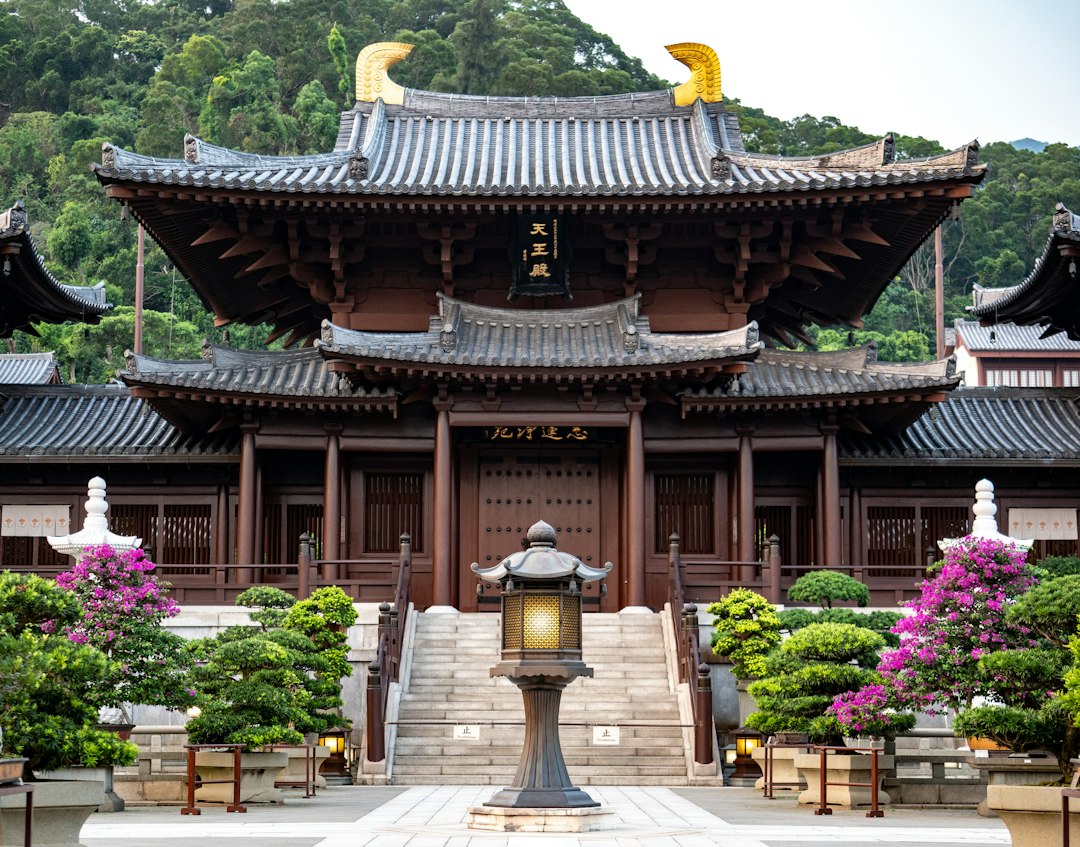
The Man Mo Temple on Hollywood Road in Sheung Wan is dedicated to two deities: Man, the god of literature, and Mo, the god of war — a pairing that tells you something essential about the pragmatism of Cantonese religious sensibility. The temple dates to the mid-nineteenth century, making it one of the oldest in Hong Kong, and it has survived the city's cycles of demolition and reinvention with a composure that feels almost pointed. Inside, the air is thick with incense from the massive hanging coils that smoulder above the main altar, casting a haze that softens the light and slows the eye. The temple is documented, visited and photographed — but it operates on a frequency that tourism does not fully reach. People come here to pray, to seek guidance, to light incense for specific and private reasons. The visitor who enters quietly and observes without intrusion will find a room that is doing serious work.
Insider tip
The giant incense coils suspended from the ceiling can burn for weeks. Look for the small paper tags attached to each coil — they bear the names and prayers of the people who commissioned them, a detail that shifts the entire space from aesthetic object to living devotional practice.
12Hiking· 2.8 km
Hong Kong Trail: the city from the ridge
The Hong Kong Trail stretches for 50 kilometres — approximately 31 miles — across Hong Kong Island, threading through five country parks in a route that begins near the Peak and ends at Big Wave Bay on the island's eastern shore. It is one of Asia's more underappreciated long-distance walks, not because it is difficult to find information about it but because the idea of sustained hiking within the boundaries of one of the world's great cities requires a conceptual adjustment that many visitors never quite make. The trail's higher sections offer perspectives on the urban density below that no rooftop bar or observation deck can replicate — the city seen from above its own skyline, compressed and glittering, surrounded by hills that are almost entirely wild. The contrast between the two Hong Kongs — the vertical and the horizontal, the built and the forested — is the walk's real subject.
Insider tip
Stage Four of the trail, between Tai Tam Reservoir and Shek O, is the section that consistently surprises people who have walked the rest. The reservoir landscape has a quality of engineered grandeur — Victorian infrastructure in a subtropical valley — that sits entirely outside the city's usual self-presentation.
The Hong Kong Museum of Art, which reopened after an extensive renovation, occupies a position on the Tsim Sha Tsui waterfront that gives it one of the better harbour views of any cultural institution in Asia — a fact that its curators seem pleasantly aware of, having oriented several gallery spaces toward the water. The collection spans Chinese antiquities, historical paintings, calligraphy and contemporary Hong Kong art in a way that resists easy summary. What the museum does particularly well is contextualise Hong Kong's artistic production within the longer history of Chinese visual culture while simultaneously acknowledging the city's specific colonial and post-colonial experience. This is a more complicated task than it sounds, and the permanent collection navigates it with more intelligence than the museum's modest international profile would suggest. It is, in the fullest sense, a civic institution doing serious work.
Insider tip
The galleries dedicated to export art — works produced in Hong Kong and Canton for Western markets during the eighteenth and nineteenth centuries — offer an unexpectedly rich account of how Hong Kong constructed its own image for outside consumption. This is a history with obvious contemporary resonance.
15Travel Planning· 4.6 km
Come pianificare un viaggio a Hong Kong con l'AI nel 2026: the city as a problem of navigation
Hong Kong is, by any reasonable measure, one of the most complex cities on earth to navigate with genuine depth: 7.5 million residents, more than 260 islands, an MTR system of nearly 100 stations, and neighbourhoods that change character every 500 metres. The question of how to move through it — which tools to use, which frameworks to trust, how to distinguish between the city that presents itself and the city that actually exists — is not a trivial one. The emergence of AI-assisted travel planning for a destination like Hong Kong raises questions that are genuinely interesting rather than merely technical: how does a system trained on published information account for the gap between documentation and experience? The city's layering — colonial, post-colonial, Chinese, global, intensely local — resists the kind of confident summary that algorithmic tools tend to produce. The best plan for Hong Kong, in my experience, is one that leaves deliberate gaps.
Insider tip
Use digital tools to handle logistics — transport connections, opening hours, neighbourhood geography — and reserve your actual decision-making for the street. The MTR's journey planner is genuinely excellent. What it cannot tell you is which exit to take when you want to be surprised.
I have been writing about cities long enough to know that the concept of the hidden place is, at some level, a convenient fiction — a way of flattering both the writer and the reader into believing that curiosity is a form of access. Hong Kong resists this flattery more effectively than most cities. It is too dense, too layered, too thoroughly documented to yield its genuinely private spaces to anyone who has not earned them through repetition. What it does offer, generously and without ceremony, is the experience of looking more carefully than the person next to you. The fifteen places in this piece are not secrets. Several of them are famous. What they share is a quality of depth that rewards attention — the kind of attention that slows the walk, asks the second question, stays for the next hour rather than moving on. In a city that moves this fast, that is the only form of discovery that actually counts.
🏆 Pocket guide
Take this guide with you.
Save it offline, get walking directions, and discover thousands more places like the ones you just read.
What is the best time of year to visit Causeway Bay and the wider Hong Kong island area?
October through December offers the most consistently comfortable conditions: lower humidity, clear skies and temperatures that make walking the city genuinely pleasant. The summer months from June to September bring typhoon season and very high humidity, which affects outdoor exploration significantly. Spring (March to May) is mild but hazy. Winter evenings can be surprisingly cool, particularly on the Peak and along exposed waterfront areas — bring a layer.
How do I get between the main sites — Hong Kong Island, Tsim Sha Tsui and Kowloon — efficiently?
The MTR is the fastest option for most cross-harbour journeys, with the Tsuen Wan and Tung Chung lines connecting the island to Kowloon in minutes. For the experience itself, the Star Ferry between Central or Wan Chai and Tsim Sha Tsui is worth taking at least once — the eight-minute crossing is among the most cost-effective perspectives on the harbour available. The Octopus card covers both the MTR and the ferry and is available from any MTR customer service centre.
Is the Hong Kong Trail suitable for visitors with moderate fitness, or does it require serious hiking preparation?
The full 50-kilometre trail is a multi-day undertaking for experienced hikers. However, individual stages vary considerably in difficulty and can be completed independently. Stages One and Two, near the Peak, are accessible to most reasonably fit visitors. Stage Four, through the Tai Tam reservoir area, is moderately challenging but well-marked. Wear proper footwear, carry water, and check the weather forecast carefully — the trail becomes hazardous in wet conditions and should not be attempted during or immediately after a typhoon warning.
Are the religious sites like Man Mo Temple open to non-worshippers, and is there an entry fee?
Man Mo Temple on Hollywood Road is open to visitors and does not charge an entry fee, though donations are welcomed. The temple is an active place of worship, so visitors are expected to behave with corresponding discretion — speak quietly, avoid flash photography near the altars, and be mindful that people present may be engaged in private devotional practice. The best time to visit for atmosphere without intrusion is mid-morning on a weekday.
What is the most practical way to approach dim sum as a visitor unfamiliar with the ordering conventions?
Arrive early — before 9am in traditional establishments — and be prepared to share a table, which is standard practice in busy dim sum houses. Many restaurants still use trolley service in the morning, where dishes are brought to the table and you select what you want as it passes. If you are ordering from a paper checklist (the more common format in newer establishments), pointing and indicating quantities is entirely acceptable. Tea is ordered first and refilled on request by lifting the lid of the teapot. Tipping is not obligatory but is appreciated.
🏆 Read this offline
Save it to your phone.
Bookmark this guide, plan your trip offline, and discover thousands of places like these.
BookmarkPlan offline60 languages
iOS / Android
Huawei users
Secret WorldHidden places, real stories — plan your trip