Trip.Planner
En · Travel Guide
Travel Guide · 2026 Edition

15 Hidden Gems in Central, Hong Kong — beyond the postcard

A knowing guide to the corners, corridors and curiosities that informed travellers still manage to miss

L
Words by
Lena Hofmann
Updated
14 October 2026
Read time
12 minutes
Includes
14 places · interactive map
15 Hidden Gems in Central, Hong Kong — beyond the postcard
There is a particular species of traveller who arrives in Hong Kong convinced they have done their research. They have bookmarked the harbour views, pre-loaded the MTR map, and read three long-reads about the city's identity. And then they spend four days in a loop between the Star Ferry pier and a rooftop bar, wondering why the place feels simultaneously electric and somehow just out of reach. I know this traveller well. I was this traveller, once.

The paradox of Central — and of Hong Kong more broadly — is that its most rewarding places are not hidden in the conventional sense. They are not unmarked doors or locals-only whispers. They are often listed, photographed, even visited. What makes them feel hidden is the pace at which this city moves. Hong Kong does not wait for you to catch up. The tram rattles past before you've read the stop name. The temple sits wedged between a pharmacy and a luxury tower, and if you are walking quickly — and everyone here walks quickly — you are past it before your eye has registered the incense smoke. Familiarity, it turns out, is its own form of invisibility. A place can appear on every map and still be genuinely unseen by the person standing in front of it.

What follows is not a list of secrets. It is a list of places that reward the kind of attention most people are too rushed to give. Some are famous. Some are peripheral. All of them have something to say, if you are prepared to stand still long enough to listen.

At a glance

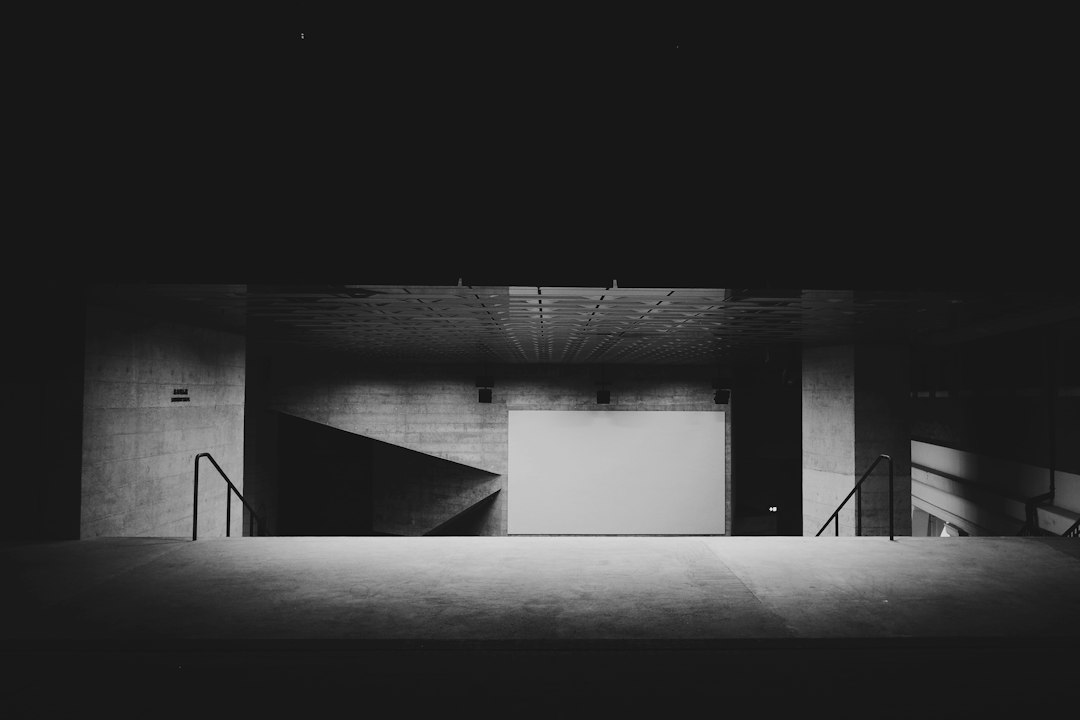
  1. Scoprire Tai Kwun: il cuore storico di Hong Kong: where the lock-up became the living room
  2. Zaha Hadid: Innovation Tower (Jockey Club Tower): a building that refuses to be background
  3. Golden Bauhinia Square in Hong Kong: ceremony and the art of standing still
  4. The night is always young at Lan Kwai Fong: the sociological experiment you can drink in
  5. Dim Sum that means "touch your heart": the ritual that still outruns its own reputation
  6. Esplorando il Mercato Notturno di Temple Street a Hong Kong: the night market as living archive
  7. Scopri la Magia di Hong Kong Park: the oasis that the lunch crowd returns to the city before you arrive
  8. Scopri il Man Mo Temple di Hong Kong: incense, continuity, and the long view
  9. Hong Kong Trail: the city that disappears behind you
  10. Scopri la Magia della Baia di Repulse a Hong Kong: the beach that the city keeps trying to forget
  11. The venerable Peak Tram: the angle that changes everything
  12. Esplora il Fascino del Museo Marittimo di Hong Kong: the harbour's memory
  13. The Avenue of Stars in Tsim Sha Tsui East, Kowloon: the promenade that earns its clichés
  14. Come pianificare un viaggio a Hong Kong con l'AI nel 2026: the city that keeps outpacing its own guides
Part one — The essentials
1 Historic Site · 0.4 km

Scoprire Tai Kwun: il cuore storico di Hong Kong: where the lock-up became the living room

Scoprire Tai Kwun: il cuore storico di Hong Kong: where the lock-up became the living room
For most of its life, this compound on Hollywood Road was a place people were brought to against their will — the Central Police Station, the magistracy, and Victoria Prison formed one of colonial Hong Kong's most forbidding institutional complexes. Today, Tai Kwun has been reborn as a heritage and arts centre, and the transformation is quietly remarkable. The original granite walls and cast-iron staircases have been preserved with a restraint that lesser restoration projects rarely manage, while two new JET studio buildings by Herzog & de Meuron insert themselves into the courtyard with the confidence of structures that know exactly what they are doing.

What most visitors miss is simply sitting in the parade ground long enough for the architectural conversation between old and new to become audible. The stone breathes differently in the late afternoon when the crowds thin.
Insider tip The former prison cellblocks are open for self-guided exploration — walk the narrow corridors on an ordinary Tuesday morning and you will have them almost entirely to yourself.
2 Architecture · 3.4 km

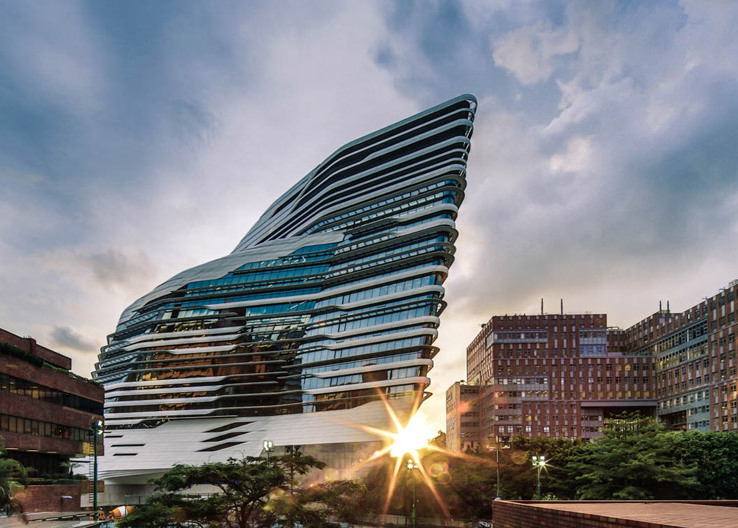
Zaha Hadid: Innovation Tower (Jockey Club Tower): a building that refuses to be background

Zaha Hadid: Innovation Tower (Jockey Club Tower): a building that refuses to be background
Zaha Hadid's Innovation Tower at Hong Kong Polytechnic University in Hung Hom is the kind of building that architectural students photograph and everyone else walks past with mild bewilderment. Completed in 2013, it is a swirling, torqued structure that seems to be in the process of becoming something else — as though the building has not quite finished deciding what shape it wants to be. That restlessness is entirely deliberate. Hadid designed it as a physical argument for the kind of non-linear thinking the university's design school is meant to produce.

From Chatham Road South it reads as an abstract sculpture. From inside, the experience is stranger still — corridors curve, sight lines shift, and the conventional grammar of a university building is cheerfully dismantled floor by floor.
Insider tip The lobby atrium is accessible to the public during university hours; take the internal staircase rather than the lift to understand what the building is actually doing with space.
3 Square · 1.7 km

Golden Bauhinia Square in Hong Kong: ceremony and the art of standing still

Golden Bauhinia Square in Hong Kong: ceremony and the art of standing still
Golden Bauhinia Square, on the waterfront outside the Hong Kong Convention and Exhibition Centre in Wan Chai, marks the 1997 handover of Hong Kong from British to Chinese administration — a moment of such compressed historical weight that the square has never quite decided how to carry it. The golden bauhinia flower sculpture at its centre is photographed thousands of times a day, usually from the same three angles, by visitors who are already moving on before the shutter clicks.

What is worth doing is arriving early enough to witness the daily flag-raising ceremony, which takes place each morning with a formality that feels genuinely moving rather than performative. The harbour behind it, the tower blocks reflected in the water, the particular quality of early light over Victoria Harbour — these are things the midday crowd never sees.
Insider tip The square is at its most atmospheric on misty mornings when the Kowloon skyline across the harbour dissolves into grey — a reminder that this city has always existed in multiple states simultaneously.
4 Nightlife · 0.3 km

The night is always young at Lan Kwai Fong: the sociological experiment you can drink in

The night is always young at Lan Kwai Fong: the sociological experiment you can drink in
Lan Kwai Fong has been declared both the soul of Hong Kong nightlife and the death of it so many times that the declarations have become part of the atmosphere. The cluster of bars, restaurants, and clubs on the steep streets above D'Aguilar Street is genuinely, defiantly loud — and the mix of expats, finance workers, tourists, and locals who end up here on any given evening tells you more about Hong Kong's social architecture than any guided tour would.

The trick is not to resist the energy but to use it. Come early enough to eat properly at one of the less-obvious restaurants tucked above street level, then watch the crowd assemble below as the evening shifts gears. Lan Kwai Fong is most interesting as a phenomenon, and phenomena reward observation.
Insider tip The streets that branch off the main drag — particularly the quieter upper sections — have bars where you can actually hear yourself think, which is where the more interesting conversations tend to happen.
Part two — A little deeper
5 Food · 3.7 km

Dim Sum that means "touch your heart": the ritual that still outruns its own reputation

Dim Sum that means "touch your heart": the ritual that still outruns its own reputation
The translation of dim sum — "touch your heart" — is so frequently quoted in travel writing that it has almost lost its meaning. Almost. Sit down to a proper dim sum breakfast, with bamboo baskets of har gow and siu mai arriving in rotation, tea being poured without ceremony, and three generations of a family occupying the table beside you, and the phrase earns itself back immediately. Dim sum in Hong Kong is not a restaurant experience in the Western sense; it is a social practice, a morning ritual, a way of being together that predates the tower blocks above it.

The tradition originated in the teahouses of Guangdong, where yum cha — drinking tea — was the primary act and the small bites were accompaniment. In Hong Kong, the balance has shifted, but the unhurried quality of a good dim sum sitting has not.
Insider tip Avoid peak Sunday morning hours unless you enjoy queuing; a weekday breakfast between 7:30 and 9am will find you in the company of regulars rather than tourists, and service is invariably sharper.
6 Market · 3.0 km

Esplorando il Mercato Notturno di Temple Street a Hong Kong: the night market as living archive

Esplorando il Mercato Notturno di Temple Street a Hong Kong: the night market as living archive
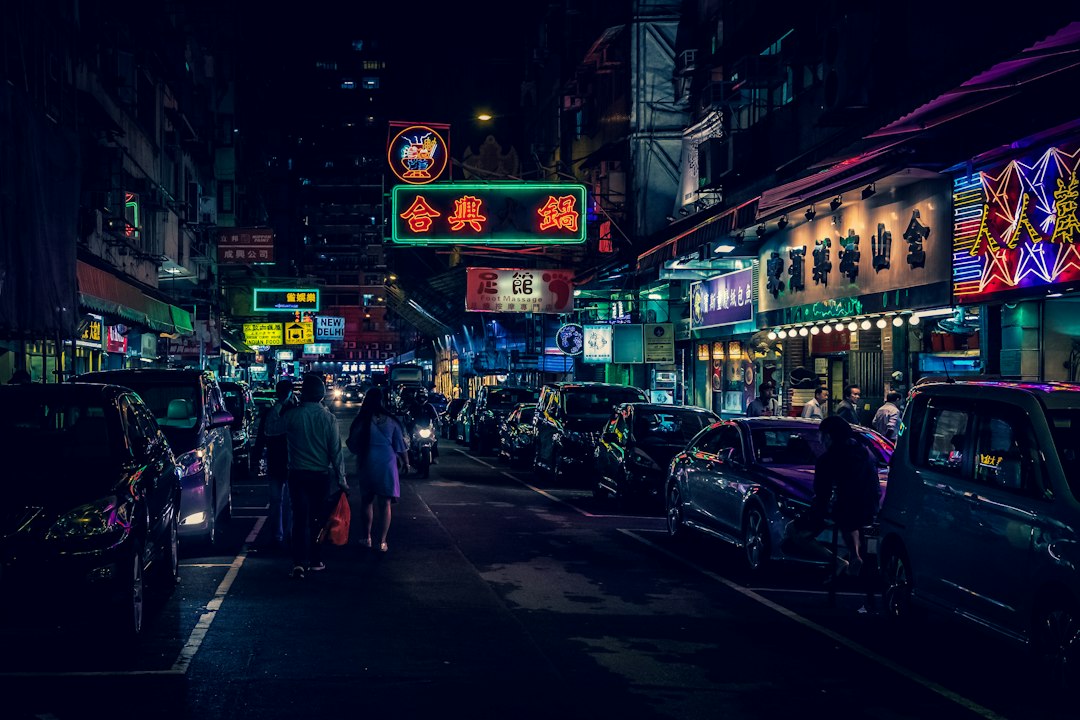
Temple Street Night Market in Yau Ma Tei, Kowloon, operates as a kind of living archive of a Hong Kong that the property developers have not yet reached — though they are trying. The stalls selling watches, jade, phone cases, and clothing of uncertain provenance have been here in some form since the 1920s, and the market retains a texture of genuine commerce rather than curated experience. Fortune tellers occupy their small territories with the gravity of minor officials. Cantonese opera singers perform in the open air with an audience that is entirely self-selecting.

The market is at its best after 9pm when the evening eaters have moved on and the stall-holders settle into the particular rhythm of people who have been doing this for a long time.
Insider tip The fortune tellers near the Tin Hau Temple end of the market are not a tourist attraction — they are a working service used by locals; approach with genuine curiosity or not at all.
7 Park · 0.6 km

Scopri la Magia di Hong Kong Park: the oasis that the lunch crowd returns to the city before you arrive

Scopri la Magia di Hong Kong Park: the oasis that the lunch crowd returns to the city before you arrive
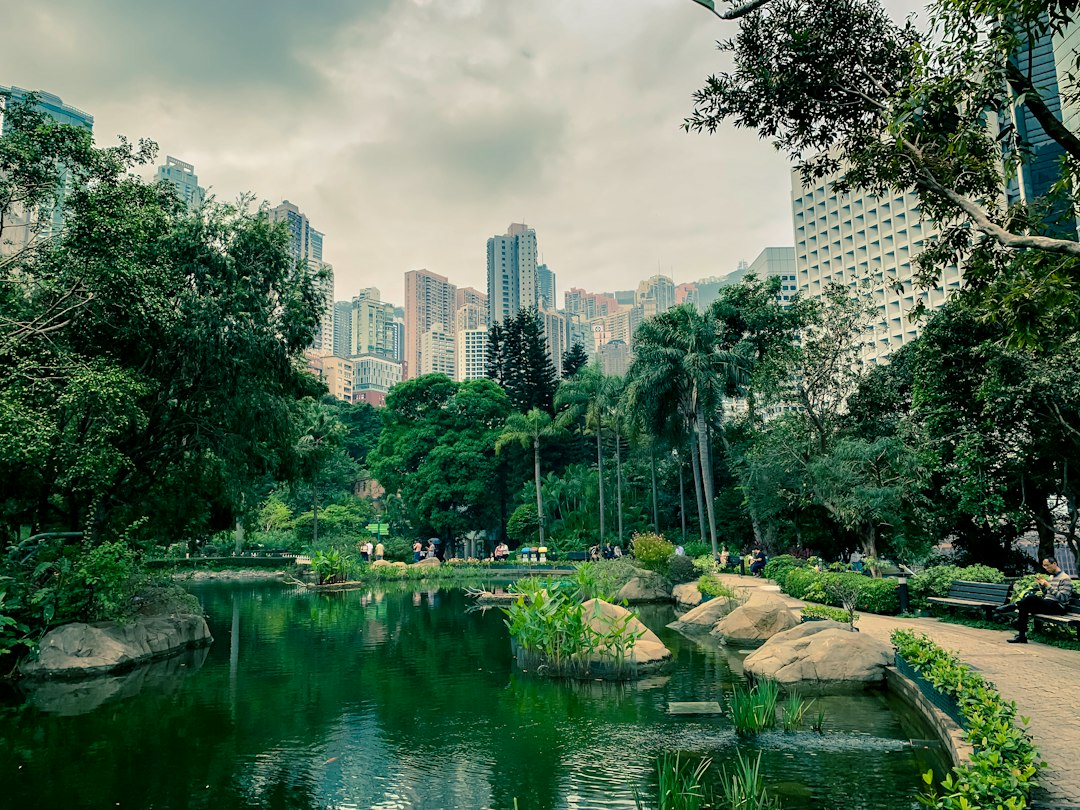
Hong Kong Park sits on land that was once the site of Victoria Barracks, and the colonial military history is still faintly legible in the bones of the place — a flagstaff house here, a formal axis there. But what the park has become since its 1991 opening is something more interesting: a genuinely urban wilderness that operates on its own ecological logic. The Edward Youde Aviary houses hundreds of birds in a walk-through rainforest structure, and the conservatory holds plant collections that most visitors walk past entirely.

The park's position — elevated above Queensway, connected by footbridge to Pacific Place — means it exists in a strange topographical suspension between the commercial city below and the Peak above. That in-between quality gives it a contemplative character that the busier parks lack.
Insider tip The Tai Chi Garden in the early morning is used by actual practitioners, not demonstrators; arrive before 7:30am and you will witness something genuinely meditative rather than performed.
8 Religious Site · 0.8 km

Scopri il Man Mo Temple di Hong Kong: incense, continuity, and the long view

Scopri il Man Mo Temple di Hong Kong: incense, continuity, and the long view
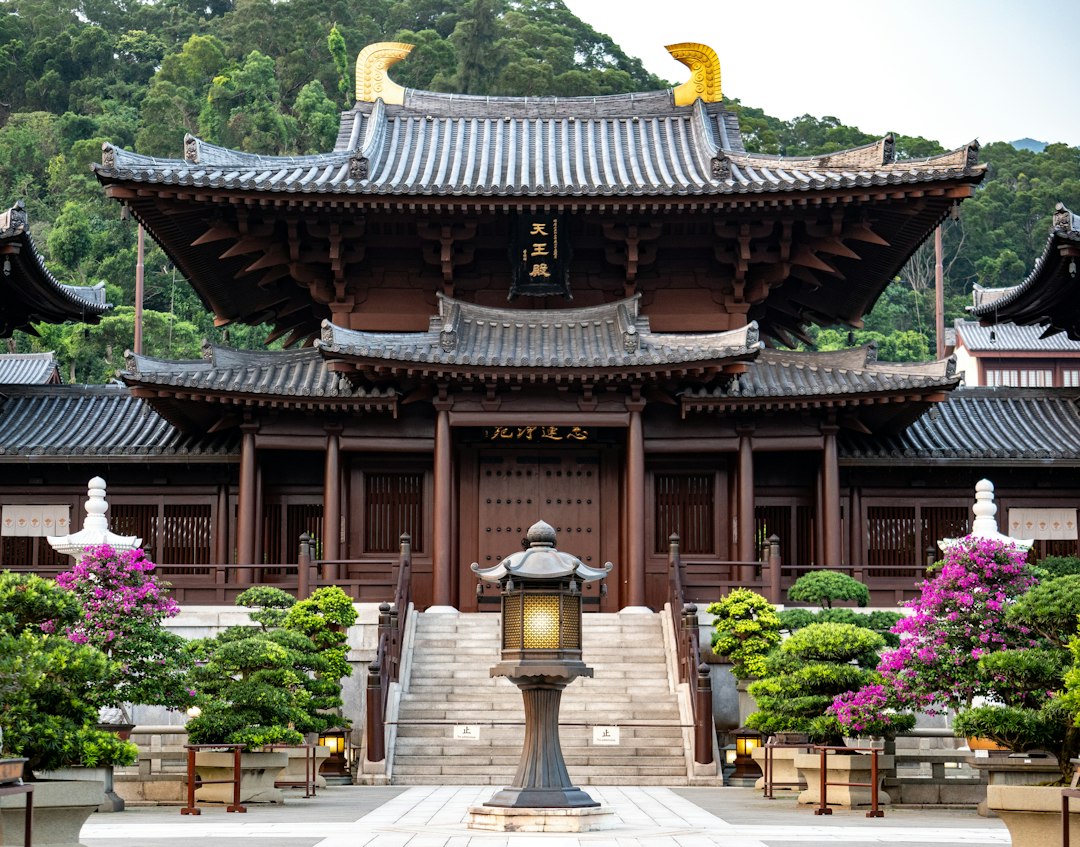
The Man Mo Temple on Hollywood Road is one of Hong Kong's oldest temples, dedicated to the gods of literature and war — Man, the civil god, and Mo, the martial one — a pairing that tells you something about what the city has always valued. The temple was built in the 1840s, which in Hong Kong terms makes it ancient, and it has survived the city's relentless self-renovation with a stubbornness that feels almost personal.

The interior is perpetually wreathed in smoke from the enormous hanging incense coils that dangle from the ceiling, each one burning for weeks at a time. Worshippers come throughout the day with a matter-of-fact devotion that has nothing to do with tourism. The effect is of a place that has simply continued, indifferent to everything that has changed around it.
Insider tip Look up at the coiled incense hanging from the ceiling — each one carries a prayer tag, and the density of them on a busy day is a kind of accidental installation that no artist could have planned.
Part three — Off the obvious path
9 Hiking · 4.9 km

Hong Kong Trail: the city that disappears behind you

Hong Kong Trail: the city that disappears behind you
The Hong Kong Trail is fifty kilometres long and runs through five country parks on Hong Kong Island — a fact that most people who have visited Hong Kong multiple times have filed away without ever acting on. The trail begins near the Peak and ends at Big Wave Bay, passing through landscapes that bear no relationship to the city visible from the harbour. Within twenty minutes of leaving the Peak Tram terminus, the tower blocks drop away and you are walking through subtropical forest with views that open and close between the trees.

The trail is divided into eight sections, each walkable independently, which means you can calibrate the commitment precisely. Section one and two, closest to the Peak, offer the most dramatic early payoff for the least distance.
Insider tip Section four, through Tai Tam Country Park, is the quietest and arguably the most beautiful — bring water, because the stretches between resupply points are longer than the trail maps suggest.
10 Beach · 6.5 km

Scopri la Magia della Baia di Repulse a Hong Kong: the beach that the city keeps trying to forget

Scopri la Magia della Baia di Repulse a Hong Kong: the beach that the city keeps trying to forget
Repulse Bay sits on the southern coast of Hong Kong Island, framed by green hills and apartment towers of the kind that appear in property advertisements for a reason. The beach itself is wide and clean by the standards of a city of eight million people, and the water is warmer than you expect. What makes Repulse Bay interesting rather than merely pleasant is the Tin Hau temple complex at the eastern end, where a walkway of deities, statues, and a large tortoise pond creates an atmosphere that is simultaneously devotional and genuinely surreal.

The bay has a long social history — it was where colonial Hong Kong came to swim and be seen — and the remnant of that era, the colonnaded Repulse Bay building, still stands above the beach with a faded elegance that the restaurants inside have not quite managed to match.
Insider tip The beach is significantly quieter on weekday mornings outside July and August; the walk along the coastal path eastward toward Stanley is almost entirely untrafficked before 10am.
11 Panorama · 0.6 km

The venerable Peak Tram: the angle that changes everything

The venerable Peak Tram: the angle that changes everything
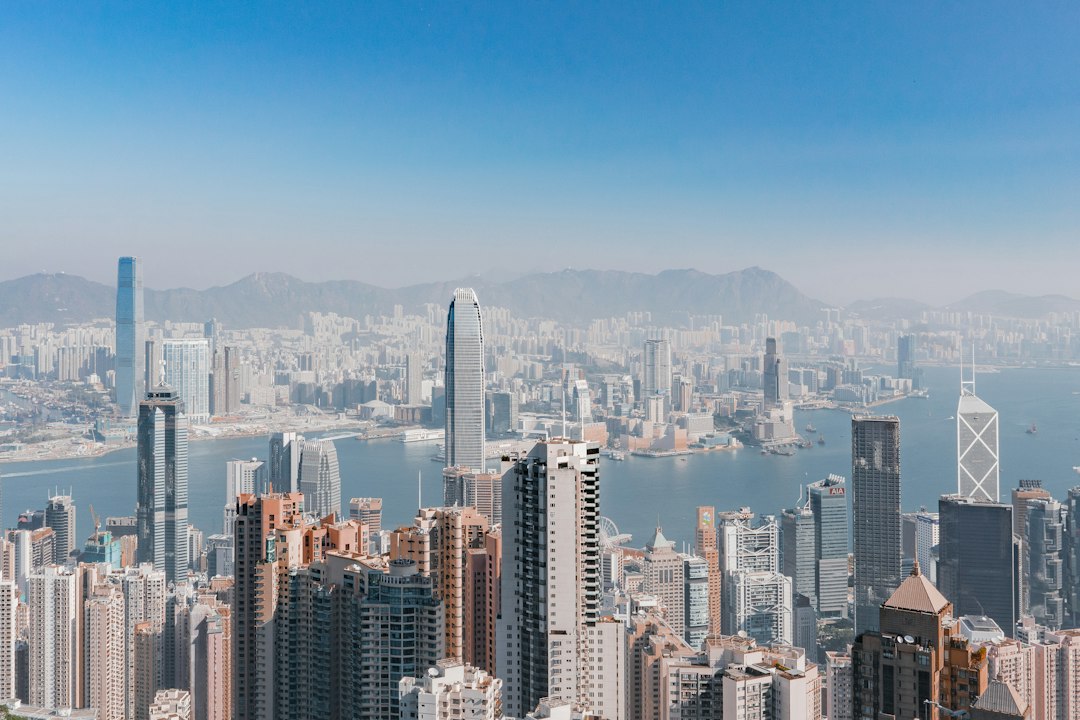
The Peak Tram has been hauling passengers up the near-vertical face of Victoria Peak since 1888, and the experience it offers has not fundamentally changed in the intervening years — which is either its greatest achievement or the city's most elegant act of conservation, depending on your mood. The funicular rises at a gradient that tilts the entire city sideways, and for a few minutes the tower blocks of Central appear to be growing at improbable angles from the hillside like a fever dream of urbanism.

The tram itself is the destination, not the Peak. The summit has been commercialised with a thoroughness that the tram ride renders irrelevant. Ride up, walk along Lugard Road for the lateral harbour views, and ride back down as the city rights itself below you.
Insider tip Take the tram in both directions rather than walking down — the descent offers a completely different visual experience, and the late evening ride, with the city fully lit, is the one that stays with you.
13 Museum · 0.7 km

Esplora il Fascino del Museo Marittimo di Hong Kong: the harbour's memory

Esplora il Fascino del Museo Marittimo di Hong Kong: the harbour's memory
The Hong Kong Maritime Museum, located at Pier 8 in Central, occupies a position so literally on the water that the boundary between exhibit and reality becomes pleasingly blurred. The museum traces Hong Kong's identity as a port city — from the Pearl River trade routes of the early nineteenth century through the container shipping that made the harbour one of the busiest in the world — with a depth that surprises visitors who expected something more decorative.

The collection includes ship models, navigational instruments, and archival photographs that document the harbour as it was before reclamation narrowed it. What emerges is a portrait of a city that has always been in transit — a place defined not by what it is but by what passes through it.
Insider tip The rooftop terrace offers one of the most unobstructed views of Victoria Harbour in Central, and it is almost never crowded — the museum visitors tend not to find their way up.
Part four — Around and beyond
14 Film Location · 2.1 km

The Avenue of Stars in Tsim Sha Tsui East, Kowloon: the promenade that earns its clichés

The Avenue of Stars in Tsim Sha Tsui East, Kowloon: the promenade that earns its clichés
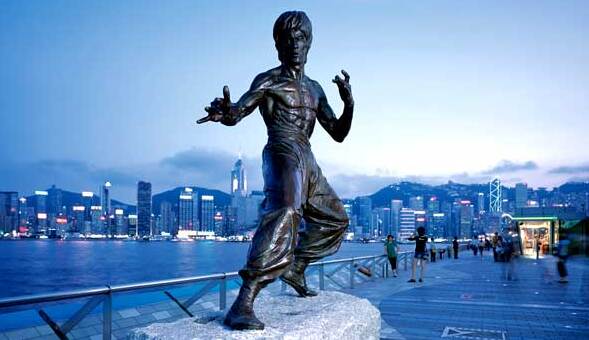
The Avenue of Stars runs along the Tsim Sha Tsui waterfront in Kowloon, celebrating Hong Kong's film industry with handprints, plaques, and a bronze Bruce Lee that has been photographed from every conceivable angle. The cynical response is to note that this is exactly the kind of civic attraction that cities build when they want to monetise cultural memory — and that response is not entirely wrong. But the Avenue of Stars also offers the finest sustained view of the Central skyline available from ground level, and the evening Symphony of Lights show, whatever its artistic limitations, demonstrates something about the scale of this city that no photograph quite captures.

The promenade reopened in 2019 after extensive renovation, and the additional space has improved the experience of simply walking it without a specific destination.
Insider tip Walk the full length of the promenade eastward past the main tourist concentration and the crowd thins considerably — the views from the quieter eastern section are identical, and the breathing room is not.
15 Travel Planning · 4.3 km

Come pianificare un viaggio a Hong Kong con l'AI nel 2026: the city that keeps outpacing its own guides

Come pianificare un viaggio a Hong Kong con l'AI nel 2026: the city that keeps outpacing its own guides
Hong Kong is a city of 7.5 million people, more than 260 islands, a metro system of nearly 100 stations, and neighbourhoods that change character every few hundred metres — a density of experience that defeats conventional planning. The question of how to navigate it is itself a subject worth taking seriously. The city changes faster than any static guide can track: restaurants close, districts shift, the relationship between Central and its surrounding neighbourhoods is in constant renegotiation.

What this means practically is that the most useful orientation tool is not a map but a framework — an understanding of how the MTR connects the districts, how the ferry network extends what is reachable, and how the city's vertical geography (the Peak above, the harbour below) organises everything in between. Build the framework first; the specifics will follow.
Insider tip The MTR Tourist Day Pass is useful but limited — the outlying island ferries and the Peak Tram require separate payment, and budgeting for both on day one will save you the mental arithmetic later.
The thing about Hong Kong is that it does not reward the itinerary. It rewards the detour. The fifteen places in this list are not a programme to be completed — they are starting points, each one capable of producing a morning or an afternoon that goes somewhere entirely unplanned. The city is too dense, too layered, too contradictory to be consumed in sequence. You will walk toward the Man Mo Temple and end up in a conversation you did not anticipate. You will take the Peak Tram meaning to spend an hour and find yourself still on Lugard Road as the sun drops behind the islands.

That is not inefficiency. That is the city working correctly. Hong Kong has always been a place that happens to you as much as a place you visit. The best thing you can do is arrive with fewer plans than you think you need, and more time than you think you have. The city will fill both.
🏆 Pocket guide

Take this guide with you.

Save it offline, get walking directions, and discover thousands more places like the ones you just read.

Save offline Smart routes Hidden gems
Scan to download iOS / Android
Scan for AppGallery Huawei users

All places, on a map

Map data © OpenStreetMap contributors.

Frequently asked questions

What is the best way to move between Central and the other districts on this list?

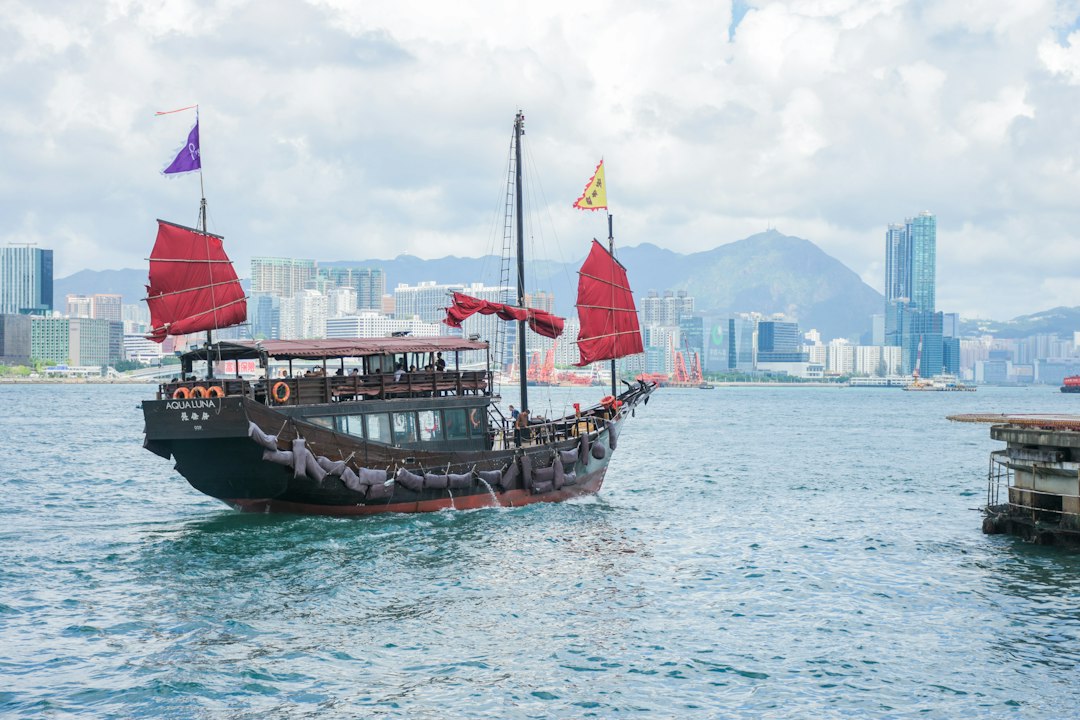
The MTR is the fastest and most reliable option for most destinations, but the Star Ferry between Central Pier 7 and Tsim Sha Tsui is both practical and worth the extra twelve minutes. For Repulse Bay and the southern coast, bus 6 or 6X from Exchange Square in Central is the standard route. The Peak Tram departs from Garden Road and requires a separate ticket from the MTR system.

Are most of these places accessible without a guided tour?

Yes, entirely. Tai Kwun, Hong Kong Park, the Man Mo Temple, the Maritime Museum, and the Avenue of Stars are all self-navigable. The Hong Kong Trail is well-marked with distance posts and directional signs throughout. Temple Street Night Market requires no guidance beyond arriving after dark. The only context that genuinely benefits from preparation is the historical background of Tai Kwun, for which the on-site interpretation is thorough.

Which of these destinations are suitable for visiting with children?

Hong Kong Park's aviary and conservatory work well for children of most ages. The Star Ferry crossing is a reliable crowd-pleaser. The Maritime Museum has interactive sections designed for younger visitors. Repulse Bay beach is a practical choice in warmer months. Lan Kwai Fong and Temple Street Night Market are evening destinations better suited to older children and adults.

Is there a logical geographic order to visit these places to minimise travel time?

A practical Central-focused day might begin at the Man Mo Temple on Hollywood Road, continue downhill to the Maritime Museum at Pier 8, cross to Tsim Sha Tsui via the Star Ferry for the Avenue of Stars, and return via MTR. A separate day could combine Tai Kwun with Hong Kong Park (both walkable from each other), followed by the Peak Tram in the late afternoon. Repulse Bay and the Hong Kong Trail are best treated as standalone half-day commitments.

What time of year is best for visiting Hong Kong, and does it affect any of these destinations specifically?

October to December offers the most reliably clear weather — important for the Peak Tram views and the Hong Kong Trail. The summer months from June to September bring heat, humidity, and typhoon risk, though Repulse Bay beach is at its most used during this period. The Maritime Museum, Tai Kwun, and Temple Street Night Market are indoor or covered enough to be viable year-round. Lunar New Year, usually in January or February, transforms the city's atmosphere significantly and is worth planning around rather than avoiding.

🏆 Read this offline

Save it to your phone.

Bookmark this guide, plan your trip offline, and discover thousands of places like these.

Bookmark Plan offline 60 languages
Scan to download iOS / Android
Scan for AppGallery Huawei users
Secret World Hidden places, real stories — plan your trip
Get the app
