Trip.Planner
En · Travel Guide
Travel Guide · 2026 Edition

15 Hidden Gems in Chinatown, Singapore — beyond the postcard

What the tour groups see and what they walk straight past

L
Words by
Lena Hofmann
Updated
12 October 2026
Read time
12 minutes
Includes
15 places · interactive map
15 Hidden Gems in Chinatown, Singapore — beyond the postcard
There is a particular kind of invisibility that afflicts the most photographed places on earth. Chinatown in Singapore has been written about, Instagrammed, food-toured and heritage-walked to the point where the neighbourhood exists in two simultaneous states: the real one, full of unglamorous utility and quiet ritual, and the curated one, which is essentially a stage set built on top of the real one. Most visitors move between the two without ever noticing the seam.

I have spent more time than is probably healthy wandering the five-foot ways of Tanjong Pagar and Smith Street, and what I keep finding is that the places which genuinely surprise you are rarely secret in any conventional sense. The Sri Mariamman Temple has been standing on South Bridge Road since the 1820s. The Chinatown Complex is listed in every guidebook. The Buddha Tooth Relic Temple glows gold and red from a considerable distance. None of these are obscure.

And yet. There is a version of each of them that most people never encounter, because encountering it requires slowing down in a city that is architecturally designed to move you efficiently forward. It requires arriving at an odd hour, or looking at a ceiling instead of a façade, or simply sitting long enough in a hawker centre that the theatre of daily life assembles itself around you.

What follows is not a list of secrets. It is a list of invitations — to look differently at places that have been hiding in plain sight, and to follow Chinatown's threads outward into the wider city that grew from the same restless colonial soil.

At a glance

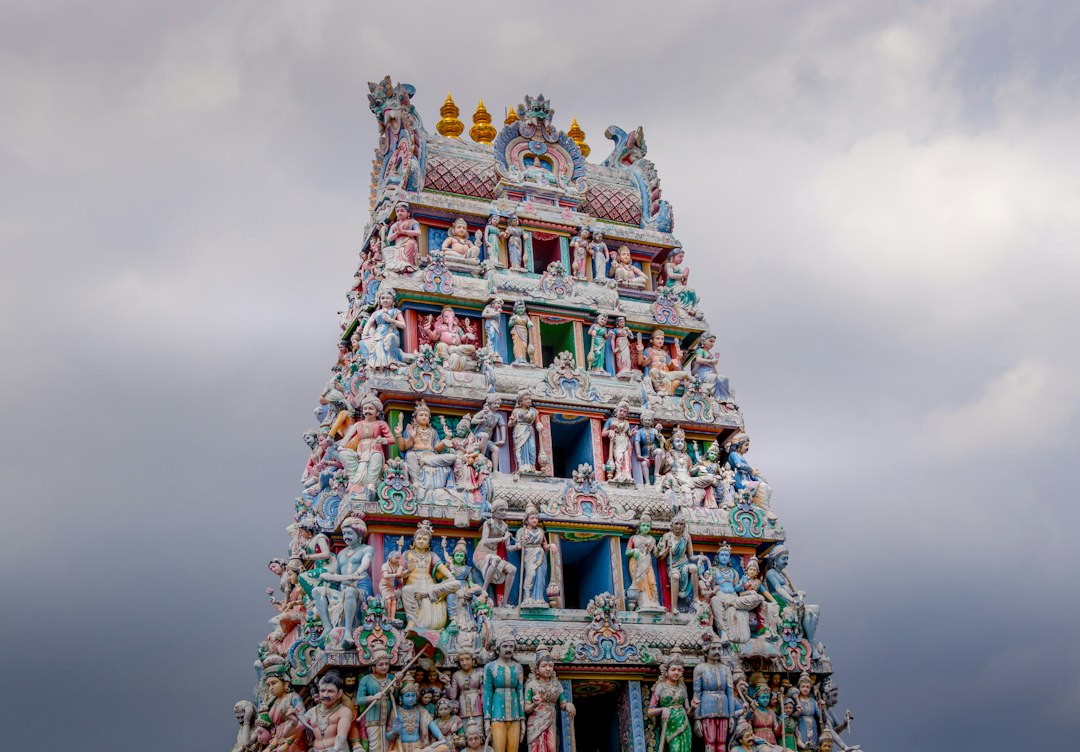
  1. Scopri il Fascino del Sri Mariamman Temple a Singapore: the gopuram that stops you mid-stride
  2. Chinatown in Singapore: the shophouse as a document
  3. Scopri il Buddha Tooth Relic Temple di Singapore: five floors that most visitors never climb
  4. Scopri il Fullerton Building di Singapore: a post office that refused to become ordinary
  5. Chinatown Complex: Un Viaggio Sensoriale a Singapore — the hawker centre as social institution
  6. Scopri il Maxwell Food Centre di Singapore: the hawker stall as a study in patience
  7. Scoprire l'Asian Civilisations Museum di Singapore: the river's memory made permanent
  8. Scopri il Fascino di Fort Canning Park a Singapore: the hill that watched the city grow
  9. Scoprire il Merlion Park: il cuore di Singapore — a symbol that works better at odd hours
  10. SkyPark Observation Deck: Panorami da Sogno a Singapore — the city as diagram
  11. Come visitare Chinatown Singapore con Secret World: the guided frame as a different kind of seeing
  12. AI Trip Planner a Marina Bay 2026: Rivoluzione nella Pianificazione Viaggi — the infrastructure of arrival
  13. Sentosa Island: Singapore's mega theme-park — the island that tells you what the city thinks leisure means
  14. Scopri la Magia del MacRitchie Reservoir: the forest that the city built around itself
  15. Little India - Singapore: the neighbourhood that resists the heritage script
Part one — The essentials
1 Religious Site · 0.2 km

Scopri il Fascino del Sri Mariamman Temple a Singapore: the gopuram that stops you mid-stride

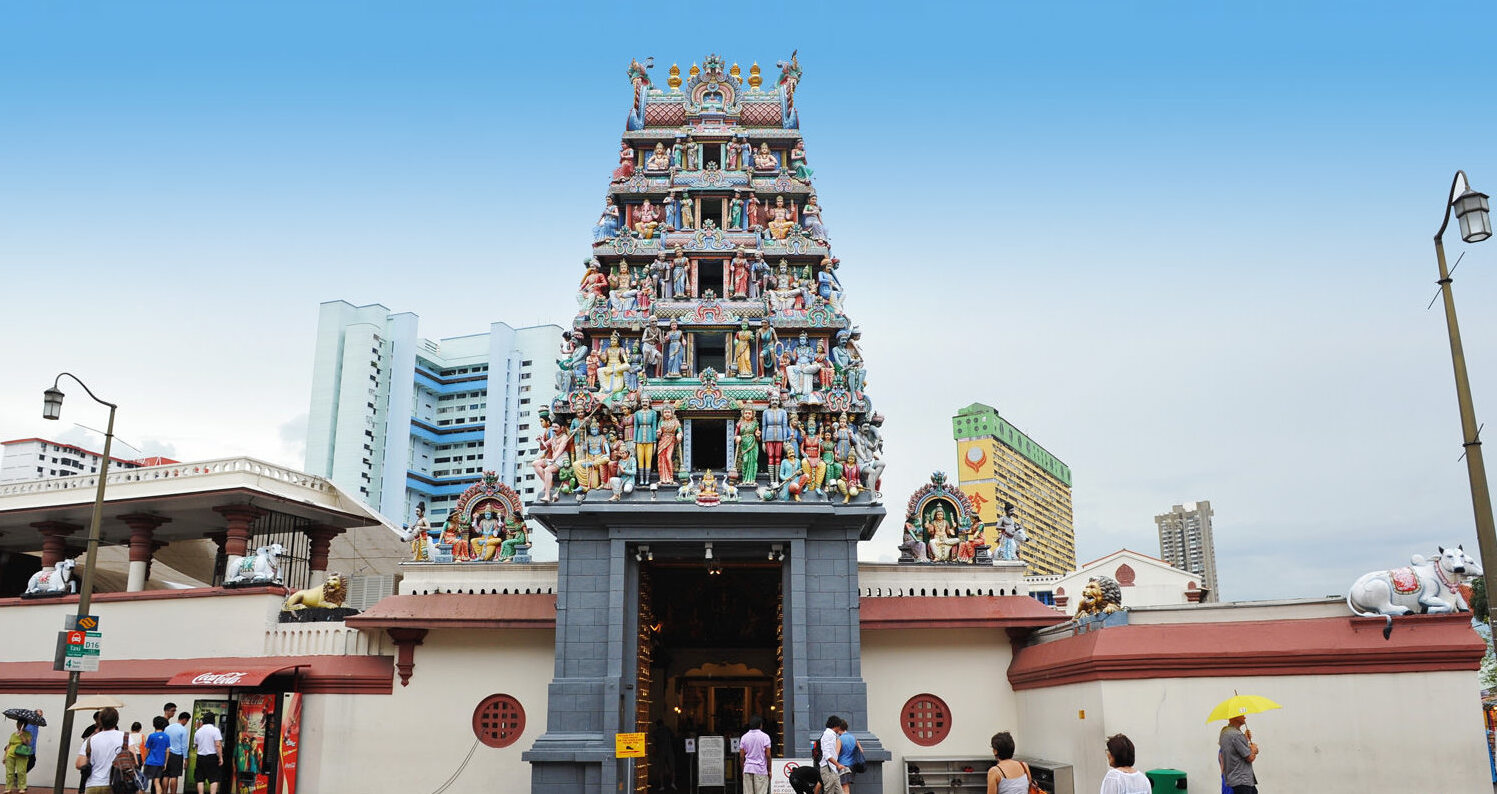
Scopri il Fascino del Sri Mariamman Temple a Singapore: the gopuram that stops you mid-stride
The Sri Mariamman Temple is Singapore's oldest Hindu temple, and it sits on South Bridge Road with the cheerful confidence of something that has outlasted every trend in its vicinity. The gopuram — the tiered gateway tower dense with painted deities — is the kind of architectural statement that makes you forget what you were doing. Most visitors photograph it from the pavement and move on, which means they miss the interior courtyard entirely: a space of ceremonial calm that operates on a different atmospheric register from the street outside.

What the postcard version never conveys is the sensory texture of the place during a weekday morning, when the incense is fresh and the priests are unhurried and the whole structure feels less like a monument and more like a working institution with several thousand years of practice behind it.
Insider tip Remove your shoes before the threshold and walk the perimeter of the inner sanctum slowly — the painted ceiling panels above the mandapam reward the kind of attention that craning your neck from the entrance will never provide.
2 Folklore / Heritage · 0.3 km

Chinatown in Singapore: the shophouse as a document

Chinatown in Singapore: the shophouse as a document
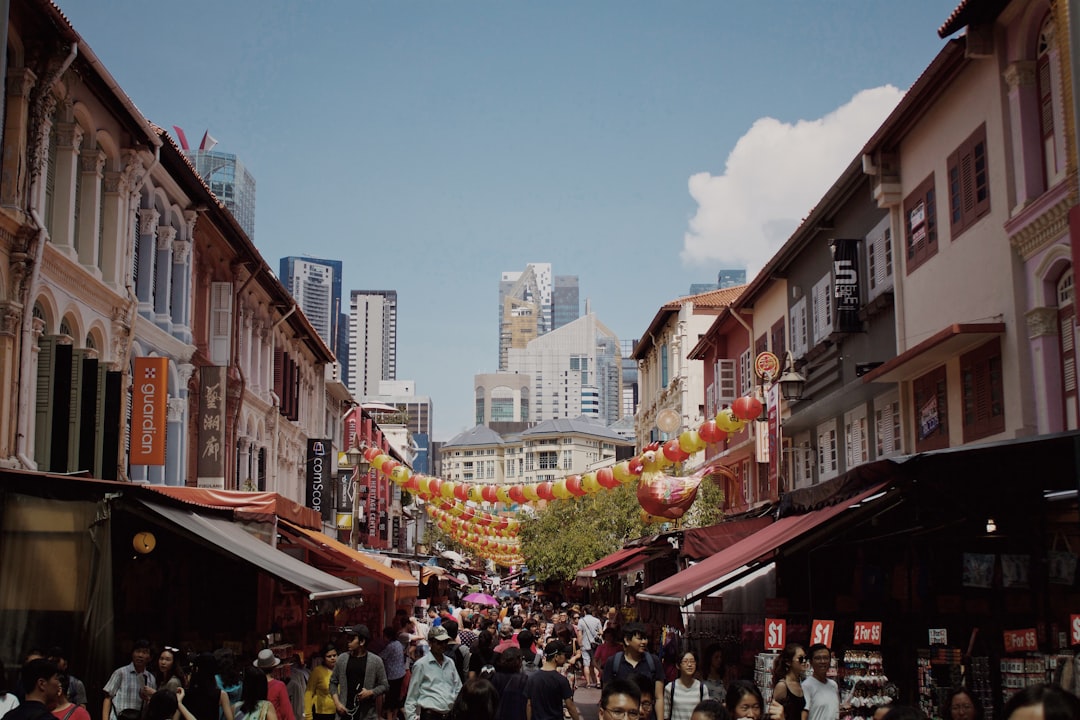
The restored shophouses of Chinatown are so thoroughly colour-coordinated that they can feel, on a busy Saturday, like a film set awaiting its principal cast. But the shophouse as a building type is genuinely interesting when you stop reading it as decoration and start reading it as a document. The five-foot way — the covered pedestrian arcade mandated by Raffles' town plan — is one of the more elegant pieces of urban policy in colonial history, creating shade and shelter as civic infrastructure rather than afterthought.

Chinatown dates from 1819, and the layering of subsequent eras is visible if you know what you are looking at: Straits Eclectic plasterwork sitting above Chinese apothecary counters, above Malay geometric tile, above a concrete floor that was poured sometime in the 1960s. The neighbourhood is a cross-section, not a surface.
Insider tip Walk Ann Siang Hill and Club Street on a Tuesday morning when the weekend crowds have dissolved — the residential upper floors of the shophouses, with their louvred shutters half-open, give you a far more honest sense of the neighbourhood's domestic scale.
3 Religious Site · 0.3 km

Scopri il Buddha Tooth Relic Temple di Singapore: five floors that most visitors never climb

Scopri il Buddha Tooth Relic Temple di Singapore: five floors that most visitors never climb
The Buddha Tooth Relic Temple on South Bridge Road is one of those buildings that announces itself so forcefully — all crimson lacquer and gilded eaves — that visitors tend to experience it as a façade rather than a building. The ground floor relic chamber draws the queues; the upper floors draw almost nobody. This is a significant oversight. The temple contains a Buddhist culture museum spread across multiple levels, with artefacts, thangka paintings and devotional objects that provide genuine context for the relic below, rather than simply framing it.

The rooftop garden, meanwhile, contains a ten-thousand-Buddha stupa and a quality of silence that feels almost implausible given that Chinatown's busiest street is directly below. It is the kind of urban discovery that makes you recalibrate your understanding of what a building can contain.
Insider tip The temple opens at 7am, and the early hour belongs almost entirely to worshippers rather than visitors — the atmosphere at that time is substantially different from the mid-morning tourist peak.
4 Historic Site · 1.0 km

Scopri il Fullerton Building di Singapore: a post office that refused to become ordinary

Scopri il Fullerton Building di Singapore: a post office that refused to become ordinary
The Fullerton Building sits at the mouth of the Singapore River with the composed authority of a structure that has always known it would outlast the institutions it housed. Built in the Palladian style and completed in 1928, it served as Singapore's General Post Office for decades before its conversion into a luxury hotel. The building's exterior is familiar from a thousand waterfront photographs, but the interior public spaces — the soaring atrium, the corridors with their original terrazzo floors — are accessible to non-guests and largely overlooked.

What makes the Fullerton genuinely interesting to the architecturally curious is the way it negotiates between civic grandeur and tropical pragticality: the deep colonnades, the high ceilings, the orientation toward the river breeze. It is a building that was solving specific problems, and the solutions are still visible.
Insider tip Walk through the building's ground-floor arcade toward the river rather than around it — the passage gives you a different relationship to the building's mass and deposits you at the waterfront with considerably more grace.
Part two — A little deeper
5 Food & Drink · 0.2 km

Chinatown Complex: Un Viaggio Sensoriale a Singapore — the hawker centre as social institution

Chinatown Complex: Un Viaggio Sensoriale a Singapore — the hawker centre as social institution
The Chinatown Complex on New Bridge Road is the kind of place that travel writing tends to describe with breathless superlatives, which is exactly the wrong register for it. It is, at its core, a working hawker centre and wet market — a place where people eat lunch because it is lunchtime and the food is good and the plastic stools are available. The upper floors house what is reputedly one of the largest hawker centres in Singapore, with stalls operating across a range of cuisines that reflects the neighbourhood's actual demographic complexity rather than its tourist-facing version.

The wet market on the lower levels is the part that most visitors skip entirely, which is their loss. The morning market operates with a brisk efficiency that tells you a great deal about how a city of this density actually feeds itself.
Insider tip Arrive before 11am to watch the hawker centre transition from breakfast service to lunch preparation — the stall holders' mise en place is a performance in its own right, and the pre-rush hour is the best time to have an actual conversation with the people cooking.
6 Food & Drink · 0.4 km

Scopri il Maxwell Food Centre di Singapore: the hawker stall as a study in patience

Scopri il Maxwell Food Centre di Singapore: the hawker stall as a study in patience
Maxwell Food Centre occupies a 1950s building on Maxwell Road that has the comfortable, slightly worn quality of a place that has never needed to try particularly hard, because the food does the work. It sits at the edge of Chinatown proper, close enough to the tourist circuit to be known but far enough that the clientele remains predominantly local during the week. The stalls represent the kind of hawker diversity — Hainanese, Teochew, Hokkien, Indian-Muslim — that reflects Singapore's actual culinary history rather than a curated version of it.

What distinguishes Maxwell from more celebrated hawker centres is its pace. The space is generous enough that you can sit without immediately feeling the social pressure to vacate, which means you can eat slowly and observe the room, which is, in the end, the point.
Insider tip The stalls at the back of the centre, away from the Tanjong Pagar Road entrance, tend to have shorter queues and no less quality — the geography of a hawker centre rewards lateral movement.
7 Museum · 0.9 km

Scoprire l'Asian Civilisations Museum di Singapore: the river's memory made permanent

Scoprire l'Asian Civilisations Museum di Singapore: the river's memory made permanent
The Asian Civilisations Museum occupies the former Empress Place Building on the bank of the Singapore River, a short walk from Chinatown's northern edge. It is the kind of museum that serious travellers in Singapore consistently undervalue, partly because the city's reputation rests on its modernity and partly because the building's colonial-era exterior does not adequately signal the quality of what is inside. The permanent collection traces the civilisations of Asia — Chinese, Southeast Asian, South Asian, Islamic — with a rigour that contextualises Singapore as a node in a much older network of exchange.

The Tang Shipwreck gallery, built around the cargo of a ninth-century Arab dhow recovered from Indonesian waters, is one of the more quietly extraordinary museum experiences in Southeast Asia: a thousand-year-old trade route made tangible.
Insider tip The museum's riverside terrace is publicly accessible and largely ignored as a sitting spot — it offers one of the better views of the Singapore River's transition from colonial waterfront to contemporary skyline.
8 Park / Historic Site · 1.2 km

Scopri il Fascino di Fort Canning Park a Singapore: the hill that watched the city grow

Scopri il Fascino di Fort Canning Park a Singapore: the hill that watched the city grow
Fort Canning Park rises above the civic district with the slightly aloof quality of a place that has been important for a very long time and is in no hurry to explain itself. The hill was the seat of Malay royalty before the colonial period, a military fort during it, and is now a public park that contains, in various states of preservation, the archaeological and horticultural residue of all those eras. The spice garden is a reconstruction of Raffles' original experimental garden; the Gothic gate leads to a Christian cemetery; the Battle Box bunker marks where the decision to surrender Singapore was made in 1942.

The park's topography — genuinely elevated above the surrounding streets — gives it a quality of remove that is rare in a city as relentlessly horizontal as Singapore's commercial centre.
Insider tip The park has multiple entrances and most visitors use the main one — entering via the stairs from Armenian Street deposits you in a quieter section of the grounds, near the archaeological dig site, before the main paths.
Part three — Off the obvious path
9 Waterfront / Landmark · 1.2 km

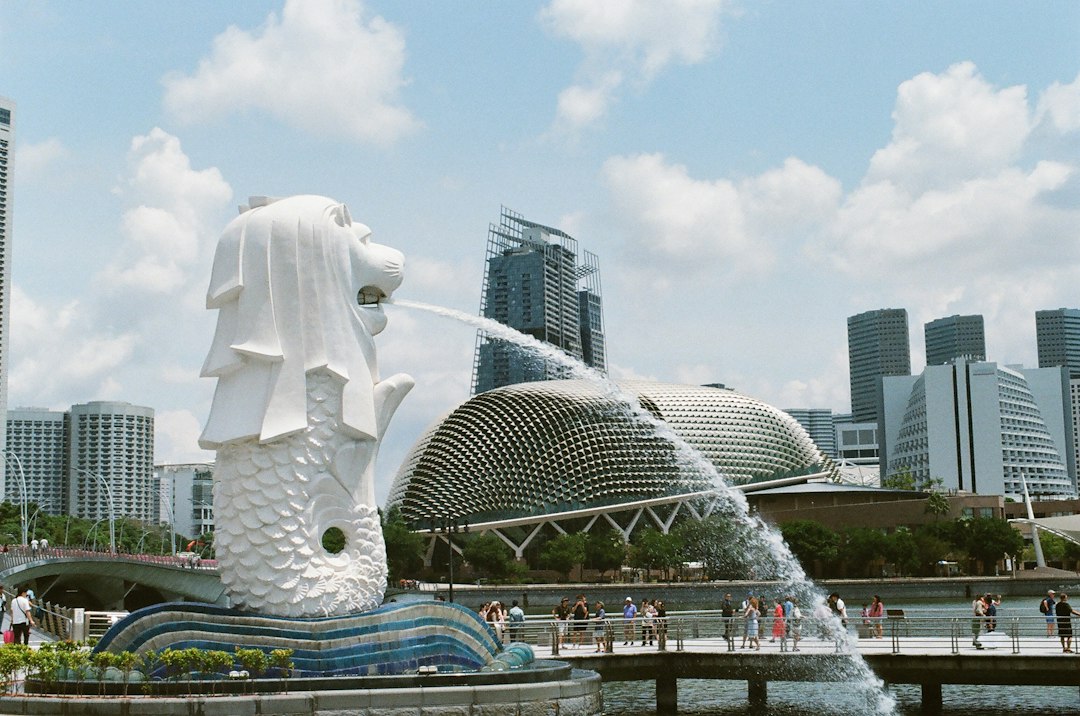
Scoprire il Merlion Park: il cuore di Singapore — a symbol that works better at odd hours

Scoprire il Merlion Park: il cuore di Singapore — a symbol that works better at odd hours
The Merlion is so thoroughly reproduced — on keychains, on hotel lobbies, on the sides of tour buses — that encountering the original statue at Marina Bay can feel anticlimactic in a way that is actually quite interesting. The gap between the symbol and the thing is itself worth thinking about. The park sits at the point where the Singapore River meets the bay, and the waterfront promenade in both directions is one of the better urban walks in the city, particularly in the early morning when the light is low and the financial district towers are doing something genuinely impressive with the sky.

The Merlion as an icon was created in 1964 and the original statue installed in 1972 — it is, by Singapore's compressed historical standards, almost venerable.
Insider tip Walk the promenade east toward the helix bridge rather than stopping at the statue — the sequence of bridges, water features and civic spaces along the bay is the real achievement, and it reads best in motion.
10 Viewpoint · 1.9 km

SkyPark Observation Deck: Panorami da Sogno a Singapore — the city as diagram

SkyPark Observation Deck: Panorami da Sogno a Singapore — the city as diagram
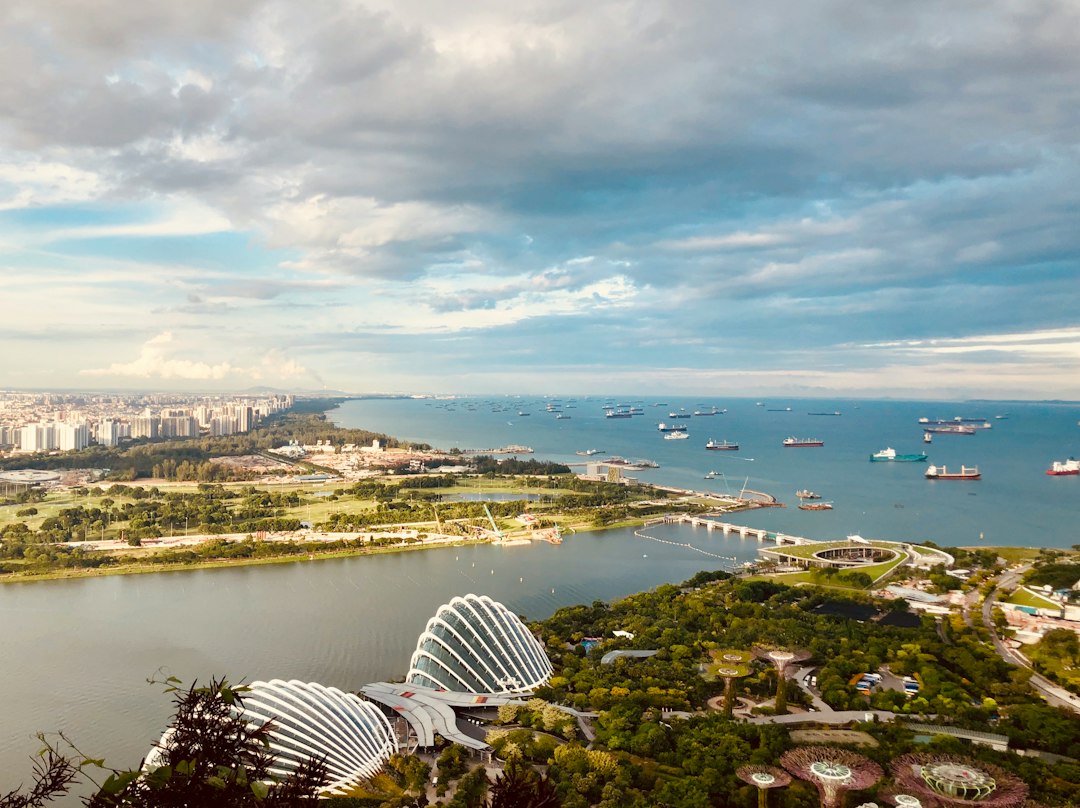
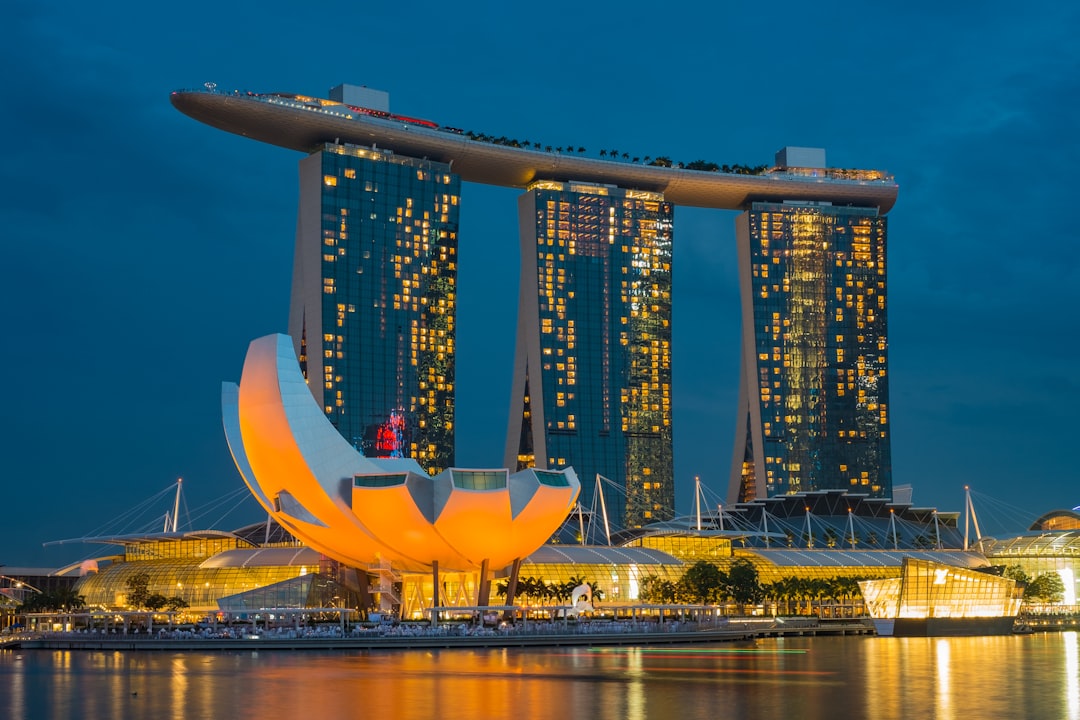
The observation deck atop Marina Bay Sands occupies the 57th floor of what is, by any reasonable measure, one of the more theatrical pieces of architecture built anywhere in the world in the twenty-first century. The three hotel towers connected by a cantilevered sky park are the kind of thing that architectural critics debate earnestly and tourists simply accept as given. From the observation deck, the city spreads in every direction with an unusual legibility: you can see Chinatown's low-rise grid, the colonial civic district, the reclaimed land of Marina Bay, and, on clear days, the Indonesian islands to the south.

The view is the point, but the view also does something useful — it reorients your mental map of the city and makes the distances between neighbourhoods comprehensible in a way that street-level navigation rarely does.
Insider tip The deck is significantly less crowded on weekday mornings than on weekend evenings — the haze conditions that sometimes affect the view are also typically better before noon.
11 Guided Experience · 0.2 km

Come visitare Chinatown Singapore con Secret World: the guided frame as a different kind of seeing
Come visitare Chinatown Singapore con Secret World: the guided frame as a different kind of seeing
There is an argument — not entirely cynical — for surrendering the independent wanderer's pride and taking a structured tour of a neighbourhood you think you already know. The Secret World approach to Chinatown positions itself around the kind of contextual knowledge that is genuinely difficult to accumulate independently: the history of specific clan associations, the function of particular temples, the social geography of a neighbourhood that has been continuously inhabited and continuously changing since 1819.

The value is not in being shown things you could not find on your own — most of the sites are visible from the street — but in having the connections between them articulated by someone who has spent time thinking about them. Chinatown's layers are real, and a good guide makes the stratigraphy legible.
Insider tip Book a morning departure rather than an afternoon one — the neighbourhood's light, its sounds and its commercial rhythms are all substantially different before noon, and a tour that catches the morning market in operation is a different experience entirely.
12 Travel Planning / Tech · 1.7 km

AI Trip Planner a Marina Bay 2026: Rivoluzione nella Pianificazione Viaggi — the infrastructure of arrival
AI Trip Planner a Marina Bay 2026: Rivoluzione nella Pianificazione Viaggi — the infrastructure of arrival
Marina Bay's evolution as a planning and visitor infrastructure hub reflects something genuinely interesting about how Singapore thinks about tourism: not as an afterthought but as a design problem with architectural solutions. The emergence of AI-assisted trip planning tools oriented around the bay district speaks to the city-state's consistent appetite for optimising the visitor experience from the point of first contact. Whether this represents genuine innovation or the application of considerable resources to a problem that a good map largely solves is a question worth sitting with.

What is useful is that these tools increasingly incorporate real-time information about crowd density, transport connections and opening hours — the kind of logistical intelligence that makes the difference between a wasted afternoon and a productive one in a city where the distances between neighbourhoods are deceptive.
Insider tip Use planning tools to identify the transit connections between Marina Bay and Chinatown — the two areas are closer than they appear on most tourist maps, and the walk along the river is one of the better transitions between them.
Part four — Around and beyond
13 Island / Theme Park · 4.1 km

Sentosa Island: Singapore's mega theme-park — the island that tells you what the city thinks leisure means
Sentosa Island: Singapore's mega theme-park — the island that tells you what the city thinks leisure means
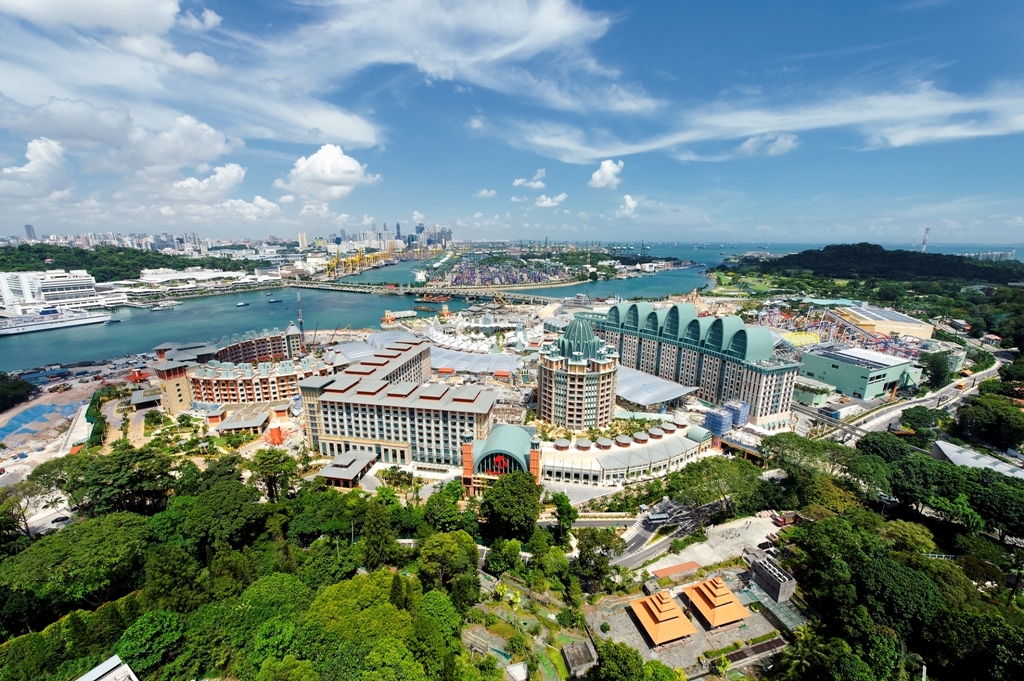
Sentosa is not, by any stretch, a hidden place — it is Singapore's most deliberately constructed leisure destination, an offshore island that has been comprehensively engineered for enjoyment in a way that leaves very little to chance. What makes it worth thinking about, for the traveller interested in cities rather than attractions, is precisely this: Sentosa is Singapore's clearest expression of the relationship between urban planning and recreational desire. The island was once a British military base called Blakang Mati; its transformation into a resort destination is a compressed version of the city's broader narrative about land, reclamation and reinvention.

The beaches, the cable car, the casino resort — these are not accidental. They are the result of deliberate decisions about what a prosperous city-state should offer its population and its visitors, and those decisions are legible in the landscape.
Insider tip The southern tip of Sentosa, beyond the main resort area, retains some of the island's older military infrastructure — the gun emplacements and fort ruins are accessible and largely unvisited by the theme-park crowds.
14 Nature Reserve · 7.2 km

Scopri la Magia del MacRitchie Reservoir: the forest that the city built around itself
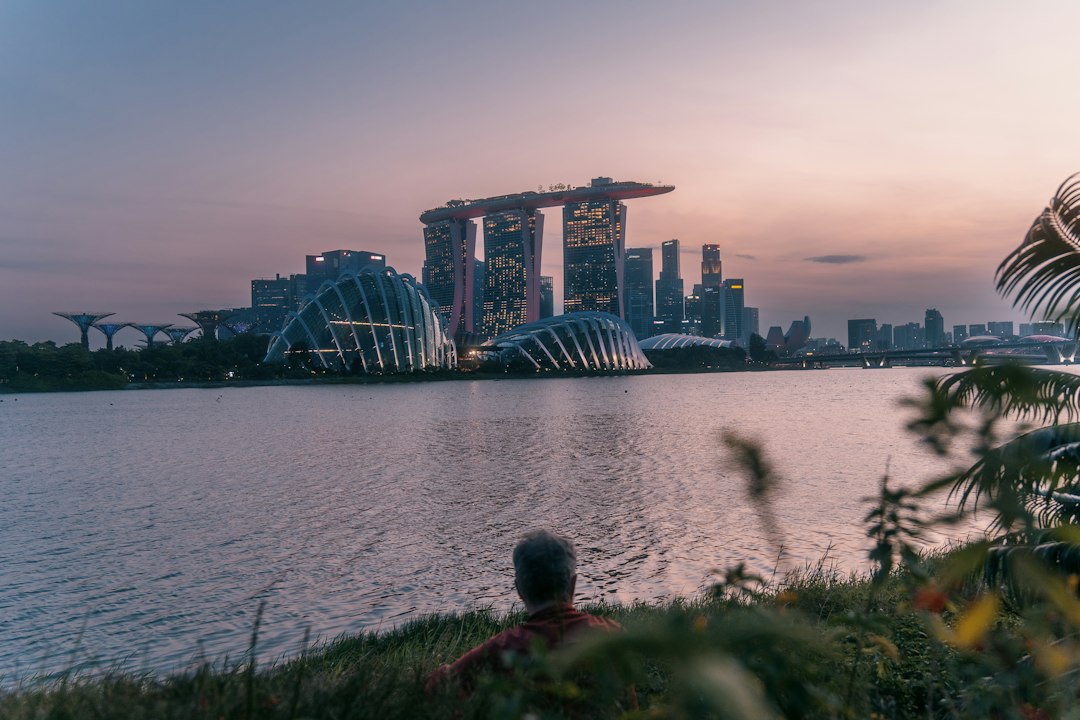
Scopri la Magia del MacRitchie Reservoir: the forest that the city built around itself
MacRitchie Reservoir sits in the geographic centre of Singapore, which is itself a remarkable fact. The central catchment area — a fragment of primary and secondary rainforest preserved around the reservoir — represents a different kind of urban planning achievement from the gleaming towers of the bay: the decision, maintained across successive governments, to keep a substantial portion of the island as working forest. The treetop walk, a suspension bridge connecting two ridgelines, is the obvious draw, but the reservoir path itself — flat, shaded, running close to the water — is the more meditative experience.

MacRitchie is a long MRT ride from Chinatown, but it functions as an essential counterweight to the neighbourhood's density — a reminder that Singapore's environmental ambitions extend beyond the potted trees of its commercial streets.
Insider tip The reservoir path is busiest on weekend mornings with runners — a weekday afternoon visit, particularly after 3pm, gives you something closer to solitude, and the birdlife is more active in the lower light.
15 Folklore / Neighbourhood · 2.7 km

Little India - Singapore: the neighbourhood that resists the heritage script
Little India - Singapore: the neighbourhood that resists the heritage script
Little India occupies a position in Singapore's tourist geography similar to Chinatown's — a designated ethnic enclave that has been partially preserved, partially renovated and partially mythologised. But where Chinatown has been substantially gentrified into a heritage district, Little India retains a more functional disorder: the goldsmith shops, the garland sellers, the provision stores, the Tamil-language signage. The area around Serangoon Road and its side streets still operates as a working commercial district for Singapore's South Asian community rather than primarily as a destination for visitors.

The temples — Veeramakaliamman is the most celebrated — are active places of worship with schedules that have nothing to do with visitor convenience, which is exactly what makes them worth visiting. The neighbourhood was established by Indian immigrants from 1819 onward and has maintained a continuity of purpose that is genuinely rare.
Insider tip Sunday afternoon is when the neighbourhood is at its most vivid and its most crowded — a Wednesday morning visit shows you the commercial and devotional infrastructure without the weekend overlay, and the flower market on Serangoon Road operates at full volume regardless of the day.
Chinatown, like most urban neighbourhoods that carry significant symbolic weight, is simultaneously overexposed and underexplored. The postcard version — the red lanterns, the painted shophouses, the temples photographed from the approved angle — is not false, exactly. It is just partial in a way that rewards the traveller who is willing to look at what sits beside it, above it, and several MRT stops beyond it.

The city that grew from this quarter is one of the more remarkable urban experiments of the twentieth century, and the experiment is still running. The connections between a hawker centre in Chinatown and a forest reservoir in the centre of the island, between a colonial post office on the river and a Hindu temple on South Bridge Road, are not decorative — they are the actual structure of the place. Following those connections, rather than the arrows on the tourist map, is the only way to understand what Singapore is actually doing, and why it keeps surprising people who thought they already knew.
🏆 Pocket guide

Take this guide with you.

Save it offline, get walking directions, and discover thousands more places like the ones you just read.

Save offline Smart routes Hidden gems
Scan to download iOS / Android
Scan for AppGallery Huawei users

All places, on a map

Map data © OpenStreetMap contributors.

Frequently asked questions

What is the best time of day to visit Chinatown's temples without large crowds?

Early morning — between 7am and 9am — is consistently the quietest period at both the Sri Mariamman Temple and the Buddha Tooth Relic Temple. This is when the spaces function as places of worship rather than visitor attractions, and the atmosphere is substantially different. Weekday mornings are preferable to weekend mornings, when even the early hours attract more visitors.

How far is Chinatown from Marina Bay, and is it walkable?

The walk from the heart of Chinatown to the Merlion Park at Marina Bay takes approximately 20 to 25 minutes along a route that passes through the civic district and along the Singapore River. It is one of the more rewarding urban walks in the city, passing the Fullerton Building and the Asian Civilisations Museum en route. The MRT is faster but the walk is considerably more instructive.

Are the hawker centres at Chinatown Complex and Maxwell Food Centre open for breakfast?

Both centres have stalls operating from the early morning, though the full complement of vendors typically arrives by mid-morning. Chinatown Complex's wet market operates from very early and is worth visiting before 9am. Maxwell Food Centre tends to have more stalls active from around 8am. Specific stall hours vary and are not always predictable — arriving with flexibility rather than a fixed target is advisable.

Is MacRitchie Reservoir practical as a day trip from Chinatown?

MacRitchie is located in the central catchment area and requires a combination of MRT and bus or taxi from Chinatown — allow approximately 45 minutes each way. The reservoir walk itself takes between one and three hours depending on the route chosen. It works well as a half-day excursion combined with a late lunch back in the city. The treetop walk has limited daily capacity and advance booking is recommended.

What should visitors know about dress codes and behaviour at Chinatown's religious sites?

Both the Sri Mariamman Temple and the Buddha Tooth Relic Temple require visitors to remove footwear before entering the main worship areas. Shoulders and knees should be covered — sarongs or wraps are typically available at the entrance for those who need them. Photography is generally permitted in public areas of both temples but should be approached with discretion during active worship. Following the lead of other visitors and staff is the most reliable guide to appropriate behaviour in any given moment.

🏆 Read this offline

Save it to your phone.

Bookmark this guide, plan your trip offline, and discover thousands of places like these.

Bookmark Plan offline 60 languages
Scan to download iOS / Android
Scan for AppGallery Huawei users
Secret World Hidden places, real stories — plan your trip
Get the app
