What the casino lights drown out, and why it's worth letting your eyes adjust
L
Words by
Lena Hofmann
Updated
10 October 2026
Read time
12 minutes
Includes
15 places · interactive map
There is a particular kind of invisibility that affects places which are, technically, already on the map. Coloane — Macau's southernmost island, the quieter one, the one that resisted land reclamation a little longer than its neighbours — suffers from this condition acutely. Its name appears in guidebooks. Its coordinates are on every travel app. And yet visitors step off the ferry at the Lisboa or the Wynn, surrender to the gravitational pull of the Cotai Strip, and never quite make it here. Those who do often arrive with a checklist and leave having ticked boxes without having seen anything at all.
I've been coming to Macau long enough to remember when the Cotai Strip was still a construction site visible from the hills above Hac Sa. What draws me back to Coloane specifically is not nostalgia — nostalgia is a lazy editorial tool — but something more structural. The island has an unusual quality: it absorbs familiarity slowly. Places you've visited three times still manage to offer a detail you missed. A doorway you hadn't noticed. A tide pattern on black sand that changes the whole mood of a beach you thought you understood.
The fifteen places in this piece are not secret. Several appear in tourist brochures. Some have queues on public holidays. But 'hidden' in 2024 is not about coordinates — it's about attention. It's about the difference between standing in front of something and actually looking at it. Coloane, more than almost anywhere else I've written about in a decade of doing this, rewards the second kind of looking. These are the places where that reward is most reliably delivered.
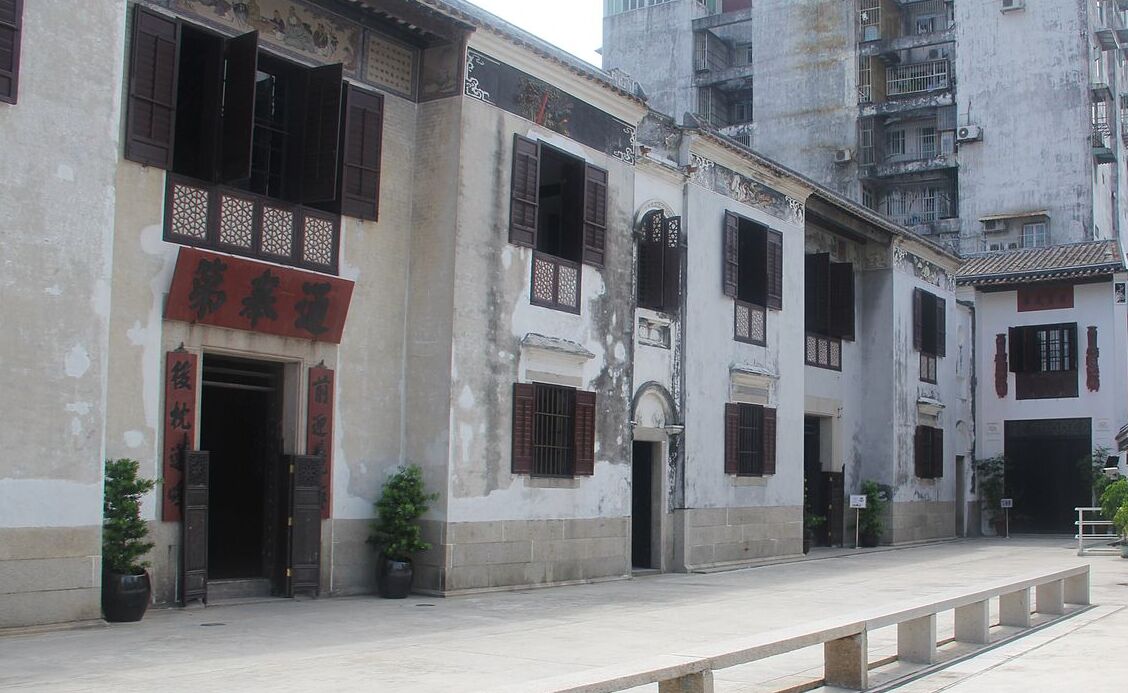
Built around 1869 and restored under UNESCO's guidance, Mandarin's House is one of those buildings that makes you recalibrate what 'private residence' means. With over sixty rooms arranged around a sequence of courtyards, it was the home of Zheng Guanying, a reformist thinker whose essays on modernisation circulated widely in late Qing China. The architecture is a negotiation between two worlds: Cantonese vernacular structure, Portuguese-influenced decorative details, and a spatial logic that prioritises shade and airflow in ways that feel almost contemporary. Most visitors spend twelve minutes here. The building rewards two hours. The rear rooms, often empty, have a quality of light in the late afternoon that no photograph has ever quite captured.
The courtyard sequence is designed to be experienced slowly — each threshold is a deliberate pause, not merely a doorway.
Insider tip
Visit on a weekday morning when tour groups are still at the Lisboa. The caretakers are often willing to point out architectural details that aren't on any signage, particularly the carved wooden screens in the main hall.
Lou Kau was a Macanese merchant of considerable influence in the late nineteenth century, and his house — tucked into the dense urban fabric near the historic centre — encodes that influence in every cornice. The building blends Qing dynasty spatial conventions with southern European decorative impulses in a way that feels less like cultural fusion and more like a man who simply knew what he liked and could afford to have it. The painted ceiling panels in the main hall are particularly worth attention: they depict scenes that mix Chinese motifs with European pastoral elements, a combination that shouldn't work but does, with a kind of confident eccentricity.
Unlike the Mandarin's House, Lou Kau's residence is smaller and more intimate, which means the details press closer. You notice the scale of personal ambition differently here.
Insider tip
The building is often overshadowed by nearby Senado Square, so foot traffic drops sharply by mid-afternoon. Arrive then for the best light through the upper-floor windows.
3Square|Fountain· 8.3 km
Senado Square in Macao: the pavement everyone photographs but nobody reads
Senado Square is the most photographed space in Macau, which is precisely why it belongs in a piece about places people fail to see properly. The wave-patterned calçada portuguesa underfoot is not decorative whimsy — it is a specific Portuguese tradition of civic stone-laying that dates back centuries, and the Macau version was laid by craftsmen brought specifically from Lisbon. The neo-classical post office building at the northern end, with its green shutters and colonnaded facade, is one of the finest examples of colonial institutional architecture in Asia, and most visitors treat it as a backdrop for selfies rather than a building worth examining.
The square functions differently at 7am, before the tour groups arrive. The morning light hits the pastel facades at an angle that makes the whole space feel like a stage set for a play that hasn't started yet.
Insider tip
Look down, not up. The wave pattern in the stone paving is most clearly visible from the elevated steps at the square's northern end — a perspective almost no one bothers to find.
Largo do Lilau is the kind of small square that European cities would protect with legislation and Macau has simply left to exist quietly. Surrounded by colonial-era residences, some restored and some in that beautiful intermediate state of dignified decay, it centres on a fountain fed by a natural spring that locals once considered to have restorative properties. The name 'Lilau' refers to this spring, and the square was historically the social heart of the Macanese community — the mixed-heritage community that emerged from centuries of Portuguese-Chinese intermarriage.
Today it sits at the edge of most tourist itineraries, close enough to the A-Ma Temple to be theoretically accessible but somehow perpetually overlooked. The surrounding houses have a domestic scale that the grander heritage sites lack, and that domesticity is its particular quality.
Insider tip
The square is at its most atmospheric on weekend evenings when some residents still gather near the fountain. It's a glimpse of neighbourhood life that the heritage-circuit version of Macau rarely offers.
Part two — A little deeper
5Religious Site|Temple· 8.0 km
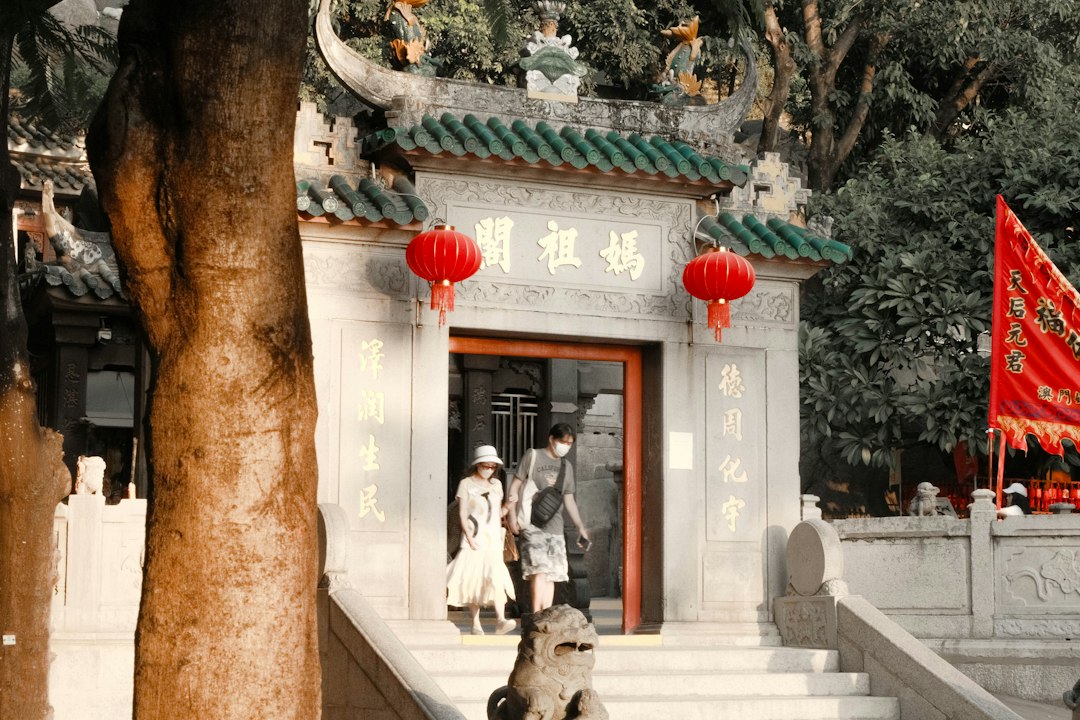
A-Ma Temple is a Taoist temple in Macao: older than the city itself
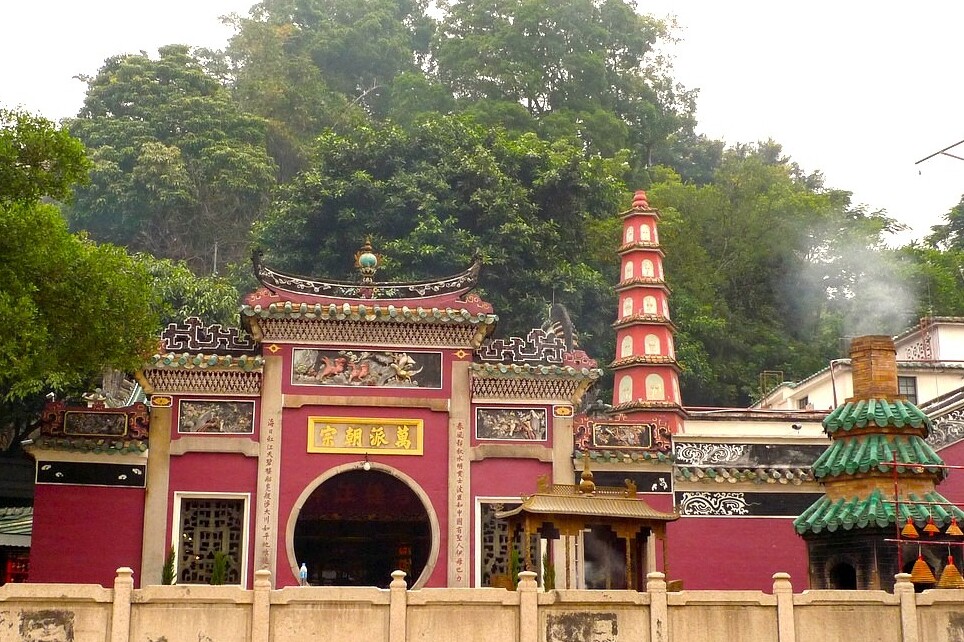
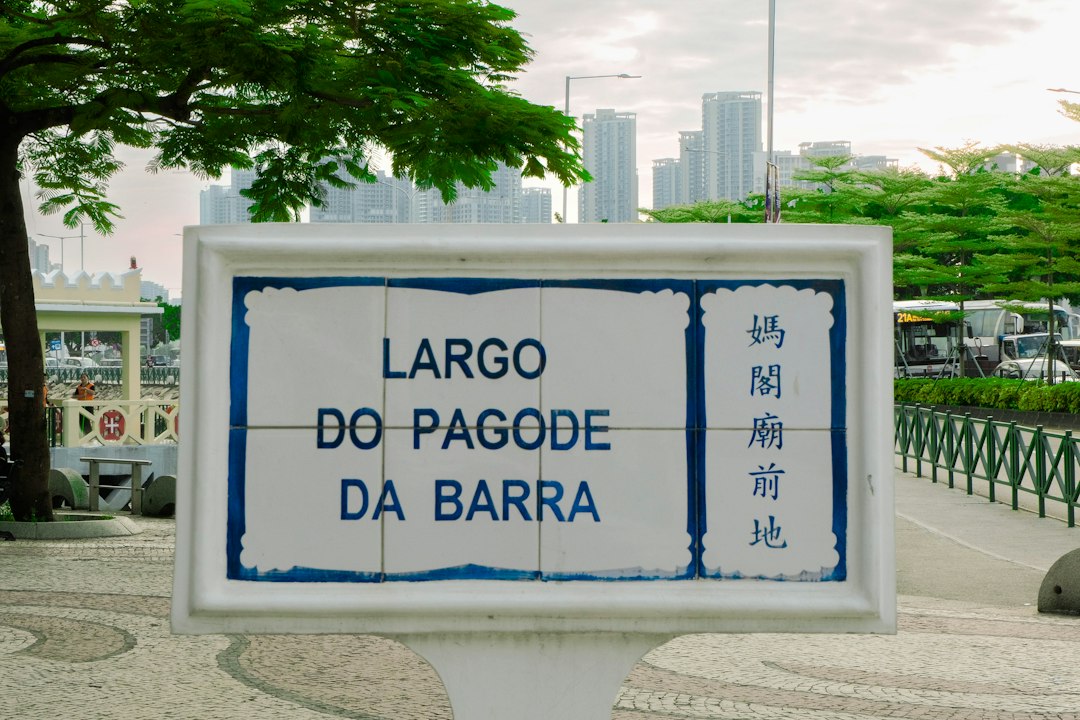
Built in 1488 — before the Portuguese arrived, before the city had a name, before most of what we call Macau existed — the A-Ma Temple may be the oldest structure still standing in the territory. The legend holds that the name 'Macau' itself derives from 'A-Ma Gao', the bay of A-Ma, the goddess of seafarers to whom this temple is dedicated. That etymological claim is contested among historians, but the building's age is not. Arriving early, before the incense smoke has fully accumulated and before the tourist coaches park outside, you encounter something that functions as an active place of worship rather than a heritage exhibit.
The temple climbs the hillside in a series of pavilions, each dedicated to different deities, connected by stone paths that require actual effort to navigate.
Insider tip
Come before 8am. The morning worshippers, many of them elderly residents from the surrounding neighbourhood, move through the space with a purposeful quiet that completely reframes the experience.
There is a reason this temple appears twice in any serious account of Macau's sacred landscape — it operates differently depending on when you arrive and what you're paying attention to. The spiritual dimension of A-Ma is not reducible to a single visit. The goddess herself occupies a complex position in Chinese religious practice, revered across Taoism, Buddhism, and folk religion simultaneously, which means the temple draws an unusually diverse congregation of worshippers. The architecture reflects this layered devotion: different pavilions were added across different dynasties, creating a structure that reads as a palimpsest rather than a unified design.
The light inside the main hall at midday, filtered through red lanterns and incense haze, has a quality that makes the space feel simultaneously ancient and immediate.
Insider tip
The upper pavilions, which require climbing steep stone steps, are visited by a fraction of the people who enter the main gate. The views from up there over the Inner Harbour are worth the effort entirely apart from the spiritual context.
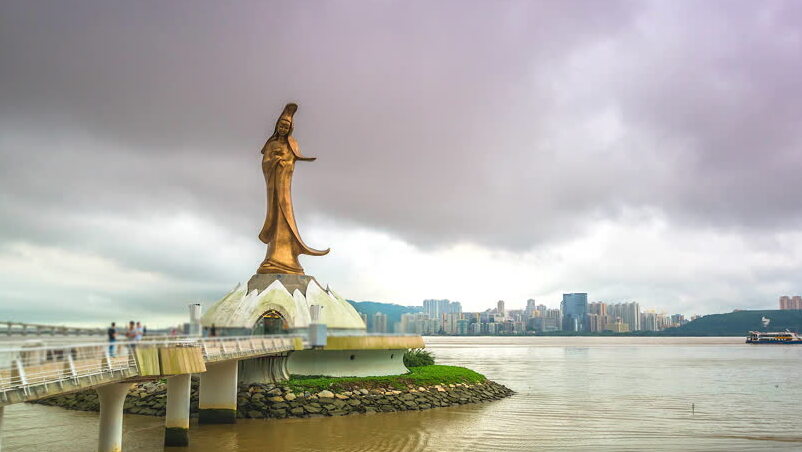
Standing near the Cultural Centre on the Outer Harbour reclamation, the Guan Yin statue is one of those landmarks that occupies an odd position in the tourist hierarchy — too prominent to be unknown, too frequently passed to be properly seen. Guan Yin, the Bodhisattva of compassion, is depicted here in a lotus position at a height that makes the figure visible from considerable distance across the water. The statue is a collaboration between Chinese and Portuguese artists, a fact that feels appropriate given Macau's foundational cultural negotiation.
Most people encounter it from a taxi window or from the deck of a ferry. The small plaza around the base, where local residents sometimes sit in the evenings watching the water, is worth spending time in rather than simply photographing.
Insider tip
The statue faces the sea, which means the best light for observation falls on it from the west in the late afternoon. The surrounding promenade is largely empty on weekday mornings.
8Garden|Park|Wildlife· 0.7 km
Macau Giant Panda Pavilion: charisma under glass
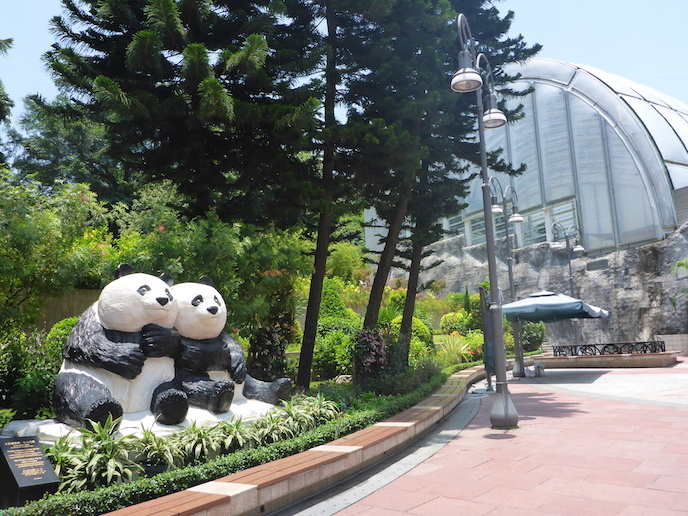
The seashell-shaped glass roof of the Giant Panda Pavilion in Coloane is visible from some distance, which means it functions simultaneously as architecture and as advertisement. The resident giant pandas — Macau's most famous non-gambling attraction — are observed from raised walkways that give visitors an unusual vantage point, looking down into the habitat rather than pressing against glass at eye level. This elevated perspective changes the dynamic considerably. The pandas, which operate on their own schedule with magnificent indifference to visiting hours, are more compelling when seen this way: as animals occupying space rather than as exhibits performing for an audience.
The pavilion sits within Seac Pai Van Park, which itself contains walking trails that almost no one follows past the panda enclosure.
Insider tip
Pandas are most active in the morning and late afternoon. Midday visits, when they're reliably asleep, are the most popular with tour groups — which tells you when to avoid going.
Part three — Off the obvious path
9Garden|Park· 8.8 km
Lou Lim Ieoc Garden: nine turns and the logic of evil spirits
The nine-turn bridge at the centre of Lou Lim Ieoc Garden is not an architectural quirk but a spiritual technology: the design is based on the belief that malevolent spirits can only travel in straight lines, meaning the bridge's zigzag path keeps them at bay. Whether or not you find that persuasive, the bridge is genuinely beautiful, arcing over a lotus pond in a garden that was originally a private residence before becoming one of Macau's most beloved public spaces. The bamboo groves, grottoes, and pavilions are arranged with a care that rewards slow walking.
The garden is technically well-known, yet it maintains a quality of calm that more famous gardens in the region have long since lost to visitor volume.
Insider tip
The garden hosts traditional music performances on some weekend mornings — erhu and guqin players practice here informally. Check local listings, but even without a scheduled performance, arriving early means near-solitude among the lotus ponds.
Returning to Lou Lim Ioc across different seasons is not redundancy — it's the only way to understand what the garden's designers intended. The lotus pond is entirely different in July, when the flowers are open, than in February, when the water is still and the bare branches of the surrounding trees create a different kind of beauty. The grottoes, which are easy to overlook on a first visit, are worth examining carefully: they're constructed from Taihu stones, the porous limestone formations prized in classical Chinese garden design for their resemblance to mountains in miniature.
The garden's function as a public space means it attracts elderly residents doing morning exercises alongside tourists consulting maps, a combination that gives it an authenticity that purely heritage-oriented spaces often lack.
Insider tip
The garden's eastern section, furthest from the main entrance, is where local residents tend to gather for morning tai chi. It's the part of the garden that feels least like a tourist attraction and most like a neighbourhood resource.
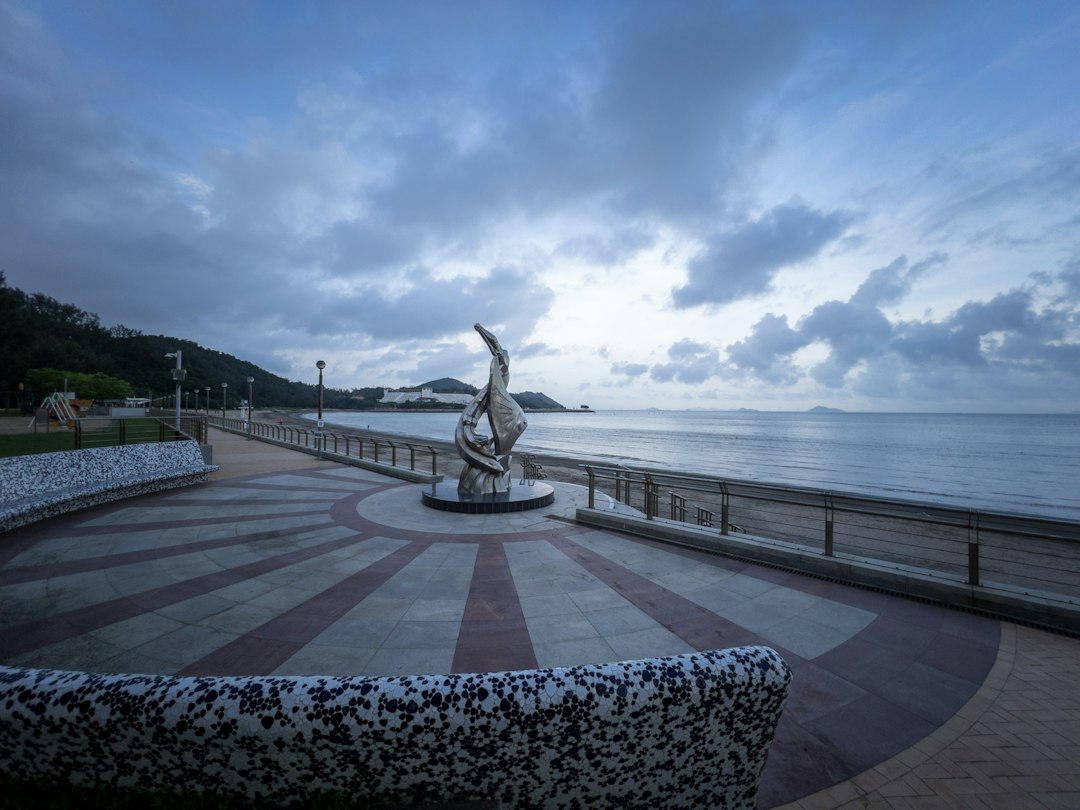
Hac Sa — literally 'black sand' in Cantonese — is the most distinctive beach in Macau and, paradoxically, one of the least visited by international tourists, who tend to associate the territory with casinos rather than coastline. The sand's dark colour comes from volcanic mineral content, giving the beach a visual character entirely unlike the pale strands of the South China Sea coast further south. The surrounding hills are green and steep, the water is warm for most of the year, and the beach has a functional, unpretentious quality — local families, barbecue facilities, a park alongside — that feels refreshingly unmediated.
It is not a beach that performs for visitors. It simply exists, which is rarer than it sounds.
Insider tip
The beach is longest and least crowded on weekday mornings outside of school holidays. The far northern end, away from the facilities, is where the black sand is most visually dramatic against the green hills.
Cheoc Van sits on Coloane's southwestern coast and operates in the shadow of Hac Sa's modest fame, which means it is quieter still. The beach is smaller, the surrounding landscape more intimate, and the facilities less developed — all of which are selling points rather than drawbacks if what you're seeking is the experience of a beach rather than a beach infrastructure. The water here is generally calmer than Hac Sa, protected by the headland, and the surrounding hills press closer, creating a sense of enclosure that some find claustrophobic and others find sheltering.
The walking path that connects Cheoc Van to Hac Sa along the hillside is one of Coloane's best-kept practical secrets, offering views across the South China Sea that the beaches themselves don't provide.
Insider tip
The connecting trail between Cheoc Van and Hac Sa takes roughly forty minutes to walk and passes through genuine secondary forest. Wear proper shoes — the path is maintained but not manicured.
Part four — Around and beyond
13Panorama|Viewpoint· 7.0 km
Macau Tower: the view that earns its cliché
At 338 metres, the Macau Tower is the kind of structure that appears in every piece about the territory, which is why it requires a different kind of attention to write about honestly. The observation deck on the 61st floor offers views across to the Chinese mainland — Zhuhai's towers visible on clear days — and down over the Pearl River Delta's extraordinary density of reclaimed land, casino development, and older urban fabric. From up here, the geography of Macau's transformation is legible in a way it never is at street level.
The tower also hosts bungee jumping and a skywalk around the outer rim, activities that attract a specific kind of visitor. The observation deck itself, separate from the adrenaline infrastructure, is worth visiting for the sheer cartographic clarity it provides.
Insider tip
Visit on a clear winter morning when the Pearl River Delta air is at its least hazy. The visibility difference between a summer visit and a January morning is dramatic enough to constitute a different experience entirely.
Macau's relationship with the sea is foundational — the Portuguese arrived by ship, the trade that built the city moved by ship, and the fishing communities that predated European contact organised their entire existence around the Pearl River Delta's waterways. The Maritime Museum, situated near the A-Ma Temple, attempts to tell that story through models, navigational instruments, and reconstructed vessel interiors. The collection is not the largest maritime museum in Asia, but it has a specificity that larger institutions lack: this is not a generic history of seafaring but a history of this particular harbour and its particular traffic.
The building itself, designed to evoke a sailing vessel, is more interesting architecturally than most reviews acknowledge.
Insider tip
The museum's upper floor has a terrace with views over the Inner Harbour that most visitors miss entirely. It's one of the better vantage points in the historic district and costs nothing beyond the admission fee.
The fact that Vila da Taipa has survived as a coherent village neighbourhood despite being minutes from the Cotai Strip is either a minor miracle of planning or simply a consequence of the Strip's overwhelming gravitational pull drawing development away from it. The colonial-era houses along Rua Correia da Silva, painted in the pastel palette that Macau's Portuguese heritage favours, contain a mixture of small restaurants, local shops, and private residences that gives the street an inhabited quality that heritage zones often sacrifice for visitor comfort.
The village sits on Taipa rather than Coloane proper, but it belongs in any serious account of what Macau looks like when it isn't performing for the casino economy. The green hills behind it, visible from the main street, are a constant reminder that this is an island.
Insider tip
The small lanes running perpendicular to the main heritage street are where the neighbourhood's actual daily life happens — laundry, children, elderly residents playing cards. These lanes are five metres from the tourist circuit and feel like a different world.
Coloane has a quality that I've only encountered in a handful of places during a decade of writing about cities: it resists summary. Every time I think I've understood it — the black sand, the pandas, the colonial squares, the temples older than the city's name — something shifts. A different light on the Mandarin's House courtyard. A conversation overheard near the Lilau fountain. The way Hac Sa beach looks at low tide on a January morning when there's no one else there.
The places in this piece are not secrets. They are simply things that require a different quality of attention than the Cotai Strip demands of you. The Strip wants your money and your excitement. Coloane wants your time and your patience, and it returns the investment in a currency that's harder to quantify but considerably more durable. Come with a loose schedule. Walk the trail between the beaches. Sit in the gardens longer than feels necessary. The island will do the rest.
🏆 Pocket guide
Take this guide with you.
Save it offline, get walking directions, and discover thousands more places like the ones you just read.
How do I get from central Macau to Coloane without a taxi?
Public buses run regularly between the ferry terminals and Coloane village, with routes also serving Hac Sa and Cheoc Van beaches. The journey from the Lisboa area takes roughly 30-45 minutes depending on traffic. Bus 26 and 26A are the most useful routes for reaching the southern beaches and the Giant Panda Pavilion area. Fares are minimal and buses run from early morning until late evening.
Is there a best time of year to visit Coloane's outdoor sites?
October through March offers the most comfortable conditions: lower humidity, clearer skies, and temperatures that make walking between sites genuinely pleasant. Summer (June-September) brings typhoon season and high humidity, though the beaches are warmer and the gardens are at their most lush. The Giant Panda Pavilion is climate-controlled, so it's comfortable year-round, but the surrounding park trails are best avoided in peak summer heat.
Are the temples and heritage houses free to enter?
Most of Macau's temples, including the A-Ma Temple, are free to enter, though donations are welcome and expected. Heritage buildings like the Mandarin's House are managed by the Cultural Affairs Bureau and are generally free or very low-cost. The Maritime Museum charges a small admission fee. The Giant Panda Pavilion has a separate admission charge. Always check current opening hours before visiting, as some sites have limited hours on certain days.
Can I walk between most of these sites, or is transport necessary?
The sites in this piece span a considerable geographic range — from Coloane's beaches in the south to Senado Square and the Lou Lim Ieoc Garden in the historic peninsula. Walking between all fifteen in a single day is not realistic. A practical approach is to group them geographically: Coloane sites (beaches, panda pavilion, A-Ma Temple area) in one day, and the historic peninsula sites (Senado Square, Largo do Lilau, Mandarin's House, Lou Kau House, gardens) in another. Taxis are inexpensive by most international standards.
How crowded do these places get, and when should I avoid visiting?
Macau's public holidays and Golden Week periods (early October and late January/early February) bring significant visitor numbers to all heritage sites. Senado Square and the A-Ma Temple area are the most affected. Coloane's beaches and the Giant Panda Pavilion are busiest on weekend afternoons. For any site on this list, weekday mornings outside of public holidays represent the optimal balance of accessibility and manageable crowds. The Lou Lim Ieoc Garden and Largo do Lilau remain relatively calm even on busy days due to their position slightly off the main tourist circuits.
🏆 Read this offline
Save it to your phone.
Bookmark this guide, plan your trip offline, and discover thousands of places like these.
BookmarkPlan offline60 languages
iOS / Android
Huawei users
Secret WorldHidden places, real stories — plan your trip