Trip.Planner
En · Travel Guide
Travel Guide · 2026 Edition

15 Hidden Gems in Dubrovnik — beyond the postcard

A city everyone thinks they know, and almost nobody actually sees

L
Words by
Lena Hofmann
Updated
15 September 2026
Read time
12 minutes
Includes
8 places · interactive map
15 Hidden Gems in Dubrovnik — beyond the postcard
There is a particular kind of invisibility that afflicts the most photographed places on earth. Dubrovnik suffers from it acutely. The cruise ships dock, the selfie sticks extend, the orange rooftops are duly admired, and by three in the afternoon the same thousand people are queuing for the same cable car shot. None of this is wrong, exactly. The walls are genuinely worth your time. The Adriatic really is that colour. But somewhere between the Instagram post and the departure gate, the actual city — the one with friction and shadow and odd little corners that don't resolve into a clean composition — gets quietly bypassed.

I have been coming to Dubrovnik long enough to remember when the cruise-ship crowds felt like an anomaly rather than the operating condition of the place. What I have learned, slowly, is that 'hidden' in a city this famous is not a geographic category. It is an attentional one. The places that surprise you here are not necessarily tucked away; some of them are visible from the main street. They are hidden in the way that a sentence in a language you don't quite speak is hidden: present, legible to those who know the grammar, invisible to everyone else.

This list is not for first-timers looking for a checklist. It is for people who have already done Dubrovnik once and came home feeling they had somehow missed it. The places below range from a cross on a ridge to a garden that predates the republic that planted it. What they share is the quality of rewarding attention — the kind of slow, slightly inconvenient attention that mass tourism is specifically designed to prevent.

At a glance

  1. Dubrovnik is the 'Pearl of the Adriatic': the city that learned to perform itself
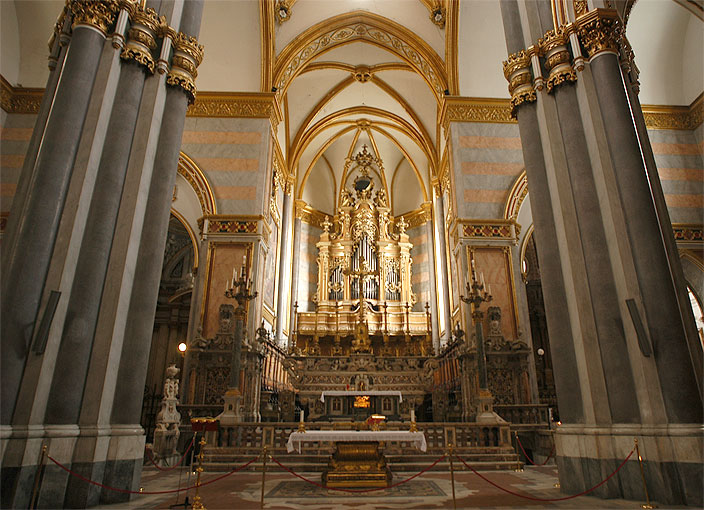
  2. DubrovniK | Fortezza Rossa: il cuore di Approdo del Re: where fiction colonised stone
  3. Torre Minčeta e La misteriosa Casa degli Eterni: the tower that holds the skyline together
  4. Dubrovnik: The Church of St Blaise: a baroque argument in stone
  5. Križ na Srđu: Un Viaggio nella Storia della Croazia: the cross that watched the siege
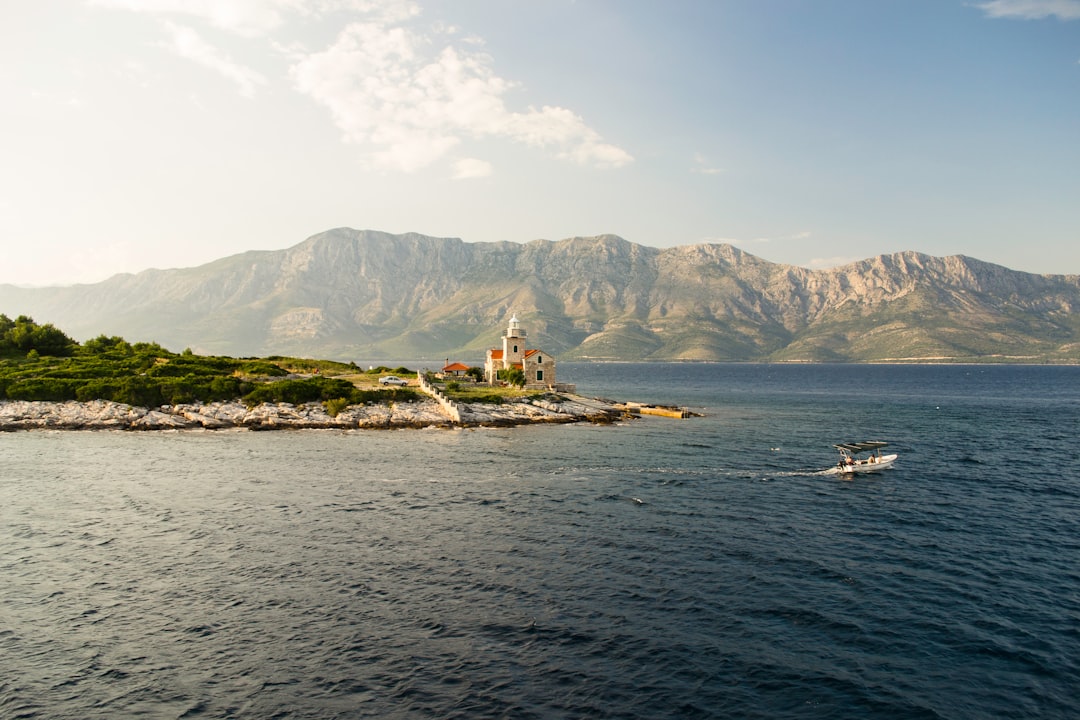
  6. L'Isola di Lokrum ed il Trono di Spade: the island that refuses to be owned
  7. Cavtat (Ragusa Vecchia), Croazia: the older city that the tourists forgot
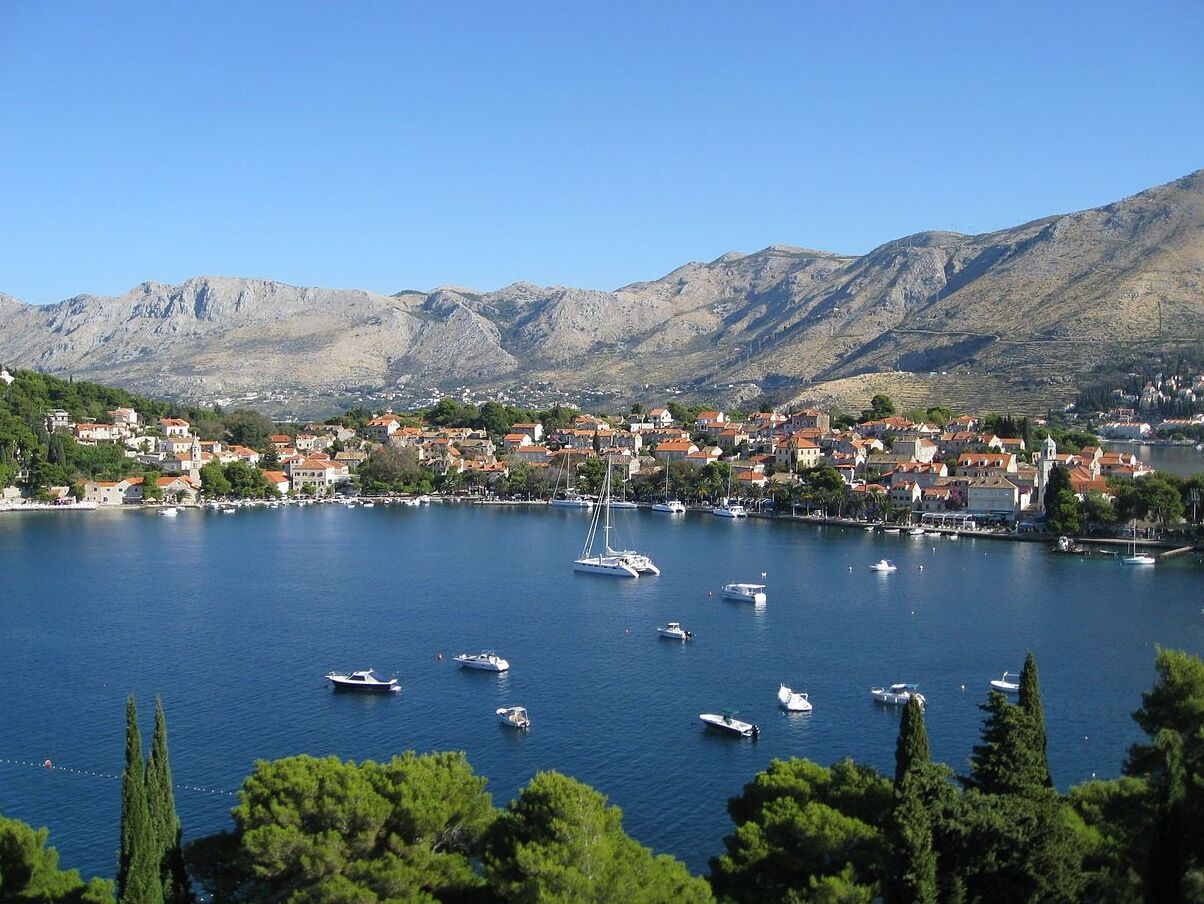
  8. Arboreto di Trsteno e i verdi giardini di Approdo del Re: the oldest arboretum on the Adriatic
1 Historic Site · 1.1 km

Dubrovnik is the 'Pearl of the Adriatic': the city that learned to perform itself

Dubrovnik is the 'Pearl of the Adriatic': the city that learned to perform itself
Every city has a version of itself it sells to strangers, and Dubrovnik has refined its pitch to an almost uncomfortable degree. The UNESCO designation, the Dalmatian coast setting, the limestone streets polished to a near-dangerous shine by centuries of foot traffic — all of it is real, and all of it has been so thoroughly packaged that the authentic and the theatrical have become genuinely hard to separate. What saves it, if you are paying attention, is the scale. The Old Town is small enough that you can walk its perimeter in under an hour, and that smallness eventually forces intimacy. The grand narrative gives way to a doorway, a cat on a step, a line of laundry strung between two baroque facades.

The Republic of Ragusa, which governed this city-state with remarkable diplomatic dexterity for centuries, understood that appearance was policy. The walls were not just defensive; they were a statement. The city was always, at some level, performing.
Insider tip Come back after 8pm in shoulder season, when the day-trippers have retreated to their ships. The streets empty with surprising speed, and the city briefly becomes itself again.
2 Fortress · 1.3 km

DubrovniK | Fortezza Rossa: il cuore di Approdo del Re: where fiction colonised stone

DubrovniK | Fortezza Rossa: il cuore di Approdo del Re: where fiction colonised stone
Lovrijenac Fortress — known to Game of Thrones devotees as the Red Keep, or Fortezza Rossa in the Italian fan lexicon — sits on a rock outcrop west of the Pile Gate, separated from the city walls by a narrow channel. Most visitors photograph it from the walls and move on. Fewer actually climb to it, which is a miscalculation. The interior is spare and wind-scoured, and the views back toward the city are the best available at ground level. The fortress predates the show by roughly nine centuries, and its actual history — built to prevent Venetian forces from establishing a foothold on the rock — is considerably more interesting than its fictional one.

At the entrance, an ancient Latin inscription reads: Non bene pro toto libertas venditur auro — 'Freedom is not well sold for all the gold in the world.' The Republic of Ragusa meant it as a civic motto. It reads, now, with a certain irony.
Insider tip The fortress hosts open-air theatre performances in summer, including occasional Shakespeare productions. Seeing Hamlet here, with the Adriatic behind the stage, is an experience that earns its cliché.
3 Tower · 1.4 km

Torre Minčeta e La misteriosa Casa degli Eterni: the tower that holds the skyline together

Torre Minčeta e La misteriosa Casa degli Eterni: the tower that holds the skyline together
Minčeta Tower is the highest point on Dubrovnik's city walls, and it anchors the northern skyline with the quiet authority of something that has been doing its job for a very long time. Built in the fifteenth century and later expanded by the Florentine architect Michelozzo, it represents the point where Ragusan civic ambition and genuine military engineering converged. Game of Thrones filmed its House of the Undying sequences here, which has generated a particular kind of tourist traffic — people looking for a fictional building inside a real one, which is its own kind of philosophical puzzle.

What the show's fans often miss is the view from the tower's crown: a full 360-degree panorama that takes in the rooftops, the harbour, the island of Lokrum, and the Dalmatian hills beyond. It is the best argument for walking the entire wall circuit rather than stopping at the obvious lookout points.
Insider tip The wall walk is one-directional. Start at the Pile Gate entrance early — before 9am if possible — and you will have the Minčeta section largely to yourself before the crowds catch up.
4 Church · 1.7 km

Dubrovnik: The Church of St Blaise: a baroque argument in stone

Dubrovnik: The Church of St Blaise: a baroque argument in stone
The Church of St Blaise — Crkva Svetog Vlaha — stands at the eastern end of the Stradun, and it is one of those buildings that most visitors walk past at speed on their way to somewhere else. This is worth correcting. Built between 1706 and 1714 after fire destroyed its predecessor, it is a baroque confection of considerable refinement: the facade is animated, the interior is calm, and the golden statue of St Blaise above the altar holds a small-scale model of medieval Dubrovnik in his hand — one of the most precise records we have of the city's pre-earthquake appearance.

St Blaise is the patron saint of Dubrovnik, and his feast day on the third of February is still observed with genuine civic feeling. The church is not a museum piece; it is a working building in a city that still takes its patron seriously.
Insider tip The statue of St Blaise holding the city model is visible from the nave, but bring binoculars or a zoom lens — the detail in the miniature city is remarkable and rarely examined closely.
5 Monument · 1.5 km

Križ na Srđu: Un Viaggio nella Storia della Croazia: the cross that watched the siege

Križ na Srđu: Un Viaggio nella Storia della Croazia: the cross that watched the siege
Mount Srđ rises sharply behind Dubrovnik, and most people who ascend it — by cable car, by foot, or by the winding road — focus on the panoramic view and the Napoleonic-era fort at the summit. Fewer pay attention to the cross itself, Križ na Srđ, which stands as a monument to something considerably more recent and more painful than the city's medieval glory. During the siege of Dubrovnik in 1991 and 1992, Mount Srđ was a front line. Croatian defenders held the high ground against Yugoslav People's Army forces, and the cross on the ridge became a symbol of resistance that the city's residents could see from below.

The war memorial museum inside the fort is small and not especially well-funded, but it is honest. It tells a story that the polished limestone streets of the Old Town do not — a story of a city that was shelled within living memory.
Insider tip Walk up rather than taking the cable car on the descent. The path down through the scrubland gives you time to look back at the city from changing angles, and it takes less than forty minutes.
6 Island · 2.9 km

L'Isola di Lokrum ed il Trono di Spade: the island that refuses to be owned

L'Isola di Lokrum ed il Trono di Spade: the island that refuses to be owned
Lokrum is ten minutes by boat from the Old Harbour, close enough to feel like an extension of the city, far enough to feel like an escape from it. The island is a nature reserve — no permanent residents, no hotels — and it has the slightly unkempt quality of a place that has decided not to accommodate human ambition. A Benedictine monastery, now ruined, stands at its centre. Peacocks wander the grounds with the indifference of creatures who know they are picturesque. A saltwater lake connects to the sea through a narrow channel, and on warm days the swimming there has a peculiar, enclosed quality — like bathing in something that is almost a swimming pool but remains, stubbornly, the Adriatic.

The island also features a replica of the Iron Throne from Game of Thrones, which is either a charming acknowledgement of the show's filming history or a minor desecration of a genuinely beautiful place, depending on your tolerance for that sort of thing.
Insider tip The last ferry back to Dubrovnik leaves in the early evening. Missing it is not a disaster — there are usually additional boats — but check the schedule before you settle in for a long afternoon swim.
7 Coastal Town · 12.7 km

Cavtat (Ragusa Vecchia), Croazia: the older city that the tourists forgot

Cavtat (Ragusa Vecchia), Croazia: the older city that the tourists forgot
Cavtat sits about eighteen kilometres south of Dubrovnik, on a wooded peninsula that juts into the Adriatic with the unhurried confidence of a place that knows it does not need to try very hard. It was, in fact, the original Ragusa — the ancient settlement from which the medieval city took its name — before being abandoned after a barbarian raid in the seventh century sent its residents north to found what would become Dubrovnik. The irony is that the successor city became one of the most visited places in Europe, while Cavtat settled into a quiet, slightly sleepy existence as a resort town with genuinely good seafood restaurants and far fewer people.

The peninsula walk — around the wooded headland, past the Račić mausoleum designed by Ivan Meštrović, and back through the old harbour — takes about an hour and offers the kind of uncrowded coastal scenery that Dubrovnik itself can no longer reliably provide.
Insider tip Take the ferry from Dubrovnik's Old Harbour rather than the bus. The approach by sea, with the wooded peninsula coming into view, is considerably more satisfying than arriving by road.
8 Garden · 11.8 km

Arboreto di Trsteno e i verdi giardini di Approdo del Re: the oldest arboretum on the Adriatic

Arboreto di Trsteno e i verdi giardini di Approdo del Re: the oldest arboretum on the Adriatic
Trsteno Arboretum sits about eighteen kilometres north of Dubrovnik, in a small coastal village that most visitors pass without stopping. This is a significant oversight. The garden was established in the late fifteenth century by the Gučetić family, Ragusan nobles who planted it as a Renaissance pleasure garden — one of the earliest examples of formal garden design on the eastern Adriatic coast. The two Oriental plane trees at the entrance are among the oldest and largest in Europe, their canopies spreading over a fountain and a small nymphaeum in a way that suggests the garden has been quietly winning its argument with time for five hundred years.

Game of Thrones used it as the gardens of King's Landing, which has brought a new category of visitor. But the arboretum predates the show, the republic that maintained it, and most of the institutions that would claim to protect it.
Insider tip Bus number 12 from Dubrovnik stops in Trsteno. The journey takes about thirty minutes and costs a fraction of what a taxi would charge. The garden is rarely crowded, even in high summer.
Cities like Dubrovnik present a specific challenge to the curious traveller: the more famous a place becomes, the more its infrastructure of tourism works to channel you through a predetermined experience, efficiently and at scale. The wall walk, the cable car, the Stradun — these are not wrong choices. They are just insufficient ones, if what you are after is the actual texture of a place.

What the fifteen entries in this list share is not obscurity. Several of them are well-known. What they share is the quality of rewarding a second look — of yielding something different to the person who arrives with a question rather than a checklist. The cross on the ridge above the city is visible from the streets below. The arboretum has been there for five centuries. The fortress has a Latin inscription at its gate that most visitors walk past without reading.

Dubrovnik is not hiding from you. It is simply waiting to see whether you are paying attention.
🏆 Pocket guide

Take this guide with you.

Save it offline, get walking directions, and discover thousands more places like the ones you just read.

Save offline Smart routes Hidden gems
Scan to download iOS / Android
Scan for AppGallery Huawei users

All places, on a map

Map data © OpenStreetMap contributors.

Frequently asked questions

When is the best time to visit Dubrovnik to avoid the largest crowds?

May and October offer the most favourable balance of weather and manageable visitor numbers. July and August are the peak months, when cruise ship arrivals can push the Old Town population to several times its residential capacity on a single day. If you are visiting in high summer, early mornings — before 9am — and evenings after 7pm are when the city is most navigable on foot.

How do I get from Dubrovnik to Cavtat and Trsteno without a car?

Cavtat is accessible by ferry from Dubrovnik's Old Harbour (roughly 30-45 minutes, seasonal service) or by bus from the main bus station. Trsteno is served by bus number 12 from Dubrovnik, with a journey time of approximately 30 minutes. Both options are inexpensive and run regularly during the tourist season, though schedules thin out in winter.

Is Lokrum Island suitable for a half-day visit, and what should I bring?

A half-day is the standard visit length and works well. Bring water, sun protection, and swimming gear — the island has limited facilities and no shops in the conventional sense. The ferry runs from the Old Harbour and takes about ten minutes each way. Check the last ferry departure time before you arrive, as it varies by season and missing it requires arranging alternative transport.

Can I walk up to Mount Srđ and the cross, or is the cable car the only option?

The hiking path to the summit is a legitimate option for reasonably fit visitors and takes approximately 90 minutes from the city. The path begins near the Pile Gate area. The cable car is faster and offers views on the ascent, but the walk gives you a different relationship with the landscape and the war memorial context of the site. Wear proper footwear — the path is rocky and can be uneven.

Is the Trsteno Arboretum worth the trip from Dubrovnik if I only have one full day?

If your single full day is in high summer and you are feeling overwhelmed by the Old Town crowds, yes — Trsteno offers a genuinely different pace and a landscape that rewards slow attention. The garden takes about 90 minutes to explore thoroughly. Combined with the bus journey, it is a half-day commitment, which leaves time for the Old Town in the evening when the day-tripper crowds have thinned.

🏆 Read this offline

Save it to your phone.

Bookmark this guide, plan your trip offline, and discover thousands of places like these.

Bookmark Plan offline 60 languages
Scan to download iOS / Android
Scan for AppGallery Huawei users
Secret World Hidden places, real stories — plan your trip
Get the app
