The city rewards those who look sideways. Here is where to look.
L
Words by
Lena Hofmann
Updated
22 October 2026
Read time
12 minutes
Includes
13 places · interactive map
Every city has two versions of itself. The first is the one that appears on tote bags and Instagram grids — the castle on its volcanic plug, the gothic spires needling a pewter sky, the Royal Mile doing its theatrical best. Edinburgh performs this version with considerable flair, and it knows it. The second version is quieter, stranger, and considerably more interesting. It exists in the same square miles, often on the same streets, and yet a surprising number of visitors — and not a few locals — walk straight past it. This is not because these places are secret in any meaningful sense. Most of them appear in guidebooks, have their own Wikipedia entries, and charge admission. What makes them feel hidden is something more psychological: they exist in the shadow of a city so aggressively photogenic that anything which cannot be captured in a single frame tends to get overlooked. Edinburgh's drama is vertical — castle, sky, hill — and so the horizontal details, the tucked-away courtyards, the locked gardens, the medieval underbellies, the bridges that changed engineering history, get absorbed into the background hum. I have been coming to Edinburgh for the better part of two decades, and I still find myself surprised by it. Not by the castle — the castle is exactly what you expect — but by what sits beside it, beneath it, or a short walk from it, waiting for the crowd to thin. What follows is not a list of secrets. It is a list of things worth paying attention to.
Edinburgh Castle: the fortress that never quite becomes familiar
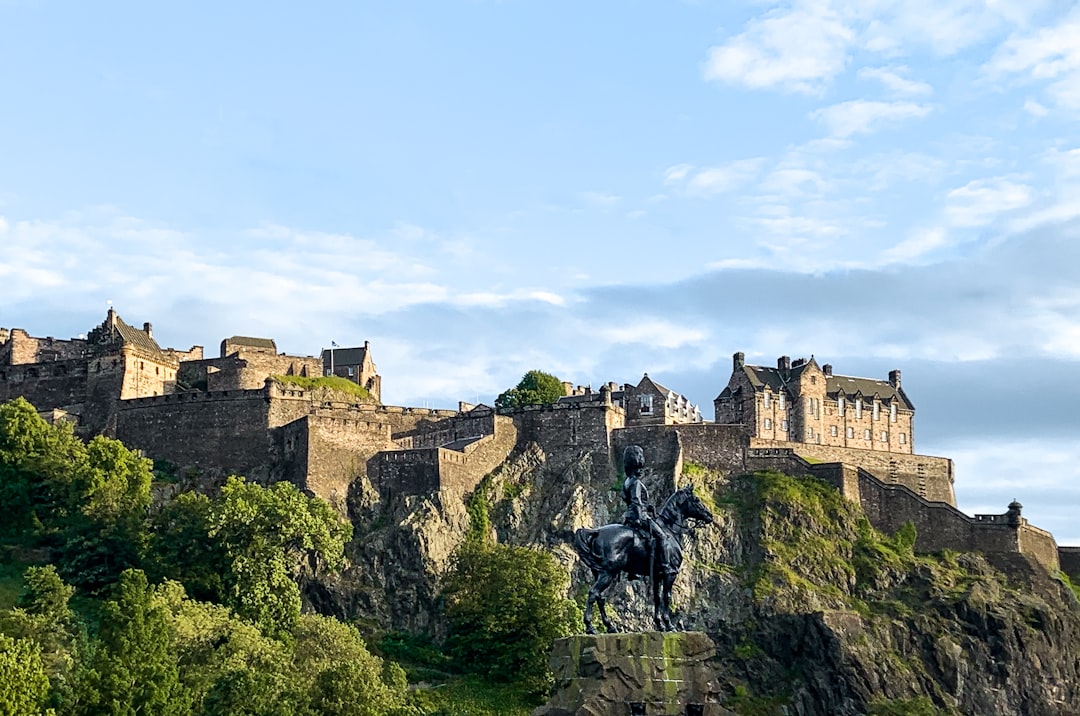
With over 1.56 million visitors passing through its gates each year, Edinburgh Castle is the least secret place on this list and, paradoxically, one of the most consistently underestimated. Most people arrive, photograph the esplanade, and leave with a general impression of grey stone and sweeping views. What they miss is the texture: the way the castle is not one building but a layered accumulation of centuries, each era of Scottish history compressed into the volcanic rock beneath. The oldest surviving structure, St Margaret's Chapel, dates to the twelfth century and is barely larger than a generous living room — easy to walk past in the rush toward the Crown Jewels. Slow down here. The chapel rewards the visitor who lingers.
Insider tip
Arrive at opening time on a weekday and head directly to St Margaret's Chapel before the tour groups form. The silence there, this early, is genuinely unusual for one of Scotland's busiest sites.
2Monument· 0.3 km
Scott Monument: Gothic excess in broad daylight
Inaugurated in 1846 and built in honour of Sir Walter Scott, the Scott Monument is one of the largest monuments to a writer anywhere in the world — a fact that says something interesting about how seriously nineteenth-century Scotland took its literary culture. The tower is blackish in colour, which gives it an eeriness that sits oddly on the cheerful commercial strip of Princes Street. Most people photograph it from below and move on. Fewer climb it. The interior is a tight, spiralling ascent through 287 steps that rewards the mildly claustrophobic with increasingly vertiginous views over the New Town and, on a clear day, across the Firth of Forth. The monument is not subtle, but it is genuinely strange in a way that grows on you.
Insider tip
The monument has four viewing platforms at different heights — you can stop at any of them. The second platform offers the best balance of effort and reward, with the New Town grid laid out below you like a Georgian diagram.
3Historic Site· 1.1 km
George Heriot's School in Edimburgh: the school that time forgot to modernise
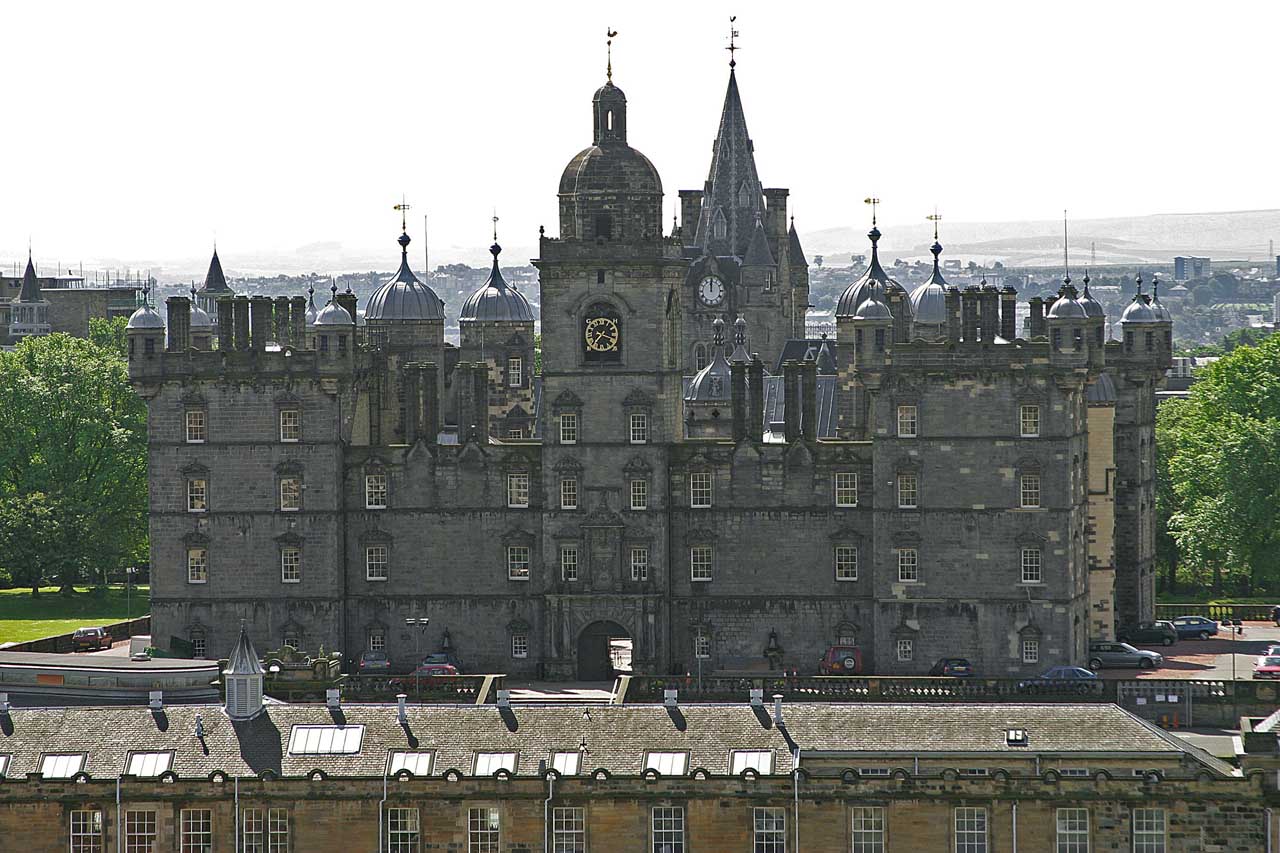
George Heriot's School sits on Lauriston Place in the Old Town, visible from the castle esplanade, and yet it is consistently overlooked by visitors who assume, reasonably enough, that a working school is not open to them. Established in 1628 by bequest of George Heriot — goldsmith and jeweller to King James VI — it was originally founded as a hospital for the care of poor children. The building is a Renaissance masterpiece: four towers, a central courtyard, and a stonework so elaborately detailed that it reportedly influenced J.K. Rowling's imagining of Hogwarts. Whether that is true or apocryphal, the building is remarkable on its own terms, and the exterior is freely visible from the surrounding streets.
Insider tip
Walk around the perimeter on a weekend morning when the school is quiet. The south-facing elevation, seen from Greyfriars Kirkyard, is the most architecturally rewarding angle and almost nobody stops to look at it properly.
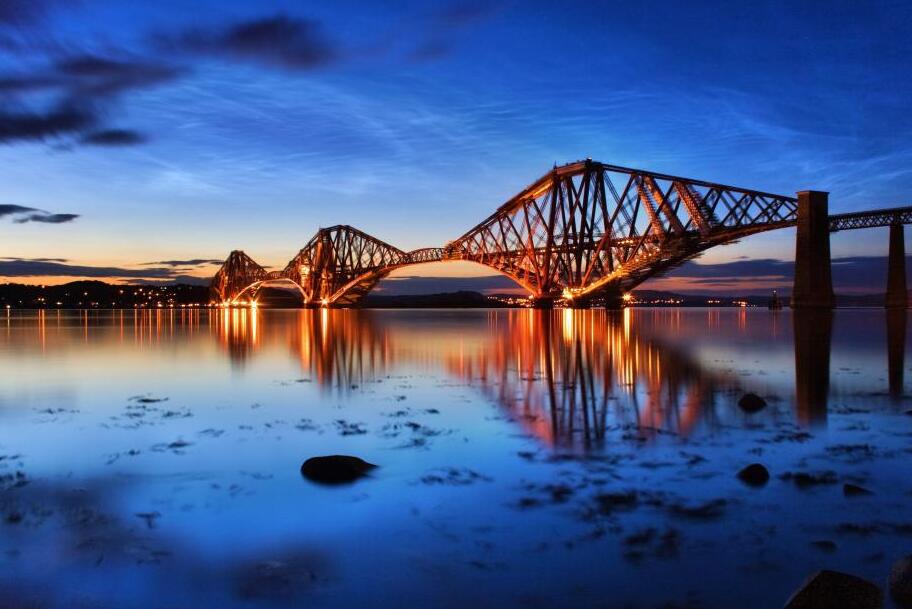
Thirteen kilometres from the city centre, the Forth Bridge sits at a distance that dissuades many visitors from making the trip — which is their loss. This cantilever railway bridge, opened in 1890 and now a UNESCO World Heritage Site, was a genuine engineering revolution. It was built in the aftermath of the Tay Bridge disaster, which meant its designers — Benjamin Baker and John Fowler — were working under extraordinary public scrutiny and pressure. The result was a structure of almost theatrical over-engineering: 54,000 tonnes of steel, designed to be visibly, undeniably safe. Seen from South Queensferry below, it is one of the most arresting pieces of industrial architecture in Europe — not beautiful in any conventional sense, but powerfully, almost defiantly itself.
Insider tip
Take the train from Edinburgh Waverley to Dalmeny station and walk down to South Queensferry. The view from the harbour, with the bridge framing the sky above you, is the one that stays with you.
Part two — A little deeper
5Food· 0.0 km
Scottish Porridge: the breakfast that predates tourism
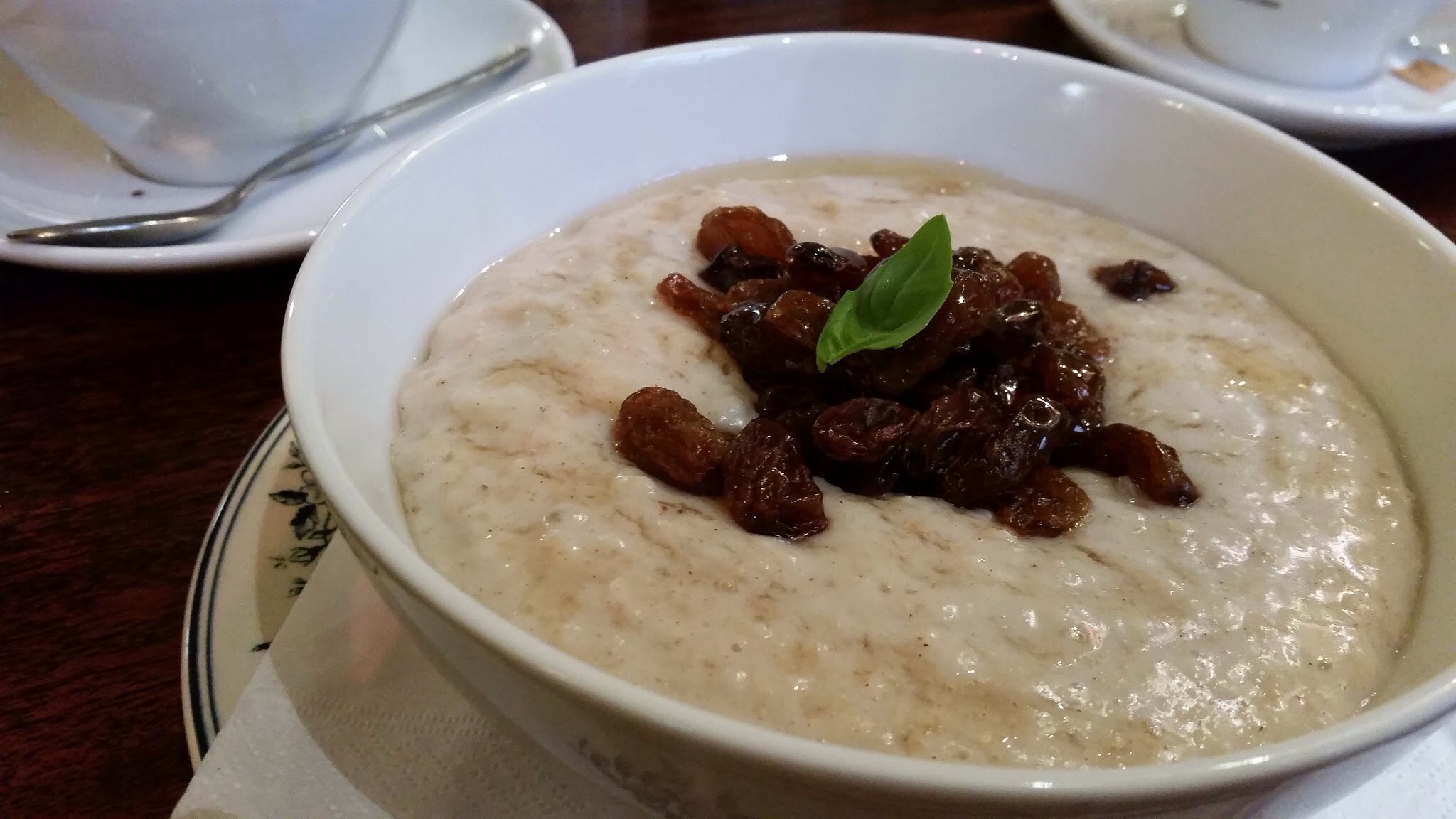
Scottish porridge has been part of the Scottish breakfast for thousands of years, and it occupies a curious position in the city's food culture — everywhere and nowhere at once. Every café in Edinburgh will serve you a version of it, but the range of quality is considerable. At its best, made with pinhead oatmeal, cooked slowly and finished with a little salt and perhaps a thread of cream, it is one of the most satisfying things you can eat on a cold Edinburgh morning. At its worst, it is a lukewarm paste that tastes of nothing in particular. The difference is almost entirely in the oats and the patience of whoever is making it. It is not glamorous food, and that is precisely why it tends to be overlooked in favour of the city's more photogenic café offerings.
Insider tip
Ask specifically for pinhead or steel-cut oats rather than rolled oats — any café worth its salt will know the difference and will appreciate that you do too. Avoid adding sugar; the Scottish tradition is salt, and it is correct.
Planning a trip to Edinburgh in 2026 increasingly means navigating a crowded landscape of apps, each promising to personalise your itinerary and surface the places that guidebooks miss. Among these, AI-driven trip planners have begun to genuinely change how informed travellers approach a city — not by replacing local knowledge, but by aggregating it in ways that were previously impossible without weeks of research. The best of these tools cross-reference opening hours, crowd patterns, and neighbourhood context in real time, which is particularly useful in a city as seasonally variable as Edinburgh. The technology is imperfect and occasionally confidently wrong, but as a starting framework for a visit — particularly one that aims to move beyond the obvious — it is worth taking seriously.
Insider tip
Use any AI trip planner as a first draft, not a final word. Feed it specific constraints — 'no major tourist sites before 10am', 'walking distance only', 'Old Town only' — and it becomes considerably more useful than a generic itinerary.
7Folklore· 0.4 km
The Real Mary King's Close: the city that Edinburgh buried
Reopened to the public in 2003, The Real Mary King's Close occupies a peculiar position in Edinburgh's cultural landscape — it is simultaneously one of the city's most visited underground attractions and one of its most genuinely unsettling. The close, sealed and built over in the seventeenth century, reflects the poverty, claustrophobia, and disease-ridden reality of Edinburgh's Old Town during a period when the city was expanding upward rather than outward. What you find underground is not a recreation but a preservation: rooms that retain the dimensions, textures, and atmosphere of a city that was simply covered rather than demolished. The guided tours vary in quality, but the best guides resist the temptation to over-dramatise what is already, in its own right, sufficiently strange.
Insider tip
Book the last tour of the day. The close empties of daytime visitors and the guides tend to be more candid — and more willing to linger — when they are not rushing to turn over a group.
8Church· 0.5 km
Edinburgh: St Giles' Cathedral: the church that was never quite a cathedral
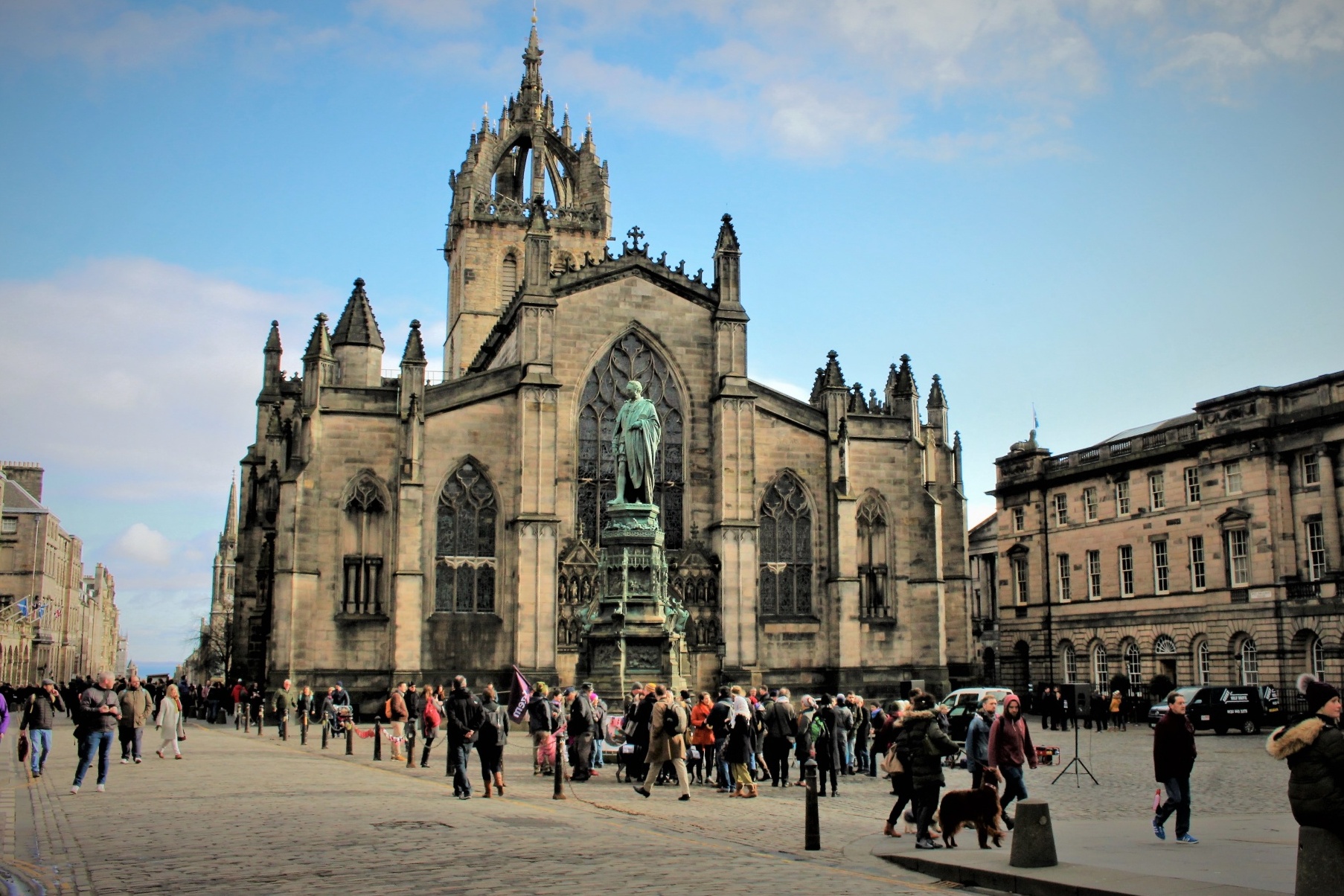
Situated between Edinburgh Castle and the Palace of Holyroodhouse, St Giles' Cathedral has a complicated relationship with its own name. It has been a cathedral — the seat of a bishop — only intermittently throughout its history, reflecting the turbulent back-and-forth of Scottish ecclesiastical politics. The building itself sits on an ancient sanctuary dating to the ninth century, though what stands today is largely medieval and later. The Thistle Chapel, added in 1911, is the detail that most visitors rush past on their way to the main nave: a small, intensely ornate space dedicated to the Order of the Thistle, Scotland's highest order of chivalry, with carved stalls of extraordinary intricacy. It is the kind of thing that takes ten minutes to see properly and is worth every one of them.
Insider tip
The Thistle Chapel requires a small additional entry fee and is often overlooked by visitors who assume the main nave is the whole story. It is not. The carved animals on the stall canopies alone justify the detour.
Part three — Off the obvious path
9Landmark· 0.6 km
Edimburgh: Greyfriars Bobby: the dog, the myth, and the kirkyard behind it
Over 150 years ago, a Skye Terrier became the most famous dog in Scotland's history — a story of loyalty so persistent it has outlasted considerable scholarly scepticism about its details. The small bronze statue of Greyfriars Bobby, installed near the entrance to Greyfriars Kirkyard, is one of Edinburgh's most photographed objects. It is also, frankly, not the point. The point is the kirkyard behind it: one of Edinburgh's oldest and most historically layered burial grounds, where the graves of figures central to Scottish history stand in various states of weathered dignity. The kirkyard was also the site of significant Covenanting history in the seventeenth century, and the atmosphere — particularly on a grey afternoon — is one of genuine historical weight rather than manufactured atmosphere.
Insider tip
Walk through the full extent of Greyfriars Kirkyard rather than stopping at the gate for the Bobby photograph. The Covenanters' Prison section at the far end is rarely crowded and contains some of the most historically significant monuments in the city.
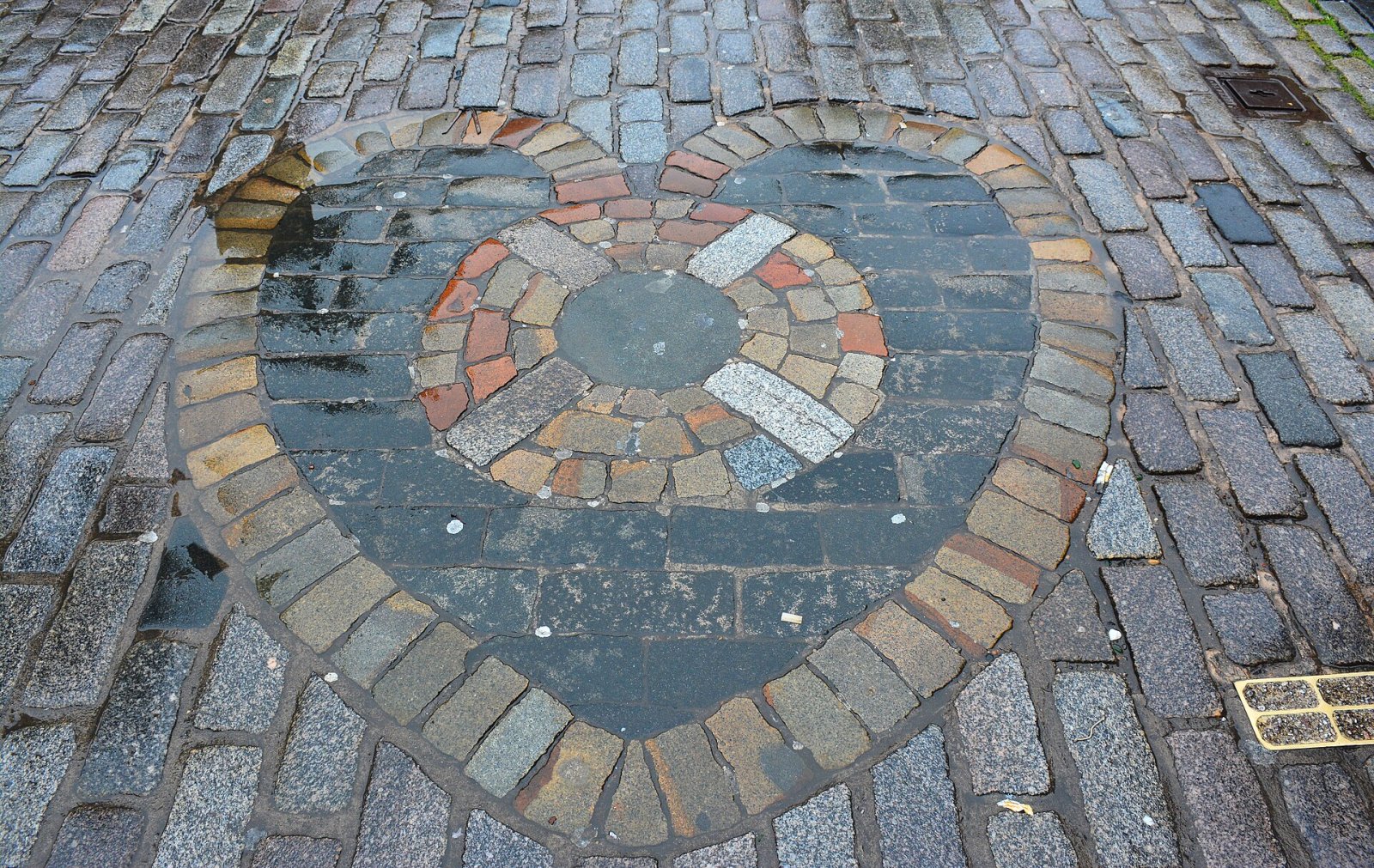
In the heart of Edinburgh's Old Town, directly in front of St Giles' Cathedral, a heart-shaped mosaic is set into the cobblestones of the Royal Mile. The Heart of Midlothian marks the site of the Old Tolbooth — a building that served variously as a tax collection point, a prison, and a place of public execution before its demolition in the early nineteenth century. The tradition of spitting on the heart is one of Edinburgh's oldest popular customs, its origins variously attributed to contempt for the prison, farewell to the city, or simple good luck. Most visitors walk over it without noticing it is there. Those who do notice tend to find it one of the city's most quietly eloquent details: a small, dark heart in the middle of a very busy street.
Insider tip
The mosaic is most visible when the surrounding cobblestones are wet — the contrast between the red and grey stone becomes much sharper after rain, which in Edinburgh is a condition you can reasonably rely on.
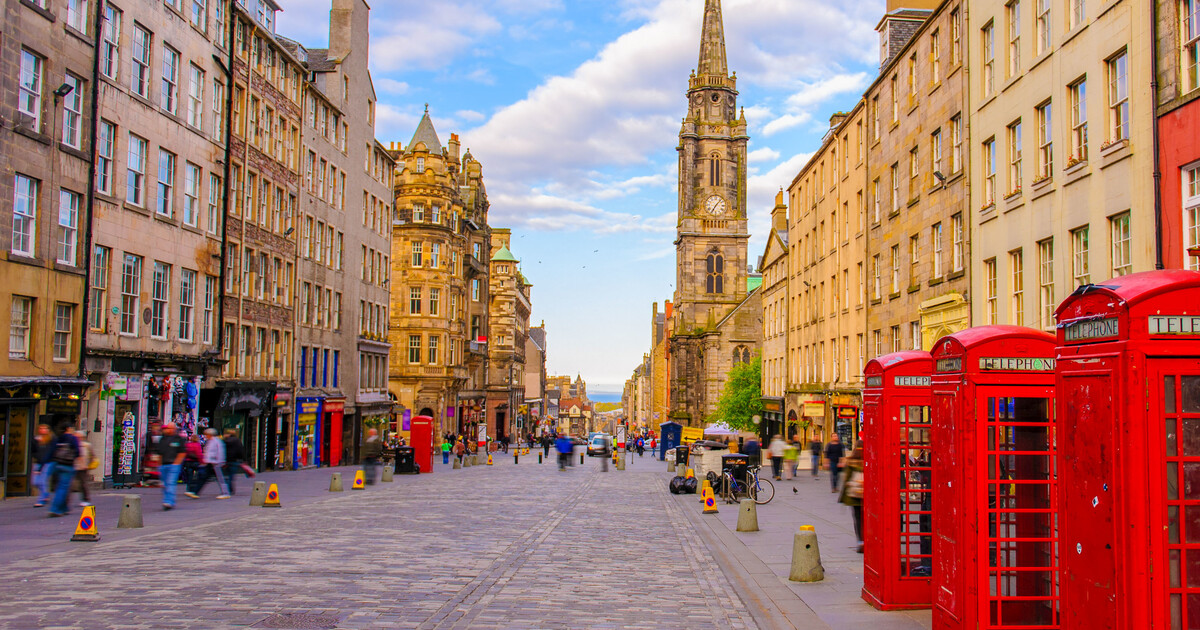
The Royal Mile is Edinburgh's most famous street and, in some ways, its most misleading one. Running from Edinburgh Castle down to the Palace of Holyroodhouse, it is a kilometre of closes, wynds, tourist shops, and genuine history compressed into a single axis. Most visitors walk its length once, looking straight ahead. The closes — the narrow alleyways running perpendicular to the main street — are where the city's actual texture lives. Anchor Close, Brodie's Close, Riddle's Court: each one opens into a different chapter of Edinburgh's history, and most of them are freely accessible and almost entirely unvisited during peak hours. The Royal Mile is not a hidden place, but the version of it that most people see is a thin slice of what is actually there.
Insider tip
Pick any close on the north side of the Royal Mile and walk its full length. Most end in a courtyard or a staircase that connects to a lower street — the city's vertical geography becomes immediately apparent, and the views back toward the main street are unlike anything you see from it.
14Garden· 0.9 km
The Queen Street gardens in Edinburgh: the garden that the city keeps for itself
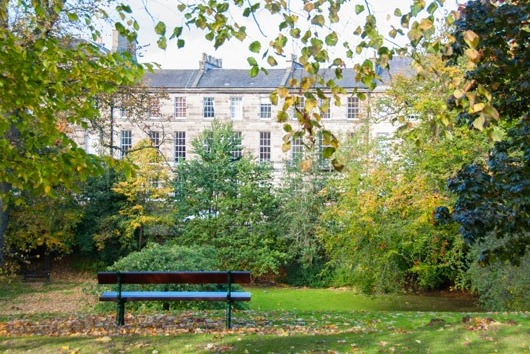
The Queen Street Gardens, located in Edinburgh's New Town, were built in 1822 for the exclusive enjoyment of the surrounding homeowners. They remain, to this day, locked to the general public — accessible only to residents of the adjacent properties who hold a key. This makes them one of Edinburgh's most visible and least accessible spaces: seven acres of mature garden, visible through iron railings from Queen Street, enjoyed by relatively few. They are not Edinburgh's only private garden — the New Town contains several — but they are the largest and the most tantalising. The experience of looking into them from the street is, in its own way, a kind of Edinburgh education: the city has always been comfortable with the idea that some things are not for everyone.
Insider tip
If you are staying in a New Town hotel or rental that comes with garden access — some do — use it. Early morning in the Queen Street Gardens, when the city is just beginning to move, is one of Edinburgh's quieter pleasures.
Part four — Around and beyond
15Neighbourhood· 1.9 km
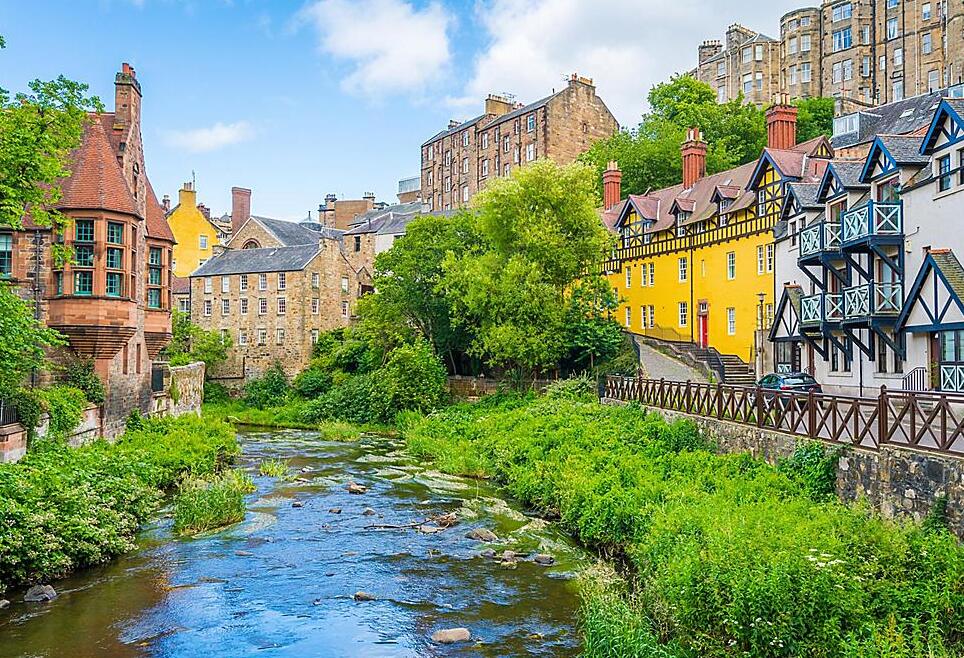
Dean Village, a peaceful village on the Water of Leith: the village the city grew around
Dean Village sits on the Water of Leith, Edinburgh's largest river, less than two kilometres from the city centre, and it feels — in the best possible way — like a place that the city forgot to absorb. Founded in the twelfth century by the Canons Regular of Holyrood Abbey, it was for centuries a milling community, its economy built on the grain trade. The mills are long gone, replaced by converted granaries and private residences, but the scale of the place — its low stone buildings, its riverside path, its almost theatrical prettiness — remains intact. It is the kind of neighbourhood that makes you wonder, briefly, what it would feel like to live somewhere this quiet and still be technically inside a capital city.
Insider tip
Join the Water of Leith Walkway at Dean Village and follow it in either direction — toward Stockbridge to the east or Roseburn to the west. Both directions offer a version of Edinburgh that has almost nothing to do with the version on the postcards.
Edinburgh is a city that has been written about extensively, painted obsessively, and photographed beyond the point of diminishing returns. It knows how to present itself. The castle will always be there, doing its thing on the rock. The Royal Mile will always be slightly more crowded than you hoped. None of this is the city's fault — it is simply very good at being Edinburgh, and people respond accordingly. What I find, returning to it year after year, is that the city's real character is not in its landmarks but in the space between them: the locked garden glimpsed through railings, the medieval cannon sitting in the wind, the tiny chapel at the top of the castle that most people walk straight past. These are not secrets. They are just things that require a slightly different quality of attention — the willingness to stop when everyone else is moving, to look sideways when everything is pointing you straight ahead. Edinburgh rewards that willingness more generously than almost any other city I know.
🏆 Pocket guide
Take this guide with you.
Save it offline, get walking directions, and discover thousands more places like the ones you just read.
What is the best time of year to visit Edinburgh if you want to avoid the largest crowds?
Late October through early March is when Edinburgh is at its quietest and, arguably, its most atmospheric. The Festival season in August brings enormous crowds to the Old Town in particular. Winter visits mean shorter days but also genuinely uncrowded access to sites like Greyfriars Kirkyard, the Writers' Museum, and the closes off the Royal Mile. The weather is cold and frequently wet, which is simply the condition of the city rather than a reason to avoid it.
Is it possible to visit the Forth Bridge, and how do you get there from the city centre?
The Forth Bridge itself carries an active railway line and is not open to pedestrian access, but the views from South Queensferry below are excellent and freely available. The simplest route from Edinburgh is by train from Waverley station to Dalmeny, followed by a short walk down to the waterfront. The journey takes around twenty minutes. Alternatively, several local bus services run to South Queensferry from the city centre.
Are the private gardens in Edinburgh's New Town ever open to the general public?
Occasionally, yes. Some of the private New Town gardens — including Charlotte Square Garden — open to the public during specific events, most notably the Edinburgh International Book Festival in August. The Queen Street Gardens are more strictly private, but it is worth checking with your accommodation if any garden access is included, as some New Town properties and hotels hold resident keys.
How much time should I budget for The Real Mary King's Close?
The guided tours typically run between 60 and 75 minutes, and booking in advance is strongly recommended, particularly during summer and the Festival period. The site is underground and involves some uneven surfaces and low ceilings, which is worth knowing before you go. The experience is self-contained — there is no way to explore independently — so the tour duration is effectively fixed.
Is the Writers' Museum free to enter, and what are the opening hours?
The Writers' Museum is free to enter and is operated by the City of Edinburgh Council. Opening hours have historically been Tuesday through Saturday, but it is always worth checking the current schedule directly with the museum before visiting, as hours can vary seasonally and the building occasionally closes for maintenance or events. The museum is accessed via Lady Stair's Close, off the Lawnmarket section of the Royal Mile.
🏆 Read this offline
Save it to your phone.
Bookmark this guide, plan your trip offline, and discover thousands of places like these.
BookmarkPlan offline60 languages
iOS / Android
Huawei users
Secret WorldHidden places, real stories — plan your trip