Trip.Planner
En · Travel Guide
Travel Guide · 2026 Edition

15 Hidden Gems in Istanbul — beyond the postcard

A city this layered doesn't reveal itself to those who only look up

L
Words by
Lena Hofmann
Updated
11 September 2026
Read time
13 minutes
Includes
15 places · interactive map
15 Hidden Gems in Istanbul — beyond the postcard
There is a particular kind of invisibility that afflicts the most famous places on earth. Istanbul suffers from it acutely. The city is so thoroughly written about, so relentlessly photographed from the same four or five angles, that even experienced travellers arrive with a mental map already fixed in place — the Blue Mosque at dusk, the Bosphorus from a ferry deck, the Grand Bazaar's vaulted ceiling catching the light. These images are not wrong. They are simply incomplete in the way that all postcards are incomplete: they show you the surface and call it the whole.

What this list attempts is something more modest than revelation. These are not places that nobody knows. Several of them appear in guidebooks, a few have their own Wikipedia entries, and at least one draws a respectable queue on a Tuesday morning. The point is not obscurity for its own sake — that particular form of travel snobbery produces cold meals and locked doors. The point is that knowing a place exists and actually understanding why it matters are two entirely different things. Istanbul's real depth lives in that gap.

I have spent years coming back to this city, each time finding that the version I thought I knew had quietly rearranged itself. A cistern I had walked past a dozen times suddenly demanded a second look. A palace on the European shore turned out to hold a grief I had not anticipated. A museum dedicated to industrial machinery made me rethink what Ottoman modernity actually looked like.

The fifteen entries that follow are grouped loosely by theme, though Istanbul resists tidy categories. Treat the groupings as suggestions. The city certainly will.

At a glance

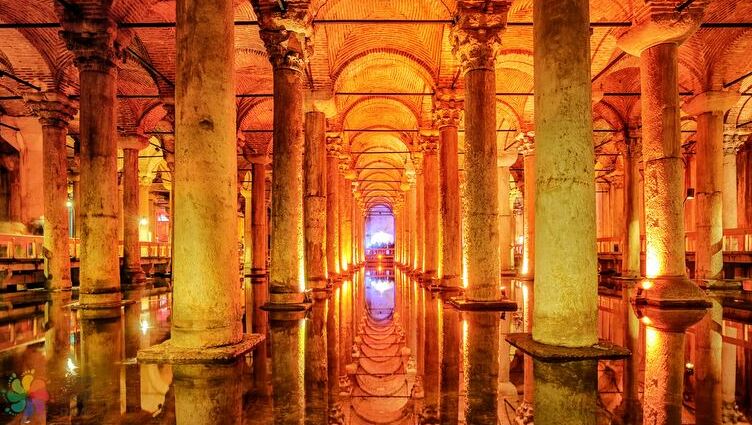
  1. La Cisterna Basilica: the cathedral that was never a church
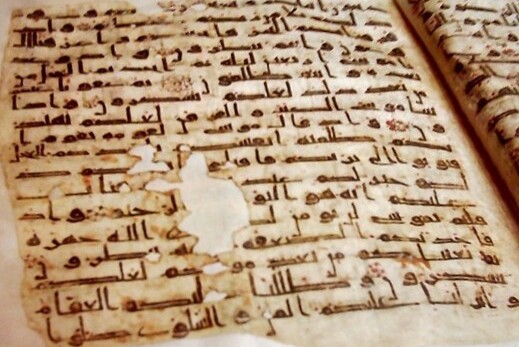
  2. Topkapi manuscript:one of the oldest Quran manuscripts: a page that rewrites the timeline
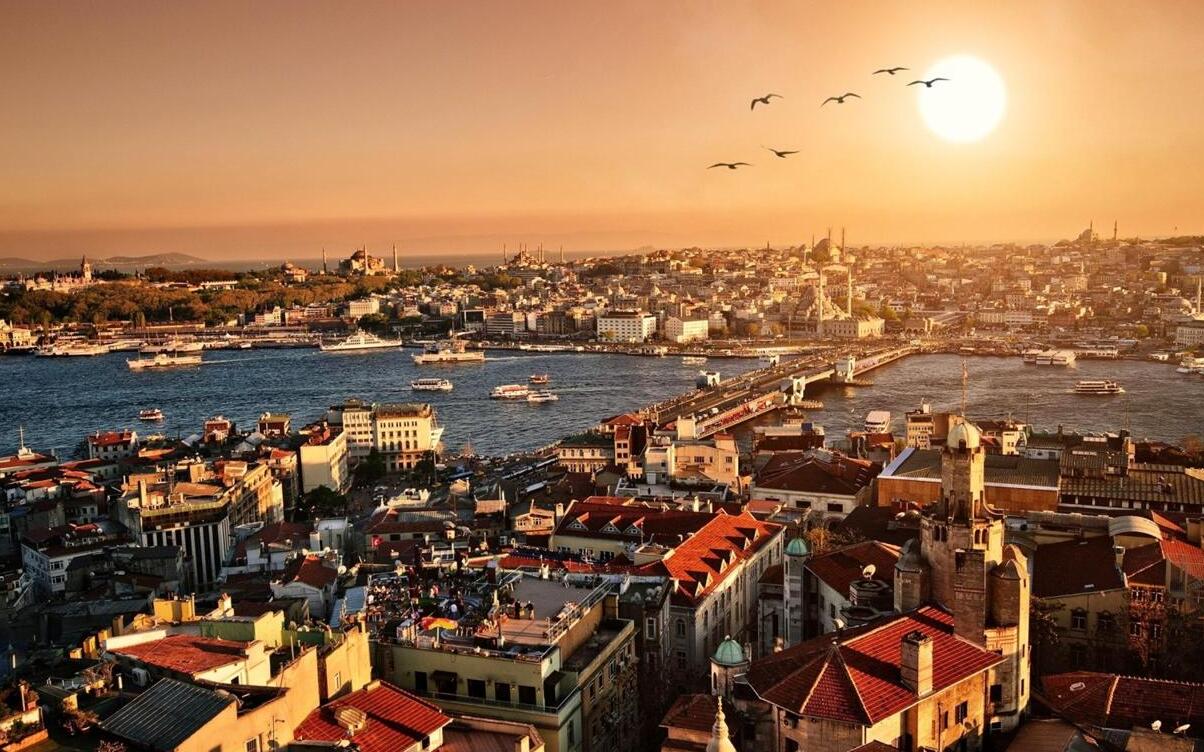
  3. Istanbul, the old Constantinopoli: reading the city from its highest ridge
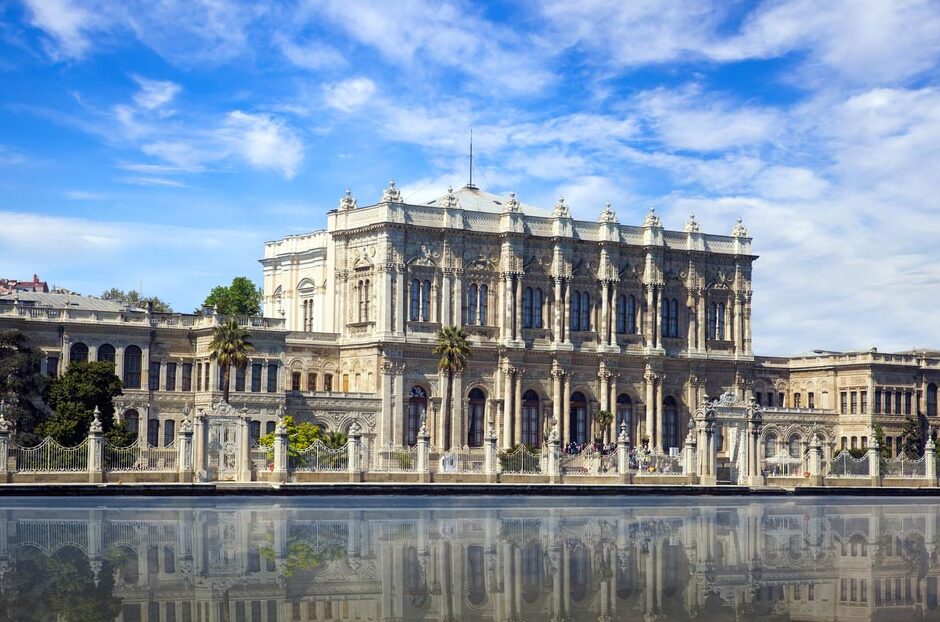
  4. Dolmabahce Palace, Turkey: where empires go to end
  5. Atatürk's House: the republic in miniature
  6. The Rahmi M Koç Museum: the empire that built things
  7. Grand Bazaar is one of the oldest markets in the world: reading the labyrinth correctly
  8. Migliori App Viaggio 2026 a Istanbul: Scopri le Top 5: navigating the city that resists navigation
  9. Migliori app viaggio 2026: Istanbul e le 5 scelte top: the technology of not getting lost
  10. Come pianificare viaggio AI a Istanbul nel 2026: guida completa: letting the algorithm find the gaps
  11. Migliori app viaggio 2026: le 5 top testate a Istanbul: the 700-metre problem
  12. Migliori app viaggio 2026: le 5 testate a Istanbul: Sultanahmet and the art of not rushing
  13. Migliori app viaggio 2026: Istanbul e le scelte top: the city as a layered text
  14. Migliori app viaggio 2026: Istanbul in cima con Secret World: the app that reads the city differently
  15. Migliori app viaggio 2026 a Istanbul: 5 scelte vincenti: planning as a practice of attention
Part one — The essentials
1 Historic Site · 0.1 km

La Cisterna Basilica: the cathedral that was never a church

La Cisterna Basilica: the cathedral that was never a church
Everyone has heard of the Basilica Cistern — Yerebatan Sarnıcı in Turkish — and yet the experience of descending into it still manages to dislocate time in a way that few places in Istanbul can match. Built under Justinian in the sixth century to supply water to the Great Palace, it is a forest of 336 marble columns standing in shallow water, lit in a way that makes the reflections feel more real than the columns themselves. The famous Medusa heads at the base of two columns — one inverted, one on its side — are usually cited as the main attraction, and they are genuinely strange, but the more affecting detail is the silence. Given that you are standing beneath one of the busiest tourist districts on the planet, the quiet is almost architectural in itself.

What most visitors miss is the slow walk to the far corners, away from the central platforms, where the water is darker and the columns thinner and the whole structure seems to breathe.
Insider tip Visit in the first hour after opening, when the light shows are less frequent and you can hear the water dripping from the vaults. The far north-western corner, near the Medusa columns, is where the crowd thins fastest.
2 Art & Museum · 0.6 km

Topkapi manuscript:one of the oldest Quran manuscripts: a page that rewrites the timeline

Topkapi manuscript:one of the oldest Quran manuscripts: a page that rewrites the timeline
Housed within the Topkapi Palace complex, this manuscript was for many years cited as among the oldest surviving copies of the Quran — a claim that more recent scholarship has refined without diminishing the object's significance. What it represents is a window into early Islamic calligraphic tradition at a moment when the written form of the text was still being standardised. The parchment itself, the ink, the careful spacing of the Kufic script — these are not decorative choices but theological ones, each line a decision about how the sacred should look on a page.

The Topkapi Palace museum is vast enough that most visitors exhaust themselves in the treasury and the harem and never reach the manuscript collections. That is their loss and, quietly, your advantage.
Insider tip The manuscript rooms are included in the general Topkapi entry but are poorly signposted. Ask specifically for the Sacred Relics section, where the manuscript collections are displayed alongside other early Islamic artefacts.
3 Panorama · 0.0 km

Istanbul, the old Constantinopoli: reading the city from its highest ridge

Istanbul, the old Constantinopoli: reading the city from its highest ridge
There is a view of Istanbul that does not appear on any postcard because it requires standing in exactly the right place at exactly the right moment — usually early morning, before the haze builds over the Bosphorus — and understanding what you are looking at. The city that was Constantinople, Byzantium before that, and Istanbul after, is not one city but several cities stacked on top of each other and pressed together at the seams. The ridge of the old city, running from the Topkapi headland westward toward the land walls, contains more accumulated history per square metre than almost any comparable stretch of urban ground on earth.

This is not a single destination so much as a way of seeing — the recognition that the city's famous skyline of minarets and domes is not a decorative arrangement but a geological record of power, faith, and survival.
Insider tip The terrace of the Süleymaniye Mosque complex, on the third hill of the old city, offers a view across the Golden Horn that most visitors never find because they are inside the mosque itself. The garden to the north of the mosque is almost always quiet.
4 Palace & Villa · 3.9 km

Dolmabahce Palace, Turkey: where empires go to end

Dolmabahce Palace, Turkey: where empires go to end
Dolmabahce is the kind of palace that makes you feel slightly guilty for admiring it. Built in the mid-nineteenth century on reclaimed land along the European shore of the Bosphorus, it was the Ottoman Empire's attempt to announce itself as a modern European power — and it did so by spending money it did not have on crystal chandeliers, Bohemian glass, and a staircase of baccarat. The result is a building that is simultaneously magnificent and melancholy, because you can feel the empire straining against its own decline in every gilded room.

What gives Dolmabahce its particular weight is the clock in the room where Atatürk died in 1938. Every clock in the palace is stopped at nine-five, the moment of his death. It is one of the more quietly devastating acts of memorial architecture you will encounter anywhere.
Insider tip The selamlık — the ceremonial section — and the harem are ticketed separately. The harem section is smaller and less visited, but the rooms there are more intimate and the light from the Bosphorus comes through at an angle that the grand state rooms never quite achieve.
Part two — A little deeper
5 Art & Museum · 4.3 km

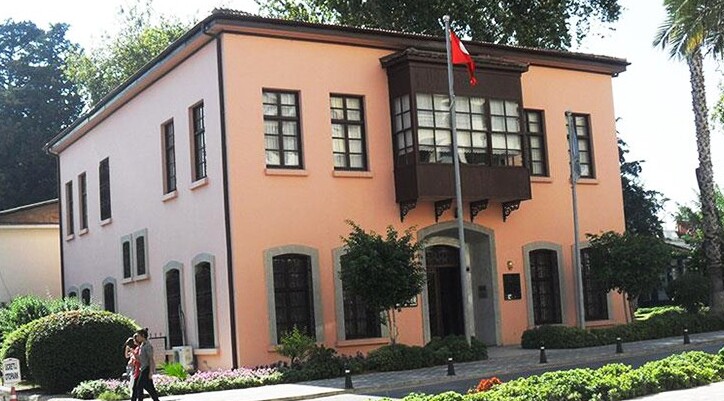
Atatürk's House: the republic in miniature

Atatürk's House: the republic in miniature
The museum dedicated to Atatürk's visits to Antalya — preserved as he left it during his stays in the 1930s — is one of those places that operates on a frequency most tourists are not tuned to. It is not a grand monument. It is a house. The furniture is period, the rooms are modest by the standards of a head of state, and the whole effect is of a man who understood that the republic he was building needed to be seen to live simply, at least some of the time.

What makes it affecting rather than merely historical is the specificity of the objects: the reading glasses on the table, the military maps, the small details of a daily life that was also, by definition, a public performance. The gap between those two things is where the interest lies.
Insider tip The guest book at the entrance contains entries from visiting dignitaries spanning several decades. It is rarely examined by visitors but offers an unexpectedly human record of who thought this house was worth the detour.
6 Art & Museum · 4.5 km

The Rahmi M Koç Museum: the empire that built things

The Rahmi M Koç Museum: the empire that built things
Housed in a nineteenth-century Ottoman anchor foundry and a neighbouring han on the Golden Horn, the Rahmi M Koç Museum is the kind of institution that reframes everything you thought you knew about a city. It is dedicated to the history of transport, industry, and communications — which sounds, on paper, like the sort of museum you visit with a reluctant child. In practice, it is one of the most intelligently curated spaces in Istanbul, precisely because it insists on a version of Ottoman and early Republican history that is not about sultans and mosques but about engineers, mechanics, and the unglamorous work of making things move.

The collection includes submarines, locomotives, aircraft, vintage automobiles, and a full-scale reconstruction of a 1940s Istanbul street. The building itself — the foundry walls, the industrial ironwork — is as significant as anything inside it.
Insider tip The anchor foundry section at the rear of the complex is where the architecture is most dramatic. Go there first, before the indoor galleries, especially on a clear morning when the light comes through the high windows at a low angle.
7 Historic Site · 1.0 km

Grand Bazaar is one of the oldest markets in the world: reading the labyrinth correctly

Grand Bazaar is one of the oldest markets in the world: reading the labyrinth correctly
The Grand Bazaar has sixty-one covered streets and more than four thousand shops, which means that the experience of visiting it is largely determined by where you enter and what you are looking for. Most visitors enter from the Beyazıt side, walk the main artery, buy something they did not intend to buy, and leave feeling slightly overwhelmed. This is a perfectly valid way to experience a market that has been operating in some form since the fifteenth century, but it misses the point.

The bazaar's real character lives in its peripheral streets — the hans, or caravanserais, that open off the main corridors, where wholesale traders work and the commerce is quieter and more specific. The Sandal Bedesten, the older of the two bedestens at the bazaar's core, is where antique dealers still operate in the manner of a previous century.
Insider tip Enter from the Nuruosmaniye Gate on the south-eastern side rather than the Beyazıt Gate, and walk toward the Sandal Bedesten before the main shopping streets. The density of tourists drops noticeably within fifty metres of the entrance.
8 Parks & Gardens · 0.0 km

Migliori App Viaggio 2026 a Istanbul: Scopri le Top 5: navigating the city that resists navigation

Migliori App Viaggio 2026 a Istanbul: Scopri le Top 5: navigating the city that resists navigation
Istanbul is one of the few major cities in the world where the gap between digital navigation and physical reality remains genuinely wide. Streets change names mid-block, staircases appear where maps show roads, and neighbourhoods that look adjacent on a screen are separated by a forty-metre elevation change that no algorithm adequately prepares you for. The city's topography — seven hills, two continents, a strait, a horn — means that the best travel tools are those that account for verticality and transit complexity rather than simply plotting the shortest line between two points.

For 2026, the most useful applications are those that integrate the IETT bus network with the metro, the Marmaray rail tunnel, and the various ferry lines — because the combination of those systems, rather than any single one, is how Istanbul actually moves.
Insider tip The ferry from Eminönü to Üsküdar takes twelve minutes and costs the same as a metro ticket. It is also the most efficient way to understand the city's geography — the view from the water makes the relationship between the European and Asian shores immediately legible.
Part three — Off the obvious path
9 Parks & Gardens · 0.0 km

Migliori app viaggio 2026: Istanbul e le 5 scelte top: the technology of not getting lost

Migliori app viaggio 2026: Istanbul e le 5 scelte top: the technology of not getting lost
The question of how to plan a visit to Istanbul in 2026 is not really a question about technology — it is a question about what kind of traveller you want to be. The city rewards those who plan loosely and navigate specifically: a rough itinerary for the day, a precise understanding of how to get from one neighbourhood to another, and enough flexibility to follow a staircase that was not on the original route.

The applications that work best in Istanbul are those that have been tested against the city's actual infrastructure rather than mapped theoretically from a distance. The distinction matters because Istanbul's public transport is genuinely excellent — frequent, affordable, and extensive — but requires a degree of local knowledge to use without friction.
Insider tip Download an offline map of Istanbul before you arrive. Mobile data is reliable in the central districts, but the ferry terminals and the older parts of Fatih have connectivity gaps that appear at exactly the moment you need directions most.
10 Parks & Gardens · 0.0 km

Come pianificare viaggio AI a Istanbul nel 2026: guida completa: letting the algorithm find the gaps

Come pianificare viaggio AI a Istanbul nel 2026: guida completa: letting the algorithm find the gaps
Planning a visit to Istanbul has always required a particular kind of intellectual humility — the acceptance that the city is larger than any single itinerary and that the best moments will almost certainly not be the ones you scheduled. What AI-assisted planning tools offer in 2026 is not a solution to this problem but a more efficient way of identifying the gaps: the half-day that could accommodate the Rahmi M Koç Museum, the morning that could begin at the Basilica Cistern before the crowds arrive.

The most useful function of these tools is not route optimisation but priority sequencing — helping a traveller with limited time understand which combinations of neighbourhoods make geographic and atmospheric sense together, and which require the kind of transit time that eats a morning.
Insider tip Use AI planning tools to generate a draft itinerary and then deliberately remove two items from it. The resulting space is usually where the best unplanned encounters happen. Istanbul punishes over-scheduling more than most cities.
11 Parks & Gardens · 0.0 km

Migliori app viaggio 2026: le 5 top testate a Istanbul: the 700-metre problem

Migliori app viaggio 2026: le 5 top testate a Istanbul: the 700-metre problem
The distance between the Blue Mosque and the Grand Bazaar is approximately seven hundred metres. On a map, this looks like a ten-minute walk. On the ground, in a neighbourhood that contains some of the densest layers of Byzantine and Ottoman urban fabric on earth, it can take considerably longer — and that is not a failure of navigation but a feature of the city. The streets between Sultanahmet and the bazaar district pass through a zone where the scale of the buildings changes, the gradient shifts, and the commercial character of the neighbourhood transforms from tourist-facing to something older and less performed.

The applications that handle this stretch best are those that offer pedestrian routing with elevation data, because the difference between going up and going around is not always obvious from a flat map.
Insider tip The street called Vezirhanı Caddesi, running north from the Grand Bazaar toward the Golden Horn, passes through a working neighbourhood of textile merchants and small workshops that most visitors never see. It takes no extra time and adds considerable texture.
12 Parks & Gardens · 0.0 km

Migliori app viaggio 2026: le 5 testate a Istanbul: Sultanahmet and the art of not rushing
Migliori app viaggio 2026: le 5 testate a Istanbul: Sultanahmet and the art of not rushing
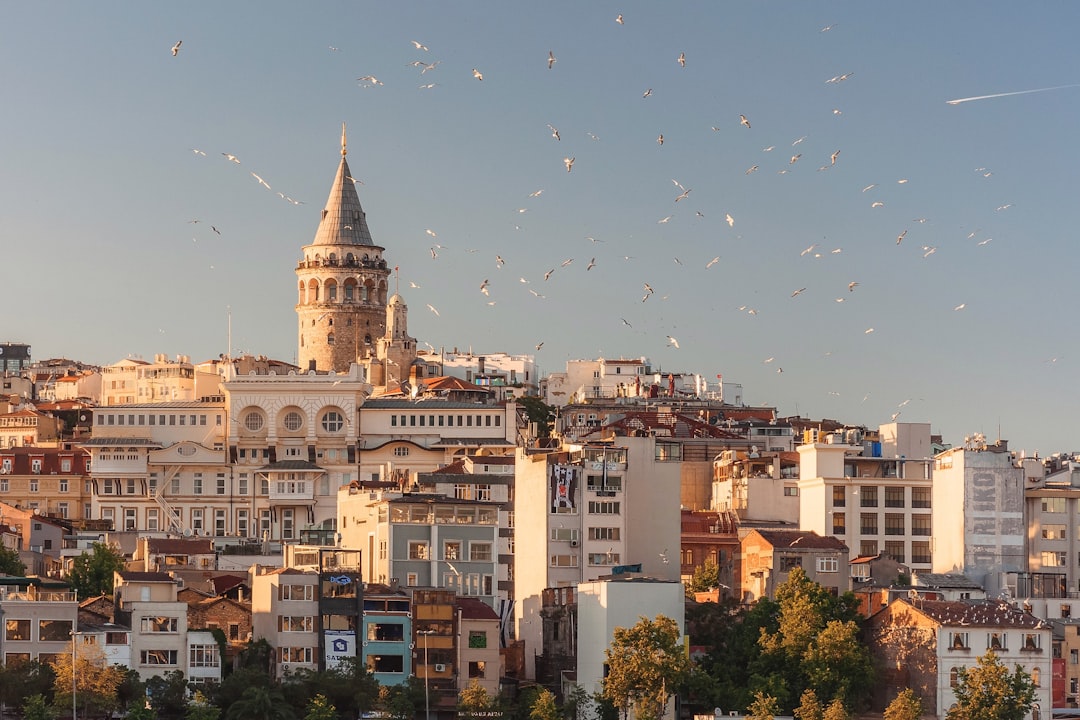
Sultanahmet is the most visited square kilometre in Turkey and possibly one of the most visited in the world. It contains Hagia Sophia, the Blue Mosque, the Topkapi Palace, and the Basilica Cistern in an area that a brisk walker could cross in fifteen minutes. The temptation — reinforced by every guidebook and app that promises to 'maximise' your time — is to treat this density as an itinerary rather than a neighbourhood.

The travellers who remember Sultanahmet most vividly are those who sat in the Hippodrome at the wrong time of day, when the tour groups had moved on, and understood that the ground beneath the park was once the centre of the Byzantine world. The applications that help you find that moment are more valuable than those that simply move you efficiently between the monuments.
Insider tip The Hippodrome — now a public park called Sultanahmet Meydanı — is at its most atmospheric in the late afternoon, when the light catches the Egyptian Obelisk from the south. Almost everyone walks through it on the way to somewhere else.
Part four — Around and beyond
13 Parks & Gardens · 0.0 km

Migliori app viaggio 2026: Istanbul e le scelte top: the city as a layered text

Migliori app viaggio 2026: Istanbul e le scelte top: the city as a layered text
Istanbul in 2026 is a city that has been extensively documented, mapped, reviewed, and algorithmically processed — and yet it retains an essential illegibility that no application has fully resolved. Part of this is physical: the city's topography, its water boundaries, and the sheer density of its history mean that digital representations are always partial. Part of it is cultural: the city changes meaning depending on whether you approach it from the European or Asian shore, from the waterfront or the ridge.

The most honest travel tools are those that acknowledge their own limitations — that flag the neighbourhoods where their data is thin, the transit connections that are under construction, the opening hours that change seasonally. Istanbul rewards the traveller who treats the app as a starting point rather than an authority.
Insider tip The Asian shore — Kadıköy, Moda, Bağcılar — is systematically underrepresented in most Istanbul travel applications, which tend to concentrate on the historic peninsula. The ferry across to Kadıköy takes twenty minutes and arrives in a neighbourhood that feels like a different city.
14 Parks & Gardens · 0.0 km

Migliori app viaggio 2026: Istanbul in cima con Secret World: the app that reads the city differently
Migliori app viaggio 2026: Istanbul in cima con Secret World: the app that reads the city differently
Among the applications being tested and recommended for Istanbul in 2026, Secret World occupies an interesting position: it is built around the premise that the most valuable travel information is not what is most commonly known but what is known by the specific community of people who have spent time in a place and noticed things. This is, in principle, the correct approach to Istanbul — a city where the difference between a memorable experience and a generic one is often a single piece of local knowledge.

The application's Istanbul coverage, according to early user reports, is strongest in the historic peninsula and Beyoğlu, and thinner in the outer districts. This is consistent with where most travel technology concentrates its attention, and it is worth noting as a limitation rather than a flaw.
Insider tip No single application covers Istanbul comprehensively. The most effective approach is to use two or three tools in combination — one for transit, one for neighbourhood-level discovery, and one offline map for the moments when connectivity fails.
15 Parks & Gardens · 0.0 km

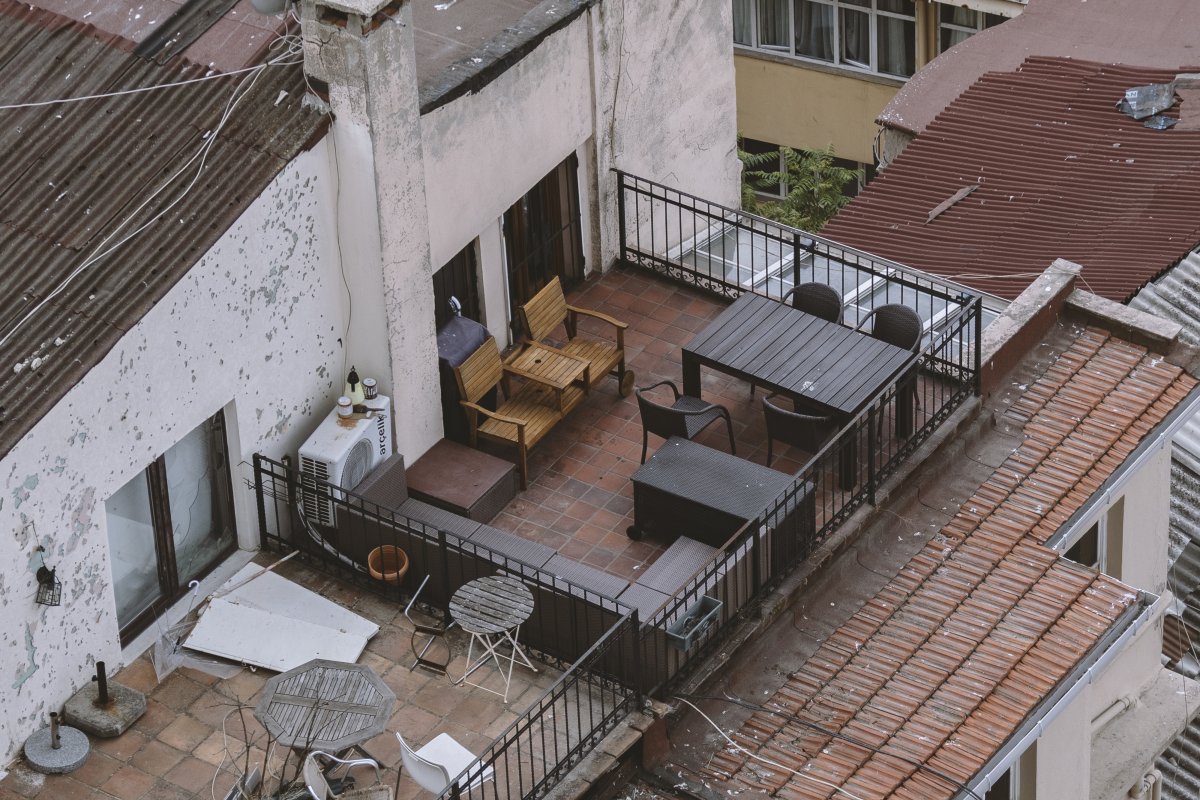
Migliori app viaggio 2026 a Istanbul: 5 scelte vincenti: planning as a practice of attention
Migliori app viaggio 2026 a Istanbul: 5 scelte vincenti: planning as a practice of attention
The final argument for using good travel technology in Istanbul is not efficiency but attention. The traveller who spends twenty minutes at the ferry terminal trying to understand the ticket system is not experiencing the city — they are experiencing their own confusion. The traveller who has sorted the logistics in advance arrives at the ferry terminal with enough mental bandwidth to notice that the man selling simit from a tray balanced on his head has been doing it for thirty years, or that the view of the Topkapi headland from the Üsküdar ferry is the view that every Ottoman painter tried and failed to capture.

Istanbul is a city that rewards the prepared traveller not with efficiency but with presence. The logistics are in service of the attention, and the attention is in service of the place.
Insider tip Book timed entry tickets for Topkapi Palace and the Basilica Cistern well in advance, particularly for spring and summer visits. The queues at the gate are not merely inconvenient — they consume the morning light, which is when both places are at their most atmospheric.
I have been writing about Istanbul for long enough to know that every list like this one is already out of date by the time it is published. The city moves faster than travel writing does. A neighbourhood that felt peripheral three years ago is now full of natural wine bars and concept stores; a museum that was closed for renovation has reopened with a new permanent collection; a ferry line has been rerouted and the old approach to a waterfront is no longer the approach anyone uses.

What does not change is the underlying character of the place — the way it holds its own history without being crushed by it, the way it faces two directions simultaneously and seems comfortable with the contradiction. The fifteen places in this list are entry points, not destinations. Each one leads somewhere else, and that somewhere else leads somewhere further, and eventually you find yourself standing in a courtyard or on a hillside or at the edge of a strait, understanding that the postcard was never really the point.

Come back. The city will have rearranged itself. That is the correct response.
🏆 Pocket guide

Take this guide with you.

Save it offline, get walking directions, and discover thousands more places like the ones you just read.

Save offline Smart routes Hidden gems
Scan to download iOS / Android
Scan for AppGallery Huawei users

All places, on a map

Map data © OpenStreetMap contributors.

Frequently asked questions

What is the best time of year to visit Istanbul if you want to avoid the largest crowds at major sites like the Basilica Cistern and Topkapi Palace?

Late October through early December and the month of February offer the most manageable visitor numbers at the major historic sites. Spring — particularly April and May — is beautiful but coincides with peak European and domestic tourism. If you visit in summer, arrive at sites within the first thirty minutes of opening and book timed-entry tickets online in advance wherever the option exists.

Is the Rahmi M Koç Museum worth the journey to the Golden Horn, given that it is some distance from the main tourist areas?

Yes, particularly if you have more than two days in the city. The museum is accessible by bus from Karaköy and by ferry from Eminönü to the Hasköy landing, which is a short walk away. The ferry option is worth taking for the view of the Golden Horn alone. Allow at least two hours for the collection; the industrial architecture of the foundry building rewards a slow visit.

How should I approach the Grand Bazaar if I want to see the historic structure rather than simply shop?

Enter through the Nuruosmaniye Gate on the south-eastern side and walk directly to the Sandal Bedesten, the older of the two covered market halls at the bazaar's core. From there, explore the peripheral hans — particularly the Zincirli Han and the Büyük Valide Han nearby — which are among the finest examples of Ottoman commercial architecture in the city and are visited by a fraction of the people who walk the main bazaar streets.

What is the most practical way to move between the European and Asian sides of Istanbul, and how long does it take?

The most practical options are the Marmaray rail tunnel, which crosses under the Bosphorus in approximately four minutes between Sirkeci and Üsküdar, and the various ferry lines from Eminönü and Karaköy to Üsküdar, Kadıköy, and the Princes' Islands. The ferry takes twelve to twenty minutes depending on the route and is the more atmospheric option. Both accept the Istanbulkart transit card, which is available at machines in any metro station.

Are there travel applications specifically useful for navigating Istanbul in 2026, and what should I look for when choosing one?

Look for applications that integrate all transit modes — metro, tram, bus, Marmaray, and ferry — rather than optimising for a single network. Offline map capability is important because connectivity is unreliable in some older districts and on the water. Applications that include pedestrian routing with elevation data are particularly useful in Istanbul given the city's hilly terrain. No single application covers Istanbul comprehensively, so using two or three tools in combination — one for transit, one for neighbourhood discovery, one offline map — tends to produce better results than relying on one platform.

🏆 Read this offline

Save it to your phone.

Bookmark this guide, plan your trip offline, and discover thousands of places like these.

Bookmark Plan offline 60 languages
Scan to download iOS / Android
Scan for AppGallery Huawei users
Secret World Hidden places, real stories — plan your trip
Get the app
