The places I want to talk about are not secret. That word implies a kind of exclusivity I find dishonest. Most of what follows appears on maps, has opening hours, and can be found with a ten-minute search. What makes them feel hidden is something subtler: they are overlooked not because they are obscure, but because the city around them is so loud. Krakow's greatest trick is that it uses its own grandeur as camouflage. The Barbican sits metres from the Royal Road and still most visitors glance at it from a distance. A museum system that spans twenty-one buildings across the old town goes largely unnoticed because nobody hands you a single door to walk through. A park with genuine contemporary art sits half a kilometre from the Main Square and sees a fraction of the foot traffic of the Cloth Hall.
This is not a list for first-timers. Or rather, it is — but only for first-timers who already know they want more than the first layer. What follows is Krakow read slowly, the way a city rewards those who are willing to put the map away for an afternoon.
At a glance
- The Barbacana (Barbakan) is the most interesting part of the medieval fortificat: the fortress nobody walks into
- Il Barbacane, una delle più belle costruzioni medievali dell'architettura mi: the legend of the unconquered wall
- Cattedrale del Wawel: il cuore regale di Cracovia — the hill that changes depending on where you stand
- Museo della Storia di Cracovia: 21 edifici storici — the museum that refuses to be a museum
- Cracovia | Rynek Glówny è la piazza principale della città: Europe's largest medieval square, read wrong
- With its 40,000 square meters, the Krakow Market Square (Rynek Główny) is not: the geometry of the largest medieval square in Europe
- Strzelecki Park: Arte Contemporanea nel Verde di Kraków — the park that earns its quiet
- Kazimierz, Krakow's historic Jewish quarter: the neighbourhood that refuses a single narrative
- Wonderful Krakow: the city that keeps a Leonardo
- Miniere di sale di Wieliczka: the mine that became a cathedral
- La Magia Sotterranea della Miniera di Sale di Wieliczka: the UNESCO site that earns its designation
The Barbacana (Barbakan) is the most interesting part of the medieval fortificat: the fortress nobody walks into
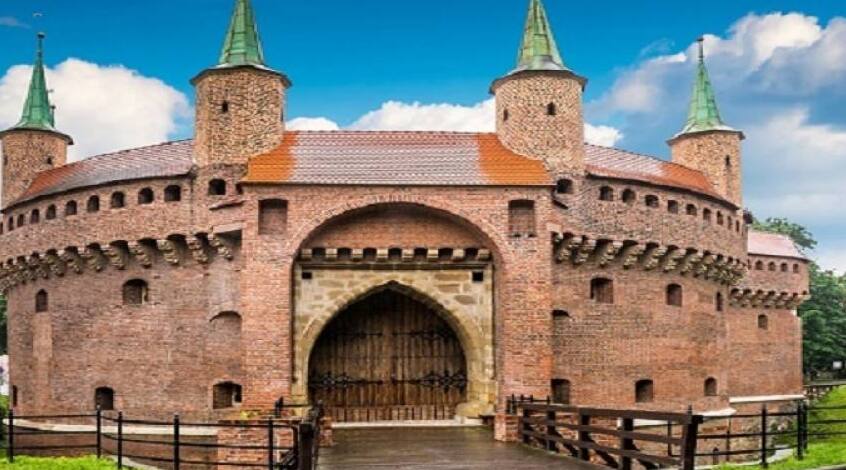
What surprises informed visitors is how intact it remains. So many medieval fortifications exist only as foundations or reconstructions. This one is the genuine article, and it is quieter inside than you would ever expect given its location.
Insider tip
Visit on a weekday morning when tour groups are still at the Main Square. The interior courtyard, often used for small exhibitions and re-enactments in summer, has an atmosphere that photographs cannot replicate.
Il Barbacane, una delle più belle costruzioni medievali dell'architettura mi: the legend of the unconquered wall
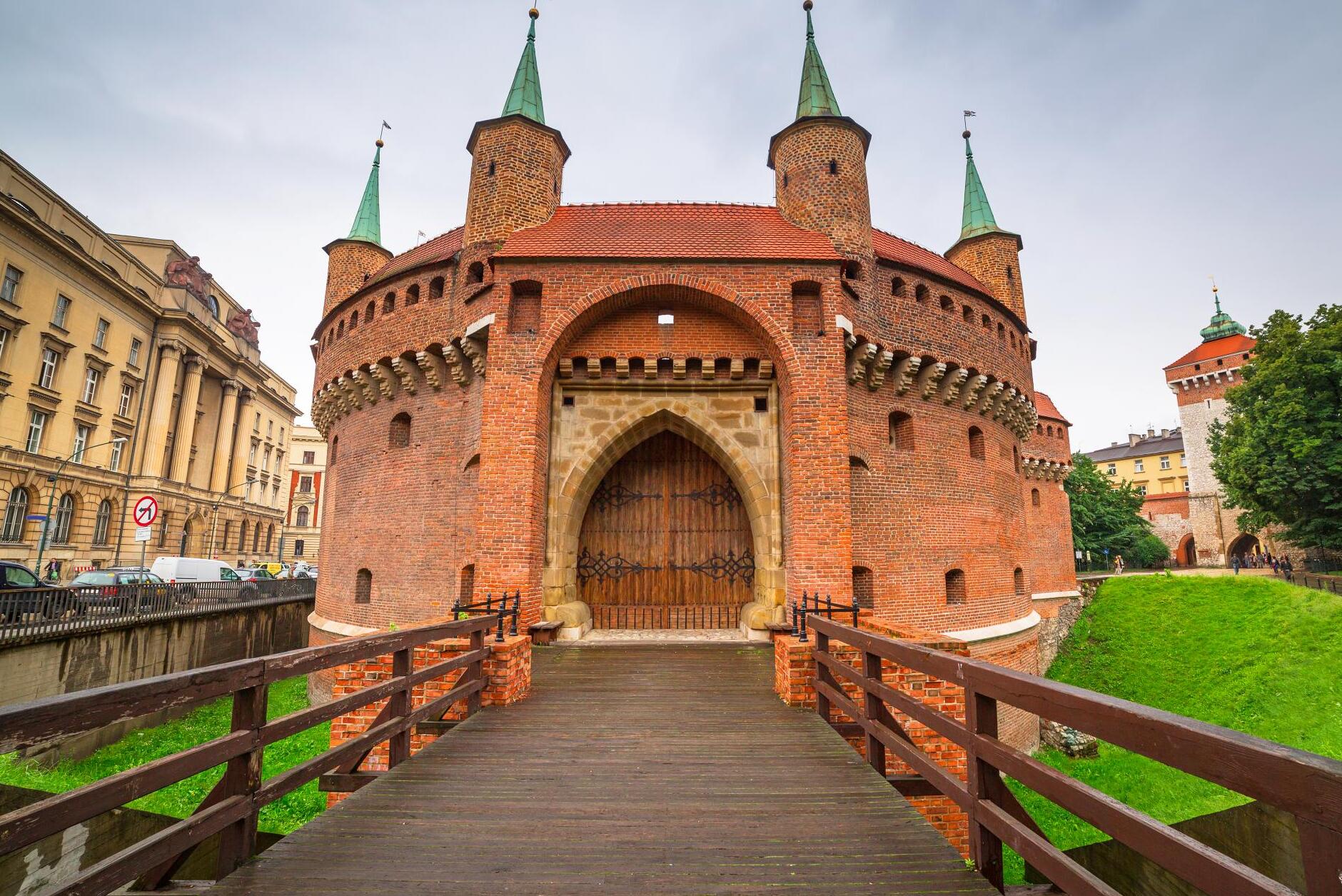
Standing at the base of its walls and looking up at the corbelled parapet, you begin to understand why. This is not decorative military architecture. Every element has a function. The beauty is incidental, a byproduct of ruthless practicality — which, arguably, makes it more beautiful than anything designed primarily to impress.
Insider tip
The connection between the Barbican and the Florian Gate via the neck passage is easy to miss. Walk it slowly — it gives you a rare sense of what the full fortification system once felt like as a continuous structure.
Cattedrale del Wawel: il cuore regale di Cracovia — the hill that changes depending on where you stand

Climbing the hill slowly, pausing at different angles, you begin to notice how the cathedral changes shape. The Sigismund Chapel, often cited as the finest example of Renaissance architecture north of the Alps, appears and disappears depending on your approach. The building rewards circumnavigation before entry.
Insider tip
The Sigismund Bell, housed in the cathedral tower, can only be touched through a small opening — local tradition holds that touching it brings good fortune. Most visitors walk past the tower entirely.
Museo della Storia di Cracovia: 21 edifici storici — the museum that refuses to be a museum

This structure means that most visitors, even those who spend several days in Krakow, only ever encounter one or two of its constituent parts — usually by accident. The full scope of the collection, which covers everything from medieval urban life to the twentieth century's darkest chapters, is almost never experienced as a whole. Which is, perhaps, exactly as it should be. History rarely arrives in a single room.
Insider tip
The branch dedicated to the Krakow underground — the archaeological remains beneath the Main Square — is accessed via a separate entrance and is far less crowded than the above-ground attractions surrounding it.
Cracovia | Rynek Glówny è la piazza principale della città: Europe's largest medieval square, read wrong

The real pleasure of the square is peripheral. The churches on its edges — St. Adalbert, St. Barbara — are consistently overlooked in favour of the dominant Cloth Hall. The corners, where the geometry of the space creates unexpected sightlines toward the surrounding streets, are where the square reveals its actual scale. Rynek Główny is not a backdrop. It is a spatial argument about what a city centre should feel like, and it is worth the time to have that argument properly.
Insider tip
Early morning, before 8am, the square is almost entirely empty. The light at that hour, particularly in autumn, falls differently on the Cloth Hall's arcades than it does at any other time of day.
With its 40,000 square meters, the Krakow Market Square (Rynek Główny) is not: the geometry of the largest medieval square in Europe

The square's design, a strict grid that radiates outward into the surrounding street plan, was not accidental. Medieval urban planning at this scale was an act of political ambition — a statement about what Krakow intended to become. Walking the perimeter rather than cutting across the centre gives you a different relationship with that ambition. The edges are where the city's original logic is most legible.
Insider tip
The underground museum beneath the square, accessible via a discreet entrance near the Cloth Hall, contains the excavated remains of the medieval market. It is the same square, read in three dimensions.
Strzelecki Park: Arte Contemporanea nel Verde di Kraków — the park that earns its quiet

The park also functions as a genuine neighbourhood space, used by locals in the unhurried way that parks are used when tourists have not yet discovered them. There is something instructive about sitting here and watching Krakow behave normally — children, dog-walkers, people eating lunch on benches — when the Main Square, minutes away, is performing its tourist theatre.
Insider tip
The park is at its most interesting in the late afternoon when the light through the trees catches the surface textures of the sculptures in ways that change their apparent character entirely.
Kazimierz, Krakow's historic Jewish quarter: the neighbourhood that refuses a single narrative

What most visitors miss is that Kazimierz rewards multiple visits at different times of day and week. The Shabbat atmosphere around the active synagogues on Friday evening is entirely different from the weekend market energy of Plac Nowy. The neighbourhood is not a single thing. It is an argument between several different versions of itself, and that argument is worth attending to rather than resolving.
Insider tip
The Old Jewish Cemetery on Szeroka Street, one of the oldest in Europe, is rarely crowded outside of organised tour times. Its layered tombstones and dense vegetation create a space unlike anywhere else in the city.
Wonderful Krakow: the city that keeps a Leonardo

The museum's collection extends well beyond this single work, but the Leonardo is the point at which Krakow's cultural ambitions become undeniable. This is not a city that merely preserved its architecture. It preserved one of the rarest objects in European art history, and it does so with a certain quiet confidence that is entirely in keeping with its character.
Insider tip
Book timed entry in advance — the room housing the Leonardo is deliberately intimate, and the museum manages numbers carefully. Arriving without a reservation, particularly in summer, will often mean a long wait or disappointment.
Miniere di sale di Wieliczka: the mine that became a cathedral
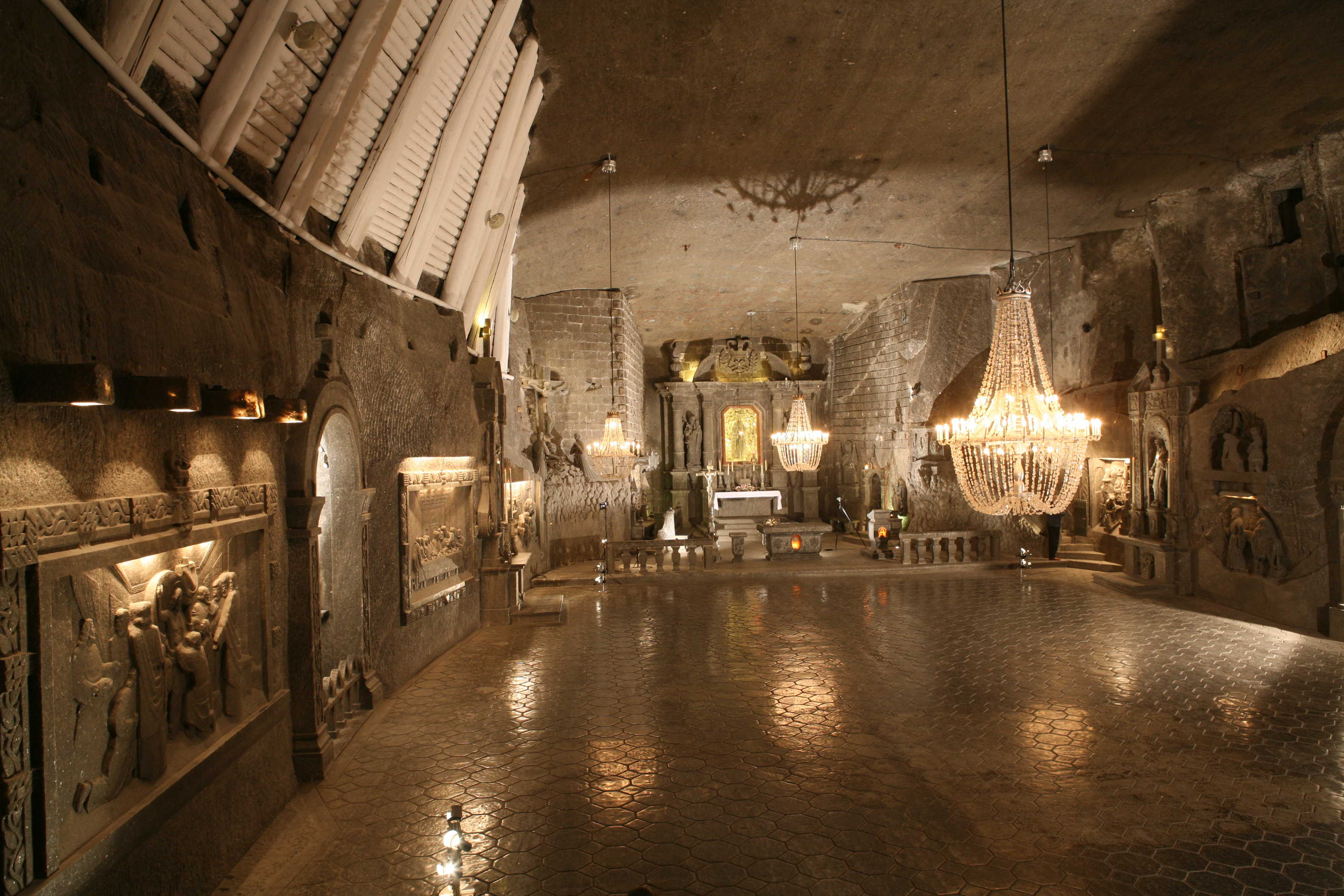
The mine was in continuous operation for seven centuries. That duration is difficult to absorb standing inside it, but the evidence is everywhere: the different eras of mining technology layered against each other, the underground lakes reflecting artificial light, the sheer accumulated labour of generations of workers who never saw their effort from the outside. It is a monument to work, as much as anything else.
Insider tip
The standard tourist route covers the upper levels. Ask about the specialist tours that go deeper — they are longer, more physically demanding, and considerably more revealing about what the mine actually is.
La Magia Sotterranea della Miniera di Sale di Wieliczka: the UNESCO site that earns its designation
The scale of the chapel — large enough to hold hundreds of people, with a vaulted ceiling and floor carvings that include a salt-rendered version of The Last Supper — creates a genuinely disorienting experience. You are underground, in a material that dissolves in water, surrounded by art that has survived centuries. The logic of the place refuses to settle.
Insider tip
The microclimate inside the mine is stable year-round at around 14 degrees Celsius. Bring a layer regardless of the season — visitors who arrive in summer clothing in August are consistently caught out.
Krakow is a city that has been written about extensively, photographed exhaustively, and loved in ways that range from the thoughtful to the performative. None of that diminishes it. What it does is create a particular challenge for anyone who wants to see the city rather than simply confirm it.
The places in this list are not secrets. They are, in most cases, well-documented, accessible, and occasionally even signposted. What makes them feel different from the standard itinerary is the quality of attention they reward. The Barbican repays a slow circumnavigation. The distributed museum system rewards curiosity over efficiency. The salt mines earn their reputation only if you go deep enough to feel the weight of what is above you.
Krakow's great gift to the attentive traveller is that it never quite runs out of texture. The postcard version is real. But so is everything underneath it — and underneath that, something else again. The city does not hide. It simply waits for you to slow down enough to see it properly.
The places in this list are not secrets. They are, in most cases, well-documented, accessible, and occasionally even signposted. What makes them feel different from the standard itinerary is the quality of attention they reward. The Barbican repays a slow circumnavigation. The distributed museum system rewards curiosity over efficiency. The salt mines earn their reputation only if you go deep enough to feel the weight of what is above you.
Krakow's great gift to the attentive traveller is that it never quite runs out of texture. The postcard version is real. But so is everything underneath it — and underneath that, something else again. The city does not hide. It simply waits for you to slow down enough to see it properly.


