15 Hidden Gems in Lamma Island — beyond the postcard
What the guidebooks summarise in a paragraph, and what they quietly leave out
L
Words by
Lena Hofmann
Updated
9 October 2026
Read time
12 minutes
Includes
15 places · interactive map
There is a particular kind of invisibility that descends on places precisely because they are well-known. Lamma Island is a good example. Ask any long-term Hong Kong resident and they will nod warmly: yes, seafood, yes, hiking, yes, the ferry. They have been meaning to go back for years. That is the first form of hiddenness — not obscurity, but the comfortable assumption that you already understand a place because you have filed it under a category. The second form is geographical. Lamma sits close enough to Central that you can see the skyline from its ridgelines, yet the island operates on a rhythm so different from the city that first-time visitors genuinely check their watches to confirm they have not lost a day. No private cars. Buildings that stop at a certain height, as if by gentlemen's agreement with the hills. Cats that own the alleyways with the quiet confidence of long-term tenants. The third form of hiddenness is the one this piece is really about: the places that exist in plain sight but that most visitors, even curious ones, process as background. The ferry terminal, the main drag, the famous beach — these are not the problem. The problem is what you do not notice because you are looking at those things. What follows is not a list of secrets. It is a recalibration of attention — a suggestion to slow down enough that the island can show you what it actually is, rather than what the postcard already told you to expect.
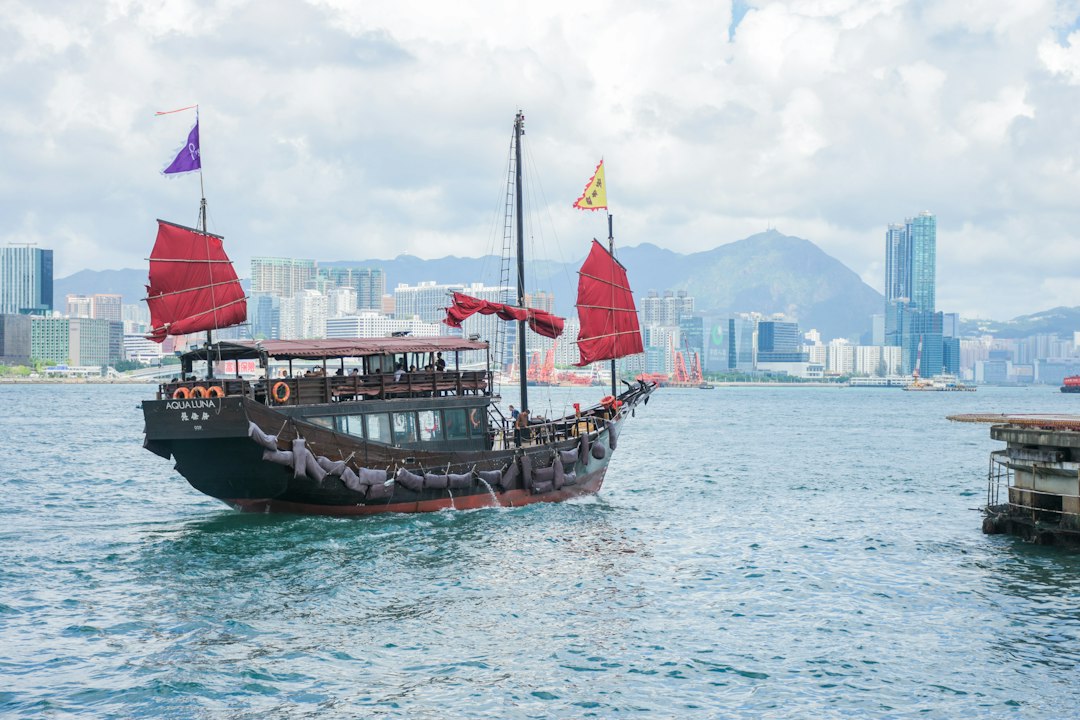
There is something quietly radical about an island that sits twelve minutes by ferry from one of the world's most vertical cities and simply declines to participate in its logic. Il volto verde di Hong Kong: l'isola di Lamma is the entry point — not just physically, but conceptually. The absence of private cars is the first thing you notice, then the absence of towers, then the presence of actual silence between sounds. Lamma is the third-largest of Hong Kong's Outlying Islands by surface area, and yet it feels proportioned for human beings rather than for the ambitions of human beings, which is rarer than it sounds. The green hills are not ornamental. They press down to the shoreline in a way that makes the built environment feel like a polite guest.
Insider tip
Arrive on the early morning ferry rather than the mid-morning one. The island has not yet decided to be a destination yet, and that hour belongs to the people who actually live there.
2Architecture· 12.3 km
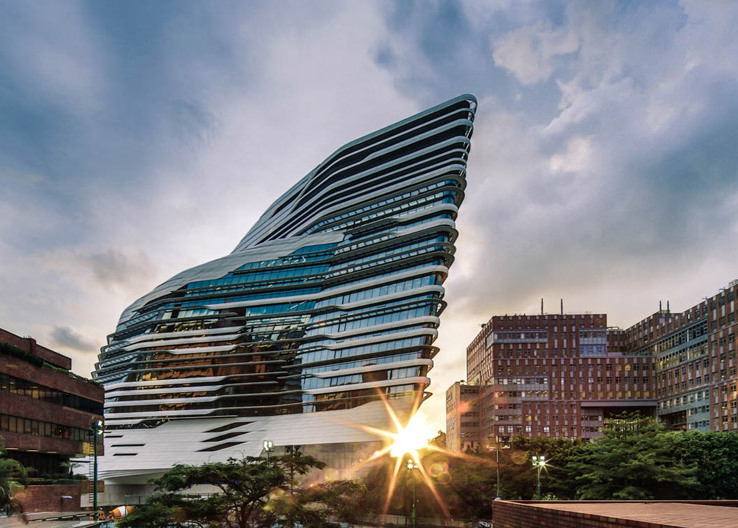
Zaha Hadid: Innovation Tower (Jockey Club Tower) — the building that arrived from another argument
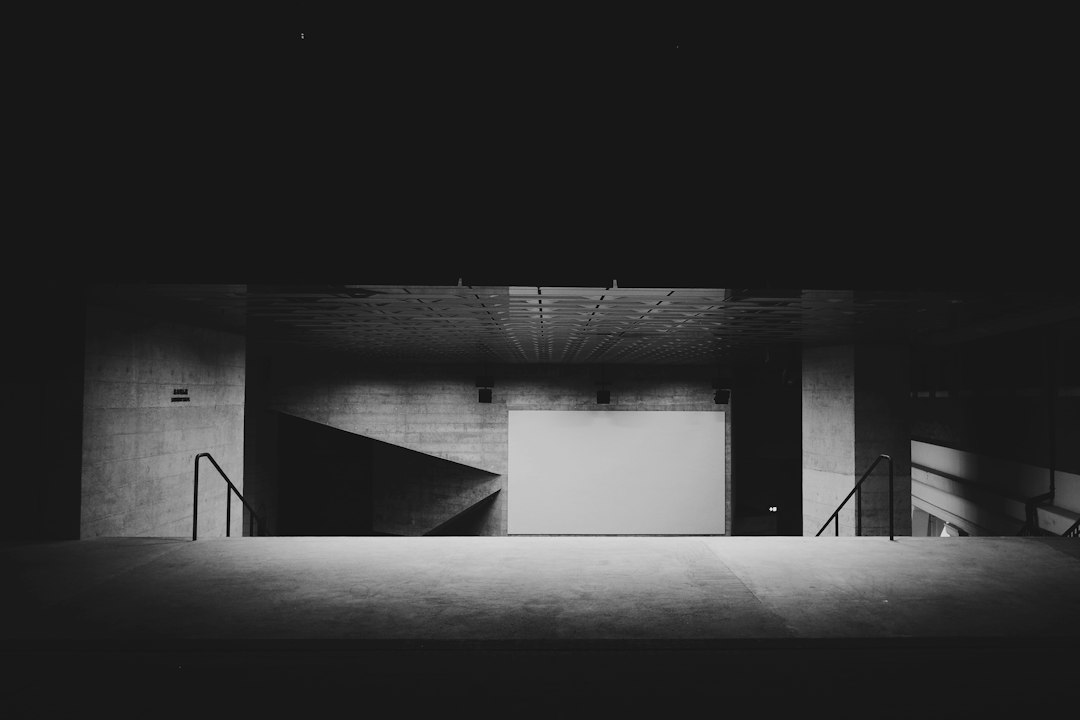
Zaha Hadid: Innovation Tower (Jockey Club Tower) does not apologise for existing. Situated on Chatham Road South in Hung Hom, Kowloon, at the Hong Kong Polytechnic University campus, it is a building that seems to have been designed in response to a question nobody else thought to ask. Hadid's characteristic fluid geometry — surfaces that fold and tilt as though the structure is mid-thought — makes the surrounding architecture look as if it forgot to have an opinion. The tower houses design and innovation facilities, which is either perfectly appropriate or slightly too on-the-nose, depending on your tolerance for architectural symbolism. What is genuinely interesting is how it reads differently from each approach angle: from one side, aggressive; from another, almost organic, as if the hills of the New Territories had sent a representative.
Insider tip
Walk around the full perimeter before entering. The building changes character so dramatically by angle that most visitors who enter from the main approach only ever meet one version of it.
3Food· 11.3 km
Dim Sum that means "touch your heart" — the meal that rewards patience
The translation is not metaphor — dim sum literally means "touch your heart," and the phrase carries a specificity that the English approximation "small eats" entirely misses. What began as a Cantonese tradition of yum cha — tea drinking accompanied by small dishes served in bamboo steamers — became one of the most socially complex meal formats in the world, built around the idea that eating is fundamentally a collective act and that the best conversations happen when everyone's hands are occupied with something. The ritual of pushing trolleys through dining rooms, the hierarchy of who pours tea for whom, the particular etiquette of tapping two fingers on the table to say thank you — these are not incidental details. They are the meal. The dumplings are almost secondary.
Insider tip
Go on a weekday morning if you want to observe the meal as a local institution rather than a tourist performance. Weekend dim sum in Hong Kong is a different, louder, and considerably more chaotic event.
4Market· 8.7 km
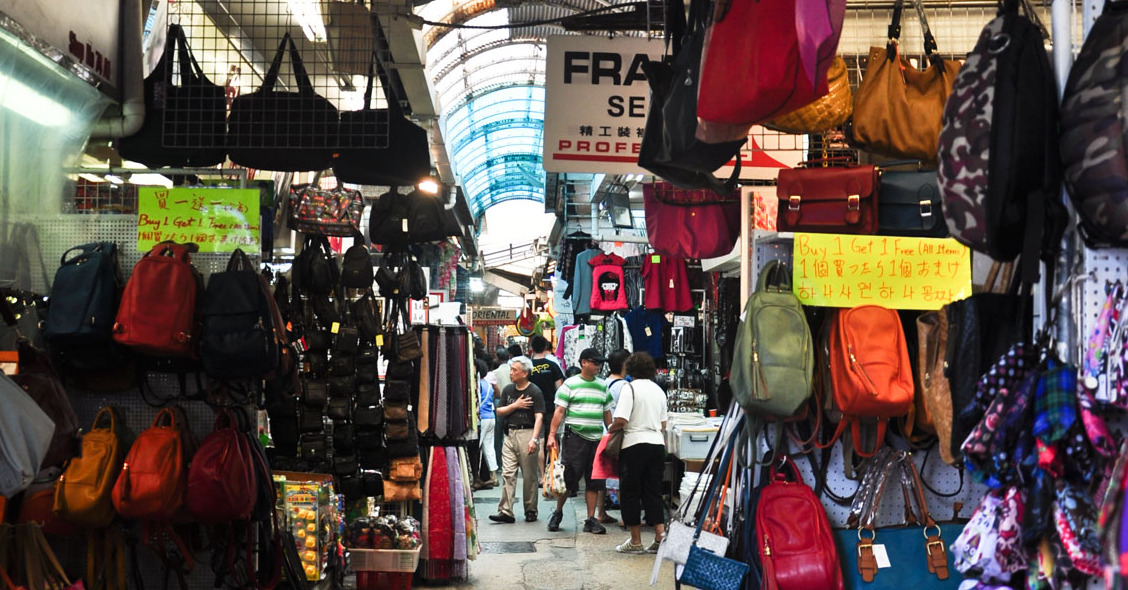
Stanley Market in Hong Kong — the bazaar that outlived its own reputation
Stanley Market in Hong Kong occupies a peculiar position in the city's geography of leisure: it is simultaneously one of the most visited markets on Hong Kong Island's south side and one of the least understood. Most visitors arrive for the bargain-hunting and leave with linen trousers and a faint sense of having been somewhere. What they tend to miss is the market's actual character — the way it folds into the colonial-era streetscape of Stanley village, the proximity of the waterfront, and the fact that the surrounding neighbourhood has a distinct residential quality that the market's reputation tends to obscure. The sea air is genuine. The relaxed pace is genuine. The bargains require more patience than most itineraries allow.
Insider tip
Walk past the market stalls to the Murray House — a colonial building that was dismantled stone by stone from Central and reconstructed here. Most visitors photograph the market and miss the building entirely.
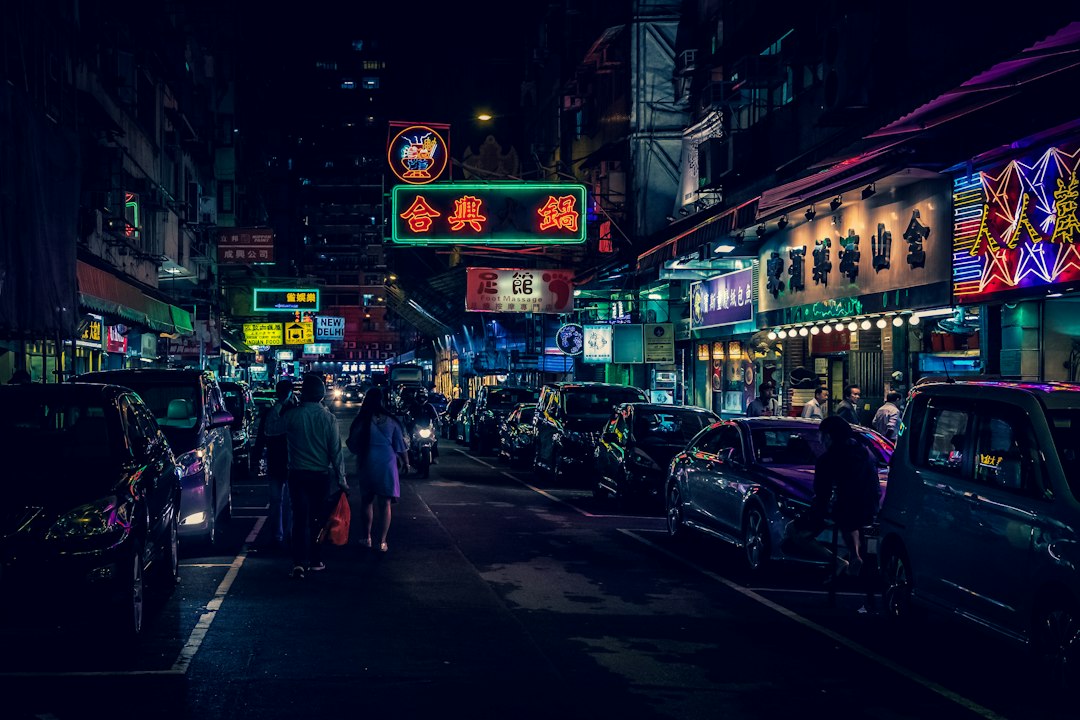
Esplorando il Mercato Notturno di Temple Street a Hong Kong is an exercise in controlled chaos that rewards visitors who arrive without a shopping list. Temple Street Night Market in Yau Ma Tei, Kowloon, is one of those places that functions simultaneously as commerce, entertainment, and social infrastructure. Fortune tellers set up between the stalls with a matter-of-fact professionalism that suggests the future is simply another service sector. Cantonese opera performances appear spontaneously, or at least appear spontaneous — the regulars know exactly when and where. The merchandise runs from the practical to the baffling, and the negotiation is expected rather than optional. Come after dark, when the neon and the noise reach their natural equilibrium and the market becomes something closer to a living room than a retail space.
Insider tip
The northern end of the market, past the main tourist concentration, is where the stalls become more local in character. The prices also quietly adjust.
Scopri la Magia della Baia di Repulse a Hong Kong requires a small act of historical imagination to fully appreciate. The bay's name derives from a nineteenth-century naval engagement in which British forces repelled pirate attacks — a detail that the crescent of sand and the green hills surrounding it do nothing to communicate. Today the bay is a place where time does genuinely seem to move at a different pace, which is either the effect of the sheltered geography or the collective decision of everyone present to resist the city's usual urgency. The water is calmer here than on the exposed beaches, and the hills that frame the view give the whole scene a theatrical quality — as if the bay were aware of being looked at and had arranged itself accordingly.
Insider tip
The Repulse Bay building — the residential block with the famous square hole in its centre, said to allow the dragon of the mountain to reach the sea — is worth examining closely from the beachfront. It is one of Hong Kong's more unusual architectural concessions to feng shui.
7Panorama· 7.5 km
Repulse Bay and one of the most beautiful beaches — the view that earns its reputation
Repulse Bay and one of the most beautiful beaches in Hong Kong is a designation that has survived long enough to become almost invisible — the kind of superlative that people repeat without testing. But the crescent shape of the bay does something genuinely interesting to the light in the late afternoon, when the surrounding hills cast long shadows across the sand and the water turns a shade of green-blue that the morning light does not produce. The beach is wide enough that it absorbs crowds without feeling overwhelmed, which is a rarer quality than it sounds in a city of Hong Kong's density. The promenade behind the sand has a slightly faded grandeur that is more interesting than a freshly renovated version would be.
Insider tip
The Tin Hau shrine complex at the southern end of the beach is easy to overlook when the main beach is busy. It is worth the short walk — the statues and the setting are quietly arresting.
Esplora il Fascino del Museo Marittimo di Hong Kong occupies a position — both physical and conceptual — that makes unusual sense for a city built on trade, migration, and the sea. The Hong Kong Maritime Museum, situated in Central Pier 8, tells the story of a port that was, for much of the nineteenth and twentieth centuries, one of the busiest in the world. But what distinguishes it from a merely dutiful institution is the way it connects maritime history to the lived experience of the city — the junks, the typhoon shelters, the fishing communities of Aberdeen, the container revolution that transformed Kwai Chung. The collection is specific enough to reward genuine curiosity rather than just general interest.
Insider tip
The museum's location on the pier means that the harbour views from the upper levels are part of the experience. Time your visit for the late afternoon, when the light on the water is at its most considered.
Part three — Off the obvious path
9Square· 9.9 km
Golden Bauhinia Square in Hong Kong — the ceremony that happens whether you watch or not
Golden Bauhinia Square in Hong Kong exists at the intersection of political symbolism and daily public life in a way that is more interesting than either the reverent or the dismissive reading of it suggests. The square was established in 1997 to mark Hong Kong's handover from British to Chinese administration, and the golden bauhinia sculpture at its centre — the bauhinia being Hong Kong's emblematic flower — has become one of those landmarks that residents walk past without seeing and visitors photograph without fully understanding. The daily flag-raising ceremony is conducted with a precision that is worth observing once, not because of what it means to you, but because of what it means to the people for whom it is a genuine ritual.
Insider tip
The square is at its most interesting on weekday mornings before the tour groups arrive. The contrast between the ceremony's formality and the surrounding harbour's ordinary commercial activity is the real subject.
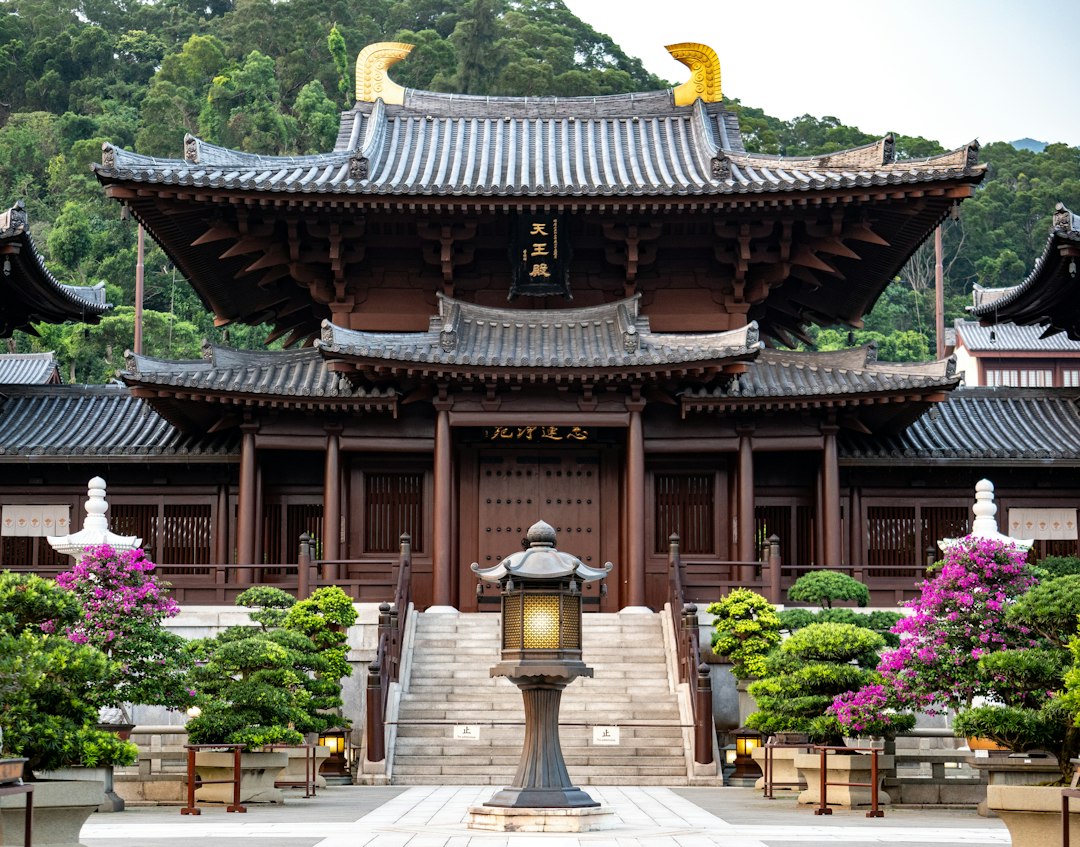
Scopri il Man Mo Temple di Hong Kong is an instruction that sounds simple until you try to follow it in the middle of a busy afternoon on Hollywood Road. The temple, dedicated to the gods of literature (Man) and martial arts (Mo), has been standing on this site since the mid-nineteenth century, and it carries that age in the quality of its silence — a silence that is not the absence of sound but the presence of something older than the noise surrounding it. The great bronze incense coils that hang from the ceiling, slowly releasing smoke into the already-dim interior, give the space a particular atmosphere that photographs do not capture and descriptions tend to oversell. It is a working temple, not a museum, and that distinction matters.
Insider tip
Visit on a weekday rather than a weekend, and arrive early enough that the morning worshippers are still present. The temple in use is a different place from the temple as a tourist attraction.
Scoprire Tai Kwun: il cuore storico di Hong Kong is a project in the most interesting sense — not a restoration, exactly, and not a museum, but something more like a negotiation between a city's colonial past and its present appetite for culture. The former Central Police Station compound on Hollywood Road, which also included a magistracy and a prison, was transformed into an arts and heritage hub that opened in 2018. The architects — Herzog & de Meuron — made the deliberate decision to preserve the visible evidence of age rather than sand it smooth, which means the complex reads as a place with a history rather than a place that has been given one. The programming mixes contemporary art with heritage interpretation in a way that is occasionally awkward and frequently interesting.
Insider tip
The prison yard — Barrack Block — is worth spending time in even if you visit nothing else. The scale of it, and the quality of the silence, communicates something that the interpretive panels do not.
12Hiking· 9.2 km
Hong Kong Trail — the city seen from above its own noise
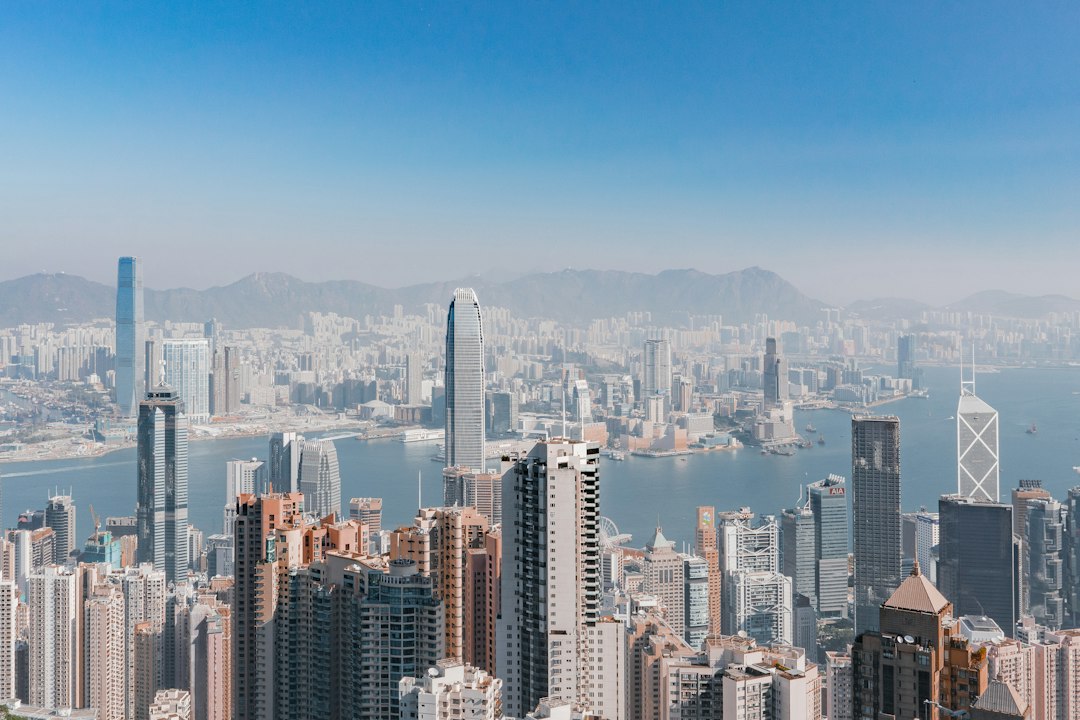
Hong Kong Trail is a fifty-kilometre route that cuts through five country parks on Hong Kong Island, and it is one of those pieces of infrastructure that the city has quietly provided for itself without making much fuss about it. The trail connects Victoria Peak to Big Wave Bay in the east, passing through terrain that most visitors to Hong Kong — even those who spend a week here — never encounter. The paradox of the Hong Kong Trail is that it offers some of the most expansive views of the city precisely by leading you away from it. From the higher sections, the relationship between the built environment and the surrounding sea and hills becomes legible in a way that street level never allows.
Insider tip
Section 8, from Tai Long Wan to Big Wave Bay, is the least-walked section and the most rewarding for that reason. The descent to the beach at the end is a particular kind of arrival.
Sentieri Sospesi: Alla Scoperta del Dragon's Back is a trail that has been described as Hong Kong's finest urban hike so many times that the description has begun to lose its meaning. What the phrase is trying to convey is the specific experience of standing on the ridge of Shek O Country Park and seeing, simultaneously, the South China Sea to one side and the urban density of Sai Wan Ho to the other — the sensation of being on the spine of something that separates two completely different worlds. The trail is not technically demanding, which means it is accessible to people who would not otherwise experience this particular geography. The name comes from the ridge's profile, which does, in fact, resemble the undulating back of a dragon when seen from the right angle.
Insider tip
The trail ends near Shek O village and beach. If you time it right, you can finish the walk with a swim and a meal in the village before catching the bus back — the combination makes the day feel complete in a way that the trail alone does not.
14Film Location· 10.8 km
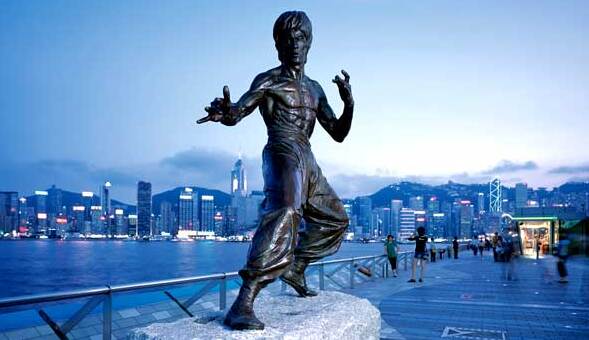
The Avenue of Stars in Tsim Sha Tsui East, Kowloon — the promenade that looks across at itself
The Avenue of Stars in Tsim Sha Tsui East, Kowloon is a waterfront promenade that was built to celebrate Hong Kong's film industry — a decision that makes more sense when you remember that Hong Kong cinema was, for several decades, one of the most influential film industries in the world, producing stars and genres that shaped action cinema globally. The handprints and stars set into the promenade are the obvious attraction, but the more interesting thing about the Avenue of Stars is its view: the Hong Kong Island skyline across the harbour, particularly during the evening light show, is one of those urban panoramas that is both completely artificial and completely genuine at the same time. The promenade is 440 metres long, which is enough distance to find a quiet section if you choose your moment.
Insider tip
The western end of the promenade, near the Clock Tower, is quieter than the central section and offers a slightly different angle on the skyline. The Clock Tower itself — a remnant of the old Kowloon-Canton Railway terminus — is worth a few minutes of attention.
15Park· 5.5 km
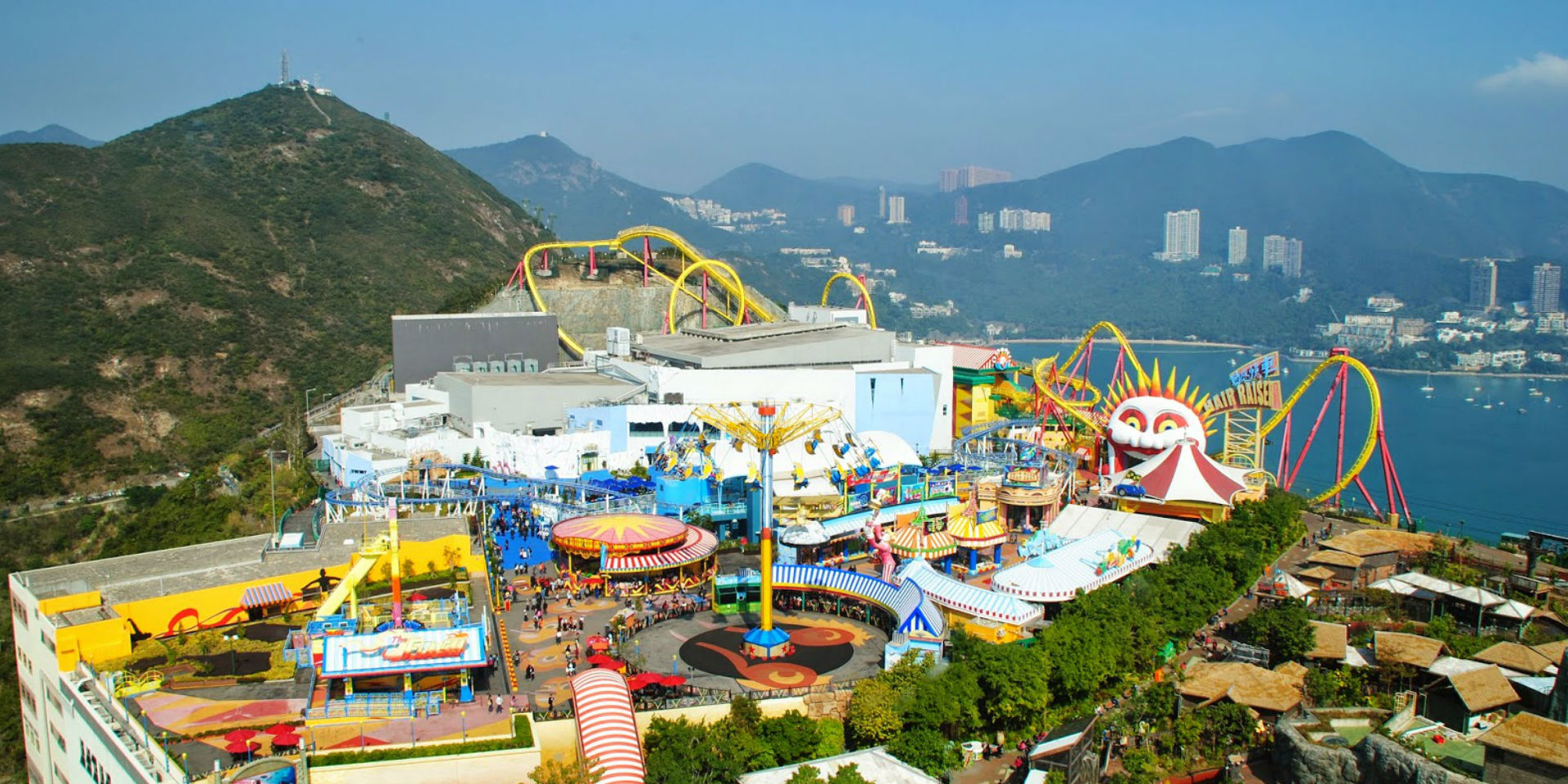
Ocean Park is a major attraction in Hong Kong — the theme park that takes the sea seriously
Ocean Park is a major attraction in Hong Kong in the way that certain institutions become so embedded in a city's identity that locals stop seeing them and visitors assume they already understand them. The park, built on the southern headland of Hong Kong Island overlooking the South China Sea, has won international recognition for its combination of marine exhibits, conservation programmes, and the kind of rides that use the dramatic cliff-top geography to genuinely alarming effect. What distinguishes it from a generic theme park is the marine life component — the aquarium exhibits are serious in a way that the rollercoasters are not, and the juxtaposition is more interesting than it sounds. The cable car crossing between the two sections of the park offers a view of the coastline that is available nowhere else.
Insider tip
The park opens at ten but the marine exhibits are significantly less crowded in the first hour. The jellyfish display, in particular, is worth arriving early for — it is one of those quietly hypnotic things that crowds ruin.
The honest thing to say about Lamma Island — and about the wider constellation of places that orbit it in this piece — is that none of them are truly hidden. They are findable. They are on maps. Some of them are on very many maps. What hides them is the speed at which most people move through a city, and the way that familiarity with a name substitutes for familiarity with a place. Lamma in particular is a useful corrective to the assumption that proximity to a major city means absorption by it. The island has maintained a character that is genuinely its own — not preserved in aspic, not performing rusticity for visitors, but simply continuing to exist on its own terms. The places in this piece reward the same approach: arrive without a fixed interpretation, spend longer than you planned, and pay attention to what is happening at the edges of whatever you came to see. The edges are usually where the place actually lives.
🏆 Pocket guide
Take this guide with you.
Save it offline, get walking directions, and discover thousands more places like the ones you just read.
How do I get to Lamma Island from Central Hong Kong?
Regular ferry services run from Central Ferry Pier 4 to both Yung Shue Wan and Sok Kwu Wan on Lamma Island. The crossing takes between twenty and thirty minutes depending on the destination. Ferries run throughout the day, with reduced frequency in the late evening. There are no private cars on the island, so the ferry is the only practical way to arrive.
Is Lamma Island suitable for a day trip, or does it reward a longer stay?
A day trip is entirely feasible and is how most visitors experience the island. However, the island's character — particularly the quieter early mornings and the evenings after the day-trippers have left — is only accessible if you stay overnight. There are guesthouses and small hotels in Yung Shue Wan. An overnight stay changes the experience considerably.
What is the best time of year to visit Hong Kong's outdoor attractions, including the hiking trails?
October through December offers the most reliable conditions — lower humidity, clearer skies, and temperatures that make walking comfortable. The summer months (June through September) bring high humidity, typhoon risk, and temperatures that make extended outdoor activity genuinely demanding. Spring is pleasant but hazy. Winter mornings on the ridgelines can be cold enough to require a layer.
Are the markets like Stanley and Temple Street worth visiting, or are they primarily tourist experiences?
Both markets occupy a middle ground. Stanley Market has become predominantly tourist-oriented, though the surrounding village and the Murray House give the area a context worth exploring. Temple Street Night Market retains more of its original mixed-use character — locals use it alongside tourists, particularly the fortune tellers and the food stalls. Arriving at Temple Street after eight in the evening gives you a more authentic version of both.
Is the Hong Kong Maritime Museum worth a dedicated visit, or is it better combined with other nearby attractions?
The museum warrants a dedicated visit of at least ninety minutes if maritime history or Hong Kong's trading past genuinely interests you. Its location at Central Pier 8 makes it easy to combine with a harbour ferry ride or a walk along the waterfront toward Sheung Wan. The museum is less crowded on weekday afternoons, which is when the exhibits are easiest to engage with properly.
🏆 Read this offline
Save it to your phone.
Bookmark this guide, plan your trip offline, and discover thousands of places like these.
BookmarkPlan offline60 languages
iOS / Android
Huawei users
Secret WorldHidden places, real stories — plan your trip