15 Hidden Gems in Lantau Island — beyond the postcard
On an island famous for a giant Buddha and a theme park, the real discoveries are the ones that don't make the brochure
L
Words by
Lena Hofmann
Updated
11 October 2026
Read time
12 minutes
Includes
10 places · interactive map
There is a particular kind of invisibility that afflicts places which are, technically, famous. Lantau Island is a case in point. Ask any Hong Kong resident about it and they will mention the Big Buddha, possibly Disneyland, and then trail off into a vague gesture toward "nature." Ask a tourist and you will get the same two answers, delivered with more enthusiasm and a phone full of cable-car photographs. The island is, by any objective measure, one of the most visited landmasses in the Pearl River Delta. And yet — and this is the thing that keeps drawing me back — it manages to feel profoundly unseen.
Part of this is geography. Lantau is larger than Hong Kong Island itself, a fact that surprises almost everyone who hears it, and its interior is a tangle of forested ridges, silted estuaries, and coastline that the MTR has never reached. But the deeper reason is psychological. Most visitors arrive with a checklist already written, follow the cable car to the plateau, tick the bronze colossus, buy the lotus-seed pastry at the monastery gift shop, and leave. The island absorbs them and releases them without revealing very much of itself.
What follows is not a list of secrets in the conspiratorial sense. Several of these places are documented, signposted, and occasionally crowded. What makes them feel hidden is the quality of attention required to actually experience them — a willingness to slow down, to take the bus instead of the gondola, to eat where the fishermen eat rather than where the tour operator suggests. Lantau rewards that kind of patience. It always has.
Lantau Island, l'isola più grande di Hong Kong: the island that swallows you whole
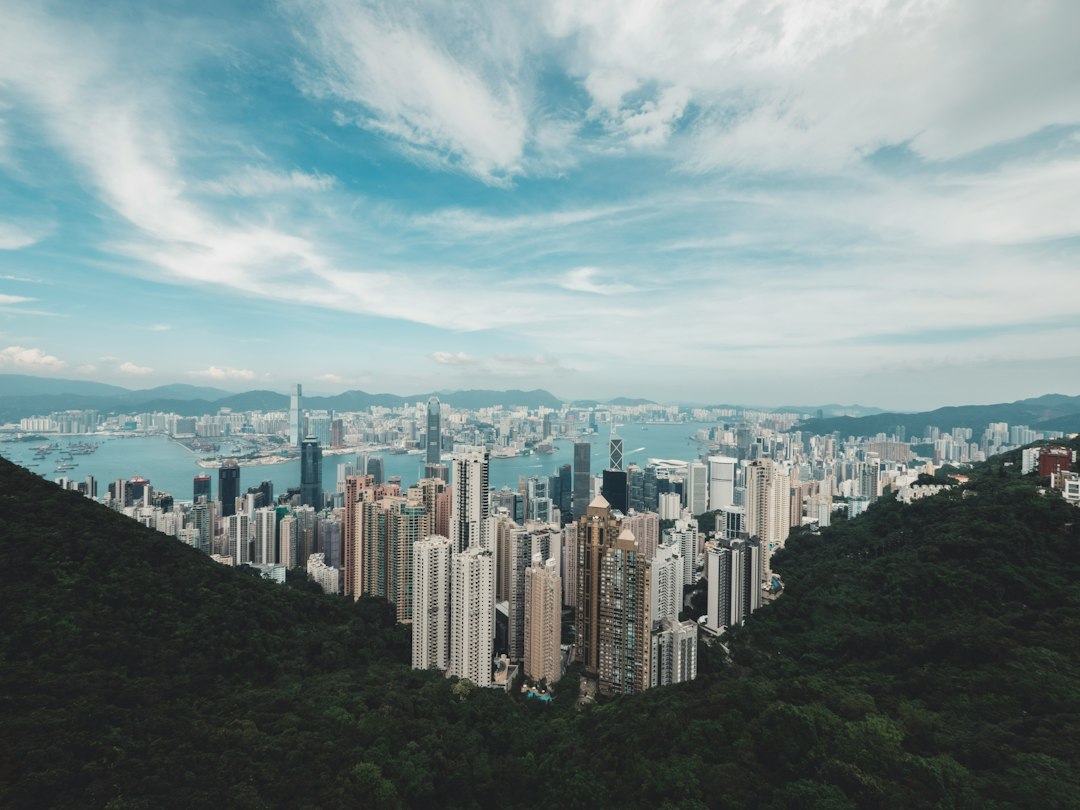
Most people treat Lantau as a transit zone — a platform from which to view a statue or enter a theme park — and in doing so they miss the essential fact about the place: it is enormous, and most of it is empty in the best possible way. The island covers roughly 147 square kilometres, the majority of which falls under the Lantau Country Park, a protected landscape of granite peaks, secondary forest, and coastal scrub that the city's relentless development has, against all odds, left largely intact. To walk even a short section of the Lantau Trail — say, the ridge between Sunset Peak and Lantau Peak — is to understand that Hong Kong's identity as a vertical concrete city is only half the story. The other half is this: wind, silence, and a horizon that feels genuinely earned.
Insider tip
The north Lantau coast, accessible by local bus from Tung Chung, offers stretches of shoreline where you can walk for twenty minutes without seeing another person, even on a Sunday.
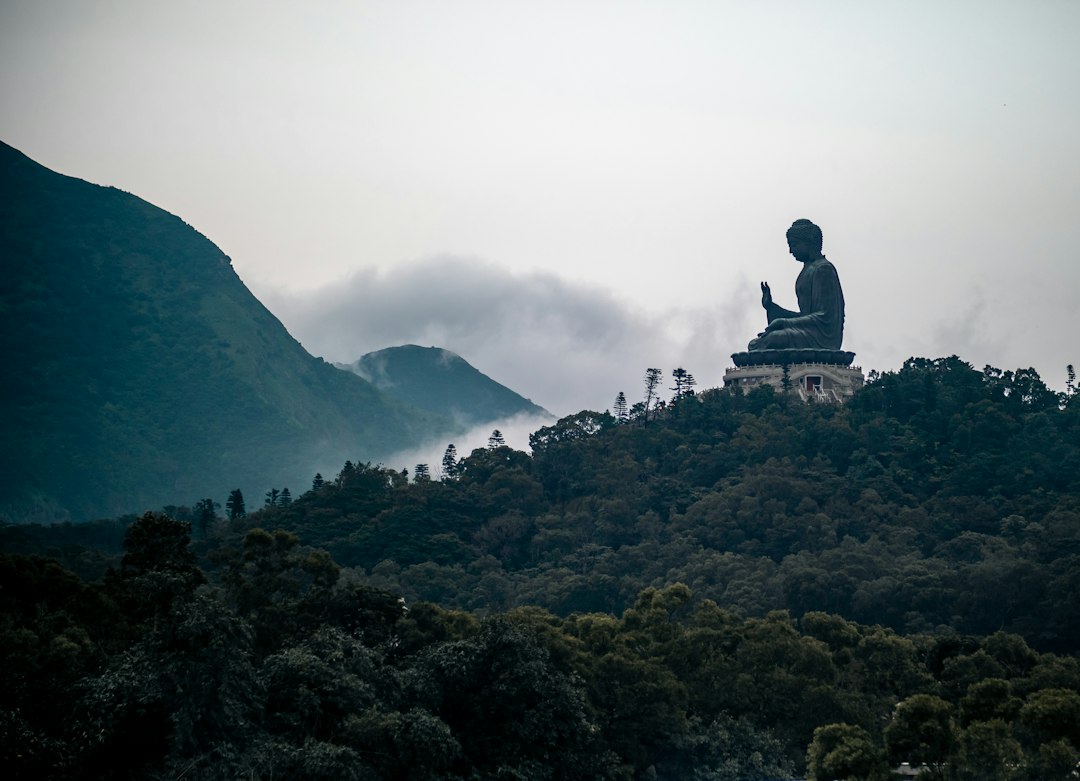
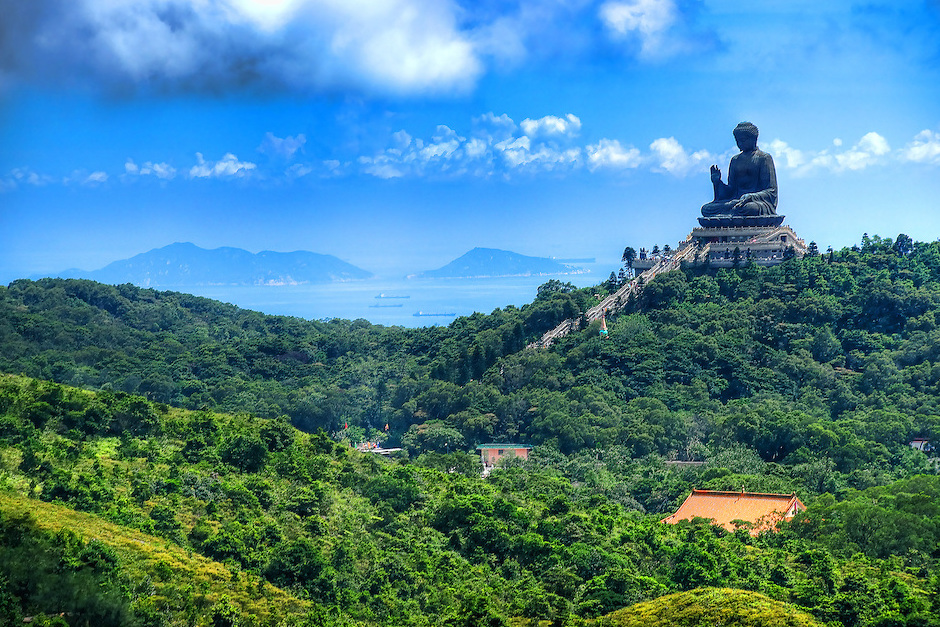
The Tian Tan Buddha is, by any measure, a spectacle — 34 metres of bronze seated on a lotus throne atop a three-tiered altar at 520 metres above sea level, facing north toward the Chinese mainland as if keeping a quiet watch over its people. Completed in 1993, it is one of the largest outdoor seated bronze Buddhas in the world. What the gondola queues and the souvenir stalls obscure is the fact that this is a working devotional site, not a theme park attraction. Arrive early on a weekday morning, before the first cable cars have disgorged their passengers, and the atmosphere shifts entirely. The 268 steps become a genuine ascent, the incense smoke from the monastery below drifts up through the mist, and the statue acquires a weight — literal and otherwise — that the photographs never quite capture.
Insider tip
The 268 steps to the base of the statue face southeast; arrive before 8am on a clear winter morning and the low sun catches the bronze in a way that no midday photograph replicates.
There is a second way to read the Tian Tan Buddha, and it has nothing to do with the cable car. The Ngong Ping 360 gondola is efficient and the views are genuinely fine, but it deposits you at a manufactured village of gift shops and staged "cultural experiences" that bear approximately zero relationship to the island's actual culture. The alternative is the old footpath from Tung Chung, a two-to-three-hour walk through secondary forest and past small shrines that reminds you the Buddha was built for pilgrims, not passengers. The path climbs gradually, the vegetation thickens, and by the time the statue appears above the treeline you have, in some small but real sense, done the work of arriving. The experience of the site is entirely different when you have walked to it.
Insider tip
The Ngong Ping trail from Tung Chung is well-marked but rarely busy on weekday mornings; bring water and budget three hours for a comfortable ascent.
4Religious Site· 4.0 km
Tian Tan Buddha, referred to as the "Big Buddha": the engineering story nobody tells
At 202 tonnes of bronze assembled from 202 separate pieces, the Tian Tan Buddha is as much a feat of engineering as it is a devotional object. The statue was cast in Nanjing and transported in sections to Lantau, then assembled on the plateau — a logistical undertaking that, given the terrain, was considerable. The altar beneath the statue contains a reliquary hall and three levels of internal chambers housing bronze Bodhisattva figures and religious artefacts. Most visitors photograph the exterior and descend; almost none enter the altar itself, which is a shame, because the interior has a quietude entirely at odds with the noise outside. The design of the statue's base echoes the Tian Tan — the Temple of Heaven — in Beijing, a geometric reference that rewards anyone who pauses long enough to think about it.
Insider tip
Entry to the altar's interior chambers requires a separate ticket purchased at the base of the stairs; it is almost always less crowded than the exterior viewing platform.
Po Lin Monastery — whose name translates roughly as "Precious Lotus" — was established in the early twentieth century by three monks from Jiangsu who came to Lantau seeking solitude. They found it, for a while. Today the monastery is best known as the staging ground for visits to the Big Buddha, and its forecourt is a reliable chaos of tour groups and incense vendors. But the monastery itself, if you push past the commercial perimeter, is a genuinely beautiful complex of red-and-gold halls set against the green flank of Lantau Peak. The main hall contains three large golden Buddha statues representing the past, present, and future, and the atmosphere inside — cool, dim, smelling of sandalwood — is entirely removed from the noise outside. Monks still live and practise here. That fact is easy to forget.
Insider tip
The monastery's vegetarian restaurant, operating since the early twentieth century, serves set lunches that are far better than the tourist-facing stalls outside — arrive before noon to secure a table.
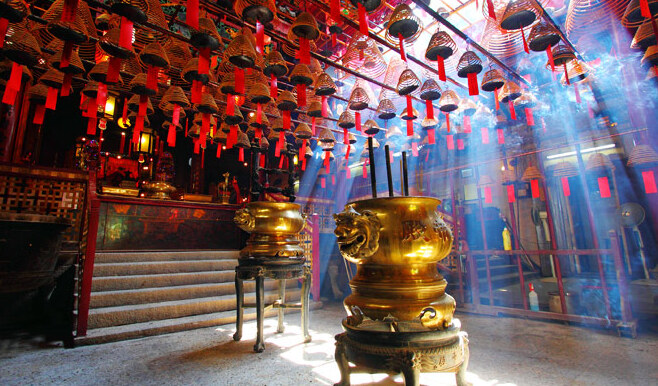
Lantau has a Man Mo Temple — one of several across Hong Kong — that pays tribute to Man Cheong, the God of Literature, and Kwan Ti, the God of War: an unlikely pairing that reflects the pragmatic pluralism of traditional Cantonese religious life. Located roughly halfway along one of the island's older road routes, the temple occupies the kind of position that makes it easy to drive past without registering. Inside, the air is thick with the smoke of the enormous hanging incense coils that are a signature of Man Mo temples throughout Hong Kong — coils that burn for weeks and are purchased by devotees as prayers made visible. The temple is neither grand nor particularly old by Chinese standards, but it has the quality that the most compelling religious spaces share: it is clearly, unmistakably, in use.
Insider tip
Visit on a weekday afternoon when the tour buses have moved on; the temple caretaker is often willing to explain the significance of the hanging coils if you ask respectfully.
7Folklore· 8.3 km
Tai O Fishing Village: the city that chose not to modernise
Tai O sits at the western tip of Lantau, on a small river delta where the Pearl River estuary meets the South China Sea, and it operates on a timescale that has very little to do with the rest of Hong Kong. The village is built largely on stilts over the water — a construction method brought by the Tanka boat people who settled here generations ago — and the effect is of a place that has resolved, collectively and without drama, to remain itself. The stilt houses are not a heritage reconstruction. People live in them, hang their laundry from them, and moor their boats beneath them. The narrow channels between the houses smell of salt and drying shrimp paste, and the pace of life is, by Hong Kong standards, almost geological.
Insider tip
The pink dolphins that inhabit the Pearl River estuary are occasionally spotted from the small boat tours that depart from the Tai O waterfront; morning departures give the best odds.
The Tai O Promenade is not a promenade in the European sense — no grand esplanade, no ornamental planting, no performative leisure. It is more accurately a series of connected walkways along the village's water channels, lined with small shops selling salted fish, shrimp paste, and dried seafood in quantities that suggest the local appetite for preservation is still very much alive. Walking it slowly, which is the only sensible speed, you pass elderly residents playing cards on plastic stools, cats sleeping on mooring ropes, and the occasional tourist moving with the slightly dazed expression of someone who expected a museum and found an actual place instead. The promenade offers the most direct possible encounter with what Tai O actually is: a working fishing community that has been famous long enough to be comfortable with being watched.
Insider tip
The small bridges crossing the main channel offer the best elevated views of the stilt houses; the bridge nearest the old rope ferry crossing is the least photographed and the most atmospheric.
9Panorama· 11.3 km
Cheung Chau - The hideaway of the pirate Cheung Po Tsai: the island that time misplaced
Cheung Chau is not, strictly speaking, part of Lantau — it is a separate island, roughly ten kilometres to the southwest, accessible by ferry from Central. But it exists in Lantau's gravitational field, and it offers something that Lantau's more visited areas do not: a small, car-free community whose main street is narrow enough that two bicycles cannot pass each other comfortably. The island's most celebrated historical figure is Cheung Po Tsai, an eighteenth-century pirate of considerable reputation who is said to have used a coastal cave here as a hideout. The cave is small, anticlimactic, and completely worth visiting, because the walk to it takes you along a coastline that is genuinely lovely in the way that coastlines are when nobody has done anything to them.
Insider tip
The windsurfer rentals near the main beach are a local institution — Cheung Chau produced Olympic windsurfing champions, and the bay conditions are genuinely excellent for beginners.
Writing about Disneyland in an editorial about overlooked places requires a certain honesty: it is not overlooked. It is, by design and by budget, one of the most visible destinations in Hong Kong. But there is a version of Hong Kong Disneyland that the park's own marketing does not emphasise, which is its role as a case study in how a city manages the tension between global franchise culture and local identity. Located at Penny's Bay on Lantau's northern coast, the park was built on reclaimed land and opened in 2005 as the smallest Disneyland in the world at the time. Its subsequent expansions — including areas developed specifically for the Hong Kong and Chinese markets — tell a story about cultural negotiation that is, if you are paying attention, as interesting as anything inside the gates.
Insider tip
The area around Penny's Bay outside the park perimeter offers an unexpectedly good view of the park's skyline against the Lantau hills — a composition that the park's own photographers seem to have missed.
The problem with writing about Lantau is that the island is indifferent to being written about. It has been famous long enough — for its Buddha, its fishing villages, its wild interior — that it has developed a kind of patience with the attention. Visitors arrive, take their photographs, and leave. The stilt houses continue to stand in the tidal water. The monks continue their routines in the monastery halls. The forested ridges continue to absorb the cloud.
What I keep returning to is not any single place on this list but the quality of attention that Lantau demands. It is an island that will not perform for you. The rewards — the light on the bronze at dawn, the silence of the trail, the smell of the promenade at low tide — are available only to those who have slowed down enough to receive them. That is not a hidden quality. It is simply a patient one.
🏆 Pocket guide
Take this guide with you.
Save it offline, get walking directions, and discover thousands more places like the ones you just read.
What is the best way to get to Lantau Island without taking the Ngong Ping 360 cable car?
The most direct alternative is the MTR to Tung Chung station, which sits at the base of the Ngong Ping plateau. From Tung Chung, local buses (routes 23 and 23A) connect to Ngong Ping village, and the old Lantau Trail footpath offers a two-to-three-hour walking route through forested terrain. For Tai O, bus route 11 runs from Tung Chung directly to the village.
How long does it take to reach Tai O Fishing Village from central Hong Kong?
Allow approximately 90 minutes to two hours door-to-door. Take the MTR to Tung Chung (Tung Chung Line), then bus route 11 to Tai O — the bus journey itself is around 40 minutes and passes through the island's interior, which is worth the time. A taxi from Tung Chung is faster but considerably more expensive.
Is Cheung Chau accessible from Lantau Island directly, or do you need to return to Hong Kong first?
There is no direct ferry between Lantau Island and Cheung Chau. The standard route is to take the ferry from Cheung Chau to Central (approximately 35–55 minutes depending on the service), which makes it most practical to visit Cheung Chau as a separate day trip from the urban ferry piers rather than as an extension of a Lantau itinerary.
Are the stilt houses in Tai O open to visitors, or is the village only viewable from the outside?
The village itself is entirely open and walkable — there are no entry fees or restrictions on exploring the public walkways, bridges, and promenade. Some stilt houses have been converted into small guesthouses or shops that welcome visitors. The interiors of private residences are, naturally, not accessible, but the village's character is fully apparent from the public channels and walkways.
What is the best time of year to visit Lantau Island to avoid the largest crowds?
Weekday mornings from October through early December offer the most comfortable conditions — the summer typhoon season (June to September) brings humidity and occasional storm closures, while public holidays and the Lunar New Year period see significant visitor numbers at the Big Buddha and Tai O. Winter weekday mornings are consistently the quietest, with clear skies and cool temperatures that make the hiking trails genuinely pleasant.
🏆 Read this offline
Save it to your phone.
Bookmark this guide, plan your trip offline, and discover thousands of places like these.
BookmarkPlan offline60 languages
iOS / Android
Huawei users
Secret WorldHidden places, real stories — plan your trip