What the crowds miss when they're busy looking at what they came to see
L
Words by
Lena Hofmann
Updated
9 October 2026
Read time
12 minutes
Includes
14 places · interactive map
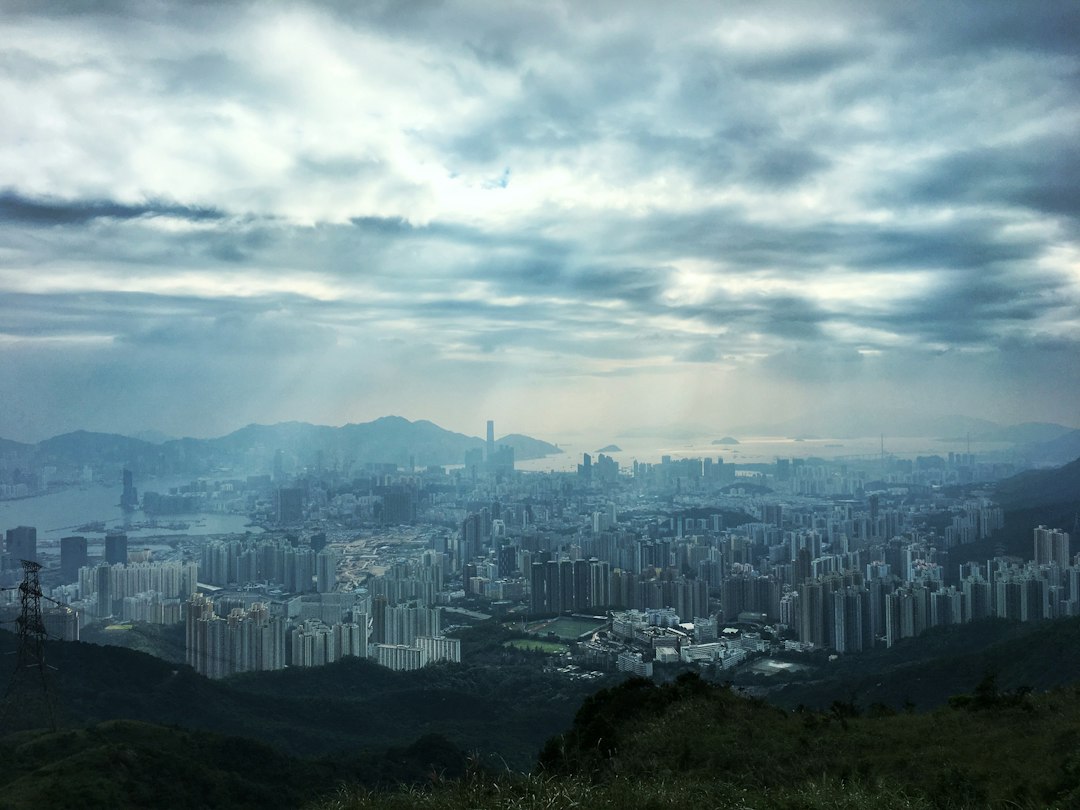
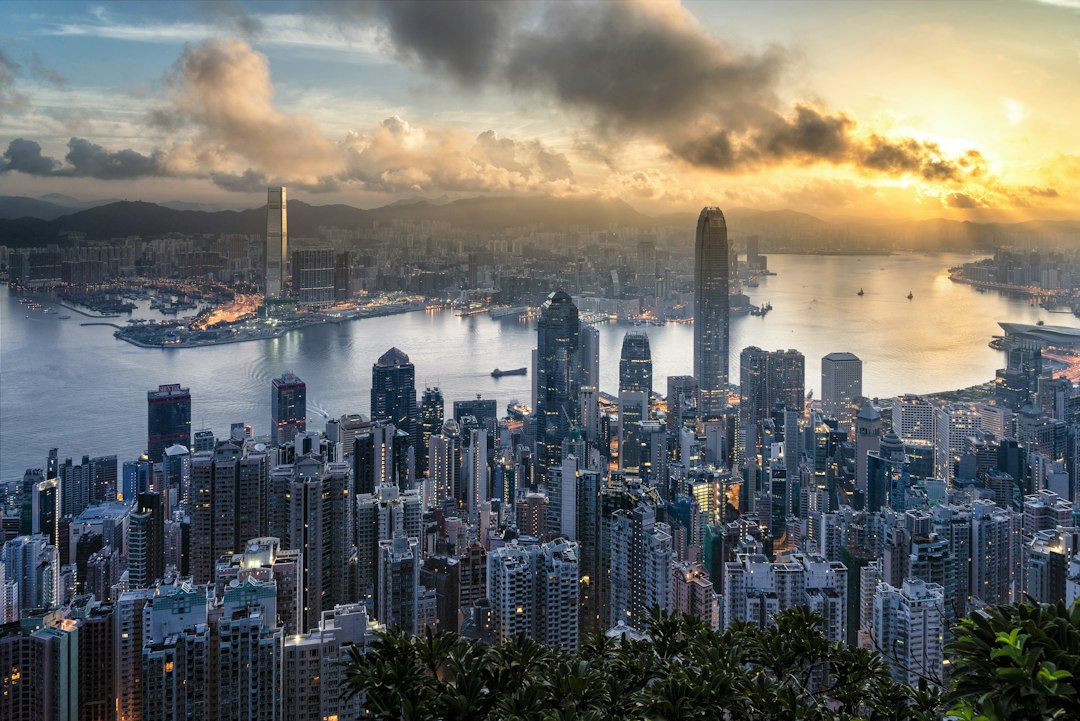
There is a particular kind of invisibility that only the most layered cities produce. It is not the invisibility of obscurity — of a place no one has heard of. It is the invisibility of saturation: so many people have mentioned a street, a market, a viewpoint, that the actual experience of being there has been buried under the accumulated weight of other people's descriptions. Mong Kok is perhaps the world's most extreme example of this phenomenon. With a population density that routinely appears in geography textbooks as a shorthand for 'a lot of people in a small space,' it is a district where everything feels simultaneously overexposed and genuinely unseen.
I have been coming here long enough to remember when the neon was still analogue — when the signs hummed rather than flickered. And what I have learned, slowly and sometimes reluctantly, is that the places which genuinely surprise an informed traveller are rarely the places no one knows about. They are, more often, the places everyone knows about but no one actually looks at. The market stall you walk through to get somewhere else. The building whose facade you photograph without ever reading what it once was. The square that functions as a shortcut.
The fifteen places gathered here span that spectrum. Some are a short walk from Mong Kok's epicentre; others require a deliberate journey outward into Kowloon and beyond. None of them will appear on a postcard. Or rather — some of them will, but the postcard will have missed the point entirely. That is the condition this piece is trying to address: not rarity, but attention. These are places that reward it.
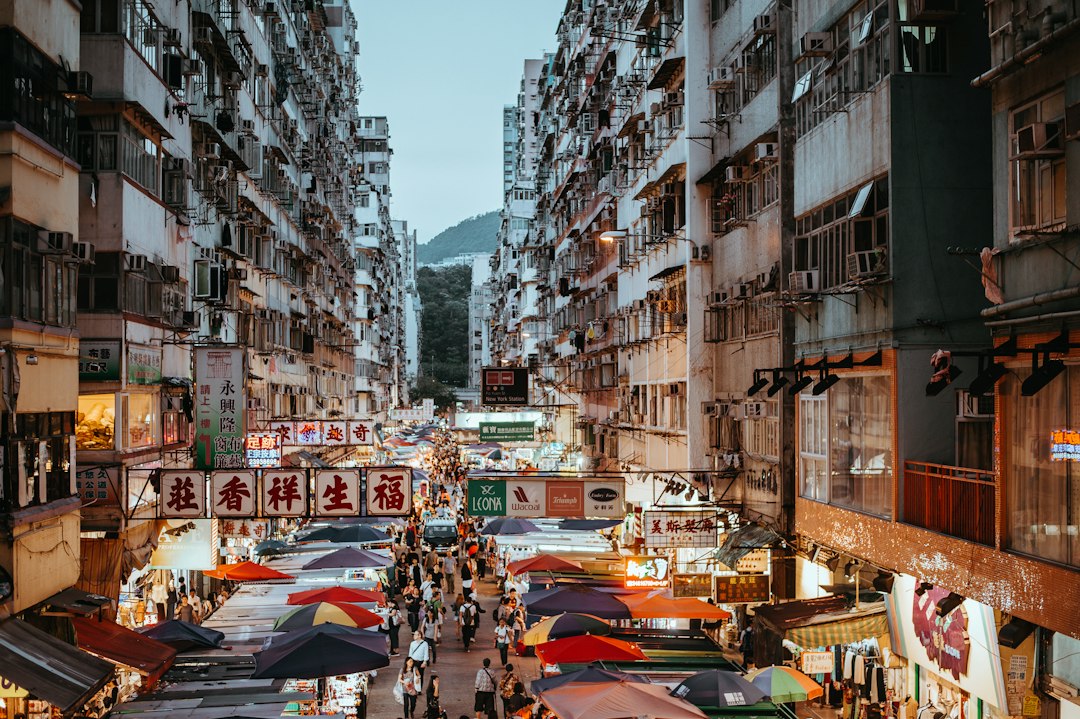
The Ladies' Market on Tung Choi Street is, technically, one of the most visited open-air markets in Hong Kong. Which is precisely why it belongs on this list. The vast majority of visitors experience it as a corridor — a loud, colourful passage between wherever they arrived from and wherever they are going next. They photograph the canopies. They price-check something they do not buy. They leave. What they miss is the internal logic of the place: the way the stalls organise themselves by category in a sequence that has remained largely consistent for decades, the vendors who have been here long enough to have opinions about the neighbourhood's transformation, the hour — around dusk — when the light turns the whole street the colour of an old photograph.
The market is not hiding. It is simply waiting for someone to stop moving.
Insider tip
Arrive between 5pm and 6pm on a weekday rather than a weekend afternoon. The crowds thin just enough to let you actually browse, and the vendors are marginally more willing to talk.
2Street Culture· 0.5 km
Hong Kong and the Ladies' Market: the city inside the market
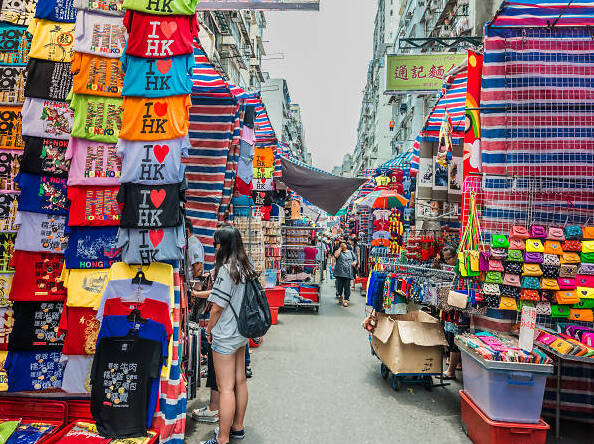
Hong Kong's street markets are frequently described as if they were a single organism — interchangeable, atmospheric, broadly similar. The reality is that each one has a distinct social texture, and the Ladies' Market's texture includes something that the guidebooks rarely mention: it is one of the few places in Kowloon where the tourist economy and the local economy genuinely coexist at the same stall. The woman selling phone cases is also selling the same phone cases to the aunties from the next block. This is not a performance of local life for visiting eyes. It is local life, with visitors included as a matter of commercial fact.
Pay attention to what is not being sold to tourists — the practical household goods, the seasonal items, the things with no obvious souvenir value. That is where the market's real character lives.
Insider tip
The Temple Street Night Market, referenced in the same trading circuit, operates on a different register entirely — more theatrical, more male-coded. The Ladies' Market is the more honest of the two.
3Market· 1.1 km
Hong Kong: The Jade Market — green stone, grey expertise
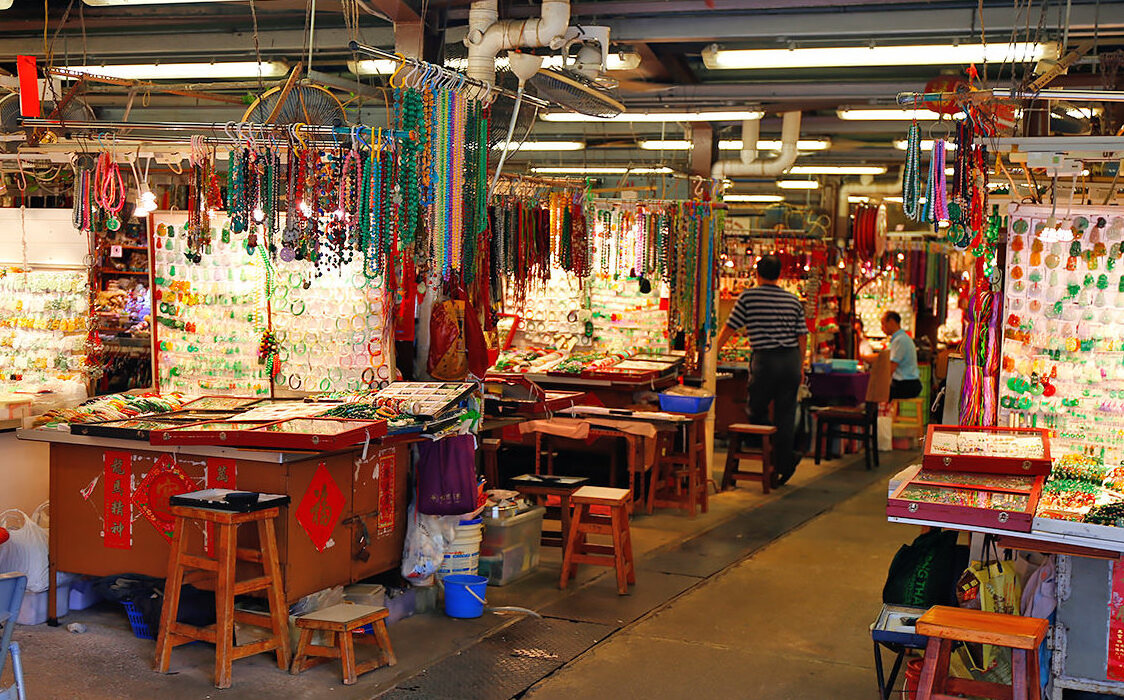
The Jade Market sits just west of Nathan Road, at the junction of Kansu and Battery Streets, and it is the kind of place that separates travellers who are genuinely curious from those who are merely collecting experiences. Hundreds of vendors spread across two covered sections sell jade in every shade and quality — from the translucent imperial green that commands serious money to the dyed and treated pieces that are, charitably, decorative. The distinction matters enormously, and almost no one visiting for the first time has the knowledge to navigate it.
That gap — between the uninitiated eye and the expert one — is actually the most interesting thing about the market. Watch the buyers who are not tourists: the way they hold a piece to the light, the questions they ask, the silence before a decision. It is a masterclass in a form of connoisseurship that the digital age has not yet replaced.
Insider tip
If you are serious about buying, bring a loupe and ask the vendor directly whether a piece is natural or treated. A reputable seller will tell you. The answer will also tell you something about the seller.
4Architecture· 1.8 km
Zaha Hadid: Innovation Tower (Jockey Club Tower) — the building that refuses to apologise
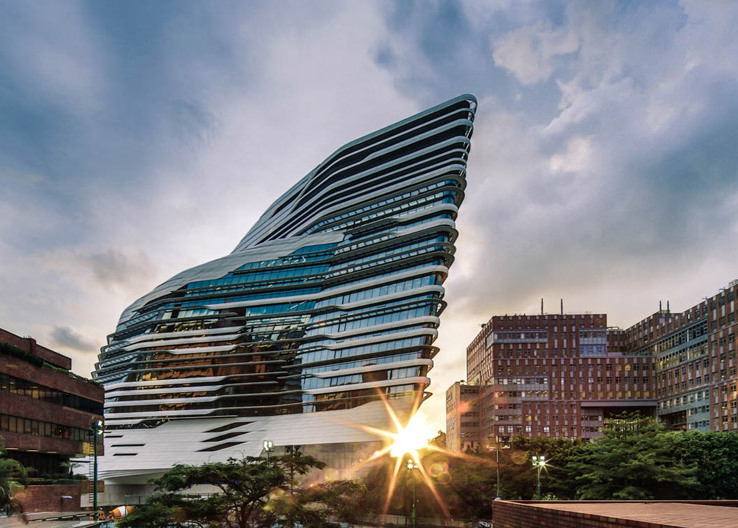
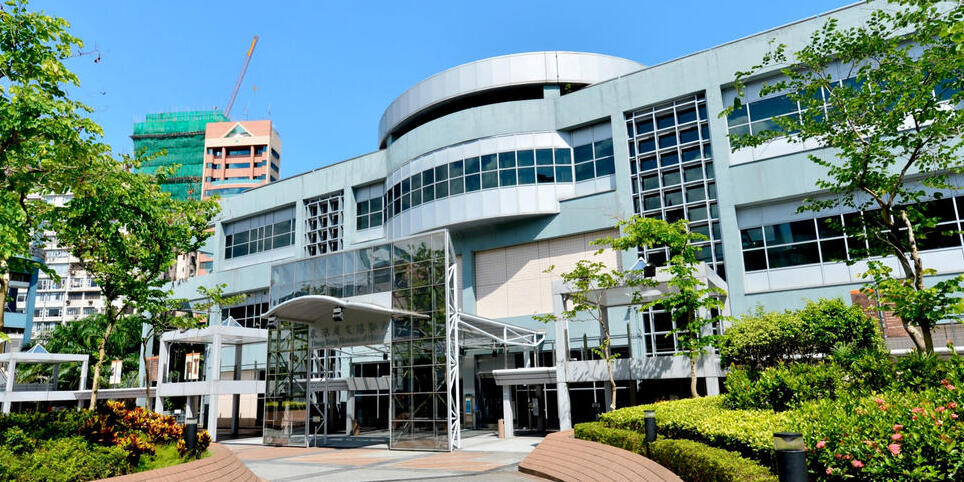
On Chatham Road South in Hung Hom, on the campus of Hong Kong Polytechnic University, Zaha Hadid's Innovation Tower stands as one of the most formally radical buildings in a city that has never been shy about architectural ambition. Completed in 2013, it is a structure that appears to be in the process of becoming something else — its surfaces folding, its volumes shifting, its relationship to the ground deliberately uncertain. It houses the university's School of Design, which is fitting: the building is itself an argument about what design can do when it refuses the rectangle.
Most visitors to Kowloon never make it to Hung Hom. Those who do are usually passing through on the way to the ferry terminal. The Innovation Tower rewards a deliberate stop — not just for photographs, but for the experience of moving around it, which changes the building entirely.
Insider tip
Walk around the full perimeter before entering. The building reads differently from each cardinal direction, and the south elevation — facing away from the main campus approach — is the most surprising.
In Tsim Sha Tsui, the former Marine Police Headquarters compound has been converted into a retail and hotel development under the name 1881 Heritage. The conversion is, depending on your tolerance for adaptive reuse that skews toward the expensive end of the market, either a thoughtful preservation or a gilded cage. Both readings are defensible. What is not in question is the quality of the original colonial-era architecture — the main building, the stable block, the signal tower — which dates to 1884 and represents one of the more complete surviving examples of late-Victorian institutional design in Hong Kong.
The crowds here tend to concentrate around the luxury shops and the hotel lobby. The peripheral buildings and the courtyard at quieter hours offer something more genuinely historical — a sense of the compound's original spatial logic, before commerce rearranged its priorities.
Insider tip
The stable block, now repurposed for retail, retains its original structural ironwork. Look up rather than at the shop windows.
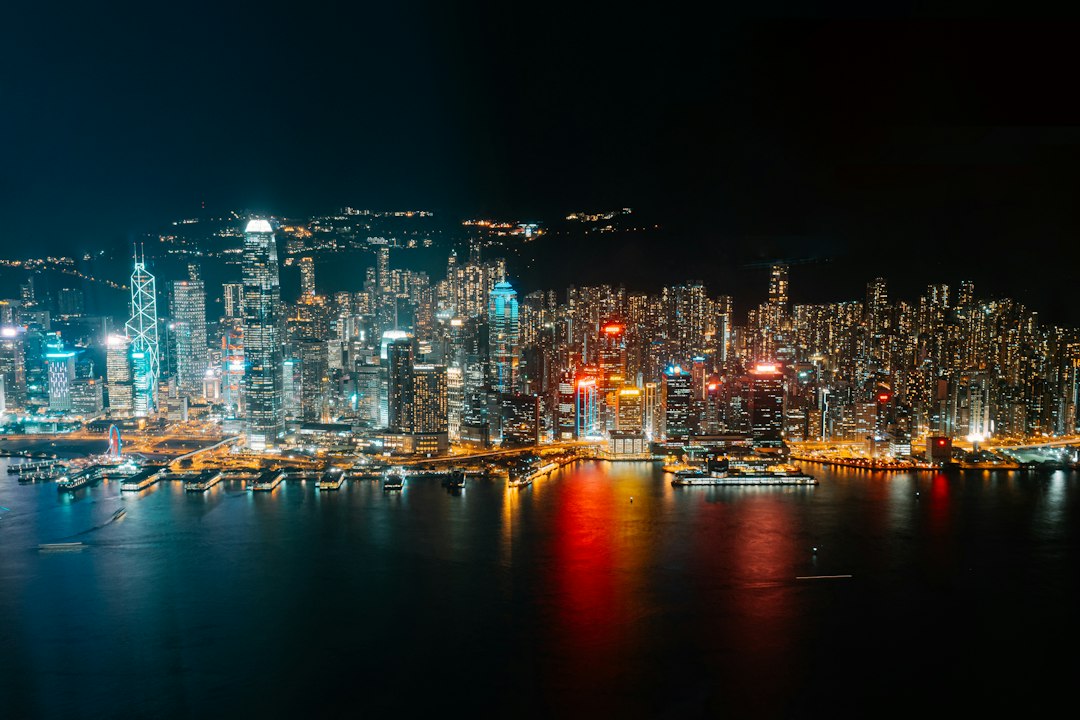
Sky100 occupies the 100th floor of the International Commerce Centre in West Kowloon, which makes it the highest observation deck in Hong Kong. The ICC itself is the kind of building that generates strong opinions — it is very large, very tall, and very present in a skyline that is already fighting for attention. The observation deck, however, earns its position. On a clear day, the view across Victoria Harbour toward Hong Kong Island's own vertical ambitions is the kind of urban panorama that makes you recalibrate your sense of scale.
What makes it less obvious than it sounds: the experience is most rewarding not at midday but at the transitional hours — the twenty minutes before sunset when the light goes horizontal, or the period just after dark when the harbour becomes a mirror for two skylines simultaneously.
Insider tip
Book the last admission slot of the evening if it is available. The post-dark view is qualitatively different from the daytime one, and the crowds are considerably thinner.
Established formally in 1975 after the City Museum and Art Gallery was divided into specialist institutions, the Hong Kong Museum of History in Tsim Sha Tsui East is the city's most sustained attempt to narrate itself. The permanent exhibition — 'The Hong Kong Story' — is enormous in scope, moving from geological prehistory through colonial history to the handover and beyond. It is also, if you are paying attention, quietly fascinating as a document of how a city chooses to frame its own contradictions.
The museum does not hide its complexity, but it does require a visitor willing to read slowly and think about what is being emphasised and what is being elided. It is not a neutral institution — no history museum is — but it is a genuinely serious one, and it is consistently undervisited relative to its quality.
Insider tip
The dioramas reconstructing colonial-era street life in the early sections are more detailed than they initially appear. Allow at least twice as long as you think you need.
The Kowloon Walled City was demolished in 1993 and 1994, and what replaced it — a carefully landscaped park with Jiangnan-style gardens — is one of the more philosophically peculiar places in Hong Kong. The park is genuinely pleasant: well-maintained, thoughtfully planted, popular with elderly residents doing morning exercises. It is also haunted, in the secular sense, by the memory of what stood here before: a dense, ungoverned enclave of roughly 33,000 people living in a structure that had grown organically beyond any planner's reach.
Artifacts from the demolition are preserved in a small exhibition pavilion near the entrance. The contrast between the park's serenity and the photographic record of what preceded it is the most interesting thing here — a city processing its own recent past through horticulture.
Insider tip
The remnants of the old Walled City's south gate are preserved near the main entrance. They are easy to walk past without registering what they are.
Part three — Off the obvious path
9Square· 3.9 km
Golden Bauhinia Square in Hong Kong: the ceremony that most tourists photograph incorrectly
In Wan Chai, on the harbourfront outside the Hong Kong Convention and Exhibition Centre, the Golden Bauhinia Square marks the site where sovereignty over Hong Kong was transferred from Britain to the People's Republic of China in 1997. The golden bauhinia sculpture at its centre is one of the most photographed objects in Hong Kong, which means it is also one of the most contextually misunderstood. Most photographs of it are close-up, isolating the sculpture from its surroundings — which erases the spatial relationship between the monument, the harbour, and the convention centre's distinctive sail-shaped roof.
The flag-raising ceremony held here each morning is attended by a mixture of mainland tourists and local residents, and the social dynamics of that gathering are, in themselves, a condensed version of Hong Kong's ongoing negotiation with its own identity.
Insider tip
The daily flag-raising ceremony begins at 8am. Arrive ten minutes early and position yourself to watch the crowd as much as the ceremony itself.
10Film Location· 3.0 km
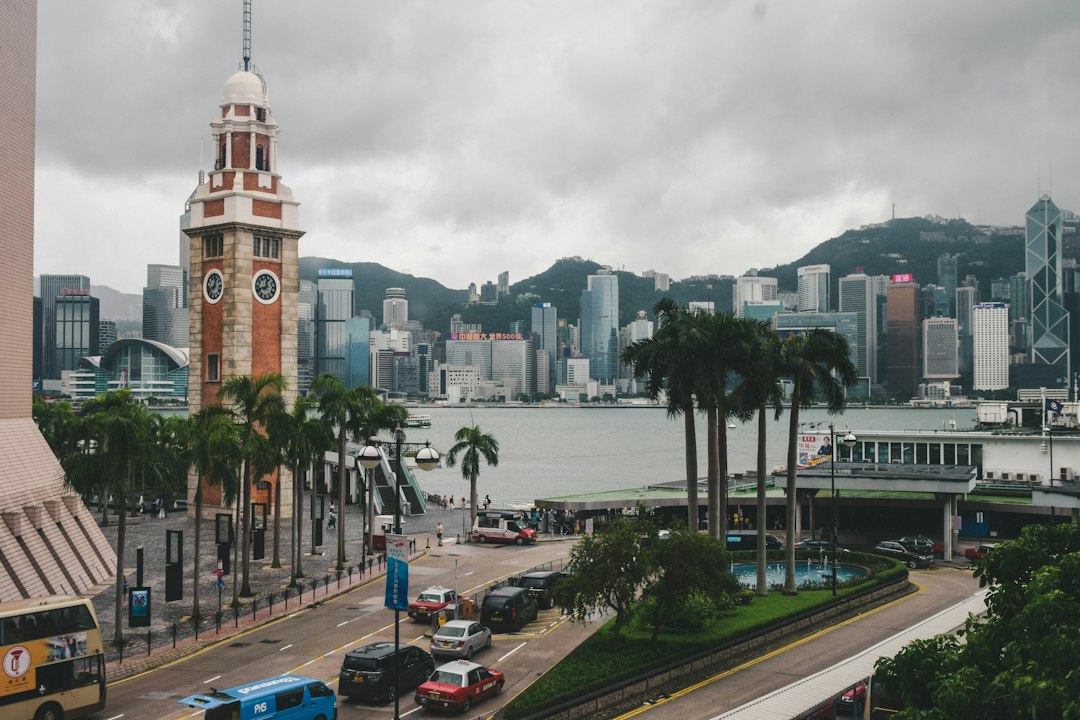
The Avenue of Stars in Tsim Sha Tsui East, Kowloon: the waterfront that is about something else entirely
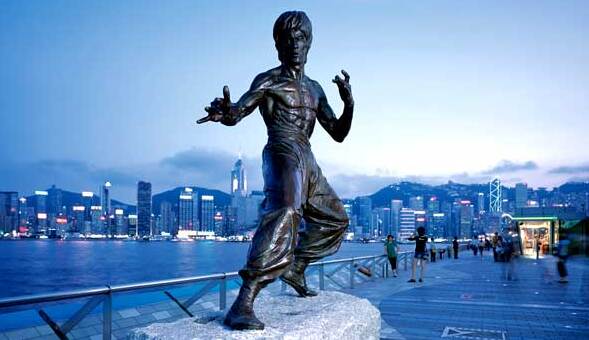
The Avenue of Stars on the Tsim Sha Tsui waterfront was designed to celebrate Hong Kong's film industry — one of the most prolific and culturally influential in the world during its peak decades of the 1970s through 1990s. The handprints, the plaques, the bronze figure of Bruce Lee: these are the things visitors photograph. What they less frequently engage with is the industry the avenue commemorates — a cinema culture that produced hundreds of films a year, that exported genres and aesthetics globally, and that has contracted dramatically since its commercial peak.
The avenue is, in this reading, simultaneously a celebration and an elegy. The harbour view it frames is spectacular on its own terms. But the film history embedded in the pavement deserves more than a glance downward between photographs.
Insider tip
The plaques are not arranged chronologically or by fame. Bring a list of films you actually know and try to find the people who made them. It changes the walk entirely.
The Wong Tai Sin Temple in Kowloon is one of Hong Kong's most visited religious sites, dedicated to the Taoist deity Wong Tai Sin, who is associated with healing and the granting of wishes. The temple complex is large, colourful, and on busy days — particularly during the Lunar New Year period — genuinely overwhelming in its sensory intensity. But it is the everyday version of the temple that is most revealing: the office workers who stop in during a lunch break, the elderly men consulting the kau cim fortune-telling sticks with the quiet seriousness of people who have been doing this for decades, the incense smoke that has been rising here since the temple's establishment in 1921.
The gap between the tourist experience and the devotional one is narrower here than at many religious sites. The temple is not a museum of belief. It is a place where belief is actively practiced.
Insider tip
The Good Wish Garden at the rear of the complex is quieter than the main temple precinct and offers a different register of the site — more contemplative, less theatrical.
12Food· 4.2 km
Dim Sum that means "touch your heart": the meal that rewards patience
Dim sum — the Cantonese tradition of small dishes served in bamboo steamers, typically eaten at breakfast or lunch — is one of the most genuinely distinctive culinary experiences Hong Kong offers, and also one of the most frequently reduced to a list of dishes rather than an experience of a particular kind of time. The phrase itself translates roughly as 'touch your heart,' which is either sentimental or accurate depending on whether you have ever sat at a large round table with a pot of tea, a trolley passing every few minutes, and nothing scheduled for the next two hours.
The practice of yum cha — drinking tea alongside the food — is as important as the food itself. The tea is not an accompaniment. It is the structure around which the meal organises itself.
Insider tip
Order less than you think you need in the first round. The trolleys keep coming, and the best dishes often appear later in the service when the kitchen has found its rhythm.
Part four — Around and beyond
14Travel Planning· 0.0 km
Come pianificare un viaggio a Hong Kong con l'AI nel 2026: the city that rewards preparation
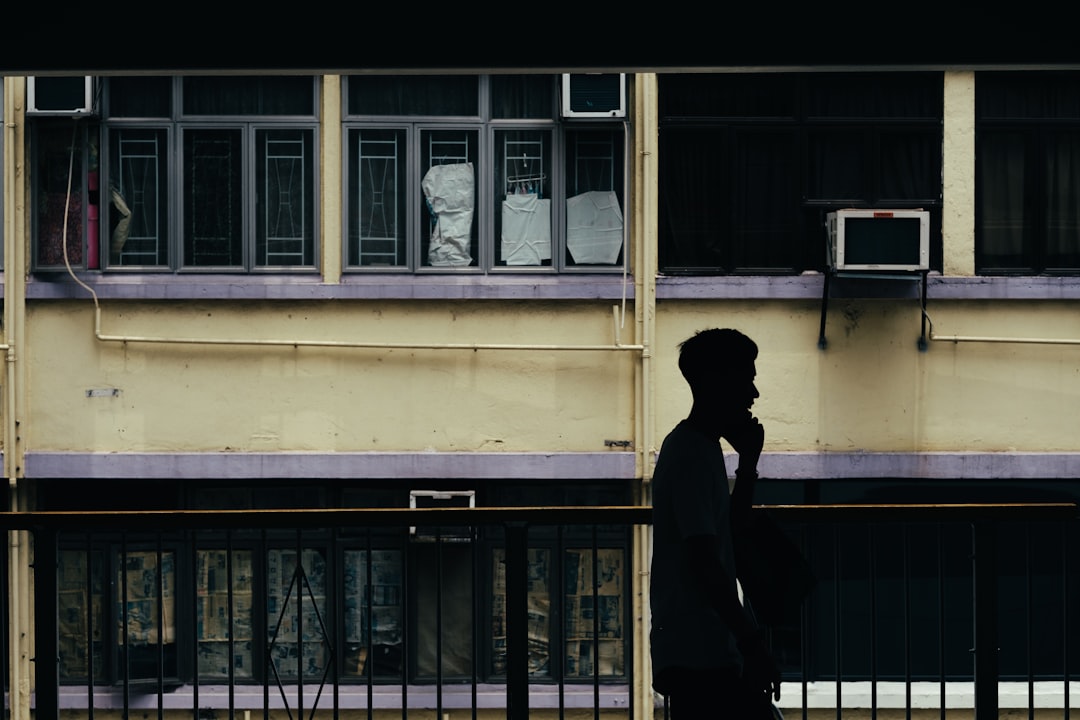
Hong Kong's complexity — its layered transport network, its neighbourhood-by-neighbourhood shifts in character, its simultaneous operation across multiple cultural and linguistic registers — makes it one of the cities where the quality of your preparation most directly determines the quality of your experience. The MTR alone has 98 stations, and the difference between arriving at the right exit and the wrong one can mean a ten-minute walk versus a thirty-second one. The city rewards people who have done the work before they arrive.
The emergence of AI-assisted trip planning tools has changed the preparation calculus somewhat — not by replacing local knowledge, but by making it easier to organise the logistical scaffolding around which genuine discovery can happen. The city remains, fundamentally, a place that gives back in proportion to what you bring to it.
Insider tip
Build in at least one day with no itinerary. Hong Kong's most interesting moments tend to happen in the gaps between planned activities.
15Travel Planning· 0.0 km
Secret World vs Wanderlog: il migliore trip planner per Hong Kong 2026 — planning the city that plans back
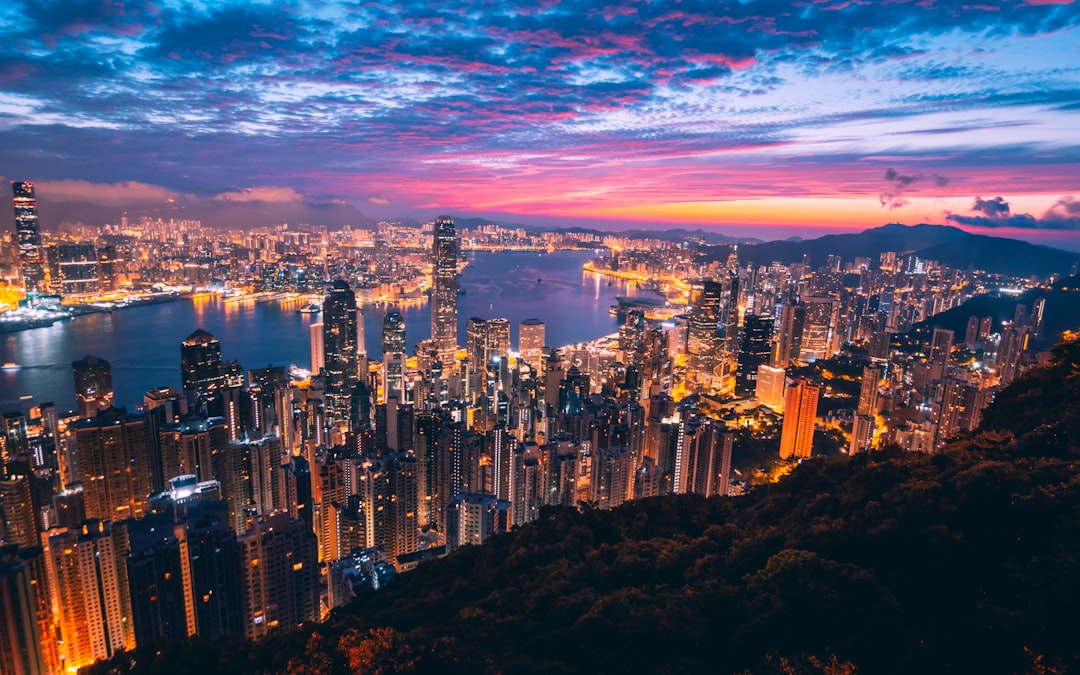
In a city as dense and operationally complex as Hong Kong — where the Temple Street Night Market, the Tian Tan Buddha on Lantau Island, and a rooftop bar in Central can all theoretically fit into a single day, but almost certainly should not — the question of how to sequence an itinerary is not trivial. Trip planning tools have proliferated, each with different strengths: some optimise for transport efficiency, others for thematic coherence, others for the kind of serendipitous adjacency that produces the best travel memories.
The more useful question, perhaps, is not which tool is technically superior but what kind of traveller you are trying to be. A city like Hong Kong will always exceed whatever framework you impose on it. The best planning leaves room for that excess.
Insider tip
Whatever tool you use, cross-reference its suggestions against current local sources. Hong Kong changes faster than most databases can track.
Mong Kok will not remember you were there. This is, I think, the correct relationship to have with a district that has been absorbing visitors and residents and reinventing itself at street level for longer than most cities have existed in their current form. The places gathered in this piece are not secrets. They are, at most, underread — places where the available attention has not kept pace with the available interest. What they share is a quality that no algorithm reliably surfaces and no star rating captures: the sense, when you are standing in them, that the city is doing something more complex than performing itself for your benefit. It is simply continuing. The market vendors are selling things. The incense is rising. The ferry is crossing the harbour. The jade is catching the light. You are there, briefly, in the middle of it. That is enough. That is, in fact, the whole point.
🏆 Pocket guide
Take this guide with you.
Save it offline, get walking directions, and discover thousands more places like the ones you just read.
What is the best time of year to visit Mong Kok and the surrounding Kowloon districts?
October through December offers the most reliably comfortable conditions — lower humidity than the summer months, temperatures in the mid-teens to low twenties Celsius, and clear skies that make the harbour views from Sky100 and the Tsim Sha Tsui waterfront genuinely rewarding. The Lunar New Year period (typically January or February) is culturally rich but operationally demanding — the Wong Tai Sin Temple in particular becomes extremely crowded.
How should I get between the major sites listed in this piece?
The MTR is the default answer for most journeys, and it is genuinely excellent — fast, air-conditioned, and well-signed in English. However, for the Tsim Sha Tsui waterfront sites (Avenue of Stars, 1881 Heritage, the Golden Bauhinia Square area), the Star Ferry crossing from Central or Wan Chai adds a dimension to the journey that the MTR cannot replicate. The Jade Market and Ladies' Market are both walkable from Yau Ma Tei and Mong Kok MTR stations respectively.
Is the Jade Market worth visiting if I have no intention of buying anything?
Yes, with the caveat that you should be honest with vendors about your intentions if they engage you. The market is interesting as a social and commercial ecosystem regardless of purchasing intent — the expertise on display, the negotiation dynamics, and the sheer variety of the material are worth an hour of anyone's time. It is busiest in the morning and tends to wind down by early afternoon.
How much time should I allow for the Hong Kong Museum of History?
The permanent 'Hong Kong Story' exhibition is genuinely large — the full circuit, read carefully, takes three to four hours. Most visitors allocate ninety minutes and leave feeling they have seen it. If you are interested in the colonial period, the pre-war social history, or the handover era specifically, identify those sections in advance and give them disproportionate time rather than trying to cover everything at the same pace.
Are there practical considerations for visiting the Wong Tai Sin Temple as a non-religious visitor?
The temple is open to visitors of all backgrounds, but it is an active place of worship, not a heritage site. Dress modestly, be quiet in the main prayer hall during active devotional periods, and do not photograph individuals engaged in prayer without their awareness. The kau cim fortune-telling practice involves shaking a cylinder of numbered sticks until one falls out, then having the corresponding fortune interpreted — if you are curious, there are interpretation services available and participation is entirely voluntary.
🏆 Read this offline
Save it to your phone.
Bookmark this guide, plan your trip offline, and discover thousands of places like these.
BookmarkPlan offline60 languages
iOS / Android
Huawei users
Secret WorldHidden places, real stories — plan your trip