There is a particular kind of invisibility that afflicts well-known places. Porto is not obscure — it wins travel awards, fills Instagram feeds, and draws visitors by the millions to its tilework and port wine lodges. And yet, experienced travellers return from the city with the nagging sense that they've seen the performance rather than the rehearsal. The postcard version of Porto is real enough: the azulejos genuinely are that blue, the Douro genuinely is that wide, the bridges genuinely do catch that light at dusk. None of it is false advertising. The problem is that the postcard version crowds out everything else, including places that sit in plain sight, unlocked, often free, occasionally peacock-guarded, and almost entirely ignored by the tour-group circuit.
What makes a place feel hidden is rarely geography. It is almost never about access. It is about the gap between a city's reputation and its reality — the moment you step sideways from the approved itinerary and find yourself somewhere that the guidebook mentioned in a single sentence, or didn't mention at all. Porto specialises in these sideways moments. A botanical garden tucked behind a university wall. A concert hall that looks like a geometry experiment left overnight. A café where the mirrors have been watching bohemians and bankers alike for over a century.
The fifteen places in this piece are not secrets. Some of them are, technically, famous. What they share is the quality of being genuinely surprising to travellers who thought they already knew Porto — which is, arguably, the more interesting kind of discovery.
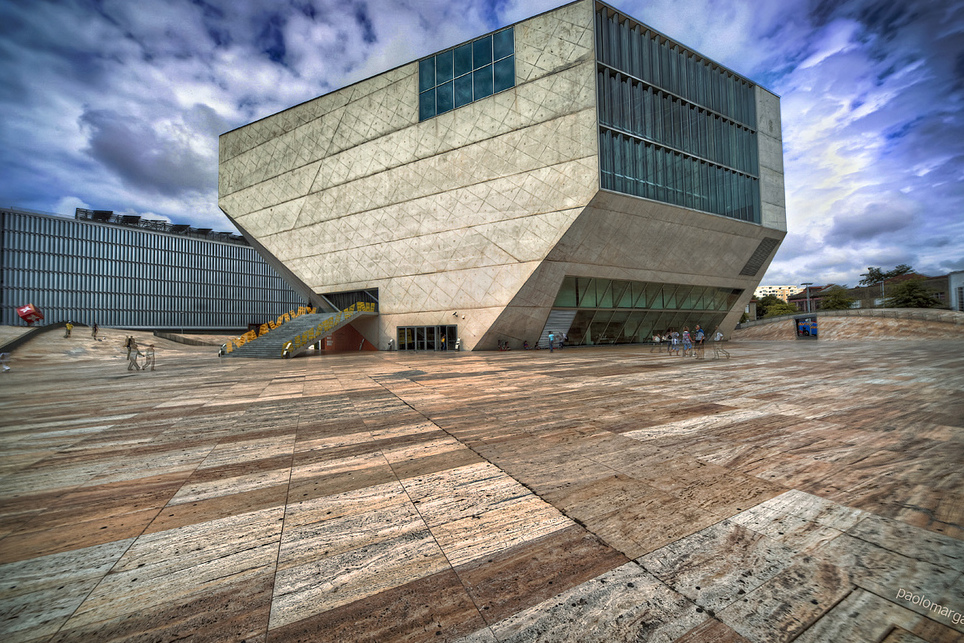
Porot: The Casa da Música — Rem Koolhaas's controlled explosion
The name in the database carries a typo — 'Porot' — which feels accidentally appropriate for a building that seems to have arrived in Porto from a parallel city. Designed by Dutch architect Rem Koolhaas and opened in 2005, the Casa da Música sits at Rotunda de Boavista like a geological event: a white polyhedron that has apparently been dropped from a considerable height and decided to stay. Most visitors to Porto see it from a passing taxi and file it under 'modern building' without stopping. That is a significant error of judgement. The acoustics inside are engineered to a standard that most European concert halls spend decades trying to approximate, and the interior spaces — corrugated gold walls, double-glazed stages with views of the city — reward the curious visitor who buys a ticket to literally anything on the programme.
Insider tip
Guided architectural tours run on weekday mornings and cost a fraction of a concert ticket. The tour accesses areas the general public never sees, including the remarkable VIP room lined with traditional azulejo panels — an ironic nod to Porto's past inside its most aggressively contemporary building.
3Religious Site· 1.8 km
Clérigos church tower — the baroque landmark that earned its height
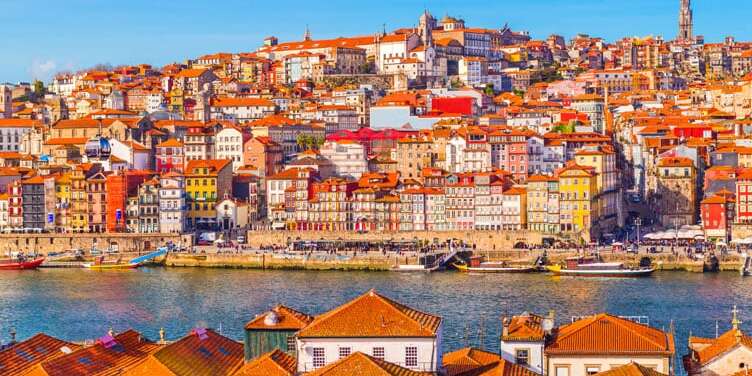
When the Clérigos tower was completed in 1763, it was the tallest structure in Portugal — a record it held for a long time before Lisbon's Vasco da Gama Tower eventually claimed the title. Designed by the Italian-born architect Nicolau Nasoni, who spent most of his working life in Porto and left his fingerprints across the city's baroque heritage, the tower is one of those landmarks that everyone photographs from the street and relatively few people actually climb. That is their loss. The 225 steps are narrow and the stairwell is genuinely dark, but the view from the top reframes the entire city: the terracotta rooftops, the river, the bridges, the Atlantic haze on the western horizon. It is a view that earns itself.
Insider tip
Arrive when the church opens rather than at midday. The morning light falls differently on the Ribeira district from above, and the queue — which can be considerable by 11am — is often nonexistent at opening time.
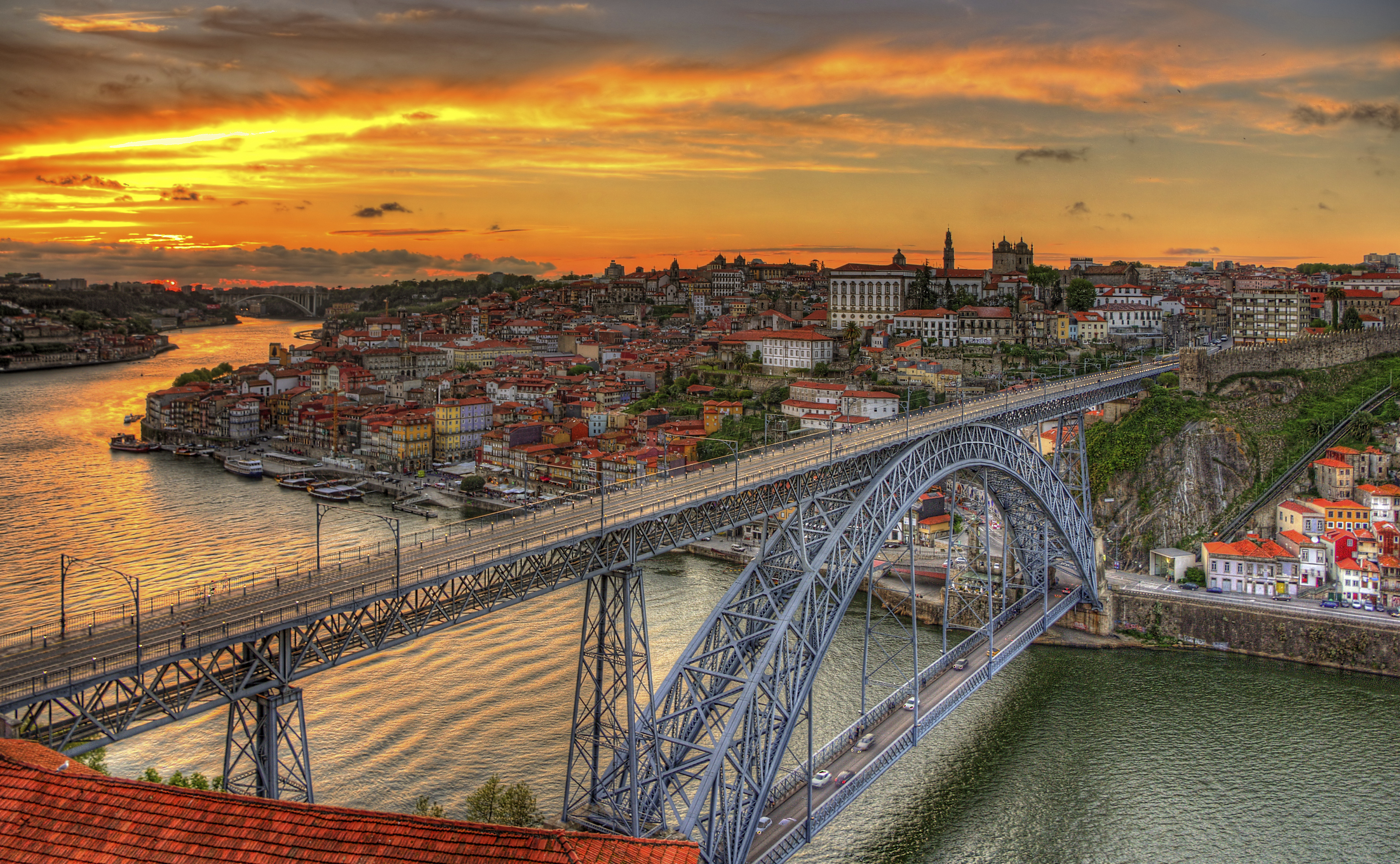
The Dom Luís I Bridge is one of the most photographed structures in Portugal, which means it has achieved the peculiar fate of being simultaneously famous and unexamined. Built between 1881 and 1886 by Théophile Seyrig — a former business partner of Gustave Eiffel, which explains the family resemblance — the iron arch spans 172 metres across the Douro, connecting Porto to Vila Nova de Gaia on two levels. The upper deck carries a metro line; the lower deck carries pedestrians and traffic. Most visitors walk the lower level and photograph the bridge from the Ribeira waterfront. Almost none walk the upper deck, which is open to pedestrians and offers a perspective on both cities that the postcard photographers, for once, have entirely missed.
Insider tip
Walk the upper deck westward toward Gaia in the late afternoon. The light on the Douro at that hour, seen from that height, is something that travel writers have been failing to adequately describe for decades.
5Palace· 2.1 km
Palácio da Bolsa is Porto's old stock exchange — a neoclassical shell with a Moorish secret
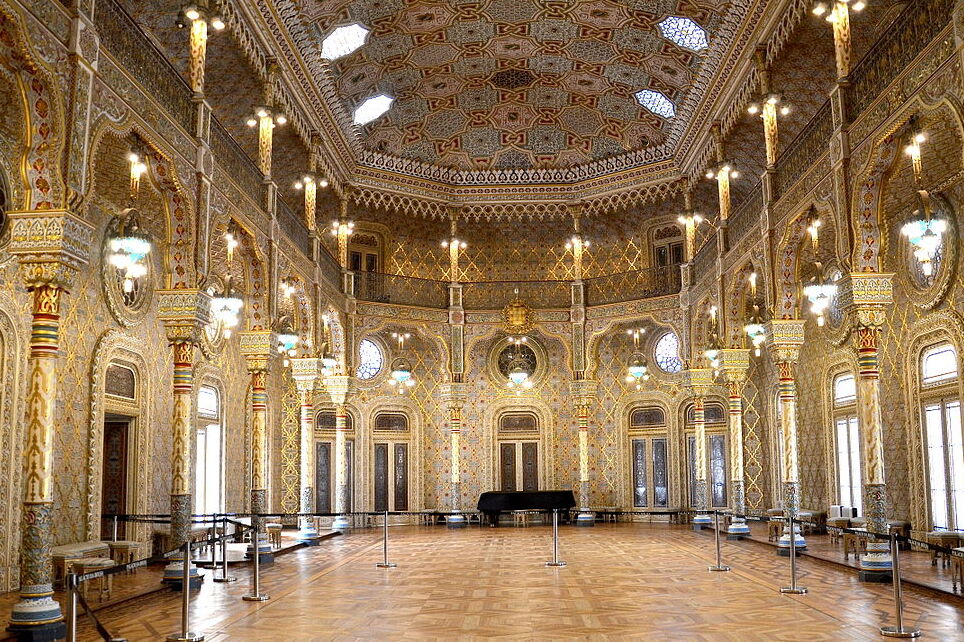
The exterior of the Palácio da Bolsa — Porto's 19th-century stock exchange, built on the ruins of a convent cloister that burned during the Siege of Porto in 1832 — is composed and neoclassical, the architectural equivalent of a well-pressed suit. The exterior was finished by 1850, and it signals competence rather than extravagance. This is a deliberate misdirection. Inside, past the courtyard with its iron-and-glass roof, is the Arab Room: a hall decorated in a neo-Moorish style of such elaborate intensity that it seems to belong to a different building, a different city, possibly a different century. The contrast is the point. Porto's merchant class was making a statement about wealth and cosmopolitan ambition, and they made it in a room that takes most visitors several minutes of silent staring to fully process.
Insider tip
Guided tours of the interior run frequently and are the only way to access the Arab Room. The guides vary considerably in enthusiasm — ask specifically about the room's 18-year construction period and the craftsmen who worked on it.
Part two — A little deeper
6Food· 0.0 km
Francesinha, a doorstep-sized sandwich typical of Porto — the dish that requires a plan
The francesinha is not, by any reasonable definition, a sandwich. It is a structural event. Inspired loosely by the French croque monsieur — hence the name, meaning 'little Frenchie', which is ironic given its dimensions — the Porto original layers cured meats, sausage, and sometimes steak between thick slices of bread, buries the entire construction under melted cheese, and then submerges it in a sauce of tomato, beer, and depending on the establishment, a proprietary combination of spices that local chefs guard with the intensity of state secrets. A fried egg on top is standard. A portion of chips alongside is not optional. The dish is not for the fainthearted, as the source material notes with admirable directness, and it is best approached on an empty stomach and with no particular plans for the afternoon.
Insider tip
Every Porto resident has a strong opinion about which establishment makes the definitive version. Ask your accommodation host rather than consulting a ranking app — the answer will tell you something useful about the neighbourhood you're staying in.
The francesinha appears twice in this list because it deserves the repetition, and because the two source entries approach it from different angles — one in the register of warning, one in the register of affection. The Italian-language description captures something that English-language food writing often flattens: the dish is made of layers. Cheese, ham, bacon, sausage, egg, all immersed in a tomato-and-beer sauce and served with chips that absorb the excess. The sauce is the argument. Every Porto kitchen has its own formula, and the differences between them — sweeter, spicier, more or less alcoholic — are the subject of the kind of passionate local debate that outsiders find disproportionate until they've eaten three different versions and found themselves unexpectedly taking sides.
Insider tip
Lunch service is the correct time to eat a francesinha. Ordering one at dinner, particularly late dinner, is technically possible but represents a commitment to the rest of your evening that you should consider carefully.
8Garden· 1.2 km
The Romantic Gardens of Palácio de Cristal — eight hectares that the city forgot to advertise
The Palácio de Cristal no longer exists — the original 19th-century crystal palace was demolished in 1951 and replaced with a sports pavilion that has none of its predecessor's grace. But the gardens that surrounded it, designed by German landscape architect Émille David in the romantic English style, survived the demolition and occupy eight hectares of quietly extraordinary parkland above the Douro. The design belongs to the tradition of the picturesque: winding paths, specimen trees, unexpected viewpoints, and a general philosophy that a garden should feel discovered rather than imposed. Peacocks wander the grounds with the studied indifference of creatures who know they are the most decorative thing in any given frame.
Insider tip
The garden's western edge has a terrace with one of the better views of the Douro and the Gaia wine lodges. It is consistently less crowded than the Ribeira waterfront viewpoints and considerably more peaceful.
There is a particular quality to the Jardins do Palácio de Cristal that the Italian-language source note captures with unexpected precision: a peacock crosses the path slowly, indifferent to the visitors who stop to photograph it among the century-old magnolias. This is the correct register for this garden. It is not a place that performs for you. The magnolias are genuinely old; the paths genuinely wind; the views over the Douro appear around corners rather than being announced. The garden sits above the river on a hillside that the city's residential streets have grown around without quite absorbing, which gives it the quality of a pause in the urban texture — a place where the city stops talking for a moment and lets you think.
Insider tip
The garden is free to enter and open daily. Weekday mornings in spring, when the magnolias are in bloom and the tour groups are still at the Livraria Lello queue, are the hours when the garden most resembles the place its designer imagined.
Part three — Off the obvious path
10Garden· 1.2 km
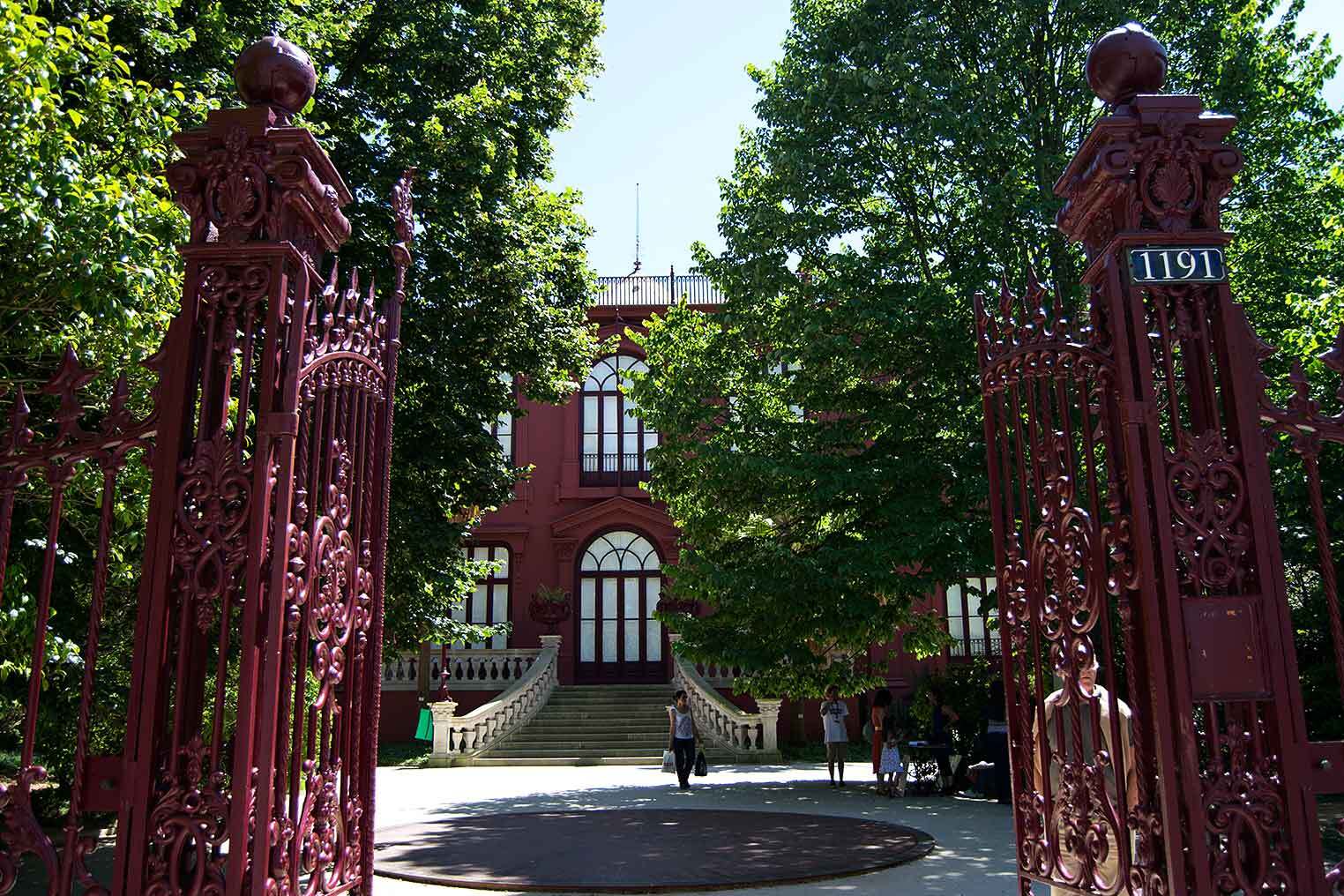
The University of Porto Botanical Garden — the ordered wilderness behind the university wall
The University of Porto's Botanical Garden occupies a hillside behind the Faculty of Sciences, tucked into the city in a way that makes it genuinely easy to walk past the entrance without registering it. This is a significant navigational error. The garden describes itself — accurately — as eclectic, ordered, and designed, which is a useful taxonomy for a space that combines the rigour of a scientific collection with the accumulated personality of a place that has been growing and changing for well over a century. It is rich in plants, stories, and what the source material calls 'memories', which is a slightly mysterious formulation that the garden earns by being the kind of place where you feel the weight of previous visitors without being able to identify any of them.
Insider tip
The garden is associated with the university's natural history collections and occasionally hosts botanical events and temporary exhibitions. Check the university's cultural calendar before visiting — access and opening hours can vary.
11Bookstore· 1.7 km
"Livraria Lello", a wonderful bookstore in "Porto" — the most famous bookshop that people visit without reading
The Livraria Lello has become, in recent years, a victim of its own mythology. The story — that J.K. Rowling, who lived in Porto in the early 1990s, drew inspiration from the bookshop for the Hogwarts library — has generated a queue that on busy days stretches down the street and around the corner. The queue is, in a sense, the appropriate punishment for visiting a bookshop primarily for its associations rather than its books. And yet the bookshop itself, once you're inside, genuinely justifies the superlatives. The neo-Gothic facade, the carved wooden interior, the famous red staircase — these are not exaggerated. The building is as good as advertised. The trick is to remember that it is, first and primarily, a working bookshop with a thoughtful selection of Portuguese literature in translation.
Insider tip
An entry fee applies, which is redeemable against book purchases. Buy something. The selection of Portuguese poetry in bilingual editions is genuinely good, and it costs about the same as a coffee elsewhere on the same street.
12Historic Café· 2.2 km
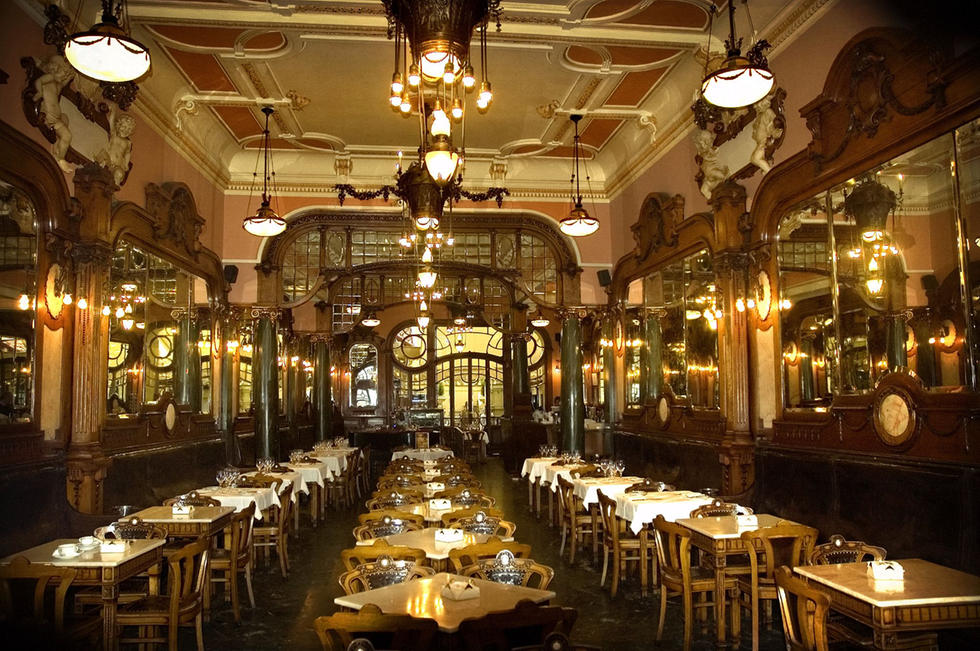
Porto: Majestic Café, a fine example of Art Nouveau — the café that has been watching Porto for a century
The Majestic Café opened in 1921 on the Rua de Santa Catarina and has been, for most of its existence, the kind of place that high society and bohemians share without either group being entirely comfortable about it. The Art Nouveau interior — large curved mirrors, leather seating, sculptural details that seem to be engaged in a slow argument with the walls — has survived with a completeness that is genuinely unusual. Most historic cafés of this period have been incrementally modernised into approximations of themselves. The Majestic has not. J.K. Rowling is reported to have written portions of the first Harry Potter novel here during her Porto years, which has added a layer of literary pilgrimage to the café's existing layers of social history.
Insider tip
The café is expensive by Porto standards, and the tourist premium is real. Order coffee and one of the traditional pastries rather than a full meal, find a seat away from the window, and spend an hour watching the room rather than the street.
Construction on the Palácio da Bolsa began in 1842 and was not completed until 1910 — a 68-year project that involved multiple architects, multiple political contexts, and the slow accumulation of ambition that characterises 19th-century civic architecture at its most earnest. The building is one of the most significant tourist sights in Porto, a designation that has the unfortunate effect of making experienced travellers slightly suspicious of it. The suspicion is misplaced. The Arab Room alone — a neo-Moorish interior of extraordinary decorative density, completed over eighteen years by craftsmen working in stucco, gold leaf, and painted wood — is the kind of space that recalibrates your sense of what decorative arts can do when given sufficient time and budget.
Insider tip
Photography inside the Arab Room is permitted but the lighting is challenging. The room is better experienced by putting the camera away for five minutes and simply looking at the ceiling, which is where the most extraordinary work is concentrated.
Part four — Around and beyond
14Historic Site· 0.0 km
Porto: il gioiello nazionale del Portogallo — the city that wins by being second
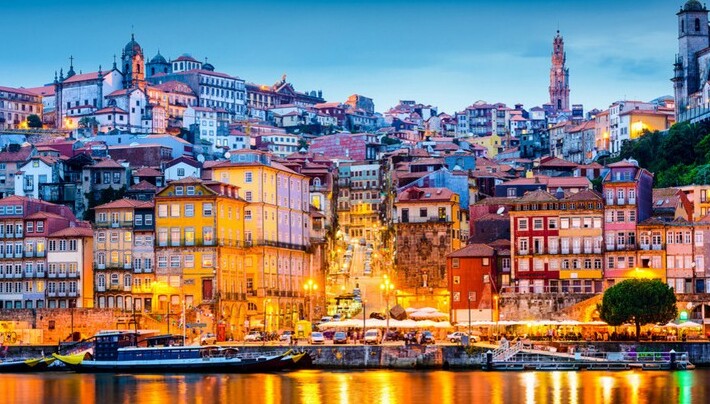
The source note for this entry poses a question — what is Portugal's national jewel? — and then answers it with a gentle provocation: many will say Lisbon, but it is the second city that wins on popularity, and rightly so. This is a useful frame for understanding Porto's particular appeal. Second cities are almost always more interesting than first cities, because they carry their history differently — without the weight of being the capital, without the obligation to represent the nation to itself. Porto's historic centre, a UNESCO World Heritage Site, contains within it the full argument for the city: the medieval street grid, the baroque churches, the azulejo facades, the river at the bottom of everything, the wine lodges on the opposite bank. It is a city that knows what it is.
Insider tip
The historic centre is best understood on foot and over multiple days. Resist the temptation to cover it comprehensively on a single long walk — the neighbourhoods have distinct personalities that reveal themselves slowly, particularly Bonfim and Cedofeita, which reward return visits.
This entry is an unusual one for a list of places, because it is not a place at all — it is a category of tool. By 2026, Porto's relationship with digital navigation has become layered enough to warrant serious attention from the informed traveller. The city's architectural richness, its azulejo heritage, its complex topography of hills and riverbanks, all create navigation challenges that generic mapping apps handle imperfectly. Specialised travel applications — reviewed and updated for Porto specifically — can make the difference between an experience that feels managed and one that feels genuinely exploratory. The irony, of course, is that the best version of Porto is found by occasionally ignoring the app and following a street that looks interesting for reasons you cannot immediately articulate.
Insider tip
Download offline maps before arriving — Porto's hillier districts can have inconsistent mobile coverage, and the moments when you most need navigation tend to coincide with the moments when the signal disappears. The Porto Metro app is separately useful and consistently reliable.
Porto resists the tidy conclusion. Every time you think you have understood it — the azulejos, the port wine, the bridges, the fado cousin called 'pimba' that locals play at volume in neighbourhood tascas — the city produces another room, another garden, another staircase that wasn't in your notes. The fifteen entries in this piece are not a complete account of anything. They are an argument for a particular way of moving through a city: slowly, with the itinerary held loosely, and with genuine willingness to stop when something catches your attention without immediately reaching for your phone to identify it.
The places that surprised you most in Porto will probably not be the ones that appeared on any list, including this one. They will be the courtyard you walked into by accident, the tiled facade you stopped to look at for longer than made sense, the conversation with a resident who gave you directions and then, for reasons neither of you could explain, kept talking for twenty minutes. Porto rewards that kind of attention. Most good cities do.
🏆 Pocket guide
Take this guide with you.
Save it offline, get walking directions, and discover thousands more places like the ones you just read.
What is the best time of year to visit Porto to avoid the largest crowds?
Late September through November offers a useful balance: the summer crowds have thinned, the weather remains mild enough for walking the hillier districts comfortably, and the city returns to something closer to its own rhythm. Spring — April and May — is similarly good, with the botanical gardens and the Palácio de Cristal grounds at their most lush. July and August are the peak months for visitor numbers, particularly around the Ribeira waterfront and the Livraria Lello, where queues can be considerable.
How do you get between the upper and lower decks of the Dom Luís I Bridge?
The lower deck is accessible directly from the Ribeira waterfront on the Porto side and from the Gaia waterfront on the opposite bank. The upper deck connects to the hilltop areas of both cities — on the Porto side, it meets the Batalha area near the cathedral; on the Gaia side, it connects to the upper town near the Serra do Pilar monastery. The Porto Metro uses the upper deck, so you can also cross by tram if you have a valid ticket. Walking the upper deck on foot is permitted and takes roughly ten to fifteen minutes at a comfortable pace.
Is the entry fee for Livraria Lello worth it, and what should I know before visiting?
The entry fee — which fluctuates but has generally been in the range of five euros — is redeemable against any purchase in the shop, which makes it effectively free if you intend to buy a book. The bookshop carries a good selection of Portuguese literature in translation, bilingual poetry editions, and Porto-specific titles that make more interesting souvenirs than most alternatives. The queue is longest between 10am and 4pm on weekdays and throughout the day on weekends. Arriving at opening time or in the final hour before closing significantly reduces waiting time.
Are the Jardins do Palácio de Cristal and the Romantic Gardens of Palácio de Cristal the same place?
Yes, they are the same garden referred to by slightly different names. The gardens cover approximately eight hectares on a hillside above the Douro, designed in the 19th century in the romantic English landscape tradition. The original crystal palace that gave the gardens their name was demolished in 1951. Entry to the gardens is free. The sports pavilion that replaced the palace hosts events and exhibitions, but the gardens themselves are the primary reason to visit — particularly the western terraces with their views over the river.
How much time should I budget for a visit to the Palácio da Bolsa, and is the guided tour necessary?
Budget between one and one and a half hours for a comfortable visit including the guided tour. The guided tour is, in practical terms, necessary — the Arab Room and the most significant interior spaces are only accessible as part of a guided group, and the tour provides context that makes the building's 68-year construction history legible. Tours depart frequently throughout the day and are conducted in multiple languages. The exterior courtyard with its iron-and-glass roof is visible without a tour ticket, but represents only a fraction of what the building contains.
🏆 Read this offline
Save it to your phone.
Bookmark this guide, plan your trip offline, and discover thousands of places like these.
BookmarkPlan offline60 languages
iOS / Android
Huawei users
Secret WorldHidden places, real stories — plan your trip