Trip.Planner
En · Travel Guide
Travel Guide · 2026 Edition

15 Hidden Gems in Sai Ying Pun — beyond the postcard

A neighbourhood that rewards the curious and quietly ignores everyone else

L
Words by
Lena Hofmann
Updated
9 October 2026
Read time
13 minutes
Includes
13 places · interactive map
15 Hidden Gems in Sai Ying Pun — beyond the postcard
There is a particular kind of invisibility that afflicts places everyone has technically heard of. Sai Ying Pun — and by extension, the wider gravitational field of Hong Kong's western districts — sits inside this paradox with some confidence. Travellers arrive clutching itineraries dense with harbour views and night markets, and they leave having seen a version of Hong Kong that is entirely real and almost entirely curated. The corners that matter, the ones that accumulate meaning rather than footfall, tend to operate just below the threshold of the standard recommendation. Not secret, exactly. Not undiscovered. Simply overlooked, which is a different and more interesting condition.

What makes a place feel hidden in a city of 7.5 million people pressed onto a peninsula and a scatter of islands? It is rarely geography. It is more often a failure of attention — the collective decision to keep moving, to follow the map's highlighted route, to photograph what has already been photographed ten thousand times that morning. The places gathered here resist that logic. Some are famous in the way that a sentence in a guidebook is famous: noted, then skipped. Others are genuinely undervisited, sitting at the edge of the tourist's mental map where the detail starts to blur.

I have been coming to this part of Hong Kong long enough to know that the city does not reveal itself to the hurried. It rewards the person who walks one street further than planned, who sits with a cup of something hot and watches the gradient of the hill do its work on the people climbing it. These fifteen places are not a checklist. They are an argument for a different kind of attention.

At a glance

  1. Scopri il Man Mo Temple di Hong Kong: incense and iron in the middle of the city
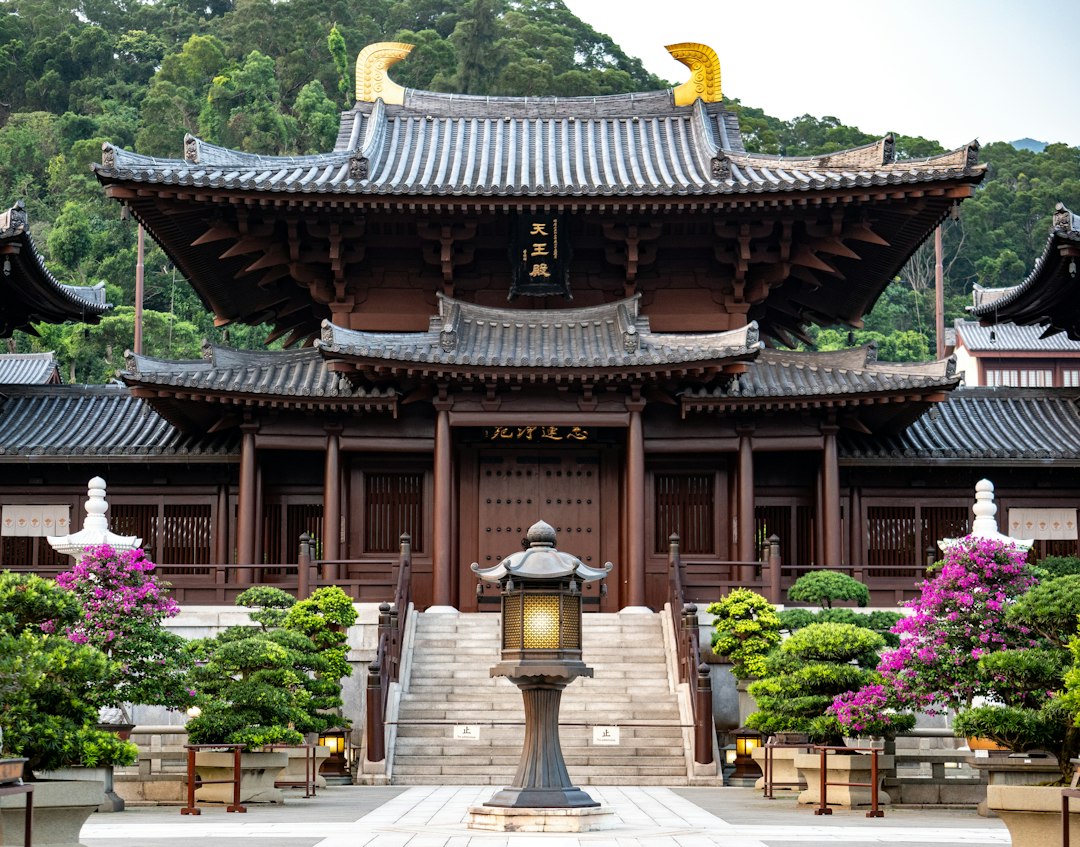
  2. Scoprire Tai Kwun: il cuore storico di Hong Kong — a former prison that became something stranger
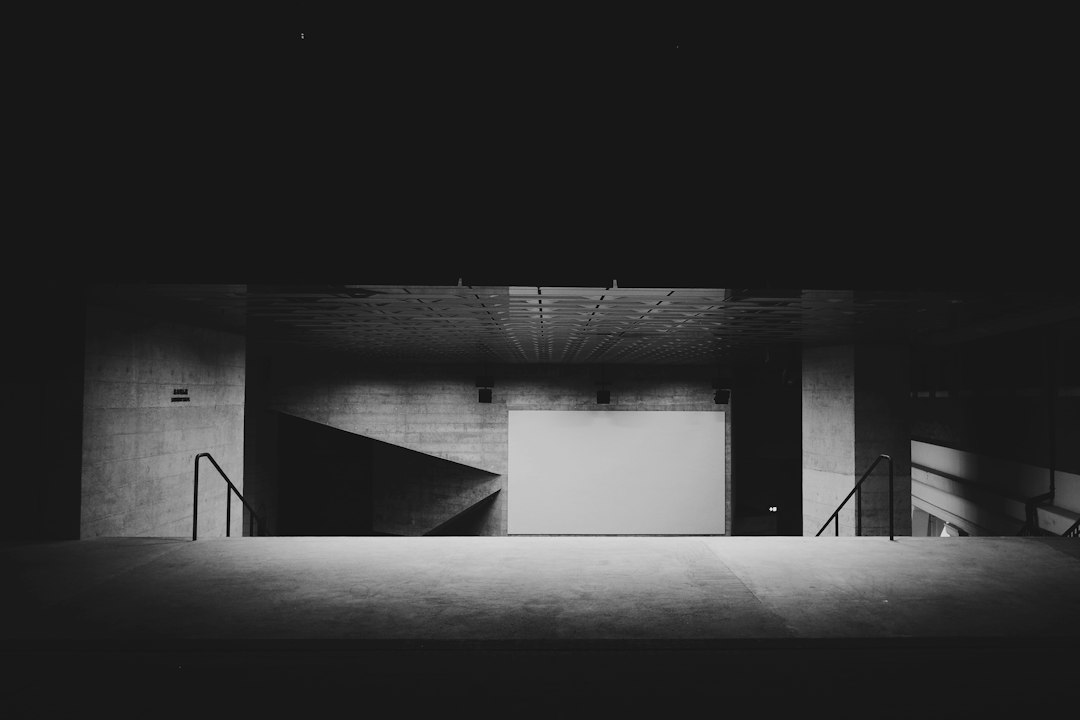
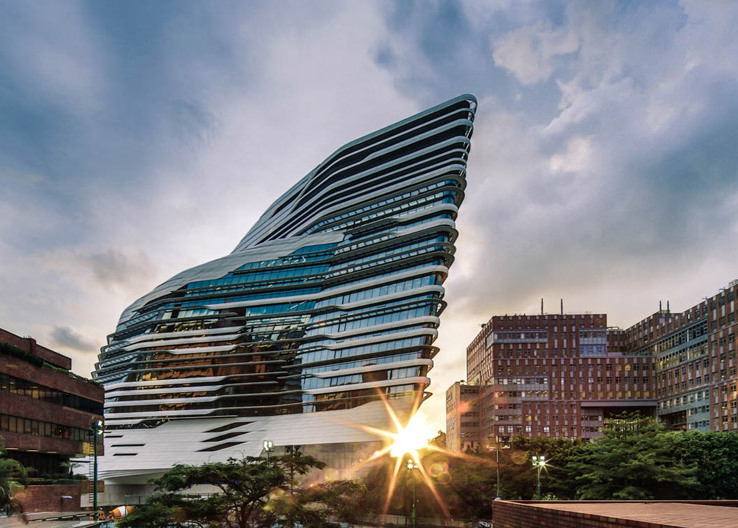
  3. Zaha Hadid: Innovation Tower (Jockey Club Tower) — a building that argued with its surroundings and won
  4. Dim Sum that means "touch your heart": a ritual that deserves more than a brunch caption
  5. Esplorando il Mercato Notturno di Temple Street a Hong Kong: the market that performs itself nightly
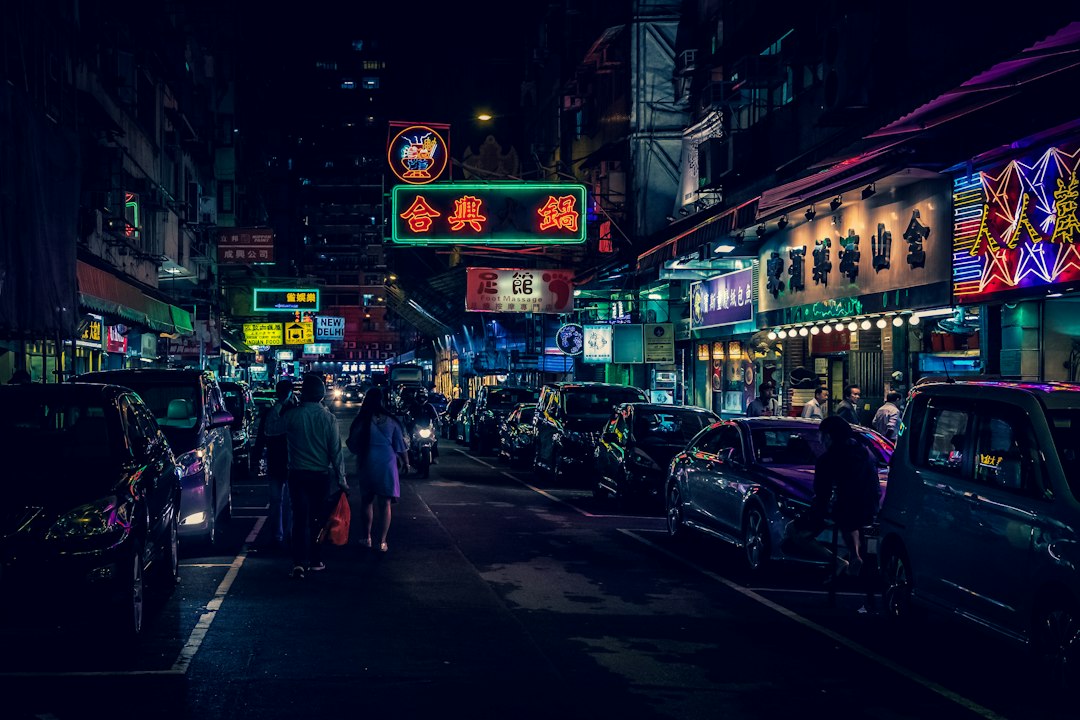
  6. Scopri la Magia di Victoria Peak a Hong Kong: the view everyone sees and almost nobody understands
  7. Scopri la Magia di Hong Kong Park: the garden that the city forgot it built
  8. Golden Bauhinia Square in Hong Kong: a plaza that carries more history than it appears to
  9. The Avenue of Stars in Tsim Sha Tsui East, Kowloon: a promenade about cinema that is actually about the harbour
  10. The night is always young at Lan Kwai Fong: a neighbourhood that is honest about what it is
  11. Esplora il Fascino del Museo Marittimo di Hong Kong: a museum about the sea in a city built by the sea
  12. Scopri la Magia della Baia di Repulse a Hong Kong: the beach that the city keeps to itself
  13. Come pianificare un viaggio a Hong Kong con l'AI nel 2026: the city as a problem of navigation and attention
Part one — The essentials
1 Religious Site · 0.8 km

Scopri il Man Mo Temple di Hong Kong: incense and iron in the middle of the city

Scopri il Man Mo Temple di Hong Kong: incense and iron in the middle of the city
The coils of incense hanging from the ceiling of Man Mo Temple have been burning, in one form or another, since the 1840s. Dedicated to Man, the god of literature, and Mo, the god of war — an unlikely pairing that somehow captures Hong Kong's own contradictions — the temple sits on Hollywood Road with a composure that the street outside entirely lacks. Most people walk past it twice before they actually go in. The interior is dim and fragrant in a way that takes a moment to adjust to, and that adjustment is the point. This is not a museum piece. Worshippers arrive throughout the day, and the rituals being performed are not staged for visitors.

What keeps Man Mo genuinely underexperienced is that it requires slowness. You cannot photograph your way through it in ninety seconds and feel you have been there.
Insider tip Visit on a weekday morning when the crowds thin and the incense smoke has a chance to settle into visible layers. The sedan chairs stored inside the temple, once used in ceremonial processions, are easy to miss if you head straight for the altars.
2 Historic Site · 1.3 km

Scoprire Tai Kwun: il cuore storico di Hong Kong — a former prison that became something stranger

Scoprire Tai Kwun: il cuore storico di Hong Kong — a former prison that became something stranger
Tai Kwun is the kind of place that resists a single description, which is probably why it remains less visited than its quality deserves. The former Central Police Station compound — cells, parade ground, magistracy and all — was transformed into a heritage and arts centre that opened in 2018. The architecture is a careful negotiation between colonial-era stone and contemporary insertions, and the result is a campus that feels simultaneously preserved and alive. The JC Contemporary gallery occupies a new building that Herzog & de Meuron designed with the restraint of people who understood they were working next to something that already had a great deal to say.

The courtyard on a quiet afternoon, with the old cell blocks casting long shadows, has a quality of suspended time that the surrounding Central district does not permit.
Insider tip The heritage trail through the former cell blocks is self-guided and frequently uncrowded — pick up the printed map from the visitor centre rather than relying on the app, which has a tendency to stall on the older sections of the compound.
3 Architecture · 4.3 km

Zaha Hadid: Innovation Tower (Jockey Club Tower) — a building that argued with its surroundings and won

Zaha Hadid: Innovation Tower (Jockey Club Tower) — a building that argued with its surroundings and won
Zaha Hadid's Innovation Tower at Hong Kong Polytechnic University in Hung Hom is one of those buildings that photographs cannot adequately prepare you for, and not because photographs fail to capture its scale. They fail to capture its movement. The structure appears to be mid-gesture — a form caught between states, with no obvious front or back, no comfortable angle from which it resolves into something familiar. Completed in 2014, it houses the university's School of Design, which is either very appropriate or slightly ironic depending on your feelings about legibility in architecture.

Most visitors to Kowloon do not make it to Hung Hom with any architectural intent. That is their loss. The building rewards a slow circuit on foot, and the campus surroundings provide enough contrast to make the tower's formal ambition legible.
Insider tip The pedestrian approach from Chatham Road South gives you the longest uninterrupted view of the tower's exterior. The lobby is accessible during university hours and worth entering for the interior atrium, which has the same restless spatial logic as the exterior.
4 Food & Drink · 5.1 km

Dim Sum that means "touch your heart": a ritual that deserves more than a brunch caption

Dim Sum that means "touch your heart": a ritual that deserves more than a brunch caption
The literal translation — "touch your heart" — is not sentimental so much as accurate. Dim sum in Hong Kong is not a meal in the way that lunch is a meal. It is a social form, a pacing of conversation around the arrival of bamboo steamers, a practice of ordering that requires a certain negotiation at the table. The dumplings and small eats that constitute a proper dim sum spread originated as a light accompaniment to tea — yum cha, drinking tea — and the tea remains the frame around which everything else is arranged.

What gets lost in the tourist version is the tempo. A dim sum session is not rushed. Trolleys arrive, choices are made, paper is stamped. The best experiences happen in rooms where the noise level is high enough that you have to lean in to be heard.
Insider tip Order the congee early — it takes longer to arrive and is frequently the item that separates a kitchen serious about its fundamentals from one coasting on the more photogenic items. A plain congee well made is a reliable indicator of kitchen standards.
Part two — A little deeper
5 Market · 3.6 km

Esplorando il Mercato Notturno di Temple Street a Hong Kong: the market that performs itself nightly

Esplorando il Mercato Notturno di Temple Street a Hong Kong: the market that performs itself nightly
Temple Street Night Market in Yau Ma Tei is famous enough that writing about it risks redundancy, and yet it remains genuinely underexperienced by most people who visit it. The tendency is to walk through quickly, note the compression of stalls, take a photograph of the light, and leave. The market repays a different approach: slower, with less agenda, at a slightly later hour when the fortune tellers and amateur Cantonese opera singers who occupy the southern end of the street have settled into their routines.

The stalls themselves sell things that range from useful to entirely inexplicable, and the food vendors along the edges serve dishes that are unpretentious in the best possible sense. This is not a curated food hall. It is a working market that happens to take place at night.
Insider tip The fortune tellers clustered near the temple itself are often overlooked by visitors who assume they are decorative. They are not. Many have decades of practice and a consultation, conducted through a patient translator if needed, is one of the more unusual ways to spend forty minutes in Kowloon.
6 Panorama · 1.2 km

Scopri la Magia di Victoria Peak a Hong Kong: the view everyone sees and almost nobody understands
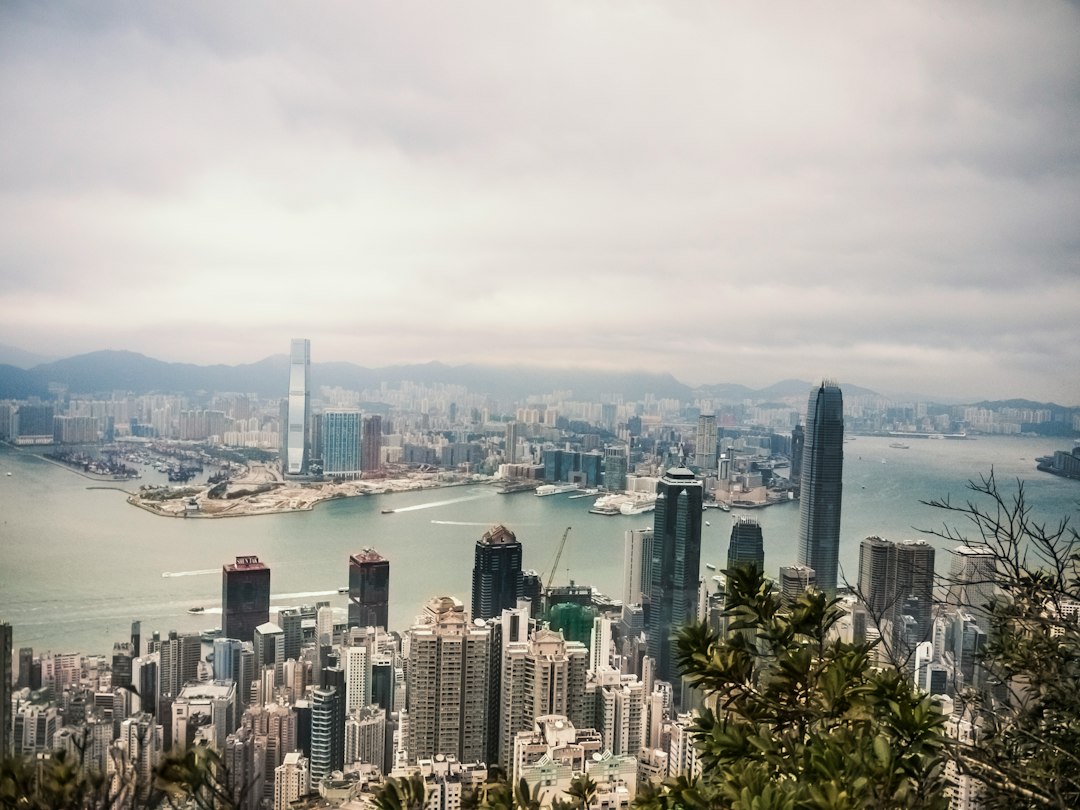
Scopri la Magia di Victoria Peak a Hong Kong: the view everyone sees and almost nobody understands
Victoria Peak is the most visited place in Hong Kong, which should disqualify it from this list entirely — and yet it belongs here because of what the majority of its visitors actually do, which is ride the tram to the top, stand at the designated viewing area, photograph the skyline, and descend. The Peak is, in this sense, experienced by almost everyone and understood by almost no one. The network of walking paths that ring the summit at various elevations, the residential streets where houses cling to gradients that would make a Swiss village nervous, the way the vegetation changes character as you move around the hill — all of this goes largely unseen.

The view from the Lugard Road circular walk, at a pace slow enough to notice the harbour shifting through different angles, is a different experience from the viewing platform entirely.
Insider tip Walk the Lugard Road loop anticlockwise in the late afternoon. The light on the western harbour is more interesting from the less-visited northern section of the path, and the crowds from the tram terminus thin out within about ten minutes of walking.
7 Garden & Park · 2.1 km

Scopri la Magia di Hong Kong Park: the garden that the city forgot it built
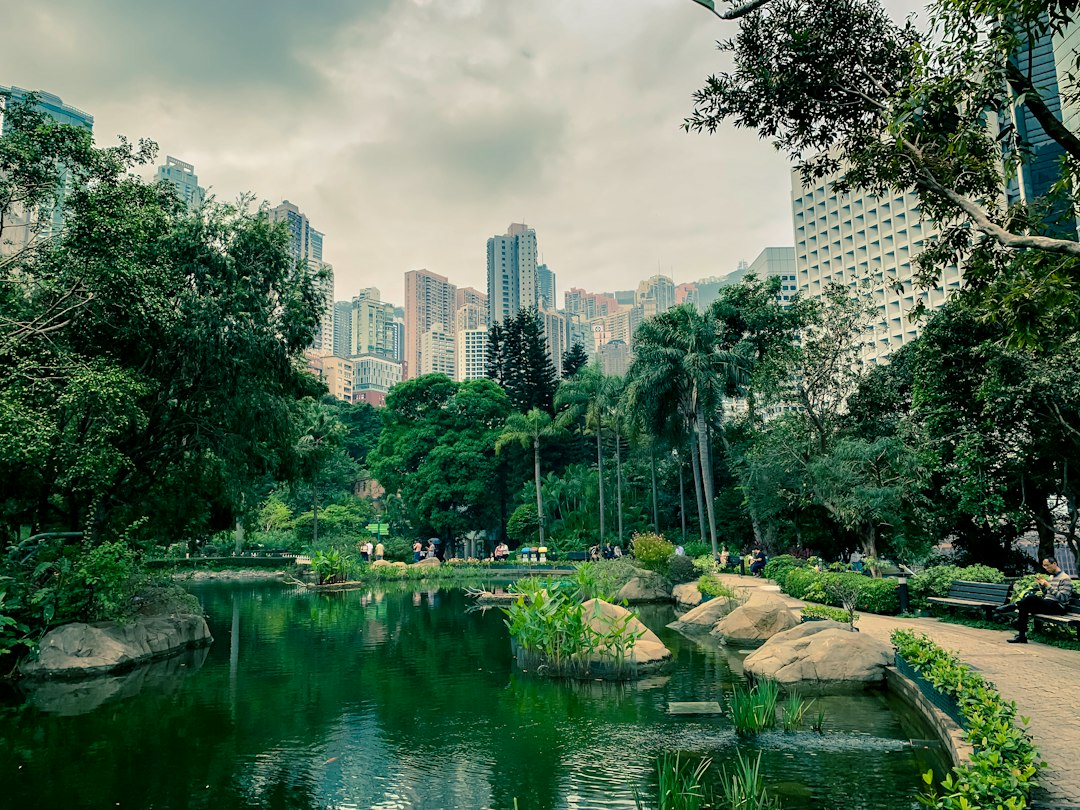
Scopri la Magia di Hong Kong Park: the garden that the city forgot it built
Hong Kong Park occupies a plateau in the middle of Admiralty that feels structurally improbable — a garden of considerable size and genuine tranquillity suspended above one of the most commercially dense districts in the world. The park was built over the former Victoria Barracks site and opened in 1991, and it contains within its borders a conservatory, an aviary, a visual arts centre housed in the colonial-era Flagstaff House, and a collection of ponds and elevated walkways that create a sequence of views entirely disconnected from the city pressing in on all sides.

Most people who pass through are using it as a shortcut between the MTR and Pacific Place. This is a reasonable use of a park, but it misses the point of one that has been designed with some care.
Insider tip The Edward Youde Aviary, a walk-through structure housing dozens of bird species in a naturalistic setting, is one of the better-kept secrets inside the park. Go early when the birds are most active and the school groups have not yet arrived.
8 Square · 3.2 km

Golden Bauhinia Square in Hong Kong: a plaza that carries more history than it appears to

Golden Bauhinia Square in Hong Kong: a plaza that carries more history than it appears to
Golden Bauhinia Square in Wan Chai sits in front of the Hong Kong Convention and Exhibition Centre on a waterfront that is, by design, monumental. The golden bauhinia flower sculpture at its centre marks the handover of Hong Kong to China in 1997 — an event whose weight is not diminished by the fact that the square is now a standard stop on coach tours. What the coaches tend not to linger on is the texture of the space itself: the way the harbour frames the sculpture, the flag-raising ceremony that takes place each morning, the quiet that settles over the plaza in the early evening when the tour groups have gone.

The square is a place where official history and daily life coexist with less friction than you might expect, and that coexistence is worth observing.
Insider tip The daily flag-raising ceremony takes place at 7:50 a.m. and is attended primarily by locals. Arriving before the ceremony gives you the plaza in its quietest state and a view of the harbour that the midday crowds make difficult to appreciate.
Part three — Off the obvious path
9 Film Location · 3.3 km

The Avenue of Stars in Tsim Sha Tsui East, Kowloon: a promenade about cinema that is actually about the harbour
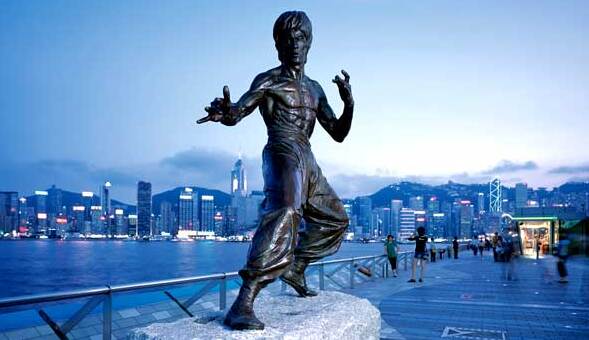
The Avenue of Stars in Tsim Sha Tsui East, Kowloon: a promenade about cinema that is actually about the harbour
The Avenue of Stars was conceived as Hong Kong's answer to Hollywood's Walk of Fame — a waterfront promenade in Tsim Sha Tsui East celebrating the local film industry, its stars, and the craftspeople who built one of the world's most distinctive cinematic traditions. The handprints and plaques are the stated attraction. The actual attraction is the 440-metre waterfront walk itself, which offers one of the most sustained and unobstructed views of Hong Kong Island's skyline available anywhere in Kowloon.

The film industry context gives the promenade a specificity that a generic harbour walk would lack. Bruce Lee's statue, positioned to look across the water, has become an icon in its own right — though the crowds that gather around it at any given hour mean that a quiet encounter requires some patience.
Insider tip The promenade is significantly less crowded in the hour before the Symphony of Lights show begins each evening. Walk it then, from east to west, to get the best of the light on the island's skyline before the laser display reframes everyone's attention.
10 Nightlife · 1.4 km

The night is always young at Lan Kwai Fong: a neighbourhood that is honest about what it is

The night is always young at Lan Kwai Fong: a neighbourhood that is honest about what it is
Lan Kwai Fong is not a hidden place. It is a sloping L-shaped street in Central that has been Hong Kong's primary expatriate and tourist nightlife district for decades, and it wears that identity without apology. What makes it worth including here is precisely its refusal to pretend to be something else. In a city where authenticity is frequently invoked and rarely defined, Lan Kwai Fong is at least authentic to its own function. The bars are crowded, the energy is loud, and the street itself — narrow, slightly steep, perpetually animated — has a physical character that the interiors of its establishments often obscure.

The neighbourhood is most interesting at the edges of its peak hours: early evening, when the after-work crowd is establishing itself, or late, when the dynamic shifts.
Insider tip The streets immediately adjacent to Lan Kwai Fong — particularly D'Aguilar Street and the lanes running off it — contain smaller bars and restaurants that operate in the neighbourhood's orbit without its full noise levels. These tend to be where the more interesting conversations happen.
11 Museum · 2.0 km

Esplora il Fascino del Museo Marittimo di Hong Kong: a museum about the sea in a city built by the sea
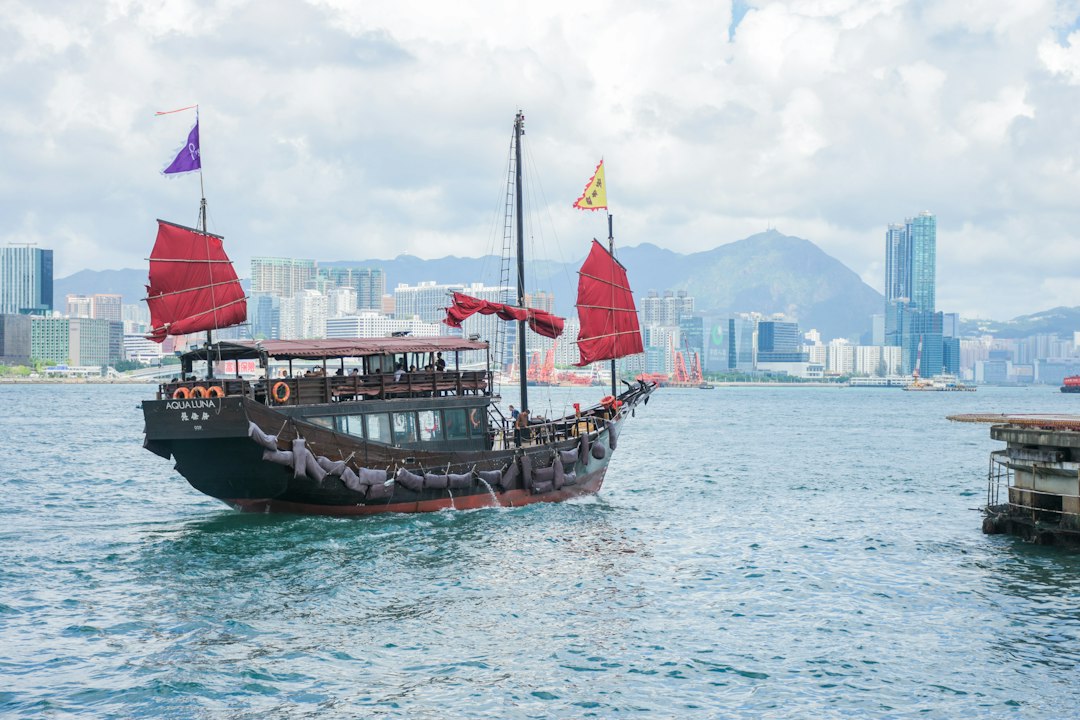
Esplora il Fascino del Museo Marittimo di Hong Kong: a museum about the sea in a city built by the sea
The Hong Kong Maritime Museum, located at Pier 8 in Central, occupies a position that is itself an argument for its existence: a building on the water, in a city whose entire history is inseparable from the sea. The collection traces Hong Kong's development as a trading port, the history of maritime navigation in the South China Sea, and the mechanics of a harbour that remains one of the busiest in the world. The exhibits are more sophisticated than the museum's relatively modest profile would suggest.

What keeps the Maritime Museum undervisited is partly its location — Central Pier is a transit point, not a destination in most people's mental geography — and partly the assumption that maritime history is a niche interest. It is not. In Hong Kong, it is the main story.
Insider tip The museum's upper level has windows that look directly out onto the harbour and the Star Ferry terminal. On a clear day, with container ships moving in the middle distance, the view contextualises everything in the collection below in a way that no wall text quite manages.
13 Beach · 7.9 km

Scopri la Magia della Baia di Repulse a Hong Kong: the beach that the city keeps to itself
Scopri la Magia della Baia di Repulse a Hong Kong: the beach that the city keeps to itself
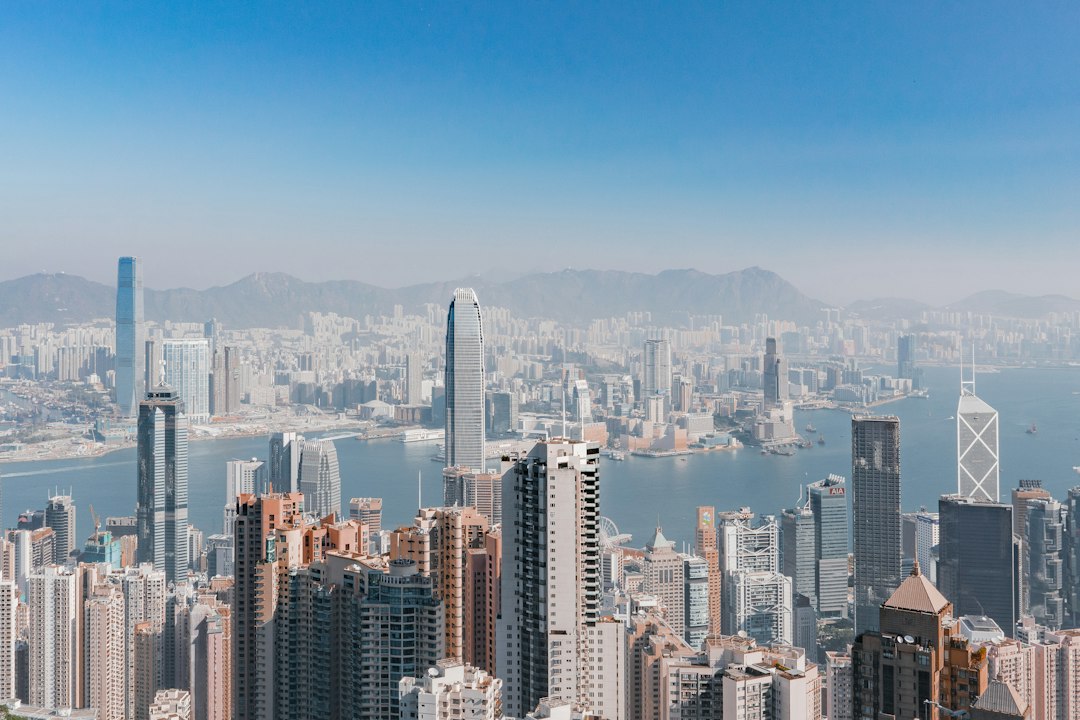
Repulse Bay on the southern side of Hong Kong Island is known to Hong Kong residents in the way that a neighbourhood beach is known — casually, practically, without ceremony. It is not, in the imagination of most international visitors, the kind of place that Hong Kong is supposed to contain. And yet the bay sits there regardless, framed by green hills, with a crescent of sand that fills with families on weekends and empties to something approaching quietness on weekday mornings.

The surrounding residential streets have their own character — a mix of apartment buildings and older structures that gives the area a texture distinct from the commercial intensity of the northern shore. The Repulse Bay Building, with its famous rectangular hole designed to allow the mountain dragon passage to the sea, is worth a slow look.
Insider tip The beach is significantly more pleasant on a weekday morning between October and March, when the crowds are thin and the humidity has dropped to something manageable. The restaurants along the beachfront serve food that is better than the setting's tourist-adjacent reputation suggests.
Part four — Around and beyond
15 Travel Planning · 4.6 km

Come pianificare un viaggio a Hong Kong con l'AI nel 2026: the city as a problem of navigation and attention
Come pianificare un viaggio a Hong Kong con l'AI nel 2026: the city as a problem of navigation and attention
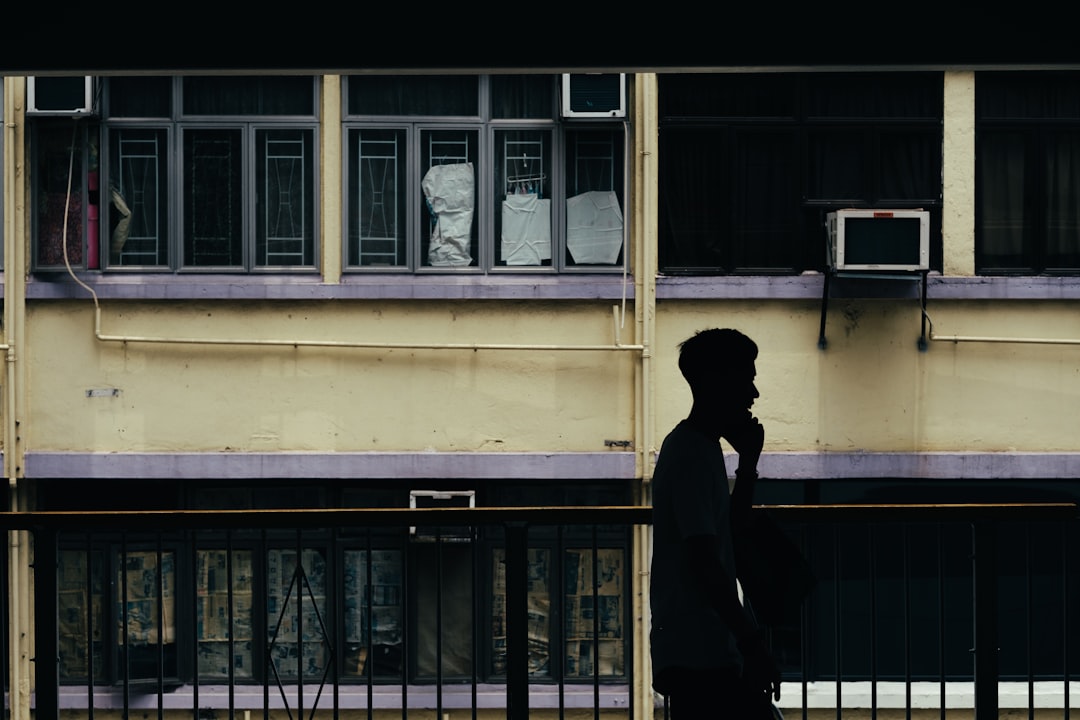
Hong Kong presents a specific planning problem: 7.5 million people, 98 MTR stations, a topography that changes character every few hundred metres, and a tourist infrastructure so well-developed that it is entirely possible to spend a week here seeing only what has been pre-selected for you. The question of how to move through a city this dense and layered — how to find the version of it that matches your actual curiosity rather than the average visitor's appetite — is genuinely difficult, and the tools available to answer it are evolving.

Navigation here is not only logistical. It is editorial. The decisions about which neighbourhood to walk through, which ferry to take, which hill to climb, accumulate into an experience that is either generic or specific depending on the quality of the choices made before arrival.
Insider tip Build dead time into your Hong Kong itinerary deliberately — half a day with no fixed destination, a starting point, and a direction. The MTR is so efficient that it encourages over-scheduling. Some of the best hours in this city are the ones that were not planned for anything in particular.
Sai Ying Pun, and the wider city it opens into, is not a place that yields to a single visit or a single approach. The fifteen places gathered here are not a complete picture — no list of fifteen anything constitutes a complete picture of Hong Kong — but they are an argument for a particular quality of attention. The city rewards people who are willing to be wrong about what they expected to find, who can sit with the discomfort of not knowing exactly where they are for long enough to actually look at it.

The postcard version of Hong Kong is not false. The harbour is as dramatic as advertised, the density is as vertiginous, the energy as particular. But the city that exists alongside and beneath that version — in the incense smoke of a Tuesday morning temple visit, on the upper deck of a ferry crossing at dusk, on a trail section where the city disappears entirely — is the one that tends to stay with you. That version does not announce itself. It simply remains available, to anyone patient enough to go looking.
🏆 Pocket guide

Take this guide with you.

Save it offline, get walking directions, and discover thousands more places like the ones you just read.

Save offline Smart routes Hidden gems
Scan to download iOS / Android
Scan for AppGallery Huawei users

All places, on a map

Map data © OpenStreetMap contributors.

Frequently asked questions

What is the best time of year to visit Sai Ying Pun and the wider Hong Kong area covered in this article?

October to early December is generally considered the most comfortable period. Temperatures drop to a manageable range, humidity falls significantly from its summer peak, and the sky tends to be clearer than at other times of year. This makes walking — which is the primary mode of engaging with most of the places listed here — considerably more pleasant. The summer months (June through September) bring high humidity, frequent rainfall, and the possibility of typhoons, which can disrupt plans at short notice.

How should I get around between the destinations listed here, given that they span different districts?

The MTR is the most efficient option for crossing between districts — it is fast, reliable, and inexpensive by international standards. For destinations on or near the waterfront, the Star Ferry between Central and Tsim Sha Tsui is both practical and worth taking on its own terms. Many of the walking and neighbourhood destinations are best reached on foot once you are in the general area. The Octopus card covers MTR, buses, ferries and many other transit options, and is worth acquiring immediately on arrival.

Are the religious sites like Man Mo Temple appropriate for non-religious visitors?

Yes, though visitors should approach with corresponding respect. Man Mo Temple is an active place of worship, not a heritage display. Dress modestly, move quietly, and avoid photographing worshippers at close range without their awareness. The temple does not charge admission, and the expectation is simply that visitors behave as they would in any functioning sacred space. The incense coils overhead are a significant part of the atmosphere and are not decorative — they burn as offerings and can take weeks to complete.

How much time should I budget for the Hong Kong Trail if I want to do a meaningful section without committing to the full route?

A single section of the Hong Kong Trail typically takes between two and four hours depending on your pace and the section chosen. Section 2, mentioned in this article, is achievable in around three hours at a moderate pace. Bring water, wear footwear with grip, and check the weather forecast before setting out — trails become significantly more demanding in wet conditions. The trail is well-marked and does not require a guide, but a downloaded offline map is useful in sections where mobile signal is intermittent.

Is Repulse Bay genuinely worth the journey from the main tourist areas, or is it primarily a local beach?

It is worth the journey, though the experience is calibrated differently from the northern shore attractions. The bus ride from Central (route 6 or 260) takes around 30 to 40 minutes and crosses the island through residential and green areas that are themselves interesting. The bay is primarily used by residents, which gives it a different atmosphere from tourist-oriented beaches elsewhere. The Repulse Bay Building's distinctive architecture and the Kwun Yam shrine complex at the southern end of the beach add cultural interest beyond the swimming and the view.

🏆 Read this offline

Save it to your phone.

Bookmark this guide, plan your trip offline, and discover thousands of places like these.

Bookmark Plan offline 60 languages
Scan to download iOS / Android
Scan for AppGallery Huawei users
Secret World Hidden places, real stories — plan your trip
Get the app
