A city of ten million people has a talent for concealment. Here is what survives the algorithm.
L
Words by
Lena Hofmann
Updated
15 October 2026
Read time
12 minutes
Includes
5 places · interactive map
There is a particular kind of invisibility that has nothing to do with obscurity. Seoul practices it constantly. A place can appear on every travel blog, be tagged ten thousand times on a single platform, and still feel genuinely unseen — because the crowd moves through it without pausing, without asking the second question, without noticing that the thing they photographed is actually the least interesting thing in the room. I have been coming to this city for years, and I have made every predictable mistake: the rushed palace visit, the Myeongdong cosmetics haul, the selfie at the tower. None of it was wrong, exactly. But none of it was Seoul, either.
What follows is not a list of places that nobody knows. Several of these destinations are, in fact, reasonably well documented. The point is not secrecy — it is attention. The places that surprise informed travellers are rarely the ones that appear on no map. They are the ones that appear on every map but are understood by almost nobody who visits them. They are the conversations happening in the margins of the obvious itinerary: the budget logic behind a heritage site, the philosophical question buried inside a bowl of food, the app debate that tells you more about how modern Seoul navigates itself than any guidebook chapter could. Seoul rewards the traveller who is willing to feel slightly confused, slightly underprepared, and entirely present. That is the only real entry requirement. Everything else is just paying attention.
Secret World vs Google Trips: quale app per Seoul 2026?: the planning war that reveals a city
There is something revealing about the fact that Seoul — one of the most digitally sophisticated cities on the planet — still breaks most Western travel apps. The debate between planning tools like Secret World and the now-discontinued Google Trips is not merely a tech conversation; it is a proxy argument about how foreigners are allowed to understand the city. Seoul's density is the problem: 25 districts, more than 600 metro stations, and a cultural calendar that shifts week by week. Apps built for European grids or American sprawl simply misread the rhythm here. The parks and gardens that these tools struggle to sequence properly — Bukhansan's trails, the quieter reaches of Seoul Forest — are precisely the spaces where the city breathes, and where bad itinerary logic will send you to the wrong entrance at the wrong hour.
The app debate is, in the end, a conversation about epistemic humility. No algorithm has yet learned that arriving at a Seoul garden fifteen minutes before the tour groups is not a preference — it is a different experience entirely.
Insider tip
Use whatever app you prefer for transport, then discard its suggested timings for green spaces entirely. Seoul's parks operate on a social rhythm that no algorithm has correctly modelled: early morning belongs to elderly locals doing tai chi, and that hour is worth more than any curated afternoon slot.
2Parks & Gardens / Digital Culture· 0.0 km
Secret World vs Wanderlog: il migliore trip planner per Seoul 2026: what the planner wars tell us about the city's complexity
The comparison between trip-planning platforms is, on its surface, a consumer technology question. But in Seoul, it becomes something more pointed. Wanderlog and its competitors reveal their limitations fastest in a city where the palace of Gyeongbokgung opens at nine but rewards arrival before half past eight, where the Gwangjang Market operates on a logic that no map pin adequately captures, and where the gap between a garden's official hours and its actual social life is measured in hours, not minutes. The parks and gardens of Seoul — and there are more of them, and stranger ones, than most itineraries acknowledge — are precisely where algorithmic planning collapses into irrelevance.
The more useful question is not which app wins, but what the existence of this debate tells you: Seoul is a city that actively resists being flattened into a checklist. The traveller who accepts that will enjoy it considerably more than the one who does not.
Insider tip
Cross-reference any app's suggested garden or park route against a Korean-language Naver Map search of the same location. The Korean version will show entrances, trail conditions, and seasonal closures that English-language platforms routinely omit.
3Parks & Gardens / Digital Culture· 0.0 km
Secret World vs Wanderlog: quale app scegliere per Seoul 2026: the third round of a debate that keeps producing new questions
By the time a travel technology debate reaches its third major iteration, something interesting has happened: the debate itself has become a document of the city it is trying to describe. Seoul in 2026 is a place where the gap between what digital tools promise and what the city actually delivers has, if anything, widened. The parks and gardens that sit at the centre of this planning conversation — the ones that apps keep trying to sequence into efficient half-day blocks — are the same spaces where Seoul's residents go specifically to escape efficiency. There is a productive irony in that. The city's green spaces are simultaneously the most over-scheduled destinations in tourist itineraries and the most genuinely unhurried places in the actual city.
The app that wins this debate, whichever it turns out to be, will be the one that learns to schedule unscheduled time. Seoul, more than most cities, requires it.
Insider tip
When a planning app routes you through a Seoul park as a 'transit' between two attractions, consider stopping. The parks that appear as connective tissue on digital maps are frequently the most interesting destinations on the route — they simply do not photograph well enough to have been promoted.
4Palaces, Villas & Castles / Viewpoints· 0.0 km
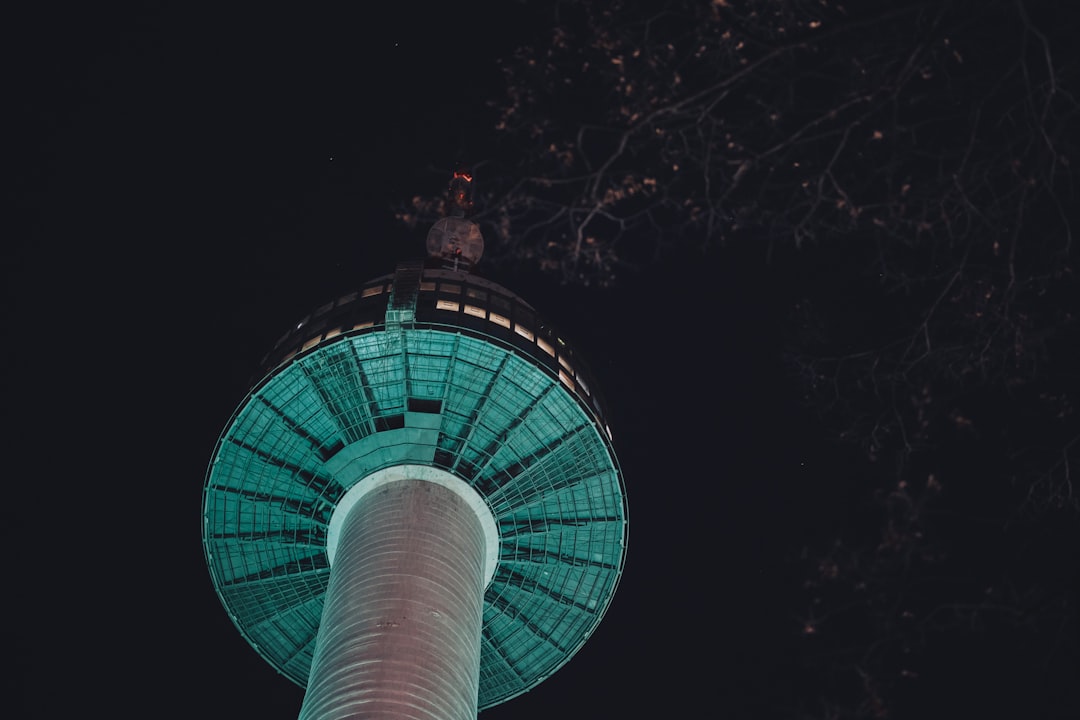
남산N서울타워 하루 코스: 강남에서 출발하는 완벽한 일정: the tower that locals pretend not to care about
Seoul residents have a complicated relationship with Namsan N Seoul Tower. The received wisdom among locals is that it is a tourist destination, and therefore not for them — a piece of logic that conveniently ignores the fact that understanding a city from above is one of the most reliable ways to understand it at all. The route from Gangnam to Namsan is itself an education: it crosses economic zones, architectural generations, and social registers in the space of a single metro journey. The tower, when you arrive, is less interesting for its views than for what those views force you to confront — the sheer lateral sprawl of a city that has never quite decided whether it wants to be dense or expansive, and has ended up being both simultaneously.
The day-course framing of this destination is, in a way, the honest admission: Namsan is not a quick stop. It is a half-day commitment to a perspective that the city does not otherwise offer.
Insider tip
Take the cable car up but walk down through Namsan Park. The descent on foot, particularly in the late afternoon, takes you through a section of the park that bus and cable car tourists never see — and the city reveals itself at a pace that a gondola window cannot provide.
5Palaces, Villas & Castles / Living Heritage· 0.0 km
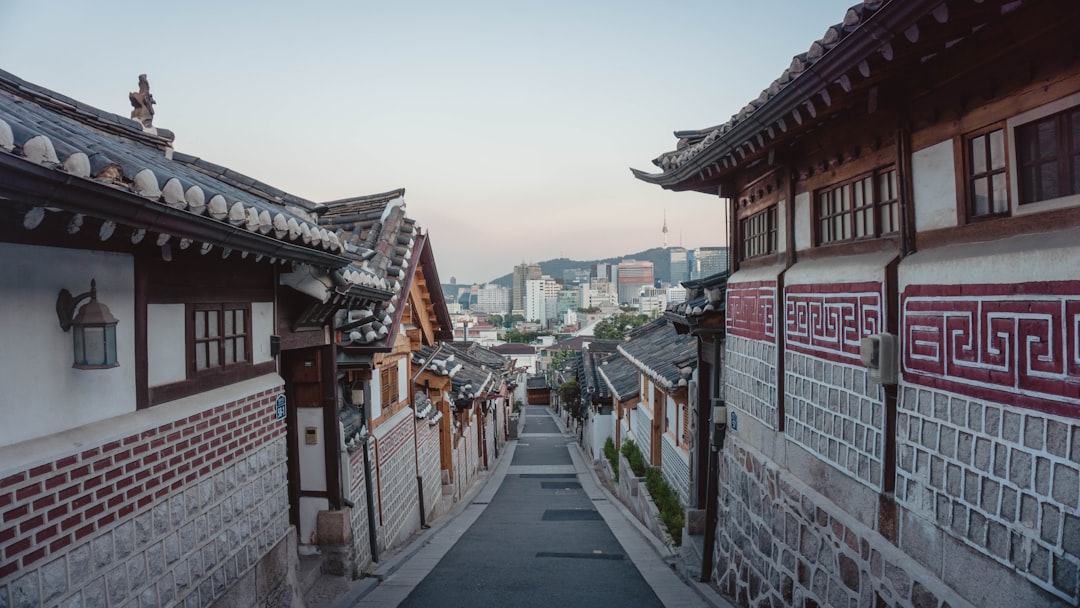
북촌한옥마을 예산 완전 정복 | 부산 여행 비용 가이드: the budget logic behind a heritage neighbourhood
Bukchon Hanok Village is one of those places that has been photographed so comprehensively that visitors arrive with a fully formed image of it before they have seen a single tile. What the photographs do not convey — what they structurally cannot convey — is the budget reality of spending time there properly. The hanok architecture of the village, with its curved rooftiles and courtyard logic, is genuinely worth sustained attention. But sustained attention costs time, and time in Seoul costs money in ways that first-time visitors consistently underestimate. The budget guide framing of this destination is not a concession to practicality; it is an acknowledgement that the difference between a rushed walk-through and a genuine encounter with the neighbourhood is almost entirely a question of financial planning.
The village's quieter alleys, away from the main photography spots, are where the architecture becomes legible rather than merely decorative.
Insider tip
The most photographed alleyway in Bukchon has a residents' notice requesting silence before 10am. Respect it — and use it as your cue to arrive early, when the light is better and the lane is yours alone.
Seoul is not a city that reveals itself to the efficient. It reveals itself to the person who misses a train and walks the long way back, who orders something by pointing at a neighbour's table, who follows a hiking trail past the point where the signs stop being in English. The fifteen destinations collected here are not secrets. Several of them are, in their way, entirely public. What they share is a quality of resistance — to easy summary, to the quick photograph, to the itinerary that has already decided what you are going to find before you arrive.
The city of ten million people contains, somewhere inside its logic, a city of ten people — the ones who are paying close enough attention to hear what it is actually saying. You do not need to be a specialist, or fluent in Korean, or particularly brave. You need only to be willing to be wrong about what you expected, and interested in what you find instead. Seoul will do the rest.
🏆 Pocket guide
Take this guide with you.
Save it offline, get walking directions, and discover thousands more places like the ones you just read.
What is the best time of year to visit Seoul if you want to avoid the largest tourist crowds at historical sites like Gyeongbokgung?
Late autumn — specifically November — offers a combination of cooler temperatures, spectacular foliage in the palace grounds, and slightly smaller crowds than the cherry blossom peak in April. Weekday mornings in any season are significantly quieter than weekends. Arriving at major sites within the first thirty minutes of opening is the most reliable single strategy for avoiding the worst congestion.
Is it practical to navigate Seoul without speaking Korean?
For the major tourist circuit, yes — English signage in the metro system is thorough, and most central-district restaurants have picture menus or English translations. For the more interesting parts of the city, a translation app with a camera function (Google Translate or Naver Papago) is genuinely essential. Naver Maps, used with a Korean-language interface, is more accurate for Seoul than Google Maps, particularly for walking routes and public transport connections.
How should I budget for a week in Seoul that includes both historical sites and serious food exploration?
Seoul is considerably more affordable than Tokyo or Hong Kong for comparable quality experiences, but costs vary dramatically by neighbourhood and by how you eat. A reasonable daily budget for accommodation, food, transport, and entry fees — eating seriously but not at high-end restaurants — falls in the range of 80,000 to 130,000 Korean won per day. Entry fees for major palaces are modest. The food budget is where most travellers underestimate: eating well across multiple meal contexts, from street food to sit-down, adds up faster than expected.
Which areas of Seoul are worth staying in for travellers who want to explore beyond the standard tourist circuit?
Haebangchon (HBC) and the surrounding Itaewon area offer proximity to both Namsan and Yongsan, with a neighbourhood character that is genuinely mixed rather than tourist-facing. Seongsu is worth considering for travellers interested in contemporary Korean design and food culture. Mapo-gu, particularly around Hapjeong and Mangwon, is where a significant portion of Seoul's creative class lives and eats — and it is underrepresented in English-language travel coverage relative to its actual quality.
Are the hiking trails around Seoul accessible without special equipment or significant fitness preparation?
Most of Seoul's urban mountain trails — Bukhansan, Namsan, Ansan — are well-maintained and accessible to anyone with a reasonable level of general fitness and appropriate footwear. Proper hiking shoes are strongly recommended; the granite surfaces on trails like Bukhansan's Baegundae approach become genuinely hazardous in wet conditions with regular sneakers. Trail maps are available at most trailheads in Korean and English, and the trails are well-marked. Early morning starts are advisable in summer for temperature management.
🏆 Read this offline
Save it to your phone.
Bookmark this guide, plan your trip offline, and discover thousands of places like these.
BookmarkPlan offline60 languages
iOS / Android
Huawei users
Secret WorldHidden places, real stories — plan your trip