15 Hidden Gems in Stanley, Hong Kong — beyond the postcard
Because the places that matter most are rarely the ones on the map everyone carries
L
Words by
Lena Hofmann
Updated
4 November 2026
Read time
12 minutes
Includes
14 places · interactive map
There is a particular kind of invisibility that settles over well-known places. Stanley, Hong Kong's southern peninsula village, suffers from it acutely. You arrive expecting a market and a waterfront, and the market and the waterfront are exactly what you get — loudly, efficiently, photographically. What you don't get, unless you've been paying a different kind of attention, are the quieter registers: the trekking ridge that makes the city feel like a rumour, the bay whose colonial name conceals a pirate story, the maritime museum that most visitors walk past on their way to somewhere noisier. The paradox of Stanley and its surrounding south-side territory is that it is simultaneously over-visited and under-examined. Tourists arrive in coachloads and leave with bargain linens and a selfie at the waterfront. Informed travellers — the ones who've already done Tokyo and Lisbon and know what genuine texture feels like — often do the same, because the surface is seductive enough to make you forget there's anything beneath it. I've been coming to Hong Kong's south side for years, and what I keep finding is that the places which genuinely surprise me are rarely secret in any strict sense. They appear on maps. They have opening hours. Some of them win awards. The trick is not that they're hidden — it's that the dominant tourist narrative simply hasn't found a way to make them loud enough to compete. This piece is an attempt to correct that, methodically and without enthusiasm for the word 'hidden'.
Stanley Market in Hong Kong: the familiar place that keeps surprising
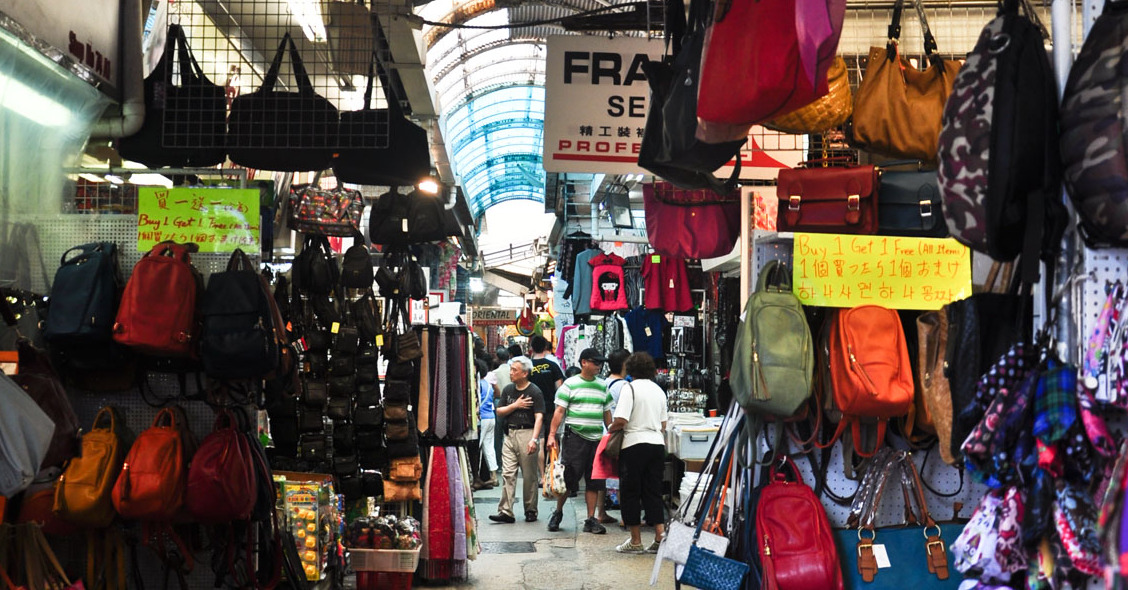
The irony of starting with Stanley Market is not lost on me. It is, by any measure, the most visited destination on this list — a warren of narrow lanes selling silk, linen, ceramics, and the kind of cheerful tourist detritus that appears in markets from Marrakech to Melbourne. And yet, most visitors experience only its outermost layer: the main drag, the silk scarves, the haggling. What they miss is the market's interior geography — the lanes that curl back on themselves, the vendors who have been selling the same hand-painted porcelain for decades, the quiet folklore of a place that has been a trading post in various incarnations since the colonial era. Stanley Market rewards the visitor who arrives early, when the light is soft and the lanes are navigable, and who treats it less as a shopping expedition and more as an anthropological one.
Insider tip
Arrive before 10am on a weekday to find vendors still setting up — this is when you'll see the market's working logic rather than its performance. The lanes behind the main row have lower prices and less foot traffic.
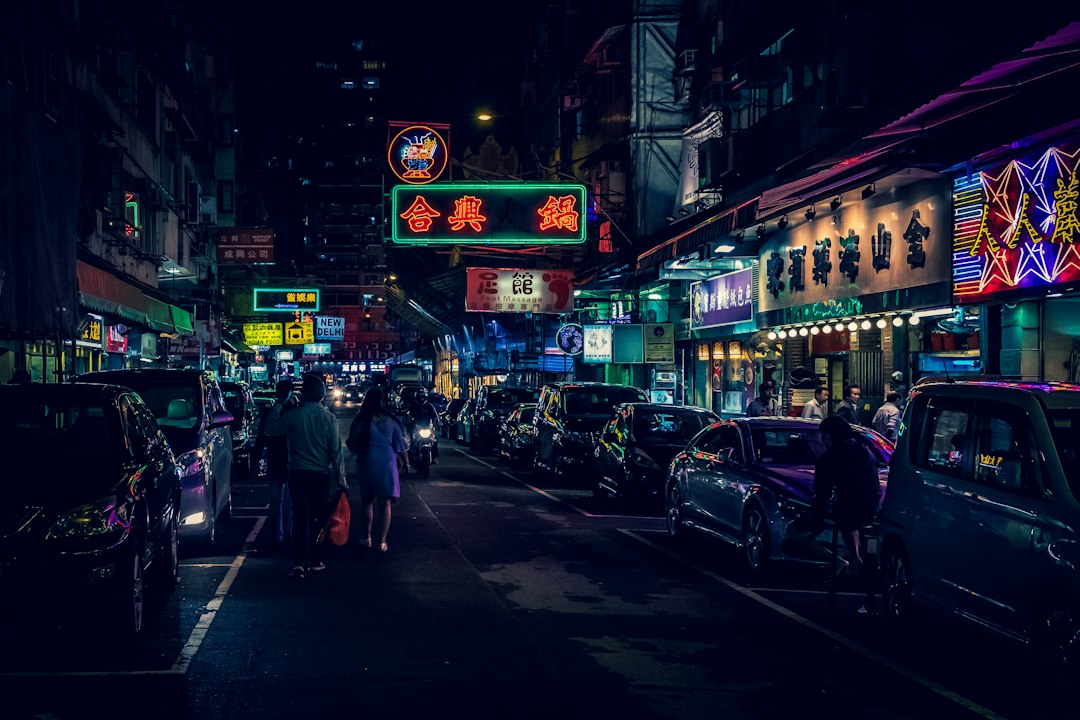
Temple Street Night Market sits at a considerable distance from Stanley's peninsula, but it belongs in any honest account of Hong Kong's market culture — and it functions as a useful counterpoint to Stanley's daytime leisure. Where Stanley is relaxed and sun-bleached, Temple Street is dense, neon-lit, and insistently alive after dark. The market has occupied its stretch of Kowloon since the mid-twentieth century, and it carries that history in its bones: fortune tellers, dai pai dong stalls, opera singers who perform between the parked cars with an unselfconscious dignity that the surrounding noise does nothing to diminish. Most visitors who make it here spend their time in the southern section, near the tourist-facing stalls. The northern end, where the market thins out and the vendors get more specific, is where Temple Street reveals its actual character.
Insider tip
The fortune tellers clustered near the Tin Hau Temple end are not a tourist installation — many are consulted regularly by locals. Even if you don't engage, watching the consultations is a lesson in how the city actually works.
3Beach· 2.4 km
Repulse Bay and one of the most beautiful beaches: the history behind the postcard
The name is the first thing worth unpacking. Repulse Bay takes its designation not from any quality of the water — which is warm, clear, and crescent-shaped in a way that seems almost engineered — but from a nineteenth-century naval engagement in which British forces repelled a pirate fleet. That history sits uneasily beneath the beach's current identity as Hong Kong's most glamorous stretch of sand, lined with luxury apartment blocks and the kind of colonial-era architecture that survived the twentieth century largely by accident. Most visitors arrive, photograph the view, and leave. The ones who stay longer discover that the bay's eastern end, away from the main beach facilities, offers a different quality of quiet — and that the apartment building at the bay's edge, with its famous rectangular hole, is a piece of feng shui thinking made literal in concrete.
Insider tip
The Repulse Bay Building's large square opening in its centre was designed to allow dragons to pass through from the mountains to the sea — a feng shui concession that the developers apparently took seriously. It is not a design quirk; it is an architectural argument.
There is a version of Repulse Bay that the weekend crowds never quite find — not because it requires special access, but because it requires a different pace. The hills that frame the bay to the south and east contain walking paths that most visitors don't register from the beach level, and these paths offer a perspective on the bay that reverses the usual tourist relationship with the place: instead of looking out from the sand, you're looking down at the sand, watching the city's relationship with its own coastline from a remove that makes it suddenly legible. The green hills are not decoration. They are the reason the bay exists in the form it does — protected, contained, and somehow quieter than its reputation suggests. The time the water slows down here is real, and it is available to anyone willing to arrive outside peak hours.
Insider tip
The residential streets immediately above the bay, accessible via the steps at the bay's western end, give you views that the beach itself doesn't offer — and the neighbourhood's quiet is a genuine contrast to the waterfront below.
Lamma Island is the most effective argument I know against the idea that Hong Kong is only a city. The third-largest of the outlying islands, Lamma has no private cars — a fact that changes the entire register of the place the moment you step off the ferry. The island divides into two villages, Yung Shue Wan and Sok Kwu Wan, connected by a trail that passes through the kind of rural landscape that Hong Kong's urban density makes easy to forget exists. The seafood restaurants along Sok Kwu Wan's waterfront are genuinely good and genuinely local, not tourist-facing in the way that similar establishments in Stanley can be. The island's power station, visible from the ferry, is an odd landmark — industrial and enormous against the green hills — but it doesn't diminish the island's character so much as complicate it in interesting ways.
Insider tip
The hiking trail between the two villages takes roughly an hour at a relaxed pace and passes through terrain that feels genuinely remote. Go on a weekday and you may have long stretches of it entirely to yourself.
The Dragon's Back trail is, by the standards of Hong Kong hiking, relatively accessible — it begins near Shek O Road and follows a ridge southeast toward the coast, covering terrain that feels genuinely wild despite being within the city's administrative boundaries. The name is earned: from the ridge, the land drops away on both sides with the kind of drama that makes you recalibrate your understanding of where you are. The trail has been named one of the best urban hikes in Asia by several publications, which is both accurate and slightly misleading — it doesn't feel urban in any meaningful sense once you're on it. What it offers is the experience of Hong Kong's topography from the inside rather than from below, and that experience changes how the city looks when you return to street level.
Insider tip
The trail ends near Big Wave Bay, a surf beach that most visitors to Hong Kong never discover. Combining the hike with an hour at the beach makes for a full day that feels nothing like the standard Hong Kong itinerary.
8Theme Park· 4.4 km
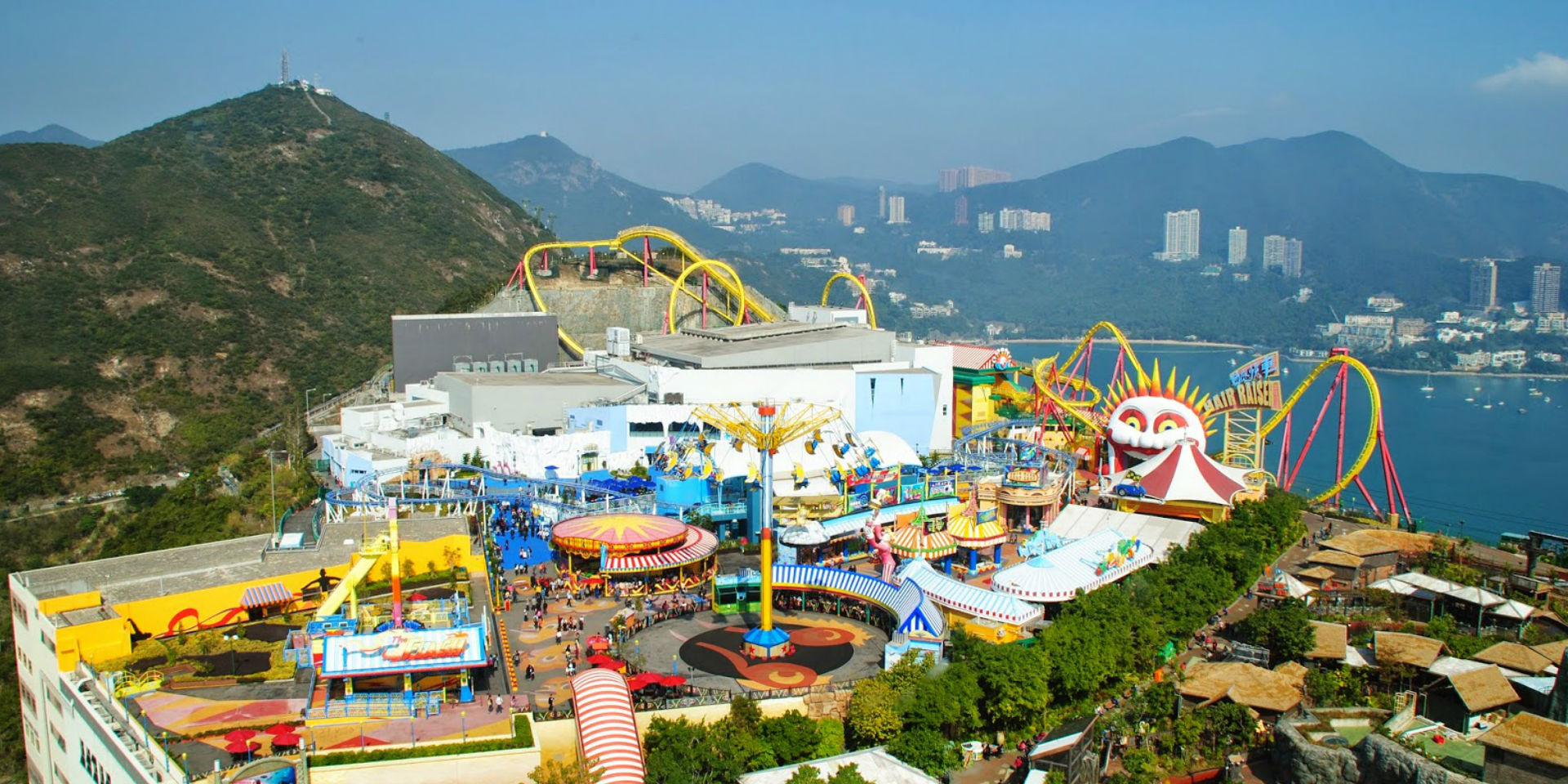
Ocean Park is a major attraction in Hong Kong: the theme park that earns its complexity
Ocean Park is easy to dismiss if you've already decided what it is. It has won awards — it has been ranked among the world's most popular amusement parks — and its combination of marine exhibits, roller coasters, and cable car rides over the South China Sea sounds like the kind of thing that exists for families with young children and no other plans. This reading is not wrong, exactly, but it is incomplete. The park's marine exhibits are genuinely serious — its work in giant panda conservation and marine research is not decorative — and the cable car crossing between the lowland and headland sections offers a view of the south side coastline that is available nowhere else without a boat. The park also sits on terrain of considerable natural drama, which the designers have used with more intelligence than you'd expect.
Insider tip
The cable car between the two sections of the park is worth the visit on its own terms — the view of the Aberdeen Channel and the surrounding hills from the gondola is one of the better perspectives on Hong Kong's coastal geography.
9Food Culture· 8.0 km
Dim Sum that means "touch your heart": the meal that is also a social contract
The literal translation — 'touch your heart' — is either poetic or sentimental depending on your disposition, but it points at something real about dim sum's social function in Hong Kong. This is not restaurant food in the conventional sense; it is a practice, a rhythm, a particular way of spending a Sunday morning that has been refined over generations. The bamboo baskets of dumplings, the har gow, the turnip cake, the custard tarts that arrive at the end — these are not simply dishes. They are the vocabulary of a specific kind of communal time. In Hong Kong, yum cha — the practice of drinking tea and eating dim sum — is so embedded in daily life that it barely registers as a cultural experience for locals. For the visitor who finds the right restaurant and the right table and the right unhurried morning, it can feel like being briefly admitted to the city's interior life.
Insider tip
Avoid dim sum restaurants that hand you a printed English menu with photographs — these are calibrated for tourists. Look instead for the places where orders are still taken on paper slips or called out to passing carts, and where the clientele is overwhelmingly local.
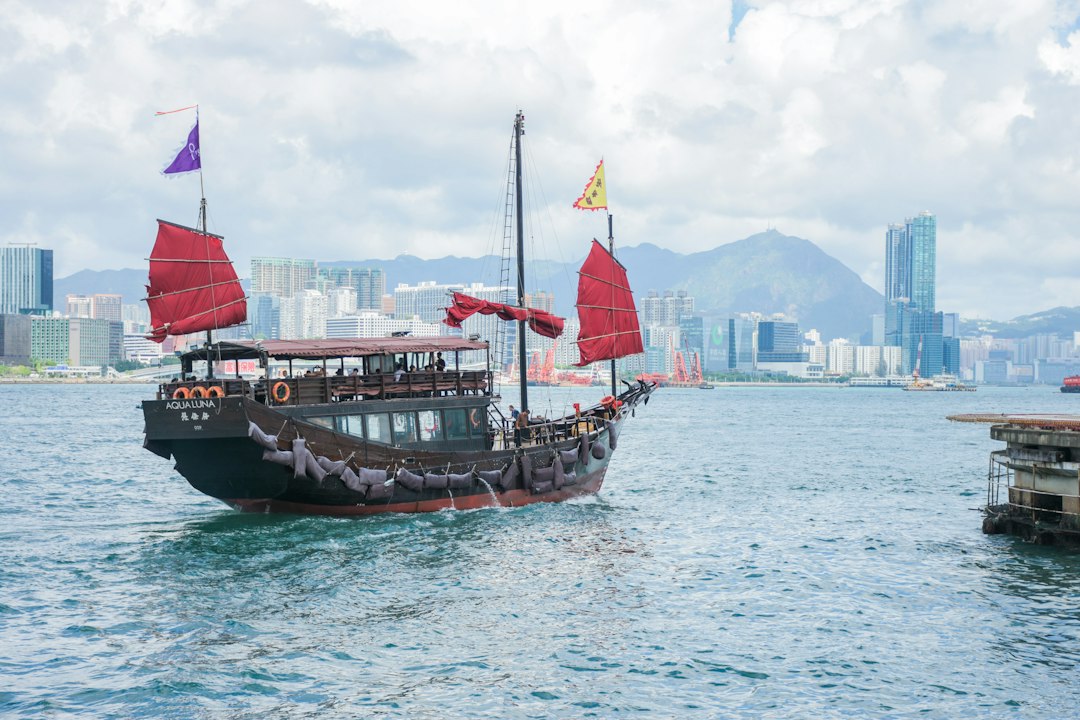
Hong Kong's Maritime Museum occupies a pier in Central that most visitors walk past en route to the Star Ferry, which is itself a kind of irony — the ferry being the most obvious expression of the maritime culture the museum exists to document. The collection covers Hong Kong's history as a trading port with genuine depth, tracing the movement of goods and people through the South China Sea across several centuries. The museum's exhibits on the junk trade and on the development of the harbour are particularly well-researched, and the building's position on the water gives the whole enterprise an immediacy that landlocked maritime museums can't replicate. It is not a large museum, and it can be done in two hours — which makes the fact that most visitors skip it entirely a minor ongoing mystery.
Insider tip
The museum's upper floor offers harbour views that rival anything you'll find in the rooftop bars nearby, and the admission fee is modest by Hong Kong standards. It is also significantly quieter than anything else in the Central waterfront area.
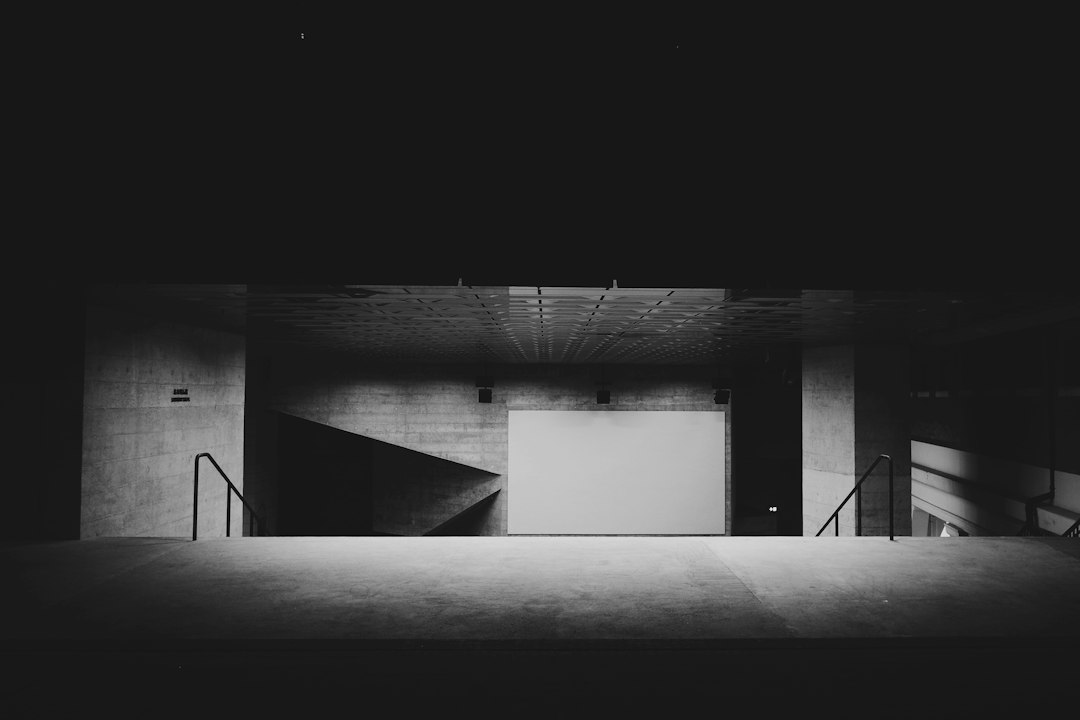
Tai Kwun — which translates roughly as 'big station' — is the former Central Police Station compound in SoHo, a collection of colonial-era buildings that served as police headquarters, magistracy, and prison for over a century before closing in 2006. Its conversion into a heritage and arts centre, which opened in 2018, is the kind of adaptive reuse project that cities get right only occasionally. The heritage buildings have been preserved with unusual integrity, and the new structures added to the compound — including a striking contemporary building that sits in dialogue with the colonial brick — manage the difficult trick of being modern without being apologetic about it. What makes Tai Kwun genuinely interesting rather than merely worthy is that it hasn't resolved the tension between its history as a site of colonial authority and its current identity as a cultural space. That tension is visible in the architecture and in the programming.
Insider tip
The former prison cells in the D Hall block are open to visitors and have been left largely unaltered — the graffiti and marks left by former inmates are part of the exhibit. This section of Tai Kwun is the most honest and the least visited.
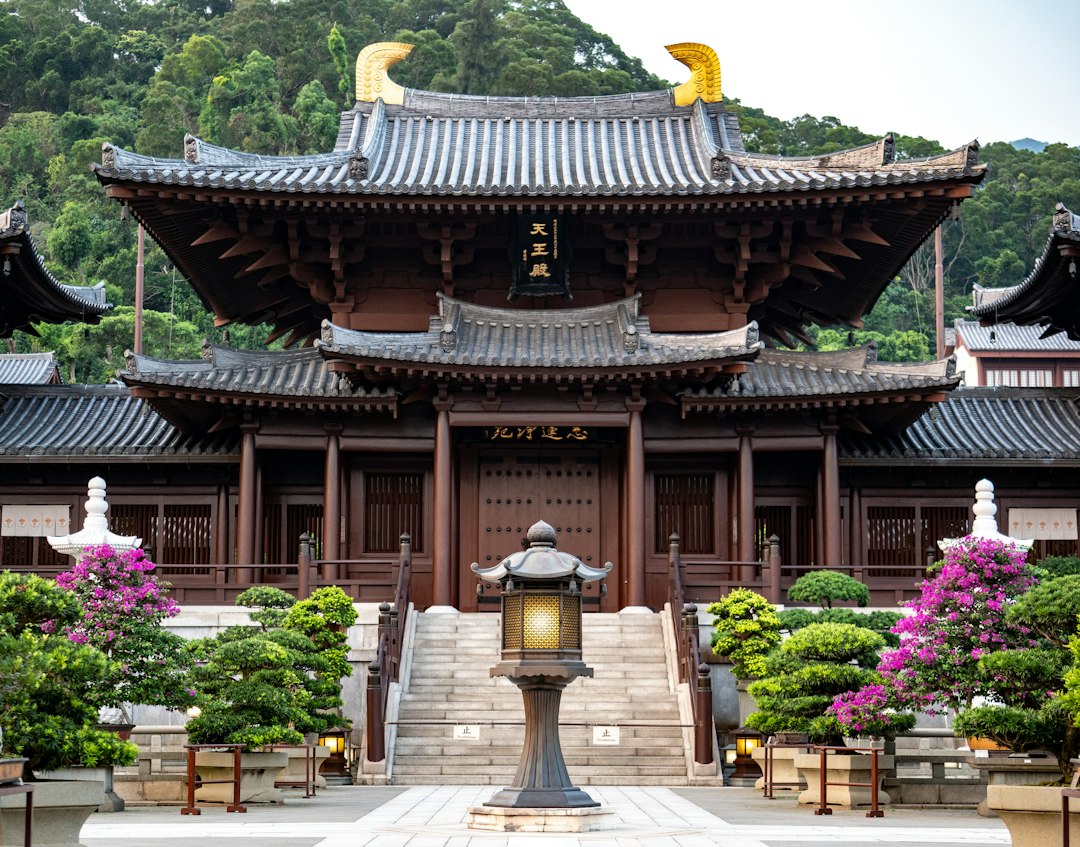
The Man Mo Temple on Hollywood Road is one of Hong Kong's oldest surviving temples, dedicated to the gods of literature and war — an unusual pairing that reflects the Taoist tradition's comfort with apparent contradiction. The temple was built in the 1840s, which makes it older than most of the city's colonial architecture, and it has been in continuous use since then, which gives it a quality of lived-in spiritual seriousness that more famous religious sites sometimes lack. The interior is permanently wreathed in incense smoke from the enormous hanging coils that burn above the worshippers, and the effect is both visually dramatic and genuinely atmospheric in a way that photographs consistently fail to capture. Hollywood Road's antique dealers and galleries have grown up around the temple over decades, creating a neighbourhood that manages to be genuinely mixed in its appeal.
Insider tip
The temple is busiest in the early morning, when local worshippers come before work — this is also when the incense smoke is thickest and the atmosphere most concentrated. The antique shops on the surrounding stretch of Hollywood Road are worth an hour of serious browsing.
13Square· 8.3 km
Golden Bauhinia Square in Hong Kong: the symbolism that the city is still working out
The Golden Bauhinia Square in Wan Chai marks the site where the handover of Hong Kong from British to Chinese sovereignty was formalised in 1997 — one of the most consequential political moments of the late twentieth century, commemorated by a gilded bronze sculpture of the bauhinia flower, Hong Kong's emblem. The square is technically a tourist attraction, and it functions as one, particularly for visitors from mainland China for whom the handover carries a specific emotional weight. For others, it is a place to think about what cities mean and what sovereignty means and what it costs to be a symbol. The square itself is not architecturally distinguished, which is perhaps the point — the meaning is entirely in the history and in the ceremony of the daily flag-raising, which draws a specific crowd and carries a specific charge.
Insider tip
The flag-raising ceremony takes place every morning and is conducted with considerable formality. Watching it without commentary — simply observing who attends and how they watch — tells you more about contemporary Hong Kong than most guided tours will.
Part four — Around and beyond
14Architecture· 10.2 km
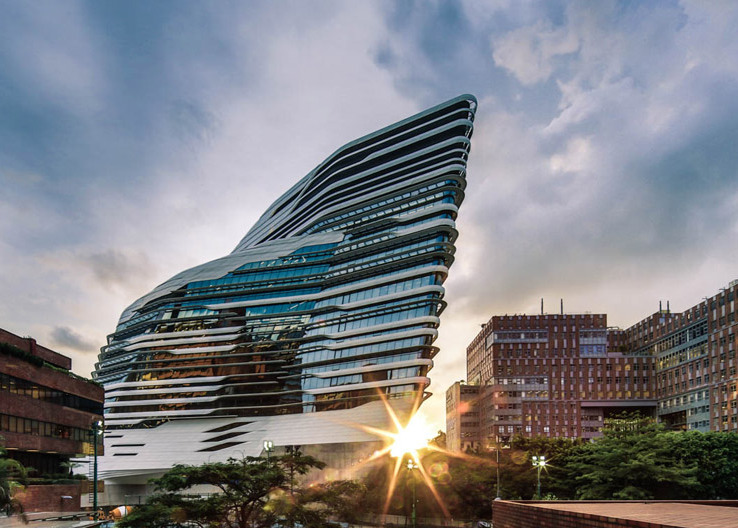
Zaha Hadid: Innovation Tower (Jockey Club Tower): the building that argues with its surroundings
The Innovation Tower at Hong Kong Polytechnic University in Hung Hom is one of Zaha Hadid's more successful institutional buildings — which is to say it is genuinely strange and genuinely functional in roughly equal measure. The building's fluid, twisting form, with its cantilevered volumes and absence of conventional right angles, sits in deliberate contrast to the rectilinear campus buildings around it. Hadid described the design as inspired by the energy of Hong Kong's urban environment, which is the kind of architectural statement that can mean anything or nothing, but in this case the building does seem to have absorbed something of the city's density and restlessness and expressed it in concrete and glass. It houses the School of Design, which is appropriate — the building is itself a design argument, made at considerable scale and with considerable conviction.
Insider tip
The building's interior spaces are as interesting as the exterior — the atrium in particular demonstrates how Hadid's spatial thinking works at the human scale. The building is open to visitors during university hours and is consistently less crowded than the exterior might suggest.
15Waterfront Promenade· 9.1 km
The Avenue of Stars in Tsim Sha Tsui East, Kowloon: the waterfront that earns its clichés
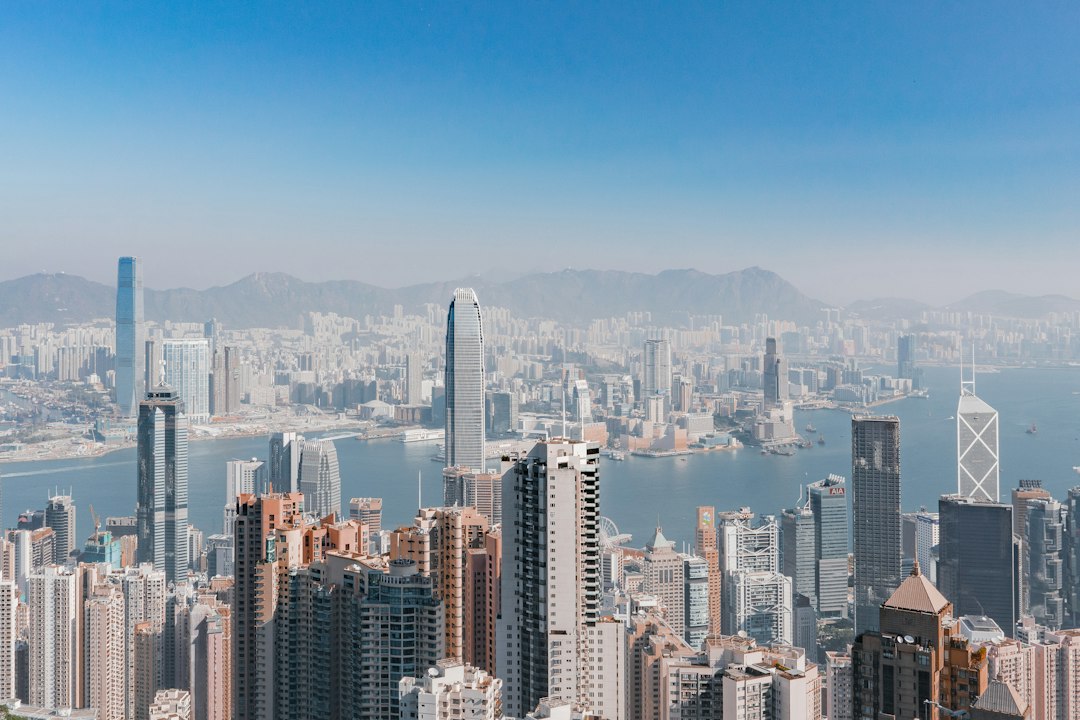
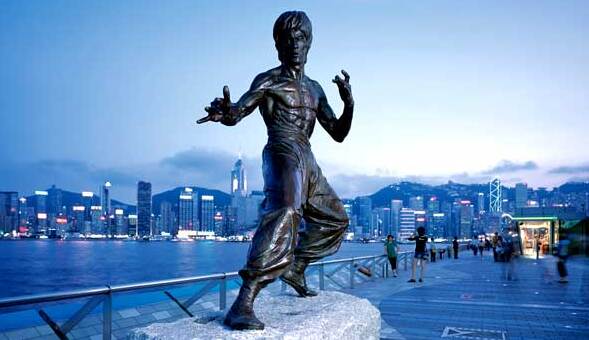
The Avenue of Stars is Hong Kong's answer to the Hollywood Walk of Fame — a 440-metre waterfront promenade lined with handprints and tributes to the figures who shaped Hong Kong's film industry, from Bruce Lee to Wong Kar-wai. It is, by the standards of this list, the most openly tourist-facing destination included, and it earns its place precisely because it is so consistently underestimated. The promenade's real value is not the celebrity tributes — though the Bruce Lee statue is worth a moment — but the view it offers across Victoria Harbour to Hong Kong Island, which from this angle and at this elevation is one of the most coherent urban panoramas in Asia. The nightly Symphony of Lights display, which uses the skyscrapers of the island as its canvas, is either spectacular or excessive depending on your relationship with coordinated light shows, but it is undeniably Hong Kong.
Insider tip
The promenade is at its best in the early morning, before the tour groups arrive, when the harbour light is soft and the city across the water is still waking up. The handprints of the less famous figures in the Hong Kong film industry — the directors and cinematographers rather than the stars — are the ones worth looking for.
I keep returning to Stanley and its surrounding south-side territory with the same question: why does a place this well-documented still manage to surprise? The answer, I think, has something to do with the gap between a city's reputation and its actual texture — the way Hong Kong's global image as a financial centre and shopping destination has consistently obscured its other identities. The green hills above the beaches. The ferry routes to islands without cars. The colonial buildings that became temples to contemporary art. The market at dawn, before anyone is performing for anyone. None of the fifteen places in this piece are truly hidden. They are simply waiting for the kind of attention that mass tourism doesn't have time for — the slow, slightly suspicious attention of someone who has learned not to trust the postcard. Stanley rewards that attention. So does everything south of the harbour. The city is larger than its legend, which is the most useful thing I can tell you before you go.
🏆 Pocket guide
Take this guide with you.
Save it offline, get walking directions, and discover thousands more places like the ones you just read.
How do I get from Stanley to the other destinations on this list, particularly those in Kowloon and Central?
Stanley is connected to Central by bus — the 6, 6A, and 260 routes are the most useful — with journey times of roughly 40 to 60 minutes depending on traffic. For destinations in Kowloon such as the Avenue of Stars or the Innovation Tower, you'll need to cross the harbour, either via the MTR (from Central or Admiralty) or the Star Ferry from Central Pier, which adds character to the journey at minimal cost. Repulse Bay is a short bus ride from Stanley along the coast road.
What is the best time of year to visit Hong Kong's south side?
October through December is widely considered the most comfortable period — the humidity drops, the skies clear, and the temperatures settle into a range that makes hiking and beach visits genuinely pleasant. The summer months (June through September) bring heat, humidity, and typhoon risk, which can close trails and affect ferry services to Lamma Island. Spring (March to May) is acceptable but hazy. If you're planning to do the Dragon's Back trail or any section of the Hong Kong Trail, autumn is the clear choice.
Is Lamma Island suitable for a day trip, or does it require an overnight stay?
Lamma is comfortably done as a day trip from Central or Aberdeen. Ferries run regularly throughout the day, and the crossing takes between 30 and 55 minutes depending on your departure point and destination village. A full day — ferry to Yung Shue Wan, hike to Sok Kwu Wan, seafood lunch, ferry back — is a satisfying itinerary that doesn't require overnight accommodation, though the island does have guesthouses for those who want to experience it at a slower pace.
Are the cultural and religious sites on this list — Man Mo Temple, Tai Kwun — appropriate for visitors with no background in Hong Kong history?
Both sites are accessible without prior knowledge, though some context enriches the experience considerably. Man Mo Temple is an active place of worship, so standard temple etiquette applies — dress modestly, be quiet, and don't photograph worshippers without implicit permission. Tai Kwun has excellent interpretive materials on site that contextualise the compound's history as a colonial police and prison facility; the heritage trail through the buildings is self-guided and well-signposted. Neither site requires advance booking for general admission, though Tai Kwun's gallery exhibitions sometimes do.
How much of this list can realistically be covered in a three-day visit to Hong Kong?
Three days allows you to cover roughly eight to ten of the fifteen destinations at a pace that doesn't feel punishing. A sensible approach: dedicate Day One to Stanley and the south side (Stanley Market, Repulse Bay, and the Dragon's Back trail if you're fit); Day Two to the island and harbour (Lamma Island as a full-day excursion, with the Maritime Museum and Golden Bauhinia Square on the return to Central); Day Three to the urban cultural sites (Man Mo Temple, Tai Kwun, and the Innovation Tower, with the Avenue of Stars and Temple Street Night Market in the evening). The Hong Kong Trail and Ocean Park each warrant a dedicated half-day and work best as standalone excursions.
🏆 Read this offline
Save it to your phone.
Bookmark this guide, plan your trip offline, and discover thousands of places like these.
BookmarkPlan offline60 languages
iOS / Android
Huawei users
Secret WorldHidden places, real stories — plan your trip