What the village keeps from everyone who arrives with a camera and leaves with a shrimp paste jar
L
Words by
Lena Hofmann
Updated
11 October 2026
Read time
12 minutes
Includes
8 places · interactive map
There is a particular kind of invisibility that afflicts places which have been photographed too many times. Tai O, the stilt-house fishing village on the western tip of Lantau Island, suffers from it acutely. The images you have seen — pink dolphins in the distance, weathered timber platforms over brown water, elderly women selling dried seafood from folding tables — are all real. They are also, in a meaningful sense, a distraction. The postcard version of Tai O functions as a kind of scrim: vivid enough to satisfy the day-tripper, opaque enough to obscure everything behind it. I have been coming here for years, sometimes for a weekend, once for nearly three weeks, and I still find the village rearranging itself around me in ways that feel genuinely new. That is not nostalgia speaking. It is the specific quality of a place that has not been curated for consumption — where the infrastructure of daily life, the smell of low tide, the particular angle of afternoon light on a corrugated iron roof, resists the flattening that tourism usually imposes. The entries that follow are not secrets in the naive sense. Several are well-documented. A few appear on maps. What makes them feel hidden is something more architectural than geographical: they occupy the negative space around the things everyone comes to see. You walk past them on the way to somewhere else. This article is an argument for stopping.
The promenade along Tai O's tidal channel is, on its surface, exactly what it sounds like: a flat path beside brown water, lined with stilt houses in various states of dignified decay. Most visitors walk it once, quickly, and consider it done. The error is the pace. Walk it at low tide, when the mud flats expose themselves and the egrets come in close. Walk it again at dusk, when the fishing boats return and the channel turns the colour of old brass. The promenade is not a single experience but a sequence of them, and the sequence only reveals itself to people who are willing to be bored for a few minutes between revelations. The architecture of the stilt houses — some patched with plywood, some with corrugated steel, a few with genuine timber joinery — constitutes an informal museum of vernacular adaptation that no institution has thought to label.
Insider tip
Come on a weekday morning before 9am, when the village belongs entirely to its residents. The light is flat and honest, and you will see the promenade for what it actually is rather than what the weekend crowds make it feel like.
2Folklore· 0.1 km
Tai O Fishing Village: the grammar of a working community
The stilt houses of Tai O are so frequently cited as the village's defining feature that visitors sometimes forget the community living in them is not a heritage exhibit. The Tanka people — boat-dwelling fisherfolk who settled here over generations — built their homes over water partly from practicality and partly from social logic: the river mouth was where the work happened, so the homes went there too. What the tourist literature tends to elide is how much of that working life persists. Nets are still repaired on the platforms. Boats still go out. The village's relationship with the sea is not ceremonial. Spend time watching rather than photographing and you begin to read the spatial grammar of the place: which platforms belong to which families, which boats are active and which are retired, where the community's social life actually concentrates.
Insider tip
The narrow lanes behind the main channel, away from the souvenir shops, are where the residential texture of the village becomes legible. Follow them without a destination and you will find yourself somewhere genuinely quiet.
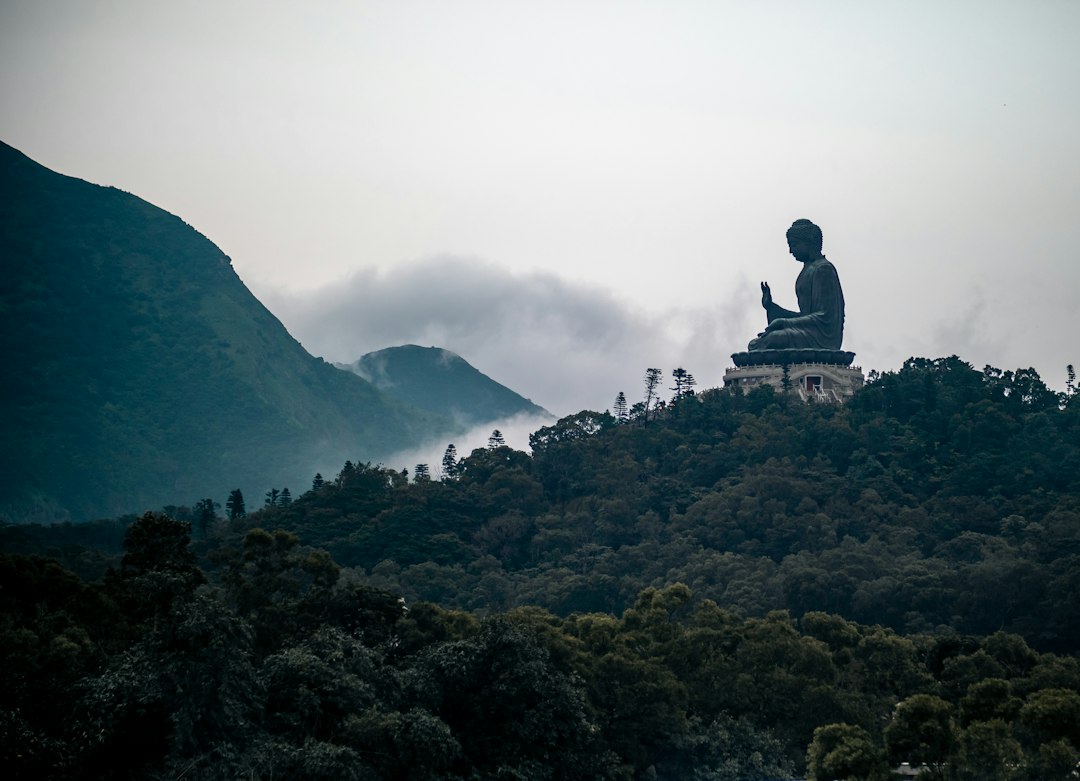
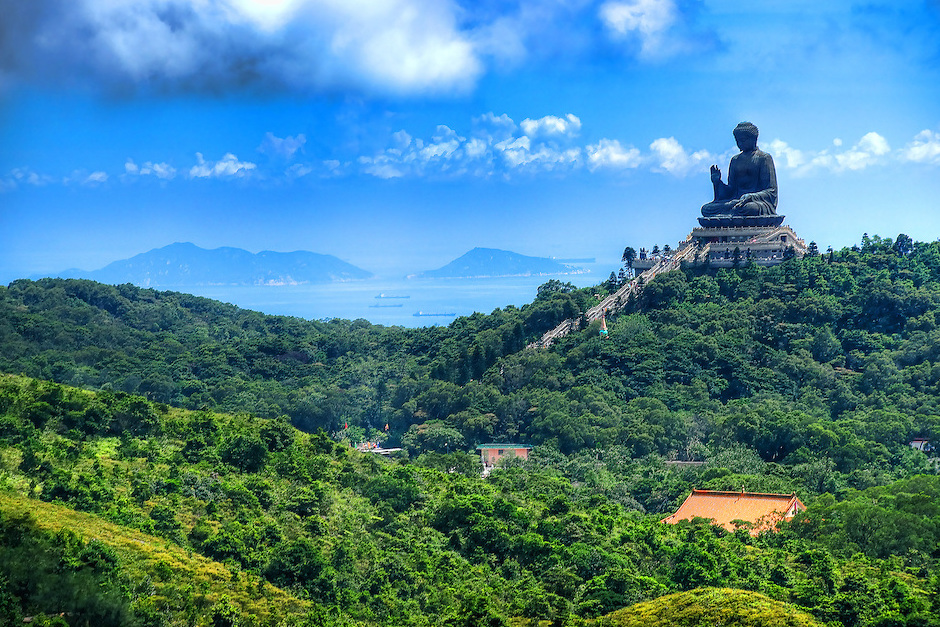
The scale of the Tian Tan Buddha on Lantau's Ngong Ping plateau is not something you can fully prepare for, and I say this as someone who finds superlatives professionally embarrassing. The bronze figure — seated, serene, facing north toward the Chinese mainland — sits at the top of 268 steps and commands a view of the surrounding mountains that makes the crowds at its base seem, briefly, beside the point. What is less discussed is the quality of the space around the statue at off-peak hours: the particular silence that settles when the tour groups have moved on, the way the incense smoke from the nearby monastery drifts across the plateau in the late afternoon, the fact that the statue was designed not as a tourist attraction but as a devotional object, and that this intention is still legible if you are paying attention.
Insider tip
The base of the statue contains a small museum and reliquary chamber that most visitors skip entirely in their rush to photograph the view. The interior is worth the extra thirty minutes.
4Religious site· 4.4 km
Tian Tan Buddha, referred to as the "Big Buddha": the cable car's second purpose
The Ngong Ping 360 cable car that carries most visitors up to the plateau is marketed primarily as an attraction in its own right, which is a commercially understandable but slightly misleading framing. The cable car's real value is what it shows you en route: the forested ridgelines of Lantau, the reservoir catchment areas, the absence of development across vast stretches of what is, by area, Hong Kong's largest island. The Buddha itself — 202 tonnes of bronze, erected in 1993 — is a genuinely significant piece of devotional architecture. The fact that it appears on every Hong Kong itinerary does not make it less worth examining carefully. What makes this entry earn its place in this list is the argument that most people look at the statue without seeing it, which is a different problem from not visiting at all.
Insider tip
If you walk up via the Ngong Ping Road rather than taking the cable car, the approach through the forest changes the experience of arrival completely — the statue reveals itself gradually rather than all at once.
The deliberate orientation of the Tian Tan Buddha — facing north to look over the Chinese people, as the traditional description has it — is a detail that most visitors register as trivia and then forget. It is worth sitting with longer than that. The statue was erected in 1993, four years before the handover of Hong Kong to China, and its northward gaze was a considered act of symbolic positioning by the Po Lin Monastery. The surrounding Lantau landscape, with its mist-prone ridges and relative emptiness, amplifies the meditative quality of the site in a way that the crowds at the base can obscure. The best time to understand what the statue is actually doing is early morning, before the tour buses arrive, when the plateau belongs to pilgrims rather than photographers.
Insider tip
The monks at the adjacent monastery follow a schedule that is publicly available. Arriving in time for morning prayers before the tourist infrastructure of the site activates is an entirely different experience from the standard visit.
Po Lin Monastery — whose name translates roughly as 'Precious Lotus' — predates the Big Buddha by several decades, and it is the monastery rather than the statue that represents the site's actual spiritual continuity. Founded in the early twentieth century by monks who came to Lantau seeking seclusion, Po Lin has grown considerably since then, but it retains a functional monastic character that distinguishes it from more purely touristic religious sites. The main hall, with its large Buddha images and the smell of incense that has been accumulating in the woodwork for generations, is worth extended time. The monastery also operates a vegetarian restaurant that is better than its cafeteria-style presentation suggests.
Insider tip
The vegetarian lunch served at the monastery restaurant is set-menu and filling. Arrive before noon to avoid the queue that forms once the cable car delivers its midday cargo of visitors.
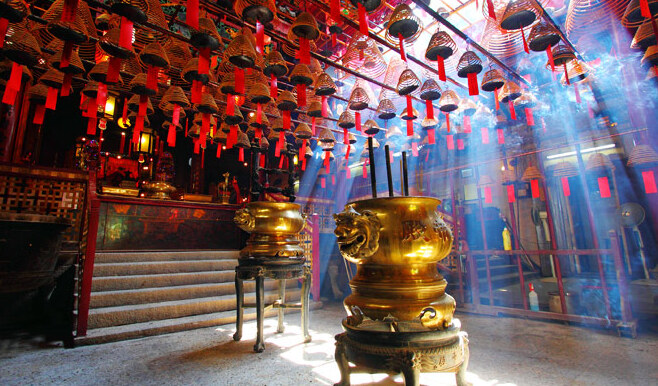
The Man Mo Temple in Tai O — dedicated jointly to the God of Literature and the God of War, an pairing that says something interesting about the pragmatic theology of Taoist devotion — is one of those places that sits in plain sight and is nonetheless consistently underexamined. The coils of incense suspended from the ceiling, burning slowly over days, create a haze and a smell that is disorienting in the best possible way. The temple is not large, and it does not need to be. Its scale is domestic, which is appropriate: this is a community temple, built for the people who live here rather than for visitors who come to admire it. The dedication to Man — the literary deity — in a fishing village is a detail worth pausing over. Education was valued here, even when life was organised around the sea.
Insider tip
Visit on a weekday afternoon when the temple is attended by elderly locals rather than tour groups. The contrast between the smoky interior and the bright channel outside, visible through the open doors, is the image that stays with you.
8Natural landscape· 8.3 km
Lantau Island, l'isola più grande di Hong Kong: the emptiness that surrounds everything
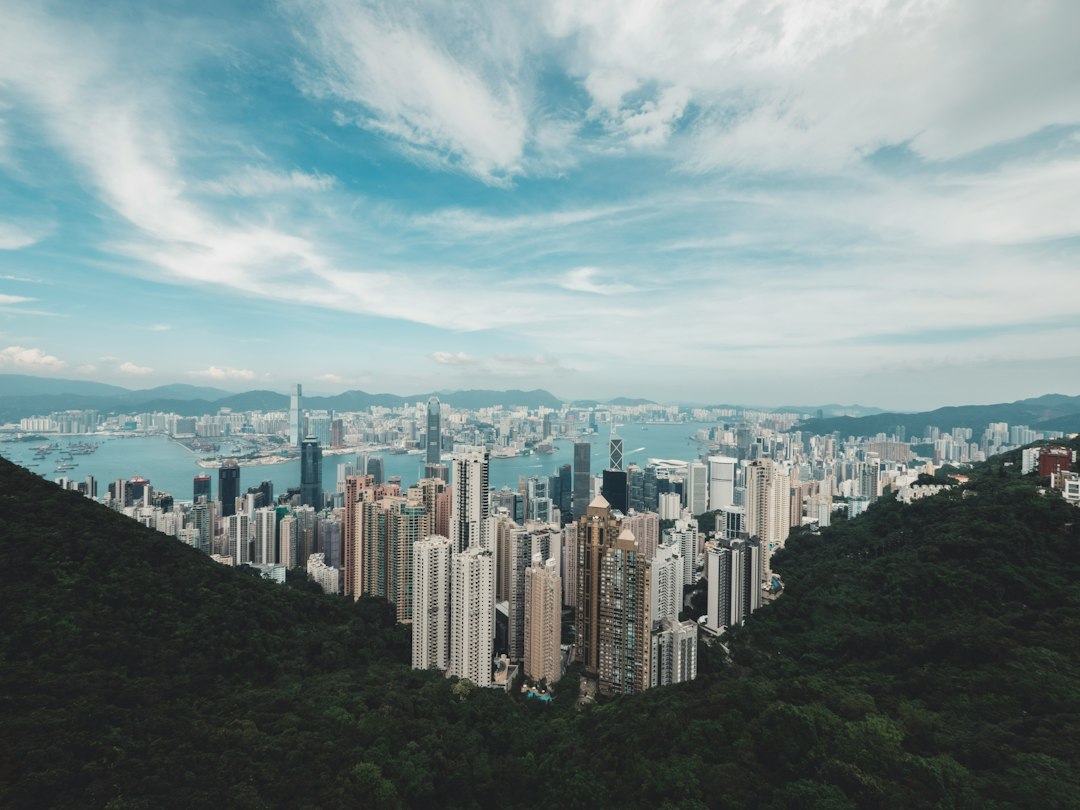
Lantau is larger than Hong Kong Island itself — a fact that surprises most visitors, who arrive by bus or cable car with a specific destination in mind and leave without having registered the scale of what surrounds them. The island's interior is predominantly country park: forested ridgelines, trail networks, reservoirs, and a coastline that shifts between sandy beaches and rocky headlands depending on which direction you face. Tai O sits on Lantau's western edge, and the village makes most sense when you understand it as a community that developed at the margin of a large, largely empty island — sustained by the sea because the land offered limited alternatives. The relationship between the village and the surrounding landscape is the context that the postcard version of Tai O consistently omits.
Insider tip
The Lantau Trail, which circumnavigates much of the island, passes through terrain that feels genuinely remote despite being within Hong Kong's administrative boundaries. Even a short section of it, walked from Tai O, changes your understanding of where you are.
Tai O does not need defending. It has survived colonial administration, typhoons, the decline of its fishing economy, the arrival of mass tourism, and the construction of infrastructure that was supposed to modernise it into irrelevance. It is still here, still smelling of brine and dried seafood, still organised around a tidal channel that does not care about visitor numbers. What it needs — what any place with this quality of accumulated life needs — is a different kind of attention from the people who come to see it. Not reverence, which is its own form of condescension, but the kind of patient, unhurried looking that allows a place to reveal itself on its own terms. The fifteen entries in this piece are not a comprehensive map. They are an argument for slowness. Tai O rewards it more than most places I know.
🏆 Pocket guide
Take this guide with you.
Save it offline, get walking directions, and discover thousands more places like the ones you just read.
The most practical route is to take the MTR to Tung Chung station on Lantau Island, then board bus route 11 directly to Tai O. The journey takes approximately 45 minutes and passes through the interior of Lantau, giving you a sense of the island's scale before you arrive. Alternatively, a ferry from Central Pier 6 to Mui Wo, followed by bus 1 to Tai O, adds time but offers a different approach. Taxis from Tung Chung are available but considerably more expensive.
What is the best time of year to visit Tai O?
Autumn and early winter — roughly October through January — offer the most comfortable conditions: lower humidity, clearer skies, and the active drying season for seafood, which means the racks and platforms are at their most productive. Summer visits are feasible but come with high humidity and the possibility of typhoon disruption. Weekday visits in any season are significantly quieter than weekends, when the village receives the bulk of its day-trip traffic from Hong Kong's urban areas.
Is Tai O suitable for a day trip, or is it worth staying overnight?
A day trip is entirely workable if your goal is the main promenade and the Big Buddha at Ngong Ping. If you want to experience the village at dawn, at dusk, and in the quieter hours between the day-trip crowds, an overnight stay changes the experience substantially. The converted Tai O Heritage Hotel in the old police station north of the village is the most characterful accommodation option, though it books up well in advance on weekends and public holidays.
Are there practical things to know about visiting the Tian Tan Buddha and Po Lin Monastery?
The Ngong Ping 360 cable car runs from Tung Chung and is the most popular approach, but it is subject to weather closures and can have significant queues on weekends. Booking tickets in advance online is advisable. The walk up via Ngong Ping Road from the Tung Chung side takes roughly two hours and is a legitimate alternative for those who prefer to arrive on foot. The monastery's vegetarian restaurant operates on a set-menu basis and closes in the early afternoon — arrive before noon to be safe.
How long should I allow to explore Tai O village properly?
Most day-trippers allow two to three hours, which is enough to walk the main promenade, visit the Man Mo Temple, and browse the seafood stalls. To engage with the village at the pace this article recommends — including the back channels, the trails above the village, and the quieter residential lanes — allow a full day minimum. The village is compact enough that you will not run out of ground to cover, but spacious enough in its detail that rushing through it means missing most of what makes it worth the journey.
🏆 Read this offline
Save it to your phone.
Bookmark this guide, plan your trip offline, and discover thousands of places like these.
BookmarkPlan offline60 languages
iOS / Android
Huawei users
Secret WorldHidden places, real stories — plan your trip