10 Best Things to Do in Cheung Chau, Hong Kong — beyond the obvious
A slow island that rewards the unhurried, the curious, and anyone willing to get slightly lost
L
Words by
Lena Hofmann
Updated
29 October 2026
Read time
13 minutes
Includes
9 places · interactive map
I first arrived on Cheung Chau by accident, which is probably the best way to arrive anywhere. I had intended to take the ferry to Mui Wo on Lantau, misread the departure board at Central Pier, and found myself forty minutes later stepping onto a narrow concrete quay surrounded by fishing nets, dried squid hanging in the afternoon sun like laundry, and approximately four hundred bicycles. There are no private cars on Cheung Chau. That fact, which sounds like a selling point in a brochure, lands differently when you are actually standing there: the silence where traffic noise should be is almost disorienting at first, like a frequency that has been removed from a recording you have heard all your life.
Cheung Chau is a dumbbell-shaped island of roughly 2.5 square kilometres, sitting about 10 kilometres southwest of Hong Kong Island, and it has been inhabited continuously for centuries — by fishermen, by Hakka settlers, and, if the local mythology is to be believed, by at least one notorious pirate. Somewhere between 20,000 and 25,000 people live here permanently, which makes it one of the more densely populated of Hong Kong's outlying islands, though you would not always guess it from the quieter northern and southern headlands.
The honest version of this article is that Cheung Chau will disappoint you if you arrive expecting spectacle. It has no grand colonial architecture, no Michelin-starred restaurants, no view that will make you drop your phone. What it has instead is texture: the smell of incense from a temple doorway, the sound of a mahjong game through a ground-floor window, the particular quality of light on the harbour at five in the afternoon. These are not things that photograph well. They are, however, the reason I keep going back.
Cheung Chau - The hideaway of the pirate Cheung Po Tsai: following a legend to its source
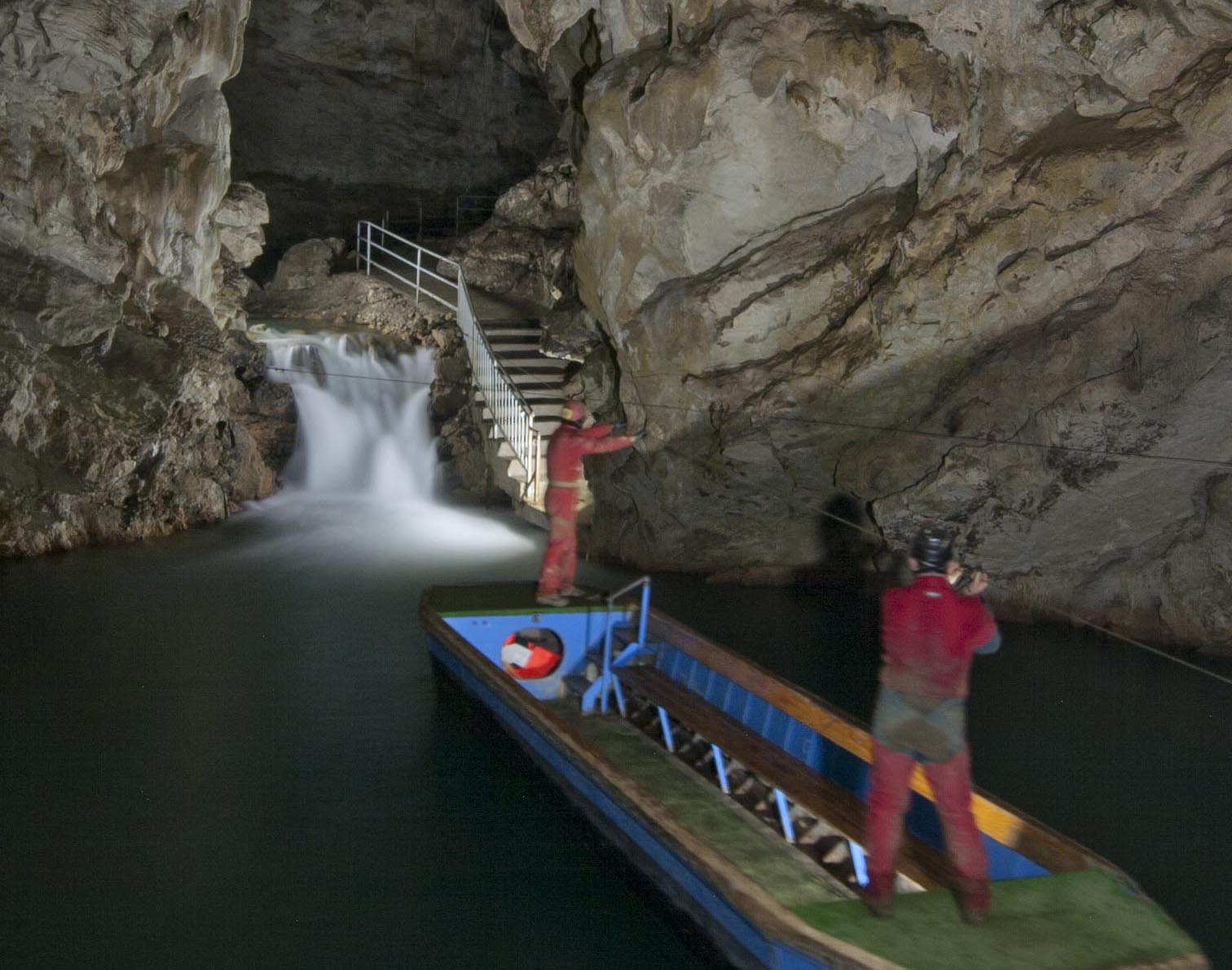
The island's name predates its most famous resident, but Cheung Po Tsai — the 18th-century pirate commander who allegedly controlled much of the Pearl River Delta at the height of his power — has become so thoroughly woven into the place's identity that the two are now inseparable. A narrow cleft in the rock on the island's southwestern headland is identified on every tourist map as his cave, the spot where he supposedly stashed plunder and evaded the Qing dynasty navy. The cave itself is anticlimactic: a low, damp passage you squeeze through sideways, wide enough for perhaps two people abreast. But the walk to reach it, along a coastal path above churning water, past banyan trees and small shrines, is genuinely good. The legend, like most legends, is more useful than the physical site it has generated.
Insider tip
Go on a weekday morning. On weekends the path to the cave fills with school groups and the rock scramble at the end becomes a queue. The headland views north toward Lantau are clearest before midday haze sets in.
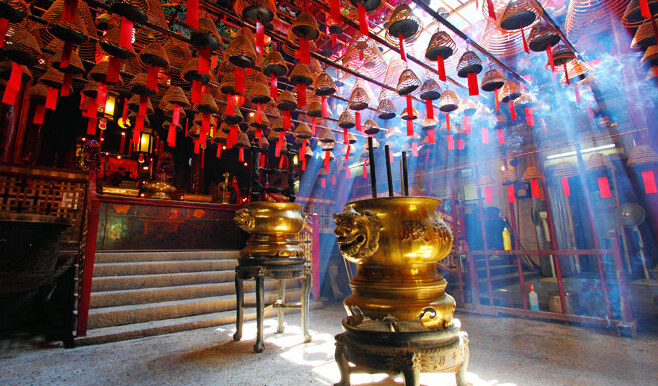
Man Mo Temple is one of the older Taoist temples in Hong Kong, paying tribute to the God of Literature (Man) and the God of War (Mo) — a pairing that has always seemed to me like a very sensible theological hedge. The interior is dense with hanging spiral incense coils that cast the whole space in a permanent amber dusk, and the smell is the kind that stays in your clothes for hours afterward. Halfway along the main road through the island's central village, the temple functions as a working place of worship rather than a preserved monument, which means you may walk in during an actual ceremony, or find an elderly man sitting on a plastic chair inside the entrance reading a newspaper, entirely unbothered by visitors. Both are equally valid experiences of the place.
Insider tip
The temple is more active in the early morning, when residents come to burn offerings and consult fortune sticks. If you arrive at midday you will mostly share it with other tourists.
Po Lin Monastery sits on the Ngong Ping plateau on Lantau Island — a short ferry ride from Cheung Chau to Mui Wo, then a bus inland and upward. The monastery, whose name translates loosely as 'Precious Lotus,' was established in the early twentieth century by monks seeking distance from the city, and for much of its history it was genuinely remote. It is less remote now. The surrounding plateau has been developed significantly, and the monastery itself operates a vegetarian restaurant that serves hundreds of people on busy weekends. None of that has entirely erased the quality of the place: the scale of the buildings, the smell of incense on cold mountain air, the particular silence that descends when a tour group moves on.
Insider tip
The vegetarian lunch at the monastery canteen is inexpensive and better than its institutional surroundings suggest. Arrive before noon to avoid the worst of the queues.
Tian Tan Buddha — erected in 1993 and sitting 34 metres high on a lotus throne above the Ngong Ping plateau — faces north, toward mainland China, which is either a gesture of spiritual guardianship or a piece of political symbolism depending on who you ask. The climb up the 268 steps on a clear day is worthwhile not for the statue itself, which is impressive in the blunt way that large things are impressive, but for the view back down across the plateau and toward the South China Sea. The more interesting question the site raises is what it means for a place of pilgrimage to also be one of Hong Kong's most visited tourist attractions. Both things are simultaneously true, and the site holds the tension without resolving it.
Insider tip
The cable car from Tung Chung is scenic but frequently has waits of 45 minutes or more on weekends. The bus from Mui Wo is slower, cheaper, and gives you a better sense of the island's interior.
5Nature|Hiking· 11.0 km
Lantau Island, l'isola più grande di Hong Kong: the largest island and its uneven geography
Lantau is larger than Hong Kong Island itself, a fact that surprises most visitors who have absorbed the city primarily through its urban density. The northern coast is almost entirely developed — the airport occupies reclaimed land off Tung Chung, and Disneyland sits on Penny's Bay — but the southern and central parts of the island retain stretches of genuine countryside: forested ridgelines, small fishing villages, and beaches that are not crowded outside of summer weekends. The Lantau Trail, a 70-kilometre circuit, can be broken into day sections accessible by bus and ferry from Cheung Chau. The section between Mui Wo and Pui O, following the southern coast, is among the more quietly satisfying walks in the territory.
Insider tip
The last bus from Pui O back to Mui Wo runs earlier than you expect. Check the timetable before you start walking, not after.
Lamma is the third-largest of Hong Kong's outlying islands and, like Cheung Chau, car-free in its inhabited areas. The ferry from Central takes about half an hour to Yung Shue Wan, the main village, which has a main street of modest restaurants, a few bars that have been there since the 1980s, and a population that includes a disproportionate number of long-term Western expatriates who arrived for a short stint and never quite left. The walk between Yung Shue Wan and Sok Kwu Wan on the island's other side takes about an hour on a well-maintained path through low hills, and you can take the return ferry from Sok Kwu Wan to Aberdeen rather than Central, which gives you a different approach to the city.
Insider tip
Sok Kwu Wan's seafood restaurants are aimed squarely at large group bookings from the city. If you want to eat well and quietly, stay in Yung Shue Wan.
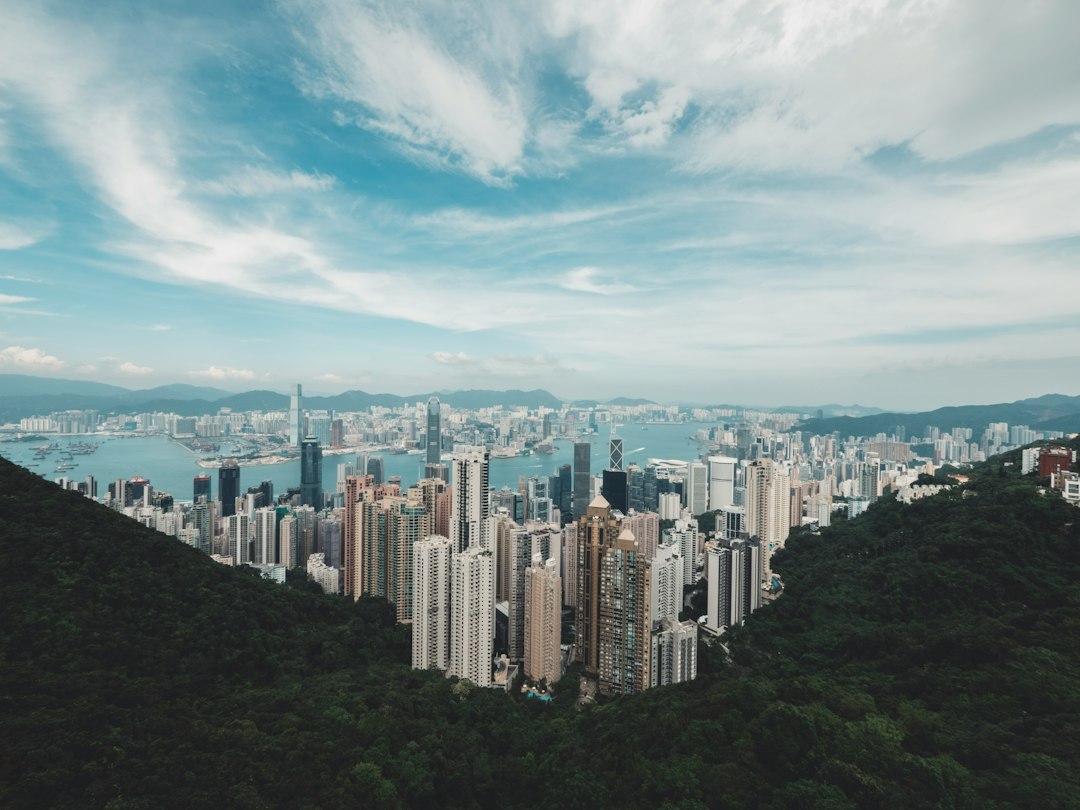
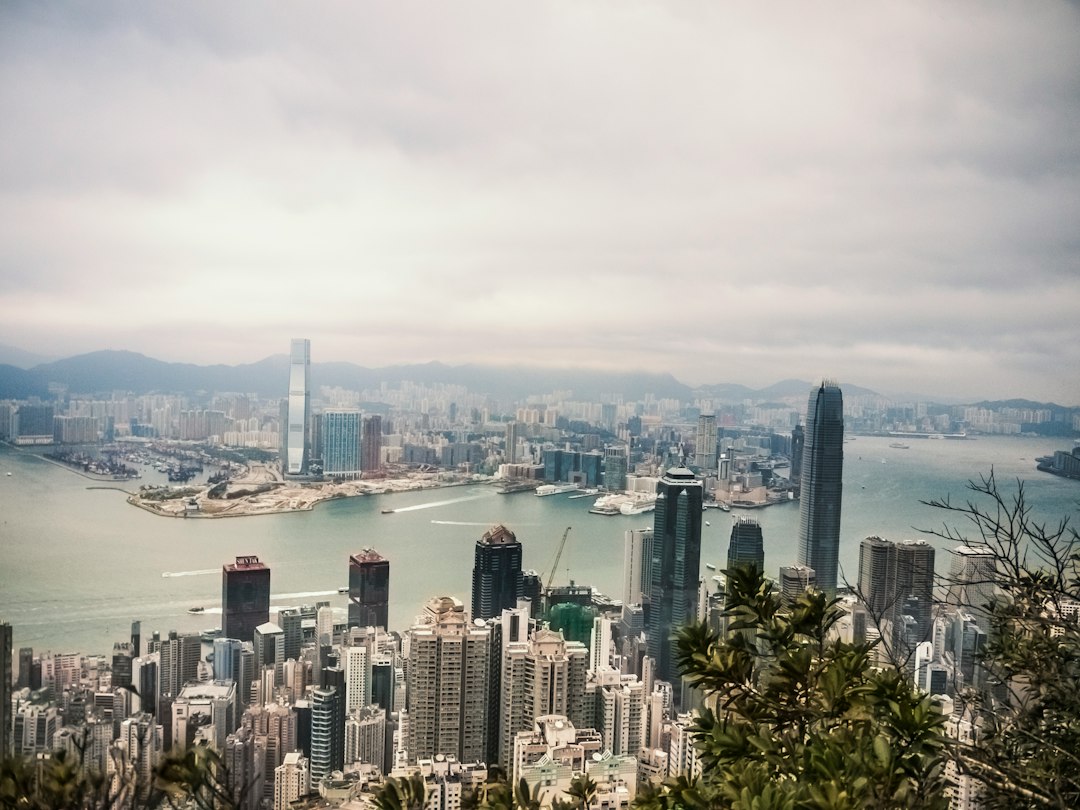
Victoria Peak sits at 552 metres above sea level and offers a view of the Hong Kong skyline that has appeared on more postcards than any other image in the territory's history. The Peak Tram, which has been running in some form since 1888, is the standard approach, and it is genuinely vertiginous in the final section. What the postcards do not show is the commercial complex at the summit — a shopping mall that greets you at the top with the same chain stores you could find in any MTR station. The view itself, particularly looking south over the reservoirs and Lamma Channel, is more interesting than the famous northern panorama, and far less crowded. Go in the early morning or on a weekday evening, when the light is better and the tour groups have thinned.
Insider tip
The circular walk around the Peak on Lugard Road takes about 45 minutes and gives you shifting perspectives on both the harbour and the southern side of the island. It costs nothing and most visitors skip it entirely.
8Panorama|Urban· 14.1 km
The Hong Kong, Victoria Peak and the wonderful skyline: the view as a form of argument
Hong Kong's skyline is frequently cited as among the densest concentrations of high-rise buildings on earth, and Victoria Peak is the conventional vantage point from which to absorb this fact. But there is something worth sitting with in what the skyline actually represents: decades of compressed development, land reclamation, the vertical logic of a city with nowhere horizontal to expand. Seen from the Peak at night, the buildings on both sides of the harbour are lit in a way that makes the whole thing look less like a city and more like a diagram of ambition. The famous nightly light show choreographed across the harbour facade is, in this writer's opinion, the least interesting thing about the view. The skyline is more compelling when it is simply doing nothing in particular.
Insider tip
The view from the southern terrace of the Peak Tower, looking away from the harbour toward the islands, is quieter and gives you a sense of how much of Hong Kong is still green.
10Theme park|Marine· 15.0 km
Ocean Park is a major attraction in Hong Kong: marine life, rollercoasters, and a complicated history
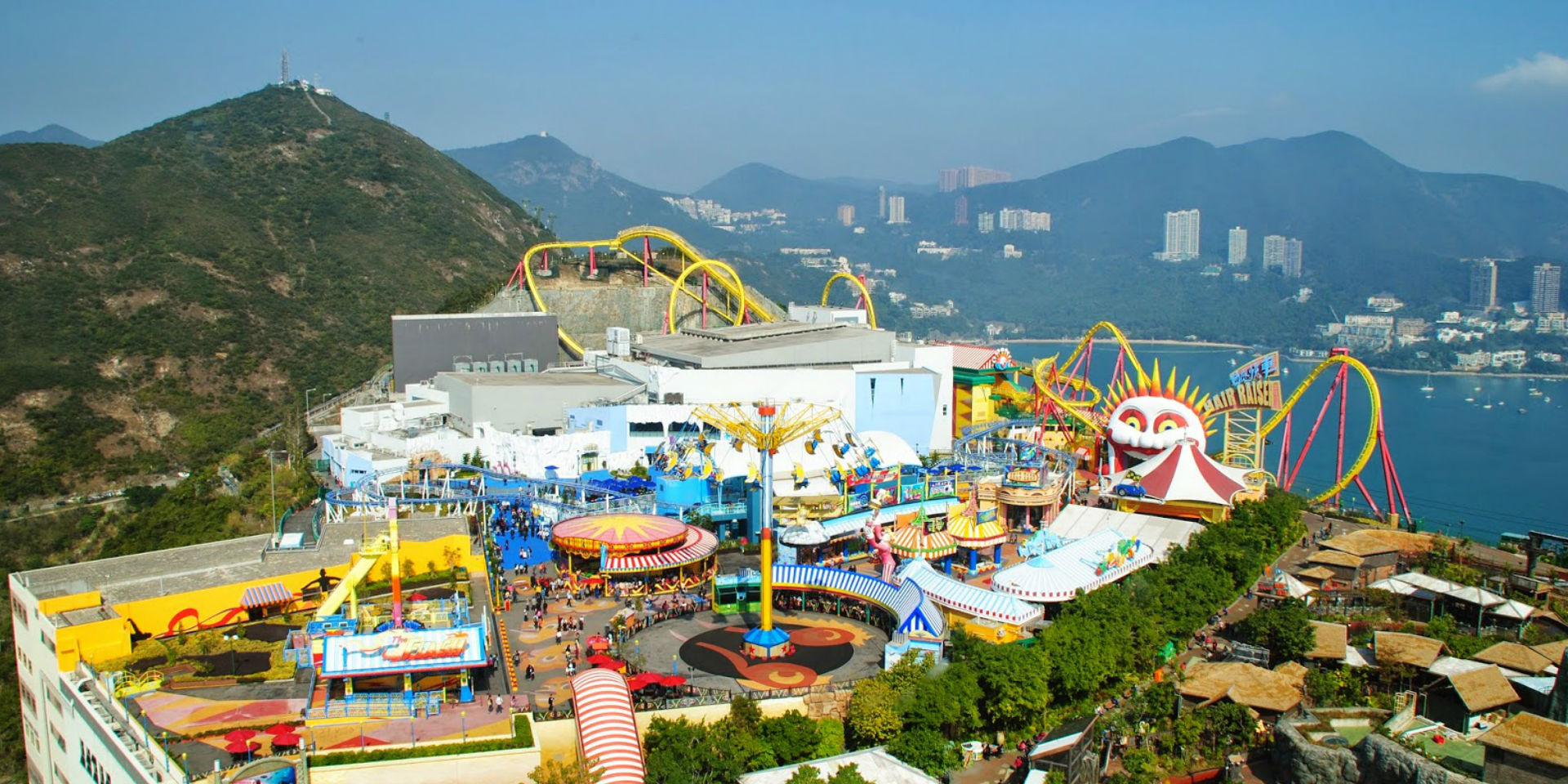
Ocean Park has occupied its site on the southern side of Hong Kong Island since 1977, which makes it considerably older than Disneyland and considerably more eccentric. It combines a marine mammal facility, a series of rollercoasters, and a cable car connecting its lower and upper sections, all arranged across a headland above the South China Sea. The park has won various international awards for attendance and design, and it has also attracted sustained criticism over the years regarding its animal welfare standards, particularly concerning its cetacean exhibits. Both things are part of its history. The views from the upper section, across the open water toward the outlying islands, are genuinely good, and on a clear day you can see Cheung Chau from the cable car.
Insider tip
The park is substantially less crowded on weekday mornings outside of school holidays. The cable car between sections is worth taking at least once for the perspective it gives you of the coastline below.
There is a particular quality to islands that exist primarily in relation to somewhere else — places whose identity is partly constituted by what they are not. Cheung Chau is not Hong Kong in the sense that most people mean when they say Hong Kong: not the glass towers, not the Michelin restaurants, not the MTR. It is Hong Kong in the older sense, the sense that predates the reclamation and the finance industry, the sense of a coastal settlement that organised itself around the water and the weather and the rhythms of fishing and trade.
The places listed in this article range from a pirate's cave to a theme park, which is a range that tells you something about the territory's fundamental character: a place that holds contradictions without needing to resolve them. You can spend a morning in a Taoist temple watching incense smoke rise toward a ceiling blackened by decades of offerings, and spend the afternoon on a cable car above a marine park. Both are Hong Kong. Both are, in their different ways, worth your time.
What I would say, after years of returning to Cheung Chau and its neighbouring islands, is this: the ferry ride back to Central at dusk, with the harbour lights coming on and the city assembling itself out of the haze, is the moment that stays with you longest. Not the cave, not the Buddha, not the skyline from the Peak. The moment of return, and what it does to your sense of scale.
🏆 Pocket guide
Take this guide with you.
Save it offline, get walking directions, and discover thousands more places like the ones you just read.
How do you get to Cheung Chau from Central, Hong Kong?
Regular ferries depart from Pier 5 at Central Ferry Piers. The standard ferry takes approximately 55 minutes; the fast ferry takes around 35 minutes and costs more. Ferries run frequently throughout the day, with reduced service late at night. Check the New World First Ferry timetable before you travel, as schedules vary by day of the week and season.
Is there accommodation on Cheung Chau, or should you visit as a day trip?
There are several small guesthouses and a handful of holiday flats available for rent on the island, and staying overnight changes the experience significantly — the island is quieter after the day-trippers leave on the last fast ferry. That said, most visitors come for the day, and a full day is sufficient to walk the main paths, visit the temple, and reach the cave on the southern headland.
What is the best time of year to visit Cheung Chau and the outlying islands?
October through December offers the most reliably clear weather: lower humidity than summer, cooler temperatures, and good visibility for coastal walks. Summer (June through September) brings typhoon risk and high humidity, though the sea is warm enough to swim. Spring is frequently overcast and hazy. Avoid public holiday weekends throughout the year if you want the ferries and paths to yourself.
Can you combine Cheung Chau with a visit to Lantau Island and the Big Buddha in one day?
It is possible but tiring and requires careful timetable management. A ferry runs between Cheung Chau and Mui Wo on Lantau, from where buses serve the Ngong Ping plateau and Po Lin Monastery. The combination works better if you start early, spend the morning on Cheung Chau, take the inter-island ferry to Mui Wo after lunch, and return to Central from Mui Wo in the evening. Check inter-island ferry timetables in advance — they run less frequently than the Central services.
Are there things to avoid or be aware of on Cheung Chau?
The island's main promenade and the path to the pirate cave become genuinely congested on sunny weekends and public holidays. The seafood restaurants along the waterfront are aimed at large groups and priced accordingly; smaller establishments on the side streets tend to be better value. The cave itself involves a low, narrow rock passage — anyone with mobility limitations or claustrophobia should be aware of this before making the walk out to the headland.
🏆 Read this offline
Save it to your phone.
Bookmark this guide, plan your trip offline, and discover thousands of places like these.
BookmarkPlan offline60 languages
iOS / Android
Huawei users
Secret WorldHidden places, real stories — plan your trip