Kowloon is the part of Hong Kong that tourists tend to pass through rather than inhabit. They come for the harbour view from the Tsim Sha Tsui promenade, for the neon, for the density, for whatever version of 'authentic Asia' they have assembled from films and Instagram feeds. Then they leave, usually back across the water to Hong Kong Island, where the hotels have better lobbies and the streets are slightly easier to parse. What they miss is a district — or rather a loose constellation of sub-districts — that has been accumulating layers of itself for well over a century: Cantonese, Shanghainese, Chiu Chow, South Asian, Vietnamese, and more recently mainland Chinese, each community leaving architectural, culinary, and social sediment that has not yet been fully smoothed over by development.
This is not a guide to the obvious. The Star Ferry is fine. The night market photographs well. But Kowloon rewards the person willing to walk past the thing they came to see, to get slightly lost, to eat somewhere with no English menu, and to sit still long enough that the place begins to reveal its actual texture. These ten entries are an attempt at that texture.
At a glance
- Scopri la Storia di Kowloon Walled City Park: the ghost of the most densely populated place on earth
- 1881 Heritage: Storia e Cultura a Hong Kong — a colonial relic that became a shopping centre
- Scopri il Tempio di Wong Tai Sin a Hong Kong: where divination is a serious business
- Nan Lian Garden: un'oasi di tranquillità a Hong Kong — Tang dynasty geometry in a modern district
- Hong Kong and the Ladies' Market: Mong Kok's most misunderstood kilometre
- Esplora il Ladies' Market di Hong Kong: the same street, a different hour
- Hong Kong: The Jade Market — a compressed education in a stone
- Zaha Hadid: Innovation Tower (Jockey Club Tower) — a building that makes the campus argue with itself
- Scopri l'incanto di Sky100 a Hong Kong: a hundred floors up, and what you actually see
- The Hong Kong Museum of History: eight thousand years in one building, and the politics of telling it
Scopri la Storia di Kowloon Walled City Park: the ghost of the most densely populated place on earth
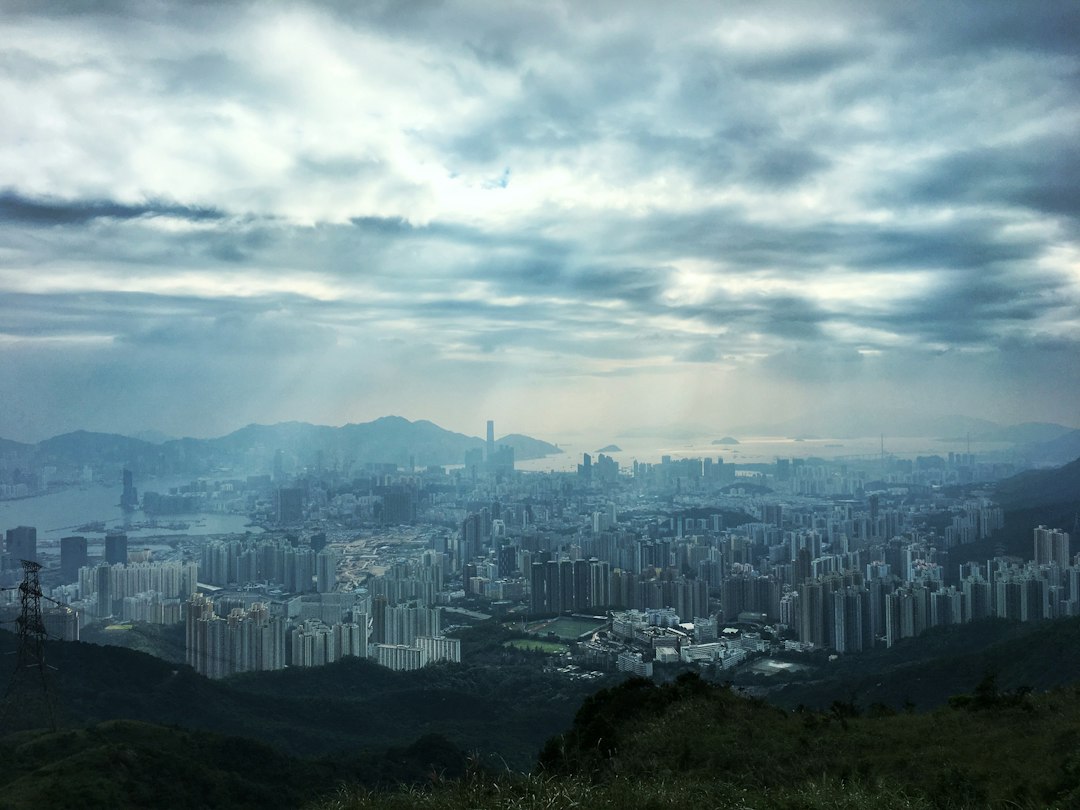
What makes it worth the visit is not the garden itself, which is pleasant but not exceptional, but the small museum housed in the former Yamen building near the park's southern entrance. Scale models and photographs of the Walled City's interior — its lightless corridors, rooftop farms, unlicensed dentists — do more to explain Kowloon's character than any amount of harbour-gazing.
Insider tip
The park opens at 6:30am and fills with tai chi practitioners by 7am. Arrive in that window and you will have the Yamen courtyard almost to yourself. The museum is free.
1881 Heritage: Storia e Cultura a Hong Kong — a colonial relic that became a shopping centre
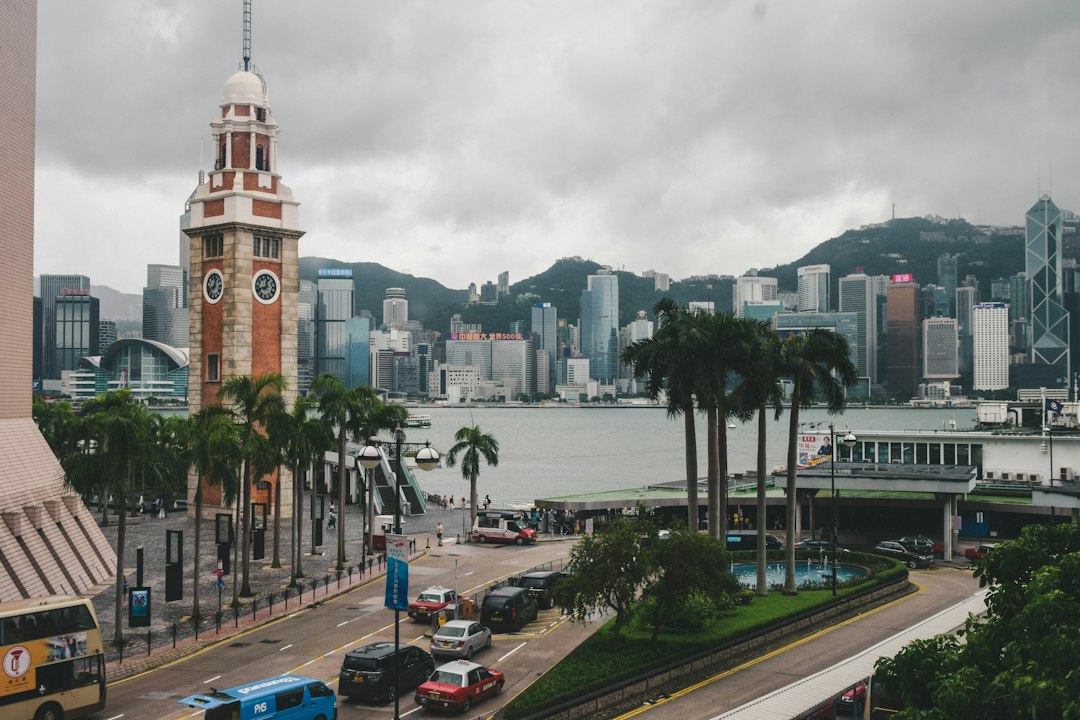
The shops inside are the kind that sell watches and leather goods at prices that require a particular relationship with money. But the courtyard is open to anyone, and the building's exterior repays close attention: the proportions, the ironwork, the way it sits at an angle to the street grid that reflects the original shoreline, which has long since been reclaimed. Go for the architecture; leave before you are tempted by anything in the display cases.
Insider tip
The Heritage Hotel within the complex occasionally runs historical tours of the compound. Check their website before visiting — the tours are infrequent but thorough.
Scopri il Tempio di Wong Tai Sin a Hong Kong: where divination is a serious business
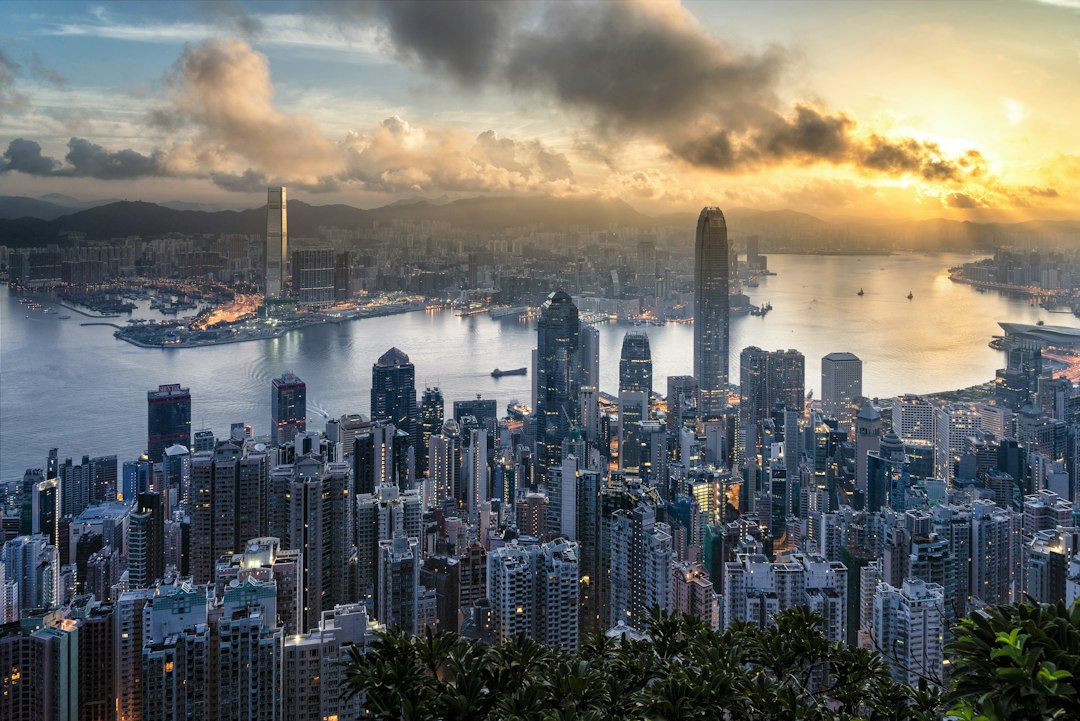
The kau cim fortune-telling practice — shaking a cylinder of numbered bamboo sticks until one falls out, then having the corresponding verse interpreted — is available to visitors, and the interpreters clustered outside the main temple are not there for tourists. They are there because people genuinely need answers. Whether you believe the mechanism works is beside the point; watching it function as a community institution is worth the MTR fare alone.
Insider tip
The temple grounds also include a Good Wish Garden and a replica of the Nine Dragon Wall from Beijing's Beihai Park. Both are frequently overlooked by visitors who stop at the main hall.
Nan Lian Garden: un'oasi di tranquillità a Hong Kong — Tang dynasty geometry in a modern district
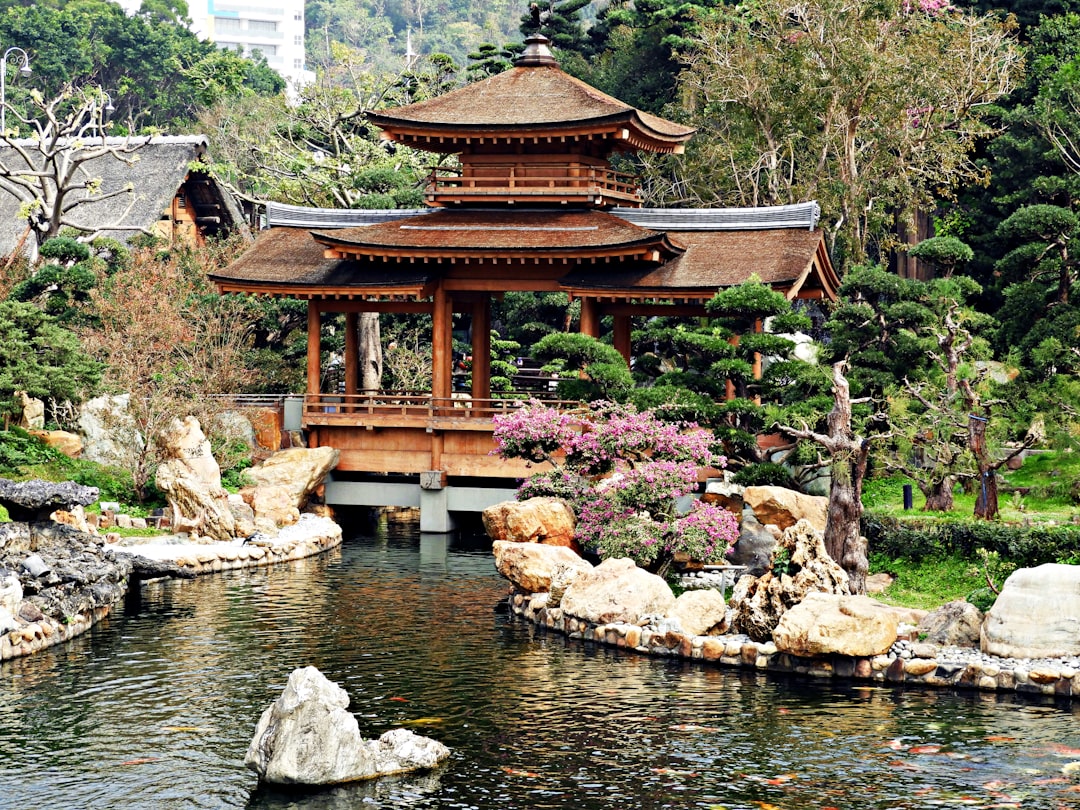
It sits directly beneath the approach path to Kai Tak Airport's former flight corridor, which means the surrounding towers are unavoidable. Some visitors find this jarring. I find it clarifying — the contrast makes both the garden and the city more legible. The adjacent Chi Lin Nunnery, a Tang-style Buddhist complex rebuilt in the 1990s, is connected by a covered walkway and is worth the additional twenty minutes.
Insider tip
The garden is closed on Tuesdays. The lotus pond is at its most photogenic in July and August, though the summer humidity is considerable. Come before 10am if possible.
Hong Kong and the Ladies' Market: Mong Kok's most misunderstood kilometre
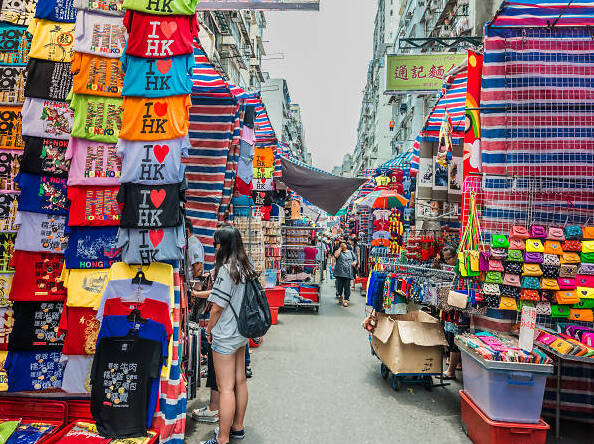
What the market actually offers, at no charge, is a concentrated lesson in how Mong Kok functions as a neighbourhood: the density of the residential blocks above the stalls, the way the street vendors and the wet market one block west and the electronics shops on Nathan Road form an ecosystem that has been operating, more or less continuously, since the mid-twentieth century. Walk it in the early evening, when it is busiest and loudest, and then walk one block east or west to feel the immediate change in register.
Insider tip
The stalls run roughly from Argyle Street in the north to Dundas Street in the south. The northern end tends to be slightly less crowded and has more clothing relative to tourist goods.
Esplora il Ladies' Market di Hong Kong: the same street, a different hour
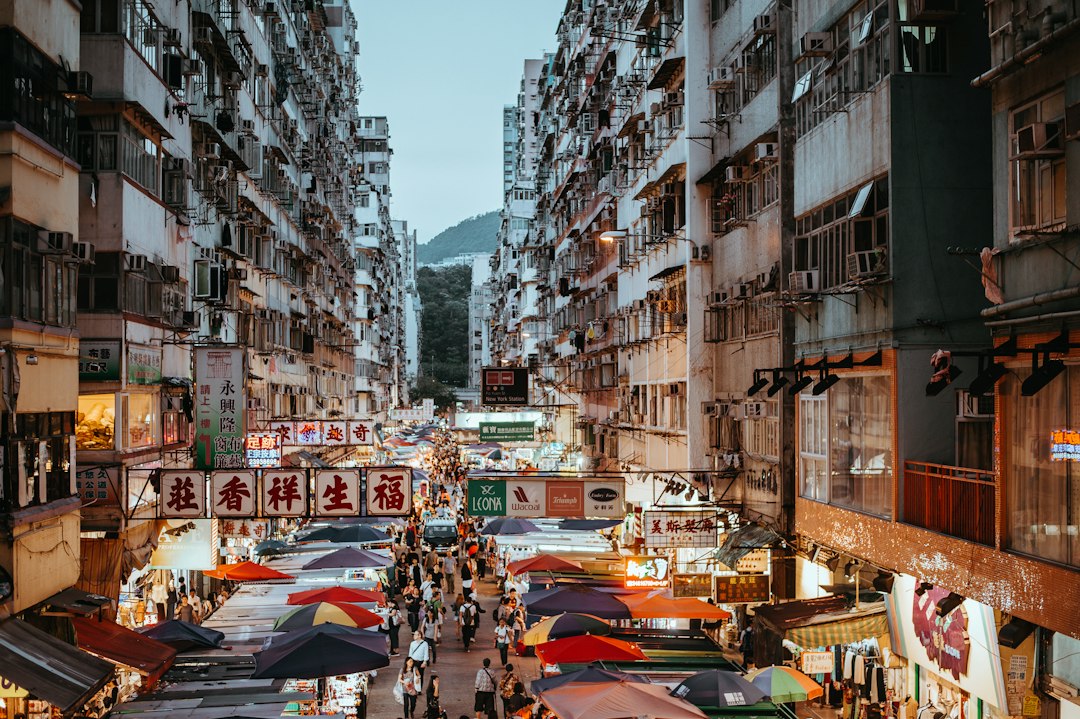
The surrounding streets of Mong Kok — Prince Edward Road to the north, the flower market on Flower Market Road, the bird garden on Yuen Po Street — form a walking circuit that takes about two hours at a reasonable pace and covers more of what Kowloon actually is than most visitors manage in a full day. The Ladies' Market is the anchor, not the destination.
Insider tip
Yuen Po Street Bird Garden, a short walk north, is a genuine anomaly: a covered market where elderly men bring their songbirds in ornate bamboo cages. It opens early and is largely finished by midday.
Hong Kong: The Jade Market — a compressed education in a stone
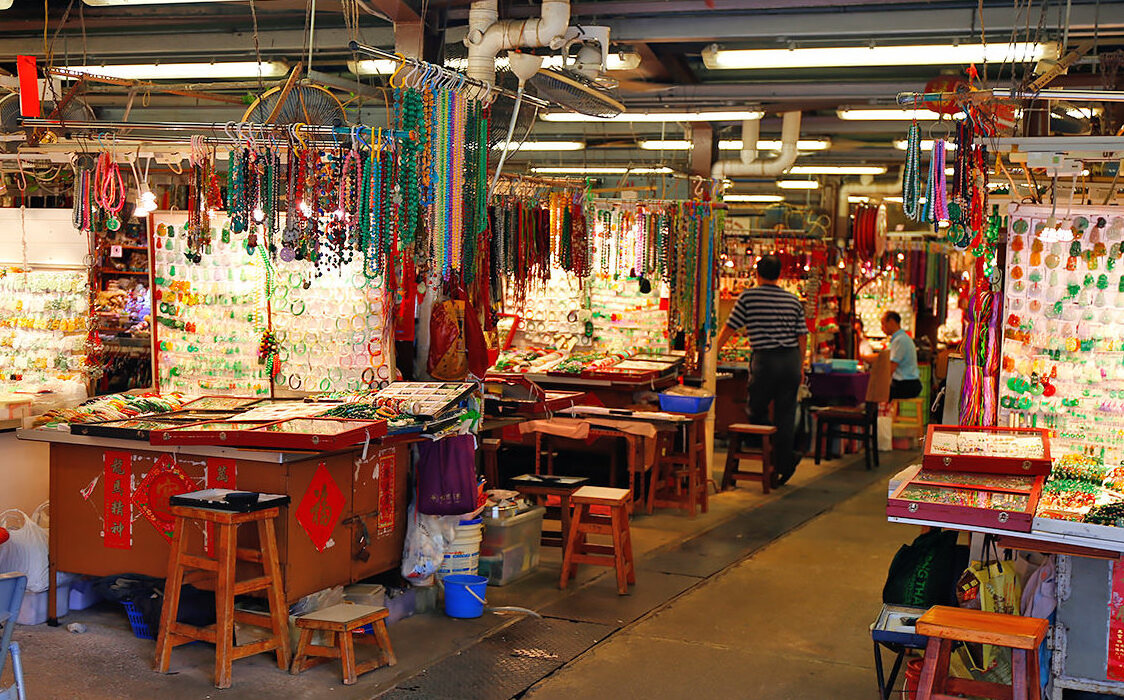
The market's value is not primarily commercial. It is a place where you can watch an entire community of knowledge — about colour, translucency, texture, provenance — operate in real time, in Cantonese, at close quarters. Bring cash, bring time, and do not expect to leave with a bargain unless you have done serious homework first. The disappointment of buying something that turns out to be glass is, in its own way, also educational.
Insider tip
The market is busiest and most fully stocked in the morning, roughly 10am to noon. Many vendors begin packing up by early afternoon. The surrounding Yau Ma Tei neighbourhood has several excellent cha chaan tengs worth finding for lunch.
Zaha Hadid: Innovation Tower (Jockey Club Tower) — a building that makes the campus argue with itself
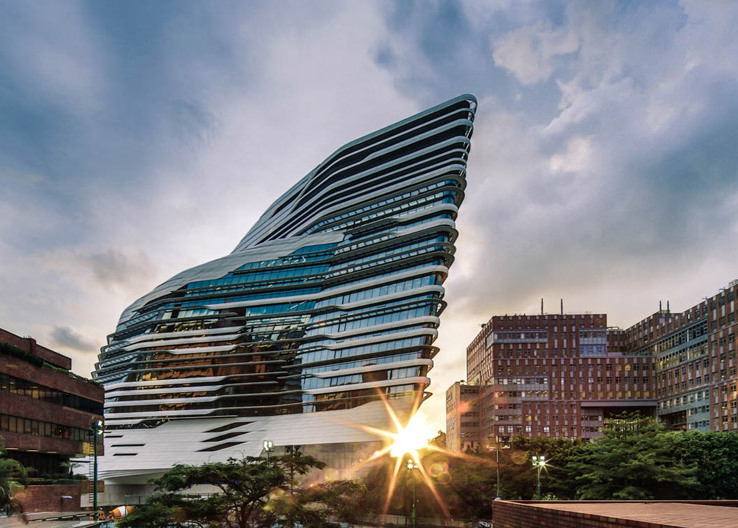
The campus itself, built incrementally over decades, is a catalogue of mid-century institutional architecture that the Innovation Tower disrupts without quite resolving. Whether that disruption is productive or merely expensive is a question worth sitting with. The building is accessible to visitors during university hours, and the interior — a continuous spiral of interconnected spaces — is more coherent than the exterior suggests.
Insider tip
The pedestrian bridge connecting the campus to Hung Hom station passes close to the building's base and offers a useful perspective on its relationship to the surrounding urban fabric. Worth the detour even if you do not go inside.
Scopri l'incanto di Sky100 a Hong Kong: a hundred floors up, and what you actually see
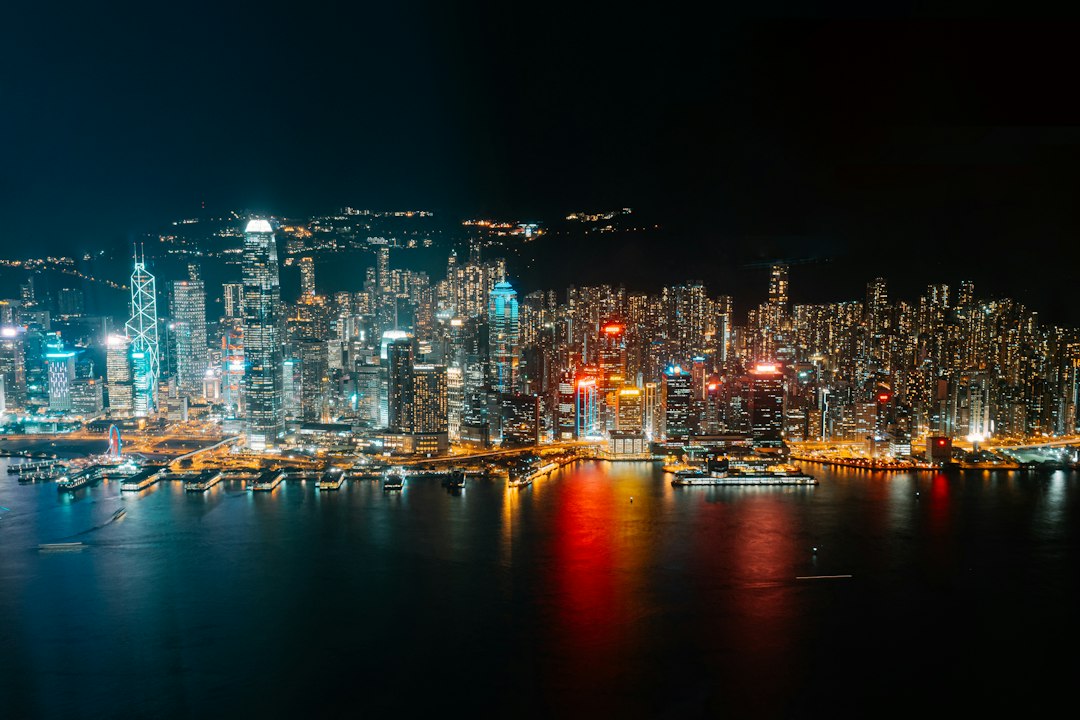
The observation deck is well-run and not especially crowded on weekday afternoons, which is the best time to visit. The multimedia installations that have been added over the years are the kind of thing that occupies children and can be ignored by adults. What is worth attending to is the spatial experience of standing above a city this dense and watching it extend in every direction to the limit of visibility — not as spectacle, but as information.
Insider tip
Book tickets online in advance; the walk-up queue on weekends can be substantial. The ticket includes access to an interactive exhibition on Hong Kong's urban development that is more substantive than it appears.
The Hong Kong Museum of History: eight thousand years in one building, and the politics of telling it
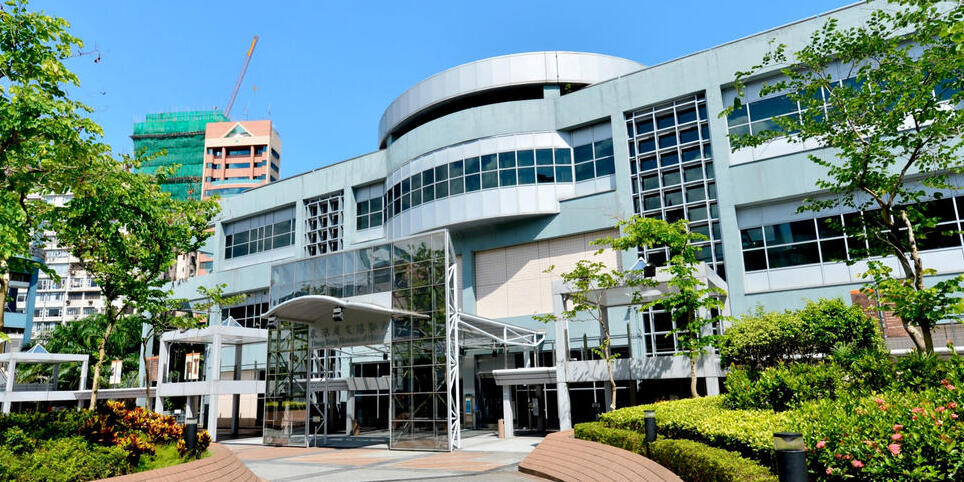
The museum was established in 1975 and has been renovated several times since. It is not glamorous. The building is functional and the signage is occasionally confusing. But the depth of the collection, and the seriousness with which it treats the question of what Hong Kong is and has been, makes it the most intellectually rewarding few hours available in the district.
Insider tip
The museum is closed on Tuesdays. The permanent exhibition is free on Wednesdays. Allow at least three hours; most visitors underestimate the scale of 'The Hong Kong Story' and run out of time before the twentieth century.
There is a version of Kowloon that is easy to consume: the night markets, the harbour view, the density as spectacle. That version is not false, but it is incomplete in the way that a photograph of a conversation is incomplete — it captures the surface arrangement without the actual exchange.
What the district rewards, if you give it time, is a more granular kind of attention. The way a park built over a demolished slum encodes an argument about urban memory. The way a jade market operates as a community of expertise that has nothing to do with tourism. The way a Tang dynasty garden built in 2006 makes a serious claim about what beauty is and how it should be organised in space.
Kowloon has been changing rapidly, as it has been changing rapidly for most of its modern existence. Buildings come down; districts gentrify or don't; communities disperse and reconstitute elsewhere. The places listed here will not all look the same in ten years, and some may not exist in their current form. That is not a reason to visit urgently, in the breathless way that travel writing sometimes recommends. It is simply a reason to pay attention while you are there — to look at what is actually in front of you, rather than at the version of it you assembled before you arrived.
What the district rewards, if you give it time, is a more granular kind of attention. The way a park built over a demolished slum encodes an argument about urban memory. The way a jade market operates as a community of expertise that has nothing to do with tourism. The way a Tang dynasty garden built in 2006 makes a serious claim about what beauty is and how it should be organised in space.
Kowloon has been changing rapidly, as it has been changing rapidly for most of its modern existence. Buildings come down; districts gentrify or don't; communities disperse and reconstitute elsewhere. The places listed here will not all look the same in ten years, and some may not exist in their current form. That is not a reason to visit urgently, in the breathless way that travel writing sometimes recommends. It is simply a reason to pay attention while you are there — to look at what is actually in front of you, rather than at the version of it you assembled before you arrived.


