10 Best Things to Do in Krakow, Poland — beyond the obvious
A long-term visitor's honest account of a city that rewards patience more than enthusiasm
L
Words by
Lena Hofmann
Updated
14 October 2026
Read time
13 minutes
Includes
10 places · interactive map
I first came to Krakow in November, which is probably the wrong time to arrive and definitely the right time to understand it. The city was grey, the Vistula was the colour of old pewter, and the tourists who had descended in summer had mostly retreated. What remained was something more useful: the city itself, going about its business, indifferent to whether I found it charming. I did, of course, but not in the way the brochures had suggested. Krakow has a habit of making you feel that you've arrived slightly too late — that the really interesting decade was the 1920s, or the 1980s underground press era, or the brief window after 1989 when Kazimierz was still genuinely rough around the edges. This is not a complaint. It is, in fact, the city's most distinctive quality: a density of layered time that makes other Central European capitals feel thin by comparison. Warsaw was rebuilt from rubble; Krakow was spared, and the weight of that survival is present in every cobblestone and every facade that has been standing since before anyone alive can remember. The danger, as a visitor, is to treat it as a museum — to move from Wawel to the Main Square to the salt mines and back to the hotel bar, having consumed the city's highlights without having touched it at all. This list is an attempt to go slightly sideways from that itinerary. Some of these places are well-known; a few are genuinely overlooked. None of them will transform your life. But they might, if you approach them with some patience and a willingness to stand still for longer than feels comfortable, give you a more accurate picture of what this particular city actually is.
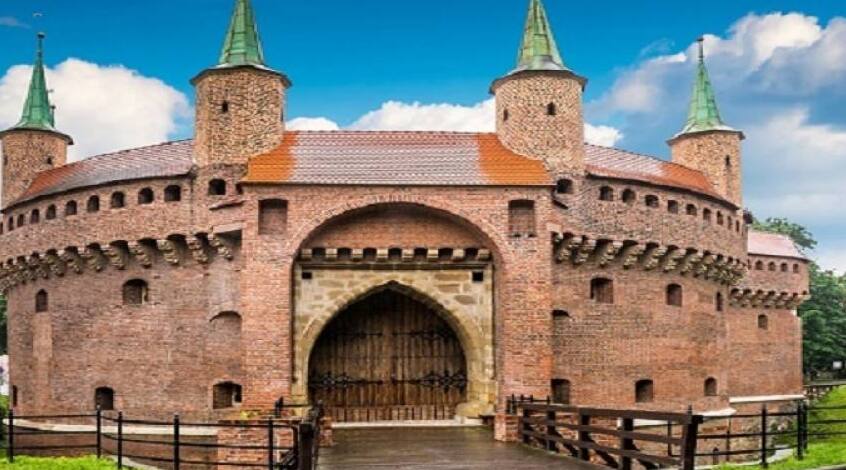
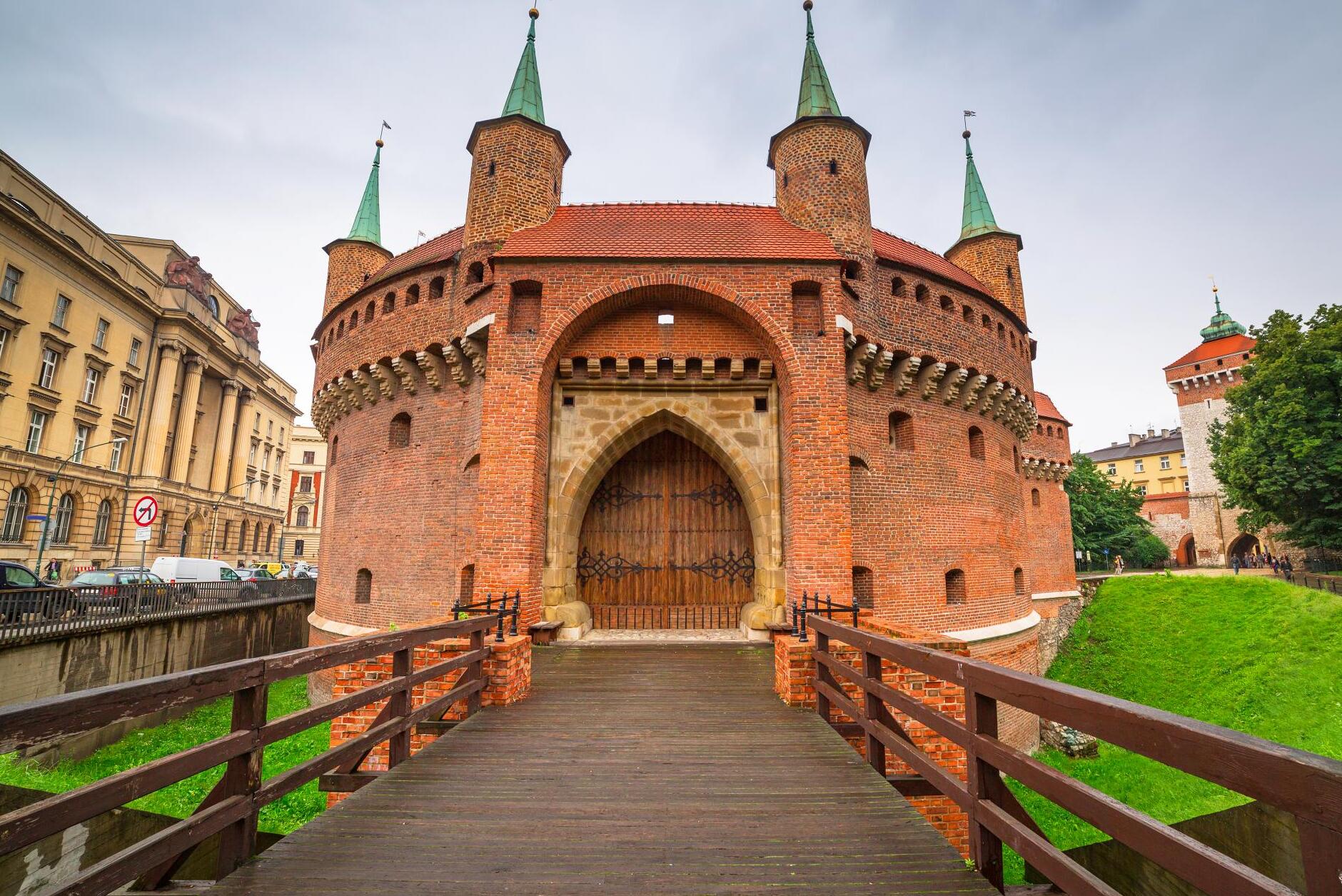
The Barbacana (Barbakan) is the most interesting part of the medieval fortificat: a gatehouse that outlived its purpose
Most cities demolished their medieval defences when they became inconvenient. Krakow kept this one, and it is worth pausing to consider why. The Barbakan — a circular, turreted gatehouse built in 1499 in response to the Ottoman threat advancing through Hungary — stands just north of the Old Town, connected to the Florian Gate by a narrow neck of masonry that once passed over a moat. The moat is long gone, replaced by the Planty park, but the structure itself is in better condition than it has any right to be. What makes it worth your time is not the architecture alone but the specific historical anxiety it embodies: this was a city that knew, in the late fifteenth century, that it might not survive the century. It did. The Barbakan did not fire a shot in anger. That is its own kind of story.
Insider tip
The interior is open seasonally and houses rotating exhibitions — worth checking before you visit, as the empty courtyard alone, while atmospheric, takes about four minutes to exhaust.
2Historic Fortification· 0.1 km
Il Barbacane, una delle più belle costruzioni medievali dell'architettura mi: the legend inside the stone
This entry and the previous one refer to the same physical structure approached from two different angles of attention, which is itself instructive about Krakow. The Italian-language source material emphasises something the English accounts tend to underplay: the Barbakan was never taken. During every assault on the city in which it played a role, the defenders held. This has passed into local legend in a way that is not especially dramatised — Krakow is not a city that shouts about its history — but is present in the quiet pride with which locals will mention it if you ask. The craftsmanship of the brickwork, the seven cylindrical turrets, the thickness of the walls: these are details that reward slow looking rather than a photograph taken from the Planty path and immediately forgotten.
Insider tip
Come in the early morning before the tour groups arrive from the hotels on Floriańska. The light on the brick at that hour is considerably more interesting than at midday.
3Square· 0.7 km
Cracovia | Rynek Glówny è la piazza principale della città: the square as civic theatre
Every city has a main square. Few have one that functions as consistently and as unselfconsciously as this one. The Rynek Główny has been the commercial and social centre of Krakow since the city was redesigned on a grid plan in 1257, and it wears that continuity without ceremony. The Cloth Hall runs down its centre, the Church of St Mary anchors the northeast corner, pigeons negotiate with tourists over the cobblestones. What the guidebooks rarely mention is that the square works just as well at midnight in January, when there are perhaps thirty people in it and the cold coming off the stone is serious, as it does during the summer markets. The proportions — roughly 200 metres on each side — are generous enough that it never feels crowded in the way that, say, the Piazza Navona does. You can always find a corner of it that is, if not quiet, at least your own.
Insider tip
The underground archaeological museum beneath the square requires a separate ticket and separate queuing — the wait is rarely worth it unless you have a specific interest in medieval drainage systems, which is a more niche enthusiasm than most visitors possess.
4Square· 0.7 km
With its 40,000 square meters, the Krakow Market Square (Rynek Główny) is not: the geometry of the largest medieval square in Europe
Forty thousand square metres is a number that doesn't mean much until you walk it. The Rynek Główny is not only the largest medieval square in Poland but, by most reckonings, the largest of its kind in Europe — a distinction that becomes physically legible when you stand at one corner and try to read the clock on St Mary's Basilica from there. The square was designed in 1257 as part of a deliberate urban plan following the Mongol raids, a piece of civic optimism built on the assumption that the city would survive and grow. It did. The square has hosted markets, executions, coronation processions, and, more recently, an annual Christmas market that is simultaneously very beautiful and very crowded with people drinking mulled wine from identical ceramic mugs. Both things can be true.
Insider tip
The hejnał — the bugle call played from the tower of St Mary's every hour — is interrupted mid-phrase, commemorating a thirteenth-century trumpeter allegedly shot by a Mongol arrow. It is one of those traditions that sounds invented but is not.
5Art & Museum· 0.4 km
Wonderful Krakow: the Leonardo problem
Krakow is one of six places in the world that has a painting by Leonardo da Vinci in permanent residence. This is a fact that the city mentions with the restraint of someone who knows they are holding a very good card. The Lady with an Ermine — painted around 1489 to 1490, 40.3 by 54.8 centimetres of tempera on walnut panel — hangs in the Czartoryski Museum, which after years of renovation has reopened in a form that does justice to the collection. The painting is smaller than most people expect. The queue to stand in front of it is longer than most people want. Neither of these facts diminishes the experience of looking at it directly, which is different in kind from looking at a reproduction in the way that most such claims are not, in fact, true. This one is.
Insider tip
Book tickets for the Czartoryski online and in advance. Walk-up availability on weekends is limited, and the alternative — standing in a queue on ul. Pijarska in Polish autumn rain — is an experience that teaches patience but not much else.
The Historical Museum of Krakow is not a building. It is twenty-one buildings — a distributed network of historic structures across the Old Town, each housing a different aspect of the city's past. This is either a brilliant piece of curatorial thinking or an administrative headache, depending on your temperament and how much you enjoy consulting maps. The practical effect is that the city itself becomes the frame for its own history, which is an arrangement that suits Krakow well, given that the architecture is doing half the interpretive work before you even look at an exhibit. Some branches are more compelling than others; the Krzysztofory Palace, which houses the main historical collection, rewards an hour of serious attention. Others are more specialist. The combined ticket represents reasonable value if you plan to visit more than three branches.
Insider tip
The museum system's website is functional but not intuitive. Check opening hours for individual branches before planning your day — they do not all keep the same schedule, and some close on Mondays while others do not.
Strzelecki Park sits north of the Old Town, a short walk from the Barbakan, and it is the kind of place that local residents use and tourists largely pass through without stopping. This is a mistake. The park has, over recent years, developed a programme of contemporary art installations that sit within the greenery without the heavy-handed interpretive apparatus that makes so many outdoor art projects feel like homework. The scale is human. You can sit on a bench near a piece of public sculpture and eat a sandwich and not feel that you are doing culture incorrectly. In a city as saturated with historical weight as Krakow, a park that is making a tentative argument for the present tense is a useful counterpoint.
Insider tip
The park is also a functional neighbourhood green space, which means it is full of people walking dogs and children on bicycles. This is not a drawback. It is precisely what makes the art feel less isolated from actual life.
8Historic Quarter· 1.7 km
Kazimierz, Krakow's historic Jewish quarter: a neighbourhood in the process of becoming
Kazimierz is, depending on which decade you first visited it, either a neighbourhood in recovery or a neighbourhood that has recovered perhaps a little too completely. The historic Jewish quarter — established in the fourteenth century, devastated during the Nazi occupation when its population was deported to the Podgórze ghetto — spent the post-war decades in a state of deliberate neglect. The 1990s brought a complicated revival, accelerated by Schindler's List being filmed partly in the area. Today, Kazimierz has galleries, bars, restaurants, and a weekend flea market on Plac Nowy that is one of the more honest commercial spaces in the city. The synagogues — several of which are still functioning — and the Jewish cemetery on Miodowa Street carry the actual historical weight. The zapiekanka stands on Plac Nowy carry lunch. Both are worth your attention.
Insider tip
The Galicia Jewish Museum on ul. Dajwór is a more rigorous and less sentimental introduction to the history of Polish Jews than most of the tourist-facing options in the quarter. It is also less crowded.
The Wawel hill is not, technically, beyond the obvious — it is the single most visited site in Krakow. But the Cathedral of Saints Stanislaus and Wenceslaus, which crowns it, is consistently underread by visitors who treat it as a backdrop for photographs of the castle. The cathedral is the burial place of Polish kings, national poets, and military heroes; it is, in the most literal sense, where Poland keeps its dead. The Sigismund Bell in the tower — cast in 1520, requiring twelve men to ring — is sounded on major national occasions, and hearing it in person is one of those experiences that arrives without warning and lands harder than expected. The hill itself, rising above the Vistula, gives you a reading of the city's geography that the flat streets of the Old Town cannot provide.
Insider tip
The Royal Chambers and the Cathedral require separate tickets, and the queues for both can be long in summer. Arrive before 9am or accept that you will spend a portion of your morning standing on cobblestones in the sun.
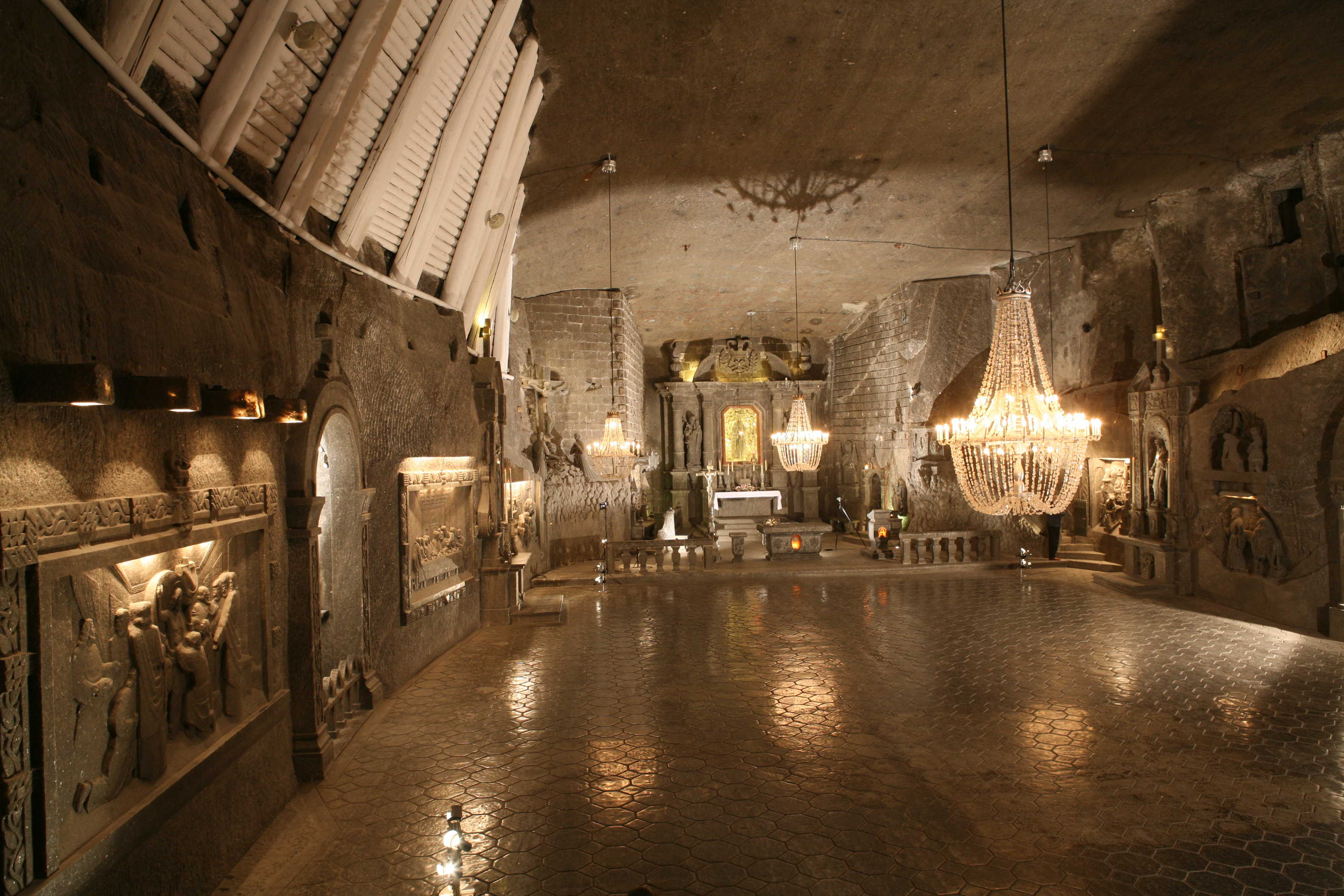
The Wieliczka Salt Mine is approximately twelve kilometres southeast of Krakow and is, by visitor numbers, one of the most attended sites in Poland. It is also genuinely worth the trip, which is not always the case with places that appear on every tour operator's itinerary. The mine has been in continuous operation since the thirteenth century; the standard tourist route covers about three kilometres of corridors and descends to a depth of around 135 metres via 800 steps. The chambers carved from salt — including a full chapel with salt-crystal chandeliers — are the kind of thing that resists adequate description and rewards direct encounter. The air at depth is cool and carries a faint mineral quality. The crowds at the entrance, particularly in summer, are real and should be planned around. Book a morning slot.
Insider tip
The English-language guided tour is the standard option and covers the main chambers competently. If you have a specific interest in the mining history rather than the spectacle, ask about the miner's route, which is less polished and more instructive.
There is a particular quality to cities that have survived things — wars, occupations, the slow erosion of being continuously inhabited for seven or eight centuries — and Krakow has it in a concentration that can feel, on some days, almost oppressive. The stones remember more than the people who walk on them. This is not a metaphor; it is a structural fact about a city where the medieval street plan is still largely intact, where the university has been operating since 1364, where the cathedral on the hill contains the tombs of people who shaped the political geography of a continent. Coming to terms with that density of accumulated time is the real work of visiting Krakow, and it is not work that can be completed in a long weekend, regardless of how efficiently you move between sites. What I have tried to do in this list is suggest a slightly slower and more lateral approach — one that treats the city not as a collection of attractions to be processed but as a place with its own internal logic, its own frictions, its own ongoing argument with its past. Some of that argument is uncomfortable. Some of it is very beautiful. Most of it requires you to put your phone away and simply look. Krakow will not perform for you. It has been here too long for that.
🏆 Pocket guide
Take this guide with you.
Save it offline, get walking directions, and discover thousands more places like the ones you just read.
Spring (April to June) and early autumn (September to October) offer the most manageable combination of weather and crowd levels. July and August bring the heaviest tourist traffic, particularly around the Main Square and Wawel. November through February is cold — sometimes seriously so — but the city is quieter, accommodation is cheaper, and the Christmas market in December, despite its commercial aspects, is worth seeing at least once.
How many days do you need to see Krakow properly?
Three full days is the minimum for the Old Town, Kazimierz, and Wawel without feeling rushed. Four or five days allows for a half-day trip to Wieliczka and a more relaxed pace within the city. Visitors who try to do Krakow in 48 hours typically see the surfaces of things rather than the things themselves, which is a common and understandable mistake.
Is Krakow easy to get around without a car?
The Old Town and Kazimierz are both walkable, and most of the sites in this list are within comfortable walking distance of the centre. The tram network covers the broader city efficiently and cheaply. Wieliczka is reachable by suburban train from Krakow Główny station in under 30 minutes. A car is not useful and is actively inconvenient in the historic centre, where many streets are pedestrianised.
Are there things in Krakow that are overhyped or disappointing?
The underground archaeological museum beneath the Main Square is frequently cited as a highlight and is, in practice, interesting for about twenty minutes. The dragon statue at the foot of Wawel hill breathes fire on a schedule and draws a crowd disproportionate to the experience. The Old Town's restaurant strip along Floriańska and Grodzka streets tends toward tourist pricing without a corresponding improvement in quality — eating one street back in either direction is almost always a better decision.
Is Krakow an expensive city to visit?
By Western European standards, no. Accommodation, food, and public transport remain considerably cheaper than equivalent options in Prague, Vienna, or Berlin. Museum entry fees are modest. The main exception is the cluster of restaurants and bars immediately around the Main Square, which have adjusted their pricing to international tourist expectations. The further you walk from the Rynek, the more accurately local the prices become.
🏆 Read this offline
Save it to your phone.
Bookmark this guide, plan your trip offline, and discover thousands of places like these.
BookmarkPlan offline60 languages
iOS / Android
Huawei users
Secret WorldHidden places, real stories — plan your trip