10 Best Things to Do in Miami, USA — beyond the obvious
A long-term resident's unsentimental guide to a city that rewards patience and punishes clichés
L
Words by
Lena Hofmann
Updated
27 October 2026
Read time
13 minutes
Includes
7 places · interactive map
I moved to Miami telling myself it would be temporary. That was several years ago. I still haven't entirely figured the place out, which is either a failure of observation or a testament to the city's genuine complexity — I'm no longer sure which. What I can tell you is that Miami is not the city its own tourism board describes. The glossy version — perpetual sunset, cocktails the colour of traffic cones, a beach that exists in a kind of eternal present tense — is real enough, but it sits on top of something considerably stranger and more interesting.
Miami is one of the few American cities that feels genuinely foreign to Americans. It conducts much of its daily life in Spanish. Its architecture is either aggressively new or defiantly mid-century, with almost nothing in between. Its relationship with money is theatrical in a way that can be exhausting if you let it be, or fascinating if you maintain the right anthropological distance. It has a Haitian community that shaped its politics for decades, a Cuban exile culture that still organises itself around a homeland most of its members have never seen, and a Brazilian population large enough to sustain its own economy within the economy.
The beach, yes. The Art Deco, yes. The nightlife, obviously. But this guide is not about those things — or not only about those things. It is about the Miami that persists once the Instagram filter is removed: the parks that double as community living rooms, the food that requires no performance, the views that cost nothing, the small frictions and unexpected pleasures that accumulate into something like understanding. I have made most of the tourist mistakes so you don't have to. What follows is what remained after I stopped being impressed.
The Art of Spending Almost Nothing: Miami's Parks as a Way of Life
There is a particular kind of travel snobbery that dismisses budget travel as mere deprivation. Miami, to its credit, makes that argument difficult to sustain. The guide Vacanze Miami low cost 2026: guida pratica per spendere poco makes a point that anyone who has spent time here will recognise as true: this is one of the few cities where you can swim in warm, clear water, visit a museum of international standing, and eat an authentic Cuban sandwich — all on the same day, and without spending what you'd pay for a single cocktail at a Brickell rooftop bar. The city's public parks are central to this equation. Bayfront Park, Lummus Park, the stretches of green along the Venetian Causeway — these are not amenity spaces maintained for tourists. They are where Miami actually lives: dominoes games in the afternoon, quinceañera rehearsals on Saturday mornings, old men reading newspapers in languages the city's promotional materials rarely acknowledge.
Insider tip
The free trolley network connects several neighbourhoods and is genuinely useful rather than merely scenic. It is also, for reasons no one has adequately explained, almost always on time.
Miami is a city that punishes the under-prepared. Traffic is not merely bad — it is a kind of philosophical position the city takes against you personally. The heat in July is not a weather event but a sustained argument for staying indoors between noon and four. Which is why the approach described in Secret World recensione 2026: Scopri Miami come mai prima d'ora — treating the city as something to be decoded rather than simply consumed — is more useful than it might initially sound. The parks and outdoor spaces here work best when you understand their rhythms: Matheson Hammock at low tide, when the atoll pool fills with shallow warm water and children wade without parental anxiety; Oleta River State Park before nine in the morning, when the kayak rentals are still quiet and the mangrove channels hold a silence the rest of Miami rarely offers. These are not discoveries. They are simply things that reward timing.
Insider tip
Oleta is technically within Miami-Dade County but feels genuinely removed. Rent a kayak rather than a paddleboard if you plan to go deep into the mangroves — the channels narrow considerably.
3Parks & Gardens· 0.0 km
The Budget Principle, Applied Seriously
The premise of Vacanze Miami low cost: Guida pratica per risparmiare nel 2026 — that Miami's reputation as an expensive city is partly a failure of imagination — holds up under scrutiny. The Pérez Art Museum Miami offers free admission on the first Thursday and Saturday of each month. The Wynwood Walls, whatever you think of the gentrification that surrounds them, are free to walk past. Coconut Grove's farmers market costs nothing to browse and rather more if you lose discipline near the tamale stand. The trap most visitors fall into is confusing Miami's loudest, most visible economy — the one organised around bottle service and valet parking — with the only economy available. The city's parks, its public beaches, its free outdoor concerts in Bayfront Park during winter months: these are not consolation prizes for people who can't afford the other version. They are, in many respects, the more interesting version.
Insider tip
South Beach's metered parking is aggressively enforced. The parking garages on Collins Avenue are expensive but cheaper than the fine, which arrives with dispiriting reliability.
The Cuban sandwich is Miami's most defensible culinary claim, and the debate about who makes the best one is conducted with an intensity that would be disproportionate if the sandwiches weren't genuinely good. Versailles on Calle Ocho is the famous option — famous enough that its clientele now includes as many tourists as exiles — but the surrounding blocks of Little Havana contain cafeterias where the ventanita (the walk-up window) still functions as it was intended: a place to stand, drink a cortadito that arrives in a paper cup the size of a shot glass, and conduct a brief transaction with someone who has no interest in whether you're enjoying your Miami experience. The food in these places is not refined. It is calibrated, which is different. The ropa vieja has been made the same way for decades. The croquetas are fried to order. The plantains are sweet and slightly collapsed. Nothing is described on a chalkboard.
Insider tip
El Pub on SW 8th Street is less photographed than Versailles and marginally better for sitting down with a full plate. The lunch counter fills by noon.
There is something mildly absurd about using artificial intelligence to plan a trip to a city as sensory and contingent as Miami. Secret World recensione 2026: la guida definitiva a Miami and similar resources position technology as the solution to the complexity of travel planning, and they are not entirely wrong — logistics are logistics, and a good itinerary tool saves time that can be spent eating well instead of refreshing a browser. But Miami specifically rewards the kind of unplanned afternoon that no algorithm schedules: the detour through Little Haiti that ends at a botanica you didn't know existed, the decision to stay for a second beer at a bar in Edgewater because the conversation became interesting. The best planning, in Miami as elsewhere, is planning that leaves room for the city to contradict your expectations. It will. It always does.
Insider tip
The Design District and Wynwood are adjacent but temperamentally different. The Design District is for looking; Wynwood, increasingly, is for being looked at. Know which you're in the mood for.
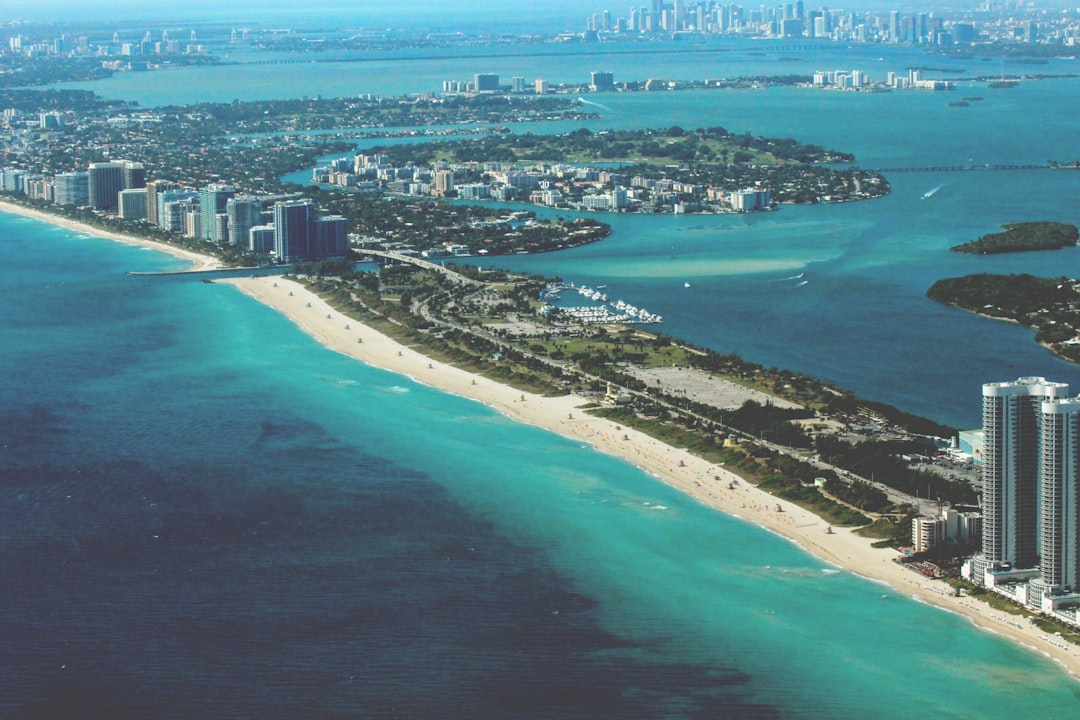
The view of downtown Miami from the MacArthur Causeway at dusk is one of the city's genuinely affecting sights, and it costs nothing beyond the willingness to pull over somewhere legal and stand in the heat for ten minutes. The skyline has changed dramatically since the early 2000s — towers that weren't there fifteen years ago now define the silhouette — and the result is a city that looks, from this angle, like it invented itself recently and is still deciding whether it's permanent. The bay in the foreground is the colour of green glass in flat light and something closer to silver when the clouds move in from the south. Cruise ships pass at a scale that seems implausible. The whole scene has a quality of mild unreality that Miami, to its credit, leans into rather than apologising for. Best Trip Planner Miami 2026: Guida Completa rightly identifies this kind of spontaneous, cost-free experience as central to understanding what the city actually offers beyond its ticketed attractions.
Insider tip
The causeway has limited stopping space. The small park at the eastern end of the MacArthur, near the toll plaza, offers a more stable vantage point with actual benches.
7Historic Architecture· 0.0 km
Vizcaya, Quietly
Vizcaya Museum and Gardens is the kind of place that appears on every list and still manages to be underexperienced. Most visitors spend forty minutes in the main villa and leave. The gardens, which extend to the bay and include a formal Italian section, a rockery, a casino folly on a small island, and a series of hedged rooms that become progressively more intimate as you walk south — these require time that the average itinerary doesn't allocate. The house itself, completed in 1916 for industrialist James Deering, is a baroque fantasy assembled from European antiques with a confidence that could read as vulgarity but somehow doesn't. It reads instead as a particular American ambition: the desire to compress centuries of European culture into a single building on Biscayne Bay. There is a small café. The queue for it is always longer than seems reasonable.
Insider tip
Wednesday mornings are the quietest. The audio guide is optional but the garden map is not — the grounds are larger than they appear from the entrance.
Miami is a city that resists the kind of conclusion travel writing usually reaches for. It does not resolve into a single character or a coherent narrative. It is simultaneously one of America's most Latin cities and one of its most aggressively capitalist. It is a place of genuine cultural depth that also contains, within a few miles, some of the most hollow luxury real estate on the continent. It has a serious visual arts scene and a serious problem with self-mythology.
What I have come to think, after years of living here and arguing with myself about it, is that Miami rewards a particular kind of attention — the kind that is willing to hold contradictions without forcing them to resolve. The city is not trying to be coherent. It is trying to be Miami, which is a project that has been underway for about a century and shows no signs of completion.
The ten things in this guide are not the ten best things in any absolute sense. They are ten things that have, at various points, made Miami feel worth the effort — the traffic, the heat, the occasional suspicion that the whole enterprise is organised primarily around making you spend money. They are the things that remained after I stopped waiting for the city to explain itself and started paying attention to what it was actually doing. That, in the end, is the only method that works here. Possibly anywhere.
🏆 Pocket guide
Take this guide with you.
Save it offline, get walking directions, and discover thousands more places like the ones you just read.
The winter months — roughly December through April — offer the most comfortable weather, with low humidity, temperatures in the low-to-mid twenties Celsius, and relatively low rainfall. This is also peak season, which means higher hotel prices and more crowded beaches. Summer is hot and humid, with afternoon thunderstorms that arrive with impressive regularity around 3pm and clear within an hour. Hurricane season runs June through November, with the most active period typically in September and October. If you can tolerate the heat, May and early June offer a reasonable compromise: lower prices, fewer tourists, and weather that is warm rather than punishing.
How do you get around Miami without a car?
With difficulty, but not impossibility. The Metrorail connects downtown to Coconut Grove, Coral Gables, and the airport on a single elevated line. The Metromover is a free automated loop around downtown and Brickell that is more useful than it looks. The free trolley system covers Wynwood, Little Havana, Coconut Grove, and several other neighbourhoods with reasonable frequency. Ride-shares are widely available but expensive during peak hours. For anything involving South Beach, the South Beach Local circulator runs along Washington Avenue and Collins. The honest answer is that Miami was designed for cars, and the public transit system, while improving, still reflects that original assumption.
Is Miami genuinely expensive, or is that reputation overstated?
Both things are true simultaneously. Miami has a tier of extreme luxury — hotels, restaurants, nightclubs — that is priced to match New York or London. It also has a parallel economy that is entirely accessible: public beaches that cost nothing, a Cuban food culture where a full meal rarely exceeds fifteen dollars, free museum days, free outdoor events, and a park system that is genuinely good. The mistake is treating the luxury tier as the only option available. If you stay in a mid-range hotel in Midtown or the Design District rather than South Beach, eat where locals eat rather than where hotel concierges recommend, and use the free trolley rather than taxis, Miami becomes a significantly more affordable city.
Which neighbourhoods are worth spending time in beyond South Beach?
Coconut Grove is Miami's oldest neighbourhood and retains a slightly overgrown, subtropical quality that the rest of the city has largely bulldozed. Little Havana is most interesting on weekdays, as noted elsewhere in this guide. Wynwood is worth a morning for the murals and the gallery density, though it has become self-conscious in a way that can be wearing. The Design District is elegant and expensive and best experienced by walking rather than shopping. Little Haiti, centred on NE 2nd Avenue, has a visual energy — the painted storefronts, the botanicas, the Haitian Creole signage — that is unlike anything else in the city. Allapattah, immediately west of Wynwood, is where several serious galleries have relocated in recent years.
What do most visitors get wrong about Miami?
The most common mistake is treating Miami as a single, legible place rather than several overlapping cities that happen to share a geography. Visitors who spend their entire trip in South Beach have experienced one version of Miami — a real one, but a narrow one. The second most common mistake is underestimating the distances. Miami-Dade County is large, traffic is serious, and the gap between 'nearby on a map' and 'reachable in twenty minutes' is often significant. The third mistake is visiting only in the first half of the day, when the light is flat and the heat is building, rather than in the late afternoon and evening, when the light turns gold, the temperature drops to something manageable, and the city begins to operate at its actual pace.
🏆 Read this offline
Save it to your phone.
Bookmark this guide, plan your trip offline, and discover thousands of places like these.
BookmarkPlan offline60 languages
iOS / Android
Huawei users
Secret WorldHidden places, real stories — plan your trip