I have since spent the better part of three years moving through this neighbourhood, which means I have also spent a considerable portion of that time being wrong about it. The obvious things — the Ladies' Market, the Temple Street Night Market a few stops south — are obvious for reasons that are not entirely dishonest. But Mong Kok rewards the kind of attention that is willing to be bored first. It rewards the person who sits with a cup of milk tea long enough to notice that the city is not performing for them.
What follows is not a list of secrets. Most of these places are known. What I have tried to do instead is describe them the way a person who has actually been there, more than once, in different weathers and different moods, might describe them — with some honesty about what works, what doesn't, and what the guidebooks tend to smooth over.
At a glance
- Esplora il Ladies' Market di Hong Kong: the stall, the haggle, the studied disappointment
- Hong Kong: The Jade Market — green stone, contested value
- Hong Kong: the harbour crossing and the logic of the Star Ferry
- Zaha Hadid: Innovation Tower (Jockey Club Tower) — form as argument
- 1881 Heritage: Storia e Cultura a Hong Kong — the preserved and the repurposed
- The Hong Kong Museum of History: eight thousand years in a building that earns its time
- Scopri la Storia di Kowloon Walled City Park: the anarchic city that no longer exists
- Come pianificare un viaggio a Hong Kong con l'AI nel 2026: navigating the layered city
- Scopri l'incanto di Sky100 a Hong Kong: the hundredth floor and what it costs you
Esplora il Ladies' Market di Hong Kong: the stall, the haggle, the studied disappointment
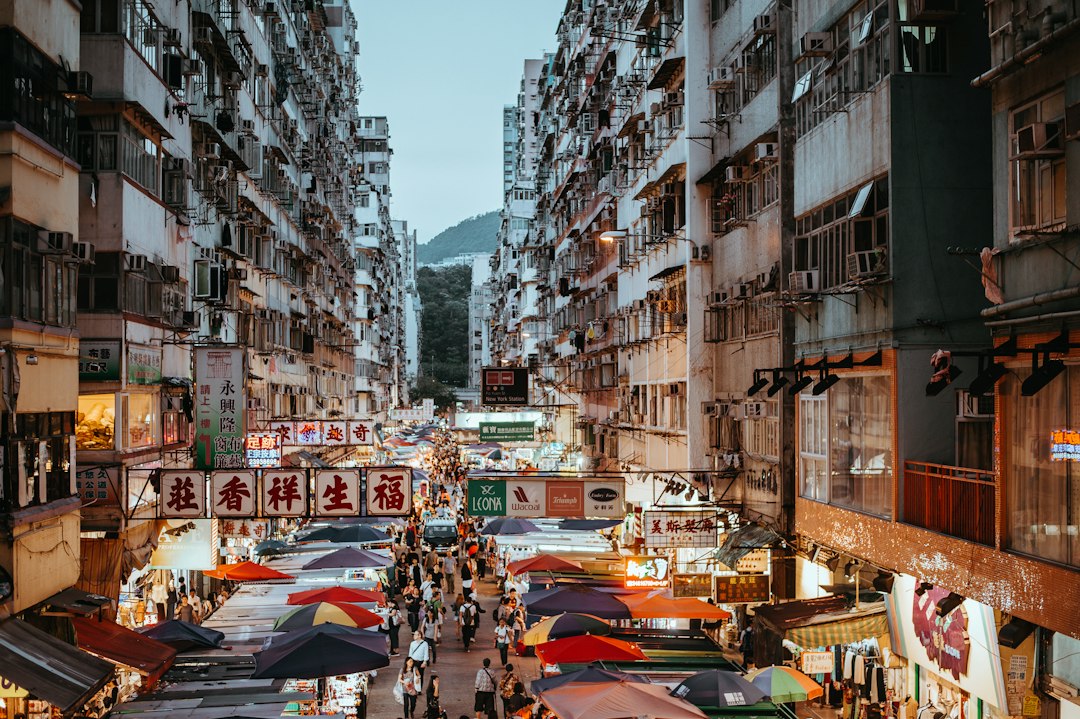
The haggling is real but modest. Vendors quote a price; you offer sixty percent of it; you settle somewhere in the middle; nobody is especially pleased. This is not a flaw in the system. The mild mutual dissatisfaction is the system. Go on a weekday if you want to move through it without friction. Go on a Saturday if you want to understand what 'dense' actually means at street level.
Insider tip
The stalls nearest the Mong Kok MTR exit tend to charge more and negotiate less. Walk north toward Argyle Street and the prices soften perceptibly.
Hong Kong: The Jade Market — green stone, contested value
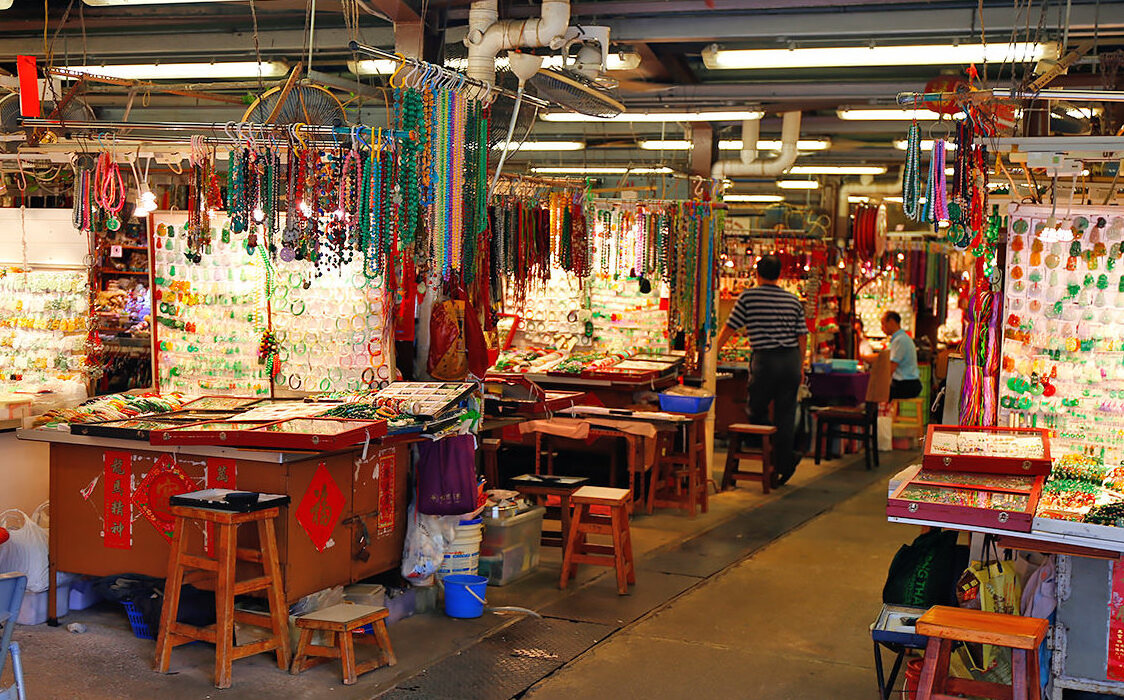
The difficulty for the uninitiated is that quality assessment requires knowledge that takes years to acquire. A translucent deep-green jadeite bangle and an opaque pale-green nephrite bangle can look superficially similar to an untrained eye and differ in value by several orders of magnitude. The vendors know this. Most are not dishonest, exactly, but they are operating in a market where information asymmetry is structural.
Insider tip
Unless you have a knowledgeable companion or years of experience, treat this as an ethnographic visit rather than a shopping expedition. Buy something small and inexpensive if you must buy something.
Hong Kong: the harbour crossing and the logic of the Star Ferry
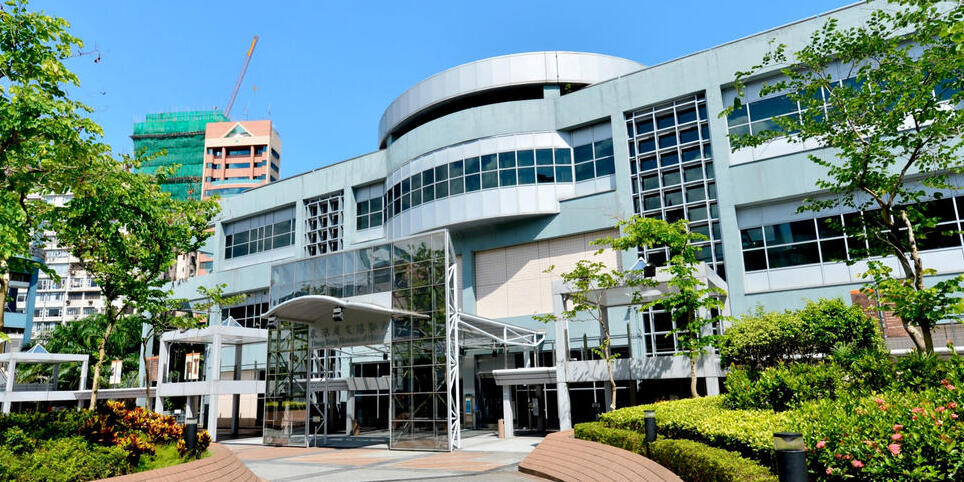
From Mong Kok, the Tsim Sha Tsui pier is reachable by MTR in under ten minutes. The ferry itself — green and white, slightly creaky, smelling of diesel and harbour water — is worth taking at different times of day. The morning crossing carries office workers reading phones. The evening crossing carries tourists and couples. Both versions are instructive.
Insider tip
Take the lower deck. It is cheaper, closer to the waterline, and the windows open, which matters in summer more than you can imagine until you experience a Hong Kong August.
Zaha Hadid: Innovation Tower (Jockey Club Tower) — form as argument
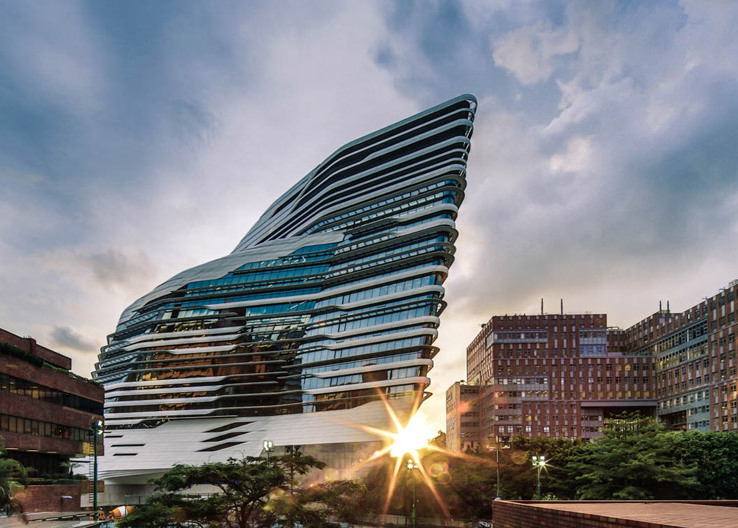
From Mong Kok, Hung Hom is a short bus or taxi ride east. The building is best approached on foot from the Chatham Road South side, where the full profile becomes visible across a stretch of open pavement. It does not photograph well, which is interesting given how photogenic Hadid's work tends to be in architectural press. In person it is more convincing.
Insider tip
The building is on a university campus and generally accessible during daytime hours. The interior atrium is worth entering if you can — the spatial logic inside is as disorienting as the exterior.
1881 Heritage: Storia e Cultura a Hong Kong — the preserved and the repurposed
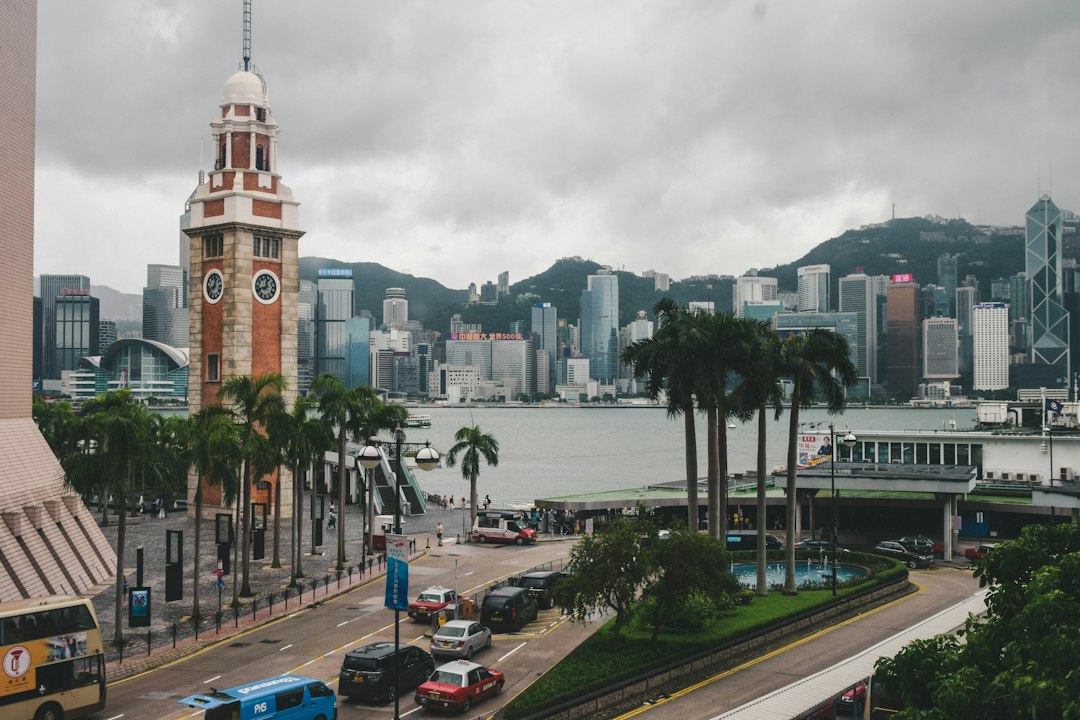
The historical fabric is real. The building genuinely served as the Marine Police base for over a century, and some of the original structures remain largely intact. What surrounds them now — high-end watch boutiques, a hotel lobby of considerable marble — creates a friction that is worth sitting with rather than resolving. The complex is free to walk through. The history is legible if you look past the retail.
Insider tip
The heritage exhibition on the upper level is small but carefully done and frequently overlooked by visitors who come only for the shopping or the photo opportunity with the water tower.
The Hong Kong Museum of History: eight thousand years in a building that earns its time
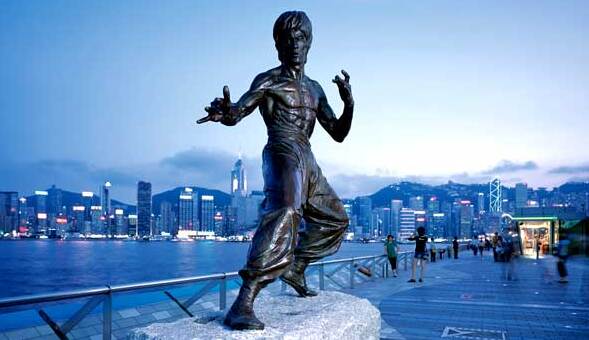
The natural history galleries at the beginning are unexpectedly good: the geological and ecological sections remind you that Hong Kong existed for millions of years before anyone thought to build a harbour there. The sections on the fishing villages and the pre-colonial settlement patterns are the ones most visitors skip and most worth reading slowly. The 1997 handover materials at the end are presented with a restraint that is itself a kind of historical document.
Insider tip
Wednesday admission is free for permanent exhibitions. The museum is significantly less crowded on weekday mornings, when you can move through the colonial-era galleries without navigating tour groups.
Scopri la Storia di Kowloon Walled City Park: the anarchic city that no longer exists
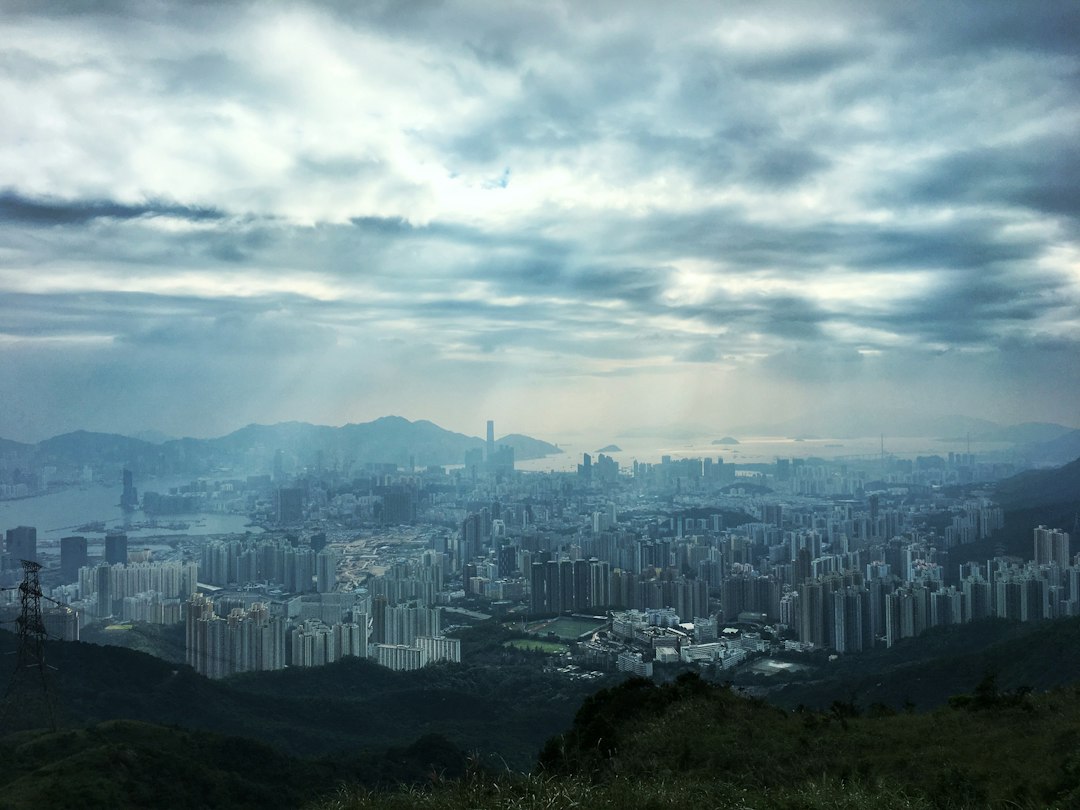
The park is pleasant and well-maintained, which is precisely the thing that makes it slightly melancholy. The garden itself is competent — pavilions, carp ponds, shaped hedges — but the interpretive exhibition at the entrance, which documents the Walled City through photographs and artefacts, is what justifies the trip. The photographs of the interior are the kind that take a moment to parse: you are looking at a city inside a city, lit by fluorescent tubes because sunlight couldn't reach it.
Insider tip
The yamen building from the original Qing-era garrison has been preserved within the park and is easy to miss. It is the oldest structure on the site and worth locating before you leave.
Come pianificare un viaggio a Hong Kong con l'AI nel 2026: navigating the layered city
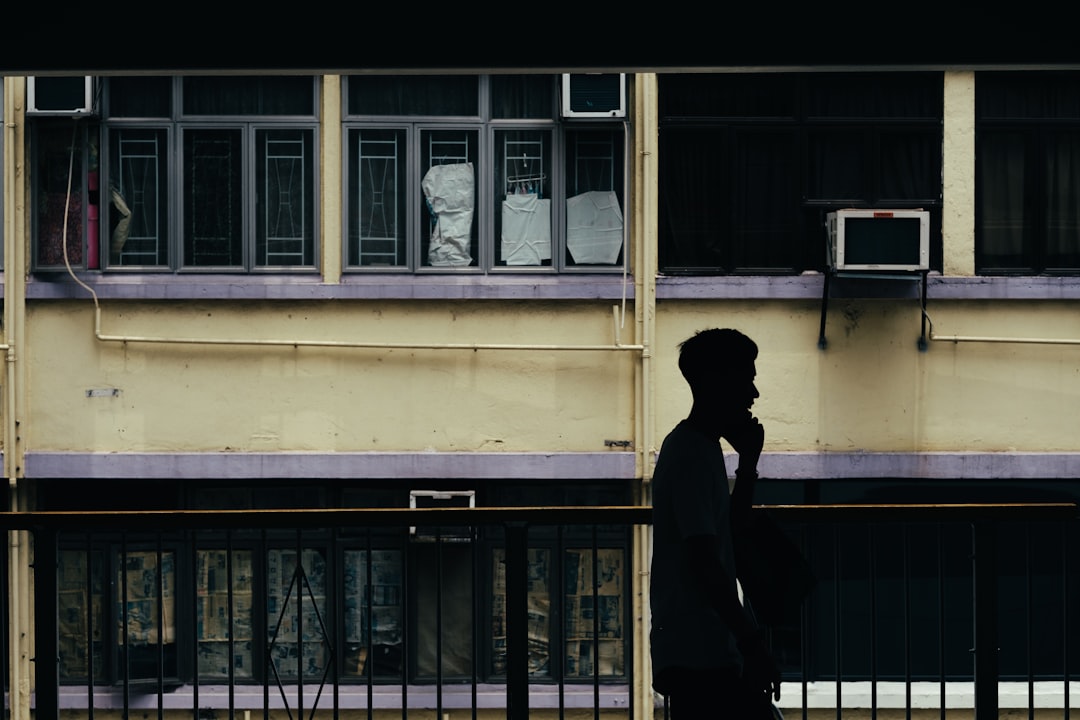
Planning a trip here in any serious way requires accepting that the city will not conform to your itinerary. The MTR is reliable to the minute; the street-level experience is not. What AI-assisted planning tools can do — and what the best human guides have always done — is help you understand the structure of the place before you arrive, so that when the plan fails, as it will, you have enough context to improvise usefully rather than standing on a pavement in Mong Kok in August, sweating, convinced you have made an error.
Insider tip
Download the MTR app before you arrive and load your Octopus card at the airport. These two actions will solve approximately sixty percent of your logistical problems before they occur.
Scopri l'incanto di Sky100 a Hong Kong: the hundredth floor and what it costs you
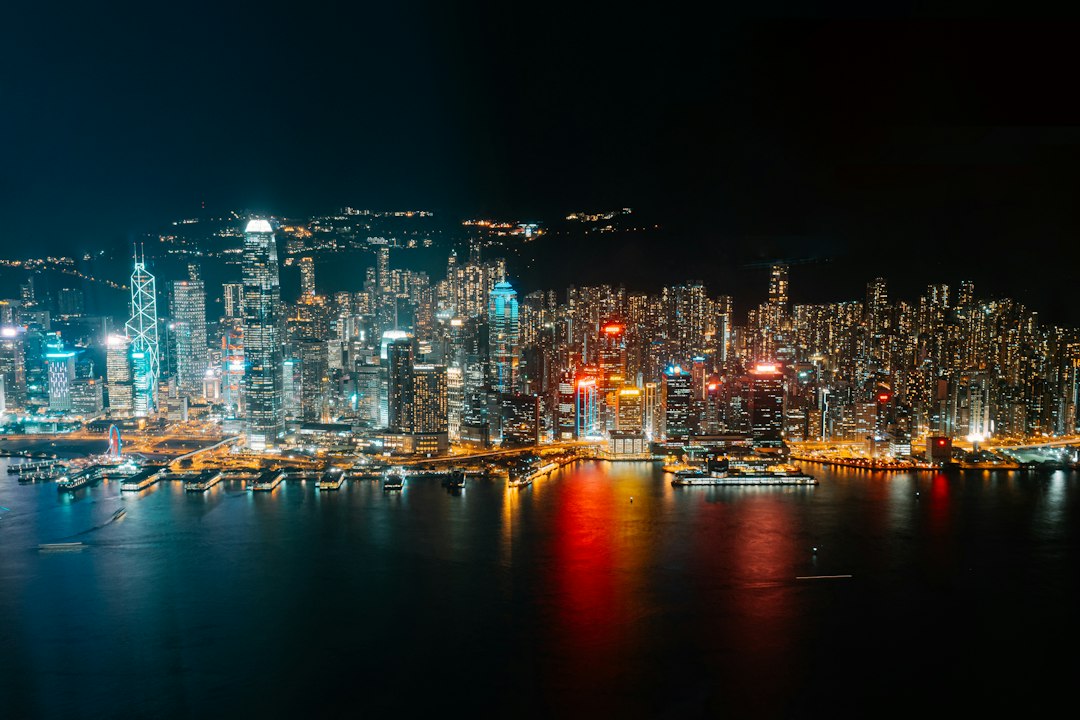
What you get for the money is genuine: the view of Victoria Harbour from this height on a clear evening, with the light going amber over the island, is one of those visual experiences that reconfigures your sense of the city's scale. What you give up is the friction of the street. There is a café, there is a gift shop, there is a queue. These things are not surprising but they are worth knowing about in advance.
Insider tip
Book the last admission slot of the day and arrive as the sun is setting over Lantau. The transition from daylight to the city's illuminated nighttime state, seen from this height, takes about forty minutes and is worth every minute of it.
There is a particular kind of exhaustion that Mong Kok produces, and it is not unpleasant. It is the exhaustion of a city that has been asking you to pay attention for several hours without pause. By the time you surface from the MTR back at your hotel, you have processed more visual and auditory information than most European city centres deliver in a full day. This is not an accident. The density is structural, economic, and in some sense philosophical — a reflection of what happens when land is scarce, time is money in the most literal sense, and the population has collectively decided that the solution to limited space is vertical intensity rather than horizontal sprawl.
What I keep returning to, after three years of moving through this neighbourhood, is how little of it I have actually understood. The city is legible on the surface — the MTR map, the street grid, the market stalls — and deeply opaque underneath. The conversations happening in Cantonese around me in tea houses are not available to me. The social textures of the buildings I walk past are not visible from the street. Mong Kok rewards the visitor who is comfortable with partial knowledge, who can find the incompleteness interesting rather than frustrating. The people who leave disappointed are usually the ones who expected the city to explain itself.
What I keep returning to, after three years of moving through this neighbourhood, is how little of it I have actually understood. The city is legible on the surface — the MTR map, the street grid, the market stalls — and deeply opaque underneath. The conversations happening in Cantonese around me in tea houses are not available to me. The social textures of the buildings I walk past are not visible from the street. Mong Kok rewards the visitor who is comfortable with partial knowledge, who can find the incompleteness interesting rather than frustrating. The people who leave disappointed are usually the ones who expected the city to explain itself.


