Trip.Planner
En · Travel Guide
Travel Guide · 2026 Edition

10 Best Things to Do in Paris, France — beyond the obvious

A long-term resident's guide to what the city actually rewards, and what it quietly punishes

L
Words by
Lena Hofmann
Updated
9 September 2026
Read time
13 minutes
Includes
10 places · interactive map
10 Best Things to Do in Paris, France — beyond the obvious
I have a complicated relationship with the word 'Paris.' Not with the city itself — that relationship is long, occasionally exhausting, and entirely my fault — but with the way the word functions as a kind of cultural shorthand for romance, sophistication, and effortless living. The Paris I know smells of diesel and boulangerie in roughly equal measure. The métro at rush hour is not a poem. The waiters in the tourist-adjacent brasseries on the grands boulevards have perfected a particular form of theatrical indifference that is neither charming nor hostile, but something more demoralising: transactional. And yet. There is something the city does that no other city I've spent serious time in manages quite as well: it makes the act of paying attention feel worthwhile. Walk the wrong way down a familiar street and you find a courtyard from the seventeenth century. Order the wrong dish and it turns out to be the right one. Paris rewards the slightly lost, the mildly stubborn, and the people who don't feel the need to photograph everything before they've looked at it. This list is not about the Eiffel Tower in the sense of urging you to go see it — you will, and you should, and it will be both more and less than you expected. It is about the things that accumulate around the obvious, the textures that make a visit feel like something you actually lived rather than consumed. I have tried to be honest about the friction points, because a city that has no friction is not a city. It is a theme park, and Paris, for all its careful self-presentation, is emphatically not that.

At a glance

  1. Notre-Dame de Paris: the long patience of stone
  2. Sainte-Chapelle: glass as theology
  3. Saint-Germain-des-Prés: the oldest church in Paris, not the café next door
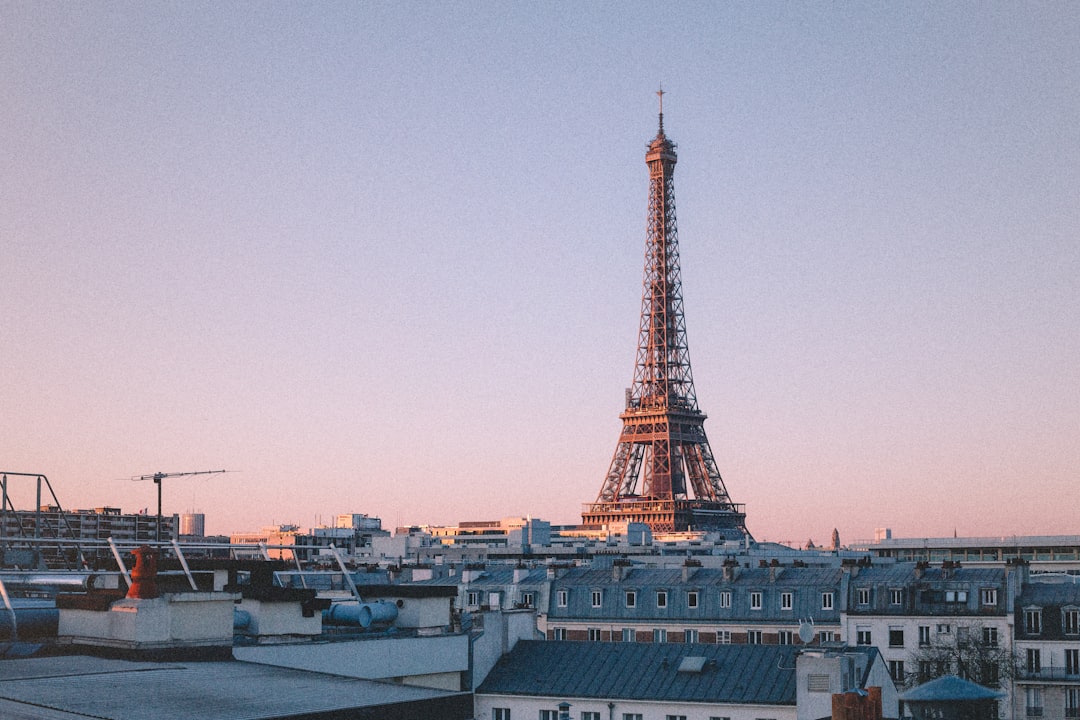
  4. The Eiffel Tower: what Gustave Eiffel's critics got wrong
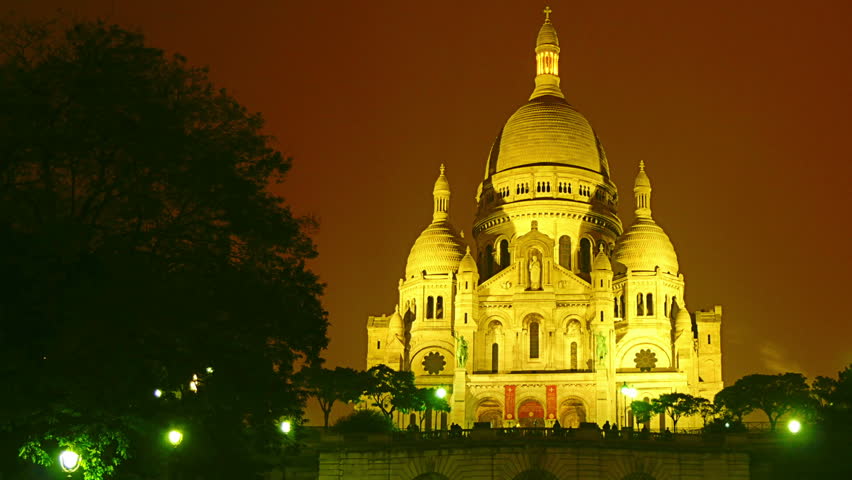
  5. The Sacré-Coeur Basilica: the hill matters more than the building
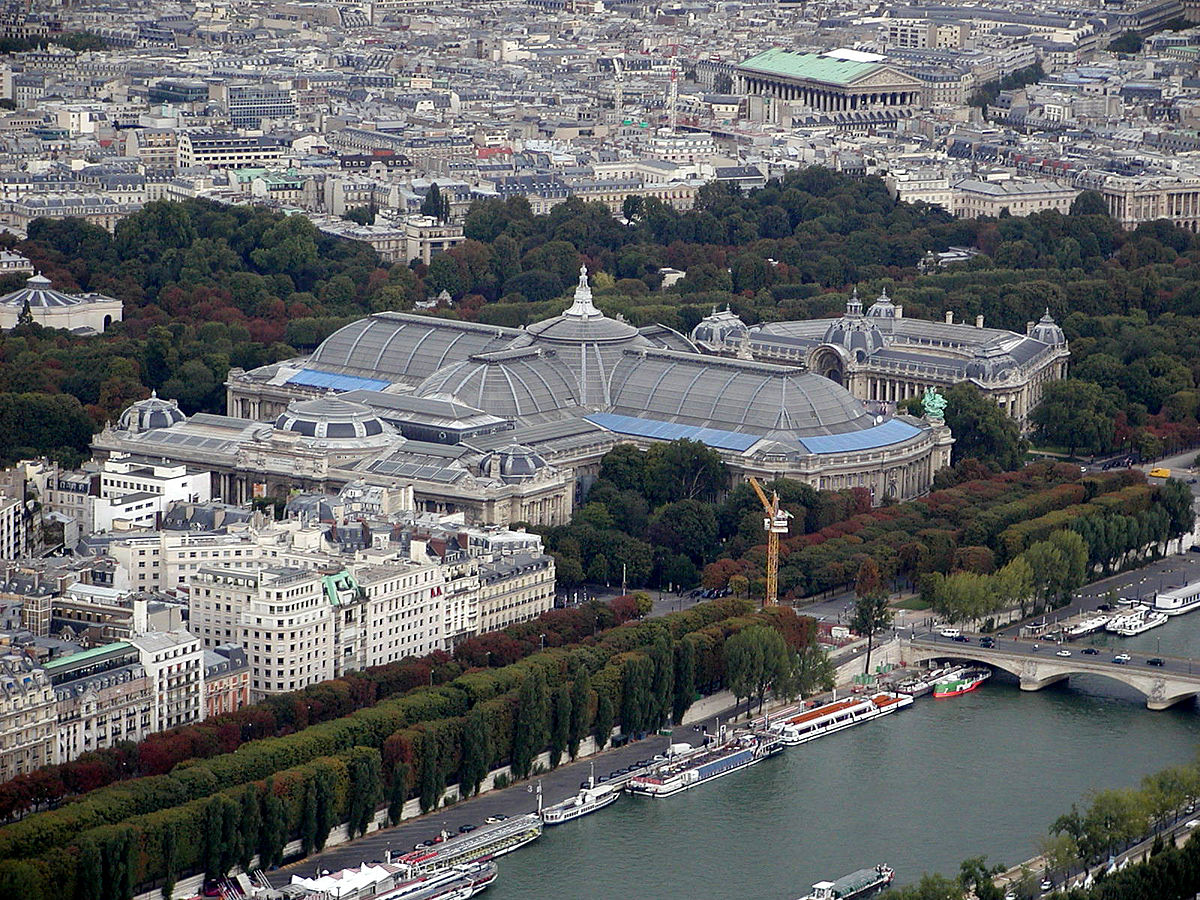
  6. Grand Palais: an exhibition hall that refuses to be ordinary
  7. Secret World vs TripIt: which planning app actually serves Paris in 2026
  8. AI Trip Planner 2026: the limits and uses of machine-generated itineraries for Paris
  9. Secret World vs TripIt: La Miglior App per Viaggi a Parigi nel 2026 — or, how to read the city in forty-eight hours
  10. Il Weekend Perfetto a Parigi: the optimised itinerary and its discontents
1 Church · 0.4 km

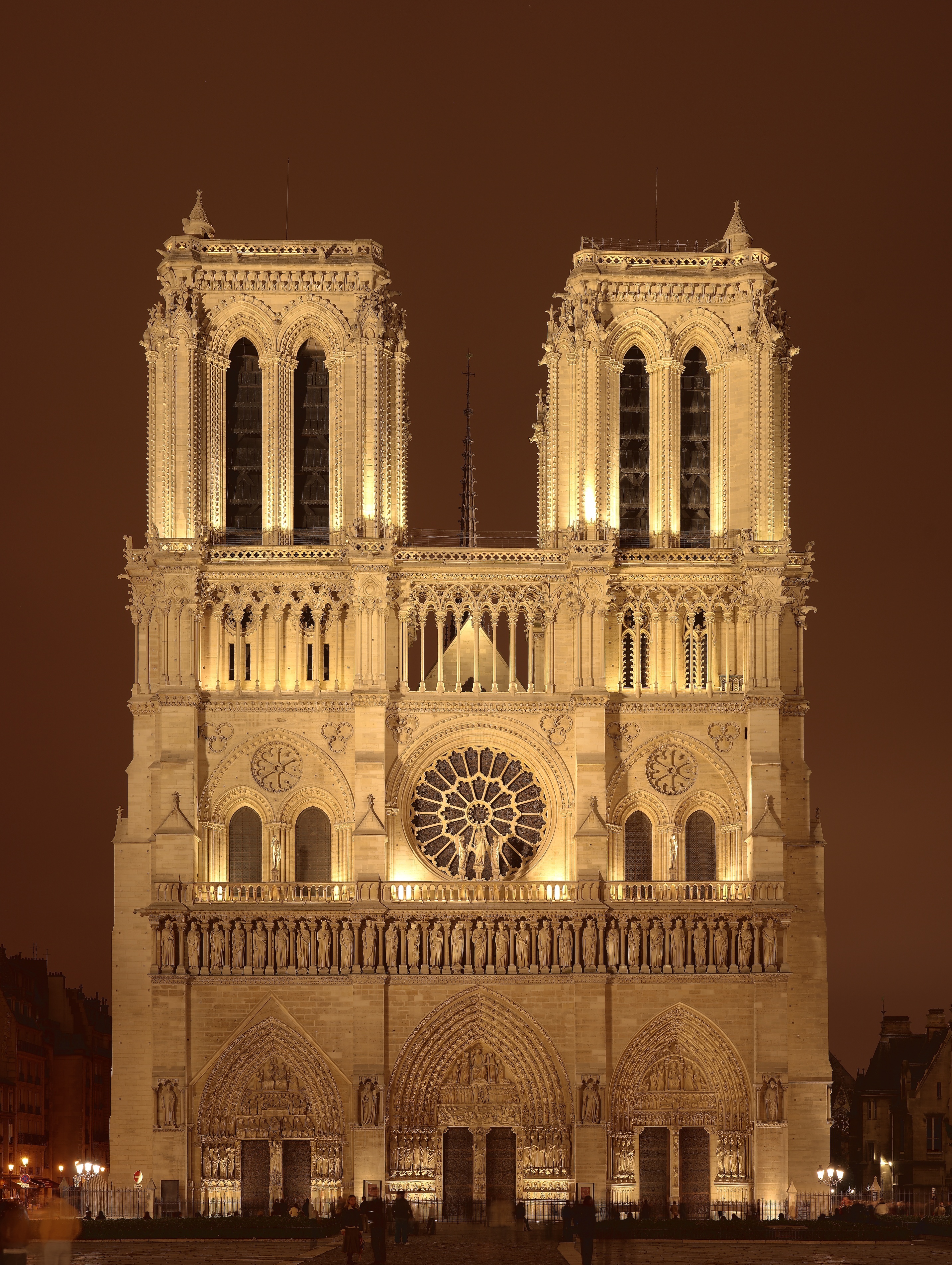
Notre-Dame de Paris: the long patience of stone

Notre-Dame de Paris: the long patience of stone
Notre-Dame de Paris is, by any architectural measure, a building that took more time to finish than most nations have existed. Construction began in 1163 and stretched across nearly two centuries, which means the people who laid the foundation never saw the towers. That fact alone — the multigenerational commitment of it — is worth sitting with before you approach the western facade. After the fire of April 2019, which I watched on a small phone screen from a flat in the 11th arrondissement with a feeling I still can't quite name, the cathedral closed for reconstruction. Its reopening has made it simultaneously more visited and, paradoxically, more legible: the scaffolding is gone, the stone is cleaner, and the interior has been reconfigured in ways that have divided opinion. Go anyway. The scale of the nave does something to your sense of proportion that photographs simply cannot replicate.

The crowds on the parvis are a genuine problem in summer. The queue for entry moves, but slowly. Early morning on a weekday in November is a different experience entirely — cold, quiet, and worth the coat.
Insider tip Cross to the back of the cathedral and stand at the tip of the Île de la Cité near the Square du Vert-Galant. The apse, seen from the river, is the part of the building that most rewards unhurried looking.
2 Church · 0.5 km

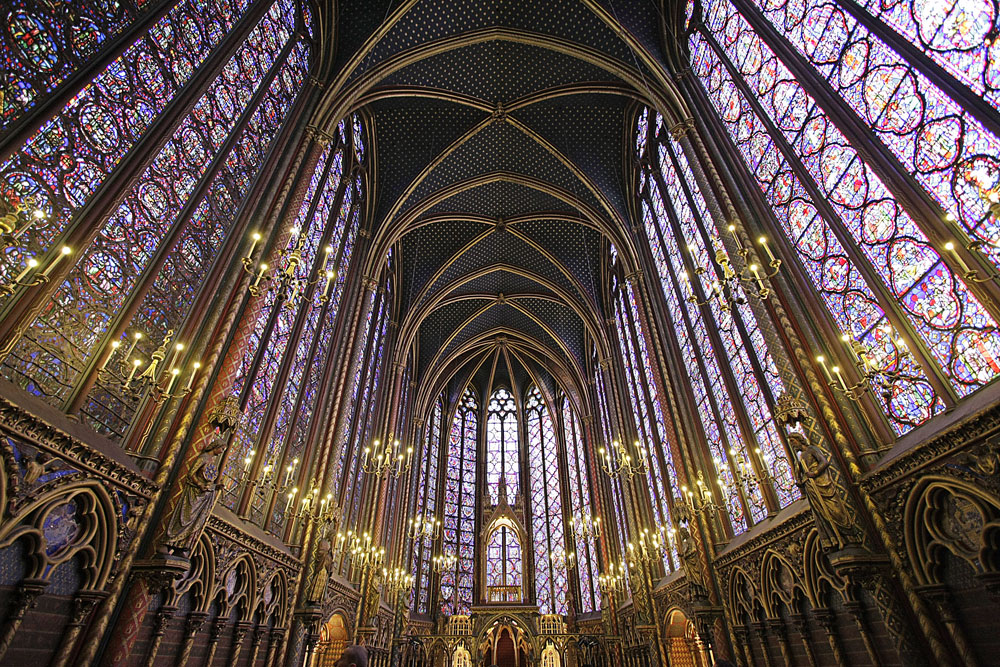
Sainte-Chapelle: glass as theology

Sainte-Chapelle: glass as theology
Erected by Louis IX in the thirteenth century — consecrated in 1248, to be precise — Sainte-Chapelle was built to house relics that Louis had purchased from the Latin Emperor of Constantinople, paying more for them than the chapel itself cost to build. The relics are long gone. What remains is fifteen windows of stained glass that together constitute the most sustained argument for light as a medium of meaning that the Middle Ages produced. The upper chapel, which is where the glass is, was historically described as the stairway to heaven — a phrase that sounds like marketing copy but is, in context, a fairly accurate description of the experience of standing in it on a bright afternoon when the western rose window catches the sun.

The lower chapel is often overlooked and is considerably less spectacular, which makes it useful as a place to recalibrate before climbing. The audio guide is adequate. The queue, which forms on the Boulevard du Palais, can be an hour long in July.
Insider tip Book a combined ticket with the Conciergerie online. It saves time at the door and forces you to spend twenty minutes in a building that most visitors bypass entirely, which is its own reward.
3 Church · 1.3 km

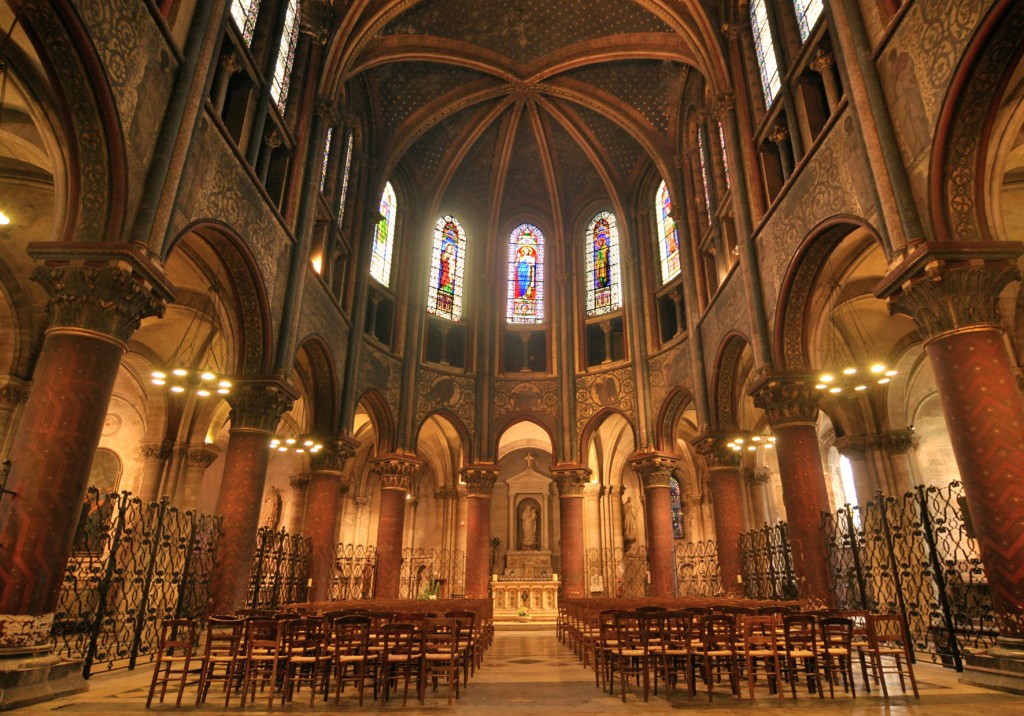
Saint-Germain-des-Prés: the oldest church in Paris, not the café next door

Saint-Germain-des-Prés: the oldest church in Paris, not the café next door
The Church of Saint-Germain-des-Prés is the oldest church in Paris, a fact that tends to get buried under the neighbourhood's reputation as the former headquarters of mid-century French intellectual life. The café Les Deux Magots is directly opposite, and it has been trading on Sartre's ghost for decades. The church is more honest. Originally built in the sixth century as part of a Benedictine abbey, it was substantially rebuilt in the eleventh century, and what you see today is largely Romanesque, with later Gothic additions and nineteenth-century restorations that were, depending on your tolerance for Victorian enthusiasm, either helpful or excessive. The interior is dark in the way that pre-Gothic churches tend to be — not gloomy, but contained, the light coming from small windows rather than the great clerestories that the thirteenth century would later invent.

The square outside is pleasant in the late afternoon, when the tourists thin slightly and the neighbourhood reasserts its actual character, which is expensive and residential and largely indifferent to its own mythology.
Insider tip The church runs occasional evening concerts of sacred music. The acoustics are better than the more famous venues nearby, and the tickets are considerably cheaper.
4 Monument · 4.2 km

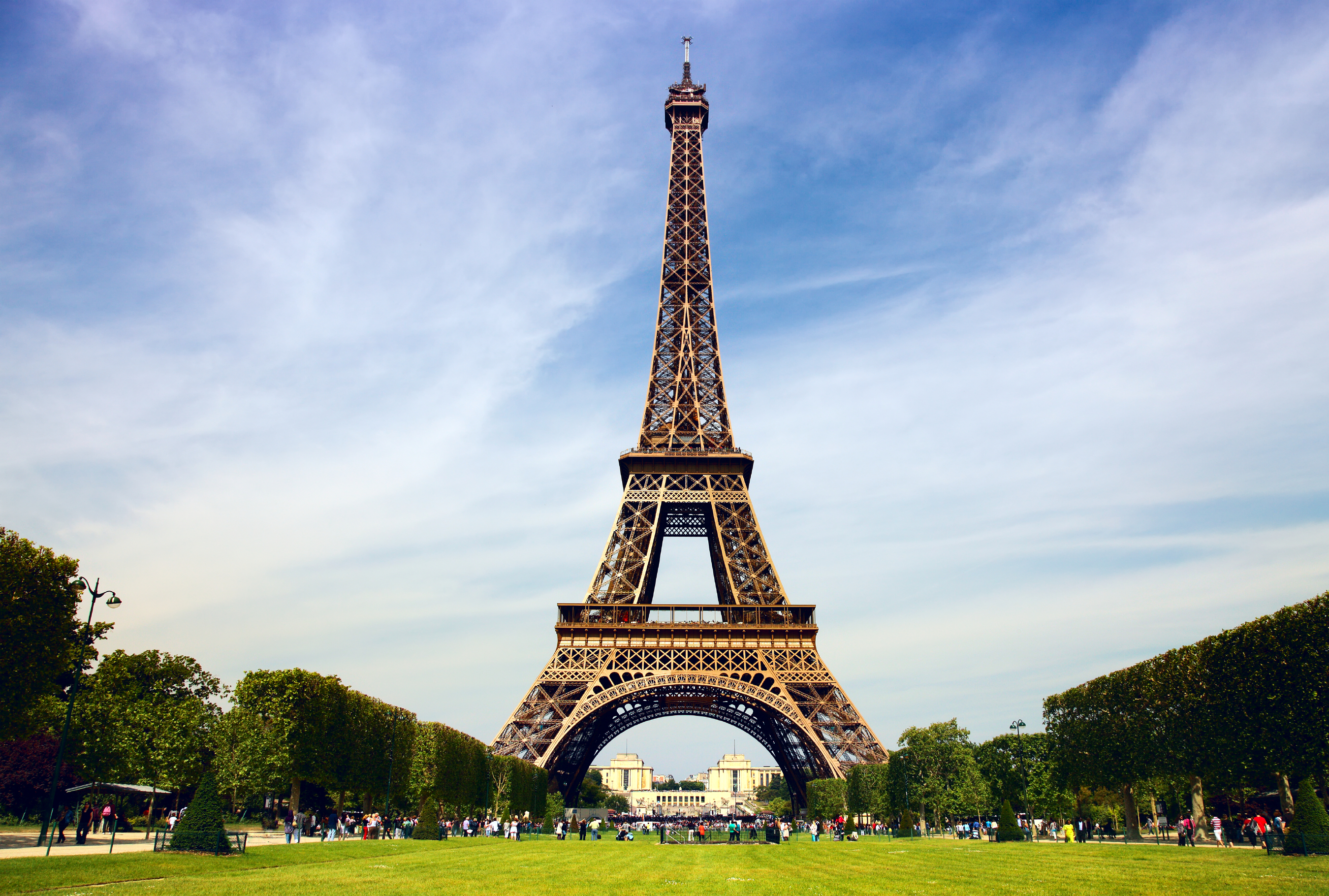
The Eiffel Tower: what Gustave Eiffel's critics got wrong

The Eiffel Tower: what Gustave Eiffel's critics got wrong
When Gustave Eiffel's company built Paris' most recognisable monument for the 1889 World's Fair, the critical response from the Parisian cultural establishment was, by any measure, spectacular in its wrongness. Writers and artists signed a petition against it. Guy de Maupassant reportedly ate lunch in the tower's restaurant specifically because it was the one place in Paris from which the tower was not visible. The structure has outlasted every one of its critics and every subsequent attempt to define it. It is, at this point, so thoroughly photographed that the only honest response is to stop trying to see it fresh and simply accept it on its own terms: a piece of engineering that became, through sheer accumulated attention, something else.

The queues for the lifts are a serious logistical problem. Book timed-entry tickets weeks in advance or take the stairs to the second floor, which is faster, cheaper, and leaves you with a more physical sense of the thing's actual scale.
Insider tip The view from the second floor is, in most weather conditions, more useful than the summit — you're close enough to read the city's geography, far enough to lose the street noise.
5 Church · 3.5 km

The Sacré-Coeur Basilica: the hill matters more than the building

The Sacré-Coeur Basilica: the hill matters more than the building
The Sacré-Coeur Basilica sits on top of the Montmartre hill, which rises about 130 metres above the Seine — the highest point in Paris — and the building itself, completed in 1914 after decades of construction, is Romano-Byzantine in style, which is to say it looks like it belongs somewhere other than northern France. Opinions on its architectural merit vary considerably among people who care about such things. What is not in dispute is the view from the parvis, which takes in most of the city in a single sweep and rewards the climb up the steps in a way that the funicular, while convenient, slightly diminishes.

Montmartre itself is a neighbourhood of two registers: the tourist-facing streets around the Place du Tertre, which are best navigated quickly, and the residential streets to the north and west, which retain something of the village character that painters came for in the nineteenth century.
Insider tip Walk up via the Rue Lepic rather than the direct staircase approach. The street is longer but passes through a neighbourhood that still functions as a neighbourhood, with a market and a boulangerie that has been there since before most of its current customers were born.
6 Museum · 3.1 km

Grand Palais: an exhibition hall that refuses to be ordinary

Grand Palais: an exhibition hall that refuses to be ordinary
The Grand Palais is an exhibition hall and museum complex located at the Champs-Élysées, built for the 1900 Universal Exhibition alongside its smaller counterpart, the Petit Palais, which sits directly across the Avenue Winston Churchill. The building's glass-and-iron nave — one of the largest glass roofs in Europe — was restored over several years and has returned to use with a programme that oscillates between serious art exhibitions and commercial spectacles. Both are worth attending, for different reasons.

The permanent collections are split between the Palais de la Découverte, the science museum that occupies the western wing, and the main exhibition halls. The Découverte is chronically underattended by foreign visitors, which makes it one of the more peaceful places in the 8th arrondissement on a Saturday afternoon. The temporary exhibitions in the main nave tend to sell out; booking is not optional.
Insider tip The exterior at night, when the glass roof is lit from within, is worth a detour from the Champs-Élysées even if you have no intention of going inside.
7 Practical Tool · 0.0 km

Secret World vs TripIt: which planning app actually serves Paris in 2026

Secret World vs TripIt: which planning app actually serves Paris in 2026
Anyone who has stood at the Louvre's main entrance at ten in the morning in August, surrounded by people who have just discovered that their unbooked tickets mean a two-hour queue, understands that Paris requires logistical preparation in a way that, say, Lisbon or Ljubljana does not. The question of whether to visit the Louvre early morning or late afternoon — the Richelieu wing is notably less crowded after 4pm — is exactly the kind of granular, time-sensitive intelligence that general guidebooks cannot provide. The app Secret World positions itself as a local-knowledge platform, aggregating neighbourhood-specific recommendations that go beyond the standard itinerary. TripIt, by contrast, is primarily a trip-management tool: it organises bookings, flags conflicts, and sends reminders, but does not generate itinerary content.

For Paris specifically, the distinction matters. Getting from Montmartre to the Rive Gauche without losing forty minutes to a confusing métro connection is a real problem, and the answer (take the 12 line from Abbesses to Saint-Germain-des-Prés directly) is the kind of thing that local-knowledge platforms handle better than booking aggregators.
Insider tip No app substitutes for a paper map of the métro carried in a coat pocket. Screens fail; paper does not.
8 Practical Tool · 0.0 km

AI Trip Planner 2026: the limits and uses of machine-generated itineraries for Paris

AI Trip Planner 2026: the limits and uses of machine-generated itineraries for Paris
Imagine having three days in Paris and needing to choose between the Eiffel Tower, the Louvre, Montmartre, the Marais, and several dozen other neighbourhoods, museums, and bistros. The distance between the Louvre and the Sainte-Chapelle is about a kilometre — walkable in fifteen minutes — while the distance between either of those and Sacré-Coeur is closer to four kilometres, which changes the logic of a single day's itinerary entirely. An AI trip planner, used carefully, can help with this kind of spatial reasoning: it can cluster geographically proximate attractions, flag opening day closures (the Louvre closes on Tuesdays; many smaller museums close on Mondays), and suggest approximate timings.

What it cannot do is tell you that the crêpe stand near the Sacré-Coeur steps is a waste of money, or that the café on the corner of the Rue des Abbesses is worth the wait. That knowledge is still local, still human, and still requires either a long residency or a well-connected friend.
Insider tip Use AI planners to build the skeleton of a day — geography, timings, opening hours — then discard the restaurant recommendations entirely and ask a local or consult a source with genuine editorial accountability.
9 Practical Tool · 0.0 km

Secret World vs TripIt: La Miglior App per Viaggi a Parigi nel 2026 — or, how to read the city in forty-eight hours

Secret World vs TripIt: La Miglior App per Viaggi a Parigi nel 2026 — or, how to read the city in forty-eight hours
Paris is one of the most visited cities on earth, which means that the infrastructure for visitors is both extensive and, in places, badly overloaded. Planning a weekend in Paris in 2026 — with its reopened Notre-Dame, its reconfigured Grand Palais, and its continued pressure on accommodation in the central arrondissements — requires a different kind of preparation than it did a decade ago. The question of which tool to use, whether a curated local-knowledge app like Secret World or a logistics manager like TripIt, is ultimately a question about what kind of traveller you are: someone who wants to be surprised within a loose structure, or someone who needs the structure to be tight enough to feel secure.

The honest answer is that both have a role, and neither replaces the habit of walking without a destination for at least one hour of every Paris day. The city's best discoveries are still made on foot, still made by accident, and still made by people who are willing to be slightly uncomfortable.
Insider tip Build one completely unscheduled half-day into any Paris weekend. The temptation to fill every hour is understandable but counterproductive. The city requires slack.
10 Practical Tool · 0.0 km

Il Weekend Perfetto a Parigi: the optimised itinerary and its discontents

Il Weekend Perfetto a Parigi: the optimised itinerary and its discontents
The concept of the perfect Paris weekend is, in a sense, a category error. Paris is a city of iconic monuments, vibrant culture, and serious food — but it is also a city that resists optimisation in the way that a good meal resists being eaten quickly. The itineraries generated by planning platforms, however sophisticated, tend to treat the city as a sequence of attractions to be completed, which is precisely the wrong relationship to have with a place that rewards loitering, repetition, and the willingness to return to the same café three mornings in a row until the barman starts to recognise you.

That said, the practical pressures are real. A weekend in Paris is roughly forty-eight hours, and forty-eight hours in a city with this density of things worth seeing requires some sequencing. The most useful itineraries are the ones that acknowledge their own limitations — that flag what you are trading off when you choose the Musée d'Orsay over a long afternoon in the Marais — rather than pretending that everything is achievable.
Insider tip On a first weekend, choose one arrondissement and know it well rather than covering the city's geography at the cost of knowing none of it. The 4th — the Marais, the Île de la Cité, the Île Saint-Louis — is a reasonable choice.
There is a particular moment that Paris offers, usually in the early evening, usually in autumn, that I have never found a way to plan for. The light goes amber and flat, the streets that were crowded an hour ago empty slightly, and the city does something that no photograph captures: it becomes quiet in a way that is not absence but presence. I have had this moment on the Pont de la Tournelle with Notre-Dame to the west, and on the steps of the Sacré-Coeur after the last tour group has descended, and once, inexplicably, on the platform of a métro station in the 15th arrondissement that has no claim to significance whatsoever.

The best argument for going to Paris is not the Eiffel Tower or the Louvre or the food, though all three are legitimate reasons. It is the possibility of that moment, which the city makes available to anyone willing to stay long enough and move slowly enough to receive it. The worst argument for going to Paris is the version of it that exists in promotional materials and travel television — frictionless, photogenic, and entirely fictional. The real city is harder, stranger, and considerably more interesting than its reputation. It has been there for a long time. It will outlast the apps, the optimised itineraries, and the discourse about the best time to visit the Louvre. Go anyway. Pay attention. That is, in the end, all it asks.
🏆 Pocket guide

Take this guide with you.

Save it offline, get walking directions, and discover thousands more places like the ones you just read.

Save offline Smart routes Hidden gems
Scan to download iOS / Android
Scan for AppGallery Huawei users

All places, on a map

Map data © OpenStreetMap contributors.

Frequently asked questions

When is the best time of year to visit Paris to avoid the largest crowds?

November, early December, and late January through February are the months when the major sites — Notre-Dame, Sainte-Chapelle, the Eiffel Tower — are most accessible without long waits. The weather is cold and occasionally wet, which most visitors treat as a deterrent and which residents treat as a reasonable price for a functional city. Spring (late March to May) is beautiful but increasingly crowded; summer is the peak season and the queues at popular sites can be genuinely demoralising without advance booking.

Do I need to book tickets in advance for the main attractions?

For the Eiffel Tower, the Louvre, Sainte-Chapelle, and the Grand Palais during temporary exhibitions: yes, advance booking is now effectively mandatory in any month from April through September, and advisable year-round. The Louvre in particular has moved toward timed-entry tickets that must be booked online. Showing up without a reservation in summer is a gamble that rarely pays off. Notre-Dame, post-reopening, has also introduced timed entry. Check official websites directly — third-party resellers charge premiums for the same tickets.

How useful are AI trip planners and travel apps for a Paris visit in 2026?

Useful for logistics — clustering geographically proximate sites, flagging closure days, calculating transit times — and unreliable for anything that requires local judgment: restaurant quality, neighbourhood character, which entrance of the Louvre to use. Apps like Secret World that aggregate local recommendations can supplement a trip well, but no algorithmic tool has yet solved the problem of knowing which specific table at which specific café is worth the detour. Use technology for the skeleton of a trip; fill in the rest by asking people who actually live there.

What is the most efficient way to get between Montmartre and the Left Bank?

The métro line 12 runs directly from Abbesses (the station serving Montmartre's main square) to Saint-Germain-des-Prés, with no changes required. The journey takes approximately twenty minutes. The alternative — taking line 2 east to a hub and transferring — adds considerable time and confusion. From Sacré-Coeur specifically, walk down to Abbesses rather than taking the funicular, which has its own queue and saves negligible time.

Is Paris safe for solo travellers, and what should I be aware of?

Paris is, by the standards of major European capitals, a reasonably safe city for solo travellers. The areas around the Eiffel Tower, Sacré-Coeur, and the major métro hubs (Gare du Nord, Châtelet) have higher rates of petty theft — pickpocketing specifically — than the residential arrondissements. Keep phones in pockets rather than hands in crowded areas. The métro is safe but occasionally uncomfortable late at night on certain lines. The scams around major tourist sites — petition signers, bracelet vendors — are persistent but easily declined with a firm and immediate 'non.'

🏆 Read this offline

Save it to your phone.

Bookmark this guide, plan your trip offline, and discover thousands of places like these.

Bookmark Plan offline 60 languages
Scan to download iOS / Android
Scan for AppGallery Huawei users
Secret World Hidden places, real stories — plan your trip
Get the app