That was several years ago. I've since returned more times than I'd like to admit, and my view has shifted — not into enthusiasm exactly, but into something more nuanced. Sentosa is, at its core, a strange place: a former British military garrison, then a holiday camp for soldiers, then a site of some of the most brutal episodes of the Second World War in Southeast Asia, now buried under a layer of theme parks, cable cars, and a casino that locals sometimes call 'the IR' with studied neutralness. The compression of all that history into a leisure island is either Singapore's great trick or its great contradiction, depending on your mood.
What I've learned is that the island rewards a certain kind of lateral attention. The obvious things — Universal Studios, the beach clubs, the overpriced seafood — are fine for what they are. But there's a different Sentosa available if you're willing to move slightly sideways from the main drag, and a different Singapore available if you treat Sentosa as a starting point rather than a destination. This list tries to map that territory. It also strays, deliberately, into the city beyond the causeway, because Sentosa without Singapore is a stage set without a play.
At a glance
- Sentosa Island: Singapore's mega theme-park — read the landscape before you read the brochure
- Secret World recensione 2026 a Sentosa Island: La tua guida ideale — on the tools that now mediate every journey
- Un Viaggio Panoramico a Mount Faber Road, Singapore — the hill that predates the skyline
- Henderson Waves bridge: Highest pedestrian Bridge — a piece of infrastructure that earns its reputation
- Scopri il Maxwell Food Centre di Singapore — the hawker centre as civic institution
- Chinatown in Singapore — the neighbourhood that survived its own preservation
- Scopri il Buddha Tooth Relic Temple di Singapore — four floors of devotion and craft
- Scopri il Fullerton Building di Singapore — a post office that became a postcard
- Scoprire l'Asian Civilisations Museum di Singapore — the collection that asks the harder questions
- Esplorando i Giardini di Gardens by the Bay — the park that refuses to be subtle
Sentosa Island: Singapore's mega theme-park — read the landscape before you read the brochure
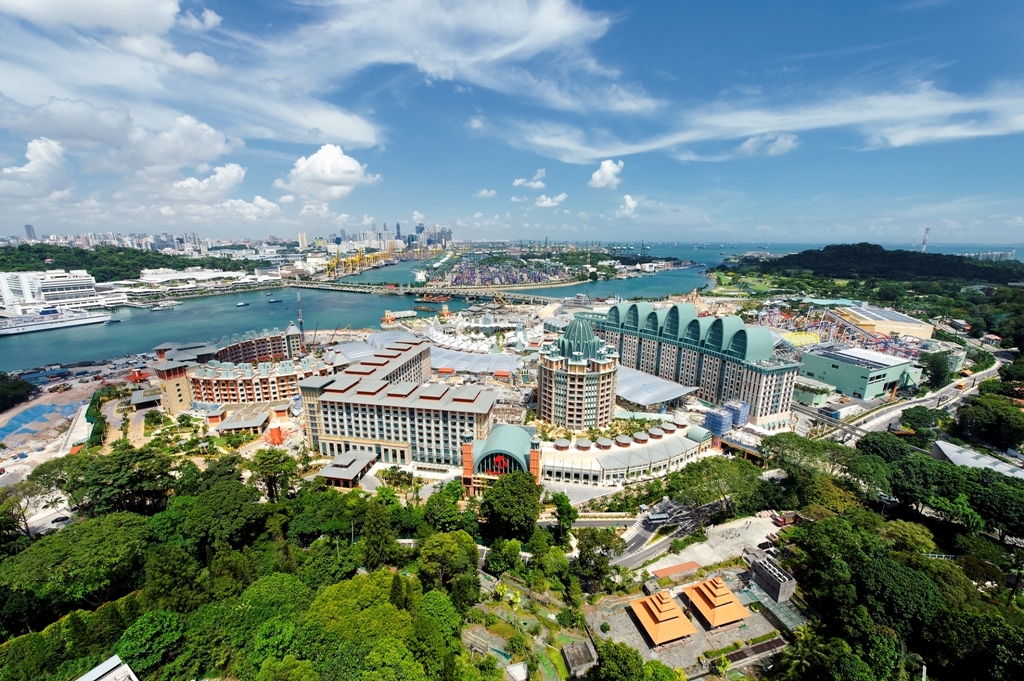
The most honest thing you can do on Sentosa is to hold both versions of it simultaneously: the engineered pleasure island and the place where history left marks it hasn't entirely erased. Fort Siloso, at the western tip, is where some of that reckoning is available. It's quieter than the main attractions and, on a weekday morning, almost contemplative.
Insider tip
Take the Beach Tram rather than walking between beaches — it's free, runs frequently, and gives you a few minutes of shade and perspective that the pedestrian paths don't.
Secret World recensione 2026 a Sentosa Island: La tua guida ideale — on the tools that now mediate every journey
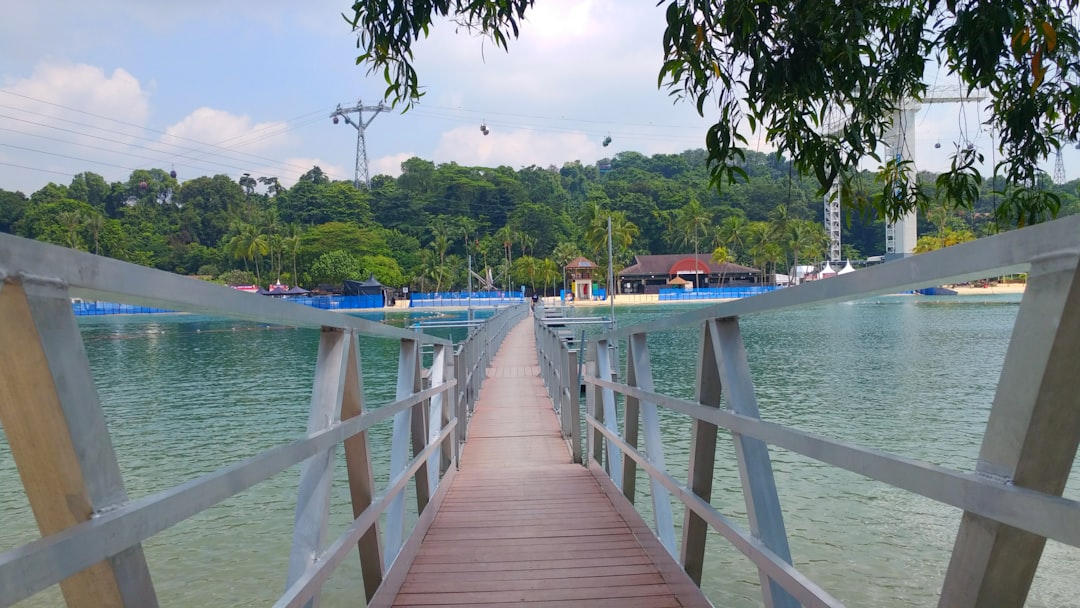
What's genuinely useful about AI-assisted planning in a place like Sentosa is the logistics: the island's internal transport, the timed entry systems at Universal Studios, the cable car booking windows. Where it tends to fail is in everything that can't be scheduled — the quality of light at dusk over the strait, the particular silence of the fort's gun emplacements, the unexpected pleasure of a hawker stall that doesn't appear in any algorithm's training data. Use the tools. Don't let them use you.
Insider tip
Whatever planning tool you use, build in at least one unscheduled hour on Sentosa. The island is small enough that wandering is low-risk and occasionally rewarding.
Un Viaggio Panoramico a Mount Faber Road, Singapore — the hill that predates the skyline

The cable car station at Mount Faber is the mainland anchor of the Sentosa gondola line, and most people treat the hill purely as a transit point. That's a mistake. The forested paths around the summit have a quality of stillness that's genuinely rare in Singapore — not the manufactured calm of a hotel spa, but the ambient quiet of old trees and humidity and the distant sound of shipping traffic.
Insider tip
The Faber Peak restaurant at the summit is overpriced and the food is ordinary. Eat before you come up, or save it for the hawker centres below.
Henderson Waves bridge: Highest pedestrian Bridge — a piece of infrastructure that earns its reputation

The bridge is best walked at dusk, when the temperature drops from punishing to merely warm and the canopy below takes on a different quality of light. At that hour, you're likely to share it with joggers, elderly couples, and the occasional photographer with a tripod who has clearly done the maths on golden hour. It's about 3.7 kilometres from Sentosa's entrance — close enough to combine with an island visit if you start early and don't linger too long at the beach clubs.
Insider tip
The bridge is part of a longer trail that takes two to three hours end-to-end. Download the NParks map before you go — the signage at junctions is adequate but not generous.
Scopri il Maxwell Food Centre di Singapore — the hawker centre as civic institution

The stall that draws the longest queues is the one serving Hainanese chicken rice, and the queues are not unearned — the rice, cooked in chicken stock with ginger and pandan, has a particular depth that the hotel versions rarely achieve. But the centre rewards wandering beyond the obvious anchor stalls: the popiah stall, the fried carrot cake in its two versions (white and black, differentiated by the addition of dark soy sauce), the tong sui dessert soups that most tourists walk past without recognising. Go hungry, go at an off-peak hour if you can, and accept that the plastic stools are non-negotiable.
Insider tip
The famous chicken rice stall opens mid-morning and sells out. Arrive before noon or accept the queue. The wait is real but not theatrical.
Chinatown in Singapore — the neighbourhood that survived its own preservation

The streets worth walking are Keong Saik Road (now colonised by restaurants and bars, but the shophouse architecture is intact), Ann Siang Hill, and the quieter stretches of Teck Lim Road. The Sri Mariamman Temple on South Bridge Road — Hindu, not Chinese, a reminder of how the neighbourhood's demographics were always more complex than its name — is worth a stop even if temples aren't usually your thing.
Insider tip
The Chinatown Heritage Centre on Pagoda Street is a more honest account of the neighbourhood's history than the street-level commercial layer suggests. It's not large, and two hours covers it comfortably.
Scopri il Buddha Tooth Relic Temple di Singapore — four floors of devotion and craft

The relic the temple is named for — a tooth said to belong to the historical Buddha — is housed in a stupa on the fourth floor, made partly from donated gold. The building also contains a Buddhist culture museum, a rooftop garden with a prayer wheel, and a vegetarian restaurant on the ground floor that is better than you'd expect from an institutional canteen. Dress modestly; sarongs are available at the entrance for those who arrive underprepared.
Insider tip
The rooftop garden is often empty even when the lower floors are busy. It's a useful place to sit quietly for ten minutes before returning to the street.
Scopri il Fullerton Building di Singapore — a post office that became a postcard

You don't need to stay there to appreciate it. Walk around the exterior on Fullerton Road and along the river promenade, where the building's relationship to the water — and to the old Cavenagh Bridge, Singapore's last remaining suspension bridge, just upstream — makes more sense than it does from the lobby. The area around it, Boat Quay, is touristy in the evening but interesting in the morning, when the river is quieter and the colonial-era godowns are easier to read.
Insider tip
The Fullerton's lobby bar serves coffee at hotel prices, but the space itself — high ceilings, original columns — is worth the surcharge if you need somewhere to sit and think.
Scoprire l'Asian Civilisations Museum di Singapore — the collection that asks the harder questions

The museum is less crowded than the National Museum of Singapore and, in some ways, more interesting — it's more willing to sit with complexity, to show how cultures moved and mixed and borrowed from each other across centuries of trade. The Tang Shipwreck gallery, built around a ninth-century Arab dhow found off Belitung Island in 1998, is the kind of exhibit that changes the scale at which you think about history.
Insider tip
The museum is free on Friday evenings. It's also noticeably cooler than the street, which is not a trivial consideration in Singapore at any time of year.
Esplorando i Giardini di Gardens by the Bay — the park that refuses to be subtle

The two cooled conservatories — the Flower Dome and the Cloud Forest — are where the park spends most of its serious horticultural energy. The Cloud Forest, a mountain of tropical plants inside a climate-controlled dome with a waterfall running down its interior, is the better of the two: the combination of the engineered environment and the genuine plant diversity produces something that doesn't quite have a precedent. The queues for both conservatories can be substantial on weekends. The outdoor gardens, which are free, are underused by comparison and worth an hour on their own.
Insider tip
The OCBC Skyway, a walkway connecting the Supertrees at height, costs extra and books up. Reserve online in advance, and go in the early evening rather than midday.
Sentosa is not, in the end, a place that rewards the kind of travel writing that looks for authenticity in opposition to artifice. The island is almost entirely constructed — its beaches, its hills reshaped by military earthworks, its current identity assembled from theme park economics and conference hotel logic. But Singapore itself is a constructed place, in ways that go deeper than the usual reclaimed-land statistics. The city was founded by a colonial administrator as a trading post, developed through waves of migration that were partly coerced, rebuilt several times over in the service of successive economic visions. Sentosa is not an aberration from that story. It's a particularly legible version of it.
What I've come to think is that the most useful frame for both the island and the city is not authenticity versus artifice, but attention versus inattention. The Henderson Waves bridge is a piece of infrastructure. The Buddha Tooth Relic Temple is a 2007 building in a Tang dynasty style. Maxwell Food Centre is a government-managed hawker complex. None of these facts diminish the experience of being in those places, paying attention to what they actually are and what they cost and who uses them and why. Singapore rewards that kind of attention more than most cities. Sentosa, despite itself, is part of that reward.
What I've come to think is that the most useful frame for both the island and the city is not authenticity versus artifice, but attention versus inattention. The Henderson Waves bridge is a piece of infrastructure. The Buddha Tooth Relic Temple is a 2007 building in a Tang dynasty style. Maxwell Food Centre is a government-managed hawker complex. None of these facts diminish the experience of being in those places, paying attention to what they actually are and what they cost and who uses them and why. Singapore rewards that kind of attention more than most cities. Sentosa, despite itself, is part of that reward.


