Taipa is the middle island of Macau's three — sandwiched between the peninsula to the north and Coloane to the south, connected to both by land reclamation that has, over the decades, swallowed the channels between them. The Cotai Strip, that particular monument to the idea that Las Vegas was insufficiently excessive, now occupies what used to be open water. Taipa Village, by contrast, has been carefully preserved, or carefully made to look preserved, which is a distinction worth keeping in mind.
I should be honest: I have walked past some of the places on this list a dozen times without going in. There is a particular kind of resident's blindness that sets in — you stop seeing things because they are always there. Writing this forced me back into several of them, and I was, more often than not, glad. A few entries cover places technically in Coloane or on the peninsula, included because Macau's geography is small enough that the distinctions collapse in practice, and because a list confined to a single postcode would be dishonest about how the city actually works. What follows is not comprehensive. It is, I hope, useful.
At a glance
- Scoprire Vila da Taipa: il Cuore Verde di Macao — the village that learned to perform itself
- Scopri la Casa di Lou Kau a Macao: the merchant's house that history almost forgot
- Largo do Lilau: il Cuore di Macao — a square that does not try to impress you
- Lou Lim Ieoc Garden: nine turns, lotus ponds, and the logic of evil spirits
- Scopri il Tempio di A-Ma: Luce e Spiritualità a Macao — the temple that named the city
- Macau | The Statue of Guan Yin: mercy at the water's edge
- Scopri Hac Sa Beach: Il Tesoro Nascosto di Macao — the black sand beach that asks nothing of you
- Macau Giant Panda Pavilion: a seashell roof and two very expensive bears
Scoprire Vila da Taipa: il Cuore Verde di Macao — the village that learned to perform itself
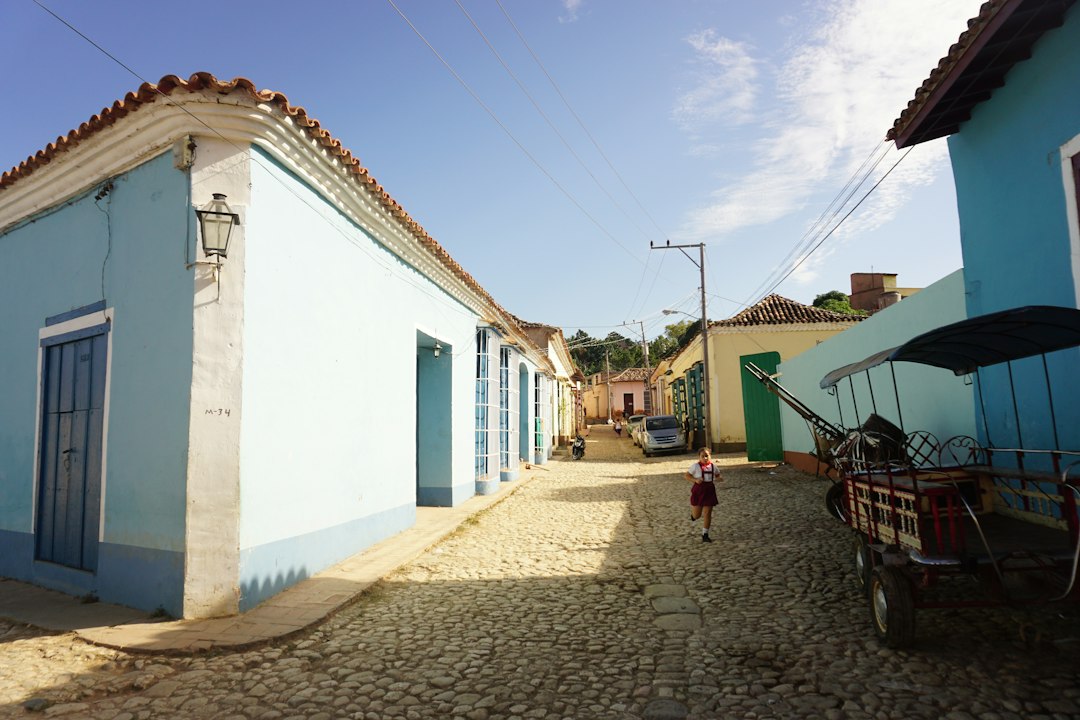
What makes it worth more than a single afternoon is the texture beneath the souvenir shops: the way a Tin Hau temple sits flush against a Portuguese-style government building, the narrow lanes behind Rua do Cunha where residents still hang laundry between windows, the sound of mahjong tiles from an open door. Come on a weekday morning, before the tour groups arrive from the peninsula, and the village has a quality of ordinary life that the casino corridor entirely lacks.
Insider tip
The back streets west of Rua Correia da Silva are quieter and less photographed than the main drag. The painted facades on the hillside above the village are worth the short climb.
Scopri la Casa di Lou Kau a Macao: the merchant's house that history almost forgot
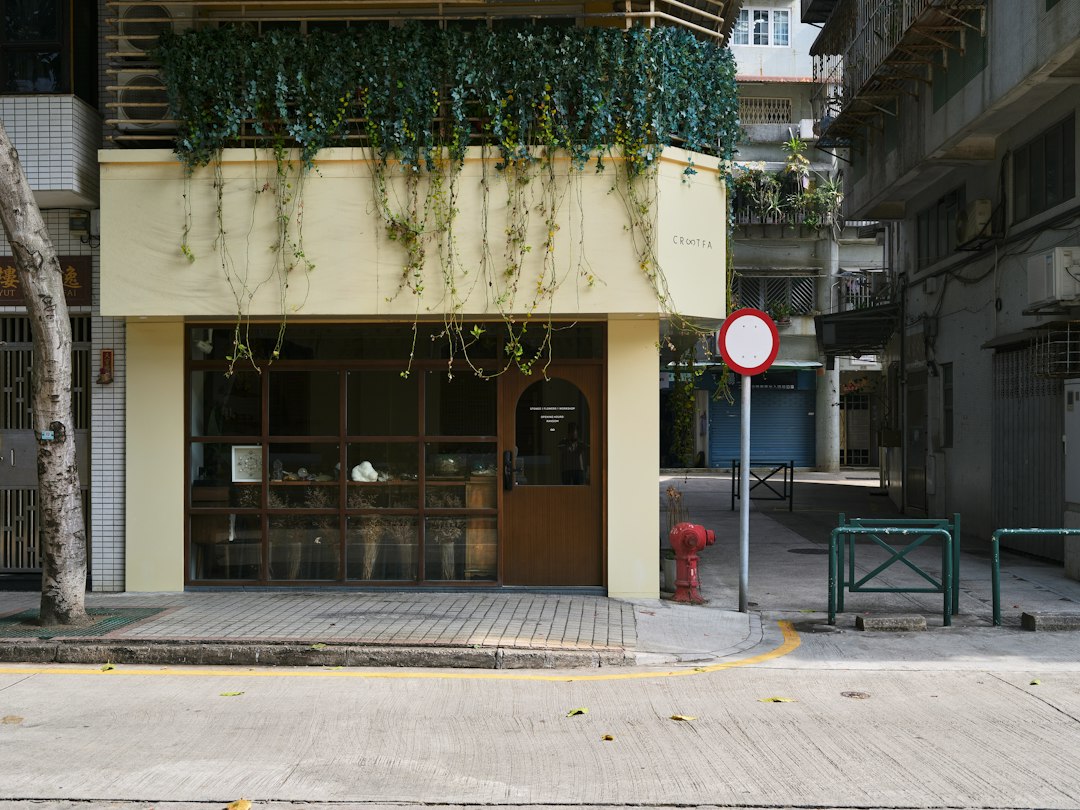
What distinguishes it is the scale — it is smaller and more domestic than Mandarin's House, less a statement of status than a record of how a prosperous family actually lived. The painted stucco panels in the main reception room are among the better-preserved examples of the period in Macau. Admission is free, which means it is rarely crowded, which means you can stand in the courtyard for as long as you like without someone asking you to move.
Insider tip
Combine this with Largo do Lilau, a ten-minute walk away, to make a coherent half-day of Macau's pre-casino domestic history.
Largo do Lilau: il Cuore di Macao — a square that does not try to impress you
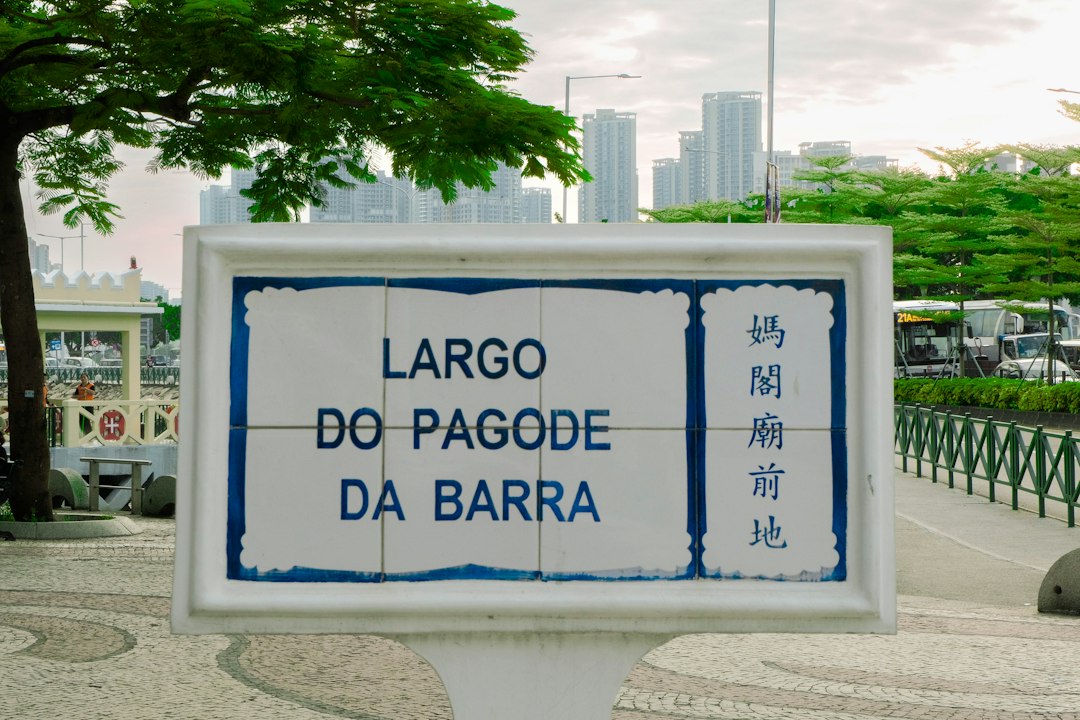
This is its main virtue. There are benches. People sit on them. An old man was feeding pigeons the last time I was there, with the focused generosity of someone who has been doing it for decades. The square is not dramatic; it does not reward a special journey. But if you are already on the peninsula and you want ten minutes of something that feels like a city rather than a theme park, Largo do Lilau is where to find it.
Insider tip
The houses on the uphill side of the square have some of the most photogenic facades in Macau, best seen in the flat morning light before 9am.
Lou Lim Ieoc Garden: nine turns, lotus ponds, and the logic of evil spirits

The garden is well-maintained and genuinely old, which distinguishes it from several of Macau's reconstructed heritage sites. It is also small enough to exhaust in twenty minutes, which is not a criticism — twenty minutes of shade and moving water in a city that runs hot is a reasonable return on the entrance fee. It doubles, on certain mornings, as a practice space for elderly residents playing the erhu.
Insider tip
The garden is adjacent to the Pui Ching School, one of Macau's oldest. The neighbourhood around it has a lived-in quality that contrasts sharply with the tourist zones.
Scopri il Tempio di A-Ma: Luce e Spiritualità a Macao — the temple that named the city
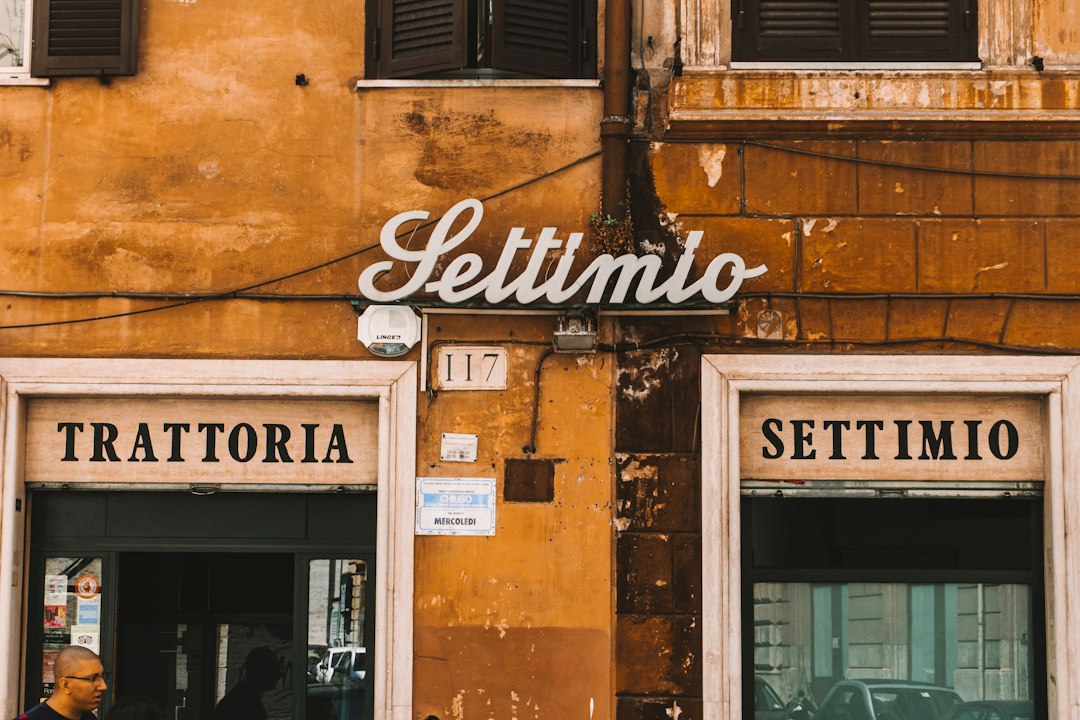
The temple is active, which matters. This is not a museum of religious practice; it is the practice itself. On festival days the smoke from the incense coils is dense enough to sting your eyes, and the noise of firecrackers carries across the harbour. On ordinary days it is quieter, and you can move through the sequence of pavilions — each dedicated to a different deity — without the sense of performing tourism. The building materials, the incense smell, the worn stone steps: these things accumulate.
Insider tip
The upper pavilions have a view across the Inner Harbour to the Chinese mainland that most visitors miss because they turn back at the main hall.
Macau | The Statue of Guan Yin: mercy at the water's edge
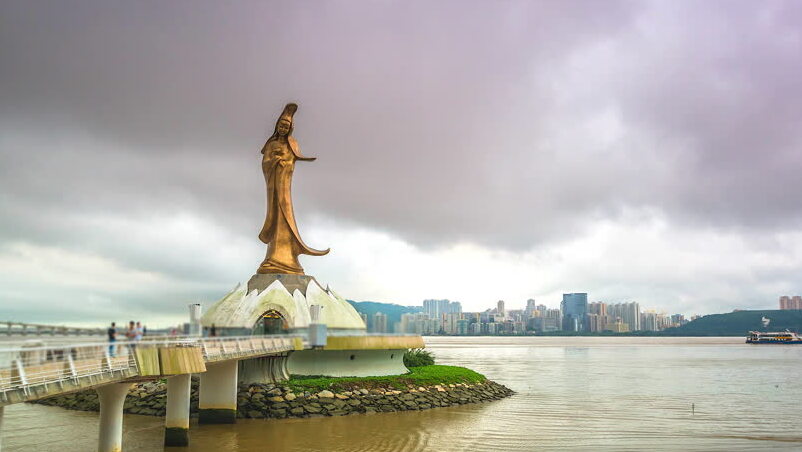
It is not, as the source note honestly acknowledges, among Macau's most visited attractions. This is, in practice, a point in its favour. The plaza around the base is open and breezy, the harbour view is unobstructed, and the religious significance of the figure — Guan Yin is the bodhisattva of compassion in the Buddhist tradition, also venerated in Taoist practice — gives the site a weight that purely decorative monuments lack. Worth thirty minutes, especially if you are already walking the waterfront.
Insider tip
The statue is easily combined with a walk south along the Praia Grande waterfront, one of the peninsula's more pleasant stretches of public space.
Scopri Hac Sa Beach: Il Tesoro Nascosto di Macao — the black sand beach that asks nothing of you
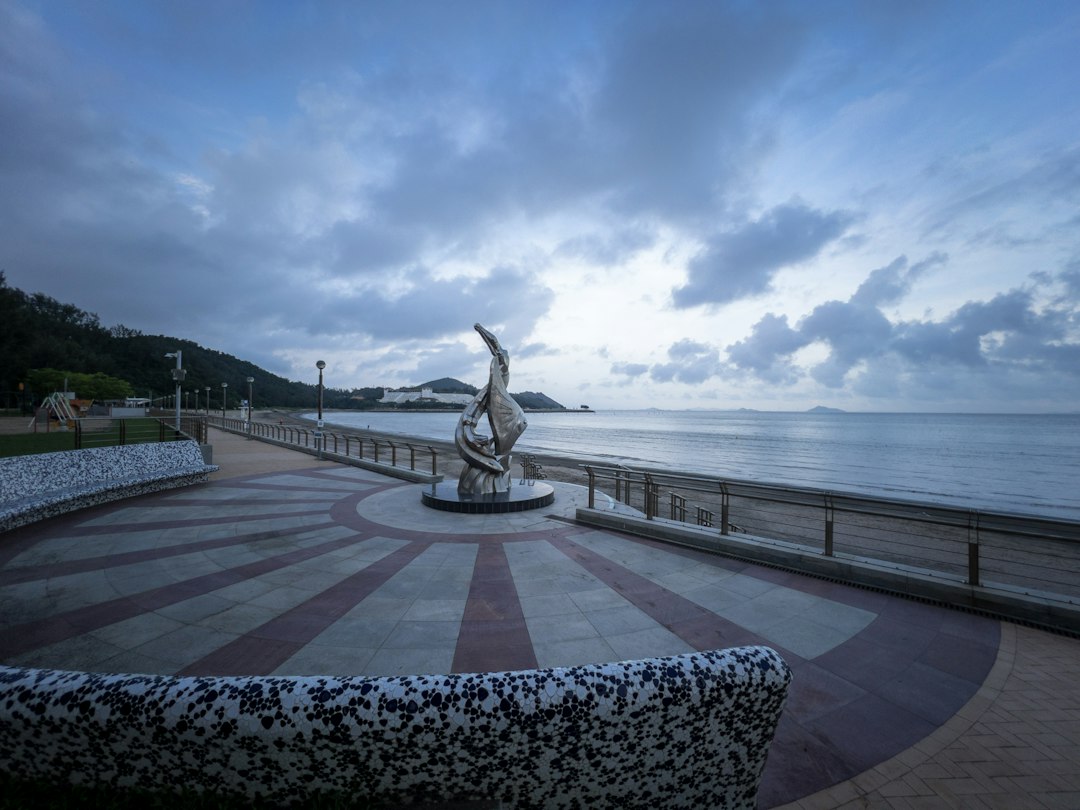
There is a resort hotel at one end and a cluster of restaurants nearby, some of which have been serving the same dishes for decades. The bus from Taipa Village takes about twenty minutes. It is not a destination for serious swimmers. It is a destination for sitting down.
Insider tip
The restaurant strip at the northern end of the beach does a serviceable Portuguese-style baked rice. Arrive before 1pm on weekends or expect a wait.
Macau Giant Panda Pavilion: a seashell roof and two very expensive bears
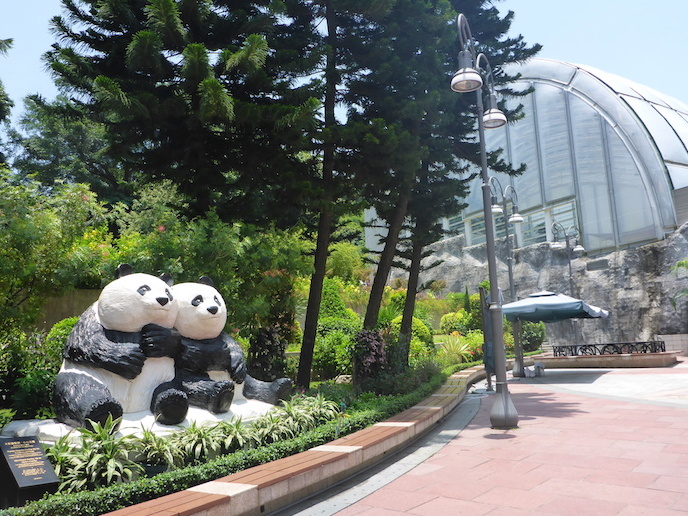
I should be straightforward: the pandas are the draw, and they are pandas, which means they are either eating bamboo or sleeping, and the crowd response to both activities is disproportionate to the drama involved. The surrounding park, however, is genuinely pleasant — Coloane's green hills, a small aviary, walking trails that see almost no foot traffic. If you have children, the pavilion justifies the journey to Coloane on its own. If you do not, combine it with Hac Sa Beach and make a half-day of the island.
Insider tip
The pandas are most active in the morning, before the heat of the day sets in. The park itself is worth an hour beyond the pavilion — the trail to the hilltop viewpoint is short and largely ignored.
There is a version of Macau that exists entirely in the promotional literature: a seamless fusion of East and West, a city where Portuguese egg tarts and Chinese temples coexist in photogenic harmony, where the casinos are just one layer of a rich cultural palimpsest. This version is not false, exactly. It is selective in the way that all promotional literature is selective.
The Macau I have come to know over years of living near it and in it is more complicated and, I think, more interesting. It is a city that has been shaped by extraordinary economic forces in a very short time, and the heritage districts — Taipa Village, the A-Ma Temple precinct, the garden squares of the peninsula — exist partly because of genuine preservation instinct and partly because heritage is itself a product that the tourism economy requires. Knowing this does not make the Mandarin's House less worth visiting. It makes it worth visiting more carefully.
What the ten places on this list share is a quality of resistance to easy consumption. None of them will give you everything in a single visit. Most of them improve on return. Macau is a city that rewards the habit of going back to the same places, not because they change, but because you do. That is, in the end, what living in a place means.


