Trip.Planner
En · Travel Guide
Travel Guide · 2026 Edition

10 Best Things to Do in Wan Chai, Hong Kong — beyond the obvious

A long-term resident's guide to the district that refuses to be summarised

L
Words by
Lena Hofmann
Updated
9 October 2026
Read time
13 minutes
Includes
10 places · interactive map
10 Best Things to Do in Wan Chai, Hong Kong — beyond the obvious
I have a complicated relationship with Wan Chai. I first arrived there in the mid-2000s on a journalism assignment, stayed in a guesthouse on Johnston Road that smelled faintly of mildew and ambition, and spent three weeks convinced I understood the place. I did not. Nobody does, not quickly, and the people who claim otherwise are usually the ones who've only seen it from the back of a taxi. Wan Chai is the district Hong Kong uses to confuse you. It sits between the financial gravity of Central and the residential density of Causeway Bay, and it borrows something from both without fully belonging to either. The old wet market still operates a few hundred metres from a convention centre the size of a small town. The trams still run along Hennessy Road, slow and indifferent to the urgency of everything around them. There are bars that have been serving the same clientele since the 1970s, and there are co-working spaces that opened last Tuesday. The colonial past is not so much preserved here as it is simply unfinished — half-demolished, half-repurposed, half-acknowledged.

What follows is not a list of the ten most photographed things in the area. It is closer to a set of coordinates for a particular kind of attention. Some of these destinations sit technically outside Wan Chai's administrative boundaries, but they orbit the district's sensibility — that specific Hong Kong combination of velocity and layering, where something very old and something very new share a wall and neither seems bothered by it. I have tried to be honest about the friction, the queues, the things that occasionally disappoint. That honesty, I think, is the only useful thing a travel writer can offer.

At a glance

  1. Golden Bauhinia Square in Hong Kong: the weight of a particular date
  2. La Magia della Torre dell'Orologio di Kowloon: a ruin that earned its place
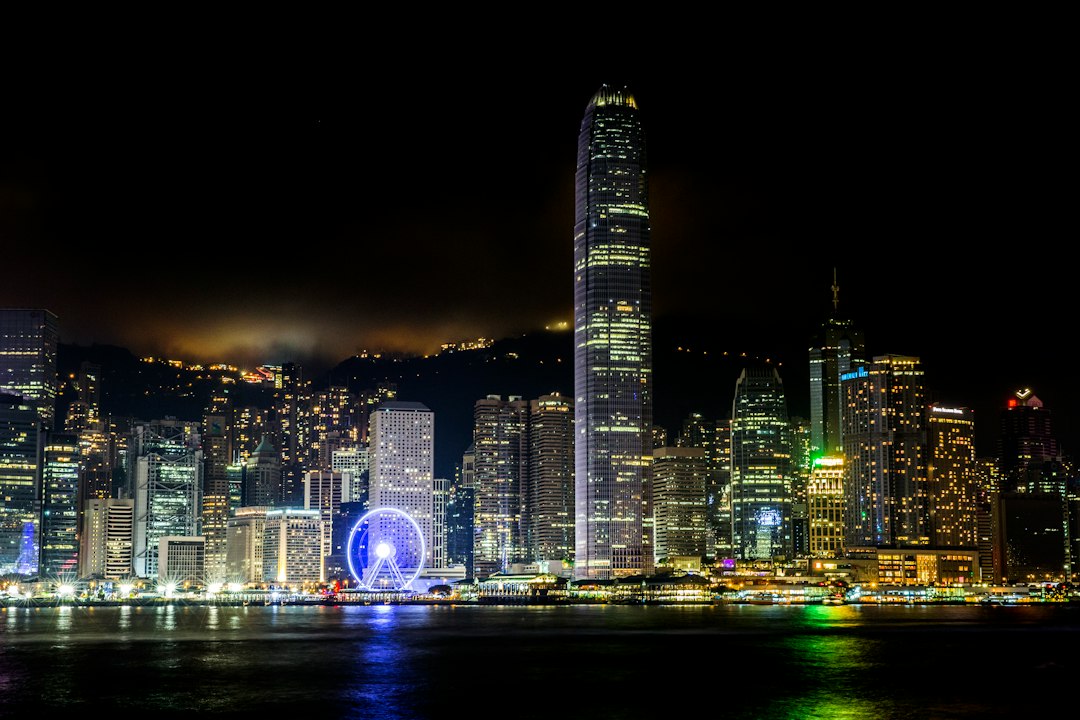
  3. Scopri la Magia di Hong Kong Park: a park that was once a barracks
  4. Dim Sum that means "touch your heart": a meal that requires patience
  5. The night is always young at Lan Kwai Fong: what it actually is
  6. The venerable Peak Tram: the ascent itself
  7. Esplora il Fascino del Museo Marittimo di Hong Kong: a city that built itself on water
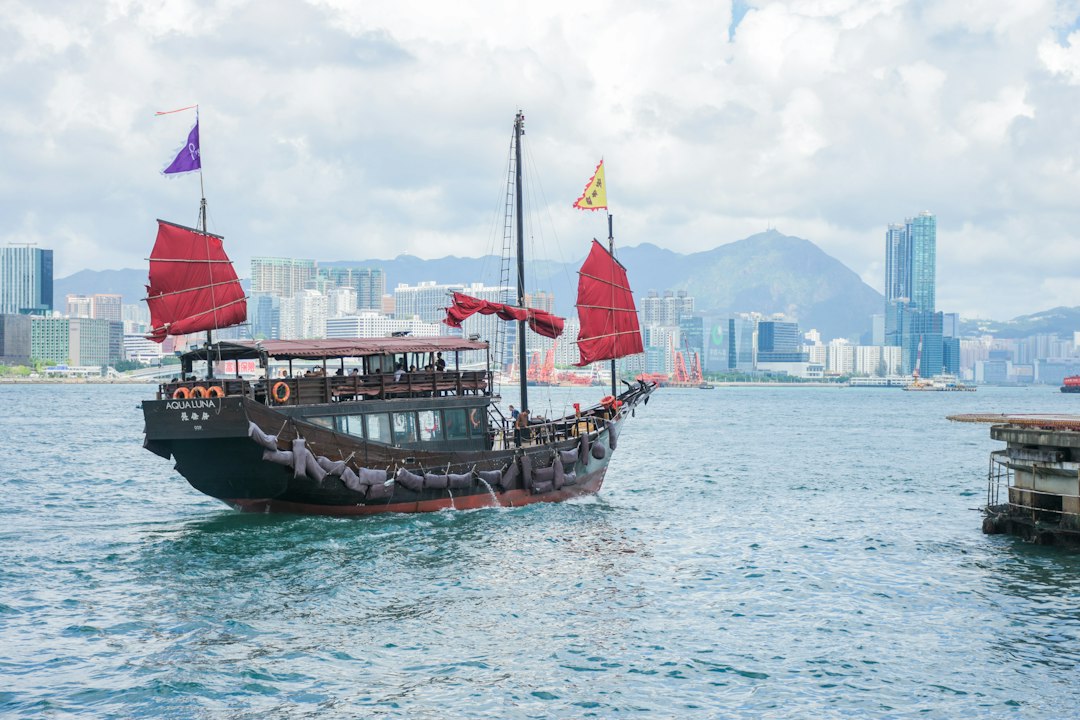
  8. The Avenue of Stars in Tsim Sha Tsui East, Kowloon: the promenade, not the plaques
  9. Scopri il Man Mo Temple di Hong Kong: incense and the long view
  10. Zaha Hadid: Innovation Tower (Jockey Club Tower): a building that argues with its surroundings
1 Square · 0.8 km

Golden Bauhinia Square in Hong Kong: the weight of a particular date

Golden Bauhinia Square in Hong Kong: the weight of a particular date
The square was created to mark 1997 — the handover of Hong Kong from British administration to the People's Republic of China and the establishment of the Hong Kong Special Administrative Region. The golden bauhinia sculpture at its centre is large, formal, and entirely unambiguous in its symbolism. Every morning at eight, there is a flag-raising ceremony that draws a crowd of mainland tourists with cameras and, depending on the day, a smaller crowd of locals who watch with expressions that are harder to read.

It would be dishonest to describe this as a neutral public space. It isn't. But that is precisely what makes it worth visiting. Few places in the world make the machinery of political transition so physically legible. The harbour view behind the sculpture is real, the Convention Centre at your back is real, and the date inscribed on the plinth is real. What you make of all three together is your own business.
Insider tip Come before nine in the morning on a weekday. The tour groups arrive later, and the harbour light is better before the haze builds.
2 Historic Site · 1.8 km

La Magia della Torre dell'Orologio di Kowloon: a ruin that earned its place

La Magia della Torre dell'Orologio di Kowloon: a ruin that earned its place
Across the harbour in Tsim Sha Tsui, the Kowloon Clock Tower is what remains of the old Kowloon-Canton Railway terminus, demolished in 1978. The tower itself survived, largely because tearing it down would have required a fight nobody wanted to have. It stands now at the edge of the Cultural Centre complex, forty-four metres of red brick and granite, entirely disconnected from any building it once served.

There is something instructive about a city that keeps a clock tower without the station. Hong Kong has a practical relationship with its own history — it preserves what it can defend economically or politically, and moves on from the rest without excessive mourning. The tower is worth the cross-harbour trip from Wan Chai not because it is grand, but because it is honest about what it is: a remnant, a placeholder, a thing that outlasted its purpose.
Insider tip The Star Ferry pier is a two-minute walk away. Take the ferry back to Wan Chai rather than the MTR — the crossing costs a few Hong Kong dollars and the view is considerably better.
3 Park · 1.2 km

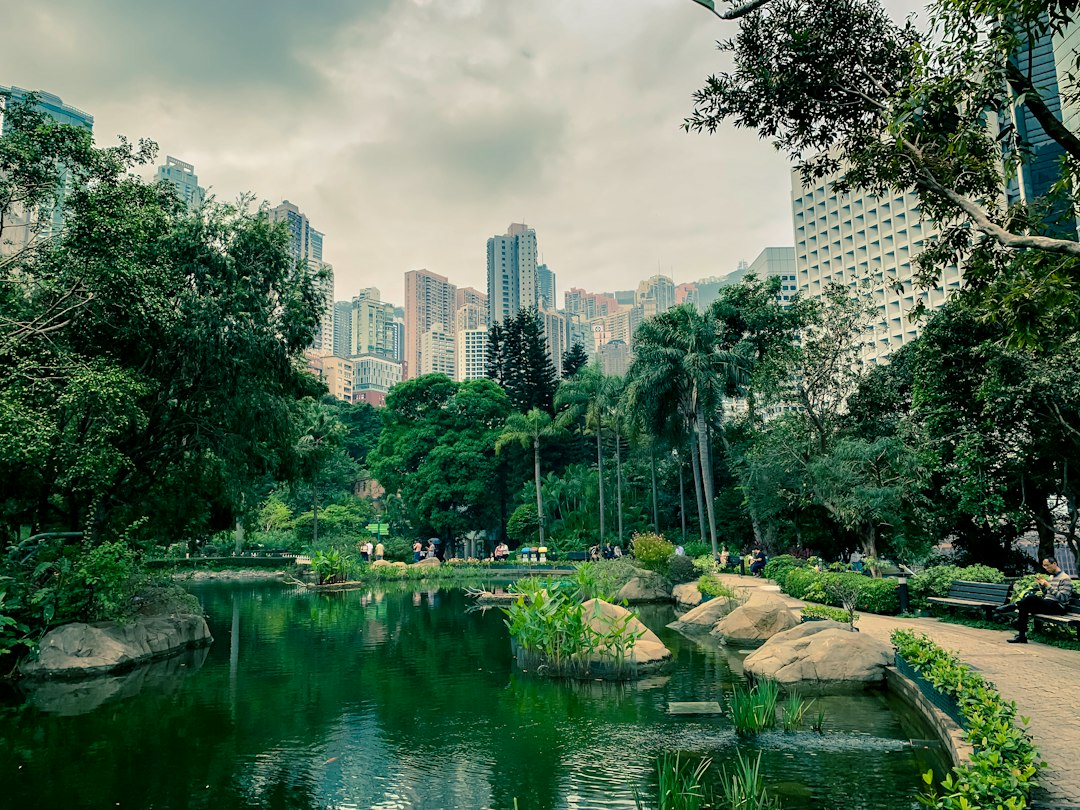
Scopri la Magia di Hong Kong Park: a park that was once a barracks

Scopri la Magia di Hong Kong Park: a park that was once a barracks
Hong Kong Park occupies land that was, for most of the colonial period, a British military garrison called Victoria Barracks. The transformation into public parkland began in the late 1980s, and the result is one of those rare urban spaces that manages to feel both designed and genuinely restful. The aviary — a large walk-through structure housing dozens of bird species — is the detail most visitors remember. The conservatory is quieter and, on a weekday morning, almost empty.

What the park does well is verticality. It sits on a slope above Queensway, and the paths move upward through different registers of density and shade. The city does not disappear — you can see towers through the trees at almost every turn — but it recedes enough to be useful. This is where you come not to escape Hong Kong but to look at it from a slight remove.
Insider tip The Flagstaff House Museum of Tea Ware, inside the park, is one of the few genuinely unhurried museum experiences in the district. It is also free.
4 Food · 2.4 km

Dim Sum that means "touch your heart": a meal that requires patience

Dim Sum that means "touch your heart": a meal that requires patience
The translation is literal: dim sum means touch your heart, and the phrase carries more weight than it first appears to. The meal — dumplings, rice rolls, turnip cake, chicken feet, various things in bamboo steamers — evolved as a yum cha tradition, a way of drinking tea and eating in increments over several hours. In Hong Kong, it remains a genuinely social institution, not a tourist performance, though the two now coexist in most restaurants with varying degrees of awkwardness.

The better dim sum houses in and around Wan Chai still operate trolley service on weekend mornings, which means you point at things as they pass rather than ordering from a menu. This system rewards the attentive and mildly disadvantages the indecisive. Expect a queue on Sunday. Expect the table to be shared with strangers. Expect it to be worth it.
Insider tip Arrive before ten-thirty on a Sunday if you want the full trolley experience. After eleven, the best items — the har gow, the cheung fun — are often gone.
5 Nightlife · 1.8 km

The night is always young at Lan Kwai Fong: what it actually is

The night is always young at Lan Kwai Fong: what it actually is
Lan Kwai Fong is a short, steep, L-shaped cluster of streets in Central, about fifteen minutes on foot from the Wan Chai waterfront. It is Hong Kong's most concentrated nightlife district, and it has been since the 1980s, when expatriate bankers and their social circles established the particular atmosphere that persists today: loud, expensive, not especially local in character, and entirely committed to its own energy.

It would be easy to dismiss it, and many long-term residents do. But there is something worth observing here — the way the crowd shifts across the evening, from post-work suits to tourists to the genuinely nocturnal — and the bars at the quieter end of the fong can be reasonable places to drink if you arrive before nine. The food options have improved considerably in the past decade. The prices have improved considerably less.
Insider tip The streets immediately adjacent to Lan Kwai Fong — particularly SoHo, up the escalator — offer more variety and marginally less noise.
6 Panorama · 1.5 km

The venerable Peak Tram: the ascent itself

The venerable Peak Tram: the ascent itself
The Peak Tram has been running since 1888, which makes it one of the oldest funicular railways in Asia. The journey takes roughly eight minutes and rises about three hundred and ninety-seven metres, at a gradient steep enough that the buildings outside the window appear to tilt at improbable angles. This optical effect is not a trick — it is simply what happens when you move at that angle through a vertical city.

The queue at the lower terminus on Garden Road can be long, particularly on weekends and public holidays. This is not a secret, and there is no reliable way around it. The upper terminus has been substantially redeveloped in recent years, and the commercial complex at the top is more aggressively retail than it once was. None of this changes the fact that the tram ride itself, specifically the eight minutes of ascent, remains one of the more genuinely disorienting experiences the city offers.
Insider tip The number 15C bus runs from Edinburgh Place in Central to the Peak terminus and is almost always faster than the tram queue. The view from the top deck is not nothing.
7 Museum · 1.5 km

Esplora il Fascino del Museo Marittimo di Hong Kong: a city that built itself on water

Esplora il Fascino del Museo Marittimo di Hong Kong: a city that built itself on water
Hong Kong's relationship with the sea is not incidental — it is constitutional. The city exists because of the harbour, because of trade routes, because of the particular geography of a deep-water port at the edge of the Pearl River Delta. The Hong Kong Maritime Museum, which moved to its current location at Central Pier 8 some years ago, attempts to tell that story across multiple floors of exhibits covering everything from ancient Chinese navigation to contemporary container shipping.

The museum is better than its relatively low profile suggests. The collection of navigational instruments and ship models is serious, and the harbour views from the upper level provide a context that no amount of explanatory text can quite replicate. It is not crowded on weekday afternoons, which is either a problem or an advantage depending on your temperament.
Insider tip The museum sits directly on the ferry pier. Combine a visit with a cross-harbour ferry ride to Kowloon for a half-day that makes the city's maritime logic genuinely legible.
8 Film Location · 1.7 km

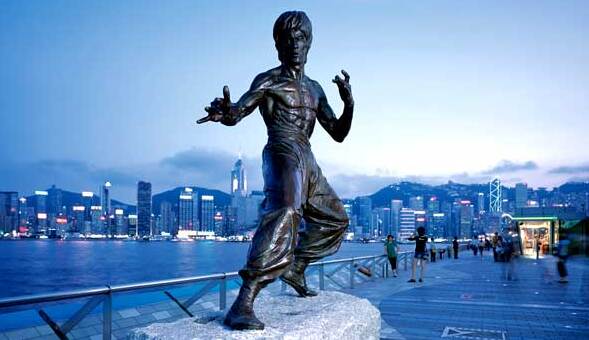
The Avenue of Stars in Tsim Sha Tsui East, Kowloon: the promenade, not the plaques

The Avenue of Stars in Tsim Sha Tsui East, Kowloon: the promenade, not the plaques
The Avenue of Stars runs along the Kowloon waterfront in Tsim Sha Tsui, a four-hundred-and-forty-metre promenade built to celebrate Hong Kong's film industry. The handprints and plaques commemorating local cinema figures are the official attraction, and they are worth a few minutes of genuine attention — the Hong Kong film industry of the 1980s and 1990s was prolific in ways that are still underappreciated outside the region.

But the real reason to come here, particularly in the early evening, is the view back across the harbour toward Hong Kong Island. The skyline is one of the most recognisable in the world, and from this distance it achieves a kind of coherence that it lacks when you are inside it. The light changes quickly after sunset. The nightly Symphony of Lights show is optional, and many residents would say firmly optional.
Insider tip The promenade connects to the Tsim Sha Tsui waterfront path, which continues west toward the Star Ferry pier. Walking the full length at dusk takes about twenty minutes and costs nothing.
9 Religious Site · 2.4 km

Scopri il Man Mo Temple di Hong Kong: incense and the long view

Scopri il Man Mo Temple di Hong Kong: incense and the long view
Man Mo Temple on Hollywood Road in Sheung Wan is dedicated to two deities: Man, the god of literature, and Mo, the god of war. The pairing has always struck me as characteristically pragmatic — a city that covers its bases. The temple dates to the 1840s, which makes it one of the oldest in Hong Kong, and it has been in more or less continuous use since then. The coils of incense hanging from the ceiling are not decorative; they are left by worshippers as slow-burning prayers, and the smoke they produce is dense enough that the interior always appears slightly out of focus.

The temple sits on Hollywood Road, which is also the centre of Hong Kong's antiques trade. The combination of the temple's antiquity and the surrounding commerce in old things creates a particular atmosphere — mercantile and spiritual in roughly equal measure, which is, again, characteristically Hong Kong.
Insider tip The antique shops along Hollywood Road are worth browsing even if you have no intention of buying. The density of old furniture, ceramics, and printed matter on a single street is unusual anywhere.
10 Architecture · 3.2 km

Zaha Hadid: Innovation Tower (Jockey Club Tower): a building that argues with its surroundings

Zaha Hadid: Innovation Tower (Jockey Club Tower): a building that argues with its surroundings
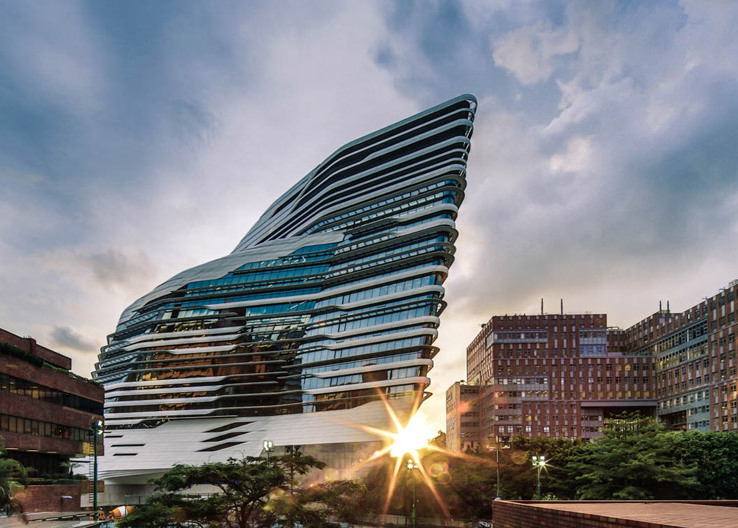
The Innovation Tower at Hong Kong Polytechnic University in Hung Hom is one of the last completed buildings designed by Zaha Hadid before her death in 2016. It is fifteen storeys of angular, torqued concrete that appears to be in the process of becoming something else — a form caught mid-transformation. This is either Hadid's signature achievement or her characteristic excess, depending on your position on architectural expressionism, and both positions are defensible.

What is not debatable is that the building refuses to recede into its context. The surrounding campus architecture is conventional, and the Innovation Tower makes no concessions to it. Inside, the spaces are genuinely difficult to furnish and navigate, which has been a recurring complaint from the people who actually work there. Whether a building can be simultaneously a serious work of architecture and a mild inconvenience is a question the tower answers in the affirmative.
Insider tip The building is on Chatham Road South in Hung Hom, reachable by MTR from Wan Chai in about twenty minutes via East Tsim Sha Tsui. The exterior is visible and photographable without entering the campus.
There is a version of Hong Kong that is easy to consume — the skyline, the dim sum, the tram, the harbour — and a version that takes considerably longer to understand. Wan Chai sits somewhere between those two versions, which is probably why it has attracted so many writers, journalists, and people who came for three weeks and stayed for years. The district has a quality that is difficult to name precisely: it is dense with time, with accumulated decisions, with the evidence of what the city has chosen to keep and what it has chosen to demolish. Not everything on this list is in Wan Chai proper. Some of it is across the harbour, some of it is up the hill, some of it requires a ferry. This seems appropriate. Wan Chai is not a self-contained experience — it is a starting point, a base from which the city becomes legible in increments.

I still don't fully understand it, which is the honest position for anyone who has spent serious time there. The trams still run. The wet market still operates. The bauhinia flag still rises at eight every morning at the waterfront. The city keeps moving, and the best you can do is move with it for a while and pay attention.
🏆 Pocket guide

Take this guide with you.

Save it offline, get walking directions, and discover thousands more places like the ones you just read.

Save offline Smart routes Hidden gems
Scan to download iOS / Android
Scan for AppGallery Huawei users

All places, on a map

Map data © OpenStreetMap contributors.

Frequently asked questions

What is the best time of year to visit Wan Chai and Hong Kong generally?

October through December is the most comfortable period: temperatures drop from the summer humidity into the low twenties Celsius, and the air is clearer than at any other time of year. Spring (March to May) is mild but hazy. Summer (June to September) is hot, extremely humid, and subject to typhoons, which can disrupt travel plans significantly. January and February are cool and dry but can be grey. There is no perfect time; there are trade-offs.

How do you get between Wan Chai and Kowloon affordably?

The cross-harbour MTR is fast and costs around ten to fifteen Hong Kong dollars depending on the exact route. The Star Ferry between Central or Wan Chai and Tsim Sha Tsui costs a few Hong Kong dollars and takes about ten minutes. The ferry is slower and the view is considerably better. Both are worth using at different times of day.

Is Wan Chai safe for solo travellers?

Hong Kong has one of the lower violent crime rates among major Asian cities. Wan Chai is generally safe, including at night. The main friction for solo travellers is the bar district on and around Jaffe Road late at night, where overcharging and aggressive touting from certain establishments has been a documented problem for decades. Awareness is sufficient; alarm is not required.

Do I need to speak Cantonese to navigate Wan Chai?

No. English signage is widespread on the MTR, in most restaurants, and in shops catering to any tourist traffic. That said, a few words of Cantonese — m̀h gōi for excuse me or thank you, and dō jeh for thank you when receiving a gift or compliment — are noticed and appreciated. Translation apps handle menus competently in most circumstances.

What is the Octopus card and do I need one?

The Octopus card is a rechargeable contactless payment card that works on the MTR, buses, trams, the Star Ferry, and in most convenience stores and many restaurants. It is not strictly necessary, but it removes the friction of buying individual tickets and is worth the small deposit required to obtain one. Cards are available at any MTR customer service centre, including at the airport on arrival.

🏆 Read this offline

Save it to your phone.

Bookmark this guide, plan your trip offline, and discover thousands of places like these.

Bookmark Plan offline 60 languages
Scan to download iOS / Android
Scan for AppGallery Huawei users
Secret World Hidden places, real stories — plan your trip
Get the app
