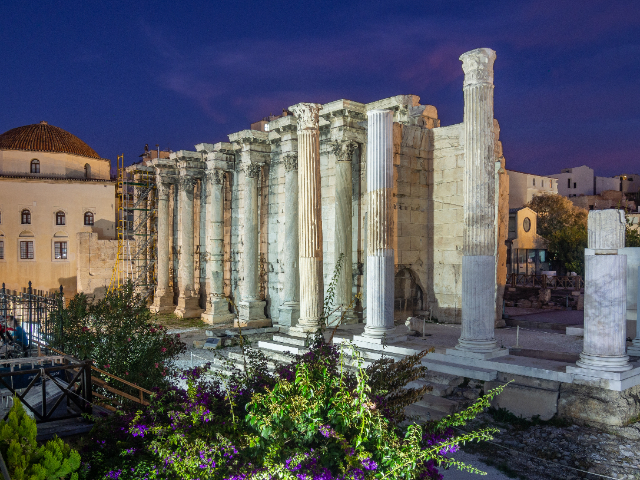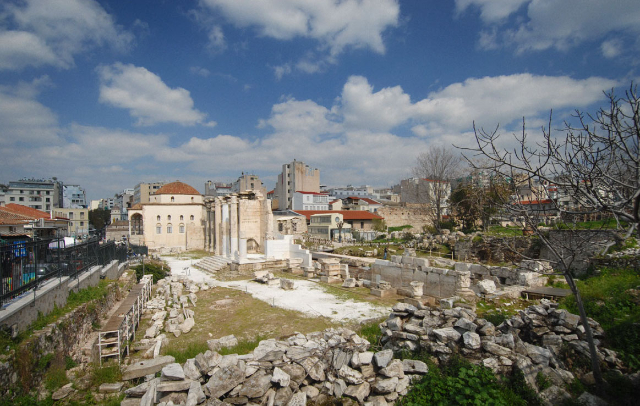

Hadrian's Library is one of the most important monuments of ancient Athens and a symbol of its cultural heritage. Built by the Roman emperor Hadrian in 132 A.D., the library was one of the largest in the ancient world, with a capacity of more than one million volumes.The building was located in the Monastiraki district of central Athens and covered an area of about 10,000 square meters. It consisted of a large rectangular hall with porticoes on three sides, inside of which book shelving was arranged. In the center of the hall was a large atrium, where scholars could read and study texts. The facade of the building was decorated with Corinthian columns and statues of famous philosophers and poets.The library was part of a larger complex, which also included a gymnasium, a garden, a temple dedicated to Zeus, and a theater. This complex had been built by Hadrian as a monument to Greek culture and his love of philosophy and literature.Hadrian's Library was one of the most important centers of learning in antiquity, attracting scholars from all over the Mediterranean world. The library's collection of books was vast and included texts on all fields of knowledge, from philosophy to medicine, from science to literature. It is said that the library was so large that it required a large staff of librarians and scholars to maintain and catalog it.After the fall of the Roman Empire, the library fell into disrepair and was sacked by the Visigoths in 267 AD. Parts of the building were later incorporated into other buildings, and much of the original decoration was lost.Today Hadrian's Library is an archaeological site and museum, which also hosts theater performances and concerts during the summer. In 2004 it was renovated for the Athens Olympic Games, and it is now possible to visit the remains of the building and admire the original columns and sculptures that have been recovered.Hadrian's Library is one of the most iconic places in Athens and a testament to the importance that culture and education have always had in the city's history. Its grandeur and beauty are still impressive today, and a visit to the library is a must for anyone in Athens.