



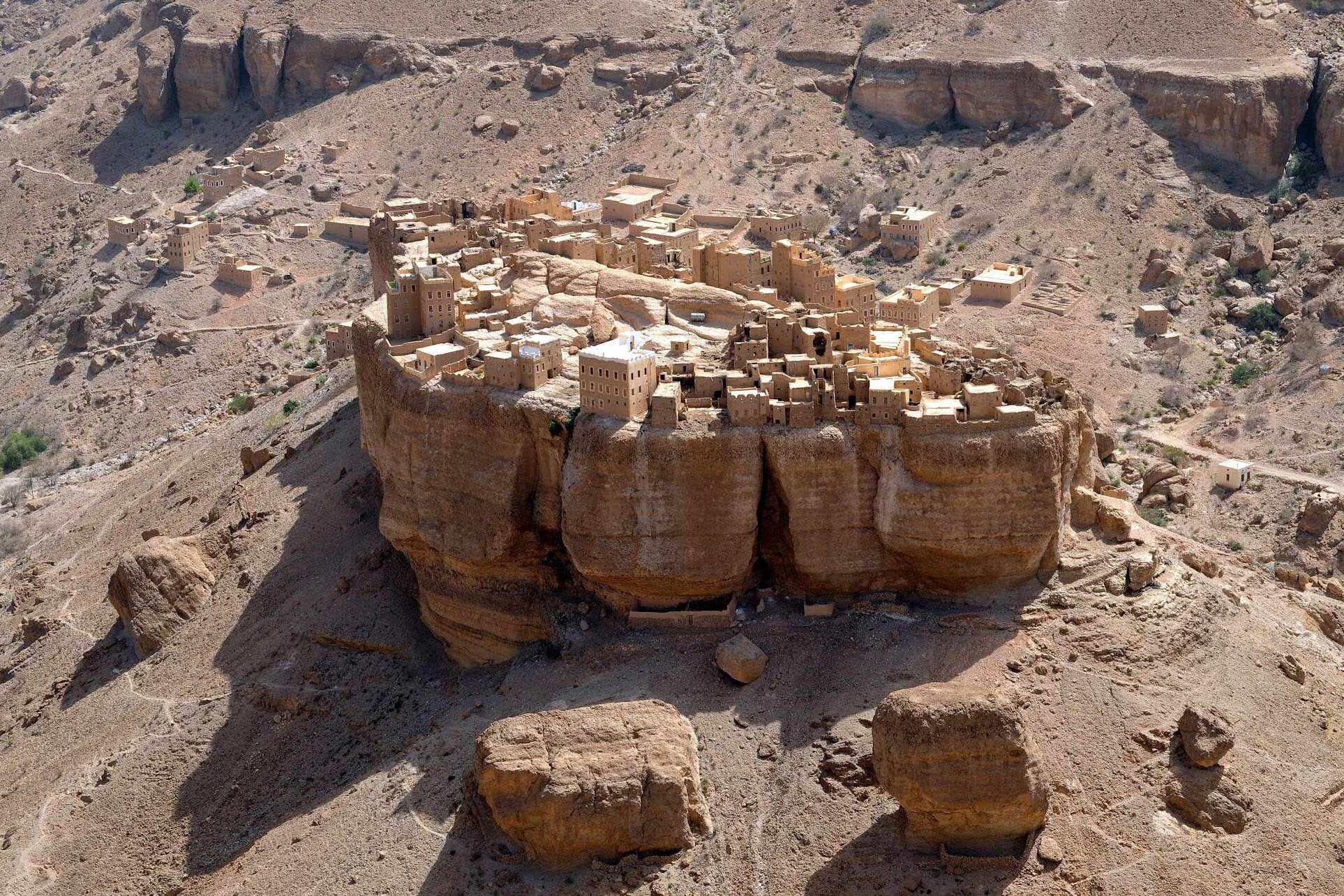
Haid Al-Jazil is a hidden gem in the mountainous heart of Yemen, where ancient history and breathtaking landscapes intertwine. This quaint village, perched on a massive boulder at a staggering height of 100 to 200 meters above the valley floor, offers a glimpse into a way of life that has remained relatively unchanged over centuries.

History and Origins
The origins of Haid Al-Jazil are steeped in the rich tapestry of Yemeni history. Dating back to ancient times, the area has been inhabited since the Sabaean civilization, which flourished around the 10th century BC. This civilization is famously known for its impressive trading networks and monumental architecture. The strategic location of Haid Al-Jazil, overlooking the fertile valleys below, made it a key settlement throughout various dynasties, including the Himyarite and later the Islamic Caliphates.
One of the most significant historical events linked to this village is the spread of Islam in the region during the 7th century. As Islam took root, Haid Al-Jazil became a vital center for trade and cultural exchange, facilitating interactions between different tribes and communities. The village's unique topography not only provided natural defenses but also contributed to its distinct architectural style, which continues to captivate visitors today.
Art and Architecture
The architectural charm of Haid Al-Jazil is palpable in its mud brick buildings, which rise several stories high. These structures, often characterized by their intricate designs and vibrant colors, reflect a blend of traditional Yemeni style and the influences of various cultures that have traversed this land. The buildings seem to defy gravity, hanging dramatically above the boulder, showcasing the ingenuity of local craftsmanship.
One striking feature of the architecture is the use of decorative motifs that adorn the façades, often depicting geometric patterns and natural elements. These designs are not merely ornamental; they carry significant cultural meaning, representing the connection between the inhabitants and their environment. Visitors can also find ancient water cisterns and terraced farming systems, which highlight the sustainable practices of the local community.
Local Culture and Traditions
The culture of Haid Al-Jazil is rich with traditions that have been preserved through generations. The village is known for its warm hospitality, where locals greet visitors with open arms and offer a taste of their vibrant culture. One of the most important aspects of local life is the celebration of festivals, particularly during Ramadan and the Eid al-Fitr feast, which are marked by communal prayers, feasting, and cultural performances.
Traditional music and dance play a vital role in community gatherings, with performances often featuring the al-Ghadeer dance, which is a rhythmic expression of joy and unity. The village also has a rich oral tradition, with storytelling being a cherished pastime, conveying the history, morals, and values of the community.
Gastronomy
Culinary traditions in Haid Al-Jazil reflect the flavors of the region, with an emphasis on local ingredients and time-honored recipes. One of the most beloved dishes is Mandi, a fragrant rice dish often served with tender lamb or chicken, infused with spices such as saffron and cumin. Another local favorite is Saltah, a hearty stew made with meat, vegetables, and a unique fenugreek sauce, served with flatbread.
For those seeking a refreshing drink, Qishr, a traditional coffee made from the husks of coffee beans, is a must-try. This beverage is often enjoyed during social gatherings and is accompanied by dates, a staple in Yemeni cuisine.
Lesser-Known Curiosities
While many visitors are drawn to the stunning architecture and breathtaking views, there are unique stories that often go unnoticed. For instance, the rocks surrounding Haid Al-Jazil are said to have ancient inscriptions, remnants of past civilizations that once thrived in this region. Moreover, the village is home to several rare species of flora and fauna, making it an intriguing destination for nature enthusiasts.
An interesting fact is that the community has maintained its traditional practices in agriculture, using ancient irrigation techniques that have stood the test of time. These methods not only support local farming but also contribute to the preservation of the landscape.
Practical Visitor Information
The best time to visit Haid Al-Jazil is during the cooler months, from October to March, when the weather is pleasant for exploring the village and its surroundings. Visitors should dress modestly, respecting local customs, and be prepared for a fair amount of walking, as the village's landscape is rugged.
When exploring, take the time to interact with the locals, who are eager to share their stories and traditions. Look for the local craft markets, where artisans sell handmade goods, providing an authentic souvenir of your visit.
As you plan your journey to this enchanting village, consider using the Secret World app to create a personalized itinerary that captures the essence of Haid Al-Jazil.
