
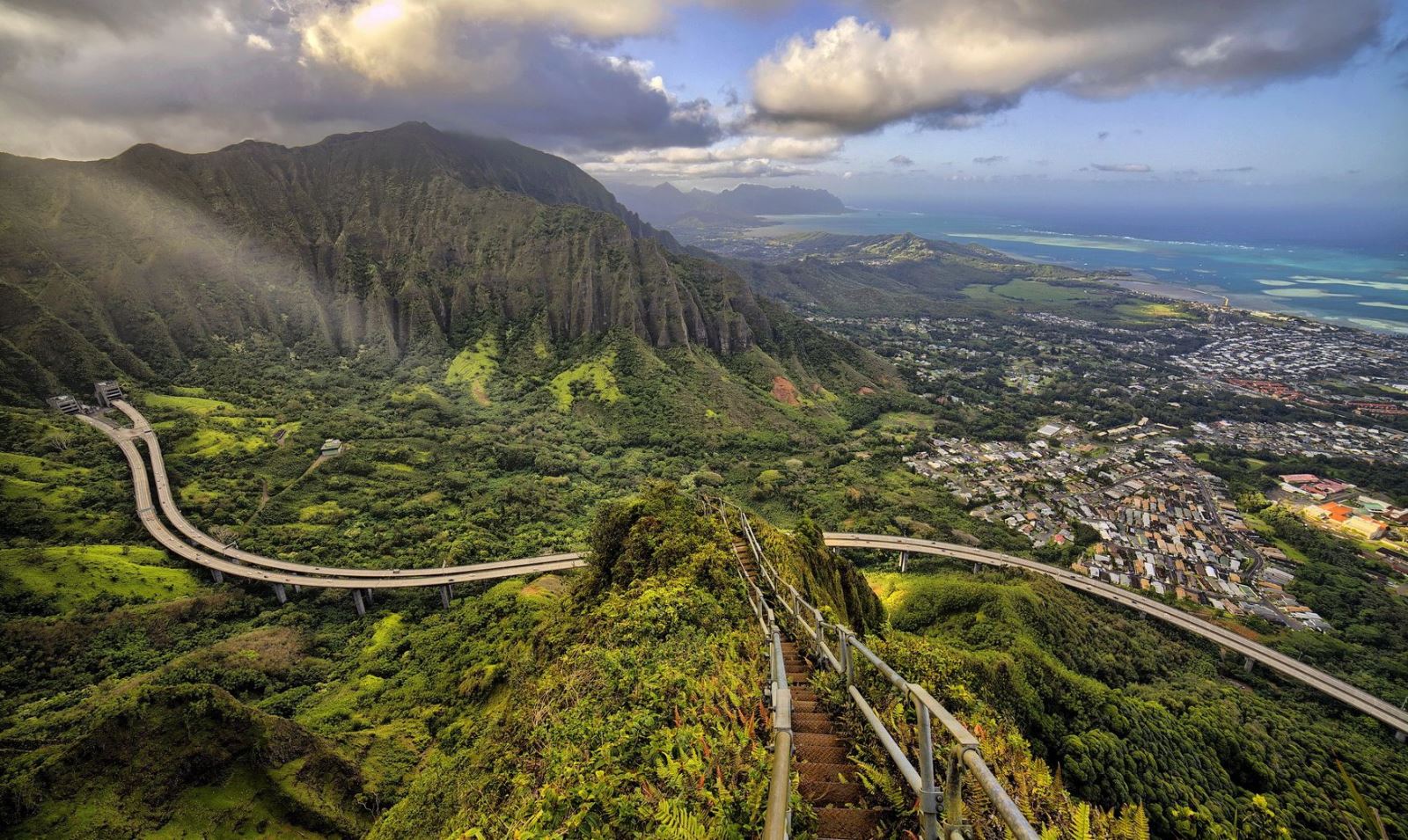

Perched on the lush windward coast of O’ahu, the Haiku Stairs, also affectionately known as the Stairway to Heaven, is a hidden gem that beckons intrepid adventurers. This stunning trail, shrouded in mist and mystery, offers a journey not just through Hawaii’s breathtaking natural beauty, but also through its rich history and captivating culture.

The origins of the Haiku Stairs date back to 1942 during World War II when they were constructed to facilitate access to a secret military radio relay station used to transmit signals to Navy ships operating across the Pacific. The original wooden steps were replaced in the 1950s with metal steps and ramps, totaling nearly 3,922 steps that ascend the Ko’olau mountain range. Though officially closed to the public since 1987 due to safety concerns, the stairway remains a symbol of adventure and exploration.
Architecturally, the Haiku Stairs are an engineering marvel, clinging to the jagged ridges of the mountains with a precarious grace. The trail begins in the lush Haiku Valley and winds its way up to the cloud-covered peaks, offering panoramic views of the island. The ascent is steep and challenging, but each step is a testament to the human will to conquer and explore the most inaccessible places on earth.

The cultural tapestry of the area surrounding the Haiku Stairs is rich with Hawaiian traditions. The indigenous Hawaiian people have long revered the mountains as sacred spaces, places of refuge and spiritual significance. Festivals such as Makani Pahili, which celebrate the winds that sweep through these valleys, highlight the deep connection between the land and its people. Such events foster a greater understanding of the island’s cultural heritage and its natural environment.
While ascending the Haiku Stairs is no longer permitted, the area around Kaneohe offers a taste of traditional Hawaiian gastronomy. The nearby towns are known for dishes like poke, a raw fish salad that captures the freshness of the Pacific, or the sweet and savory kalua pork, slow-cooked to perfection. Quenching the thirst after a hike, a cold glass of lilikoi (passion fruit) juice or a refreshing shave ice can provide just the right amount of local flavor.
There are lesser-known curiosities surrounding the Haiku Stairs that intrigue both locals and visitors alike. For instance, the trail’s name, Haiku, often leads to a poetic misconception, as it actually refers to the Hawaiian word for “kahili flower,” which once flourished in the valley. Furthermore, the steep ridges and dense foliage have made this region a haven for rare bird species, making it a hidden paradise for ornithologists.
For those considering a visit to this mesmerizing part of O’ahu, timing is everything. The best time to explore the nearby areas is during the cooler, drier months from April to October, avoiding the heavy rains of winter. While planning your visit, it’s crucial to respect local regulations and the sacredness of the site. Instead of attempting the unauthorized climb, consider taking a scenic drive along the Likelike Highway or visiting the nearby Ho’omaluhia Botanical Garden for similarly stunning vistas.
Engaging with the local community can also provide deeper insights into the realities of life on the islands. Respecting local customs and seeking permission when exploring Hawaiian lands is not just courteous but essential in preserving the cultural and environmental integrity of the area.
Though the Haiku Stairs may remain out of reach for now, the spirit of adventure they embody continues to inspire. Whether you are drawn by the allure of history, the call of the wild, or the taste of the islands, this corner of O’ahu offers an unforgettable glimpse into Hawaii’s heart and soul.


