
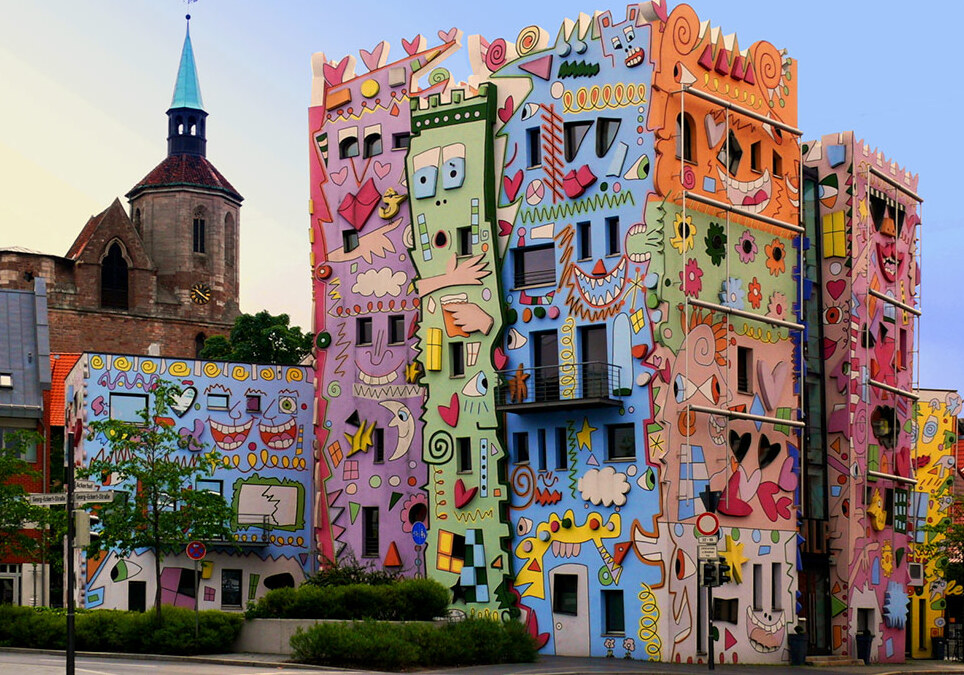

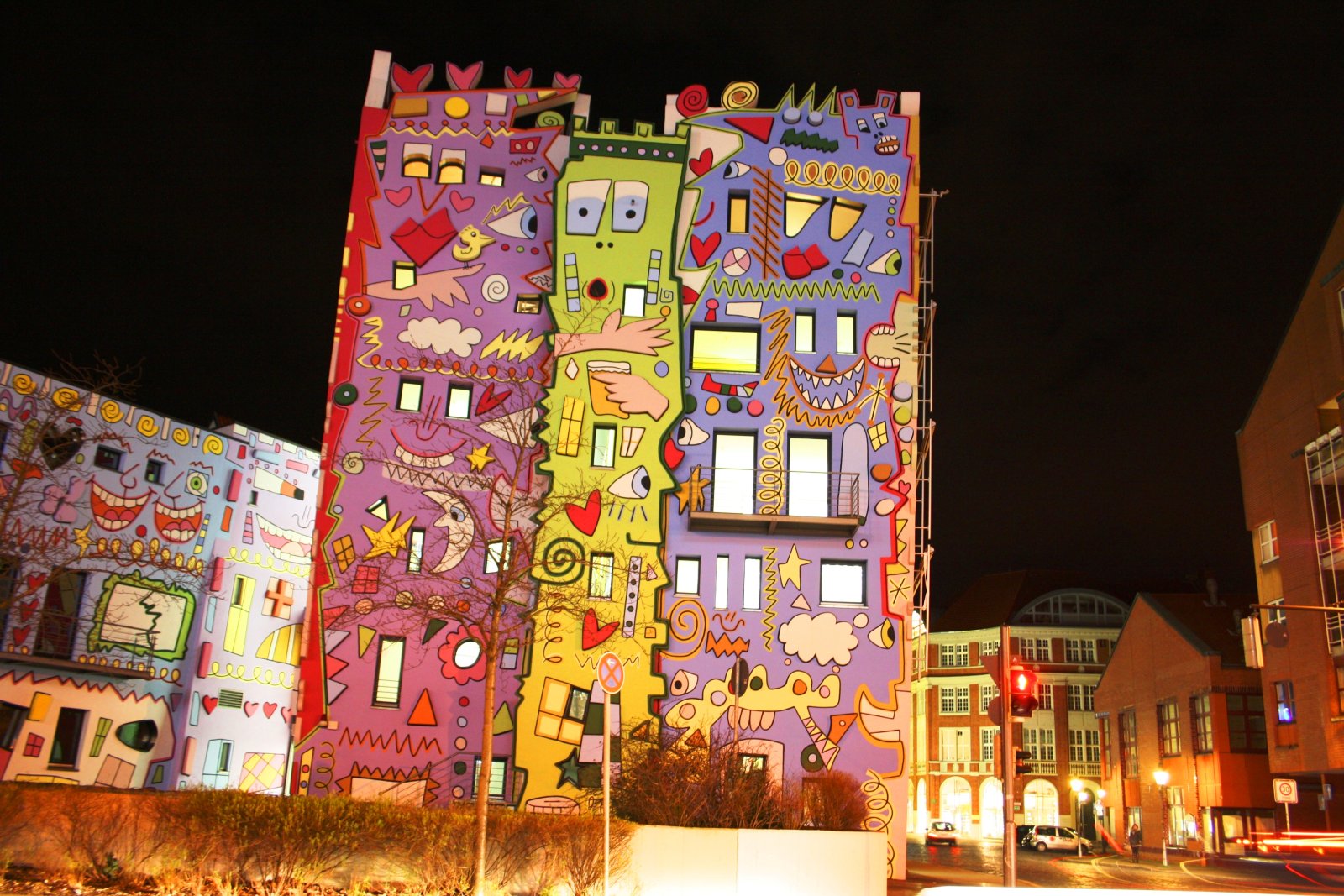
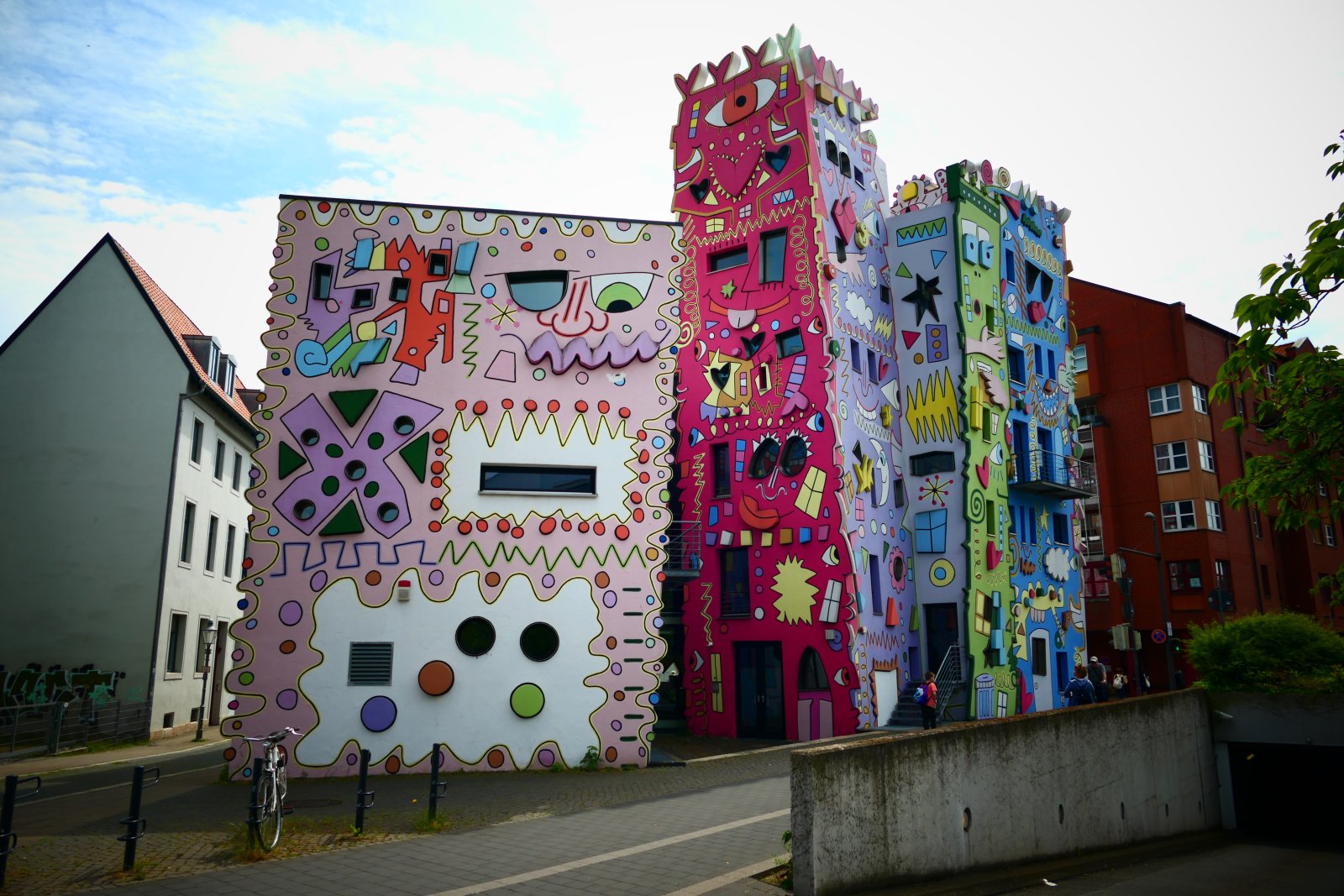
In the heart of Braunschweig, the Happy Rizzi Haus stands as a vibrant testament to modern art and architecture. Commissioned in the late 1990s, this building is a collaboration between Konrad Kloster, the architect, and James Rizzi, the American artist known for his unique, whimsical style. It was completed in 2001 and quickly became a beloved landmark, though its bold design sparked a mix of admiration and skepticism among local residents. The building's exterior features a kaleidoscope of colors, with misshapen windows and lively reliefs that seem to leap off the walls, embodying Rizzi's playful illustrations. This artistic choice not only adds character to Ackerhof, the street where it resides, but also invites passersby to engage with the art on a deeper level.
History and Origins Braunschweig, a city with roots tracing back to the Middle Ages, is steeped in history. Founded in the 9th century, it became a significant center of trade and culture in the Holy Roman Empire. The area is known for its architecture and has witnessed numerous historical events, including the Hanoverian Civil War in the 18th century. As the city evolved, it embraced modernization while retaining its historical charm. The Happy Rizzi Haus, a product of the city's contemporary spirit, reflects this blend of history and modernity, symbolizing a new chapter in Braunschweig's architectural narrative.
Art and Architecture The Happy Rizzi Haus is a vivid example of Postmodern architecture. Its design flaunts a playful aesthetic, with Rizzi's signature cartoon-like motifs and bright colors dominating the façade. Each element of the building—from the exaggerated, asymmetrical windows to the cheerful sculptures—is a direct interpretation of Rizzi’s artwork, creating a whimsical atmosphere. The building's artistic significance lies not only in its visual appeal but also in how it challenges traditional architectural norms, inviting viewers to see buildings as canvases for artistic expression. Rizzi's work has sparked discussions about the role of art in urban environments, encouraging conversations about how cities can be more welcoming and lively.
Local Culture and Traditions Braunschweig is rich in culture, with a variety of local customs and traditions. The Brunswick Spring Fair, held annually, showcases the region's heritage through music, dance, and food. The city also celebrates St. George's Day with parades and festive events, reflecting its deep-rooted traditions. While exploring the Happy Rizzi Haus, visitors can immerse themselves in the local culture by visiting nearby galleries and museums that honor both modern and historical art, creating a dialogue between the past and present.
Gastronomy No visit to Braunschweig is complete without indulging in local culinary delights. The city is famous for its Braunschweiger mustard, a spicy condiment that has become a staple in German kitchens. Additionally, the region is known for hearty dishes such as Grünkohl (kale) and Pinkel (a type of sausage), traditionally enjoyed during the winter months. For those with a sweet tooth, don’t miss the Braunschweiger Mohnkuchen, a poppy seed cake that is often enjoyed with coffee. Local cafes near the Happy Rizzi Haus offer a perfect spot to savor these regional flavors while taking in the vibrant atmosphere.
Lesser-known Curiosities While the Happy Rizzi Haus is well-known, what many visitors might miss are the intricate details embedded in its design. For instance, the building features a hidden Rizzi signature cleverly integrated into the artwork, an Easter egg for the observant. Additionally, the building's roof is shaped like a whimsical hat, which Rizzi believed would bring luck to the city. It’s also interesting to note that the artist was inspired by the lively spirit of Braunschweig itself, believing that the building should reflect the joy and diversity of the community. This connection to the local spirit makes the Happy Rizzi Haus more than just a building; it embodies the city's heart and soul.
Practical Visitor Information For those planning a visit, the best time to explore Braunschweig is during the spring and early autumn when the weather is pleasant and the city is alive with festivals. The Happy Rizzi Haus is easily accessible via public transport, located just a short walk from the city center. As you stroll around, take your time to appreciate the building's playful features and capture photographs that showcase its vibrant colors. Don't forget to explore the surrounding area, where you can find quaint shops, local art, and inviting cafes.
In a city rich with history and culture, the Happy Rizzi Haus stands out as a beacon of creativity, inviting everyone to experience its charm. To make the most of your time in Braunschweig and discover hidden gems, consider using the Secret World app for a personalized itinerary.


