


About 340 meters below the lush surface of Welchman Hall, in the heart of Barbados, silent streams flow between limestone formations that take millennia to grow by a few centimeters. Harrison's Cave is an active cave, which means that water continues to shape stalactites and stalagmites even today, depositing calcite layer by layer in a slow and relentless geological process. This is not just a simple tourist site: it is a constantly evolving underground ecosystem.
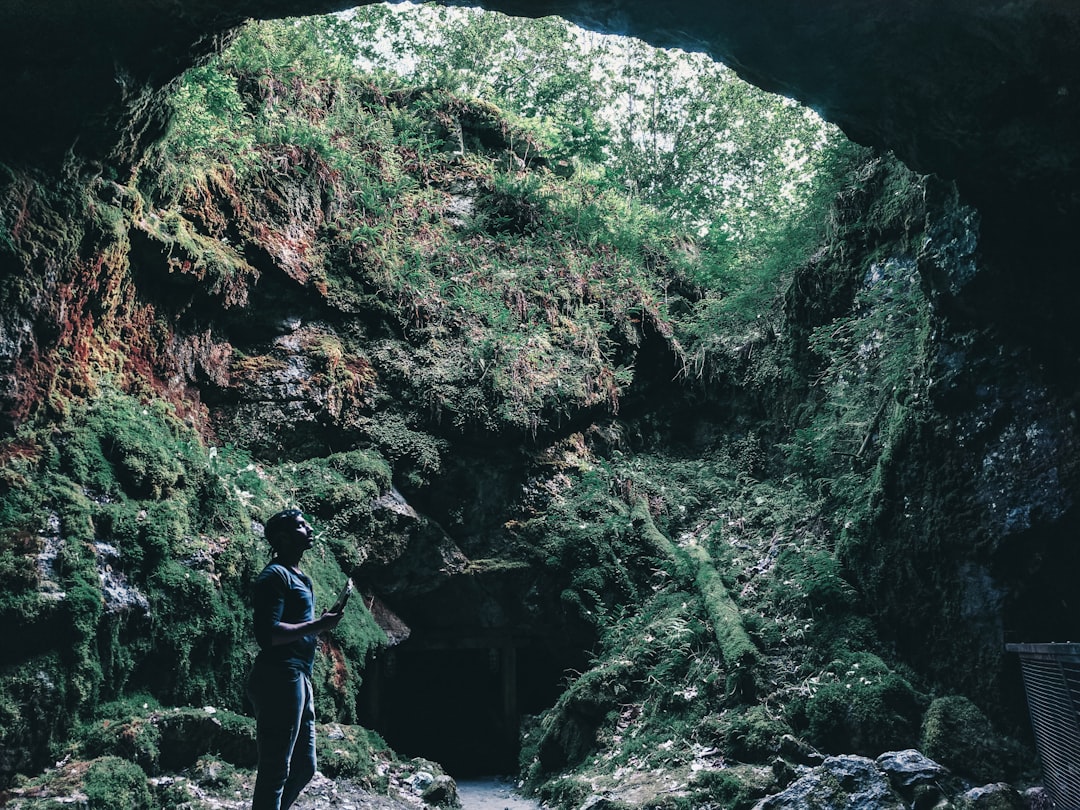
The cave was systematically explored for the first time in the 1970s, when Danish geologist Ole Sorenson conducted the first technical surveys that led to the official mapping of the system. The site was opened to the public in 1981 and has since become one of the most visited natural landmarks in the Eastern Caribbean. Entrance to the park is through a modern visitor center, designed to minimize the visual impact on the surrounding hilly landscape.
The underground tram journey

The main visit takes place aboard a small electric tram that travels approximately 1.5 kilometers of illuminated tunnels inside the cave. The journey lasts about 45 minutes and passes through different environments: large halls with ceilings up to 15 meters high, narrower corridors where humidity can be felt on the skin, and viewpoints overlooking pools of turquoise water. The temperature inside remains constant around 26-28 degrees Celsius throughout the year, regardless of the external climate.
During the trip, the guides point out the most impressive formations: some columns — created by the fusion of a stalactite with a stalagmite — reach considerable heights and have a crystallized surface that spectacularly reflects artificial light. Underground streams are visible at several points along the route, and in some sections, the sound of water flowing beneath the tram tracks can be clearly heard.

The biodiversity of an underground ecosystem
Cave environments host life forms adapted to darkness and constant humidity. Inside Harrison's Cave live various species of bats, which use the tunnels as shelter and play a fundamental role in the island's ecosystem through seed dispersal and insect control. Their presence is especially noticeable in the less illuminated areas of the path, where it is occasionally possible to observe them hanging from the rocky walls.

The flora surrounding the cave entrance also contributes to the natural richness of the site. The park is located near Welchman Hall Gully, a natural gorge that hosts dense tropical vegetation, with mahogany trees, giant bamboo, and endemic plants of Barbados. Those visiting Harrison's Cave can easily combine the descent into the caves with a walk in the gorge, obtaining a complete picture of the biodiversity of the Barbadian interior.
Water as a Geological Protagonist

What makes Harrison's Cave particularly interesting from a naturalistic point of view is the constant presence of active water. Unlike many caves that host only fossil formations — that is, stalactites and stalagmites that have stopped growing — here the process of limestone deposition is still ongoing. Rainwater filters through the porous limestone of the surface, becomes enriched with minerals, and re-emerges in the underground galleries, leaving crystalline deposits on the existing formations.
The pools present along the path reach significant depths at some points and host small aquatic organisms adapted to the hypogean environment. The color of the water varies from clear to pale green depending on the depth and local mineral composition, creating a visual effect that contrasts with the gray stone of the surrounding walls.
Practical information for the visit
Harrison's Cave is easily reached from the capital Bridgetown in about 30-40 minutes by car, following the road that crosses the parish of Saint Thomas towards Welchman Hall. The park has its own parking lot. The most helpful advice is to book the tram in advance online, especially during the period from December to April, when tourist traffic is higher: the available seats on each tram are limited and sessions fill up quickly during the peak hours of the day. The early morning departures generally offer less crowding and more effective artificial lighting in the main halls. The ticket price for adults is around 30 Barbadian dollars, but it is advisable to check the updated rates on the official website before the visit. Bringing an additional light layer is not necessary given the internal temperature, but closed shoes with non-slip soles are strongly recommended for safety on the wet path.


