



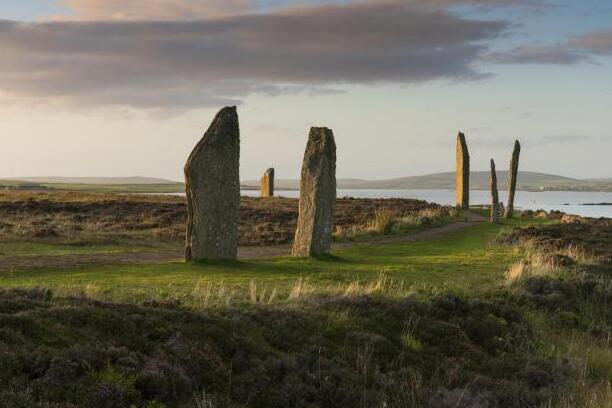
Lying just off the north coast of Scotland, the Heart of Neolithic Orkney is a mesmerizing testament to humanity's distant past. This remote archipelago, part of the Orkney Islands, is steeped in prehistoric history that dates back around 5,000 years. Its landscape is dotted with monumental stone structures, each whispering stories of ancient settlers who once thrived here.

The origins of these remarkable sites trace back to a time when the region was a bustling hub for early farmers and artisans. The Neolithic period, spanning from approximately 4000 to 2500 BC, saw the establishment of permanent settlements. The construction of these monuments signifies a significant shift in human society, moving from nomadic lifestyles to more community-oriented ways of life. Key historical events include the rituals and funerary practices that took place at sites like Maeshowe, a large chambered tomb renowned for its intricate carvings and alignment with the winter solstice.
Architecturally, the Heart of Neolithic Orkney showcases some of the most impressive stonework from this era. The Standing Stones of Stenness, built around 3,100 BC, is one of the earliest stone circles in Britain, predating even the iconic Stonehenge. The stones, towering at 6 meters high, are not only a marvel of engineering but also of cosmological significance, believed to be aligned with celestial events. Similarly, the Ring of Brodgar, encircled by a deep ditch and standing stones, embodies the artistic and ceremonial practices of the time. The meticulous craftsmanship of these structures reflects a sophisticated understanding of stonework and communal effort.

Local culture in Orkney remains vibrant, shaped by its rich heritage. The islands celebrate various customs and festivals that pay homage to their Neolithic roots. One notable event is the Orkney Folk Festival, held annually, where music and storytelling echo the ancient traditions of the islands. The St. Magnus Festival, dedicated to Orkney's patron saint, also showcases the islands' artistic spirit, blending music, art, and theater. These festivities are a reminder of the community's strong connection to their ancestry and the landscape around them.
Gastronomically, Orkney is known for its hearty fare, influenced by both land and sea. Local foods include freshly caught seafood, such as scallops and crab, along with lamb that grazes on the nutrient-rich grass of the islands. Traditional dishes often feature ingredients like barley, a staple in local cuisine, and Orkney cheddar, renowned for its rich flavor. Visitors can also indulge in local brews, particularly Orkney ales, which reflect the island's artisanal brewing heritage.
Among the lesser-known curiosities of the Heart of Neolithic Orkney is the tale of the Mysterious Maeshowe. This tomb not only serves as a burial site but also houses one of the largest collections of Viking runes in the world, etched by Norse invaders during their raids in the 12th century. Additionally, the Stenness stones were once thought to be a portal to the otherworld, a belief that highlights the fascinating interplay between history and mythology that permeates Orkney's culture.
For those considering a visit, the best time to explore the Heart of Neolithic Orkney is during late spring and summer, when the weather is milder, and the islands are alive with greenery. It’s advisable to plan ahead, as some sites may have limited access or guided tours. Be sure to look for the interpretative centers that offer insights into the archaeological significance and stories behind these ancient monuments.
As you wander among the stones, take a moment to embrace the tranquility of the landscape and reflect on the lives of those who came before. The Heart of Neolithic Orkney is a place where history is palpable, and every stone holds a story waiting to be uncovered. Use the Secret World app to craft a personalized itinerary that brings these ancient wonders to life.
